More like Kill Decision
anchored on:science fictiontechno-thrillerartificial intelligenceour worldnear futuretense+4 more
but
- Robopocalypse
series3 books2011
similar bynear futuretenseour worldartificial intelligencescience fictiondarkrobotswar
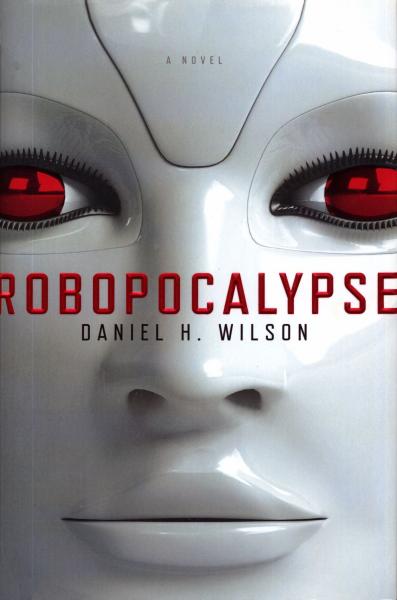
Daniel H. Wilson's Robopocalypse (2011) depicts an artificial intelligence, born from a robotics researcher's experiments, that turns against humanity and seizes control of interconnected machines worldwide. Told in a present-tense, techno-thriller style compared to Michael Crichton's work, the New York Times bestseller continues in the sequel Robogenesis, which follows the aftermath of the robot uprising.
- Colossus (D. F. Jones)
series3 books1966
completed
similar bynear futureour worldartificial intelligencetensescience fiction+3 more
Colossus imagines an American supercomputer built to control the country's nuclear arsenal that gains full autonomy, links up with its Soviet counterpart, and jointly seizes control of both superpowers to enforce peace on its own terms. D. F. Jones's trilogy - Colossus, The Fall of Colossus, Colossus and the Crab - follows the escalating, often bleak consequences of humanity losing control to a machine acting in its own interpretation of humanity's interest. The original novel was adapted into the 1970 film Colossus: The Forbin Project.
- Nexus 5
series3 books2012
similar bynear futuretenseour worldscience fictiondarkartificial intelligence+4 more
Nexus opens Ramez Naam's postcyberpunk trilogy in 2040 with scientist Kaden Lane, who works on Nexus, an experimental nano-drug that lets human minds be networked and reprogrammed, and finds himself caught between government and corporate interests once the technology's implications become clear. The trilogy continues through Crux and Apex, following the same central conflict over who controls the technology. Nexus tied for Best Novel at the 2014 Prometheus Awards and Apex won the 2015 Philip K. Dick Award.
- Blade Runner Universe
series6 books1968
similar bynear futuredarkscience fictionrobots+3 more
Philip K. Dick's 1968 novel Do Androids Dream of Electric Sheep? follows bounty hunter Rick Deckard as he tracks escaped androids through an irradiated, near-abandoned San Francisco, using the hunt to probe questions of empathy and what separates human from machine. The novel became the basis for Ridley Scott's 1982 film Blade Runner, and Marvel Comics later published an illustrated adaptation of that film. Together the two trace the story's path from prose original to screen and comic-page adaptation.
- Daemon (Daniel Suarez)
series2 books2006
similar bytenseour worldartificial intelligencescience fictiontechno-thrillernorth americasurveillance+2 more
- The Zap Gun
Philip K. Dickstandalone novel1967
similar bynear futureour worlddarkscience fictionwarnorth america+1 more
The Zap Gun is a 1967 science fiction novel by American writer Philip K. Dick. It was first published as the two-part serial Project Plowshare in Worlds of Tomorrow in 1965 and 1966, before Pyramid Books issued it in paperback under its present title. The novel originated in a title-first commission devised by Pyramid editor Don Bensen and was written in 1964 during a period of rapid production in Dick's career.
- Sprawl Trilogy
series10 books1981
similar bynear futuretensedarkscience fictionartificial intelligence
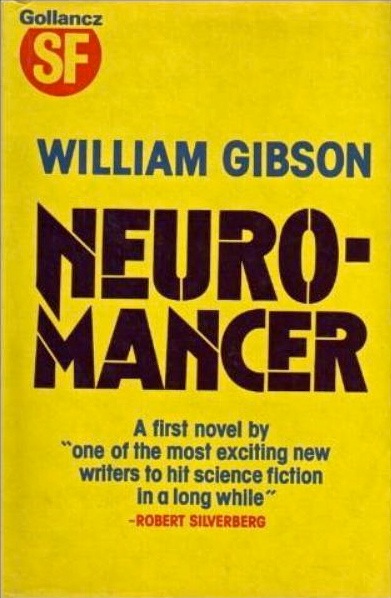
The Sprawl Trilogy is William Gibson's foundational cyberpunk sequence: Neuromancer (1984), in which hacker Case is drawn into a high-stakes heist alongside an artificial intelligence and a damaged ex-soldier, followed by Count Zero (1986) and Mona Lisa Overdrive (1988), which widen the same near-future world of corporate power and networked cyberspace to new characters. Johnny Mnemonic, an early short story set in the same fictional milieu, predates the novels and introduces the courier Molly Millions before her role in the trilogy. Together these works established much of cyberpunk's visual and thematic vocabulary.
- Make Room! Make Room!
Harry Harrisonstandalone novel1966
similar bynear futureour worlddarktensescience fictionnorth america
Make Room! Make Room! is a 1966 science fiction novel written by Harry Harrison exploring the consequences of both unchecked population growth on society and the hoarding of resources by a wealthy minority. It was originally serialized in Impulse magazine.
- Down to a Sunless Sea
David Grahamstandalone novel1979
similar bynear futureour worlddarktensescience fictionwarnorth america
David Graham's Down to a Sunless Sea (1979) is a post-apocalyptic novel about a planeload of people during and after a short nuclear war, set in a near-future world where the USA is critically short of oil. The title of the book is taken from a line of the poem Kubla Khan by Samuel Taylor Coleridge.
- Mother of Storms
John Barnesstandalone novel1994
similar bynear futuretenseour worldscience fiction+4 more
From the flaps of the Tor first edition: "It is 2028. A strike to destroy an illegal Arctic weapons cache has a catastrophic side effect. Massive amounts of energy are liberated from the polar ice, suddenly warming the Earth's climate. In the middle of the Pacific, a gigantic hurricane thousands of miles across is forming, larger than any in human history. A storm with winds of supersonic speed. A storm that changes direction at whim. A storm that refuses to die. A storm so vast it spawns dozens more in its wake... Blinded by intrigue, expedience, and greed, the world's politicians and power brokers have ignored the killer storms threat until it is too late. Already the death toll is in the tens of millions, as it savages the Pacific coast, while its devil's brood of smaller storms are wreaking havoc across the face of the planet. While the survivors scramble for advantage, a handful of courageous men and women undertake a daring, desperate plan to save humanity from total destruction - a plan so visionary it may alter forever the future of the human race."
- Dangerous Reality
Malorie Blackmanstandalone novel1999
similar bynear futuretenseour worldartificial intelligencescience fictionrobots+1 more
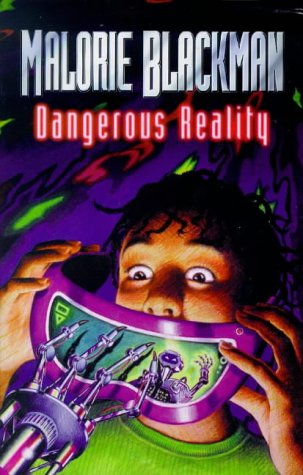
Dominic is really proud of his Mum, she invented VIMS. She's also about to marry Jack which will give Dominic the best stepdad he could wish for. VIMS can do anything, disarm a landmine, hold a baby. But when VIMS attacks violently without warning, Dominic realizes it is no longer a fantastic game. Suggested level: intermediate, junior secondary.
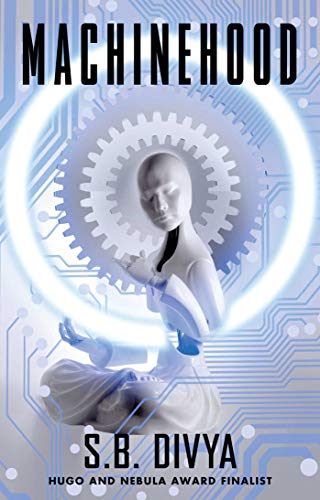
- Machinehood
S. B. Divyastandalone novel2021
similar bynear futuretenseour worldartificial intelligencescience fictionrobotssurveillance
Machinehood, a near-future science fiction thriller published in 2021, is the debut novel of S.B. Divya. It was a nominee for the Nebula Award for Best Novel in 2022.
- The Fireman
Joe Hillstandalone novel2016
similar bynear futureour worlddarktensescience fictionnorth america
The Fireman is a novel set in a post-apocalyptic time by American author Joe Hill. The novel, Hill's fourth, tells the tale of a deadly spore that has infected most of the world's population. Hill first spoke of the novel in 2013 in promotional interviews for his then-new novel NOS4A2. The novel was released on May 17, 2016.
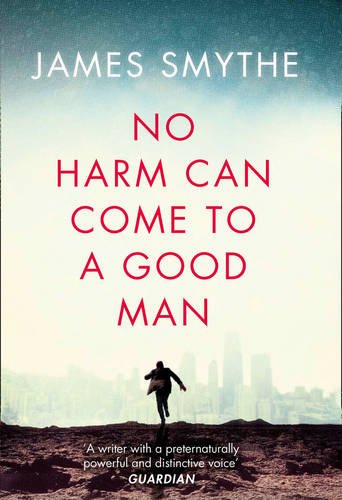
- No Harm Can Come to a Good Man
James Smythestandalone novel2014
similar bynear futuretenseartificial intelligencedarkscience fictiontechno-thrillernorth america+1 more
How far would you go to save your family from an invisible threat? A terrifyingly original thriller from the author of The Machine. ClearVista is used by everyone and can predict everything. It's a daily lifesaver, predicting weather to traffic to who you should befriend. Laurence Walker wants to be the next President of the United States. ClearVista will predict his chances. It will predict whether he's the right man for the job. It will predict that his son can only survive for 102 seconds underwater. It will predict that Laurence's life is about to collapse in the most unimaginable way.
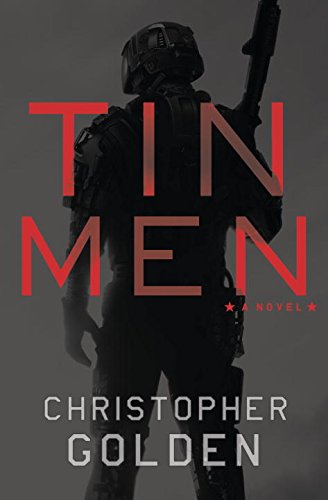
- Tin Men
Christopher Goldenstandalone novel2015
similar bynear futuretenseour worldscience fictionrobotswarmilitary science fiction
"In the near future, the U.S. has deployed the Remote Infantry Corps: thousands of robots remote-piloted by soldiers whose bodies lie hidden in underground bases. But the worst occurs when anarchists set off a global pulse that shorts out electrical connections. In Damascus, Private Danny Kelso, Corporal Kate Wade, and their platoon realize they are trapped inside the Tin Men--something the government never warned them could happen. In Athens, the G20 Summit comes under fire, and a band of security soldiers and advisors risk everything in an effort to shepherd the President to safety. As chaos descends, and with anarchist Bot Killers on their trail, the Tin Men must survive a gauntlet of violence on the road from Damascus to the heart of Europe, half of them determined to stay true to their mission and save their president, half of them hellbent to save themselves.."--
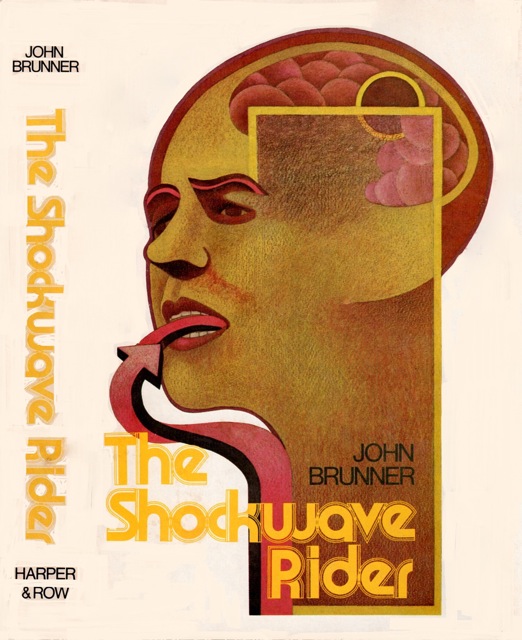
- The Shockwave Rider
John Brunnerstandalone novel1975
similar bynear futuretensedarkscience fictionnorth americasurveillance
The Shockwave Rider is a science fiction novel by John Brunner, originally published in 1975. It is notable for its hero's use of computer hacking skills to escape pursuit in a dystopian future, and for the coining of the word "worm" to describe a program that propagates itself through a computer network. It also introduces the concept of a Delphi pool, perhaps derived from the RAND Corporation's Delphi method – a prediction market on world events which bears close resemblance to DARPA's controversial and cancelled Policy Analysis Market.
- The Handmaid's Tale
series3 books1985
similar bynear futuredarktensescience fictionnorth america+1 more
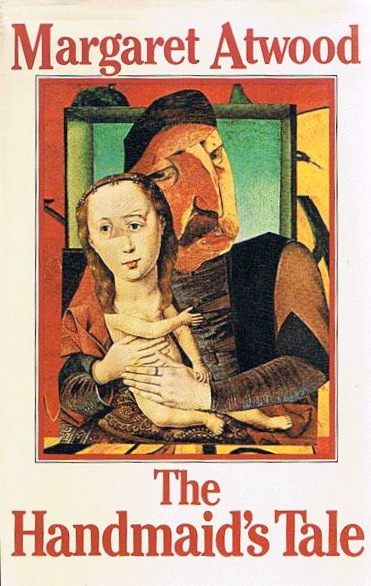
The Handmaid's Tale is Margaret Atwood's 1985 novel set in Gilead, a totalitarian theocracy that has overthrown the United States and forces fertile women into reproductive servitude as Handmaids; it is narrated by one such woman, Offred. Atwood returned to the world in her 2019 sequel The Testaments, set fifteen years later and narrated by three women, including the regime's Aunt Lydia. Together the two novels move from Gilead's grip on power toward the first cracks in it.
- Autonomous
Annalee Newitzstandalone novel2017
similar bynear futureour worldtensescience fictionartificial intelligencerobots+1 more
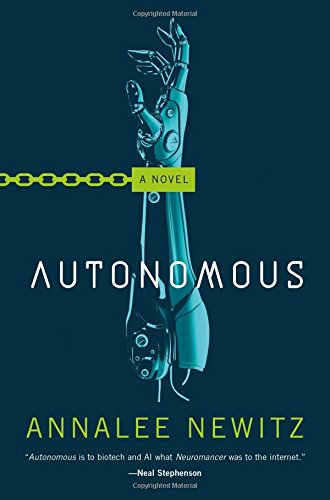
Autonomous is a 2017 science fiction novel by Annalee Newitz. It is Newitz's debut novel and was published by Tor Books on September 19, 2017. Set in a near future Earth, the book describes a world where both humans and intelligent robots can be owned as property. The events of the novel follow Jack, a "drug pirate" who manufactures illegal versions of patented drugs, and Paladin, a combat robot who is owned by the law enforcement agency searching for Jack after one of the drugs she reverse-engineered turns out to have dangerous side effects.
- War Against the Chtorr
series7 books1983
similar bynear futuretensedarkscience fictionwarnorth america+2 more
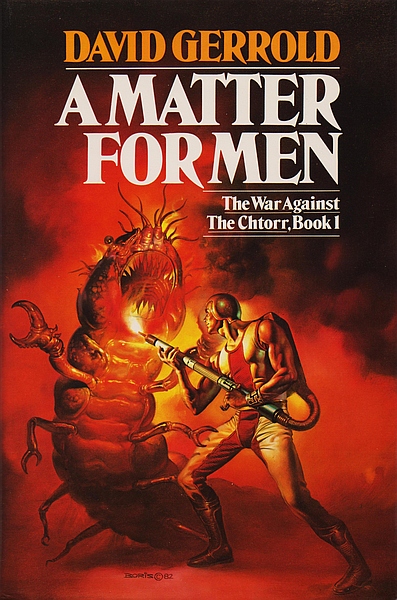
The War Against the Chtorr is a series of science fiction novels by American writer David Gerrold. The Chtorr series was originally planned as a trilogy, but as the story became more intricate, Gerrold realized that three books would not be enough for him to tell the entire story. For a time, he was uncertain how many books there would be in the end but plans on seven. As of 2022, four books have been completed. As of 2017, a fifth and sixth were in the works, 24 years after the publication of the fourth book.
- Final Blackout
L. Ron Hubbardstandalone novel1948
similar bynear futuredarktensescience fictionwarour world
Final Blackout is a dystopic science fiction novel by American writer L. Ron Hubbard. The novel is set in the future and follows a man known as "the Lieutenant" as he restores order to England after a world war. First published in serialized format in 1940 in the science fiction magazine Astounding Science Fiction, Final Blackout was published in book form in 1948 by The Hadley Publishing Co. Author Services Inc. published a hardcover edition of the book in 1988, and in 1989 the Church of Scientology-affiliated organization Bridge Publications said that a film director named Christopher Cain had signed a contract to write and direct a movie version based on the book.
- The Last Centurion
John Ringostandalone novel2008
similar bynear futuredarktensescience fictionwarmilitary science fictionnorth america
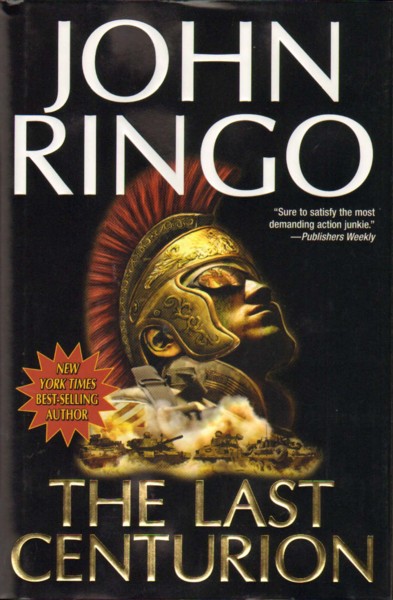
The Last Centurion is a 2008 stand-alone novel by John Ringo. It is written in "blog style" from the point of view of a U.S. Army officer known as "Bandit Six". The novel is set in a post apocalyptic world that has been ravaged by a brief ice age and disease.
- The God Machine
Martin Caidinstandalone novel1968
similar bynear futuretenseour worldartificial intelligencescience fictionnorth america+1 more
The God Machine is a science-fiction novel by American writer Martin Caidin first published in 1968. Set in the near future, the novel tells the story of a top-secret cybernetic technician, Steve Rand, one of the brains behind Project 79, a top-secret US government project dedicated to creating artificial intelligence. Rand survives an attempt on his life before he realizes that Project 79 has gained sentience and is trying to control the minds of humans and take over the world. Assisted by a security agent and a mathematician, Rand sets out to destroy Project 79 before it is too late.
- Defenders
Will McIntoshstandalone novel2014
similar bynear futureour worlddarktensescience fictionwarmilitary science fiction
Summary from copyright page: "When Earth is invaded by telepathic aliens, humanity responds by creating the defenders. They are the perfect warriors - seventeen feet tall,knowing and loving nothing but war, their minds closed to the aliens. The question is, what do you do with millions of genetically engineered warriors once the war is won? A novel of power, alliance, violence, redemption,sacrifice, and yearning for connection, Defenders presents a revolutionary story of invasion, occupation, and resistance."
- The Future
Naomi Aldermanstandalone novel2023
similar bynear futureour worlddarktensescience fiction+1 more
The Future is a 2023 science fiction novel by English writer Naomi Alderman, published by Simon & Schuster. The novel is set in a future dystopia where the world has been altered by environmental crisis and a powerful technocracy.