Loreful
HomeDiscover
Search series, authors…⌘K
Loreful

Reading orders for SF/F series and shared universes — with your place kept in every one.

Explore

UniversesSeriesWorksAuthorsAtlas

Help

FAQAboutSite map

Account & legal

Sign inCreate accountPrivacyTerms

Data

Built on ISFDB, Wikipedia, Wikidata and Open Library. Curated reading orders carry their reasoning on the page; the rest follow publication order. Data sources & licenses

© Loreful · data: ISFDB · CC BY

More like Kill Switch

anchored on:thriller & suspense

but

Mood

The mood the book leaves you in.

  • The reading experience is propelled by journeys, exploration, and physical risk; excitement and forward momentum dominate over dread or introspection.
  • Joy and loss are deliberately mixed; the resolution grants characters something real while taking something else away, leaving warmth and sorrow together.
  • The book demands work from the reader — dense prose, difficult structure, unfamiliar ideas, or morally uncomfortable material — as part of its intended effect.
  • Grim events, cruelty, or despair dominate the atmosphere, and the book does not soften them with comfort or comic relief.
  • The atmosphere is quietly unsettling — wrongness, unease, and the uncanny pervade the book without necessarily escalating into overt horror.
  • The book is built to move the reader; character feeling is foregrounded and major scenes aim at a strong emotional response.
  • Humor is a primary aim and the prose plays for laughs — comic situations, wit, or dialogue produce sustained comedy, not occasional levity.
  • The book insists that things can improve; effort and decency are shown to matter, and the arc bends toward better outcomes even through hardship.
  • The book teaches as it goes — real facts, history, science, or craft are conveyed in enough depth that learning is part of the reading experience.
  • The book is designed to uplift and motivate, presenting perseverance or achievement in a way that invites the reader to aspire or act.
  • The overall register is cheerful and easygoing; stakes are kept gentle and the book avoids dwelling on pain or dread.
  • Withheld information drives the experience; the book sustains enigmas and secrets the reader wants resolved, whatever its genre.
  • The book is contemplative and inward-looking, giving more weight to thought, memory, and meaning than to external events.
  • The book works as comfort reading — low tension, a soothing pace, and an atmosphere the reader can unwind in.
  • Grief, loss, or melancholy set the dominant register, and the book lets sorrow stand rather than resolving it into comfort.
  • Sustained suspense is the point; the book keeps the reader braced for what happens next through danger, pressure, or impending revelation.
  • Playful invention and charm define the register — fanciful conceits, light absurdity, and a narration that delights in its own oddity.

About

What the story runs on.

  • Stories in which extraterrestrial beings are central — as characters, cultures, or the object of the plot.
  • Stories about venturing into space to explore — survey missions, astronauts, and the frontier of the unknown beyond Earth.
  • Stories about minds with paranormal abilities — telepathy, telekinesis, precognition, empathy — and how societies handle those who have them.
  • Stories structured as a quest — a journey undertaken to find, deliver, or destroy something of great import.
  • Stories in which staying alive against nature, catastrophe, or scarcity is the central problem.
  • Stories of lovers kept apart by law, family, faith, or station, where the obstacle to love is the plot.
  • Stories of growing up — a young protagonist crossing from childhood into adult knowledge and responsibility.
  • Stories about who a character truly is — self-discovery, doubled lives, and the search for a self.
  • Stories in which a buried family truth — hidden parentage, crimes, or shames — surfaces and reorders the present.
  • Stories driven by maneuvering for power — factions, conspiracies, and statecraft conducted in shadow.
  • Stories in which war itself is the subject — combat, occupation, and what warfare does to soldiers and civilians.
  • Stories organized around investigating a killing — the case, the clues, and the pursuit of the killer, in any genre's clothing.

Shelf

Where it sits in the library.

    • Fiction built on magic or other supernatural elements that have no scientific explanation.
    • Secondary-world fantasy at large scale, where the fate of nations or the world turns on the protagonists' struggle.
    • Fantasy set in a recognizably modern city or contemporary world where the supernatural intrudes on everyday life.
    • Fantasy that blends in horror's atmosphere and imagery, keeping a fantastical frame around grim or frightening material.
    • Action-driven fantasy following warriors or rogues with personal stakes against sorcerous threats, rather than world-spanning conflicts.
    • Fantasy set in a real historical period or a close analogue of one, with magic woven into the era.
    • Fantasy in which protagonists cross from the ordinary world into another world through a portal or similar passage.
    • Fiction that retells or reworks a traditional fairy tale in a new form or setting.
    • Fantasy drawing directly on myths, legends, and folklore, retelling them or building on their figures and logic.
    • Fantasy of ghosts, vampires, shapeshifters, psychics, and similar phenomena, usually set in an otherwise ordinary world.
    • Fiction mixing science-fictional trappings with overtly magical or impossible elements in one setting.
    • Low-stakes fantasy emphasizing comfort, community, and everyday pleasures over conflict and peril.
    • Speculative fiction of pervasive moral ambiguity, violence, and cynicism that rejects heroic conventions — fantasy and SF alike.
      • Fiction that extrapolates from science and technology — future societies, space travel, or speculative inventions — within at least nominally natural laws.
      • Science fiction of interstellar scope — starships, galactic polities, and adventure across star systems.
      • Science fiction committed to scientific rigor, where technical plausibility constrains the story.
      • Science fiction centered on armed forces and warfare, told largely from a military point of view.
      • Science fiction of networked, corporate-dominated near futures, pairing high technology with social decay.
      • Science fiction styled on nineteenth-century steam-powered technology, often in a Victorian or pseudo-Victorian setting.
      • Fiction depicting an oppressive or catastrophic society, presented as a warning.
      • Fiction set after civilization's collapse, following survivors in the ruins of the old world.
      • Fiction in which characters move between past and future, and the mechanics or consequences of that travel drive the plot.
      • Fiction exploring a world where a historical event went differently and history diverged from ours.
      • Science fiction about humanity's first encounter and communication with an alien intelligence.
      • Science fiction in which extraterrestrial forces attack or occupy Earth and humanity resists.
      • Fiction whose primary aim is to frighten or unsettle the reader through dread, menace, or the monstrous.
      • Horror of vast, indifferent, incomprehensible entities before which humanity is insignificant, in the Lovecraft tradition.
      • Horror of decaying houses, buried family secrets, and oppressive atmosphere in the Gothic literary tradition.
      • Horror centered on hauntings and the returning dead.
      • Horror located in the mind — paranoia, obsession, and unreliable perception rather than external monsters.
      • Horror built around the reanimated dead and survival amid their outbreaks.
      • Horror defined by explicit, transgressive gore that refuses to cut away from violence.
      • Speculative fiction of the strange and uncanny that resists both natural explanation and standard genre categories.
      • Fiction organized around solving a crime or puzzle, typically following an investigator toward the identification of a culprit.
      • A puzzle-first mystery that lays out clues so the culprit's identity can be deduced before the reveal.
      • Crime fiction of moral ambiguity, fatalism, and hard-edged style, set among the corrupt and the doomed.
      • A mystery following the realistic routines of police work — forensics, interviews, and case-building.
      • A gentle mystery with an amateur sleuth, a small community, and violence kept off the page.
      • A mystery set in a past era, where the investigation works within that period's methods and society.
      • Fast-paced fiction driven by imminent danger, pursuit, or high-stakes conspiracy, built to sustain tension.
      • A thriller of espionage — agents, tradecraft, and intelligence services in conflict.
      • A thriller centered on lawyers and the courtroom, where litigation carries the suspense.
      • A thriller driven by detailed contemporary or near-future technology, often military or scientific.
      • A thriller whose tension comes from mental states and manipulation between characters rather than external action.
      • Fiction whose central plot is a romantic relationship and its development toward an emotionally satisfying resolution.
      • Romance in which one or both partners are supernatural beings, blending fantasy elements into the love story.
      • A fantasy-romance hybrid in which the romantic arc and the fantasy plot carry equal weight.
      • Romance set in a past era, with courtship shaped by the period's society and manners.
      • Romance set in the present day, without supernatural or historical elements.
      • Fiction set in a real past period, where the historical setting materially shapes characters and events.
        • General and literary fiction emphasizing prose style, character interiority, or formal ambition over genre plot conventions.
        • Fiction in a realistic world where magical events occur and are treated as ordinary, in the tradition of Latin American literature.
        • Fiction that ridicules people, institutions, or society in order to criticize them.
        • Fiction of dreamlike, irrational imagery and logic that breaks from realistic representation.
        • Fiction that plays with narrative convention through metafiction, fragmentation, and self-reference.
        • Fiction propelled by journeys, exploration, and physical peril, where action and survival carry the plot.
        • Adventure fiction of ships and seafaring — naval engagements, voyages, and life at sea.
        • Fiction of the American frontier West — gunmen, ranchers, and lawmen, typically in the late nineteenth century.
        • Fiction centered on soldiers, campaigns, and the experience of warfare, historical or imagined.
          • Fiction written primarily to amuse, using comedic situations, wit, or parody as its organizing principle.
            • Multi-generational fiction following a family or dynasty across decades, with inheritance and kinship as the through-line.
              • Fiction whose world runs on explicit game mechanics — levels, stats, and skills that characters can see and exploit.
                • Fiction about costumed or superpowered heroes and their conflicts with comparable villains.

                Practical

                How long a commitment, whether it stands alone, and whether it has finished.

                Tap a chip to ask for it · tap again to rule it out · once more to clear. Numbers show what would be left.

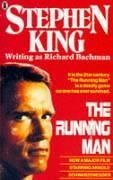
                • Cover of The Running Man
                  The Running Man

                  Stephen King · standalone novel · 1982

                  similar bytensethriller & suspensenorth americanear futurescience fiction

                  The Running Man is a dystopian thriller novel by American writer Stephen King, first published under the pseudonym Richard Bachman in 1982 as a paperback original. It was collected in 1985 in the omnibus The Bachman Books. The novel is set in a dystopian United States during the year 2025, in which the nation's economy is in ruins and world violence is rising. The story follows protagonist Ben Richards as he participates in the reality show The Running Man, in which contestants win money by evading a team of hitmen sent to kill them.

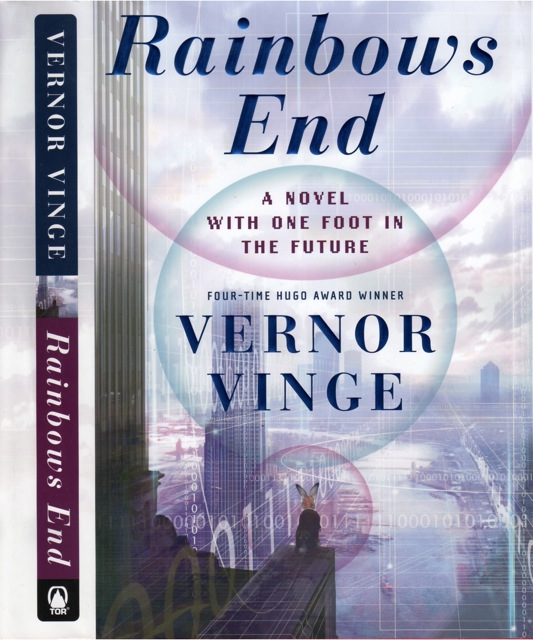
                • Cover of Rainbows End
                  Rainbows End

                  Vernor Vinge · standalone novel · 2006

                  similar bytensethriller & suspensenorth americanear futurescience fiction

                  A science-fiction thriller set in a place and time as exciting and strange as any far-future world: San Diego, California, 2025. Robert Gu is a recovering Alzheimer’s patient. The world that he remembers was much as we know it today. Now, as he regains his faculties through a cure developed during the years of his near-fatal decline, he discovers that the world has changed and so has his place in it. He was a world-renowned poet. Now he is seventy-five years old, though by a medical miracle he looks much younger, and he’s starting over, for the first time unsure of his poetic gifts. Living with his son’s family, he has no choice but to learn how to cope with a new information age in which the virtual and the real are a seamless continuum, layers of reality built on digital views seen by a single person or millions, depending on your choice. But the consensus reality of the digital world is available only if, like his thirteen-year-old granddaughter Miri, you know how to wear your wireless access—through nodes designed into smart clothes—and to see the digital context—through smart contact lenses. With knowledge comes risk. When Robert begins to re-train at Fairmont High, learning with other older people what is second nature to Miri and other teens at school, he unwittingly becomes part of a wide-ranging conspiracy to use technology as a tool for world domination. In a world where every computer chip has Homeland Security built-in, this conspiracy is something that baffles even the most sophisticated security analysts, including Robert’s son and daughter-in law, two top people in the U.S. military. And even Miri, in her attempts to protect her grandfather, may be entangled in the plot. As Robert becomes more deeply involved in conspiracy, he is shocked to learn of a radical change planned for the UCSD Geisel Library; all the books there, and worldwide, would cease to physically exist. He and his fellow re-trainees feel compelled to join protests against the change. With forces around the world converging on San Diego, both the conspiracy and the protest climax in a spectacular moment as unique and satisfying as it is unexpected.

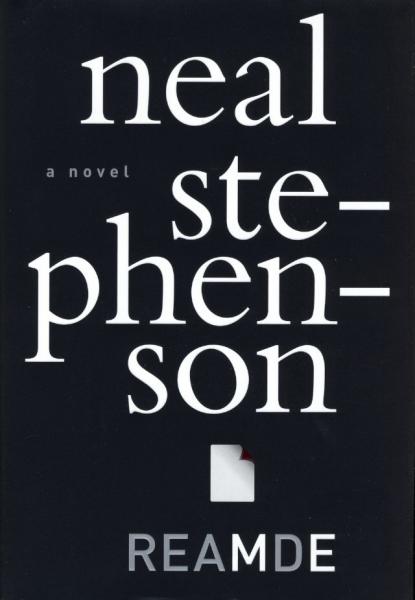
                • Cover of Richard Forthrast
                  Richard Forthrast

                  series · 2 books · 2011

                  similar bynorth americascience fiction+3 more

                  Neal Stephenson's Richard 'Dodge' Forthrast novels open with Reamde, a globe-spanning thriller that starts when ransomware inside an MMORPG economy pulls Richard's extended family into a real-world hostage crisis involving hackers, jihadists and Russian mobsters. The sequel Fall; or, Dodge in Hell shifts registers entirely, following Richard's digitally preserved mind after death into an afterlife simulation built from his scanned brain. The two books share a protagonist and family but differ sharply in genre and scale.

                • Cover of H. G. Wells' War of the Worlds
                  H. G. Wells' War of the Worlds

                  universe · 65 books · 1898

                  Start hereThe War of the Worlds · Start here

                  similar byscience fiction+1 more

                  No one would have believed, in the closing years of the nineteenth century, that human affairs were being watched keenly and closely from the timeless worlds of space. And then the cylinders fell. H. G. Wells' War of the Worlds opens in the quiet of the Surrey commons, where a falling star proves to be the first Martian craft — and from the pit rise the towering tripods, the Heat-Ray, the choking Black Smoke and the creeping red weed, wielded by minds that regard mankind much as we regard the creatures we boil for supper. This is invasion rendered as natural disaster: cold, methodical, and vast beyond argument. Wells' 1898 novel is the seed; everything else grows from that Martian soil. The catalogue gathers direct sequels and continuations alongside a wide field of other hands. In War of the Worlds: Global Dispatches the invasion is retold across the whole planet through the eyes of Twain, Verne, Tolstoy, Lowell and Kipling; in the Manly Wade and Wade Wellman crossover, Sherlock Holmes, Watson and Professor Challenger take the field against the machines; and Scott Washburn's Great Martian War stretches the fighting into a decades-long alternate history of steam, artillery and grinding attrition. It is a loose shared world — no single decreed sequence, many voices answering one calamity. What sets this world apart is its refusal of heroics: the invaders fall not to generals but to the smallest things of Earth, humbling and indifferent. Begin, always, with Wells' original novel — it is short, and it is the ground every later book stands upon. From there follow your appetite: Global Dispatches for the panorama, the Holmes campaign for adventure, Washburn for the long war.

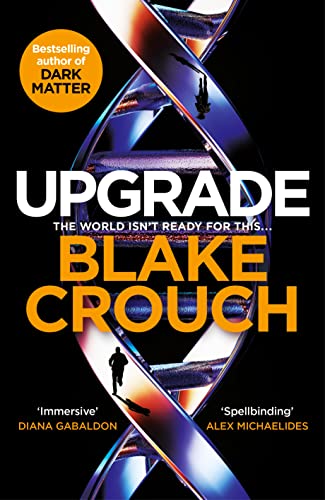
                • Cover of Upgrade
                  Upgrade

                  Blake Crouch · standalone novel · 2022

                  similar bytensethriller & suspensenorth americanear futurescience fiction

                  Upgrade is a 2022 novel by Blake Crouch. It is his tenth stand-alone novel, published three years after Summer Frost (2019). The novel explores the ethical and existential ramifications of genetic engineering, set in a near-future world where humanity grapples with the consequences of advanced human genetic enhancement.

                • Cover of Quantum Night
                  Quantum Night

                  Robert J. Sawyer · standalone novel · 2016

                  similar bytensethriller & suspensenorth americanear futurescience fiction

                  Quantum Night is a 2016 science-fiction thriller novel written by Canadian novelist Robert J. Sawyer. Set in 2020, the book touches on themes of quantum physics, psychology, current politics and ethics.

                • Cover of Empire (Orson Scott Card)
                  Empire (Orson Scott Card)

                  series · 2 books · 2006

                  similar bytensethriller & suspensenorth americanear futurescience fiction

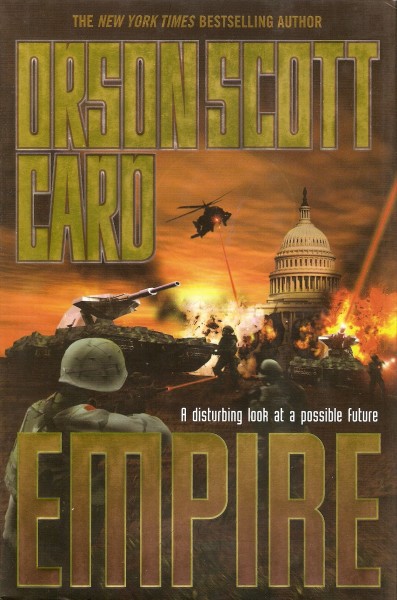
                  The Empire Duet is a two-book series written by Orson Scott Card under license from Chair Entertainment, beginning with Empire in 2006. The sequel Hidden Empire was released December 22, 2009.

                • Cover of Cas Russell / Russell's Attic
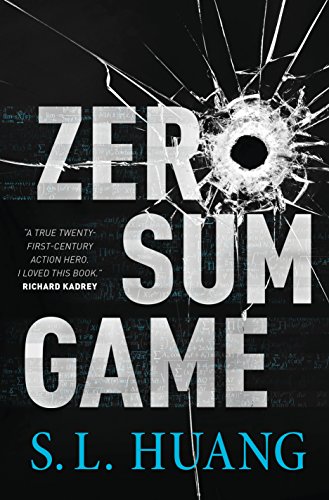
                  Cas Russell / Russell's Attic

                  series · 5 books · 2014

                  similar bytensethriller & suspensenear futurescience fiction+1 more

                • Cover of The Word Exchange
                  The Word Exchange

                  Alena Graedon · standalone novel · 2014

                  similar bytensethriller & suspensenorth americanear futurescience fiction

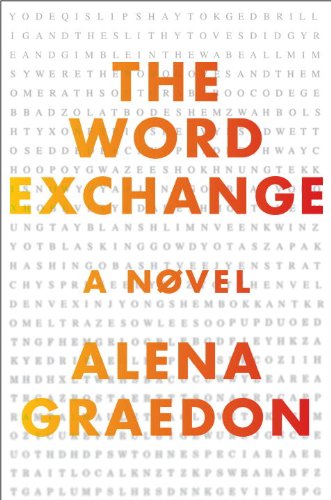
                  The Word Exchange is a science fiction novel by Alena Graedon, published in 2014. It is a dystopian thriller set in the not very distant future when the printed word has nearly vanished, technology dominates, and language has become a commodity. An online "Word Exchange" has taken the effort out of looking up words, a mere convenience until real dictionaries are no longer available. Then it becomes possible to corner the market for words. The novel has been translated into eight different languages.

                • Cover of The Fourth Realm
                  The Fourth Realm

                  series · 3 books · 2005

                  similar bytensethriller & suspensescience fiction+2 more

                  The Fourth Realm Trilogy refers to the trilogy of books written by pseudonymous author John Twelve Hawks and published between 2004 and 2009. The trilogy has been translated into 25 languages and has sold more than 1.5 million books.

                • Cover of Library of America P. K. Dick Collection
                  Library of America P. K. Dick Collection

                  series · 9 books · 1962

                  completed

                  similar bynear futurescience fiction+1 more

                • Cover of Firestarter
                  Firestarter

                  Stephen King · standalone novel · 1980

                  similar bytensethriller & suspensenorth americascience fiction

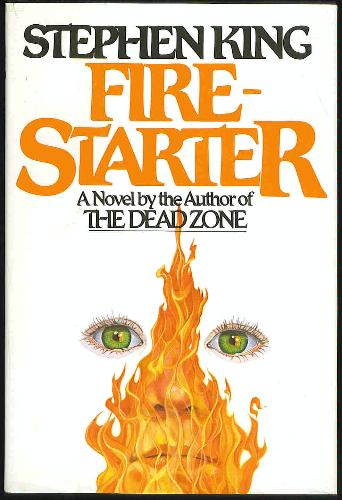
                  WorldCat: Innocence and beauty ignite with evil and terror... First, a man and a woman are subjects of a top-secret government experiment designed to produce extraordinary psychic powers. Then, they are married and have a child. A daughter. Early on the daughter shows signs of a wild and horrifying force growing within her. Desperately, her parents try to train her to keep that force in check, to 'act normal'. Now the government wants its brainchild back for its own insane ends.

                • Cover of The Oracle Year
                  The Oracle Year

                  Charles Soule · standalone novel · 2018

                  similar bytensethriller & suspensenorth americanear futurescience fiction

                  Awakening from a dream with more than one hundred predictions about the future in his head, an unassuming Manhattan bassist becomes one of the world's most powerful men and hides his identity behind an online persona that is targeted by greedy corporations and dangerous enemies.

                • Cover of Sprawl Trilogy
                  Sprawl Trilogy

                  series · 10 books · 1981

                  similar bytensenear futurescience fiction

                  The Sprawl Trilogy is William Gibson's foundational cyberpunk sequence: Neuromancer (1984), in which hacker Case is drawn into a high-stakes heist alongside an artificial intelligence and a damaged ex-soldier, followed by Count Zero (1986) and Mona Lisa Overdrive (1988), which widen the same near-future world of corporate power and networked cyberspace to new characters. Johnny Mnemonic, an early short story set in the same fictional milieu, predates the novels and introduces the courier Molly Millions before her role in the trilogy. Together these works established much of cyberpunk's visual and thematic vocabulary.

                • Cover of Restoration Series
                  Restoration Series

                  series · 4 books · 2005

                  similar bytensethriller & suspensenorth americanear future+1 more

                • Cover of The Caretaker Trilogy
                  The Caretaker Trilogy

                  series · 3 books · 2006

                  similar bytensethriller & suspensenear futurescience fiction

                  The Caretaker Trilogy is a series of science fiction thrillers with an ecological theme, written for young adults by David Klass. The first book in the series, Firestorm (2006), was the first book ever endorsed by Greenpeace and was praised by critics for its combination of entertainment value and environmental message, garnering an American Library Association (ALA) Best Book citation, a starred review from Publishers Weekly, and a favorable review by the New York Times Book Review. The story focuses on Jack Danielson, a teenager sent back from the future to save the world's oceans. Whirlwind, the second book in the Caretaker Trilogy, tells the story of Jack's efforts to save the Amazon rainforest; published in March 2008 by Farrar, Straus and Giroux. The third book in the trilogy is Timelock, published in 2009.

                • Cover of At the End of Everything
                  At the End of Everything

                  Marieke Nijkamp · standalone novel · 2022

                  similar bytensethriller & suspensenorth americanear futurescience fiction

                  The Hope Juvenile Treatment Center is ironically named. No one has hope for the delinquent teenagers who have been exiled there; the world barely acknowledges that they exist. Then the guards at Hope start acting strange. And one day…they don't show up. But when the teens band together to make a break from the facility, they encounter soldiers outside the gates. There's a rapidly spreading infectious disease outside, and no one can leave their houses or travel without a permit. Which means that they're stuck at Hope. And this time, no one is watching out for them at all. As supplies quickly dwindle and a deadly plague tears through their ranks, the group has to decide whom among them they can trust and figure out how they can survive in a world that has never wanted them in the first place.

                • Cover of Forever War
                  Forever War

                  series · 10 books · 1972

                  similar byscience fiction+1 more

                  Joe Haldeman's The Forever War (1974) follows a soldier conscripted into a centuries-long interstellar war against the alien Taurans, using relativistic space travel so that months spent in transit correspond to years or decades passing back on Earth. Haldeman later returned to the same conflict in Forever Peace (1997), a thematically connected but separate story, and Forever Free (1999), a direct sequel set years after the original war's end. The first novel won the Hugo, Nebula, and Locus awards and is considered a foundational work of military science fiction.

                • QL
                  Quantum Logic

                  series · 7 books · 1990

                  completed

                  similar bytensenear futurescience fiction+1 more

                • Cover of The Peri Reed Chronicles
                  The Peri Reed Chronicles

                  series · 4 books · 2015

                  similar bythriller & suspensenear futurescience fiction+2 more

                • Cover of Blade Runner Universe
                  Blade Runner Universe

                  series · 6 books · 1968

                  similar bynear futurescience fiction+1 more

                  Philip K. Dick's 1968 novel Do Androids Dream of Electric Sheep? follows bounty hunter Rick Deckard as he tracks escaped androids through an irradiated, near-abandoned San Francisco, using the hunt to probe questions of empathy and what separates human from machine. The novel became the basis for Ridley Scott's 1982 film Blade Runner, and Marvel Comics later published an illustrated adaptation of that film. Together the two trace the story's path from prose original to screen and comic-page adaptation.

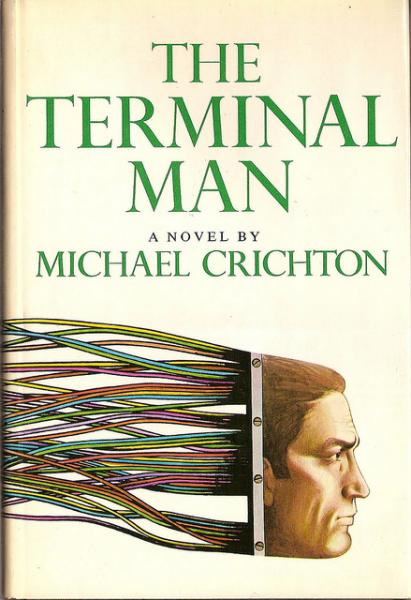
                • Cover of The Terminal Man
                  The Terminal Man

                  Michael Crichton · standalone novel · 1972

                  similar bytensethriller & suspensenorth americascience fiction

                  The Terminal Man is a novel by American writer Michael Crichton. It is his second novel under his own name, his 12th overall, and is about the dangers of mind control. It was published in April 1972 and also serialized in Playboy in March, April, and May 1972. In 1974, it was made into a film of the same name.

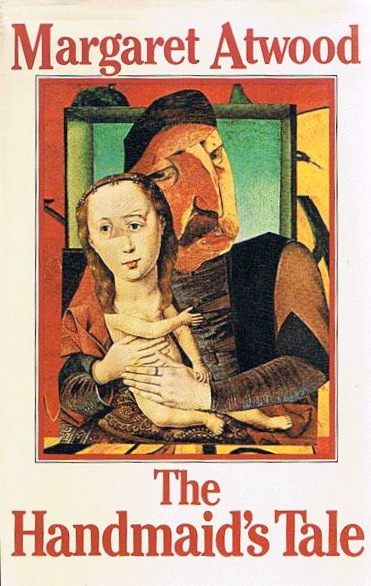
                • Cover of The Handmaid's Tale
                  The Handmaid's Tale

                  series · 3 books · 1985

                  similar bytensenorth americanear futurescience fiction

                  The Handmaid's Tale is Margaret Atwood's 1985 novel set in Gilead, a totalitarian theocracy that has overthrown the United States and forces fertile women into reproductive servitude as Handmaids; it is narrated by one such woman, Offred. Atwood returned to the world in her 2019 sequel The Testaments, set fifteen years later and narrated by three women, including the regime's Aunt Lydia. Together the two novels move from Gilead's grip on power toward the first cracks in it.

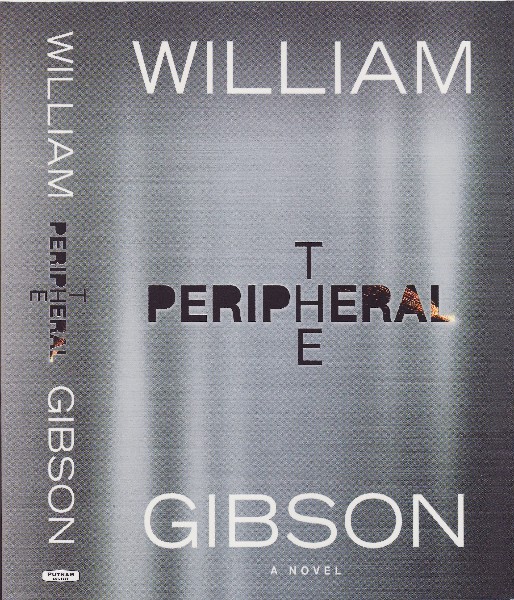
                • Cover of The Jackpot Trilogy
                  The Jackpot Trilogy

                  series · 2 books · 2014

                  similar bytensenorth americanear futurescience fiction+1 more

                  William Gibson's Jackpot sequence begins with The Peripheral (2014), a science-fiction thriller cross-cutting between a near-future American town and a devastated London seventy years on. Gibson continued the same world in Agency (2020), set slightly later in the near-future timeline.