More like Kinning
anchored on:19th centuryalternate historyafrica
but
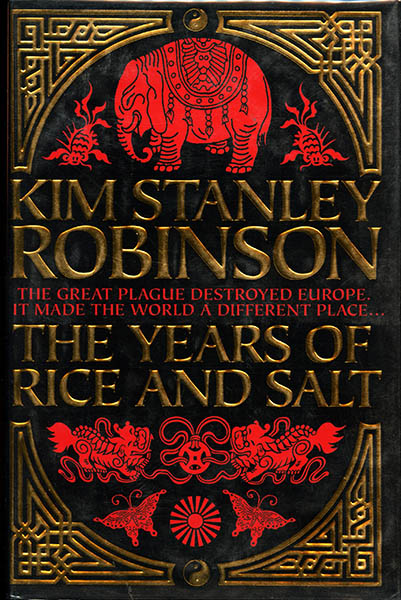
- The Years of Rice and Salt
Kim Stanley Robinsonstandalone novel2002
similar byalternate historyreflectivecolonialismchallengingscience fiction+1 more
What if the Black Death had killed nearly everyone in Europe instead of a third of it? Kim Stanley Robinson opens on that premise with a Mongol scout named Bold, who finds a Hungarian city emptied by plague and only narrowly escapes execution meant to contain the contagion; sold into slavery, he ends up serving aboard a Chinese treasure fleet alongside a young African companion. From there the novel follows a recurring cast of souls, reincarnated across centuries and identifiable book to book by the first letter of their names, through an alternate history in which Islamic and Chinese civilizations, not a devastated Europe, shape the world's future.
- Hainish
series33 books1964
completed
similar byreflectivescience fiction+2 more
The Hainish Cycle consists of a number of science fiction novels and stories by Ursula K. Le Guin. The cycle is set in a future history that features civilizations of human beings on planets orbiting a number of nearby stars, including Terra ("Earth"); these humans are contacting each other for the first time and establishing diplomatic relations, as well as setting up a confederacy under the guidance of the oldest of the human worlds, the peaceful planet Hain. In this history, human beings did not evolve on Earth, but they were instead the result of interstellar colonies planted by Hain in the distant past, after which interstellar travel ceased for an extended period. Some of the human races have new genetic traits, a result of ancient Hainish experiments in genetic engineering; this includes people who can dream while awake, and a world of hermaphroditic people who only enter active sexuality once per month, not knowing which sex will manifest in them. In keeping with Le Guin's narrative approach, she uses varied social and environmental settings to explore the anthropological and sociological outcomes of human evolution in those environments. The author often discounted the characterization of a so-called "Hainish Cycle".
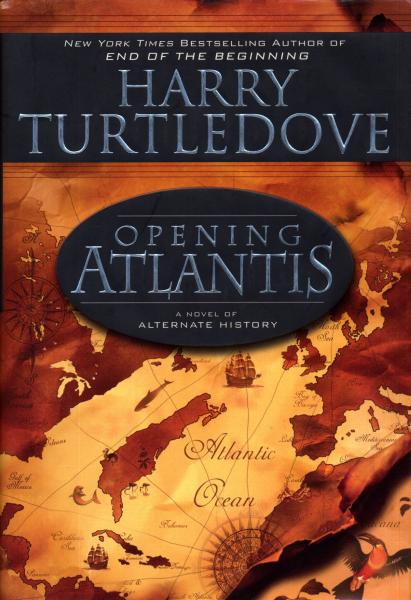
- Lost Continent of Atlantis
series5 books2005
similar byalternate history19th century+3 more
Atlantis is an alternate history series written by Harry Turtledove. The point of divergence occurs around 85 million years ago when the eastern portion of the North American continent splits off from the rest of the continent and forms Atlantis, a separate continent farther east in the Atlantic Ocean.
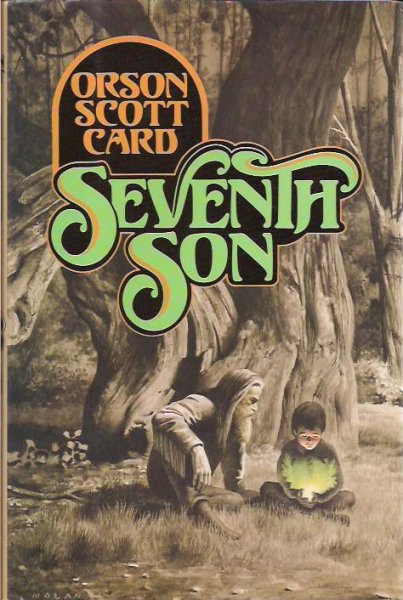
- The Alvin Maker Saga
series15 books1986
similar byalternate history19th century+1 more
The Tales of Alvin Maker is a series of seven alternate history fantasy novels written by American novelist Orson Scott Card, published from 1987 to 2026. They explore the experiences of a young man, Alvin Miller, who realizes he has incredible powers for creating and shaping things around him.
- Bring the Jubilee
Ward Moorestandalone novel1953
similar byalternate historyreflective19th centuryscience fiction
From the flaps of the Farrar, Straus and Young first edition: ""Although I am writing this in the year 1877, I was not born until 1921." So Hodge Backmaker begins his story of the harsh and curious world he lived in, a world in which the South won the Civil War and the all-powerful Confederacy dominated the poor and backward North; a North that had neither a transcontinental railroad, and where television was undreamed of. Like most Northerners, Hodge was poor - but he had ambition. A printer's handyman in 1938, he had since become an eminent historian. Hodge's special interest was the American past, when the States had been united and had seemed to be on the brink of prosperity and technical progress. And then he was offered an opportunity no historian could resist - he could go back in time. Hodge chsoe to return to a certain field near Gettysburg on a day in July, 1863... Bring the Jubilee is a novel of curious events, of adventures and reflection, of passions and comment. It at time Hodge's world, its horse-carriages and gas-lights, minibles and tinugraphs and the Great Emperors' War of 1914 faintly resembles our own, it is perhaps, because that world might well become a reality: on the battlefield of Gettysburg there is a small hill called Little Round Top. One July morning in 1863 the Confederate Army made the tactical error of not occupying this hill. It was a mistake that cost them victory in a battle which - in the view of many historians - was the turning point of the Civil War."
- Roma Eterna
series11 books1989
similar byalternate history+3 more
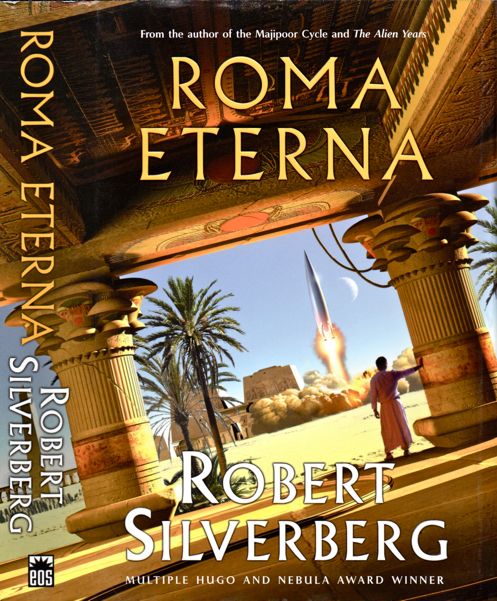
Robert Silverberg's Roma Eterna imagines an alternate history in which the Roman Empire never fell and endures into the present day, tracing its long, uneven survival through a sequence of pivotal moments across two millennia. Rather than one continuous plot, the book is a fix-up of ten linked stories, most first published in Asimov's Science Fiction over a fourteen-year span, each set in a different era of this unbroken Rome. It reads as the chronicle of a civilization rather than a story following a single cast of characters.
- Ada or Ardor: A Family Chronicle
Vladimir Nabokovstandalone novel1969
similar byalternate history19th centurychallengingscience fiction+1 more
An alternate-world novel by the celebrated author of "Lolita" in which North America is a 19th- and early 20th-century province of Russia still ruled by Tsars.
- A Different Flesh
series8 books1985
similar byalternate historyscience fiction+2 more
Harry Turtledove's A Different Flesh is a collection of linked alternate-history stories imagining a North America where Homo erectus survived alongside Ice Age megafauna into the modern era, taking the ecological and historical place occupied by Native American civilizations in our own timeline. The linked stories follow European contact, exploitation, and study of these surviving hominids across centuries of altered American history, from early colonization through more recent settings. It's anthropological alternate history more concerned with what contact does to the newly "discovered" species than with conventional adventure plotting.
- Pavane
series9 books1966
completed
similar byalternate historyreflective+1 more
Keith Roberts' Pavane (1968) is a single fix-up novel built from linked stories rather than a multi-book series: in an alternate 20th century where Elizabeth I was assassinated and Spain conquered England, the Catholic Church suppresses Protestantism and keeps technology frozen at a steam-powered, feudal level. The interconnected stories follow different Dorset families across generations as long-suppressed dissent against Church rule begins to stir.
- The Difference Engine
William Gibson & Bruce Sterlingstandalone novel1990
similar byalternate history19th centuryscience fiction+1 more
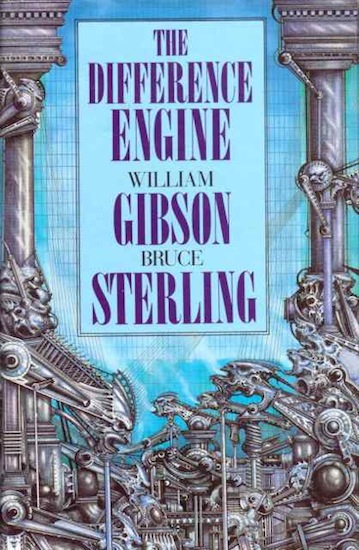
The computer age arrives a century early with Babbage's perfection of his 'analytical engine'. The industrial revolution is accelerated by the development of steam-driven cybernetic 'Engines'. An advanced Great Britain prepares to better the world's lot. An example of the 'steampunk' sub-genre of the cyberpunk movement.
- Temeraire
series48 books2006
similar byalternate history19th century
Temeraire is a series of nine alternate history fantasy novels written by American author Naomi Novik. The novels follow the adventures of Captain William Laurence and his dragon, the eponymous Temeraire, and reimagine events of the Napoleonic Wars with "an air force of dragons, manned by crews of aviators". His Majesty's Dragon, the first entry in the series, won the Compton Crook Award in 2007 and was nominated for the Hugo Award for Best Novel the same year. Temeraire: In the Service of the King, an omnibus volume collecting the first three novels, won the Locus Award for Best First Novel in 2007. Temeraire was nominated for the Hugo Award for Best Series in 2017.
- Bilalistan
series2 books2002
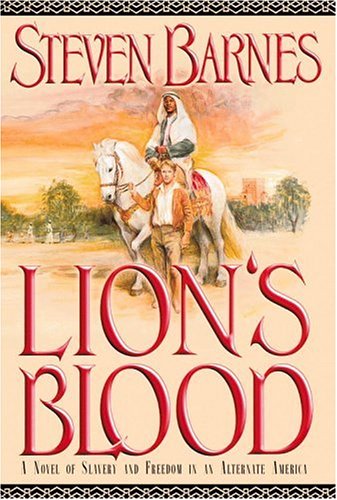
similar byalternate history19th centurycolonialismslaveryscience fiction+1 more
- Fire on the Mountain
Terry Bissonstandalone novel1988
similar byalternate history19th centuryrebellion and revolutionslaveryscience fiction
Alternate history, where John Brown's raid on Harper's Ferry succeeds and sparks a slave rebellion in 1859.
- Jess
H. Rider Haggardstandalone novel1887
similar by19th centuryafricacolonialism+1 more
Jess is a novel by British writer H. Rider Haggard, set in South Africa.
- A Thousand Perfect Things
Kay Kenyonstandalone novel2013
similar byalternate history19th centurycolonialism+1 more
A novel based on an alternate 19th century consisting of two warring continents on an alternate earth : the scientific Anglica (England) and magical Bharata (India). A young Victorian woman and aspiring botanist journeys to Bharata where she faces a choice between two suitors and two irreconcilable realms.
- Pastwatch
series2 books1996
similar byalternate historyreflectivecolonialismscience fiction
Pastwatch: The Redemption of Christopher Columbus (1996) is a science fiction novel by American writer Orson Scott Card, the first in a proposed Pastwatch series. The book's focus is the life and activities of explorer Christopher Columbus. Much of the action deals with a group of scientists from the future who travel back to the 15th century in order to change the pattern of European contact with the Americas. These alternate with chapters describing Columbus' career and his efforts to obtain backing to his project of travelling across the ocean - much of which can be considered as historical fiction.
- If the South Had Won the Civil War
MacKinlay Kantorstandalone novel1961
similar byalternate historyreflective19th century
If the South Had Won the Civil War is a 1961 alternate history book by MacKinlay Kantor, a writer who also wrote several novels about the American Civil War. It was originally published in the November 22, 1960, issue of Look magazine. It generated such a response that it was published in 1961 as a book.
- Climb the Wind: A Novel of Another America
Pamela Sargentstandalone novel1998
similar byalternate history+1 more
- That Inevitable Victorian Thing
E. K. Johnstonstandalone novel2017
similar byalternate history19th century+1 more
- Draka (S. M. Stirling)
series6 books1988
similar byalternate historyslaveryscience fiction+1 more
The Domination of the Draka is a dystopian science fiction alternate history series by American author S. M. Stirling.
- The Land of Hope and Glory
series3 books2011
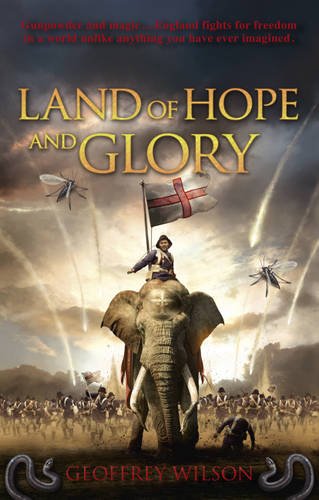
similar byalternate history19th centuryrebellion and revolutioncolonialism
- Allan Quatermain
series25 books1885
similar byafrica19th century
Allan Quatermain is the protagonist of H. Rider Haggard's 1885 novel King Solomon's Mines, its one sequel Allan Quatermain (1887), twelve prequel novels and four prequel short stories, totalling eighteen works. An English professional big game hunter and adventurer, in film and television he has been portrayed by Richard Chamberlain, Sean Connery, Cedric Hardwicke, Patrick Swayze and Stewart Granger among others.