More like Kinsman
anchored on:science fictionspacenear futurespace explorationredemptiontense
but
- Have Space Suit - Will Travel
Robert A. Heinleinstandalone novel1958
similar byscience fictiontensenear futurespacespace exploration
From the back cover of the Del Rey 9th printing: "Skyjacked - Everything happened at once. One minute Kip Russell was walking about in his own backyard, testing out an old space suit and dreaming about going to the moon - and the next he was out cold and the captive of an insidious space pirate. The whole thing seemed like a very bad dream until he discovered he wasn't the only prisoner on board. Then the reality of the situation became inescapable. He - along with the daughter of a world-renowned scientist and a beautiful creature from an alien planet - had been skyjacked by a monstrous extraterrestrial and they were on their way to the Moon... a journey toward a fate worse than death!"
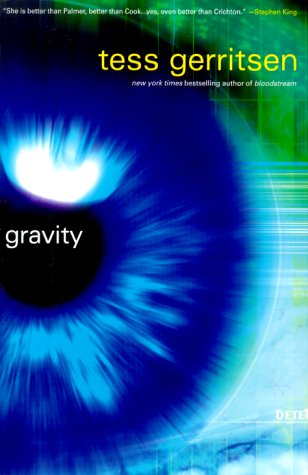
- Gravity
Tess Gerritsenstandalone novel1999
similar byscience fictiontensenear futurespacespace explorationdark
Medical thriller set aboard the International Space Station where astronauts are dying one by one from a mysterious disease. Dr Emma Watson is a research physician on a mission to study living organisms in space. But the mission aboard the space station turns into a nightmare.
- Starplex
Robert J. Sawyerstandalone novel1996
similar byscience fictiontensespacenear futurespace exploration+1 more
The only novel of its year to be nominated for both the Hugo and Nebula Awards. Starplex won Canada's Aurora Award for best novel of the year. For nearly twenty years Earth's space exploration had exploded outward, thanks to a series of mysterious, artificial wormholes. No one knows who created these interstellar passages, yet they have brought the far reaches of space immediately close. For Starplex Director Keith Lansing, too close. Discovery is superseding understanding. And when an unknown vessel — with no windows, no seams, and no visible means of propulsion — arrives through a new wormhole, an already battle-scarred Starplex could be the starting point of a new interstellar war . . . ROBERT J. SAWYER has won the Hugo, Nebula, John W. Campbell Memorial, Seiun, and Aurora Awards, all for best science fiction novel of the year. His novels include Hominids, Rollback, Wake, and FlashForward (basis for the TV series).
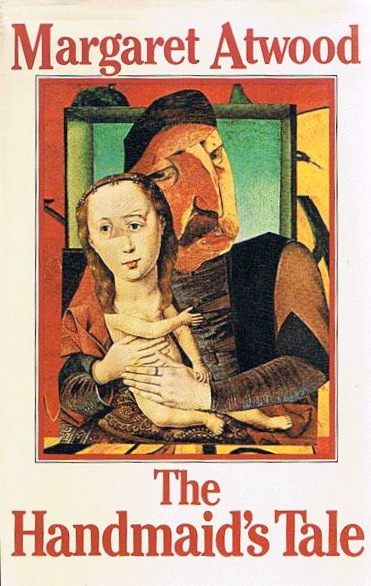
- The Handmaid's Tale
series3 books1985
similar byscience fictiontensenear futuredark+1 more
The Handmaid's Tale is Margaret Atwood's 1985 novel set in Gilead, a totalitarian theocracy that has overthrown the United States and forces fertile women into reproductive servitude as Handmaids; it is narrated by one such woman, Offred. Atwood returned to the world in her 2019 sequel The Testaments, set fifteen years later and narrated by three women, including the regime's Aunt Lydia. Together the two novels move from Gilead's grip on power toward the first cracks in it.
- Blade Runner Universe
series6 books1968
similar byscience fictionnear futuredark+2 more
Philip K. Dick's 1968 novel Do Androids Dream of Electric Sheep? follows bounty hunter Rick Deckard as he tracks escaped androids through an irradiated, near-abandoned San Francisco, using the hunt to probe questions of empathy and what separates human from machine. The novel became the basis for Ridley Scott's 1982 film Blade Runner, and Marvel Comics later published an illustrated adaptation of that film. Together the two trace the story's path from prose original to screen and comic-page adaptation.
- The Martian
series2 books2012
similar byscience fictiontensenear futurespace exploration
Andy Weir's novel The Martian, first self-published in 2011 before a commercial re-release, follows astronaut Mark Watney after he is stranded alone on Mars when his crew presumes him dead and departs. Using scientific improvisation and dark humor, Watney works to keep himself alive long enough for a rescue to reach him. It is a single, self-contained survival story.
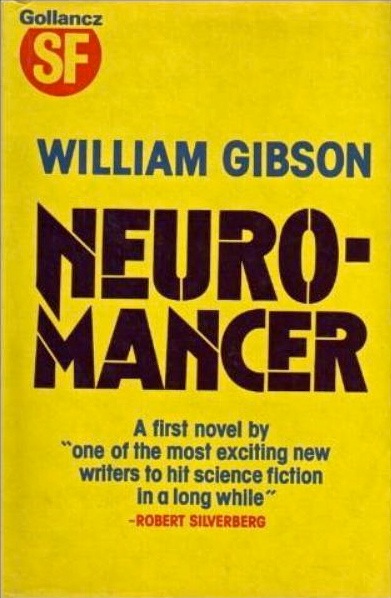
- Sprawl Trilogy
series10 books1981
similar byscience fictionnear futuretensedark
The Sprawl Trilogy is William Gibson's foundational cyberpunk sequence: Neuromancer (1984), in which hacker Case is drawn into a high-stakes heist alongside an artificial intelligence and a damaged ex-soldier, followed by Count Zero (1986) and Mona Lisa Overdrive (1988), which widen the same near-future world of corporate power and networked cyberspace to new characters. Johnny Mnemonic, an early short story set in the same fictional milieu, predates the novels and introduces the courier Molly Millions before her role in the trilogy. Together these works established much of cyberpunk's visual and thematic vocabulary.
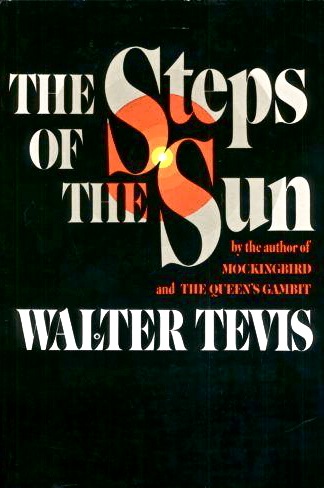
- The Steps of the Sun
Walter Tevisstandalone novel1983
similar byscience fictiontensenear futurespacespace explorationpolitical intrigue
The Steps of the Sun is a 1983 science fiction novel by the American author Walter Tevis. It is about a future energy crisis, and a world in which China has become the leading superpower.
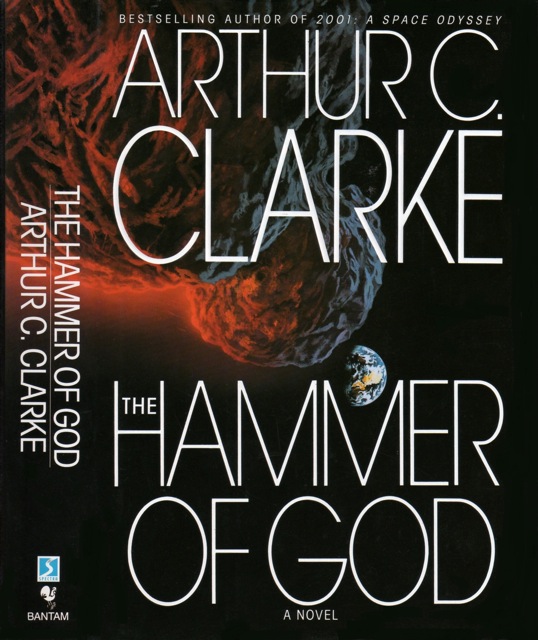
- The Hammer of God
Arthur C. Clarkestandalone novel1993
similar byscience fictiontensenear futurespacespace exploration
The Hammer of God is a science fiction novel by Arthur C. Clarke originally published in 1993. Set in the year 2109, it deals with the discovery of an asteroid to be on course to collide with Earth and depicts the mission for deflecting the asteroid by using fusion thermal rockets.
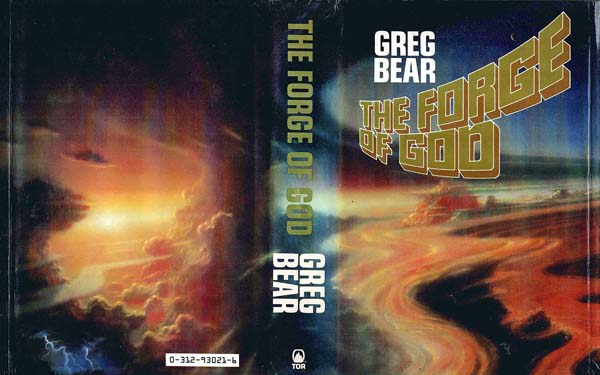
- Forge of God
series2 books1987
completed
similar byscience fictiontensedark+3 more
The Forge of God (1987) is Greg Bear's science fiction novel about Earth's discovery that it is the target of an incomprehensible, overwhelming alien attack, following scientists and ordinary people as they try to understand what is destroying the planet. Its 1992 sequel, Anvil of Stars, follows a group of young survivors sent on a mission of interstellar retaliation, continuing directly from the first book's ending.
- Aftermath (Charles Sheffield)
series2 books1998
completed
similar byscience fictiontensenear futuredarkspace
Charles Sheffield's Aftermath duology opens with a near-future Earth devastated by a nearby supernova's radiation, which knocks out electronics and forces survivors to rebuild without most modern technology. Starfire continues years later as a second, larger stellar threat approaches and humanity must recover enough capability to respond. Sheffield, a physicist by training, grounds both books in hard-science consequences of the disaster rather than treating it as mere backdrop.
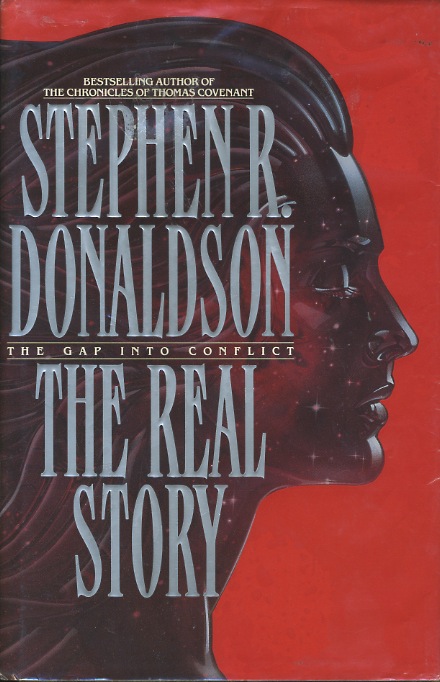
- The Gap
series5 books1990
similar byscience fictiontensespacedarkpolitical intrigue+1 more
The Gap Cycle is a series of science fiction novels by Stephen R. Donaldson, more usually known for his works of epic fantasy. The series was originally published between 1991 and 1996 by Bantam Books and was reprinted by Gollancz in 2008 in the UK. Here, Donaldson gave a loose retelling of Wagner's Ring cycle.
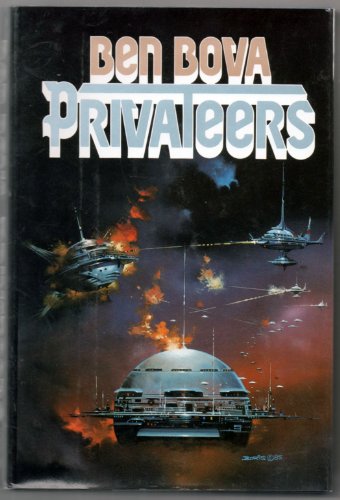
- Privateers
Ben Bovastandalone novel1985
similar byscience fictionspacenear futurespace exploration+2 more
This latest of Grand Tour chronicles tells a brilliant tale of revenge, love, and freedom while also laying out a vision for the human future in Space. Setting itself up for a final confrontation between Soviet official Vasily Malik and American/Venezuelan industrialist Dan Randolph, this book reasonably describes how Third World Nations might take the lead in both liberty and space exploration as America withdraws from a world teeming with dictatorships.
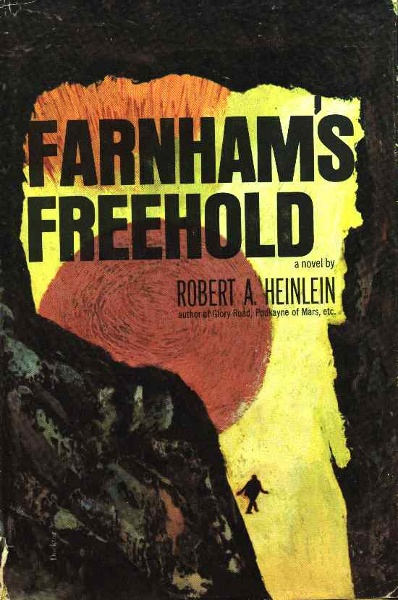
- Farnham's Freehold
Robert A. Heinleinstandalone novel1964
similar byscience fictiontensenear future+1 more
Farnham's Freehold is a science fiction novel by American writer Robert A. Heinlein. A serialized version, edited by Frederik Pohl, appeared in Worlds of If magazine. The complete version was published in novel form by G. P. Putnam later in 1964.
- NASA Trilogy
series4 books1996
similar byscience fictiontensespace exploration+4 more
The NASA Trilogy consists of three hard science fiction novels written by British science fiction author Stephen Baxter. They were published from 1996 to 1998. These books explore the possibilities of the American space program if the circumstances had been different. They have generally darker tones than his other books and are critical of NASA. They consist of:
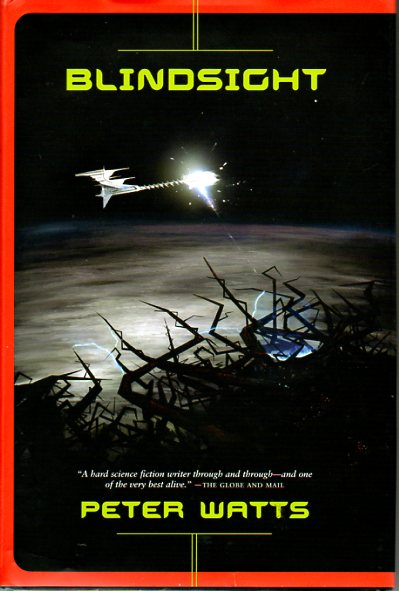
- Blindsight / Firefall
series3 books2006
similar byscience fictiontensespacedark+2 more
Blindsight sends a crew of radically modified posthumans (including a resurrected, genetically restored vampire) out to the Oort cloud after humanity detects an alien signal, only to make contact with something intelligent, wildly capable, and possibly not conscious at all — a first-contact story built around the question of whether self-awareness is actually useful. Peter Watts's Echopraxia is a same-timeframe "sidequel" rather than a direct sequel, following different characters through the fallout of the same first-contact event.
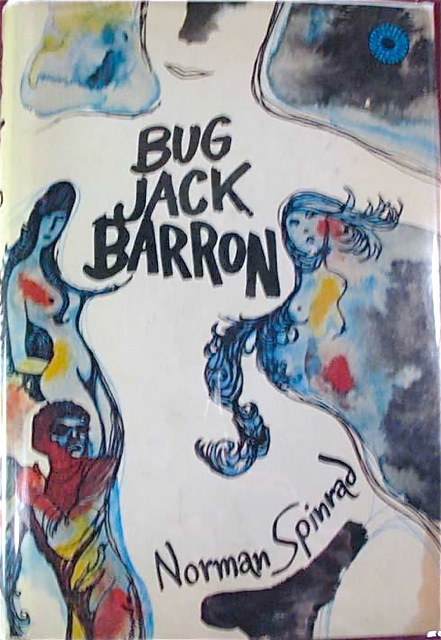
- Bug Jack Barron
Norman Spinradstandalone novel1969
similar byscience fictiontensenear futurepolitical intrigue+1 more
Bug Jack Barron is a 1969 science fiction novel by American writer Norman Spinrad, first serialized in the New Worlds magazine under the editorship of Michael Moorcock. It was nominated for the 1970 Hugo Award. The novel is notable for its lyrical style and unique use of cut-up phrases. In this regard, Spinrad has cited the influence of Beat writers William S. Burroughs, Allen Ginsberg, and Jack Kerouac.
- The Season of Passage
Christopher Pikestandalone novel1992
similar byscience fictiontensenear futurespacespace explorationdark
Dr. Lauren Wagner was a celebrity. She was involved with the most exciting adventure mankind had ever undertaken. The whole world admired and respected her. But Lauren knew fear. Inside--voices entreating her to love them. Outside--the mystery of the missing group that had gone before her. The dead group. But were they simply dead? Or something else? A terrifying novel of horror--and, surprisingly, of salvation--from one of America's bestselling writers. A novel you won't forget.
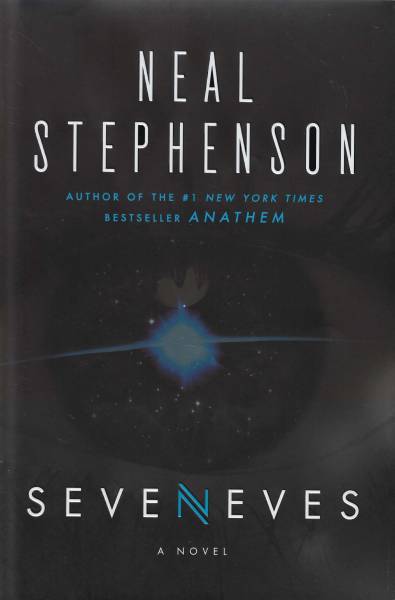
- Seveneves
Neal Stephensonstandalone novel2015
similar byscience fictiontensespacenear future
Seveneves is a science fiction novel by Neal Stephenson published in 2015. The story tells of the desperate efforts to preserve Homo sapiens in the wake of apocalyptic events on Earth after the unexplained disintegration of the Moon and the remaking of human society as a space-based civilization after a severe genetic bottleneck.
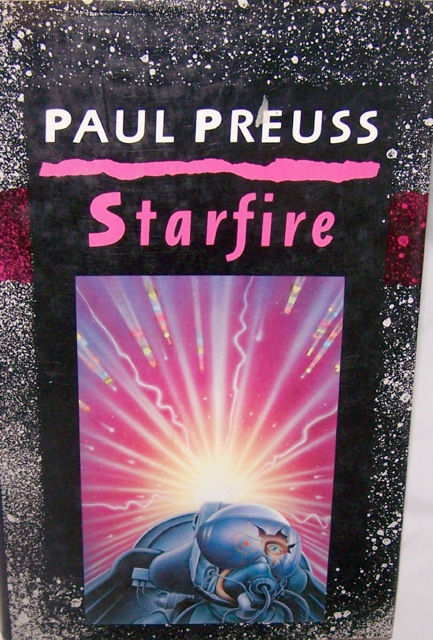
- Starfire
Paul Preussstandalone novel1988
similar byscience fictiontensespacenear futurespace exploration
Starfire is a science fiction novel by author Paul Preuss. First published in February 1988, it is about a group of NASA astronauts on a mission to an asteroid which is falling into the Sun.
- Adventures of Viktor & Julia
series2 books1999
similar byscience fictiontensenear futurespace exploration+1 more
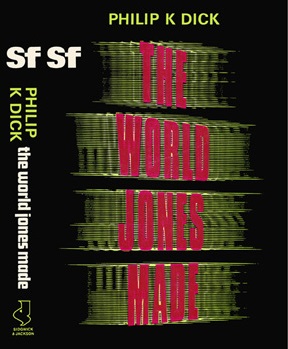
- The World Jones Made
Philip K. Dickstandalone novel1956
similar byscience fictiontensenear futuredarkpolitical intrigue
The World Jones Made is a 1956 science fiction novel by American writer Philip K. Dick, examining notions of precognition, humanity, and politics. It was first published by Ace Books as one half of Ace Double D-150, bound dos-à-dos with Agent of the Unknown by Margaret St. Clair.The story takes place after a nuclear war in which society is dominated by relativism, which rejects absolute truths and preaches tolerance as the highest principle. The mutant Floyd Jones, who can see into the future, plans to overthrow the system and colonise space. The story ends with the defeat of Jones, whose plans fail despite his ability to see the future due to the immutability of fate.