More like Kursed
but
- H. G. Wells' War of the Worlds
universe65 books1898
Start hereThe War of the Worlds · Start here
similar byscience fiction+1 more
No one would have believed, in the closing years of the nineteenth century, that human affairs were being watched keenly and closely from the timeless worlds of space. And then the cylinders fell. H. G. Wells' War of the Worlds opens in the quiet of the Surrey commons, where a falling star proves to be the first Martian craft — and from the pit rise the towering tripods, the Heat-Ray, the choking Black Smoke and the creeping red weed, wielded by minds that regard mankind much as we regard the creatures we boil for supper. This is invasion rendered as natural disaster: cold, methodical, and vast beyond argument. Wells' 1898 novel is the seed; everything else grows from that Martian soil. The catalogue gathers direct sequels and continuations alongside a wide field of other hands. In War of the Worlds: Global Dispatches the invasion is retold across the whole planet through the eyes of Twain, Verne, Tolstoy, Lowell and Kipling; in the Manly Wade and Wade Wellman crossover, Sherlock Holmes, Watson and Professor Challenger take the field against the machines; and Scott Washburn's Great Martian War stretches the fighting into a decades-long alternate history of steam, artillery and grinding attrition. It is a loose shared world — no single decreed sequence, many voices answering one calamity. What sets this world apart is its refusal of heroics: the invaders fall not to generals but to the smallest things of Earth, humbling and indifferent. Begin, always, with Wells' original novel — it is short, and it is the ground every later book stands upon. From there follow your appetite: Global Dispatches for the panorama, the Holmes campaign for adventure, Washburn for the long war.
- Cavor
series2 books1901
similar byscience fictionearly 20th century
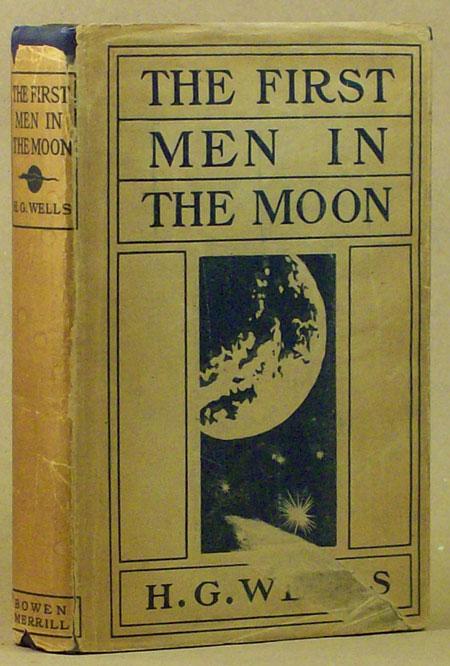
H. G. Wells's 1901 novel The First Men in the Moon is narrated by the businessman Bedford, who joins the reclusive scientist Cavor after Cavor invents cavorite, a gravity-blocking substance that carries the two men to the Moon. There they discover a vast underground civilization of insect-like Selenites, and the expedition that began as a hunt for lunar minerals turns into an encounter with an alien society. It is a standalone novel; later editions crediting Stephen Baxter add an introduction or afterword rather than a continuing story.
- The Master Key: An Electrical Fairy Tale
L. Frank Baumstandalone novel1901
similar byscience fictionearly 20th century+1 more
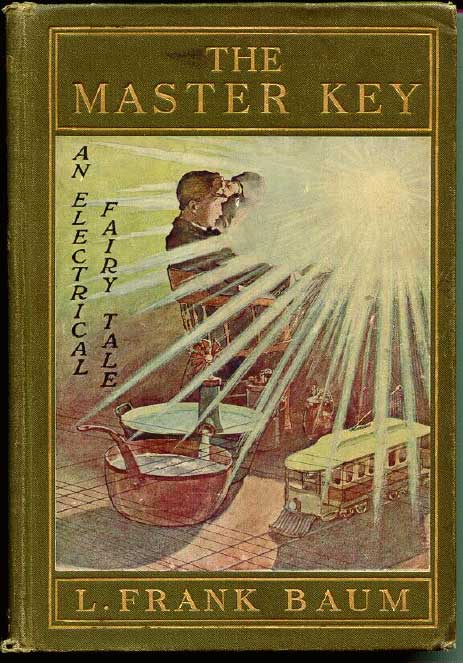
Rob Joslyn is an amateur electrical tinkerer, wiring up batteries and motors with more enthusiasm than skill, when one bungled experiment does something no wiring diagram predicted: it summons the Demon of Electricity. Impressed rather than angry, the Demon offers Rob an extraordinary deal -- three gifts a week for three weeks, devices harnessing electrical power beyond anything on Earth -- and leaves the boy to decide what to do with power most adults could never be trusted with. What follows tests Rob's judgment as much as his ingenuity, gift by increasingly dangerous gift. L. Frank Baum's venture into science fiction, published between Oz books.
- The Leviathan Trilogy
series3 books2009
similar byscience fictionearly 20th centuryyoung adult
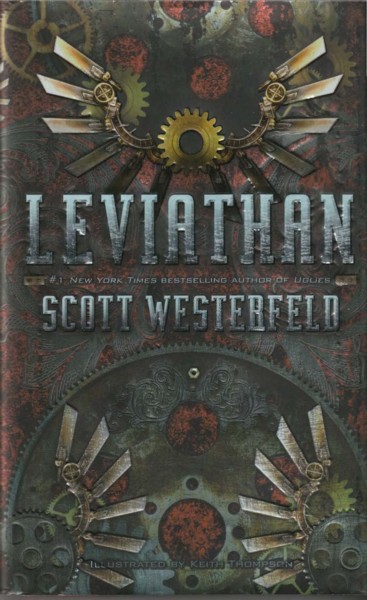
Set in an alternate First World War, Leviathan splits the belligerents into Clankers, who fight with mechanical walkers, and Darwinists, who fight with fabricated living creatures built from spliced DNA. Scott Westerfeld follows a British girl disguised as a boy to serve on a living airship and the exiled heir to the Austro-Hungarian throne as their paths collide, continuing across Behemoth and Goliath. Keith Thompson's illustrations are integral to all three books, alternating text chapters with illustrated sequences.
- Cosmic Trilogy (C. S. Lewis)
series4 books1938
completed
similar byscience fiction+1 more
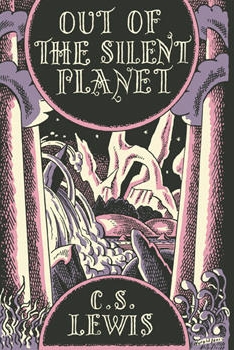
The Space Trilogy is a series of science fiction novels by British writer C. S. Lewis. The trilogy consists of Out of the Silent Planet (1938), Perelandra (1943), and That Hideous Strength (1945). A philologist named Elwin Ransom is the protagonist of the first two novels and an important character in the third.
- Cryptonomicon
Neal Stephensonstandalone novel1999
similar byearly 20th century+1 more
There are two main timelines in this novel. This first is during World War II, and follows the lives of three cryptologists: Lawrence Pritchard Waterhouse (American), Alan Turing (British), and Rudolf von Hacklheber (German), as well as the strange exploits of Detachment 2702. The second timeline takes place during the present, filled with the offspring of the main characters in the first timeline. They are preoccupied with the construction of a data haven.
- Slaughterhouse-Five or the Children's Crusade: A Duty-Dance with Death
Kurt Vonnegut & Jr.standalone novel1969
similar byscience fiction+1 more
Vonnegut opens in his own voice, describing the twenty years it took him to face writing about surviving the firebombing of Dresden as a POW. He then hands the story to Billy Pilgrim, an awkward, fatalistic American chaplain's assistant swept into the Battle of the Bulge and captured by German forces alongside a soldier who dies blaming him for it. Imprisoned in a disused slaughterhouse in Dresden, Billy survives the firebombing that follows, and, we're told upfront, has also come 'unstuck in time,' living his life out of order, including a stretch on the alien world of Tralfamadore. Vonnegut's best-known novel folds war memoir into science fiction and black comedy.
- In the Days of the Comet
H. G. Wellsstandalone novel1906
similar byscience fictionearly 20th century
In the Days of the Comet is a 1906 science fiction novel by H. G. Wells in which humanity is "exalted" when a comet causes "the nitrogen of the air, the old azote," to "change out of itself" and become "a respirable gas, differing indeed from oxygen, but helping and sustaining its action, a bath of strength and healing for nerve and brain." The result: "The great Change has come for evermore, happiness and beauty are our atmosphere, there is peace on earth and good will to all men."
- Oxford Time Travel
series6 books1982
similar byscience fiction+1 more
Connie Willis's Oxford Time Travel novels are set at a near-future Oxford University where historians travel into the past as observers, constrained by a version of history that resists any change large enough to alter real events. Doomsday Book sends a medieval historian to what should be 1320 but turns out to be the Black Death year of 1348, intercut with a present-day epidemic at Oxford; To Say Nothing of the Dog returns to the same time-travel program for a lighter, Victorian-set story with different characters. The two novels share their setting and rules rather than a directly continuing plot.
- Walter Goodwin
series3 books1918
completed
similar byearly 20th century+1 more
The Moon Pool (1919) and The Metal Monster (1920) are connected fantasy-adventure novels by A. Merritt, both narrated by the same character, Dr. Walter Goodwin, as he encounters hidden ancient civilizations and forces beyond ordinary science. The Moon Pool began as two related stories serialized in All-Story Weekly before being combined into a novel, and its success led Merritt to send Goodwin into a second, similarly strange discovery in The Metal Monster the following year. The two books follow Goodwin from one uncanny expedition to the next rather than forming a tightly plotted continuing saga.
- Time and Again
series2 books1970
completed
similar byscience fiction+1 more
Time and Again (1970) follows Si Morley, a commercial artist recruited into a secret government project that sends him back to Manhattan in 1882, where he falls for a woman named Julia while weighing whether he can, or should, alter the past; Jack Finney illustrates the story with period photographs and engravings. The sequel, From Time to Time (1995), continues Si's story with a further trip into the past.
- The Collected Science Fiction and Fantasy of Jack London
series6 books1906
completed
similar byscience fictionearly 20th century
- The Monster Men
Edgar Rice Burroughsstandalone novel1929
similar byscience fictionearly 20th century
The Monster Men is a 1913 science fiction novel by American author Edgar Rice Burroughs, written under the working title "Number Thirteen". It first appeared in print under the title of "A Man Without a Soul" in the November, 1913 issue of All-Story Magazine, and was first published in book form in hardcover by A. C. McClurg in March, 1929 under the present title. It has been reissued a number of times since by various publishers. The first paperback edition was issued by Ace Books in February 1963.
- The World Set Free
H. G. Wellsstandalone novel1914
similar byscience fiction+1 more
The World Set Free is a novel written in 1913 and published in 1914 by H. G. Wells. The book is based on a prediction of a more destructive and uncontrollable sort of weapon than the world has yet seen. It had appeared first in serialised form with a different ending as A Prophetic Trilogy, consisting of three books: A Trap to Catch the Sun, The Last War in the World and The World Set Free.
- The Food of the Gods and How It Came to Earth
H. G. Wellsstandalone novel1904
similar byscience fictionearly 20th century
The Food of the Gods and How It Came to Earth is a science fiction novel by H. G. Wells that was first published in 1904. Wells called it "a fantasia on the change of scale in human affairs. ... I had hit upon [the idea] while working out the possibilities of the near future in a book of speculations called Anticipations (1901)".
- Gladiator
Philip Wyliestandalone novel1930
similar byscience fictionearly 20th century
Gladiator is a science fiction novel by American author Philip Wylie, first published in 1930. The story concerns a scientist who invents an "alkaline free-radical" serum to "improve" humankind by granting the proportionate strength of an ant and the leaping ability of the grasshopper. The scientist injects his pregnant wife with the serum and his son Hugo Danner is born with superhuman strength, speed, and bulletproof skin. Hugo spends much of the novel hiding his powers, rarely getting a chance to openly use them.
- The Purple Cloud
M. P. Shielstandalone novel1901
similar byscience fictionearly 20th century
Around 1900, the author receives a packet of writings of a psychic, who recounts her vision of the multi-decade diary of an arctic explorer of the future, the first to reach the north pole; but during his multiyear trek, an unknown eruption temporarily poisons the atmosphere with cyanide, killing all human and animal life, sparing only the arctic latitudes and leaving him the last man on earth.
- Gravity's Rainbow
Thomas Pynchonstandalone novel1973
similar byearly 20th century+1 more
Gravity's Rainbow is a 1973 postmodern novel by Thomas Pynchon. The narrative is set primarily in Europe at the end of World War II and centers on the design, production and dispatch of V-2 rockets by the German military. In particular, it features the quest undertaken by several characters to uncover the secret of a mysterious device, the Schwarzgerät, which is slated to be installed in a rocket with the serial number "00000".
- Men Like Gods
H. G. Wellsstandalone novel1923
similar byscience fictionearly 20th century
Men Like Gods is a 1923 novel, referred to by the author as a "scientific fantasy", by English writer H. G. Wells. It features a utopia located in a parallel universe.
- The Missing
series10 books2008
similar byscience fictionyoung adult+1 more
The Missing is a series of young adult novels written by Margaret Peterson Haddix. It tells the story of famous children from history stolen from their place in time by futuristic time travelers and accidentally sent to the 21st century as babies. Jonah Skidmore is one of the stolen children, and he, along with his non-adopted sister Katherine, must help return the missing kids to their rightful places in history and fix time before it is destroyed. The first book in the series, Found, was published on April 22, 2008. The series continued with book titles Sent, Sabotaged, Torn, Caught, Risked, and Revealed. The eighth and final book, Redeemed, was released on September 8, 2015. There are also two ebook short stories, Sought and Rescued . Haddix originally intended the series to consist of only seven books. However, she stated that she had trouble closing out the series in seven books; leading to her decision to write Redeemed.
- A Columbus of Space
Garrett P. Servissstandalone novel1911
similar byscience fictionearly 20th century
The year was 1909 and Garrett Putnam Serviss was already a respected science writer for the Hearst newspaper group. Serviss’ reputation was such that his articles appeared in almost every major American magazine. Beginning in January of that year Frank Munsey’s All-Story magazine began the serialization of Serviss’ epic science fiction adventure A Columbus of Space. Just three months earlier the visionary rocket pioneer, Robert Goddard, had submitted an article to Popular Science magazine about the possibilities of nuclear propulsion for space travel. Goddard’s article was rejected, but Serviss had no such problem with his science-fiction adventure story. In August of 1926 Serviss’ story was resurrected in the pages of Hugo Gernsback’s Amazing Stories magazine. In fact Serviss was featured in eight of the first eleven issues of Amazing. A Columbus of Space is an adventure thriller written at a time when Venus was still believed to only show one hemisphere to the sun and Venusian life was still thought to be possible.
- Karl Glogauer
series2 books1969
similar byscience fiction+1 more
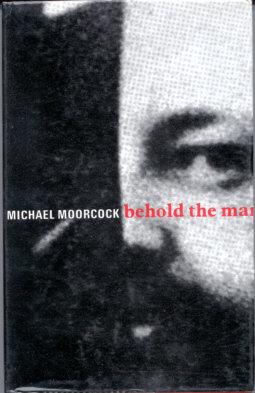
Michael Moorcock's two Karl Glogauer novels share a character rather than a plot. In Behold the Man (1969), Glogauer travels back in time seeking the historical Jesus, discovers the real man is severely disabled, and takes on the role of Christ himself, engineering his own crucifixion to fulfill the story he grew up reading. Breakfast in the Ruins (1972) recasts him across seventeen variant lives spanning 1871 to 1990, each one crueler than the last, framed around a present-day encounter in London -- using the same protagonist for a different formal experiment rather than continuing a single narrative.