More like Labyrinth
anchored on:historical mysteryeuropemysteriousdual timelinemystery & detectivefamily secrets+3 more
but
- Languedoc Trilogy
series3 books2005
similar bymysteriouseuropefamily secretsdual timelinehistorical fiction+6 more
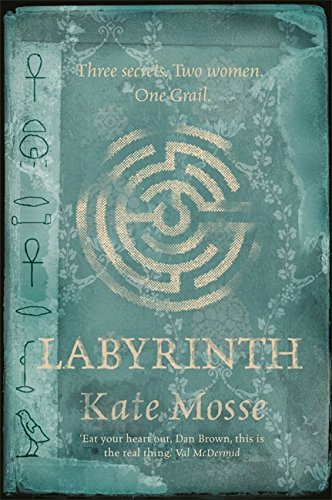
Kate Mosse's Languedoc Trilogy opens with Labyrinth, alternating between a present-day archaeologist in southern France and a woman living through the Cathar crusades eight centuries earlier, both entangled with the same hidden, grail-like relic. Sepulchre and Citadel repeat the dual-timeline structure with different centuries and protagonists, all tied to the same Languedoc region. The books share setting and structural device rather than a continuous cast.
- Snipers
Kristine Kathryn Ruschstandalone novel2013
similar bymysteriouseuropefamily secretsmurder investigationhistorical mysterymystery & detectivedual timeline
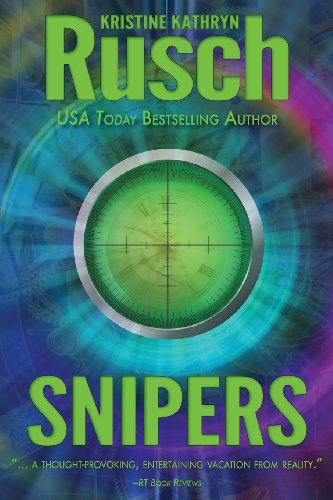
The Carnival Sniper?as famous as Jack The Ripper. And like Jack The Ripper, never caught, his identity lost to history. In 1913, the Carnival Sniper terrorized Vienna, murdering the famous and not-so-famous alike. Police Detective Johann Runge never caught the Sniper and his failure defined the rest of his life. In 2005, bestselling crime writer Sofie Branstadter receives permission to use modern forensic investigative techniques on the Sniper?s victims. She believes she can figure out the identity of the Sniper, but she needs the help of Runge?s great-grandson, classical pianist Anton Runge. Together the two of them plunge into a world of scientific evidence and fantastic clues, all leading to one unbelievable conclusion.
- The Devil in Velvet
John Dickson Carrstandalone novel1951
similar bymysteriouseuropemurder investigationhistorical mysterymystery & detective
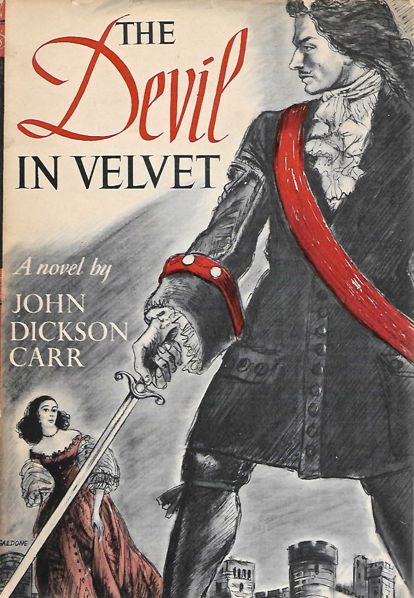
The Devil in Velvet, first published in 1951, is a detective story by American writer John Dickson Carr. This novel is both a mystery and a historical novel, with elements of the supernatural.
- Robert Langdon
series6 books2000
similar bymysteriouseuropemystery & detectivecontemporaryfaith and religion+1 more
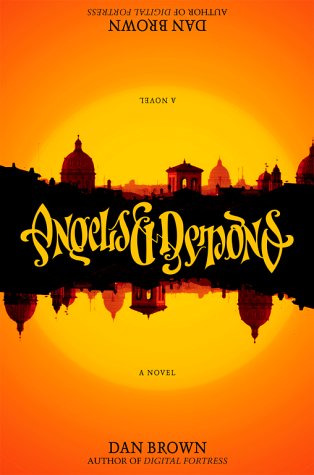
The Robert Langdon novel series is named after Robert Langdon, the protagonist of the novels by American author Dan Brown. Langdon is portrayed as a Harvard University professor of religious iconology and symbology, a fictional field related to the study of historic symbols, which is not methodologically connected to the actual discipline of semiotics. Brown's novels that feature the lead character also include historical themes and Christianity as motifs, and as a result have generated controversy. Brown states on his website that his novels are not anti-Christian, and that he is on a "constant spiritual journey" himself.
- Marie Antoinette, Serial Killer
Katie Alenderstandalone novel2013
similar bymysteriouseuropefamily secretsmurder investigationmystery & detectivecontemporary
While in Paris, France on a class trip, Colette Iselin enlists the help of her charming French tour guide to help uncover a possible connection between Marie Antoinette, a series of gruesome murders, and perhaps her own family history, and he also gives her insights into herself. While in Paris on a class trip, Colette Iselin enlists the help of her charming French tour guide to help uncover a possible connection between Marie Antoinette, a series of gruesome murders, and perhaps her own family history.
- Fire, Burn!
John Dickson Carrstandalone novel1957
similar bymysteriousmurder investigationhistorical mysterymystery & detective+1 more
Fire, Burn! is a 1957 historical mystery novel by John Dickson Carr. Carr considered this one of his best impossible crime novels.
- The Glass Demon
Helen Grantstandalone novel2010
similar bymysteriouseuropefamily secretsmurder investigationmystery & detectivecontemporary
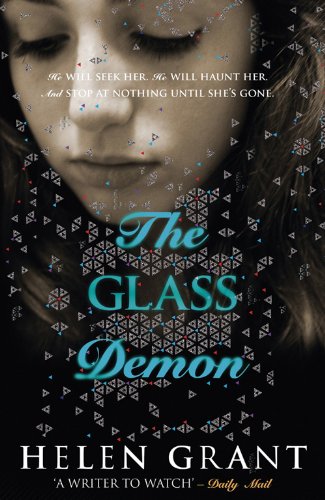
When seventeen-year-old Lin and her family move to an ancient German castle for a year while her medievalist father searches for the famed Allerheiligen glass--lost stained glass windows that are said to be haunted by a terrifying demon--she becomes involved in a horrific murder mystery.
- Sebastian St. Cyr
series1 book2012
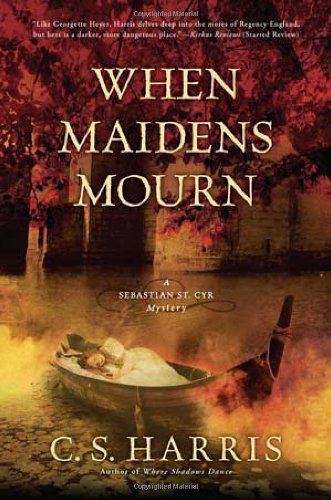
similar bymysteriousfamily secretsmurder investigationhistorical mysterymystery & detectivehistorical fiction
- The House Saphir
Marissa Meyerstandalone novel2025
similar bymysteriousfamily secretsmurder investigationeuropemystery & detectivecontemporary
Mallory Fontaine is a fraud. Though she comes from a long line of witches, the only magic she possesses is the ability to see ghosts, which is rarely as useful as one would think. She and her sister have maintained the family business, eking out a paltry living by selling bogus spells to gullible buyers and conducting tours of the infamous mansion where the first of the Saphir murders took place. Mallory is a self-proclaimed expert on Count Bastien Saphir—otherwise known as Monsieur Le Bleu—who brutally killed three of his wives more than a century ago. But she never expected to meet Bastien's great-great grandson and heir to the Saphir estate. Armand is handsome, wealthy, and convinced that the Fontaine Sisters are as talented as they claim. The perfect mark. When he offers Mallory a large sum of money to rid his ancestral home of Le Bleu's ghost, she can’t resist. A paid vacation at Armand’s country manor? It’s practically a dream come true, never mind the ghosts of murdered wives and the monsters that are as common as household pests. But when murder again comes to the House Saphir, Mallory finds herself at the center of the investigation—and she is almost certain the killer is mortal. If she has any hope of cashing in on the payment she was promised, she’ll have to solve the murder and banish the ghost, all while upholding the illusion of witchcraft. But that all sounds relatively easy compared to her biggest learning to trust her heart. Especially when the person her heart wants the most might be a murderer himself.
- The Historian
Elizabeth Kostovastandalone novel2005
similar bymysteriouseuropefamily secretshistorical fiction+1 more
The Historian is the 2005 debut novel of American author Elizabeth Kostova. The plot blends the history and folklore of Vlad Țepeș and his fictional equivalent Count Dracula. Kostova's father told her stories about Dracula when she was a child, and later in life she was inspired to turn the experience into a novel. She worked on the book for ten years and then sold it within a few months to Little, Brown and Company, which bought it for US$2 million.
- The Secret of Anatomy
Mark Morrisstandalone novel1994
similar bymysteriousfamily secretsmurder investigationmystery & detectivecontemporary
David Fox is in the throes of a mid-life crisis. One day, whilst walking on the beach, he finds a bottle containing a note at the sea's edge. The note, written in 1953, is from a boy named John Marshall who claims his father is trying to kill him.
- Don't Tell a Soul
Kirsten Millerstandalone novel2021
similar bymysteriousfamily secretsmurder investigationmystery & detectivecontemporary
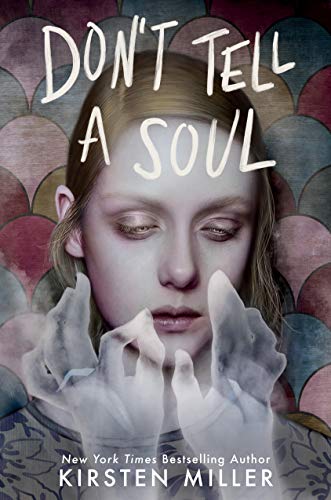
Summary: "Bram moves to the small town of Louth in order to help her uncle start his new inn, but when she discovers a legacy of silenced women tied to her new home, she sets out to investigate the truth behind the town's 'Dead Girl' myths"--Provided by publisher. [end quotation of CIP data]
- The Seduction of Water
Carol Goodmanstandalone novel2003
similar bymysteriousfamily secretsmystery & detectivecontemporarydual timeline+1 more
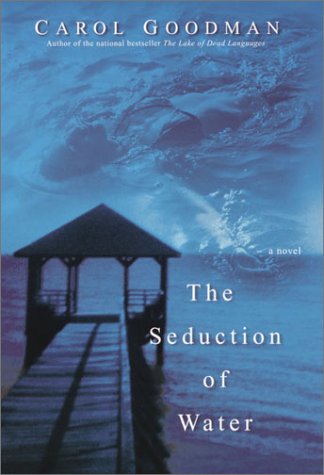
"Iris Greenfeder, ABD (All But Dissertation), has just turned forty, lives in Manhattan, and works three teaching jobs to support herself. Recently she's felt that the "buts" are taking over her life: all but published, all but a professor, all but married (to Jack, her boyfriend of ten years). Yet the sudden impulse to write a story about her mother leads to a shot at literary success. The piece recounts an eerie Irish fairy tale her mother used to tell her at bedtime - and nestled inside it is the sad story of her mother's death...". "More than fifty years ago, Iris's mother, Katherine Morrissey, arrived at the Catskills's grand Hotel Equinox penniless, with almost no belongings. Kay was hired as a maid but refused to speak of her past or her family. One year later, she married Ben Greenfeder, the hotel's manager. During the hotel's off-season, Kay wrote the first two fantasy novels of a planned trilogy. There never was a third book. When Iris was nine, her mother left one day for a writer's conference - and never came back. Kay died that very night in a hotel fire on Coney Island, registered as another man's wife." "Now Hedda Wolfe, Kay's former literary agent, has a proposal: If Iris will return to the Hotel Equinox where she grew up, research her mother's life, and find the third and final manuscript that Hedda is convinced exists, then she can guarantee Iris a huge advance to write her mother's biography.". "Transfixed by the notion of a third book, Iris believes that it will hold clues to the mysteries of Kay's life - and death. But as she begins to peer into the thicket of her mother's hidden world, stinging revelations leave Iris with new questions. When a deadly "accident" befalls the one man who could shed some light on Kay, it becomes clear that Iris is not alone in her deep interest in her mother's past - or in her search for a lost manuscript that might hold more secrets than she ever expected."--BOOK JACKET.
- The City & the City
China Miévillestandalone novel2009
similar bymysteriousmurder investigationmystery & detectivecontemporary
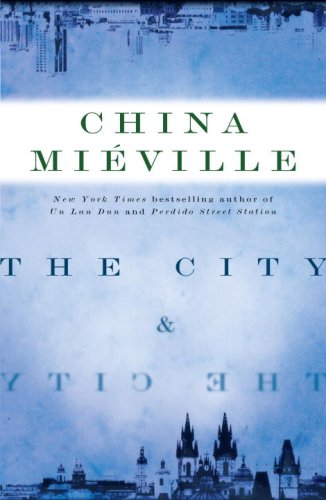
Inspector Tyador Borlú must travel to Ul Qoma to search for answers in the murder of a woman found in the city of Besźel. (Source: OCLC record)
- The Mysteries
Lisa Tuttlestandalone novel2005
similar bymysteriousfamily secretsmurder investigationmystery & detectivecontemporary
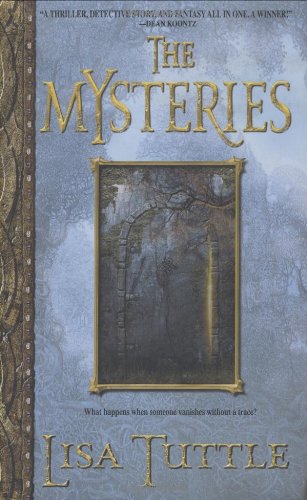
From award-winning author Lisa Tuttle comes a riveting novel that combines the contemporary story of one man's search for a missing young woman with history's most enduring legends of the disappeared. Gripping and unforgettable, here is a spellbinding mix of the mysteries that inhabit our everyday lives--and a mind-bending exploration of what happens when someone vanishes without a trace.Ever since his father disappeared when he was nine years old, Ian Kennedy has had a penchant for stories about missing people--and a knack for finding them. Now he's a private investigator with an impressive track record. But when a woman enters his London office and asks him to find her lost daughter, Ian faces a case he fears he cannot solve--and one he knows he must.Laura Lensky's stunning twenty-one-year-old daughter, Peri, has been missing for over two years--a lifetime, under the circumstances. But when Ian learns the details of her disappearance, he discovers eerie parallels to an obscure Celtic myth--and to the haunting case that launched his career, an early success he's never fully been able to explain. Though Ian suspects Peri may have chosen to vanish, his curiosity leads him to take on the search. Soon he finds himself drawing not only from the mysteries that have preoccupied his adulthood, but from the fables and folklore that pervaded his youth. What follows is a journey that takes Ian and those who care for Peri into the Highlands of Scotland, as the unknowns of the past and present merge in the case--and in their lives. Rich in pathos and steeped in secrets, The Mysteries opens a thought-provoking door from one world into the heart of another, where some of our most perplexing enigmas--and their answers--are startlingly alive.From the Hardcover edition.
- The Colorado Kid
Stephen Kingstandalone novel2005
similar bymysteriousmurder investigationmystery & detectivecontemporary
The Colorado Kid is a mystery novel by American writer Stephen King, published by the Hard Case Crime imprint in 2005. The book was initially issued in one paperback-only edition by the specialty crime and mystery publishing house. King's next novel for Hard Case Crime was Joyland, which was published in June 2013. Hard Case Crime reissued The Colorado Kid in an illustrated paperback edition in May 2019.
- Fata Morgana
William Kotzwinklestandalone novel1977
similar bymysteriouseuropemurder investigationmystery & detective
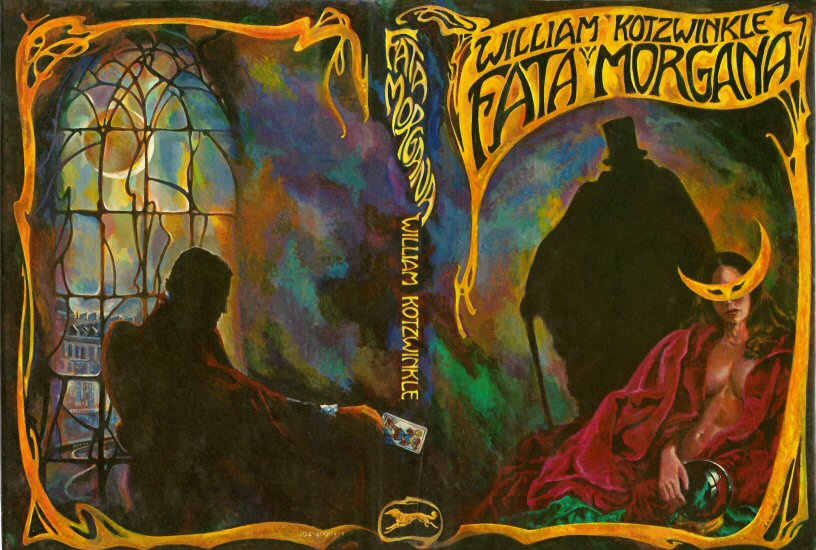
From the flaps of the Knopf first edition: "In Fata Morgana a celebrated novelist turns conjurer to bring us a supremely theatrical magic show - a rich exotic entertainment of crime, treble-trickery, and legerdermain, with Europe as its stage and the golden leaders of the Uppercrust and the Underworld as its players. The time and place are Paris, 1861 - the extravagant capital of Louis Napoleon and his Empress Eugenie, the gaudy, blatant public arena of Great Whores and fabulous charlatans; the treacherous private labyrinth of Police Inspector Paul Picard and the human prey he stalks. Picard is a hunter of the purest instincts, with an appetite for the ladies, a taste for lemon tarts, and a policeman's nose for hard realities. As the book opens he is on his way to the Opera, for music and murder: among the guests is as elegant a killer as ever sliced his way through Parisian high society, and on his arm is the young woman he means to decapitate tonight. A strange encounter with them precipitates Picard into a new and (apparently) trivial assignment - a case that is fated to disrupt and then transform, irrevocably, his life. At first it seems routine: a man - Ric Lazare - has recently arrived in Paris and in a short time has captured the jaded attention and the favors of the entire city. His aura of opulence, his bewitching wife, Rene, and, above all, his unearthly fortune-telling machine have won him entree to the salons (and the bank vaults) of the most dazzling leaders of society, including, it is whispered, the Emperor himself. But, who - and what - is Lazare? Is he a crook? A master of illusions? A real magician? Or - more terrible - a reincarnation from an Older World? To find the answer, Picard must follow the thread of the man's past. His quest takes him from Paris to Vienna, Nuremberg, Budapest, and on to the dark, menacing valleys and steppes of eastern Hungary, uncovering a trail of deceit and violent death: a fabled toy maker driven to destroy himself and a lifetime's priceless creations... a man ruthlessly killed over a dice game... a beautiful woman purchased at auction, then stolen away... the sudden death of a priest. Beset by intimations of his own mortality, by a sense of inexplicable entrapment in a malign world of mechanical and deadly playthings, by a slowly suffocating conviction that he is undertaking a journey he has made before, Picard, caught up in the quickening pace, returns to Paris - and to a terrifying confrontation with his quarry and his own destiny."
- The Bone Garden
Tess Gerritsenstandalone novel2007
similar byfamily secretsmurder investigationmystery & detectivehistorical mysterycontemporarydual timeline+1 more
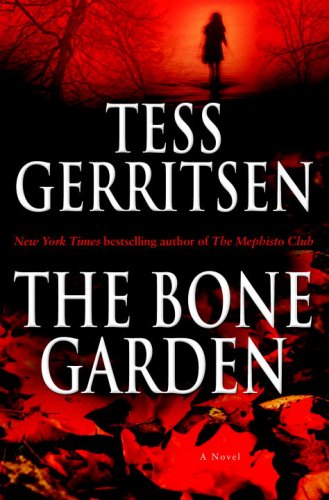
The Bone Garden is a 2007 novel written by Chinese-American novelist Tess Gerritsen, loosely part of the Jane Rizzoli / Maura Isles series.
- The Astrologer's Daughter
Rebecca Limstandalone novel2014
similar bymysteriousfamily secretsmurder investigationmystery & detectivecontemporary
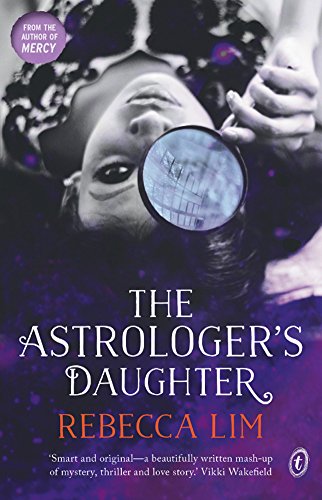
Avicenna Crowe's mother, Joanne, is an astrologer with uncanny predictive powers and a history of being stalked. Now she is missing. The police are called, but they're not asking the right questions. Like why Joanne lied about her past, and what she saw in her stars that made her so afraid. But Avicenna has inherited her mother's gift. Finding an unlikely ally in the brooding Simon Thorn, she begins to piece together the mystery.
- PaperQuake: A Puzzle
Kathryn Reissstandalone novel1998
similar bymysteriousfamily secretsmystery & detectivecontemporarydual timeline+1 more
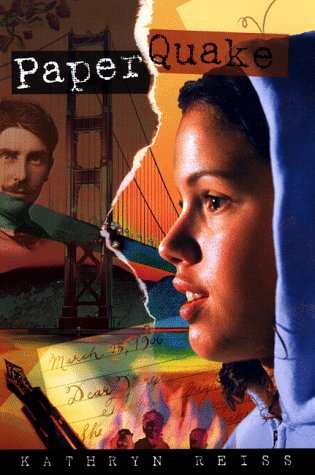
"Violet's paralyzing fear of the earthquakes that are rocking the San Francisco Bay Area makes it difficult for her to overcome her "baby" image. But things change when her family renovates an old building. While she helps her sisters sweep up, an aftershock dislodges a letter addressed to Baby V from 1906-- and Violet is certain the message in the letter is intended for her. More mysterious writings from the past tumble into her hands with each quake. The girls try to unravel the mystery behind these supernatural communications, but as ever more frequent earthquakes rattle their own lives, they realize their time may be running out . . . " — quoted from the product description on the product page on Amazon.com as of 2012-12-06.
- Houses of Stone
Barbara Michaelsstandalone novel1993
similar bymysteriousfamily secretsmurder investigationmystery & detectivecontemporarydual timeline
It is a find of inestimable value for Karen Holloway. The battered manuscript she holds in her hand—written in the nineteenth century and bearing the mysterious attribution "Ismene"—could prove a boon to the eager young English professor's career. But Karen's search for the author's true identity is carrying her into the gray shadows of the past, to places fraught with danger and terror. For the deeper she delves into Ismene's strange tale of gothic horror, the more she is haunted by the suspicion that the long-dead author was writing the truth . . . and that even now she is guiding Karen's investigation, leading her to terrible secrets hidden behind the cold walls of houses of stone.
- Promise Not To Tell
Jennifer McMahonstandalone novel2007
similar bymysteriousfamily secretsmurder investigationmystery & detectivecontemporary
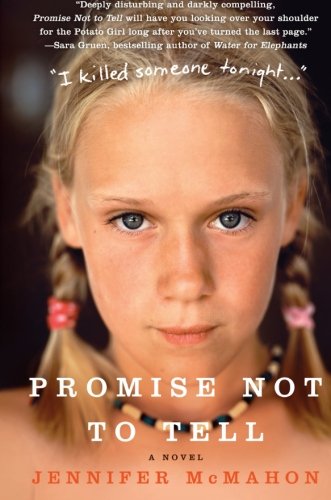
Promise Not to Tell is a 2007 mystery novel with supernatural elements written by Vermont author Jennifer McMahon. The book was released in April 2007 in the US by Harper Paperbacks. It was released in Germany by Rowohlt Verlag, under the title Das Mädchen Im Wald, in October 2007. It was released in the United Kingdom by Orion Books in 2008.
- The Last Legacy (James Logan)
series2 books2024
similar bymysteriousfamily secretsmurder investigationmystery & detective
- Shadow Ticket
Thomas Pynchonstandalone novel2025
similar bymysteriousmurder investigationeuropemystery & detective
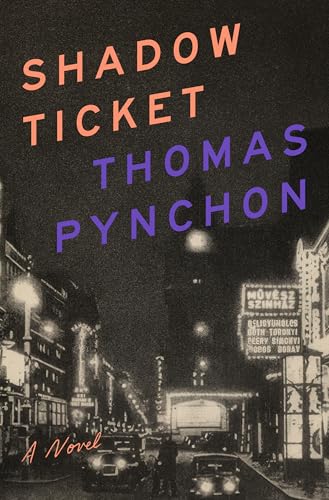
Shadow Ticket is a novel by the American author Thomas Pynchon. It was announced by Penguin Press in April 2025 and published in October the same year. The novel, which is set in 1932, centers on a Milwaukee private investigator who is set adrift in Hungary while tracking the heiress to a Wisconsin cheese fortune.