More like Last Light
anchored on:survivalnear futuretensepost-apocalypticthriller & suspenseparenthood+3 more
but
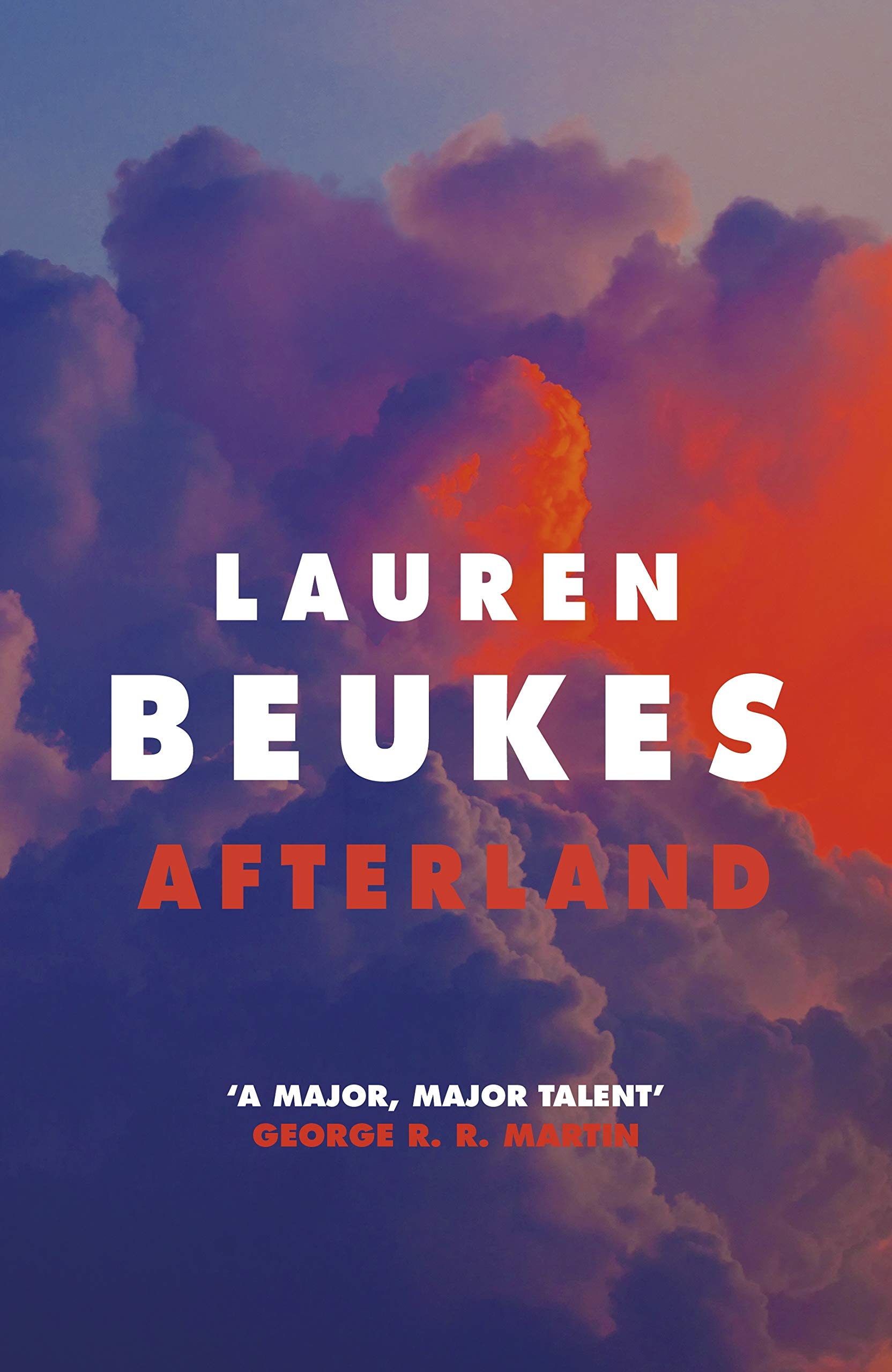
- Afterland
Lauren Beukesstandalone novel2020
similar bynear futuretensepost-apocalypticthriller & suspensesurvivaldarkparenthood
Afterland is a 2020 science fiction novel by South African writer Lauren Beukes. It takes place during "Manfall", a 2020 pandemic which has killed off almost all the world's men. Three years later In the United States, Cole and her twelve-year-old son, Miles are trying to flee to their home in South Africa. Miles is one of the few surviving males, and is sought after by US government researchers and boy traffickers.
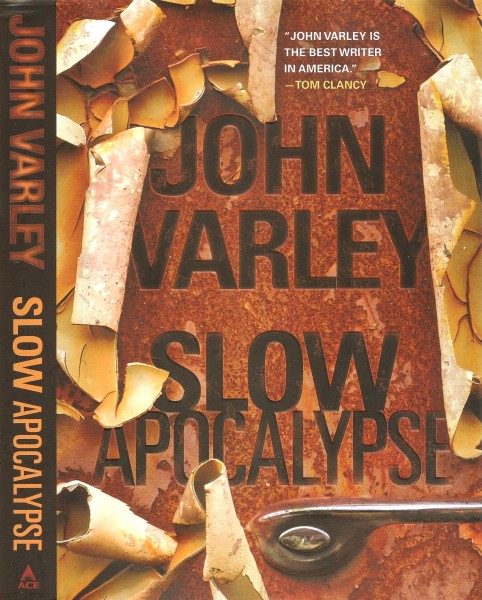
- Slow Apocalypse
John Varleystandalone novel2012
similar bynear futuretensepost-apocalypticthriller & suspensedarksurvivalecological collapse+1 more
"Despite wars with Iraq and Afghanistan, as well as 9/11, the United States' dependence on foreign oil has kept the nation tied to the Middle East. A scientist has developed a cure for America's addiction--a slow-acting virus that feeds on petroleum, turning it solid. But he didn't consider that his contagion of an Iraqi oil field would spread to infect the fuel supply of the entire world ... In Los Angeles, screenwriter Dave Marshall heard this scenario from a retired U.S. Marine and government insider who acted as a consultant on Dave's last film. It sounded as implausible as many of his scripts, but the reality is much more frightening than anything he can envision. An ordinary guy armed with extraordinary information, Dave hopes his survivor's instinct will kick in so he can protect his wife and daughter from the coming apocalypse that will alter the future of Earth--and humanity ..."--
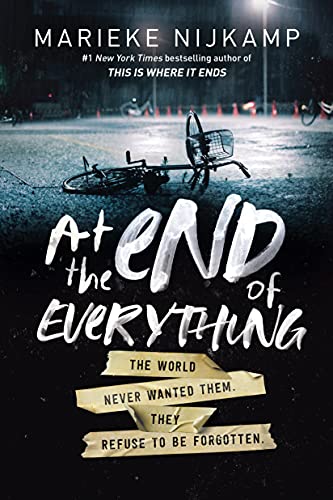
- At the End of Everything
Marieke Nijkampstandalone novel2022
similar bynear futuretensepost-apocalypticthriller & suspensesurvivaldark
The Hope Juvenile Treatment Center is ironically named. No one has hope for the delinquent teenagers who have been exiled there; the world barely acknowledges that they exist. Then the guards at Hope start acting strange. And one day…they don't show up. But when the teens band together to make a break from the facility, they encounter soldiers outside the gates. There's a rapidly spreading infectious disease outside, and no one can leave their houses or travel without a permit. Which means that they're stuck at Hope. And this time, no one is watching out for them at all. As supplies quickly dwindle and a deadly plague tears through their ranks, the group has to decide whom among them they can trust and figure out how they can survive in a world that has never wanted them in the first place.
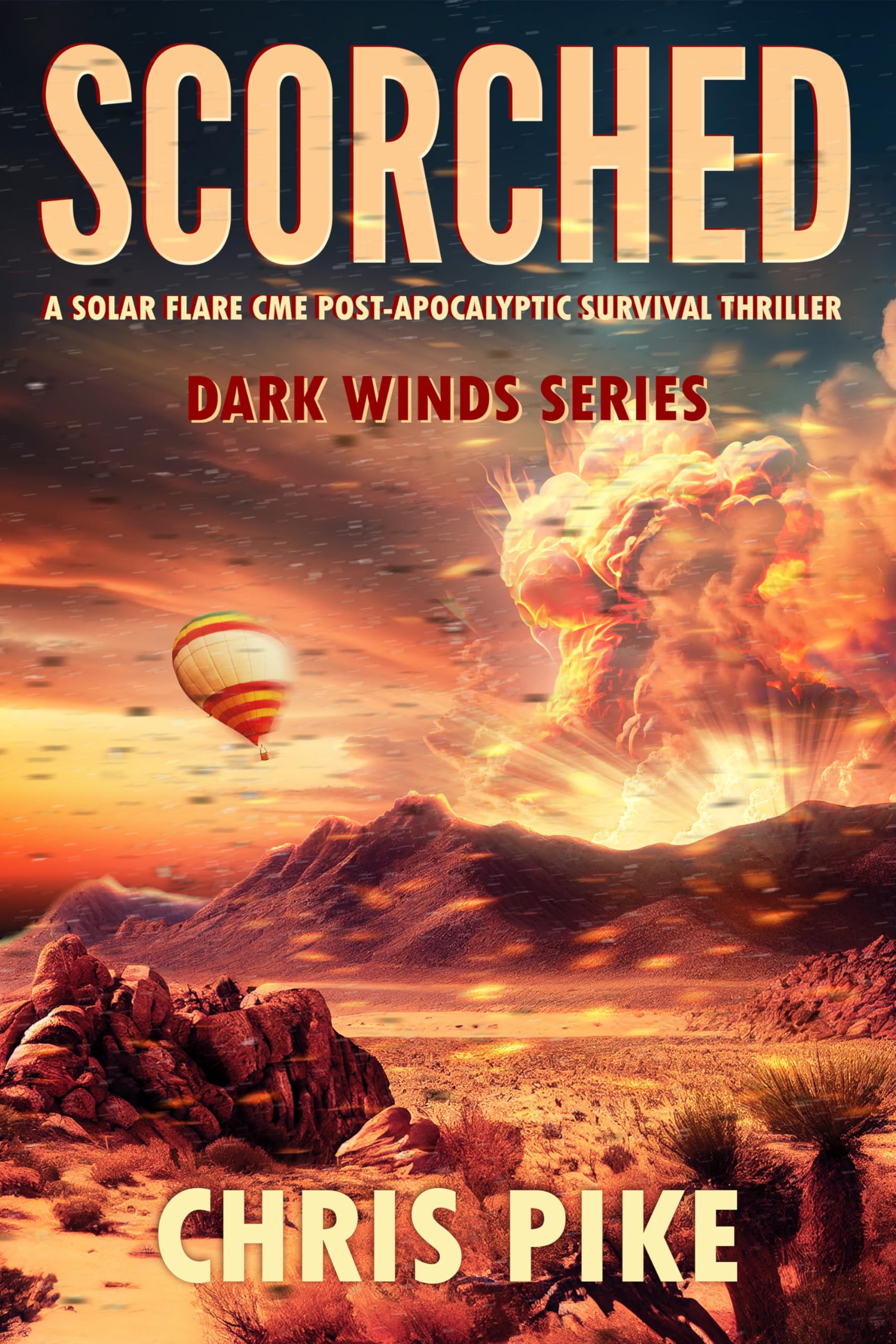
- Dark Winds (Chris Pike)
series1 book2024
similar bynear futuretensepost-apocalypticthriller & suspensesurvivaldarkecological collapse
- The Hopkins Manuscript
R. C. Sherriffstandalone novel1939
similar bynear futurepost-apocalypticsurvivaldarktenseecological collapse
The Hopkins Manuscript is a dystopian science fiction novel by R. C. Sherriff, first published in 1939 by Victor Gollancz. In 1958 it was reissued in a revised edition as a Pan paperback under the title The Cataclysm. The novel was later republished under its original title by The Macmillan Company in 1963 and by Persephone Books in 2002.
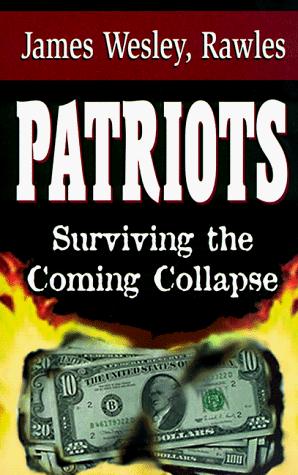
- Coming Collapse
series5 books1999
similar bynear futuretensepost-apocalypticsurvivaldark+3 more
The Patriots novel series is a five-novel series by survivalist novelist and former U.S. Army officer and blogger, James Wesley Rawles. It is followed by his Counter-Caliphate Chronicles novel series.
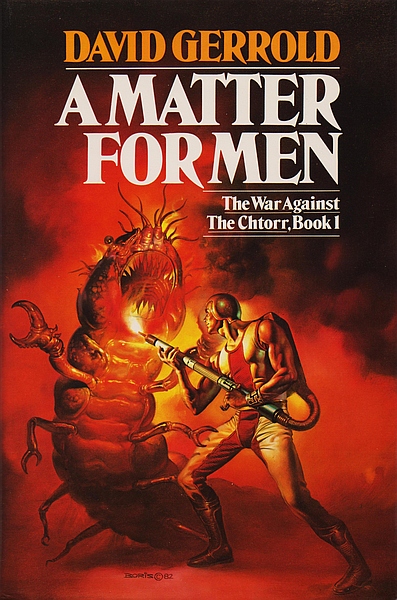
- War Against the Chtorr
series7 books1983
similar bynear futurepost-apocalyptictensedarksurvivalecological collapsewar
The War Against the Chtorr is a series of science fiction novels by American writer David Gerrold. The Chtorr series was originally planned as a trilogy, but as the story became more intricate, Gerrold realized that three books would not be enough for him to tell the entire story. For a time, he was uncertain how many books there would be in the end but plans on seven. As of 2022, four books have been completed. As of 2017, a fifth and sixth were in the works, 24 years after the publication of the fourth book.
- The Running Man
Stephen Kingstandalone novel1982
similar bynear futuretensethriller & suspensesurvivaldark
The Running Man is a dystopian thriller novel by American writer Stephen King, first published under the pseudonym Richard Bachman in 1982 as a paperback original. It was collected in 1985 in the omnibus The Bachman Books. The novel is set in a dystopian United States during the year 2025, in which the nation's economy is in ruins and world violence is rising. The story follows protagonist Ben Richards as he participates in the reality show The Running Man, in which contestants win money by evading a team of hitmen sent to kill them.
- Mother of Storms
John Barnesstandalone novel1994
similar bynear futuretensepost-apocalypticsurvivalecological collapse+1 more
From the flaps of the Tor first edition: "It is 2028. A strike to destroy an illegal Arctic weapons cache has a catastrophic side effect. Massive amounts of energy are liberated from the polar ice, suddenly warming the Earth's climate. In the middle of the Pacific, a gigantic hurricane thousands of miles across is forming, larger than any in human history. A storm with winds of supersonic speed. A storm that changes direction at whim. A storm that refuses to die. A storm so vast it spawns dozens more in its wake... Blinded by intrigue, expedience, and greed, the world's politicians and power brokers have ignored the killer storms threat until it is too late. Already the death toll is in the tens of millions, as it savages the Pacific coast, while its devil's brood of smaller storms are wreaking havoc across the face of the planet. While the survivors scramble for advantage, a handful of courageous men and women undertake a daring, desperate plan to save humanity from total destruction - a plan so visionary it may alter forever the future of the human race."
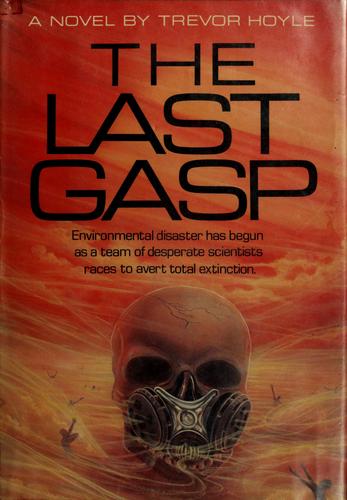
- The Last Gasp
Trevor Hoylestandalone novel1983
similar bynear futuretensethriller & suspensedarksurvivalecological collapse
From the flaps of the Crown first edition: "When British marine biologist Gavin Chase stepped out into the windswept wastes at the Halley Bay antarctic research station one morning, the last thing he expected to see was a sled team coming out of nowhere carrying a half-mad, half-frozen Russian scientist babbling an incomprehensible warning. But that warning would threaten the future of the human race and force Chase to make some of the hardest decisions of his life. Months later, at a Geneva environmental conference, Chase meets Cheryl Detrick, the daughter of Theo Detrick, the grand old man of diatom research. Chase, the Detricks, and Soviet scientist Boris Stanovnik theorize that the oxygen-producing microscopic plants of the world's oceans are dying and the level of atmospheric pollutants has finally exceeded the ability of the planet's ecology to recycle them. There is also good reason to believe that the superpowers are planning to wage a new type of environmental warfare. Sooner or later there will be nothing left to breathe. So begins a race against the future. Chase and Cheryl, now lovers, struggle to avert ecological catastrophe as agents of the military-industrial complex hunt them down... and as a growing belt of unbreathable gases spreads outward from the equator, uprooting millions. Their enemies are Lloyd Madden, an insane military mastermind planning to seed the earth with poison and then repopulate it with a race of mutants, and Joseph Earl Gelstrom, a wealthy chemical manufacturer who has Cheryl's father killed to hide his involvement. But Gelstrom himself falls victim to pollution sickness, and he repents. To raise money to finance a research team, Chase must make an unholy alliance with the dying Gelstrom, but this is too much for Cheryl, who leaves him. As more and more of the world becomes uninhabitable, as industries and governments collapse and chaos reigns, as the oceans fill up with dioxin, as the climate changes and mutant life-forms encroach upon the last refuges of humankind, Chase leads a last desperate mission to find and rescue Cheryl and to lead his team of scientists to safety."
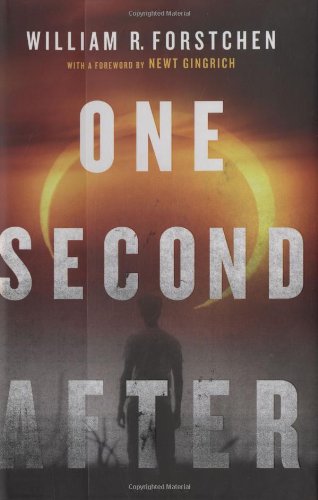
- One Second After / John Matherson
series4 books2009
similar bypost-apocalypticnear futuredarktensesurvivalwar
Retired army colonel and college professor John Matherson is living an ordinary life in a small North Carolina town when every piece of modern electronics around him dies at once -- the opening move of an electromagnetic pulse attack on the United States. William R. Forstchen's One Second After follows Matherson and his neighbors as they try to hold their community together with no power, no vehicles, and no outside help, and the sequels track the same slow, grinding rebuilding over the following years. The series leans hard into plausible, granular detail about what actually happens to a country when its grid goes down.
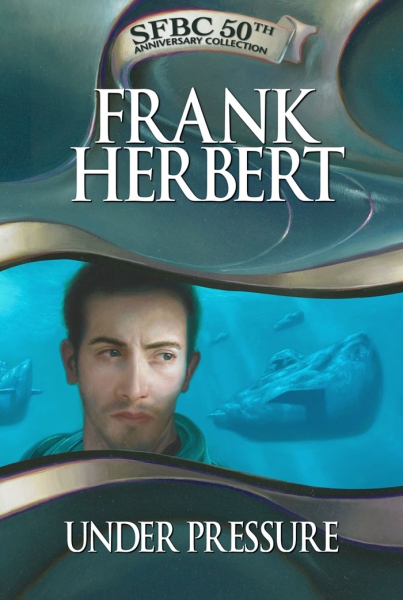
- Under Pressure
Frank Herbertstandalone novel1956
similar bynear futuretensethriller & suspensedarksurvival+1 more
From back cover Del Rey paperback September 1978: FOUR MEN Were on board the atomic subtug Fenian Ram S1881. They were on a mission to steal vitally needed oil from underwater deposits in enemy territory -- a mission from which none of the last twenty tugs had returned... FOUR MEN Fighting a war a mile and half under the ocean, isolated by the unrelenting pressure of the water and by their own hellish fears... FOUR MEN Who knew everything they had to know about one another -- except which one of them was the saboteur who could destroy them all!
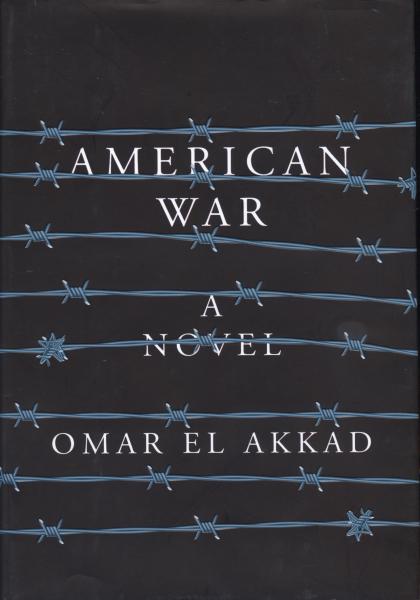
- American War
Omar El Akkadstandalone novel2017
similar bynear futurepost-apocalypticdarksurvivalecological collapsewar+1 more
American War is the first novel by the Egyptian-Canadian journalist Omar El Akkad. It is set in the United States in the near future, ravaged by climate change and disease, in which the Second Civil War has broken out over the use of fossil fuels.
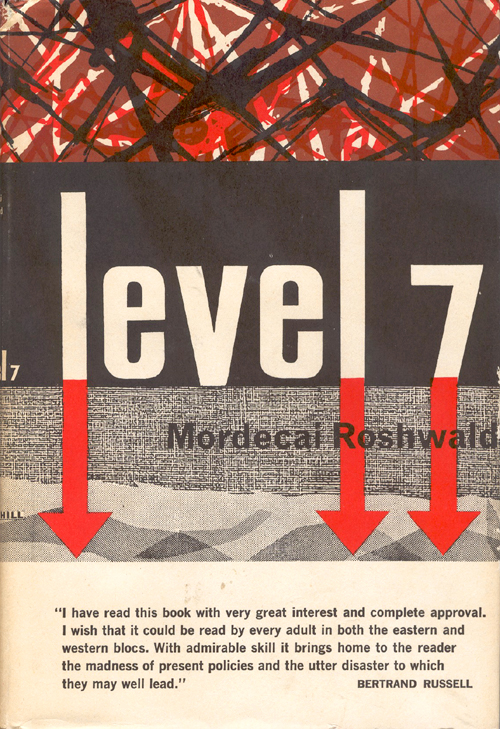
- Level 7
Mordecai Roshwaldstandalone novel1959
similar bynear futurepost-apocalypticdarktensesurvivalwar
Level 7 is a 1959 science fiction novel by American writer Mordecai Roshwald. It is told from the first-person perspective of a modern soldier, X-127, living in the underground military complex Level 7, where he and several hundred others are expected to reside permanently. X-127 fulfills the role of 'push-button' offensive initiator of his nation's nuclear weapons capacity against an unspecified enemy. X-127 narrates life within a deep shelter before, during and after a nuclear war that wipes out the human species.
- The Fireman
Joe Hillstandalone novel2016
similar bynear futurepost-apocalypticsurvivaldarktense
The Fireman is a novel set in a post-apocalyptic time by American author Joe Hill. The novel, Hill's fourth, tells the tale of a deadly spore that has infected most of the world's population. Hill first spoke of the novel in 2013 in promotional interviews for his then-new novel NOS4A2. The novel was released on May 17, 2016.
- The Passage
series3 books2010
similar bynear futurepost-apocalypticdarktensesurvival
The Passage is a novel series by Justin Cronin. There are three published books in the series. The film rights were acquired by Fox Entertainment Group in 2007 for adaptation into a film trilogy, but after 12 years of development and planning, it was changed to a television series, which premiered in January 2019 and was canceled after the first season.
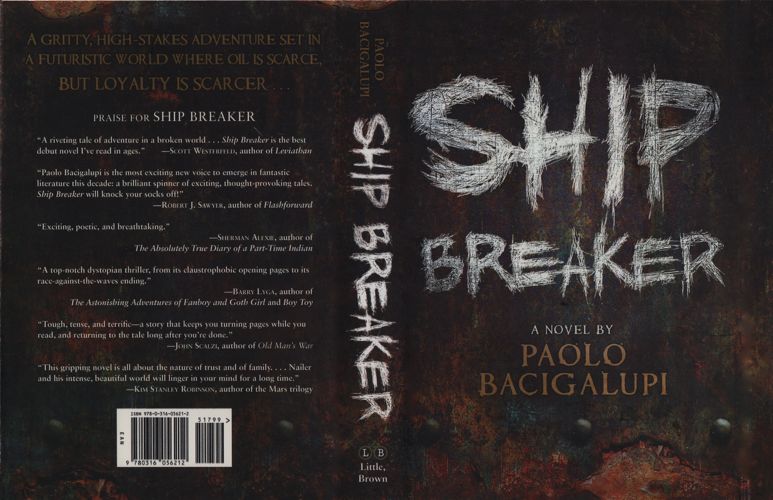
- Ship Breaker
series3 books2010
similar bypost-apocalypticdarktensenear futuresurvival+2 more
Nailer works a light-crew scavenging copper wire and scrap from beached oil tankers on a Gulf Coast reshaped by rising seas and vanished order, until a wrecked clipper ship washes ashore carrying a half-drowned girl from the wealthy world he'll never belong to. Paolo Bacigalupi's Ship Breaker follows Nailer as helping her pulls him out of his abusive father's orbit and into a much larger, more dangerous game involving her family's fortune. The sequels The Drowned Cities and Tool of War widen the same flooded, resource-scavenging future to new characters and coastlines.
- Down to a Sunless Sea
David Grahamstandalone novel1979
similar bynear futurepost-apocalypticsurvivaldarktensewar
David Graham's Down to a Sunless Sea (1979) is a post-apocalyptic novel about a planeload of people during and after a short nuclear war, set in a near-future world where the USA is critically short of oil. The title of the book is taken from a line of the poem Kubla Khan by Samuel Taylor Coleridge.
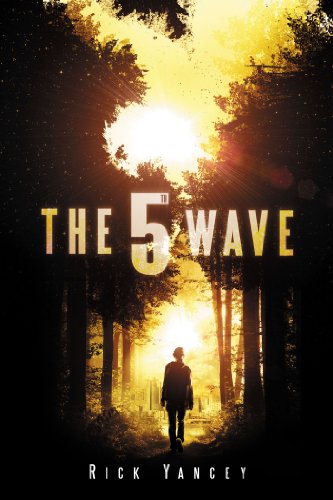
- The 5th Wave
series4 books2013
similar bytensepost-apocalypticnear futuresurvivaldark
Rick Yancey's The 5th Wave opens after a series of escalating alien attacks has already devastated Earth's population and infrastructure, following sixteen-year-old survivor Cassie Sullivan as she searches for her younger brother while trying to work out who, among the remaining humans, can still be trusted. The trilogy is young-adult science fiction that treats its alien-invasion premise as a survival and paranoia story more than a war story.
- The Road
Cormac McCarthystandalone novel2006
similar bynear futurepost-apocalypticsurvivaldarkparenthood
In this post-apocalyptic novel, a father and his son walk alone through burned America. Nothing moves in the ravaged landscape save the ash on the wind. It is cold enough to crack stones, and when the snow falls it is gray. They sky is dark. Their destination is the coast, although they don't know what, if anything, awaits them there. They have nothing; just a pistol to defend themselves against the lawless bands that stalk the road, the clothes they are wearing, a cart of scavenged food--and each other. This book boldly imagines a future in which no hope remains, but in which the father and his son, "each the other's world entire," are sustained by love. It is an unflinching meditation on the worst and the best that we are capable of: ultimate destructiveness, desperate tenacity, and the tenderness that keeps two people alive in the face of total devastation.--From publisher description.
- Cold People
Tom Rob Smithstandalone novel2023
similar bynear futurepost-apocalypticsurvivaldarktense+1 more
A novel about a colony of global apocalypse survivors seeking to reinvent civilisation under the most extreme conditions imaginable: without warning, a mysterious and omnipotent force has claimed Earth for their own; there are no negotiations, no demands, no reasons given for their actions; humanity has thirty days to reach the one place on Earth where they will be allowed to exist... Antarctica.
- Aftermath (Charles Sheffield)
series2 books1998
completed
similar bynear futuretensedarksurvival+2 more
Charles Sheffield's Aftermath duology opens with a near-future Earth devastated by a nearby supernova's radiation, which knocks out electronics and forces survivors to rebuild without most modern technology. Starfire continues years later as a second, larger stellar threat approaches and humanity must recover enough capability to respond. Sheffield, a physicist by training, grounds both books in hard-science consequences of the disaster rather than treating it as mere backdrop.