Loreful
HomeDiscover
Search series, authors…⌘K
Loreful

Reading orders for SF/F series and shared universes — with your place kept in every one.

Explore

UniversesSeriesWorksAuthorsAtlas

Help

FAQAboutSite map

Account & legal

Sign inCreate accountPrivacyTerms

Data

Built on ISFDB, Wikipedia, Wikidata and Open Library. Curated reading orders carry their reasoning on the page; the rest follow publication order. Data sources & licenses

© Loreful · data: ISFDB · CC BY

More like Lent

anchored on:historical fantasyreincarnationfaith and religionour worldeuroperenaissance and early modern+5 more

but

Mood

The mood the book leaves you in.

  • The reading experience is propelled by journeys, exploration, and physical risk; excitement and forward momentum dominate over dread or introspection.
  • Joy and loss are deliberately mixed; the resolution grants characters something real while taking something else away, leaving warmth and sorrow together.
  • The book demands work from the reader — dense prose, difficult structure, unfamiliar ideas, or morally uncomfortable material — as part of its intended effect.
  • Grim events, cruelty, or despair dominate the atmosphere, and the book does not soften them with comfort or comic relief.
  • The atmosphere is quietly unsettling — wrongness, unease, and the uncanny pervade the book without necessarily escalating into overt horror.
  • The book is built to move the reader; character feeling is foregrounded and major scenes aim at a strong emotional response.
  • Humor is a primary aim and the prose plays for laughs — comic situations, wit, or dialogue produce sustained comedy, not occasional levity.
  • The book insists that things can improve; effort and decency are shown to matter, and the arc bends toward better outcomes even through hardship.
  • The book teaches as it goes — real facts, history, science, or craft are conveyed in enough depth that learning is part of the reading experience.
  • The book is designed to uplift and motivate, presenting perseverance or achievement in a way that invites the reader to aspire or act.
  • The overall register is cheerful and easygoing; stakes are kept gentle and the book avoids dwelling on pain or dread.
  • Withheld information drives the experience; the book sustains enigmas and secrets the reader wants resolved, whatever its genre.
  • The book is contemplative and inward-looking, giving more weight to thought, memory, and meaning than to external events.
  • The book works as comfort reading — low tension, a soothing pace, and an atmosphere the reader can unwind in.
  • Grief, loss, or melancholy set the dominant register, and the book lets sorrow stand rather than resolving it into comfort.
  • Sustained suspense is the point; the book keeps the reader braced for what happens next through danger, pressure, or impending revelation.
  • Playful invention and charm define the register — fanciful conceits, light absurdity, and a narration that delights in its own oddity.

About

What the story runs on.

  • Stories in which extraterrestrial beings are central — as characters, cultures, or the object of the plot.
  • Stories structured as a quest — a journey undertaken to find, deliver, or destroy something of great import.
  • Stories in which staying alive against nature, catastrophe, or scarcity is the central problem.
  • Stories of lovers kept apart by law, family, faith, or station, where the obstacle to love is the plot.
  • Stories in which a friendship — its making, testing, or loss — is the emotional center.
  • Stories of growing up — a young protagonist crossing from childhood into adult knowledge and responsibility.
  • Stories about who a character truly is — self-discovery, doubled lives, and the search for a self.
  • Stories about mourning — living through the death of a loved one and what loss does to the survivors.
  • Stories in which a buried family truth — hidden parentage, crimes, or shames — surfaces and reorders the present.
  • Stories driven by maneuvering for power — factions, conspiracies, and statecraft conducted in shadow.
  • Stories in which war itself is the subject — combat, occupation, and what warfare does to soldiers and civilians.
  • Stories organized around investigating a killing — the case, the clues, and the pursuit of the killer, in any genre's clothing.

Shelf

Where it sits in the library.

    • Fiction built on magic or other supernatural elements that have no scientific explanation.
    • Secondary-world fantasy at large scale, where the fate of nations or the world turns on the protagonists' struggle.
    • Fantasy set in a recognizably modern city or contemporary world where the supernatural intrudes on everyday life.
    • Fantasy that blends in horror's atmosphere and imagery, keeping a fantastical frame around grim or frightening material.
    • Action-driven fantasy following warriors or rogues with personal stakes against sorcerous threats, rather than world-spanning conflicts.
    • Fantasy set in a real historical period or a close analogue of one, with magic woven into the era.
    • Fantasy in which protagonists cross from the ordinary world into another world through a portal or similar passage.
    • Fiction that retells or reworks a traditional fairy tale in a new form or setting.
    • Fantasy drawing directly on myths, legends, and folklore, retelling them or building on their figures and logic.
    • Fantasy of ghosts, vampires, shapeshifters, psychics, and similar phenomena, usually set in an otherwise ordinary world.
    • Fiction mixing science-fictional trappings with overtly magical or impossible elements in one setting.
    • Low-stakes fantasy emphasizing comfort, community, and everyday pleasures over conflict and peril.
    • Speculative fiction of pervasive moral ambiguity, violence, and cynicism that rejects heroic conventions — fantasy and SF alike.
      • Fiction that extrapolates from science and technology — future societies, space travel, or speculative inventions — within at least nominally natural laws.
      • Science fiction of interstellar scope — starships, galactic polities, and adventure across star systems.
      • Science fiction committed to scientific rigor, where technical plausibility constrains the story.
      • Science fiction centered on armed forces and warfare, told largely from a military point of view.
      • Science fiction of networked, corporate-dominated near futures, pairing high technology with social decay.
      • Science fiction styled on nineteenth-century steam-powered technology, often in a Victorian or pseudo-Victorian setting.
      • Fiction depicting an oppressive or catastrophic society, presented as a warning.
      • Fiction set after civilization's collapse, following survivors in the ruins of the old world.
      • Fiction in which characters move between past and future, and the mechanics or consequences of that travel drive the plot.
      • Fiction exploring a world where a historical event went differently and history diverged from ours.
      • Science fiction about humanity's first encounter and communication with an alien intelligence.
      • Science fiction in which extraterrestrial forces attack or occupy Earth and humanity resists.
      • Fiction whose primary aim is to frighten or unsettle the reader through dread, menace, or the monstrous.
      • Horror of vast, indifferent, incomprehensible entities before which humanity is insignificant, in the Lovecraft tradition.
      • Horror of decaying houses, buried family secrets, and oppressive atmosphere in the Gothic literary tradition.
      • Horror centered on hauntings and the returning dead.
      • Horror located in the mind — paranoia, obsession, and unreliable perception rather than external monsters.
      • Horror built around the reanimated dead and survival amid their outbreaks.
      • Horror defined by explicit, transgressive gore that refuses to cut away from violence.
      • Speculative fiction of the strange and uncanny that resists both natural explanation and standard genre categories.
      • Fiction organized around solving a crime or puzzle, typically following an investigator toward the identification of a culprit.
      • A puzzle-first mystery that lays out clues so the culprit's identity can be deduced before the reveal.
      • Crime fiction of moral ambiguity, fatalism, and hard-edged style, set among the corrupt and the doomed.
      • A mystery following the realistic routines of police work — forensics, interviews, and case-building.
      • A gentle mystery with an amateur sleuth, a small community, and violence kept off the page.
      • A mystery set in a past era, where the investigation works within that period's methods and society.
      • Fast-paced fiction driven by imminent danger, pursuit, or high-stakes conspiracy, built to sustain tension.
      • A thriller of espionage — agents, tradecraft, and intelligence services in conflict.
      • A thriller centered on lawyers and the courtroom, where litigation carries the suspense.
      • A thriller driven by detailed contemporary or near-future technology, often military or scientific.
      • A thriller whose tension comes from mental states and manipulation between characters rather than external action.
      • Fiction whose central plot is a romantic relationship and its development toward an emotionally satisfying resolution.
      • Romance in which one or both partners are supernatural beings, blending fantasy elements into the love story.
      • A fantasy-romance hybrid in which the romantic arc and the fantasy plot carry equal weight.
      • Romance set in a past era, with courtship shaped by the period's society and manners.
      • Romance set in the present day, without supernatural or historical elements.
      • Fiction set in a real past period, where the historical setting materially shapes characters and events.
        • General and literary fiction emphasizing prose style, character interiority, or formal ambition over genre plot conventions.
        • Fiction in a realistic world where magical events occur and are treated as ordinary, in the tradition of Latin American literature.
        • Fiction that ridicules people, institutions, or society in order to criticize them.
        • Fiction of dreamlike, irrational imagery and logic that breaks from realistic representation.
        • Fiction that plays with narrative convention through metafiction, fragmentation, and self-reference.
        • Fiction propelled by journeys, exploration, and physical peril, where action and survival carry the plot.
        • Adventure fiction of ships and seafaring — naval engagements, voyages, and life at sea.
        • Fiction of the American frontier West — gunmen, ranchers, and lawmen, typically in the late nineteenth century.
        • Fiction centered on soldiers, campaigns, and the experience of warfare, historical or imagined.
          • Fiction written primarily to amuse, using comedic situations, wit, or parody as its organizing principle.
            • Multi-generational fiction following a family or dynasty across decades, with inheritance and kinship as the through-line.
              • Fiction whose world runs on explicit game mechanics — levels, stats, and skills that characters can see and exploit.
                • Fiction about costumed or superpowered heroes and their conflicts with comparable villains.

                Practical

                How long a commitment, whether it stands alone, and whether it has finished.

                Tap a chip to ask for it · tap again to rule it out · once more to clear. Numbers show what would be left.

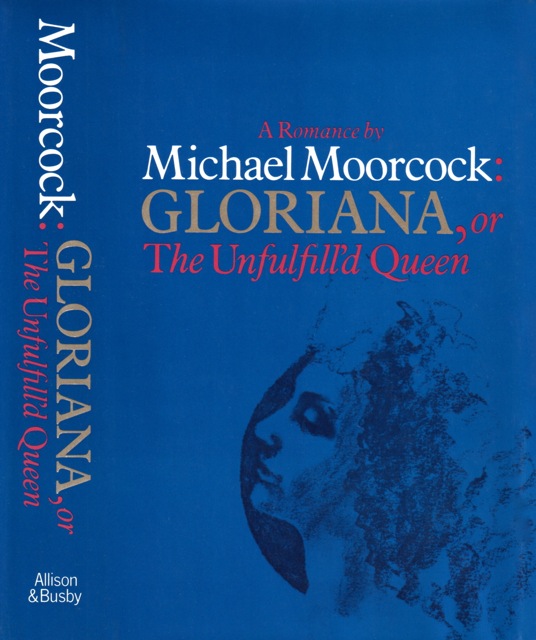
                • Cover of Gloriana, or, the Unfulfill'd Queen
                  Gloriana, or, the Unfulfill'd Queen

                  Michael Moorcock · standalone novel · 1978

                  similar byreflectiverenaissance and early modernhistorical fantasyliterary & generalfantasyidentitypolitical intrigue

                  Gloriana, or The Unfulfill'd Queen is a work of literary fantasy by British novelist Michael Moorcock. It was first published in 1978 and has remained in print ever since.

                • Cover of The Malacia Tapestry
                  The Malacia Tapestry

                  Brian W. Aldiss · standalone novel · 1976

                  similar byreflectiverenaissance and early modernhistorical fantasypolitical intriguefantasy

                  The Malacia Tapestry is a fantasy-historical novel by British writer Brian Aldiss, published in 1976. The story takes place in a fictional port city called Malacia, which is an alternate history version of a Renaissance city-state. It tells the story of a poor young actor named Perian de Chirolo who hopes to change his station in life so he can marry a wealthy merchant's daughter. While Malacia is considered a near-utopia, the happiness in the city belies the authoritarian rule of the powerful Supreme Council, which uses fear to prevent progress.

                • Cover of Immortal
                  Immortal

                  Traci L. Slatton · standalone novel · 2008

                  similar byreflectiverenaissance and early modernour worldeuropehistorical fantasyliterary & generalidentityfaith and religion

                  In an age of wonderous beauty and terrible secrets,one man searches for his destiny...In the majestic heart of Florence, a beautiful golden-haired boy is abandoned and subjected to cruelty beyond words. But Luca Bastardo is anything but an ordinary boy. Across two centuries of passion and intrigue, Luca will discover an astonishing gift--one that will lead him to embrace the ancient mysteries of alchemy and healing and to become a trusted confidant to the powerful Medicis...even as he faces persecution from a sadistic cabal determined to wrest his secrets for themselves.But as the Black Death and the Inquisition wreak havoc on his beloved city, Luca's survival lies in the quest to solve two riddles. One is the enigma of his parents and his ageless beauty. The other is a choice between immortality and the only chance to find his one true love. As Luca journeys through the heights of the Renaissance, befriends Giotto and Leonardo Da Vinci--140 years apart--and pursues the most closely guarded secrets of religious faith and science for the answers to his own burning questions, his remarkable search will not only change him...but will change the course of history.From the Trade Paperback edition.

                • Cover of Confessions of an Ugly Stepsister
                  Confessions of an Ugly Stepsister

                  Gregory Maguire · standalone novel · 1999

                  similar byreflectiverenaissance and early modernfantasyidentityeurope

                  Confessions of an Ugly Stepsister is a 1999 fantasy novel by American writer Gregory Maguire, retelling the tale of Cinderella through the eyes of one of her "ugly stepsisters." In 2002, the book was adapted into a TV movie of the same name directed by Gavin Millar. The book is dedicated to Andy Newman, Maguire's husband.

                • Cover of Mother Night
                  Mother Night

                  Kurt Vonnegut & Jr. · standalone novel · 1962

                  similar byreflectiveour worldliterary & generalidentityeurope

                  Howard W. Campbell Jr., an American playwright who grew up in Germany, writes his memoirs from an Israeli prison cell awaiting trial for war crimes. As the Nazis rose to power, Campbell stayed on, married a German actress, and was recruited by an American agent to serve as a double agent, broadcasting Nazi propaganda over the radio while secretly passing coded intelligence to the Allies. The catch, as Campbell tells it, is that he became one of the war's most effective propagandists in the process, whatever his loyalties. Kurt Vonnegut's darkest novel asks what a person becomes when the mask he wears for a cause is indistinguishable from his face.

                • Cover of Stranger in a Strange Land
                  Stranger in a Strange Land

                  Robert A. Heinlein · standalone novel · 1961

                  similar byreflectivefaith and religionidentityour world

                  Stranger in a Strange Land is a 1961 science fiction novel by the American author Robert A. Heinlein. It tells the story of Valentine Michael Smith, a human who comes to Earth in early adulthood after being born on the planet Mars and raised by Martians, and explores his interaction with and eventual transformation of Terran culture.

                • Cover of Grendel
                  Grendel

                  John Gardner · standalone novel · 1971

                  similar byreflectiveeuropeliterary & generalfantasyidentity

                  Between bouts of his war on the king of the Danish Norsemen, the monster philosophizes about life and fate.

                • Cover of The Scarlet Letter
                  The Scarlet Letter

                  Nathaniel Hawthorne · standalone novel · 1850

                  similar byreflectiverenaissance and early modernfaith and religionliterary & general+1 more

                  In 17th-century Puritan Boston, Massachusetts of 1642-1649, a woman conceives a daughter through an adulterous affair, then struggles to create a new life of repentance and dignity.

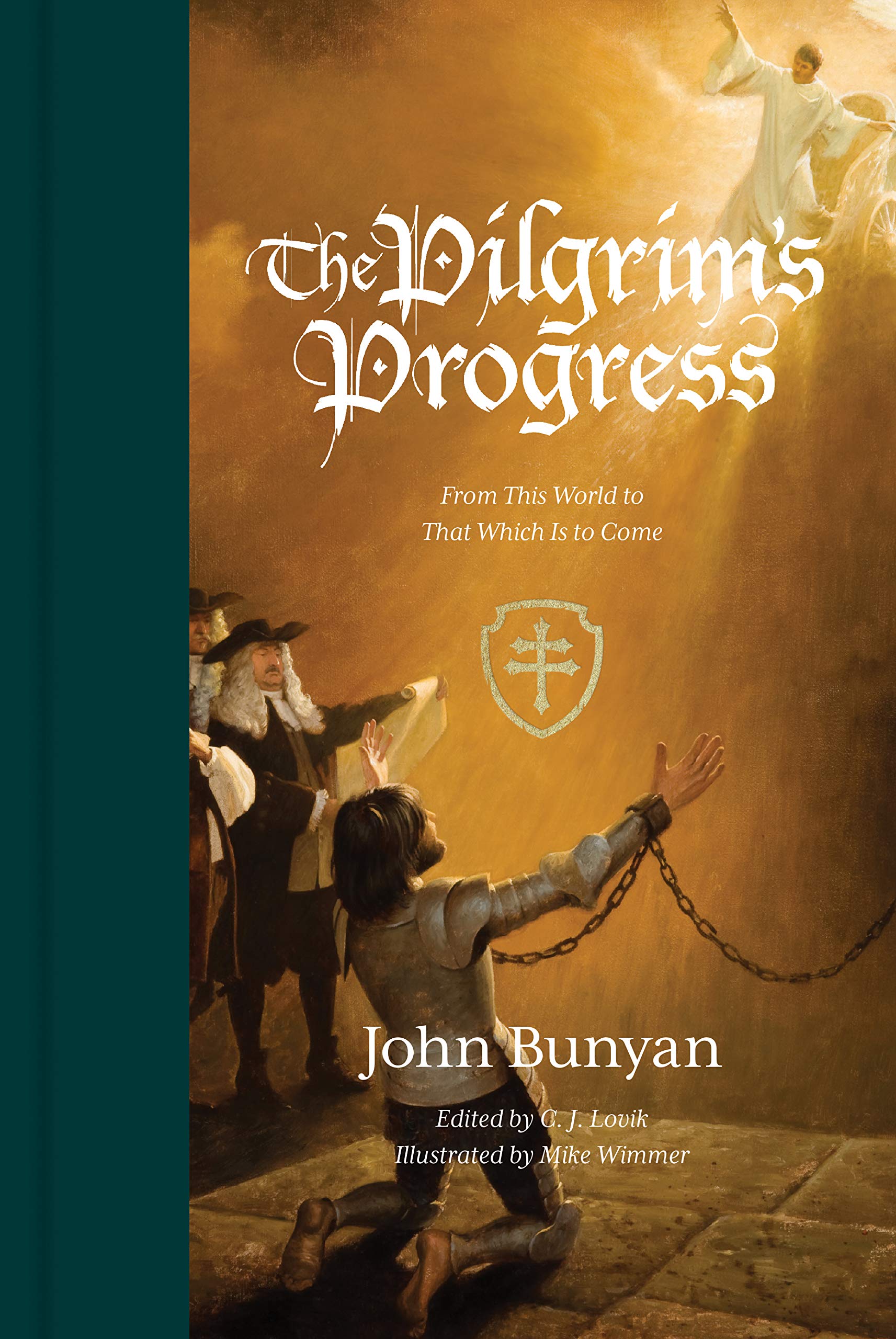
                • Cover of The Pilgrim's Progress
                  The Pilgrim's Progress

                  John Bunyan · standalone novel · 1678

                  similar byreflectiverenaissance and early modernfaith and religionliterary & general

                  The Pilgrim's Progress from This World, to That Which Is to Come is a 1678 Christian allegory written by the English nonconformist preacher John Bunyan. It is commonly regarded as one of the most significant works of Protestant devotional literature and of wider early modern English literature. It has been translated into more than 200 languages and has never been out of print. It appeared in Dutch in 1681, in German in 1703 and in Swedish in 1727. The first North American edition was issued in 1681. It has also been cited as the first novel written in English. According to literary editor Robert McCrum, "there's no book in English, apart from the Bible, to equal Bunyan's masterpiece for the range of its readership, or its influence on writers as diverse as William Hogarth, C. S. Lewis, Nathaniel Hawthorne, Herman Melville, Charles Dickens, Louisa May Alcott, George Bernard Shaw, William Thackeray, Charlotte Brontë, Mark Twain, John Steinbeck and Enid Blyton." The lyrics of the hymn "To be a Pilgrim" are based on the novel.

                • Cover of Concrete Island
                  Concrete Island

                  J. G. Ballard · standalone novel · 1974

                  similar byreflectiveour worldliterary & generalidentityeurope

                  Architect Robert Maitland crashes his car onto a stretch of wasteland trapped between three converging motorways -- visible from thousands of cars, reachable by none of them. Injured and unable to climb back to the road, Maitland adapts to life on what he starts calling the Island, scavenging food thrown from car windows, and discovers he isn't alone: a runaway sex worker hiding in a bunker, and a brain-damaged former circus acrobat, both long past expecting rescue. What begins as a survival story turns into a question of whether Maitland even wants to leave. A J. G. Ballard novel of urban isolation, grouped with Crash and High-Rise.

                • Cover of Flint and Mirror
                  Flint and Mirror

                  John Crowley · standalone novel · 2022

                  similar byreflectiverenaissance and early modernhistorical fantasyfantasypolitical intrigue

                  Flint and Mirror: A Novel of History and Magic is a 2022 historical fantasy novel by John Crowley, retelling the life of Hugh O'Neill, Earl of Tyrone from a magical viewpoint. An expansion of Crowley's 2018 short story of the same name, it was first published by Tor Books.

                • Cover of Freddy's Book
                  Freddy's Book

                  John Gardner · standalone novel · 1980

                  similar byreflectiverenaissance and early modernhistorical fantasyliterary & generalidentity

                  WorldCat: Freddy, who is a shy, obese, eight-foot-tall adolescent, writes a folktale of sixteenth-century Scandinavia. The dark, anguished world he writes of mirrors his own anguish.

                • Cover of Sarantine Universe
                  Sarantine Universe

                  series · 8 books · 1995

                  similar byreflectivehistorical fantasypolitical intrigue+3 more

                  Guy Gavriel Kay's Sarantine-world novels are loosely connected historical fantasies sharing one invented history rather than a fixed cast: The Lions of Al-Rassan (1995, an analogue of medieval Spain), The Last Light of the Sun (2004, drawing on the Viking-age raids of Alfred the Great's Britain), Children of Earth and Sky (2016, a world modeled on Venice, Istanbul, and the Balkans in the 15th century), its prequel A Brightness Long Ago (2019), and its sequel All the Seas of the World (2022, set amid wars between Christendom and the Ottoman Empire). Each novel stands alone, but together they trace centuries of the same fictional world, distinct from Kay's separate Sarantine Mosaic duology.

                • Cover of The Fire Gospel
                  The Fire Gospel

                  Michel Faber · standalone novel · 2008

                  similar byreflectivefaith and religionour worldliterary & generalfantasy

                  Literary fantasy novel

                • EO
                  Eloisa: Or, a Series of Original Letters

                  Jean-Jacques Rousseau · standalone novel · 1761

                  similar byreflectiverenaissance and early moderneuropeliterary & generalpolitical intrigue+1 more

                  The love between Julie d'Étange and her private teacher St Preux, made impossible because of their relative stations, leads to a dead-end. Julie eventually marries old M. de Wolmar, who acquaints them with his Utopian estate, characteristic of the Age of enlightenment.

                • Cover of Replay
                  Replay

                  Ken Grimwood · standalone novel · 1987

                  similar byreflectiveour worldfantasyidentity+1 more

                  Replay is a fantasy novel by American writer Ken Grimwood, first published by Arbor House in 1987. It won the 1988 World Fantasy Award for Best Novel.

                • Cover of Life of Pi
                  Life of Pi

                  Yann Martel · standalone novel · 2001

                  similar byreflectiveliterary & generalidentityfaith and religion+1 more

                  Life of Pi is a Canadian philosophical novel by Yann Martel published in 2001. The protagonist is Piscine Molitor "Pi" Patel, an Indian boy from Pondicherry, who explores issues of spirituality and metaphysics from an early age. After a shipwreck, he survives 227 days while stranded on a lifeboat in the Pacific Ocean with a Bengal tiger named Richard Parker, raising questions about the nature of reality and how it is perceived and told.

                • Cover of The Actual Star
                  The Actual Star

                  Monica Byrne · standalone novel · 2021

                  similar byreflectivereincarnationliterary & generalfaith and religion+2 more

                  [Publisher:] The Actual Star takes readers on a journey over two millennia and six continents–telling three powerful tales a thousand years apart, all of them converging in the same cave in the Belizean jungle. Braided together are the stories of a pair of teenage twins who ascend the throne of a Maya kingdom; a young American woman on a trip of self-discovery in Belize; and two dangerous charismatics vying for the leadership of a new religion and racing toward a confrontation that will determine the fate of the few humans left on Earth after massive climate change. In each era, a reincarnated trinity of souls navigates the entanglements of tradition and progress, sister and stranger, and love and hate–until all of their age-old questions about the nature of existence converge deep underground, where only in complete darkness can they truly see. The Actual Star is a feast of ideas about where humanity came from, where we are now, and where we're going–and how, in every age, the same forces that drive us apart also bind us together.

                • Cover of How to Stop Time
                  How to Stop Time

                  Matt Haig · standalone novel · 2017

                  similar byreflectivehistorical fantasyour worldfantasyidentity

                  How to Stop Time is a historical fantasy novel by English writer Matt Haig, published in July 2017.

                • Cover of Lost
                  Lost

                  Gregory Maguire · standalone novel · 2001

                  similar byreflectiveour worldliterary & generalidentity+1 more

                  Lost is a 2001 novel by American author Gregory Maguire. Unlike many of Maguire's other adult novels, Lost is set in the real world. The novel's concept is that the protagonist is a distant relative of the man who inspired Charles Dickens' character of Ebenezer Scrooge.

                • Cover of The Good Man Jesus and the Scoundrel Christ
                  The Good Man Jesus and the Scoundrel Christ

                  Philip Pullman · standalone novel · 2009

                  similar byreflectivefaith and religionour worldliterary & general

                  Philip Pullman retells the gospel story with one change: Mary gives birth to twin sons, not one. Jesus grows into the moral teacher and healer familiar from scripture, while his brother, given the name Christ, watches from the sidelines, recording and reshaping his brother's story with an eye toward the institution he believes should be built on it. As Jesus preaches humility and doubt, Christ is drawn into a bargain with a mysterious stranger who wants his account shaped into something more useful for the church that will one day claim to speak for both of them. Part of Canongate's Myth series, Pullman's short, provocative reworking of the New Testament.

                • Cover of Galileo's Dream
                  Galileo's Dream

                  Kim Stanley Robinson · standalone novel · 2009

                  similar byreflectiverenaissance and early moderneurope+1 more

                  Galileo's Dream (2009) is a science fiction novel with elements of historical fiction, written by Kim Stanley Robinson. In the book, 17th-century scientist Galileo Galilei is visited by far-future time travelers living on the Galilean moons of Jupiter. Italicized portions of text within the novel are "mostly from Galileo's writing or that of his contemporaries."

                • Cover of The Salt Roads
                  The Salt Roads

                  Nalo Hopkinson · standalone novel · 2003

                  similar byreflectiveour worldhistorical fantasyfantasyfaith and religioneurope+1 more

                  Jeanne Duval, the ginger-haired entertainer, is descended from African slaves and white sailors. It is twilight, and she argues with her lover Charles Baudelaire in his Paris apartment. Mer, plantation slave and doctor, has healing hands though her spirit is sickened. She both hungers for and dreads liberation, and longs for the gods to take her home. Thais, a beauty from Alexandria, was sold into slavery and prostitution as a girl. Impelled to seek a glorious revelation, she will travel the long hot roads to Jerusalem. (adapted from information stated with the first edition)

                • Cover of Here Lies Arthur
                  Here Lies Arthur

                  Philip Reeve · standalone novel · 2007

                  similar byreflectivehistorical fantasyour worldidentity+1 more

                  Here Lies Arthur is a young-adult novel by Philip Reeve, published by Scholastic in 2007. Set in fifth or sixth century Britain and the Anglo-Saxon invasion, it features a girl who participates in the deliberate construction of legendary King Arthur during the man's lifetime, orchestrated by a bard. Reeve calls it a back-creation: not a genuine historical novel as it is not based on actual specific events; rather it is "back-created" from the legends, giving them a "realistic" origin.