More like Level 7
anchored on:science fictionwarunderground & cavesnear futuredarkfirst person+6 more
but
- Final Blackout
L. Ron Hubbardstandalone novel1948
similar bynear futurewardarktensescience fictiondystopiapost-apocalyptic+2 more
Final Blackout is a dystopic science fiction novel by American writer L. Ron Hubbard. The novel is set in the future and follows a man known as "the Lieutenant" as he restores order to England after a world war. First published in serialized format in 1940 in the science fiction magazine Astounding Science Fiction, Final Blackout was published in book form in 1948 by The Hadley Publishing Co. Author Services Inc. published a hardcover edition of the book in 1988, and in 1989 the Church of Scientology-affiliated organization Bridge Publications said that a film director named Christopher Cain had signed a contract to write and direct a movie version based on the book.
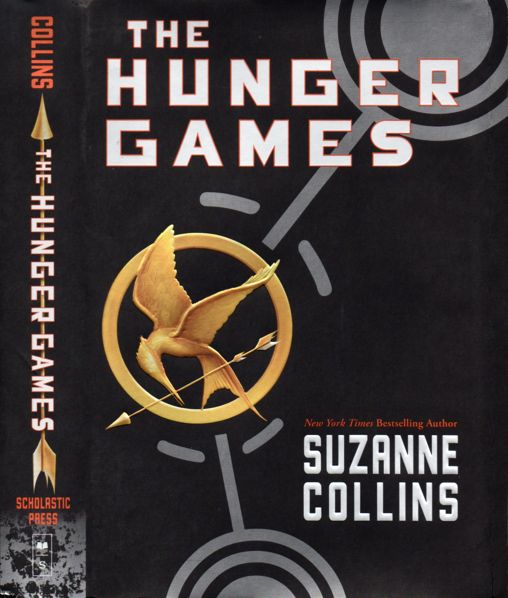
- The Hunger Games
series3 books2008
part of The Hunger Games Universe
similar bydarktensescience fictiontotalitarianismsurvivaldystopiapost-apocalypticfirst person+1 more
The Hunger Games is a series of young adult dystopian novels written by American author Suzanne Collins. The series consists of a trilogy that follows teenage protagonist Katniss Everdeen, as well as two prequels. The Hunger Games universe is a dystopia set in Panem, a post-apocalyptic North American country consisting of the wealthy Capitol and 12 districts in varying states of poverty. As punishment for rebellion, the Capitol hosts an annual battle royale competition called The Hunger Games. Each of the 12 districts must send two children between the ages of 12 and 18 to participate, and the last surviving child is dubbed the victor.
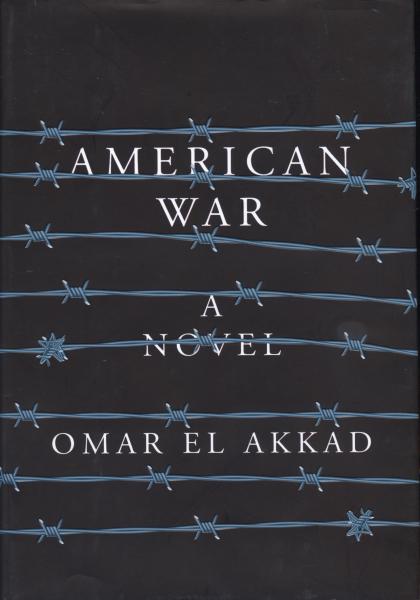
- American War
Omar El Akkadstandalone novel2017
similar bynear futuredarkwarscience fictionsurvivaldystopiapost-apocalyptic+1 more
American War is the first novel by the Egyptian-Canadian journalist Omar El Akkad. It is set in the United States in the near future, ravaged by climate change and disease, in which the Second Civil War has broken out over the use of fossil fuels.
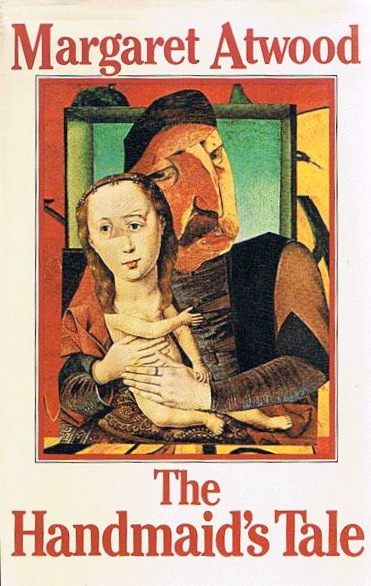
- The Handmaid's Tale
series3 books1985
similar bynear futuredarktensetotalitarianismscience fictiondystopia+1 more
The Handmaid's Tale is Margaret Atwood's 1985 novel set in Gilead, a totalitarian theocracy that has overthrown the United States and forces fertile women into reproductive servitude as Handmaids; it is narrated by one such woman, Offred. Atwood returned to the world in her 2019 sequel The Testaments, set fifteen years later and narrated by three women, including the regime's Aunt Lydia. Together the two novels move from Gilead's grip on power toward the first cracks in it.
- Tomorrow!
Philip Wyliestandalone novel1954
similar bynear futuredarkwartensescience fictionsurvivaldystopia
Conjecture of a tomorrow which brings an attack by the enemy and the destruction of all major cities across an unprepared country.
- The Children of Men
P. D. Jamesstandalone novel1992
similar bynear futuredarktensescience fictiontotalitarianismdystopiapost-apocalyptic
"The human race has become infertile, and under the despotic rule of Xan Lyppiatt, the Warden of England the old are despairing and the young cruel. Theo Faren, a cousin of the Warden, lives a solitary life in this ominous atmosphere. That is, until a chance encounter with a young woman leads him into contact with a group of dissenters. Suddenly his life is changed irrevocably, as he faces agonising choices which could affect the future of mankind." (pdjames.co.uk)
- The Hunger Games Universe
universe5 books2008
Start hereThe Hunger Games · Start here
similar bydarktensescience fictionsurvivaltotalitarianismdystopia+3 more
Panem, they call it now — a nation raised on the drowned bones of North America, a glittering Capitol ringed by twelve districts it once starved into obedience. Every year the Capitol collects its debt in children: two tributes from each district, drawn by lottery, dropped into an engineered arena, and made to kill one another on live television while the whole country is required to watch. This is the Hunger Games — entertainment, punishment, and government at once. Suzanne Collins tells it in a compact, unified body of work. The founding trilogy — The Hunger Games, Catching Fire, and Mockingjay — follows Katniss Everdeen, a girl from the coal-mining District 12 who volunteers in her sister's place and becomes something the Capitol never scripted. Two prequels reach back into the same machinery: The Ballad of Songbirds and Snakes traces a young Coriolanus Snow long before he is President, and Sunrise on the Reaping returns to District 12 a generation ahead of Katniss. Begin with the trilogy, in order — it is Katniss's voice, close and present-tense, that makes Panem breathe, and the prequels land hardest once you know how her story ends. Beneath the spectacle sits one steady, uncomfortable question: who profits when we agree to look away.
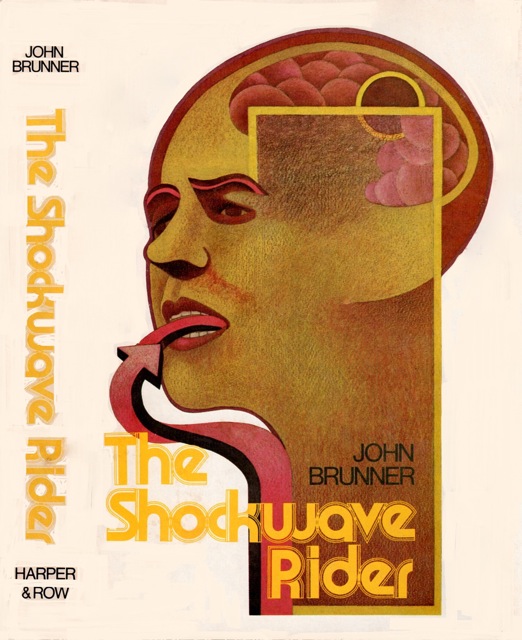
- The Shockwave Rider
John Brunnerstandalone novel1975
similar bynear futuredarktensescience fictiontotalitarianismdystopiapost-apocalyptic
The Shockwave Rider is a science fiction novel by John Brunner, originally published in 1975. It is notable for its hero's use of computer hacking skills to escape pursuit in a dystopian future, and for the coining of the word "worm" to describe a program that propagates itself through a computer network. It also introduces the concept of a Delphi pool, perhaps derived from the RAND Corporation's Delphi method – a prediction market on world events which bears close resemblance to DARPA's controversial and cancelled Policy Analysis Market.
- Earthseed
series7 books1993
similar bynear futuredarkscience fictionsurvivaldystopiapost-apocalyptic+2 more
Octavia E. Butler's Earthseed novels, Parable of the Sower and Parable of the Talents, follow Lauren Olamina as she survives the collapse of a climate-ravaged, near-future United States and founds a belief system built on the idea that "God is Change." The two-book series was left unfinished at Butler's death; a planned third novel, Parable of the Trickster, was never completed. Later graphic-novel adaptations retell the same two stories rather than continuing the narrative.
- The Last Centurion
John Ringostandalone novel2008
similar bynear futuredarktensescience fictionsurvivalwarpost-apocalypticfirst person
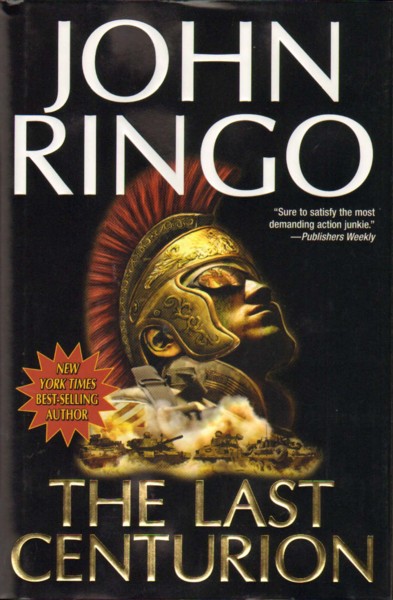
The Last Centurion is a 2008 stand-alone novel by John Ringo. It is written in "blog style" from the point of view of a U.S. Army officer known as "Bandit Six". The novel is set in a post apocalyptic world that has been ravaged by a brief ice age and disease.
- The Passage
series3 books2010
similar bynear futuredarktensesurvivalscience fictionpost-apocalyptic+1 more
The Passage is a novel series by Justin Cronin. There are three published books in the series. The film rights were acquired by Fox Entertainment Group in 2007 for adaptation into a film trilogy, but after 12 years of development and planning, it was changed to a television series, which premiered in January 2019 and was canceled after the first season.
- Down to a Sunless Sea
David Grahamstandalone novel1979
similar bynear futuredarktensescience fictionsurvivalwarpost-apocalyptic
David Graham's Down to a Sunless Sea (1979) is a post-apocalyptic novel about a planeload of people during and after a short nuclear war, set in a near-future world where the USA is critically short of oil. The title of the book is taken from a line of the poem Kubla Khan by Samuel Taylor Coleridge.
- The Running Man
Stephen Kingstandalone novel1982
similar bynear futuredarktensescience fictionsurvivaltotalitarianismdystopia
The Running Man is a dystopian thriller novel by American writer Stephen King, first published under the pseudonym Richard Bachman in 1982 as a paperback original. It was collected in 1985 in the omnibus The Bachman Books. The novel is set in a dystopian United States during the year 2025, in which the nation's economy is in ruins and world violence is rising. The story follows protagonist Ben Richards as he participates in the reality show The Running Man, in which contestants win money by evading a team of hitmen sent to kill them.
- Shade's Children milieu
series2 books1997
similar bynear futuredarktensescience fictionsurvivaldystopiapost-apocalyptic
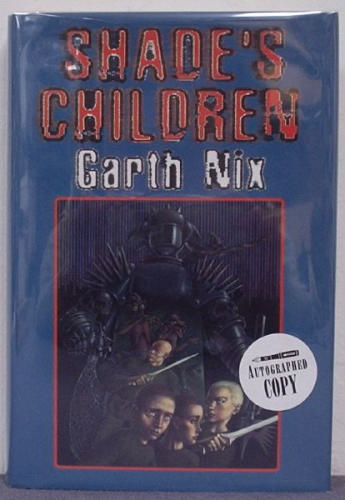
Shade's Children is set on an Earth where all adults vanished overnight fourteen years earlier, leaving children to be harvested at puberty by the machines that now run the world, unless they escape into hiding with Shade, a mysterious AI-like protector. Garth Nix's 1997 novel is a single, self-contained book rather than a series, though its bleak post-apocalyptic premise has drawn comparisons to his other work.
- Ship Breaker
series3 books2010
similar bydarktensenear futurescience fictionsurvivalpost-apocalyptic+2 more
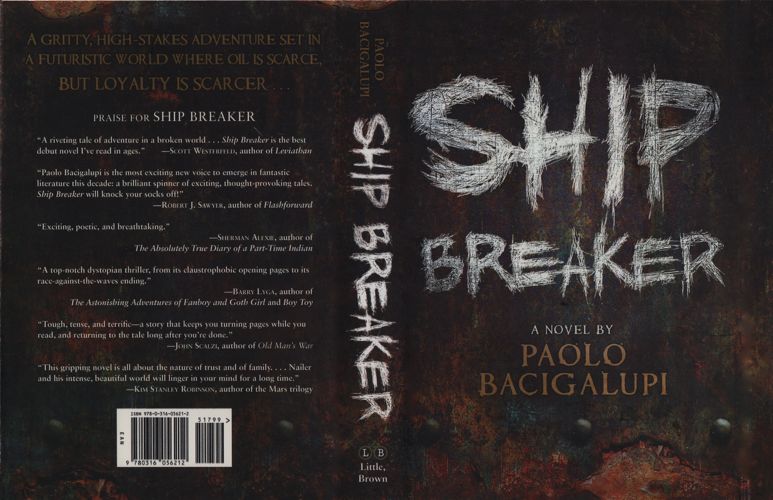
Nailer works a light-crew scavenging copper wire and scrap from beached oil tankers on a Gulf Coast reshaped by rising seas and vanished order, until a wrecked clipper ship washes ashore carrying a half-drowned girl from the wealthy world he'll never belong to. Paolo Bacigalupi's Ship Breaker follows Nailer as helping her pulls him out of his abusive father's orbit and into a much larger, more dangerous game involving her family's fortune. The sequels The Drowned Cities and Tool of War widen the same flooded, resource-scavenging future to new characters and coastlines.
- The Hopkins Manuscript
R. C. Sherriffstandalone novel1939
similar bynear futuredarktensescience fictionsurvivaldystopiapost-apocalyptic
The Hopkins Manuscript is a dystopian science fiction novel by R. C. Sherriff, first published in 1939 by Victor Gollancz. In 1958 it was reissued in a revised edition as a Pan paperback under the title The Cataclysm. The novel was later republished under its original title by The Macmillan Company in 1963 and by Persephone Books in 2002.
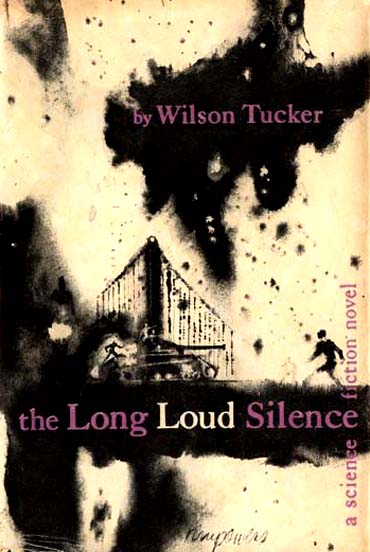
- The Long Loud Silence
Wilson Tuckerstandalone novel1952
similar bynear futuredarktensescience fictionsurvivalwarpost-apocalyptic
Publisher's description: Tomorrow's war -- the war that could not be. The army of the United States was stationed along the length of the Mississippi River, guns pointed east -- with orders to shoot anyone attempting to cross. For the Final War was not a war of the ultimate bomb, of atomic hell. It was a war of the tiny germ, the filterable virus, the disease that came to conquer a nation -- and stayed to damn a world."
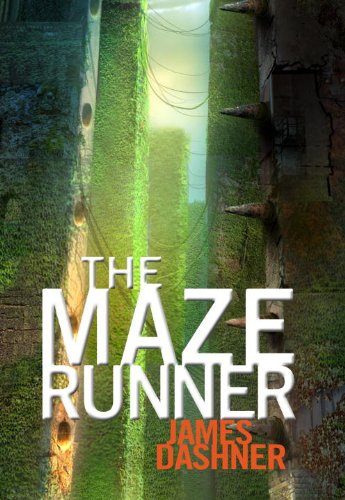
- Maze Runner
series11 books2009
similar bynear futuretensescience fictionsurvivaldystopiapost-apocalyptic+1 more
The Maze Runner is a series of young adult dystopian science fiction novels written by American author James Dashner. The series consists of the trilogy The Maze Runner (2009), The Scorch Trials (2010) and The Death Cure (2011), as well as two prequel novels, The Kill Order (2012) and The Fever Code (2016). A novella titled Crank Palace (2020) and a companion book titled The Maze Runner Files (2013) have also been released. A sequel trilogy in the series titled The Maze Cutter takes place 73 years following the events of The Death Cure and consists of the novels The Maze Cutter (2022), The Godhead Complex (2023), and The Infinite Glade (2025).
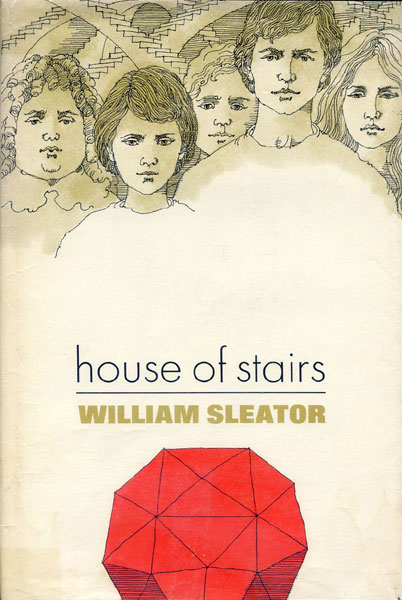
- House of Stairs
William Sleatorstandalone novel1974
similar bynear futuredarktensescience fictionsurvivaltotalitarianismdystopia
Publisher's description: "Five fifteen-year-old orphans of widely varying personality characteristics are involuntarily placed in a house of endless stairs as subjects for a psychological experiment on conditioned human response."
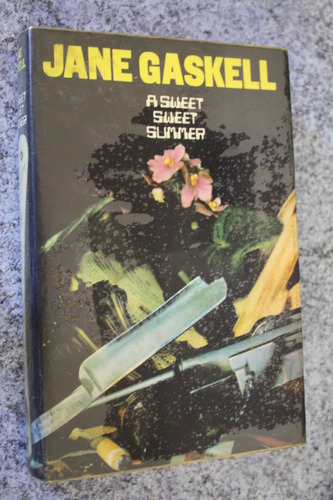
- A Sweet Sweet Summer
Jane Gaskellstandalone novel1969
similar bynear futuredarktensescience fictionsurvivalwartotalitarianismdystopia
Publisher: "Nobody was safe anymore. Huge ships from outer space hung over major British cities and took command by sending orders (disobeyed at risk of death) in strange bubbles. Anarchy is encouraged in an England totally isolated from everywhere else in the world, and the streets are battle fields for communist and fascist bands. Yet it is a summer of wildflowers on the railtracks when Pel's strange and wild cousin Frijja comes to stay and everyone has to battle against a mob of hoodlum fascists who try to take over the house. Jane Gaskell thus introduces a violent world in the not-so-distant future when Englishmen are forced to fight violent forces of darkness among their own people as well as super-powerful extraterrestrials in order to maintain a semblance of civilization."
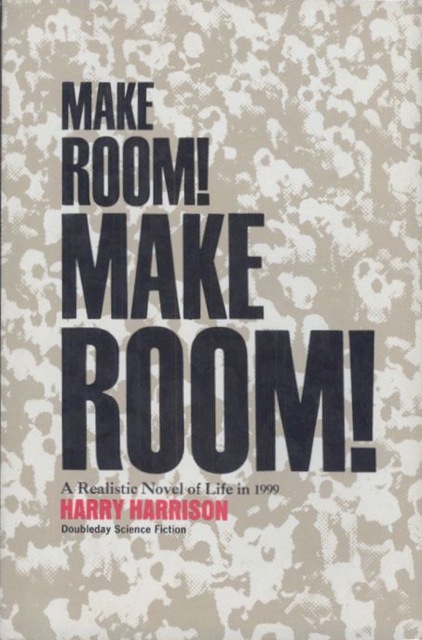
- Make Room! Make Room!
Harry Harrisonstandalone novel1966
similar bynear futuredarktensescience fictionsurvivaldystopia
Make Room! Make Room! is a 1966 science fiction novel written by Harry Harrison exploring the consequences of both unchecked population growth on society and the hoarding of resources by a wealthy minority. It was originally serialized in Impulse magazine.
- I Am Legend
Richard Mathesonstandalone novel1954
similar bydarktensesurvivalscience fictionpost-apocalypticdystopiafirst person
The last human survivor of the vampire epidemic has to maintain his defences against their onslaught, while attempting to research the cause and possibly solution to the plague. Robert Neville is the last living man on Earth... but he is not alone. Every other man, woman and child on the planet has become a vampire, and they are hungry for Neville's blood. By day he is the hunter, stalking the undead through the ruins of civilization. By night, he barricades himself in his home and prays for the dawn. How long can a man survive like this?
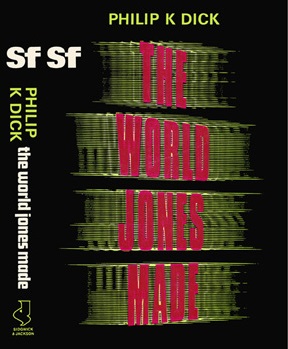
- The World Jones Made
Philip K. Dickstandalone novel1956
similar bynear futuredarktensescience fictiondystopiapost-apocalyptic+1 more
The World Jones Made is a 1956 science fiction novel by American writer Philip K. Dick, examining notions of precognition, humanity, and politics. It was first published by Ace Books as one half of Ace Double D-150, bound dos-à-dos with Agent of the Unknown by Margaret St. Clair.The story takes place after a nuclear war in which society is dominated by relativism, which rejects absolute truths and preaches tolerance as the highest principle. The mutant Floyd Jones, who can see into the future, plans to overthrow the system and colonise space. The story ends with the defeat of Jones, whose plans fail despite his ability to see the future due to the immutability of fate.
- The Long Walk
Stephen Kingstandalone novel1979
similar bynear futuredarktensesurvivaltotalitarianismscience fictiondystopia
The Long Walk is a dystopian horror novel by American writer Stephen King, published in 1979, under the pseudonym Richard Bachman. Set in a dystopian alternative version of the United States ruled by a totalitarian regime, the plot follows the contestants of a grueling annual walking contest. While not the first of King's novels to be published, The Long Walk was the first novel he wrote, having begun it in 1966–67 during his freshman year at the University of Maine, some eight years before his first published novel, Carrie, was released in 1974.