More like Light Play
anchored on:science fictiongenetic engineeringour worldcontemporarytensesurvival+2 more
but
- The Andromeda Strain
series2 books1969
similar byscience fictioncontemporarytensesurvivalplague and pandemic+2 more
Michael Crichton's 1969 novel The Andromeda Strain follows a team of scientists racing to contain a lethal extraterrestrial microorganism that crash-lands in Arizona, told in the clinical, document-driven style that helped establish the techno-thriller genre. Daniel H. Wilson's authorized 2019 sequel The Andromeda Evolution revisits the same threat five decades later. Together the two books form a two-part outbreak story separated by a fifty-year gap in publication.
- Cell
Stephen Kingstandalone novel2006
similar byscience fictionour worldcontemporarytensedarksurvivalplague and pandemic
In Cell, King taps into readers fears of technological warfare and terrorism. Mobile phones deliver the apocalypse to millions of unsuspecting humans by wiping their brains of any humanity, leaving only aggressive and destructive impulses behind. Those without cell phones, like illustrator Clayton Riddell and his small band of "normies," must fight for survival, and their journey to find Clayton's estranged wife and young son rockets the book toward resolution.
- Prey
Michael Crichtonstandalone novel2002
similar byscience fictionour worldcontemporarytensegenetic engineeringsurvival+1 more
Prey is the thirteenth novel by Michael Crichton under his own name and his twenty-third novel overall. It was first published in November 2002, making it his first novel of the twenty-first century. An excerpt was first published in the January–February 2003 issue of Seed magazine. Prey brings together themes from two earlier Crichton best-selling novels, Jurassic Park and The Andromeda Strain, and serves as a cautionary tale about developments in science and technology: in particular, nanotechnology, genetic engineering, and distributed artificial intelligence.
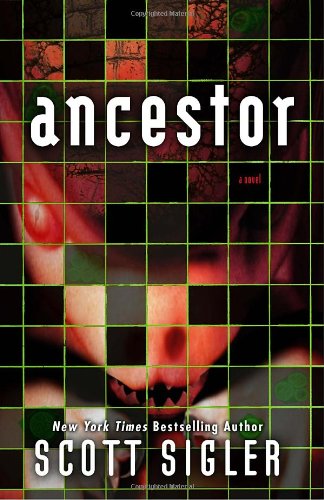
- Ancestor
Scott Siglerstandalone novel2007
similar byscience fictionour worldcontemporarytensegenetic engineeringdarksurvival
Ancestor is a science fiction thriller novel by American writer Scott Sigler. The novel was released in podcast format in 2006, with it also being released in print via Dragon Moon Press in 2007. Ancestor was later re-released by Crown Publishing in 2010.
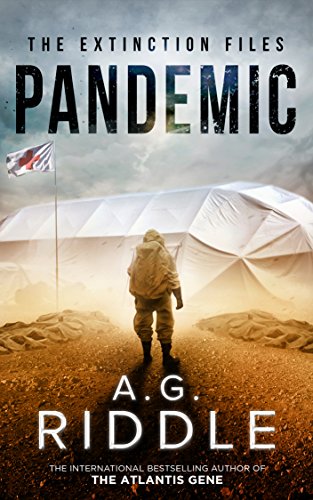
- The Extinction Files
series2 books2017
similar byscience fictionour worldcontemporarytensegenetic engineeringplague and pandemic+1 more
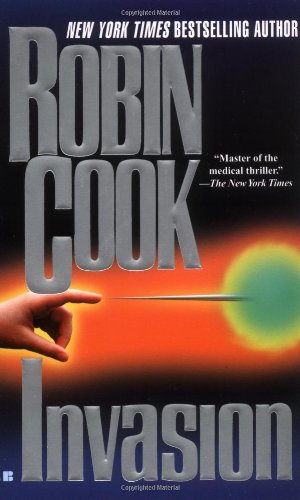
- Invasion
Robin Cookstandalone novel1997
similar byscience fictionour worldcontemporarytensegenetic engineering+3 more
Earth is bombarded from space by small disks which, in addition to having powerful physical armaments, when handled activate latent viral DNA which causes humans to mutate into alien beings; a small group recognize the danger and attempt to develop a biological counterweapon.
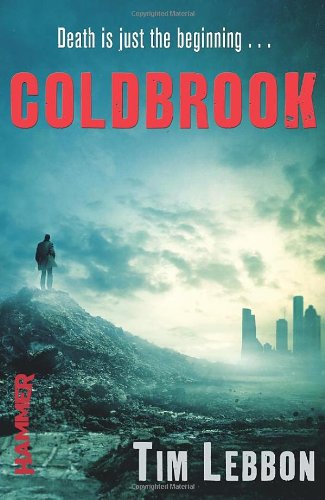
- Coldbrook
Tim Lebbonstandalone novel2012
similar byscience fictionour worldcontemporarytensedarksurvivalplague and pandemic
The world as we know it has changed forever. The reason is Coldbrook. The facility lay deep in Appalachian Mountains, a secret laboratory called Coldbrook. Its scientists had achieved the impossible: a gateway to a new world. Theirs was to be the greatest discovery in the history of mankind, but they had no idea what they were unleashing.
- Footfall
Larry Niven & Jerry Pournellestandalone novel1985
similar byscience fictionour worldcontemporarytensesurvival
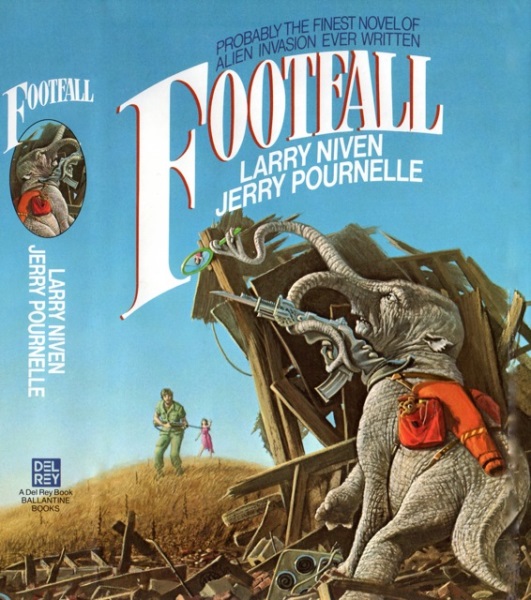
When aliens travel to Earth from Alpha Centauri, differences between alien and human psychology result in an unprovoked invasion, and the resulting resistance results in the aliens' use of a devastating weapon.
- Mount Dragon
Lincoln Child & Douglas Prestonstandalone novel1996
similar byscience fictionour worldcontemporarytensegenetic engineeringplague and pandemic+1 more
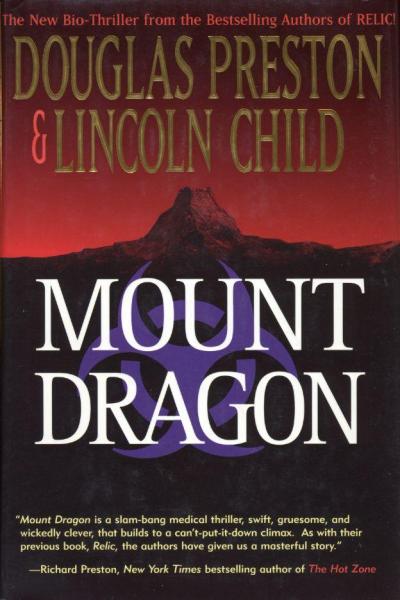
A tech tycoon recruits a scientist to perfect a genetically engineered vaccine against all strains of influenza, but when he discovers a disastrous flaw he becomes the target of multiple attacks.
- The Triffids
series3 books1951
similar byscience fictionour worlddarksurvival+2 more
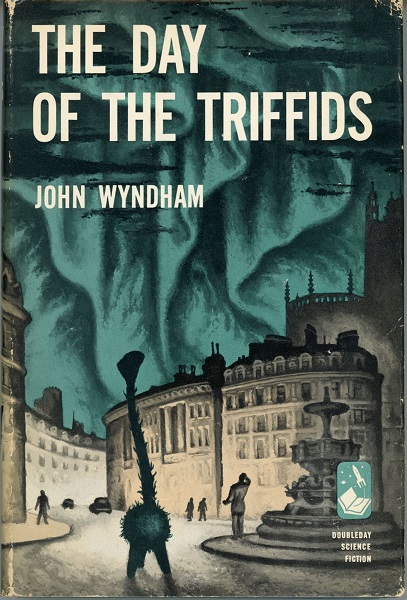
John Wyndham's The Day of the Triffids (1951) opens with a meteor-shower-like event that leaves most of Britain's population blind, throwing civilization into collapse just as triffids, an aggressive and mobile species of poisonous plant, become free to hunt the helpless survivors. Simon Clark's authorized sequel The Night of the Triffids (2001) picks up a generation later, narrated by the original protagonist's son as he confronts a new triffid-dominated world, and John Whitbourn's The Age of the Triffids extends the shared setting further still. Together the three novels form a loose post-apocalyptic trilogy built on Wyndham's original premise rather than a tightly plotted single story.
- The Eyes of Heisenberg
Frank Herbertstandalone novel1966
similar byscience fictionour worldtensegenetic engineeringdark
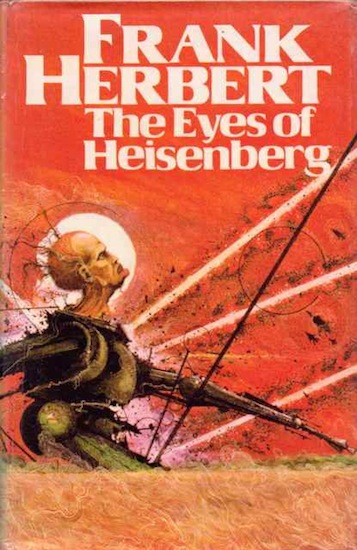
Tens of thousands of years in the future, Earth is ruled by the Optimen, a genetically engineered aristocracy that has made itself functionally immortal, while ordinary people, the Folk, live under strict reproductive control. When Harvey and Lizbeth Durant arrive to have their embryo genetically screened, the examining doctor finds something in the child no one has seen in a very long time: real potential for both fertility and life span, traits the Optimen have arrogated to themselves. Rather than destroy the embryo as policy demands, the doctor hesitates, setting off a chain of surveillance, suspicion and resistance. A tightly wound Frank Herbert thriller about genetic caste and rebellion.
- The White Plague
Frank Herbertstandalone novel1982
similar byscience fictionour worlddarktensegenetic engineeringplague and pandemic+1 more
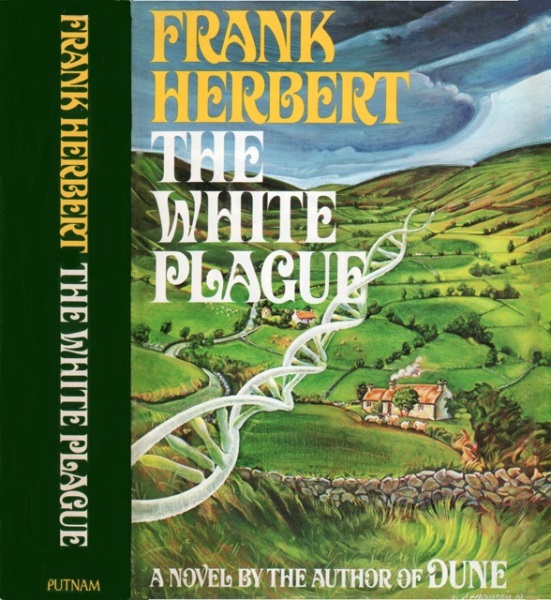
The White Plague is a 1982 science fiction novel by American author Frank Herbert about an engineered disease which kills only women. It was nominated for a best science fiction novel Locus Award in 1983.
- The Kraken Wakes
John Wyndhamstandalone novel1953
similar byscience fictionour worldtensedarksurvival
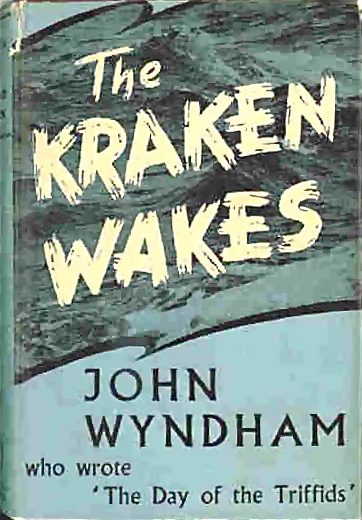
" Behind a spectacular meteor shower actually hides the beginning of an invasion by a mysterious and powerful alien race. Earth's life is disrupted by the attacks of extraterrestrials whose war machines, emerging from the depths of the oceans, seem indestructible. The coalitioned forces of the whole world are worthless, powerless in the face of the indecipherable and deadly plans of a superior intelligence, capable of bringing the entire planet to the brink of catastrophe" Goodreads May 20, 2022
- The Swarm
Frank Schätzingstandalone novel2004
similar byscience fictionour worldcontemporarytensedarksurvival
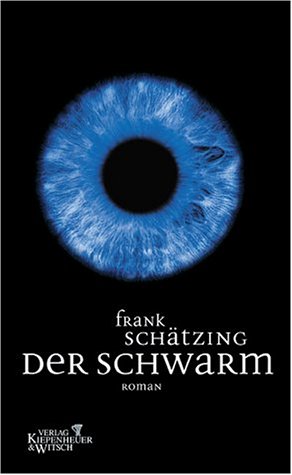
The Swarm is a science fiction novel by German author Frank Schätzing. It was first published in 2004 and soon became a bestseller.
- Vitals
Greg Bearstandalone novel2002
similar byscience fictionour worldcontemporarytensegenetic engineering+1 more
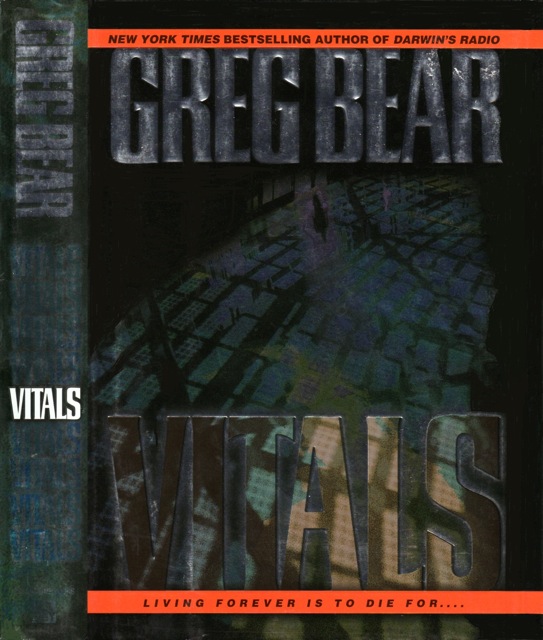
From the flaps of the Del Rey first edition: "Hal Cousins is one of a handful of scientists nearing the most sought after discovery in human history: the key to short-circuiting the aging process. Fueled by a wealth of research, an overdose of self-confidence, and the money of influential patrons to whom he makes outrageous promises, Hal experiments with organisms living in the hot thermal plumes in the ocean depths. But as he journeys beneath the sea, his other world is falling apart. Across the country, scientists are being inexplicably murdered - including Hal's identical twin brother, who is also working to unlock the key to immortality. Hal himself barely eludes a cold-blooded attack at sea, and when he returns home to Seattle, he finds himself walking into an eerie realm where voices speak to him from the dead ... where a once-brilliant historian turned crackpot is leading him on a deadly game of hide-and-seek ... and where the beautiful, rich widow of his twin is more than willing to pick up the pieces of Hal's life-and take him places he's never been before. Suddenly Hal is trapped inside an ever-twisting maze of shocking revelations. For he is not the first person to come close to ending aging forever - and those who came before him will stop at nothing to keep the secret to themselves. Now every person on earth is at risk of being made an unsuspecting player in one man's spectacular and horrifying master plan. From the bottom of Russia's Lake Baikal to a billionaire's bionic house built into the cliffs of the Washington seashore, from the darkest days of World War II and the reign of Josef Stalin to the capitalist free-for-all that is the United States, Vitals tells an astounding tale of the most unimaginable scientific secret of all - exposed by the quest for immortality itself..."
- Intercepts
T. J. Paynestandalone novel2019
similar byscience fictionour worldcontemporarytensegenetic engineeringdarksurvival
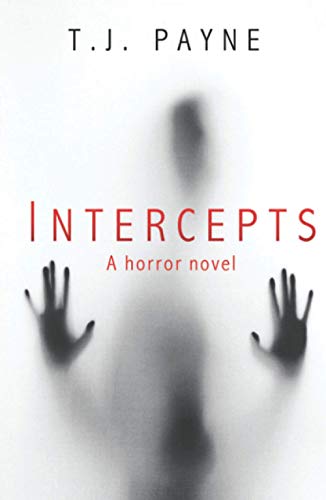
• Joe works at a facility that performs human experimentation. His work just followed him home.
- I Am Legend
Richard Mathesonstandalone novel1954
similar byscience fictionour worlddarktensesurvivalplague and pandemic
The last human survivor of the vampire epidemic has to maintain his defences against their onslaught, while attempting to research the cause and possibly solution to the plague. Robert Neville is the last living man on Earth... but he is not alone. Every other man, woman and child on the planet has become a vampire, and they are hungry for Neville's blood. By day he is the hunter, stalking the undead through the ruins of civilization. By night, he barricades himself in his home and prays for the dawn. How long can a man survive like this?
- Light Play
series3 books1999
similar byscience fictionour worldtensedarkgenetic engineeringsurvivalplague and pandemic+2 more
- The Death of Grass
John Christopherstandalone novel1956
similar byscience fictionour worlddarktensesurvivalplague and pandemic
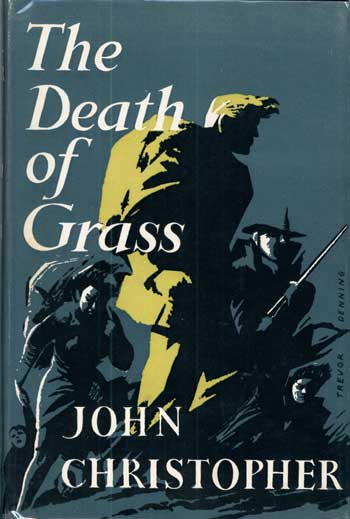
The Death of Grass is a 1956 post-apocalyptic science fiction novel written by the English author Sam Youd under the pen name John Christopher. The plot concerns a virus that kills off grass species, including rice and wheat. The Death of Grass was the first of several post-apocalyptic novels written by Youd. The novel was written in a matter of weeks and liberated him from his day job.
- White Shark
Peter Benchleystandalone novel1994
similar byscience fictionour worldcontemporarytensegenetic engineeringdarksurvival
White Shark is a 1994 novel by author Peter Benchley, famous for Jaws, The Island, Beast, and The Deep. White Shark is similar to Jaws but does not feature a shark, let alone a white shark, despite what the title suggests; the phrase is the codename of a weapon. To avoid confusion and to capitalize on the miniseries adaptation, the book was republished as Creature in 1997.
- The Fireman
Joe Hillstandalone novel2016
similar byscience fictionour worlddarktensesurvivalplague and pandemic
The Fireman is a novel set in a post-apocalyptic time by American author Joe Hill. The novel, Hill's fourth, tells the tale of a deadly spore that has infected most of the world's population. Hill first spoke of the novel in 2013 in promotional interviews for his then-new novel NOS4A2. The novel was released on May 17, 2016.
- The Killer Thing
Kate Wilhelmstandalone novel1967
similar byscience fictionour worldcontemporarytensedarksurvival
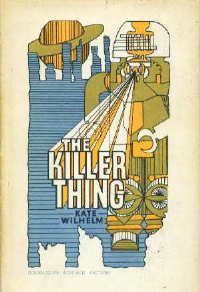
A robot destroys its inventor and programs itself to kill all life. How much must be sacrificed to stop it?
- Micro
Michael Crichton & Richard Prestonstandalone novel2011
similar byscience fictionour worldcontemporarytensegenetic engineeringsurvival
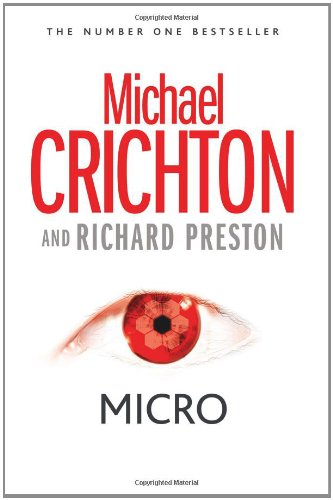
Micro is a techno-thriller novel by Michael Crichton, the seventeenth under his own name and second to be published after his death, published in 2011. Upon his death in 2008, an untitled, unfinished manuscript was found on his computer, which would become Micro. Publisher HarperCollins chose science writer Richard Preston to complete the novel from Crichton's remaining notes and research, and it was finally published in 2011. Micro followed the historical thriller Pirate Latitudes, which was also found on his computer and published posthumously in 2009.
- When the Wind Blows
series2 books1998
similar byscience fictioncontemporarytensegenetic engineeringsurvival+2 more