More like Light Plays
anchored on:science fictiongenetic engineeringour worldnear futuresurvivalidentity+3 more
but
- The Fireman
Joe Hillstandalone novel2016
similar byscience fictionour worldnear futuredarktensesurvivalplague and pandemic
The Fireman is a novel set in a post-apocalyptic time by American author Joe Hill. The novel, Hill's fourth, tells the tale of a deadly spore that has infected most of the world's population. Hill first spoke of the novel in 2013 in promotional interviews for his then-new novel NOS4A2. The novel was released on May 17, 2016.
- The Twilight of Briareus
Richard Cowperstandalone novel1974
similar byscience fictionour worldnear futuredarktensegenetic engineeringsurvivalidentity
It took the light of the supernova Briareus Delta one hundred and thirty-two years to cross space to the Solar System. But the night it exploded in our sky was a night that would never be forgotten in the history of the world. For in that bath of cosmic particles, all things changed. Not only the weather and the flora and fauna, but humanity itself received what seemed to be its death sentence. Sterility signalled the end of man, until the strange children known as the Zeta-mutants began to appear. Richard Cowper, author of Clone and other sf novels, has produced in this new novel a gripping story of how one man coped with the terrible dilemma of his world - how he attempted to solve the problem of the girls with the amber eyes and what he did when he found out what he himself had become during The Twilight of Briarseus. (from the back cover of the DAW Books first printing)
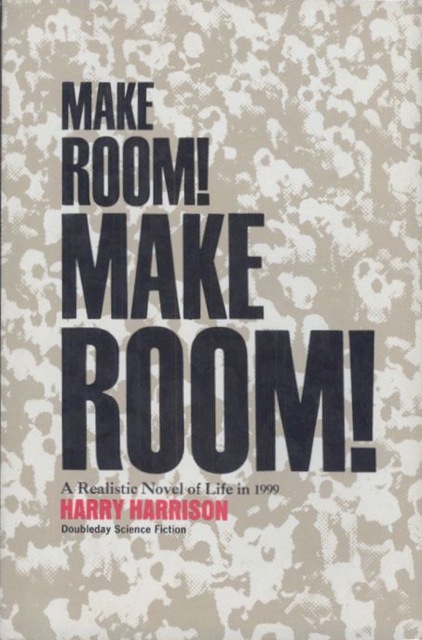
- Make Room! Make Room!
Harry Harrisonstandalone novel1966
similar byscience fictionour worldnear futuredarktensesurvival
Make Room! Make Room! is a 1966 science fiction novel written by Harry Harrison exploring the consequences of both unchecked population growth on society and the hoarding of resources by a wealthy minority. It was originally serialized in Impulse magazine.
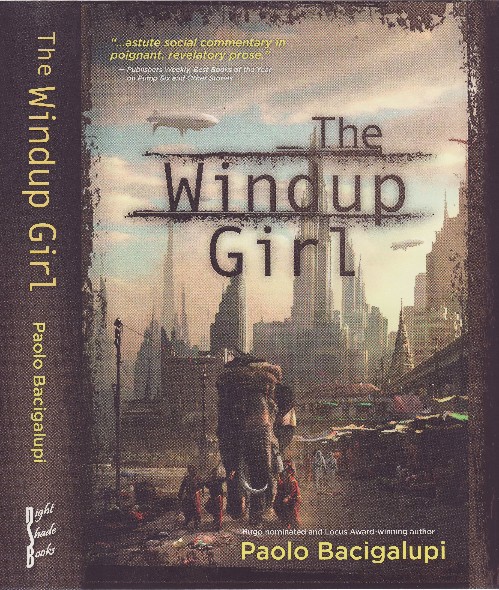
- The Windup Universe
series3 books2005
similar byscience fictionnear futureour worlddarkgenetic engineering+1 more
- Darwin
series2 books1999
completed
similar byscience fictionnear futuretensegenetic engineeringplague and pandemic+2 more
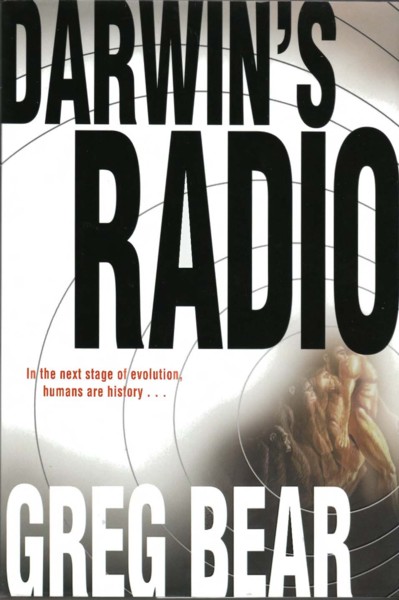
Greg Bear's Darwin's Radio imagines a dormant retrovirus in human DNA activating worldwide, triggering an accelerated leap in human evolution that governments respond to as a plague. The 1999 novel won the Nebula Award; its sequel Darwin's Children follows the first generation of changed children as society decides what to do with them. Together they're speculative near-future science fiction grounded in genetics rather than space opera.
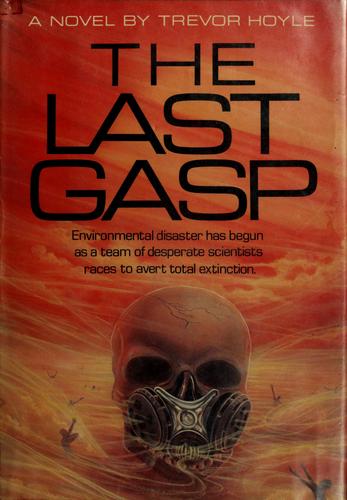
- The Last Gasp
Trevor Hoylestandalone novel1983
similar byscience fictionour worldnear futuredarktensesurvivalplague and pandemic
From the flaps of the Crown first edition: "When British marine biologist Gavin Chase stepped out into the windswept wastes at the Halley Bay antarctic research station one morning, the last thing he expected to see was a sled team coming out of nowhere carrying a half-mad, half-frozen Russian scientist babbling an incomprehensible warning. But that warning would threaten the future of the human race and force Chase to make some of the hardest decisions of his life. Months later, at a Geneva environmental conference, Chase meets Cheryl Detrick, the daughter of Theo Detrick, the grand old man of diatom research. Chase, the Detricks, and Soviet scientist Boris Stanovnik theorize that the oxygen-producing microscopic plants of the world's oceans are dying and the level of atmospheric pollutants has finally exceeded the ability of the planet's ecology to recycle them. There is also good reason to believe that the superpowers are planning to wage a new type of environmental warfare. Sooner or later there will be nothing left to breathe. So begins a race against the future. Chase and Cheryl, now lovers, struggle to avert ecological catastrophe as agents of the military-industrial complex hunt them down... and as a growing belt of unbreathable gases spreads outward from the equator, uprooting millions. Their enemies are Lloyd Madden, an insane military mastermind planning to seed the earth with poison and then repopulate it with a race of mutants, and Joseph Earl Gelstrom, a wealthy chemical manufacturer who has Cheryl's father killed to hide his involvement. But Gelstrom himself falls victim to pollution sickness, and he repents. To raise money to finance a research team, Chase must make an unholy alliance with the dying Gelstrom, but this is too much for Cheryl, who leaves him. As more and more of the world becomes uninhabitable, as industries and governments collapse and chaos reigns, as the oceans fill up with dioxin, as the climate changes and mutant life-forms encroach upon the last refuges of humankind, Chase leads a last desperate mission to find and rescue Cheryl and to lead his team of scientists to safety."
- Blood Music
Greg Bearstandalone novel1985
similar byscience fictionour worldnear futuredarkgenetic engineering
Blood Music is a 1985 science fiction novel by American writer Greg Bear. It is an expanded version of a short story of the same title, originally published in the June 1983 issue of Analog and the winner of both the 1983 Nebula and 1984 Hugo awards for Best Novelette. The novel won the 1986 Prix Apollo Award, given to the best science fiction novel published in France during the preceding year, under the title La Musique du sang.
- The Triffids
series3 books1951
similar byscience fictionour worlddarksurvival+2 more
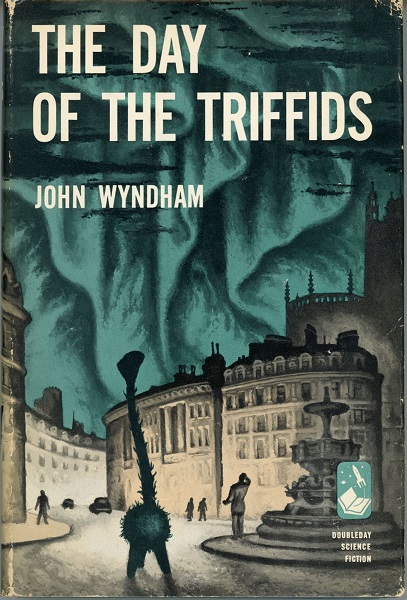
John Wyndham's The Day of the Triffids (1951) opens with a meteor-shower-like event that leaves most of Britain's population blind, throwing civilization into collapse just as triffids, an aggressive and mobile species of poisonous plant, become free to hunt the helpless survivors. Simon Clark's authorized sequel The Night of the Triffids (2001) picks up a generation later, narrated by the original protagonist's son as he confronts a new triffid-dominated world, and John Whitbourn's The Age of the Triffids extends the shared setting further still. Together the three novels form a loose post-apocalyptic trilogy built on Wyndham's original premise rather than a tightly plotted single story.
- Stand on Zanzibar
John Brunnerstandalone novel1968
similar byscience fictionour worldnear futuredarkgenetic engineering
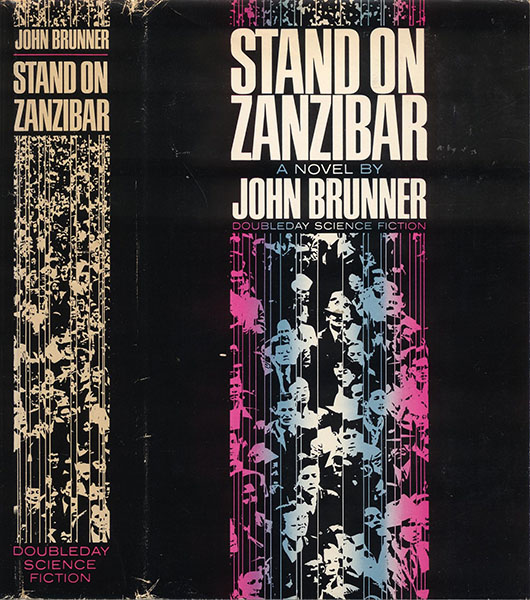
Stand on Zanzibar is a dystopian New Wave science fiction novel written by John Brunner and first in part published in New Worlds magazine in 1967 and in book form in 1968. The book won a Hugo Award for Best Novel at the 27th World Science Fiction Convention in 1969, as well as the 1969 BSFA Award and the 1973 Prix Tour-Apollo Award.
- Blade Runner Universe
series6 books1968
similar byscience fictionnear futuredarkidentity+2 more
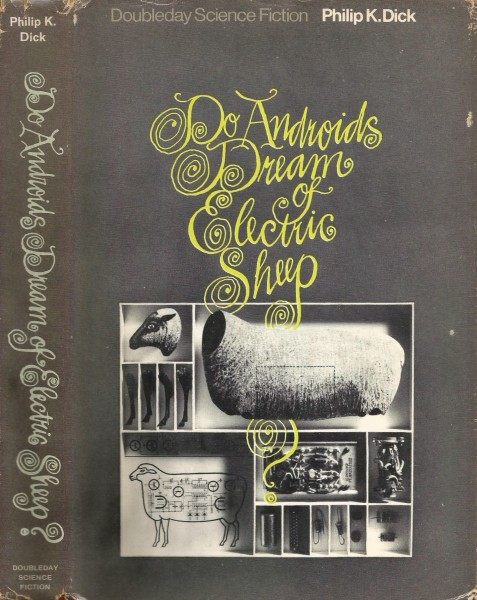
Philip K. Dick's 1968 novel Do Androids Dream of Electric Sheep? follows bounty hunter Rick Deckard as he tracks escaped androids through an irradiated, near-abandoned San Francisco, using the hunt to probe questions of empathy and what separates human from machine. The novel became the basis for Ridley Scott's 1982 film Blade Runner, and Marvel Comics later published an illustrated adaptation of that film. Together the two trace the story's path from prose original to screen and comic-page adaptation.
- Black Moon
Kenneth Calhounstandalone novel2014
similar byscience fictionour worldnear futuredarktensesurvivalplague and pandemic
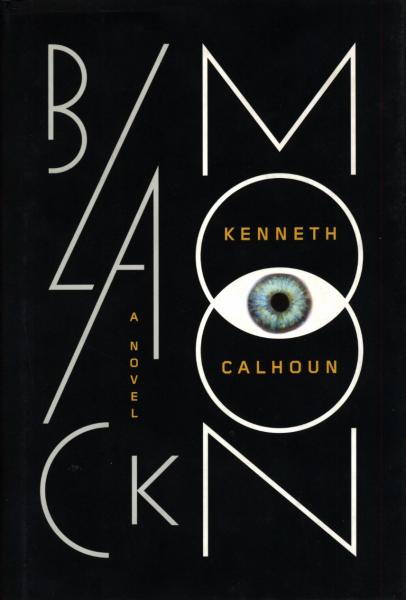
Insomnia has claimed everyone Biggs knows. Even his beloved wife, Carolyn, has succumbed to the telltale red-rimmed eyes, slurred speech and cloudy mind before disappearing into the quickly collapsing world. Yet Biggs can still sleep, and dream, so he sets out to find her.
- Light Play
series3 books1999
similar byscience fictionour worlddarktensenear futuregenetic engineeringsurvivalplague and pandemic+1 more
- Alternate Purpose
Christopher Coatesstandalone novel2019
similar byscience fictionour worldnear futuretensesurvivalplague and pandemic
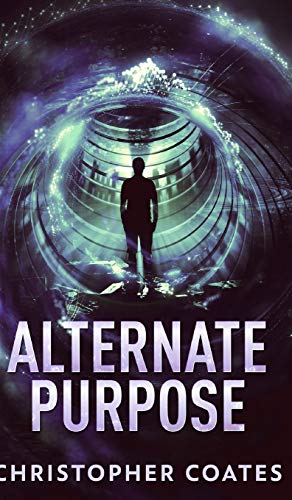
• "A global pandemic has devastated the world. Facing a rebuilding time of generations, two scientists come up with a solution: send someone back in time to prevent the horrible accident that released the deadly pathogen on the world. The problem with their discovery? The time travel process is fatal to anyone trying it." ― quoted from this book's product page on Amazon.com as of 2020-05-28.
- Aftermath (Charles Sheffield)
series2 books1998
completed
similar byscience fictionnear futuredarktenseour worldsurvival+1 more
Charles Sheffield's Aftermath duology opens with a near-future Earth devastated by a nearby supernova's radiation, which knocks out electronics and forces survivors to rebuild without most modern technology. Starfire continues years later as a second, larger stellar threat approaches and humanity must recover enough capability to respond. Sheffield, a physicist by training, grounds both books in hard-science consequences of the disaster rather than treating it as mere backdrop.
- At the End of Everything
Marieke Nijkampstandalone novel2022
similar byscience fictionour worldnear futuredarktensesurvivalplague and pandemic
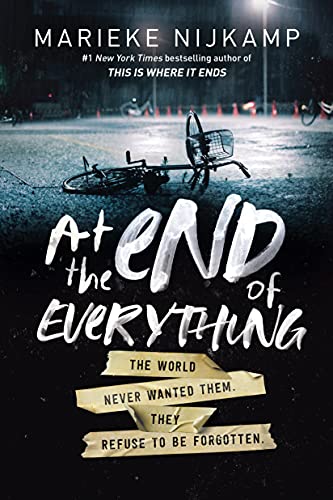
The Hope Juvenile Treatment Center is ironically named. No one has hope for the delinquent teenagers who have been exiled there; the world barely acknowledges that they exist. Then the guards at Hope start acting strange. And one day…they don't show up. But when the teens band together to make a break from the facility, they encounter soldiers outside the gates. There's a rapidly spreading infectious disease outside, and no one can leave their houses or travel without a permit. Which means that they're stuck at Hope. And this time, no one is watching out for them at all. As supplies quickly dwindle and a deadly plague tears through their ranks, the group has to decide whom among them they can trust and figure out how they can survive in a world that has never wanted them in the first place.
- Down to a Sunless Sea
David Grahamstandalone novel1979
similar byscience fictionour worldnear futuredarktensesurvival
David Graham's Down to a Sunless Sea (1979) is a post-apocalyptic novel about a planeload of people during and after a short nuclear war, set in a near-future world where the USA is critically short of oil. The title of the book is taken from a line of the poem Kubla Khan by Samuel Taylor Coleridge.
- I Am Legend
Richard Mathesonstandalone novel1954
similar byscience fictionour worlddarktensesurvivalplague and pandemic
The last human survivor of the vampire epidemic has to maintain his defences against their onslaught, while attempting to research the cause and possibly solution to the plague. Robert Neville is the last living man on Earth... but he is not alone. Every other man, woman and child on the planet has become a vampire, and they are hungry for Neville's blood. By day he is the hunter, stalking the undead through the ruins of civilization. By night, he barricades himself in his home and prays for the dawn. How long can a man survive like this?
- The Martian
series2 books2012
similar byscience fictionnear futuretenseour worldsurvival
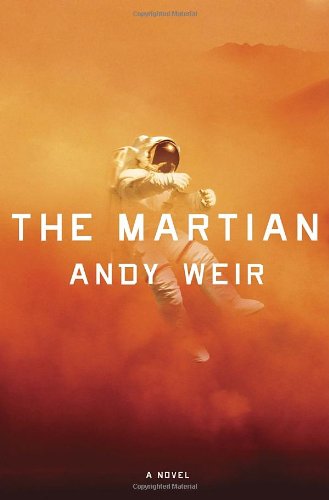
Andy Weir's novel The Martian, first self-published in 2011 before a commercial re-release, follows astronaut Mark Watney after he is stranded alone on Mars when his crew presumes him dead and departs. Using scientific improvisation and dark humor, Watney works to keep himself alive long enough for a rescue to reach him. It is a single, self-contained survival story.
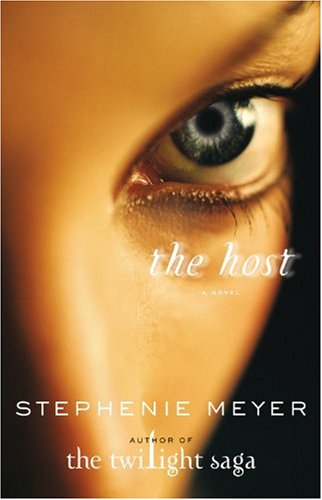
- The Host
Stephenie Meyerstandalone novel2008
similar byscience fictionour worldnear futuretensesurvivalidentity
The earth has been invaded by a species that take over the minds of their human hosts while leaving their bodies intact, and most of humanity has succumbed. But Melanie Stryder refuses to fade away. Wanderer, the invading "soul" who has been given Melanie's body, knew about the challenges of living inside a human: the overwhelming emotions, the too vivid memories. But there was one difficulty Wanderer didn't expect: the former tenant of her body refusing to relinquish possession of her mind. Melanie fills Wanderer's thoughts with visions of the man Melanie loves--Jared, a human who still lives in hiding. Unable to separate herself from her body's desires, Wanderer yearns for a man she's never met. As outside forces make Wanderer and Melanie unwilling allies, they set off to search for the man they both love.--From publisher description.
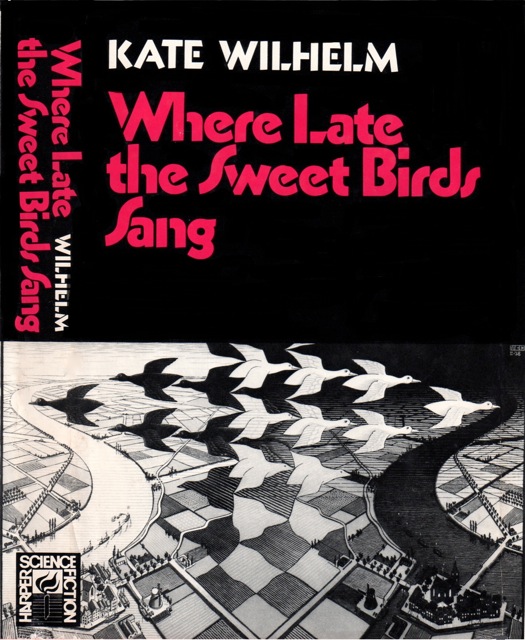
- Where Late the Sweet Birds Sang
Kate Wilhelmstandalone novel1976
similar byscience fictionour worldnear futuredarksurvival+1 more
Where Late the Sweet Birds Sang is a science fiction novel by American writer Kate Wilhelm, published in 1976. The novel is composed of three parts, "Where Late the Sweet Birds Sang," "Shenandoah," and "At the Still Point," and is set in a post-apocalyptic era, a concept popular among authors who took part in the New Wave Science Fiction movement in the 1960s.
- The Children of Men
P. D. Jamesstandalone novel1992
similar byscience fictionour worldnear futuredarktense
"The human race has become infertile, and under the despotic rule of Xan Lyppiatt, the Warden of England the old are despairing and the young cruel. Theo Faren, a cousin of the Warden, lives a solitary life in this ominous atmosphere. That is, until a chance encounter with a young woman leads him into contact with a group of dissenters. Suddenly his life is changed irrevocably, as he faces agonising choices which could affect the future of mankind." (pdjames.co.uk)
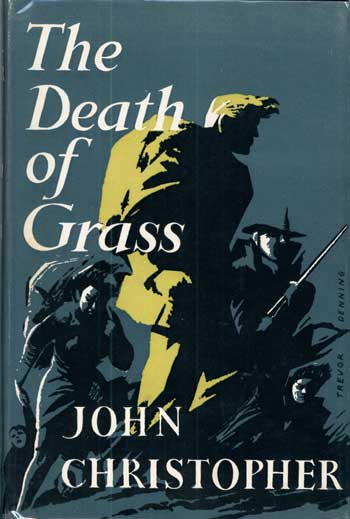
- The Death of Grass
John Christopherstandalone novel1956
similar byscience fictionour worlddarktensesurvivalplague and pandemic
The Death of Grass is a 1956 post-apocalyptic science fiction novel written by the English author Sam Youd under the pen name John Christopher. The plot concerns a virus that kills off grass species, including rice and wheat. The Death of Grass was the first of several post-apocalyptic novels written by Youd. The novel was written in a matter of weeks and liberated him from his day job.
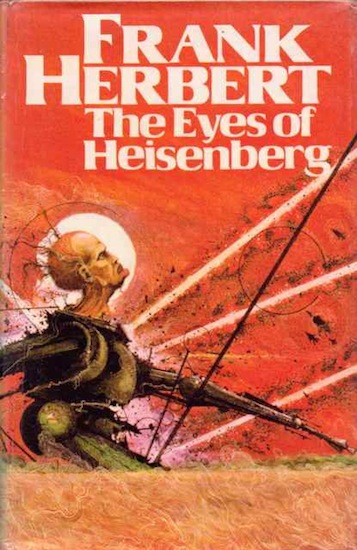
- The Eyes of Heisenberg
Frank Herbertstandalone novel1966
similar byscience fictionour worlddarktensegenetic engineering
Tens of thousands of years in the future, Earth is ruled by the Optimen, a genetically engineered aristocracy that has made itself functionally immortal, while ordinary people, the Folk, live under strict reproductive control. When Harvey and Lizbeth Durant arrive to have their embryo genetically screened, the examining doctor finds something in the child no one has seen in a very long time: real potential for both fertility and life span, traits the Optimen have arrogated to themselves. Rather than destroy the embryo as policy demands, the doctor hesitates, setting off a chain of surveillance, suspicion and resistance. A tightly wound Frank Herbert thriller about genetic caste and rebellion.
- The Zap Gun
Philip K. Dickstandalone novel1967
similar byscience fictionour worldnear futuredark+2 more
The Zap Gun is a 1967 science fiction novel by American writer Philip K. Dick. It was first published as the two-part serial Project Plowshare in Worlds of Tomorrow in 1965 and 1966, before Pyramid Books issued it in paperback under its present title. The novel originated in a title-first commission devised by Pyramid editor Don Bensen and was written in 1964 during a period of rapid production in Dick's career.