Loreful
HomeDiscover
Search series, authors…⌘K
Loreful

Reading orders for SF/F series and shared universes — with your place kept in every one.

Explore

UniversesSeriesWorksAuthorsAtlas

Help

FAQAboutSite map

Account & legal

Sign inCreate accountPrivacyTerms

Data

Built on ISFDB, Wikipedia, Wikidata and Open Library. Curated reading orders carry their reasoning on the page; the rest follow publication order. Data sources & licenses

© Loreful · data: ISFDB · CC BY

More like Lightborn

anchored on:science fiction

but

Mood

The mood the book leaves you in.

  • The reading experience is propelled by journeys, exploration, and physical risk; excitement and forward momentum dominate over dread or introspection.
  • Joy and loss are deliberately mixed; the resolution grants characters something real while taking something else away, leaving warmth and sorrow together.
  • The book demands work from the reader — dense prose, difficult structure, unfamiliar ideas, or morally uncomfortable material — as part of its intended effect.
  • Grim events, cruelty, or despair dominate the atmosphere, and the book does not soften them with comfort or comic relief.
  • The atmosphere is quietly unsettling — wrongness, unease, and the uncanny pervade the book without necessarily escalating into overt horror.
  • The book is built to move the reader; character feeling is foregrounded and major scenes aim at a strong emotional response.
  • Humor is a primary aim and the prose plays for laughs — comic situations, wit, or dialogue produce sustained comedy, not occasional levity.
  • The book insists that things can improve; effort and decency are shown to matter, and the arc bends toward better outcomes even through hardship.
  • The book teaches as it goes — real facts, history, science, or craft are conveyed in enough depth that learning is part of the reading experience.
  • The book is designed to uplift and motivate, presenting perseverance or achievement in a way that invites the reader to aspire or act.
  • The overall register is cheerful and easygoing; stakes are kept gentle and the book avoids dwelling on pain or dread.
  • Withheld information drives the experience; the book sustains enigmas and secrets the reader wants resolved, whatever its genre.
  • The book is contemplative and inward-looking, giving more weight to thought, memory, and meaning than to external events.
  • The book works as comfort reading — low tension, a soothing pace, and an atmosphere the reader can unwind in.
  • Grief, loss, or melancholy set the dominant register, and the book lets sorrow stand rather than resolving it into comfort.
  • Sustained suspense is the point; the book keeps the reader braced for what happens next through danger, pressure, or impending revelation.
  • Playful invention and charm define the register — fanciful conceits, light absurdity, and a narration that delights in its own oddity.

About

What the story runs on.

  • Stories in which a machine intelligence — an AI, computer mind, or sentient program — is a central character or the story's driving problem.
  • Stories in which extraterrestrial beings are central — as characters, cultures, or the object of the plot.
  • Stories driven by deliberate modification of genomes — designer organisms, engineered humans, and the consequences of remaking life.
  • Stories about venturing into space to explore — survey missions, astronauts, and the frontier of the unknown beyond Earth.
  • Stories about minds with paranormal abilities — telepathy, telekinesis, precognition, empathy — and how societies handle those who have them.
  • Stories in which staying alive against nature, catastrophe, or scarcity is the central problem.
  • Stories of growing up — a young protagonist crossing from childhood into adult knowledge and responsibility.
  • Stories about who a character truly is — self-discovery, doubled lives, and the search for a self.
  • Stories driven by maneuvering for power — factions, conspiracies, and statecraft conducted in shadow.
  • Stories about rising against rulers — uprisings, resistance movements, and revolutions and their aftermaths.
  • Stories in which war itself is the subject — combat, occupation, and what warfare does to soldiers and civilians.
  • Stories organized around investigating a killing — the case, the clues, and the pursuit of the killer, in any genre's clothing.

Shelf

Where it sits in the library.

    • Fiction built on magic or other supernatural elements that have no scientific explanation.
    • Secondary-world fantasy at large scale, where the fate of nations or the world turns on the protagonists' struggle.
    • Fantasy set in a recognizably modern city or contemporary world where the supernatural intrudes on everyday life.
    • Fantasy that blends in horror's atmosphere and imagery, keeping a fantastical frame around grim or frightening material.
    • Action-driven fantasy following warriors or rogues with personal stakes against sorcerous threats, rather than world-spanning conflicts.
    • Fantasy set in a real historical period or a close analogue of one, with magic woven into the era.
    • Fantasy in which protagonists cross from the ordinary world into another world through a portal or similar passage.
    • Fiction that retells or reworks a traditional fairy tale in a new form or setting.
    • Fantasy drawing directly on myths, legends, and folklore, retelling them or building on their figures and logic.
    • Fantasy of ghosts, vampires, shapeshifters, psychics, and similar phenomena, usually set in an otherwise ordinary world.
    • Fiction mixing science-fictional trappings with overtly magical or impossible elements in one setting.
    • Low-stakes fantasy emphasizing comfort, community, and everyday pleasures over conflict and peril.
    • Speculative fiction of pervasive moral ambiguity, violence, and cynicism that rejects heroic conventions — fantasy and SF alike.
      • Fiction that extrapolates from science and technology — future societies, space travel, or speculative inventions — within at least nominally natural laws.
      • Science fiction of interstellar scope — starships, galactic polities, and adventure across star systems.
      • Science fiction committed to scientific rigor, where technical plausibility constrains the story.
      • Science fiction centered on armed forces and warfare, told largely from a military point of view.
      • Science fiction of networked, corporate-dominated near futures, pairing high technology with social decay.
      • Science fiction styled on nineteenth-century steam-powered technology, often in a Victorian or pseudo-Victorian setting.
      • Fiction depicting an oppressive or catastrophic society, presented as a warning.
      • Fiction set after civilization's collapse, following survivors in the ruins of the old world.
      • Fiction in which characters move between past and future, and the mechanics or consequences of that travel drive the plot.
      • Fiction exploring a world where a historical event went differently and history diverged from ours.
      • Science fiction about humanity's first encounter and communication with an alien intelligence.
      • Science fiction in which extraterrestrial forces attack or occupy Earth and humanity resists.
      • Fiction whose primary aim is to frighten or unsettle the reader through dread, menace, or the monstrous.
      • Horror of vast, indifferent, incomprehensible entities before which humanity is insignificant, in the Lovecraft tradition.
      • Horror of decaying houses, buried family secrets, and oppressive atmosphere in the Gothic literary tradition.
      • Horror centered on hauntings and the returning dead.
      • Horror located in the mind — paranoia, obsession, and unreliable perception rather than external monsters.
      • Horror built around the reanimated dead and survival amid their outbreaks.
      • Horror defined by explicit, transgressive gore that refuses to cut away from violence.
      • Speculative fiction of the strange and uncanny that resists both natural explanation and standard genre categories.
      • Fiction organized around solving a crime or puzzle, typically following an investigator toward the identification of a culprit.
      • A puzzle-first mystery that lays out clues so the culprit's identity can be deduced before the reveal.
      • Crime fiction of moral ambiguity, fatalism, and hard-edged style, set among the corrupt and the doomed.
      • A mystery following the realistic routines of police work — forensics, interviews, and case-building.
      • A gentle mystery with an amateur sleuth, a small community, and violence kept off the page.
      • A mystery set in a past era, where the investigation works within that period's methods and society.
      • Fast-paced fiction driven by imminent danger, pursuit, or high-stakes conspiracy, built to sustain tension.
      • A thriller of espionage — agents, tradecraft, and intelligence services in conflict.
      • A thriller centered on lawyers and the courtroom, where litigation carries the suspense.
      • A thriller driven by detailed contemporary or near-future technology, often military or scientific.
      • A thriller whose tension comes from mental states and manipulation between characters rather than external action.
      • Fiction whose central plot is a romantic relationship and its development toward an emotionally satisfying resolution.
      • Romance in which one or both partners are supernatural beings, blending fantasy elements into the love story.
      • A fantasy-romance hybrid in which the romantic arc and the fantasy plot carry equal weight.
      • Romance set in a past era, with courtship shaped by the period's society and manners.
      • Romance set in the present day, without supernatural or historical elements.
      • Fiction set in a real past period, where the historical setting materially shapes characters and events.
        • General and literary fiction emphasizing prose style, character interiority, or formal ambition over genre plot conventions.
        • Fiction in a realistic world where magical events occur and are treated as ordinary, in the tradition of Latin American literature.
        • Fiction that ridicules people, institutions, or society in order to criticize them.
        • Fiction of dreamlike, irrational imagery and logic that breaks from realistic representation.
        • Fiction that plays with narrative convention through metafiction, fragmentation, and self-reference.
        • Fiction propelled by journeys, exploration, and physical peril, where action and survival carry the plot.
        • Adventure fiction of ships and seafaring — naval engagements, voyages, and life at sea.
        • Fiction of the American frontier West — gunmen, ranchers, and lawmen, typically in the late nineteenth century.
        • Fiction centered on soldiers, campaigns, and the experience of warfare, historical or imagined.
          • Fiction written primarily to amuse, using comedic situations, wit, or parody as its organizing principle.
            • Multi-generational fiction following a family or dynasty across decades, with inheritance and kinship as the through-line.
              • Fiction whose world runs on explicit game mechanics — levels, stats, and skills that characters can see and exploit.
                • Fiction about costumed or superpowered heroes and their conflicts with comparable villains.

                Practical

                How long a commitment, whether it stands alone, and whether it has finished.

                Tap a chip to ask for it · tap again to rule it out · once more to clear. Numbers show what would be left.

                • Cover of Blindsight / Firefall
                  Blindsight / Firefall

                  series · 3 books · 2006

                  similar bychallengingscience fictionspaceartificial intelligencehard science fiction+2 more

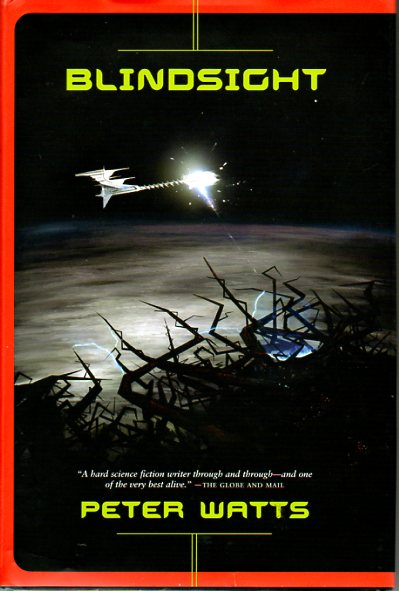
                  Blindsight sends a crew of radically modified posthumans (including a resurrected, genetically restored vampire) out to the Oort cloud after humanity detects an alien signal, only to make contact with something intelligent, wildly capable, and possibly not conscious at all — a first-contact story built around the question of whether self-awareness is actually useful. Peter Watts's Echopraxia is a same-timeframe "sidequel" rather than a direct sequel, following different characters through the fallout of the same first-contact event.

                • Cover of The Light of Other Days
                  The Light of Other Days

                  Arthur C. Clarke & Stephen Baxter · standalone novel · 2000

                  similar bychallengingscience fictionnear future+3 more

                  An industrialist devises a technique to use tiny wormholes as light pipes to enable viewing of any event anywhere; and subsequently it becomes possible to use them to view any event in the past as well. The effects on society are enormous.

                • QL
                  Quantum Logic

                  series · 7 books · 1990

                  completed

                  similar byscience fictionnear future+3 more

                • Cover of Jean le Flambeur
                  Jean le Flambeur

                  series · 3 books · 2010

                  similar bychallengingscience fictionspaceartificial intelligencehard science fiction

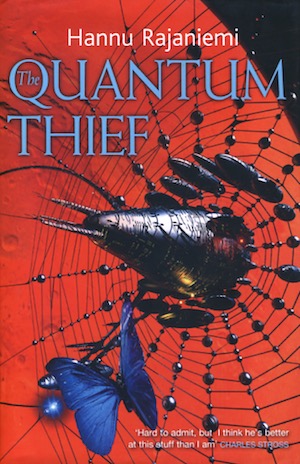
                  Jean le Flambeur is a master thief broken out of a virtual prison to pull off one more impossible heist, in a solar system reshaped by uploaded minds, post-human factions, and economies built on memory and privacy themselves. Hannu Rajaniemi's trilogy - The Quantum Thief, The Fractal Prince, The Causal Angel - is dense, idea-heavy hard SF that trusts readers to piece its future together from context rather than exposition.

                • Cover of Richard Forthrast
                  Richard Forthrast

                  series · 2 books · 2011

                  similar byscience fiction+4 more

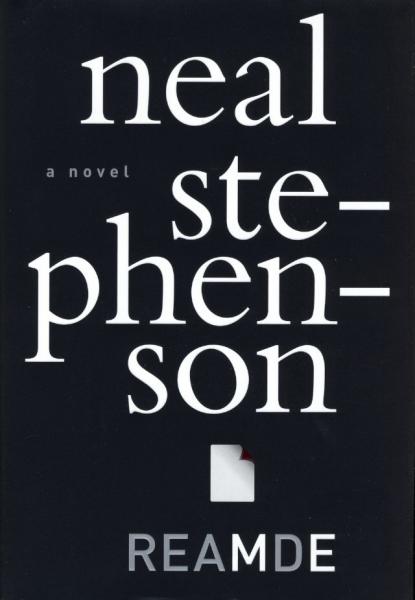
                  Neal Stephenson's Richard 'Dodge' Forthrast novels open with Reamde, a globe-spanning thriller that starts when ransomware inside an MMORPG economy pulls Richard's extended family into a real-world hostage crisis involving hackers, jihadists and Russian mobsters. The sequel Fall; or, Dodge in Hell shifts registers entirely, following Richard's digitally preserved mind after death into an afterlife simulation built from his scanned brain. The two books share a protagonist and family but differ sharply in genre and scale.

                • Cover of Stranger in a Strange Land
                  Stranger in a Strange Land

                  Robert A. Heinlein · standalone novel · 1961

                  similar bychallengingscience fictionidentitynear future

                  Stranger in a Strange Land is a 1961 science fiction novel by the American author Robert A. Heinlein. It tells the story of Valentine Michael Smith, a human who comes to Earth in early adulthood after being born on the planet Mars and raised by Martians, and explores his interaction with and eventual transformation of Terran culture.

                • Cover of Subjective Cosmology
                  Subjective Cosmology

                  series · 3 books · 1992

                  similar bychallengingscience fictionnear futurehard science fiction+2 more

                • Cover of Macx Family
                  Macx Family

                  series · 10 books · 2001

                  similar byscience fictionnear future+4 more

                  Charles Stross's Accelerando follows three generations of the Macx family as human and posthuman intelligence accelerates toward and through a technological singularity, told across nine interlinked stories originally published separately before being combined into a fix-up novel. Its early chapters, following economist Manfred Macx giving away business ideas for a living, give way to increasingly alien later sections as uploaded minds and artificial intelligences outpace human comprehension. It won the Locus Award and remains one of the defining fictional treatments of the singularity concept.

                • Cover of Culture
                  Culture

                  series · 15 books · 1987

                  completed

                  part of The Culture

                  similar byscience fictionartificial intelligence+2 more

                  The Culture series is a science fiction series written by Scottish author Iain M. Banks and released from 1987 until 2012. The stories centre on The Culture, a utopian, post-scarcity space society of humanoid aliens and advanced superintelligent artificial intelligences living in artificial habitats spread across the Milky Way galaxy. The main themes of the series are the dilemmas that an idealistic, more-advanced civilization faces in dealing with smaller, less-advanced civilizations that do not share its ideals, and whose behaviour it sometimes finds barbaric. In some of the stories, action takes place mainly in non-Culture environments, and the leading characters are often on the fringes of the Culture, sometimes acting as agents of the Culture in its plans to civilize the galaxy. Each novel is a self-contained story with new characters, although reference is occasionally made to the events of previous novels.

                • Cover of A Meeting with Medusa
                  A Meeting with Medusa

                  series · 2 books · 1971

                  similar bychallengingscience fictionspacehard science fiction+1 more

                  Arthur C. Clarke's A Meeting with Medusa follows an astronaut, badly injured in an earlier disaster, on a solo balloon expedition into Jupiter's atmosphere, where he encounters vast floating lifeforms unlike anything previously catalogued. Decades later, Stephen Baxter and Alastair Reynolds continued the story in The Medusa Chronicles, following the same protagonist across a much longer span of future history. The original novella won the 1972 Nebula Award.

                • Cover of Children of Time
                  Children of Time

                  series · 6 books · 2015

                  similar byscience fictionspace+3 more

                  Adrian Tchaikovsky's Children of Time follows two threads: a terraformed planet where an experimental nanovirus meant to accelerate primate evolution instead uplifts a species of spiders into a technological civilization guided by the recorded personality of a human scientist, and the last survivors of Earth aboard a generation ark ship searching for a new home. The two threads collide across mismatched timescales as the ark ship's crew, cycling in and out of cryosleep, finally reach the spiders' world. It's the first of a loosely connected series that applies the same premise to different alien biologies in each subsequent book.

                • Cover of A Clockwork Orange
                  A Clockwork Orange

                  series · 4 books · 1962

                  completed

                  similar bychallengingscience fictionnear future+1 more

                  Anthony Burgess's 1962 novel is narrated by Alex, a teenage gang leader in a near-future Britain gripped by a youth subculture of extreme violence, recounting his crimes in Nadsat, an invented slang blending English with Russian-derived words. After his crimes catch up with him, Alex is made the subject of a controversial state program meant to forcibly reform his behavior, and the novel uses his ordeal to question whether imposed goodness is worth the loss of free will. It is a standalone novel.

                • T
                  Thistledown

                  series · 5 books · 1978

                  completed

                  similar byscience fictionspacehard science fiction+1 more

                • Cover of Genesis
                  Genesis

                  Bernard Beckett · standalone novel · 2006

                  similar bychallengingscience fictionartificial intelligenceidentitynear future

                  Genesis (2006) is a philosophical science fiction novel by New Zealand author Bernard Beckett. It won the 2007 Esther Glen Award for children's literature, and the 2007 New Zealand Post Book Awards for Children and Young Adults. As of 2008 it has been published in 22 countries.

                • Cover of Man Plus
                  Man Plus

                  series · 2 books · 1976

                  similar byscience fictionnear future+2 more

                  Frederik Pohl's Man Plus follows Roger Torraway, who is surgically and cybernetically rebuilt into a post-human organism able to survive unprotected on the Martian surface, as part of a crash program to colonize Mars ahead of a predicted global crisis. The 1976 novel, which won the Nebula Award, is a clinical, unsentimental look at what such a transformation costs a person's sense of self. Thomas T. Thomas wrote the sequel Mars Plus, continuing the story of the Martian colony years later.

                • Cover of Blood Music
                  Blood Music

                  Greg Bear · standalone novel · 1985

                  similar byscience fictionnear futurehard science fiction+2 more

                  Blood Music is a 1985 science fiction novel by American writer Greg Bear. It is an expanded version of a short story of the same title, originally published in the June 1983 issue of Analog and the winner of both the 1983 Nebula and 1984 Hugo awards for Best Novelette. The novel won the 1986 Prix Apollo Award, given to the best science fiction novel published in France during the preceding year, under the title La Musique du sang.

                • Cover of The Overman Culture
                  The Overman Culture

                  Edmund Cooper · standalone novel · 1971

                  similar byscience fiction+2 more

                • Cover of The Diamond Age
                  The Diamond Age

                  Neal Stephenson · standalone novel · 1995

                  similar byscience fictionartificial intelligencenear futurehard science fiction+1 more

                  The Diamond Age: Or, A Young Lady's Illustrated Primer is a science fiction novel by Neal Stephenson. It is to some extent a Bildungsroman or coming-of-age story, focused on a young girl named Nell, set in a future world in which nanotechnology affects all aspects of life. The novel deals with themes of education, social class, ethnicity, and the nature of artificial intelligence. The Diamond Age was first published in 1995 by Bantam Books, as a Bantam Spectra hardcover edition. In 1996, it won both the Hugo and Locus Awards, and was shortlisted for the Nebula and other awards.

                • Cover of The Fall Revolution
                  The Fall Revolution

                  series · 4 books · 1995

                  similar byscience fiction+4 more

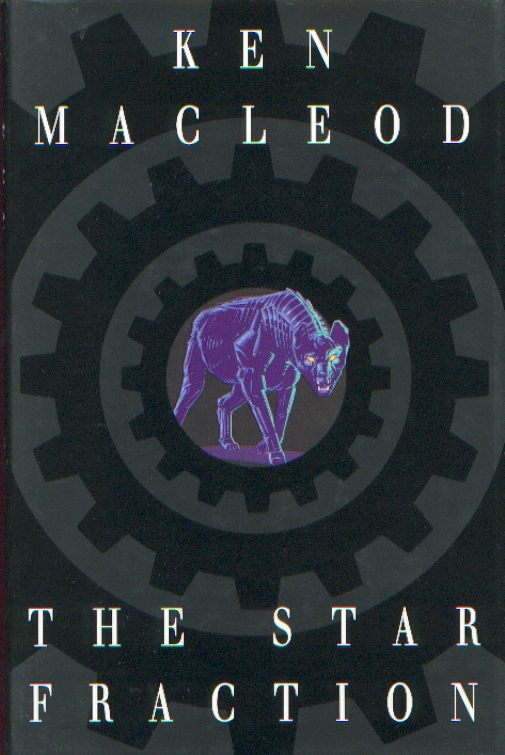
                  Ken MacLeod's Fall Revolution sequence opens with The Star Fraction (1995), his Arthur C. Clarke Award-nominated debut set in a fractured near-future Britain where a functioning anarchist microstate and rival revolutionary factions vie for power. The four connected novels — continuing through The Stone Canal, The Cassini Division, and The Sky Road — each stand largely alone while tracing overlapping characters and politics across a shared future history, later collected in the omnibus volumes Fractions and Divisions.

                • Cover of The Science Fiction Hall of Fame
                  The Science Fiction Hall of Fame

                  series · 11 books · 1895

                  similar byscience fiction+1 more

                • Cover of Ender Wiggin
                  Ender Wiggin

                  series · 14 books · 1977

                  part of Ender's Game Universe

                  similar byscience fiction+2 more

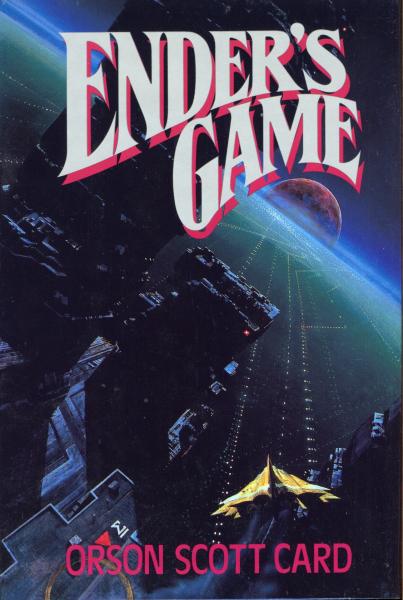
                  Orson Scott Card's Ender's Game (1985, expanded from his 1977 novella) follows child prodigy Andrew "Ender" Wiggin as he is recruited into a military training program built to prepare Earth's defenses for an anticipated third war against an insectoid alien species known as the Formics. The saga continues years later through Speaker for the Dead and Xenocide, following an older Ender as he confronts the moral weight of his role in that earlier conflict, and concludes the core arc in Children of the Mind, with Ender in Exile filling in the years between the first two books. Set within the wider Ender's Game universe, the series shifts from military coming-of-age story to slower, more philosophical science fiction as it progresses.

                • Cover of The Golden Oecumene
                  The Golden Oecumene

                  series · 3 books · 2002

                  similar bychallengingscience fictionspaceartificial intelligence+2 more

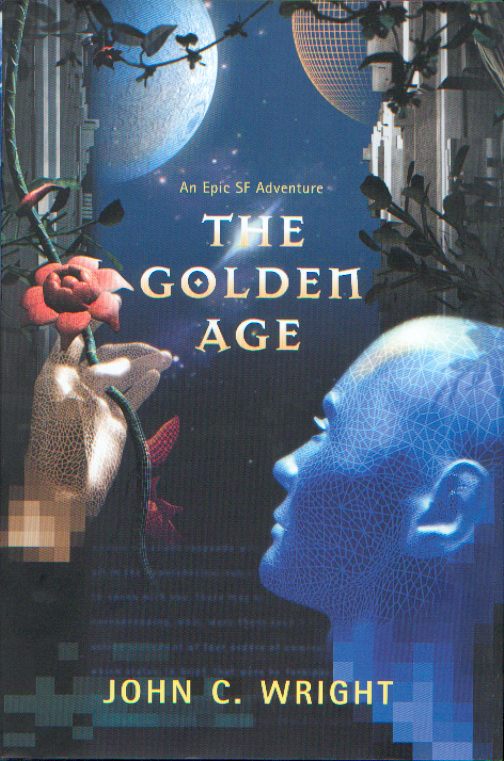
                  The Golden Oecumene is a science fiction trilogy by the American writer John C. Wright. It consists of three books, The Golden Age, The Phoenix Exultant and The Golden Transcendence.

                • Cover of Quantum Night
                  Quantum Night

                  Robert J. Sawyer · standalone novel · 2016

                  similar byscience fictionartificial intelligencenear future+2 more

                  Quantum Night is a 2016 science-fiction thriller novel written by Canadian novelist Robert J. Sawyer. Set in 2020, the book touches on themes of quantum physics, psychology, current politics and ethics.

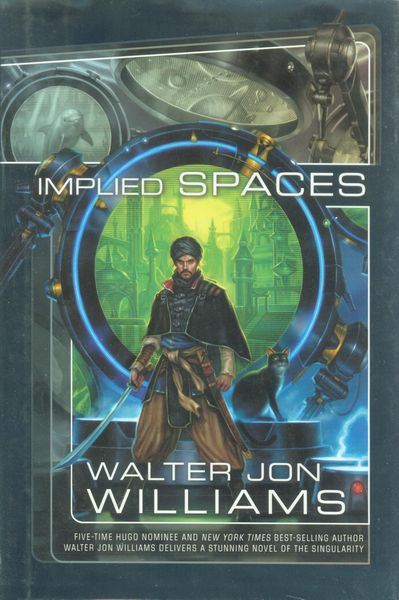
                • Cover of Implied Spaces
                  Implied Spaces

                  Walter Jon Williams · standalone novel · 2008

                  similar bychallengingscience fictionspaceartificial intelligence+1 more

                  Implied Spaces is a 2008 space opera novel by American author Walter Jon Williams. It explores themes of transhumanism, artificial intelligence and ontology.