More like Limits
anchored on:science fictionfar futurehard science fictionspace explorationspaceother star systems+2 more
but
- Ringworld
series5 books1970
part of Known Space
similar byadventurousfar futurescience fictionspace explorationspaceother star systemsaliens
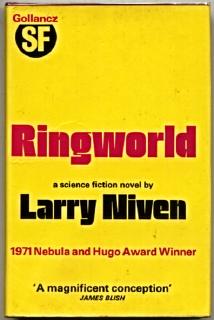
The Ringworld series is a series of science fiction novels written by American author Larry Niven. It is part of his Known Space series of stories. Its backdrop is the Ringworld, a giant artifact 3 million times the surface area of Earth circling a star. The series is composed of four standalone science fiction novels, the original award-winning book and its three sequels:1970: Ringworld 1979: The Ringworld Engineers 1996: The Ringworld Throne 2004: Ringworld's Children
- Mesklin
series6 books1954
completed
similar byadventurousfar futurescience fictionhard science fictionspace explorationother star systemsaliens+1 more
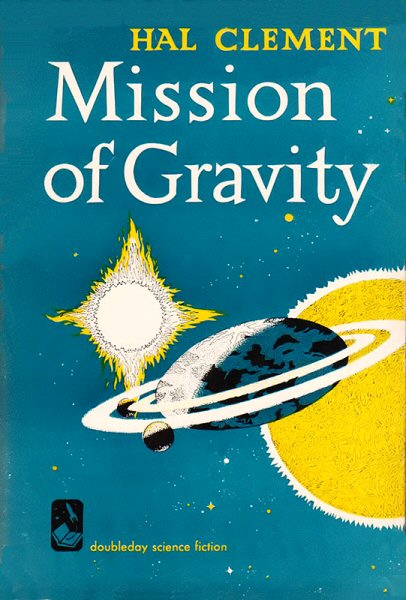
Mesklin is a fictional planet created by Hal Clement and used in a number of his hard science fiction stories, starting with Mission of Gravity (1954). Alongside the novel's original 1953 serialization in Astounding Science Fiction, Clement published an essay titled "Whirligig World" on how he designed the planet to have the properties he wanted. The idea came from an object that was at the time believed to exist in the 61 Cygni system, and which might represent an extrasolar planet.
- Starman Jones
Robert A. Heinleinstandalone novel1953
similar byadventurousfar futurescience fictionspace explorationspaceother star systems+1 more
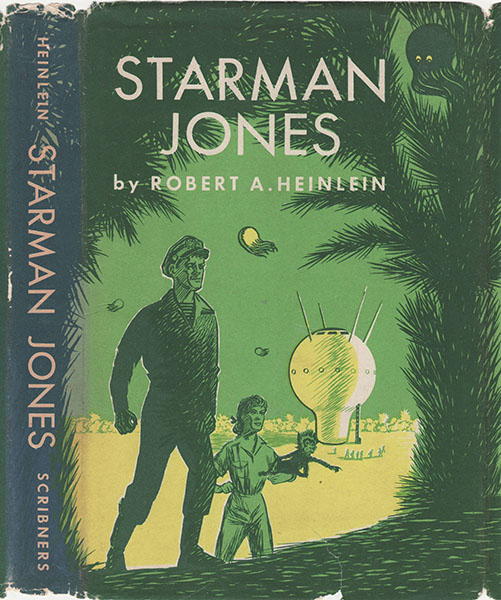
Starman Jones, a 1953 science fiction novel by Robert A. Heinlein, features a farm boy who wants to go to the stars. Charles Scribner's Sons published the book as part of the Heinlein juveniles series.
- Uplift Universe
universe13 books1980
Start hereUplift · Start here
similar byadventurousfar futurescience fictionspaceother star systemsaliens+2 more
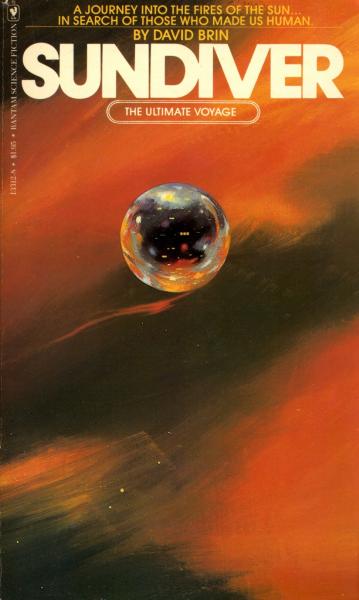
No species, the Galactics insist, ever climbs to sapience alone. For a billion years the elder races have "uplifted" their chosen clients — reshaping some promising animal, gene by patient gene, into a thinking being, then binding it through long ages of indenture. Patron lifts client; client one day becomes patron; and every lineage traces back through the vast Galactic Library to the vanished Progenitors who began it all. Then a ragged band of primates arrives at the stars with no patron to claim them — wolflings, self-made, an affront to a hundred thousand years of law — and worse, these humans have already started uplifting neighbors of their own: the neo-dolphins and neo-chimpanzees of Earthclan. David Brin builds this galaxy across two trilogies. The first — Sundiver, the Hugo- and Nebula-winning Startide Rising, and the Hugo-winning The Uplift War — sends an expedition into the Sun, then follows the dolphin-crewed survey ship Streaker as it flees a discovery that sets fanatical star-clans at war, and a chimp-led resistance on an invaded colony world. The second sequence, Uplift Storm — Brightness Reef, Infinity's Shore, Heaven's Reach — descends to Jijo, a forbidden world where six fallen races hide as illegal settlers, and draws every loose thread toward a reckoning. Short fiction fills the margins. This is space opera with an ecologist's conscience: teeming with invented biologies, wry cross-species banter, and real unease about what we owe the minds we make. Begin with Startide Rising — the saga's beating heart, and readable on its own — or take Sundiver first and read straight through in publication order.
- Heechee
series19 books1972
completed
similar byfar futurescience fictionspace explorationspaceother star systemsaliens+1 more
The Heechee Saga, also known as the Gateway series, is a series of science fiction novels and short stories by Frederik Pohl. The Heechee are an advanced alien race that visited the Solar System hundreds of millennia ago and then mysteriously disappeared. They left behind bases containing artifacts, including working starships, which are discovered and exploited by humanity.
- Uplift
series5 books1980
part of Uplift Universe
similar byadventurousfar futurescience fictionother star systemsspacealiens+2 more
David Brin's Uplift trilogy opens with Sundiver, sending human explorers into the Sun itself, then follows a dolphin-crewed starship on the run from hostile aliens in Startide Rising and a fight over the colony world Garth in The Uplift War. The books sit inside Brin's wider Uplift Universe, built on the idea that spacefaring "patron" species genetically engineer younger "client" species into full sapience, with humanity an anomaly that reached the stars without a patron of its own.
- The Avatar
Poul Andersonstandalone novel1978
similar byadventurousfar futurescience fictionspace explorationspaceother star systemsaliens+1 more
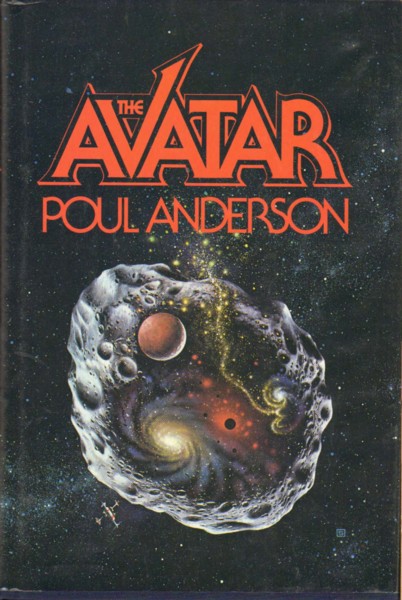
After humanity discovers portals that transport a space vessel through time and space, a crew which has visited the planet of another species returns to Earth, only to find a political faction in power which seeks to conceal this knowledge in the name of social stability. With the aid of the political opposition, they escape and journey through the portal in search of knowledge, and perhaps even to meet those who created the portal system.
- The Colors of Space
Marion Zimmer Bradleystandalone novel1963
similar byadventurousfar futurescience fictionspace explorationspaceother star systemsaliens
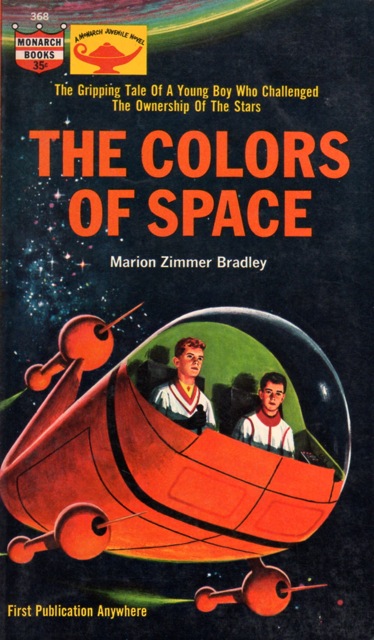
The Lhari seem peaceful and friendly, but they go to some lengths to protect their monopoly on faster-than-light travel. One young man is sent to discover their secrets.
- Pip & Flinx
series18 books1972
part of Humanx Commonwealth
similar byadventurousfar futurescience fictionspaceother star systemsaliens+1 more
The Pip & Flinx novels follow Flinx, a young man with an unusual, mysterious origin, and his ever-present animal companion Pip, across Alan Dean Foster's Humanx Commonwealth setting. Beginning with The Tar-Aiym Krang (1972) — chronologically the second entry, since Foster later filled in Flinx's earlier life — the series grew to fifteen novels published between 1972 and 2017, mixing planetary adventure with a slowly unfolding personal mystery.
- Tunnel in the Sky
Robert A. Heinleinstandalone novel1955
similar byadventurousfar futurescience fictionspace explorationother star systemssurvival+1 more
As the final test of a survivalist/explorer class, teenagers are dumped on an alien planet to use their skills while awaiting pickup. But something has gone wrong, and they find they are on their own.
- Space Beagle
series5 books1939
completed
similar byadventurousfar futurescience fictionspace explorationspacealiens+1 more
The Voyage of the Space Beagle is a 1950 fix-up novel by A. E. van Vogt, stitched together from four previously published pulp stories into a single continuous account of the exploration ship Space Beagle's encounters with a series of dangerous alien life forms. Its episodic, crew-versus-monster structure reads as a loose sequence of adventures rather than one continuous plot.
- The Final Architecture
series6 books2021
similar byadventurousfar futurescience fictionspace explorationspaceother star systemsaliens+1 more
The Final Architecture is a series of science fiction novels by British writer Adrian Tchaikovsky. It contains the books Shards of Earth, Eyes of the Void, and Lords of Uncreation. The series focuses on a group of humans fighting against the mysterious Architects, who destroy inhabited planets. The series has been well-received critically, with Shards of Earth winning the 2021 BSFA Award for Best Novel. The entire series was a finalist for the 2024 Hugo Award for Best Series.
- The Stars My Destination
Alfred Besterstandalone novel1956
similar byadventurousfar futurescience fictionspaceother star systemssurvival+1 more
When a passing spaceship refuses to rescue the lone survivor from the drifting wreck of another ship, he dedicates his life to discovering who made that decision and exacting his revenge, in the process altering human history and his own character.
- Dragon's Egg
series3 books1980
completed
similar byscience fictionspace explorationhard science fictionfar futureother star systemsaliens+3 more
Robert L. Forward's Dragon's Egg (1980) follows first contact with the cheela, intelligent beings the size of sesame seeds living on the surface of a neutron star, where crushing gravity and fast-moving physics let them evolve from primitive agriculture to advanced technology in about a month of Earth time while human observers watch from orbit. The sequel Starquake (1985) follows the cheela's own development of space travel and a catastrophic starquake that devastates their neutron-star home, alongside the continuing story of the human crew observing them.
- Starship Troopers
Robert A. Heinleinstandalone novel1959
similar byadventurousfar futurescience fictionspaceother star systemsaliens
Starship Troopers is a military science fiction novel by American writer Robert A. Heinlein. Written in a few weeks in reaction to the US suspending nuclear tests, the story was first published as a two-part serial in The Magazine of Fantasy & Science Fiction as Starship Soldier, and published as a book by G. P. Putnam's Sons on November 5, 1959.
- Iris
William Barton & Michael Capobiancostandalone novel1990
similar byadventurousfar futurescience fictionspace explorationspaceother star systemsartificial intelligencealiens+1 more
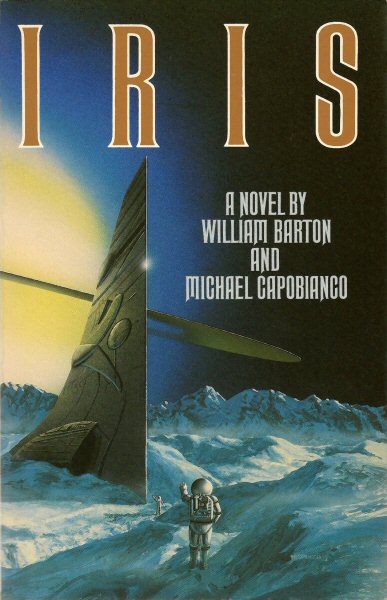
From the front flap of the Doubleday first edition: "From a future Earth ravaged by economic collapse to a rogue planet and its three enigmatic moons, from the familiarity of a colony ship to the heart - and mind - of a totally alien world, William Barton and Michael Capobianco take both the reader and the crew of the Deepstar on a daring odyssey of extraterrestrial exploration and dazzling alien contact. When the gas giant Iris approaches our solar system, the ten-member crew of the Deepstar, originally intending to colonize Titan, decide to change their course and make their new home on Ocypete, one of Iris's moons. It is only when they begin to explore their new surroundings that they discover the Artifact - an ancient alien spacecraft, empty, deserted, but still operational. As the group seeks an explanation for the mysterious ship, they find a frightening new reason to band together when one of their number is suddenly telepathically absorbed by the immense, living alien computer buried at the heart of Iris itself. The discoveries they make - and the battle they must fight - take them on a journey through inner and outer space, through the intricate mazes of the mind and the delicate pathways of the heart."
- Space Winners
Gordon R. Dicksonstandalone novel1965
similar byadventurousfar futurescience fictionspace explorationspaceother star systemsalienssurvival
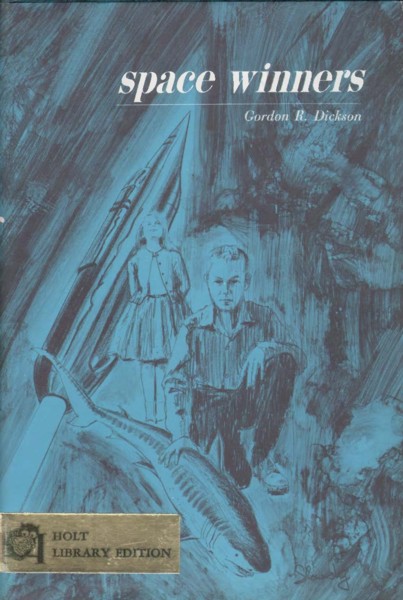
They were humanity's hope - the first young people selected to leave Earth for study in the Galactic Federation. But something went wrong in deep space. Terribly wrong. Suddenly Jim Rawlins, Ellen Bouvier, Curt Harrington, and the squirrel-like Alien philosopher Peep were castaways, stranded on the Quarantined World of Quebahr - with no training, and little hope of rescue. Between them and the Federation's emergency beacon were primitive Mauregs, aggressive Walats, lizard-like Noifs - plus danger, conspiracy, and the mystery of an impending high-tech war on a backward, peaceful planet. Without warning, the future of two worlds - Earth and Quebahr - depended on three young humans' ability to adopt and survive.
- Wheelers
Ian Stewart & Jack Cohenstandalone novel2000
similar byadventurousfar futurescience fictionspace explorationhard science fictionspaceother star systemsaliens
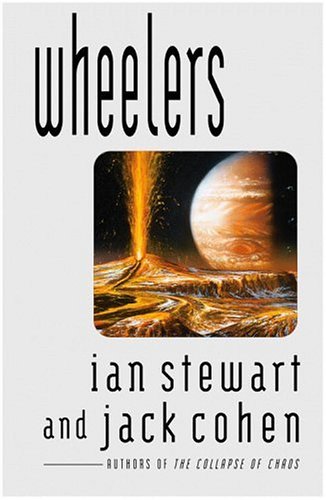
Wheelers is a hard science fiction novel written by English mathematician Ian Stewart and reproductive biologist Jack Cohen. The book was originally released in hardcover form in the year 2000, and a more common paperback printing was begun in 2001. It has enjoyed modest commercial success and is perhaps best known for its conceptions of alien zoology and intelligence—hallmarks of Cohen's work as a consultant on exobiology for books, movies, and television.
- Academy / Priscilla (Hutch) Hutchins
series16 books1983
similar byscience fictionfar futurespace explorationspaceother star systemsaliens+2 more
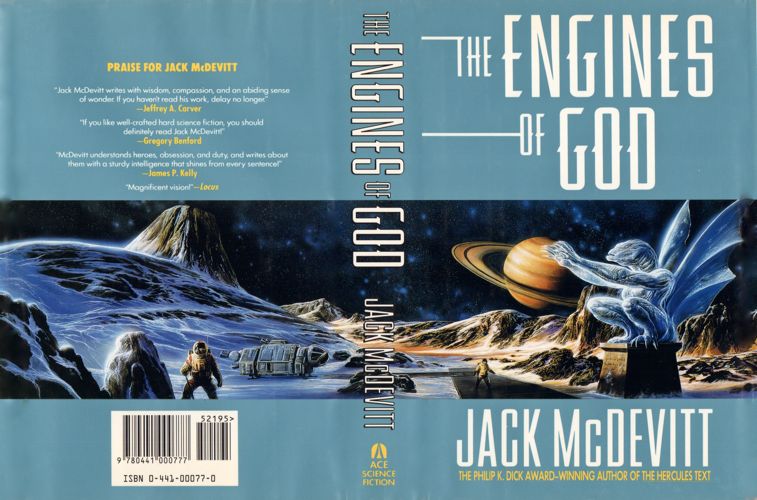
Jack McDevitt's Academy novels follow Priscilla 'Hutch' Hutchins, a starship pilot turned administrator, across a series of archaeological mysteries involving vanished alien civilizations and inexplicable ancient artifacts scattered through human space. Beginning with The Engines of God, the series treats deep time and the near-total absence of intelligent alien life as its central mystery, favoring slow-burn discovery over action. McDevitt returned to Hutch across three decades of publication.
- Across a Billion Years
Robert Silverbergstandalone novel1969
similar byadventurousfar futurescience fictionspace explorationspaceother star systemsaliens
Across a Billion Years is a 1969 science fiction novel by American writer Robert Silverberg.
- Fleet of Worlds
series5 books2007
part of Known Space
similar byfar futurescience fictionspace explorationspaceother star systemsaliens+2 more
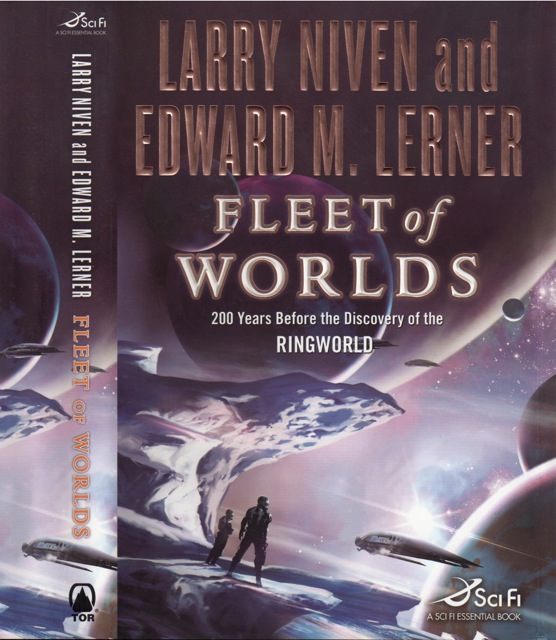
Fleet of Worlds opens a run of Known Space prequels co-written by Larry Niven and Edward M. Lerner, centered on the liberation of the human colony New Terra from the control of the Pierson's Puppeteers — the famously cowardly aliens who steer their fleet of five worlds away from any hint of danger. The series introduces a new Known Space species, the Gw'oth, across its run and eventually catches up to and continues past the original Ringworld novel in its fifth book, Fate of Worlds.
- Citizen of the Galaxy
Robert A. Heinleinstandalone novel1957
similar byadventurousfar futurescience fictionspaceother star systems+1 more
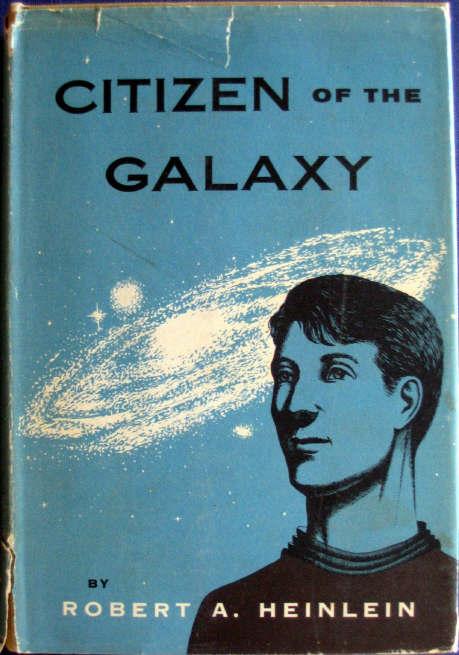
On a planet far distant from Earth, a lame beggar buys a young boy slave who has forgotten his origins. The beggar is more than he seems, and gives the boy an extensive education while employing him as an observer of activity in their city. Years later, the beggar is captured by the government, and the youth must escape the planet.
- Fractalverse
series2 books2020
similar byfar futurescience fictionspace explorationspaceother star systemsalienssurvival+2 more
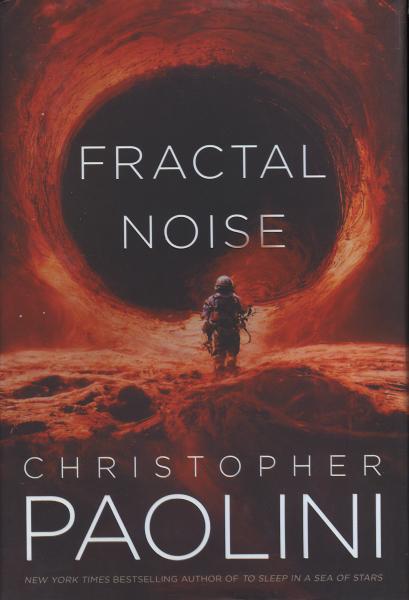
To Sleep in a Sea of Stars opens Christopher Paolini's Fractalverse with Kira Navárez, a xenobiologist whose survey of an unexplored planet triggers first contact with an ancient alien intelligence, dragging her and the wider human Alliance into a wider interstellar conflict for survival. Fractal Noise, a parallel entry, follows a separate crew investigating a mysterious signal-emitting structure on another world within the same universe. Both books were published between 2020 and 2023.
- Mindswap
Robert Sheckleystandalone novel1966
similar byadventurousfar futurescience fictionspaceother star systemsalienssurvival
"In the future, interstellar travel to alien worlds will be too expensive for most ordinary people. It certainly is for Marvin, a college student who wants to take a really good vacation. And so he signs up for what he can afford, a mindswap, in which a persons consciousness is swapped into the body of an alien lifeform. But Marvin is unlucky, and finds himself in the body of an interstellar criminal, a body that he has to vacate fast. But that criminal consciousness has stolen Marvins earthly body, and Marvin has to find a body on the black market. Travel from world to world with Marvin, each one crazier than the last, as he keeps finding far-from-ideal bodies in awful situations, just to stay alive"--Cover p. [4].