More like Loki Wolf
but
- Kairos
series11 books1962
completed
similar byyoung adult+5 more
The Time Quintet is a science fantasy series of five young adult novels written by American author Madeleine L'Engle and made up of A Wrinkle in Time (1962), A Wind in the Door (1973), A Swiftly Tilting Planet (1978), Many Waters (1986), and An Acceptable Time (1989).
- Stephen King multiverse
universe46 books1967
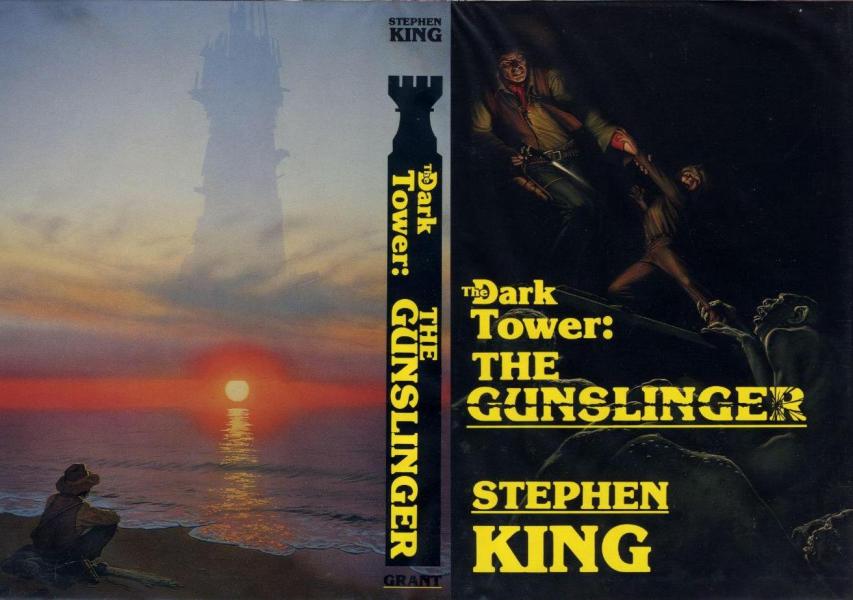
Start hereThe Gunslinger · Start here
similar by+3 more
The man in black fled across the desert, and the gunslinger followed. So begins the long walk of Roland Deschain, last of an order of knight-errant pistoleers, across a land that has "moved on" — where the compass points drift, dead machines rot toward sentience, and the weave of what's real wears thin. His quest is the Dark Tower itself: a spire standing at the hub of every world that exists, the linchpin that holds all of them back from ruin. Roland's road runs eight volumes, from The Gunslinger through the closing Dark Tower, with the later, interleaved tale The Wind Through the Keyhole folding a story-within-a-story back into his youth. Along the way he draws a ka-tet — a fellowship bound by fate, not choosing — through doorways between worlds: a heroin-shackled New Yorker, a woman of two minds, a boy who dies twice. The Tower is also the secret axle around which the wider shelf of King's work turns; threads from The Stand, 'Salem's Lot and beyond wind quietly toward it. Expect a mongrel of Western, high fantasy, horror and decayed science fiction, told in a dusty, incantatory dialect all its own — ka, thankee-sai, the world that has moved on. This is King at his most mythic and most personal, a decades-spanning circle that rewards a patient reader. Begin at the beginning: The Gunslinger, then walk forward in publication order. There are other worlds than these — but this door opens first.
- Five Children Universe
series27 books1902
completed
similar byfantasy+5 more
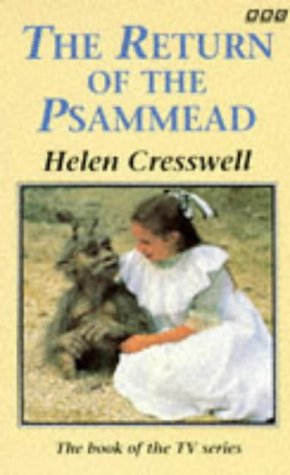
Two separate modern continuations of E. Nesbit's Psammead stories were written decades apart by different authors: Helen Cresswell's The Return of the Psammead (1992) brings the wish-granting sand fairy back for a new set of children, while Kate Saunders's Five Children on the Western Front (2014) follows the now-grown Lamb and his siblings as the First World War arrives, in a more somber sequel to Nesbit's original trilogy. Neither book is by Nesbit herself, and the two have no direct connection to each other beyond both drawing on her creation. Later writers have kept returning to Nesbit's premise long after her own trilogy ended.
- His Dark Materials Universe
universe13 books1995
Start hereHis Dark Materials · Start here
similar bycoming of ageadventurousyoung adultfantasy+1 more
In a world like ours and unlike it, every human soul walks outside the body in the shape of an animal — a daemon, who speaks, who cannot be lied to, and who settles into one fixed form only when childhood ends. This is the country of His Dark Materials: a company of parallel worlds across which an invisible dust of consciousness drifts down upon the waking mind; where a Church that calls itself the Magisterium would sooner sever a child's soul than let that Dust be understood; and where a golden instrument, the alethiometer, answers true questions for anyone with the patience to read it. Philip Pullman's design stands in two trilogies and a scatter of shorter tales. His Dark Materials — Northern Lights (published in America as The Golden Compass), The Subtle Knife, and The Amber Spyglass — carries Lyra Belacqua from the rooftops of a shadow Oxford across the borders between worlds. The Book of Dust returns to that same territory: La Belle Sauvage looks back to Lyra as an infant carried through a great flood, while The Secret Commonwealth follows her grown and less certain into adulthood, with a concluding volume closing the arc. Around them sit slim companion books — Lyra's Oxford, Once Upon a Time in the North, Serpentine — and Nicholas Wright's stage adaptation, made with Pullman's blessing. The register is grave and luminous at once, its title lifted from Milton and its quarrel drawn from Blake: a story that takes the side of curiosity, love, and the physical world against any authority that would forbid them. It reads as adventure — armoured bears, aeronauts, knife-cut windows between skies — yet reasons like philosophy. Begin with Northern Lights / The Golden Compass and read the first trilogy through before turning to The Book of Dust, which deepens everything the first has already made you feel.
- Alderley
series4 books1960
similar bycontemporaryfantasymythic fantasy+3 more
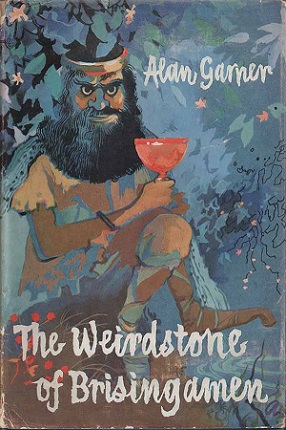
Alan Garner's Alderley books begin with The Weirdstone of Brisingamen (1960) and The Moon of Gomrath (1963), children's fantasies set around the real Cheshire hill of Alderley Edge and drawn from its local legends. Garner returned to the same setting and characters decades later in Boneland (2012), a far darker novel for adults in which the now-grown Colin, afflicted with amnesia covering his entire childhood, tries to piece together what really happened to him and his sister. The three books span most of Garner's writing life rather than forming one continuous trilogy.
- His Dark Materials
series8 books1995
part of His Dark Materials Universe
similar bycoming of ageadventurousyoung adultfantasy+1 more
His Dark Materials is a trilogy of fantasy novels by Philip Pullman consisting of Northern Lights, The Subtle Knife (1997), and The Amber Spyglass (2000). It follows the coming of age of two children, Lyra Belacqua and Will Parry, as they wander through a series of parallel universes. The novels have won a number of awards, including the Carnegie Medal in 1995 for Northern Lights and the 2001 Whitbread Book of the Year for The Amber Spyglass. In 2003, the trilogy was ranked third on the BBC's The Big Read poll.
- The Dark Is Rising
series5 books1965
similar byadventurouscontemporaryfantasymythic fantasy+3 more
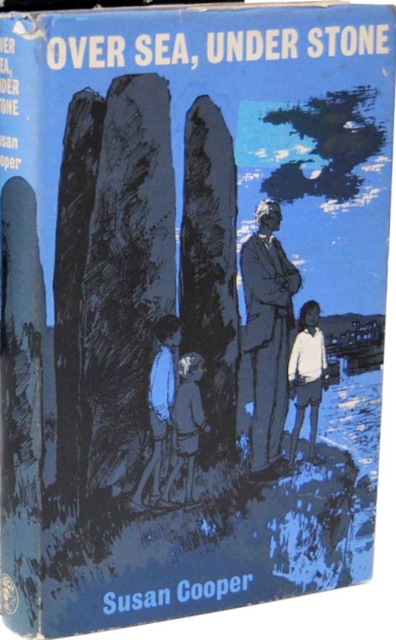
The Dark Is Rising Sequence is a series of five contemporary fantasy novels for older children and young adults that were written by the British author Susan Cooper and published from 1965 to 1977. The first book in the series, Over Sea, Under Stone, was originally conceived as a stand-alone novel, and the sequence gets its name from the second novel in the series, The Dark Is Rising. The Dark Is Rising Sequence is used as an overarching title in several omnibus, boxed-set, and coordinated editions; but the title of The Dark Is Rising is also used for the whole series.
- James and the Giant Peach
Roald Dahlstandalone novel1961
similar bycoming of ageadventurouscontemporaryour worldfantasy+1 more
James and the Giant Peach is a children's novel written in 1961 by British author Roald Dahl. The first edition, published by Alfred Knopf, featured illustrations by Nancy Ekholm Burkert. There have been re-illustrated versions of it over the years, drawn by Michael Simeon, Emma Chichester Clark, Lane Smith and Quentin Blake. It was adapted into a film of the same name in 1996 which was directed by Henry Selick, and a musical in 2010.
- Talisman
series4 books1984
similar bycontemporaryfantasy+3 more
Stephen King and Peter Straub's The Talisman follows twelve-year-old Jack Sawyer as he crosses between our world and the Territories, a parallel realm, on a cross-country quest to save his dying mother. The 2001 sequel Black House catches up with Jack decades later as a retired detective drawn into a serial-murder case in small-town Wisconsin that pulls the Territories back into his life. A third book, Other Worlds Than These, was announced in 2025 to complete the trilogy.
- Johnny Dixon and the Professor
series13 books1983
similar bycontemporaryhorrormiddle grade+2 more
Johnny Dixon is a fictional American boy featured in a series of twelve children's gothic horror novels, 1983 to 1999, written by John Bellairs or his successor Brad Strickland. In each book, 12-year-old Johnny and his group of friends face and overcome evil forces usually bent on ending the world. Alternatively, Johnny Dixon is the book series.
- Fionavar Universe
series5 books1984
similar bycontemporaryfantasy+2 more
Ysabel is a 2007 standalone contemporary fantasy novel by Guy Gavriel Kay, following teenager Ned Marriner as he stumbles into a centuries-old rivalry playing out around the cathedral of Aix-en-Provence. It marked Kay's turn toward urban fantasy and briefly brings back two adult characters from his earlier Fionavar Tapestry trilogy, though it is not itself part of that trilogy and can be read on its own.
- Fairy Tale
Stephen Kingstandalone novel2022
similar bycoming of ageadventurouscontemporaryfantasy+2 more
Fairy Tale is a dark fantasy novel by American author Stephen King, published on September 6, 2022, by Scribner. The novel follows Charlie Reade, a 17-year-old who inherits keys to a hidden, otherworldly realm, and finds himself leading the battle between forces of good and evil.
- Buffy the Vampire Slayer
series155 books1992
part of Buffyverse
similar bycontemporaryyoung adult+4 more
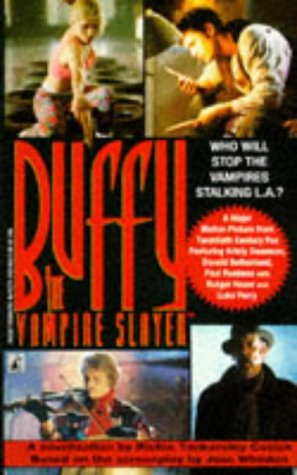
Buffy the Vampire Slayer is an American supernatural horror drama television series created by Joss Whedon. The show's concept is based on the 1992 film written by Whedon, although they are separate and distinct productions. Whedon served as executive producer and showrunner of the series under his production company Mutant Enemy Productions. It aired on The WB from March 10, 1997, to May 22, 2001, and later on UPN from October 2, 2001, to May 20, 2003.
- Peter Pan Universe
universe112 books1902
Start herePeter Pan · Start here
similar byfantasy+2 more
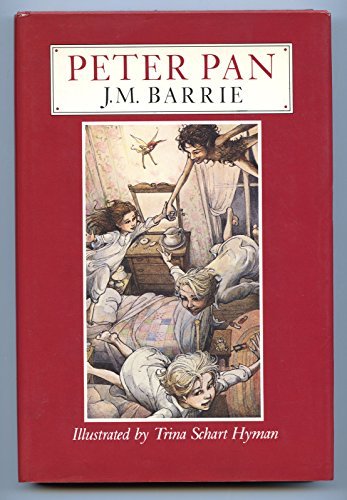
Second star to the right, and straight on till morning — and there it is, the island that every child dreams once and then, growing up, contrives to forget. Neverland: mermaids in the lagoon, a ticking crocodile with a clock in its belly, a pirate nursing his severed hand, and above it all the boy who will not grow up, forever flying, forever heartless in the lovely careless way that only children are. It begins with J. M. Barrie — the 1904 stage play, the chapters of Kensington Gardens, and the novel Peter and Wendy that fixed Peter, Wendy, Tinker Bell, Hook and the Lost Boys in place. From that small window a wide world has flown. Dave Barry and Ridley Pearson supply the how-it-all-began in their Starcatchers books, chasing falling starstuff aboard a doomed ship to explain why one orphan came to fly and never age. A whole bright shelf tends Tinker Bell's Pixie Hollow — the Disney Fairies and Fairy Haven tales, Kiki Thorpe's Never Girls — while Heidi Schulz hands the wheel to Hook's own daughter, and stranger, dimmer corners carry the island into far darker weather. Many hands, one archipelago; no single map governs them all. What sets it apart is the sweetness with a blade in it — wonder shadowed always by the ache of leaving, of mothers who keep the window open and children who fly home too late. Newcomers should begin where it began, with Barrie's Peter and Wendy, then, for the origin, take the Starcatchers books in their own order. The rest of Neverland waits, as it always does, for whoever still remembers how to reach it.
- Narnia
series26 books1950
part of Narnia Universe
similar bycoming of ageadventurousfantasy+1 more
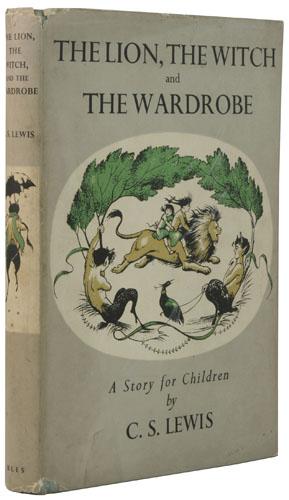
The Chronicles of Narnia is a series of seven portal fantasy novels by British author C. S. Lewis. Illustrated by Pauline Baynes and originally published between 1950 and 1956, the series is set in the fictional realm of Narnia, a fantasy world of magic, mythical beasts, and talking animals. It narrates the adventures of various children who play central roles in the unfolding history of the Narnian world. Except in The Horse and His Boy, the protagonists are all children from the real world who are magically transported to Narnia, where they are sometimes called upon by the lion Aslan to protect Narnia from evil. The books span the entire history of Narnia, from its creation in The Magician's Nephew to its eventual destruction in The Last Battle.
- House of Night
series20 books2007
similar bycontemporaryyoung adultfantasy+2 more
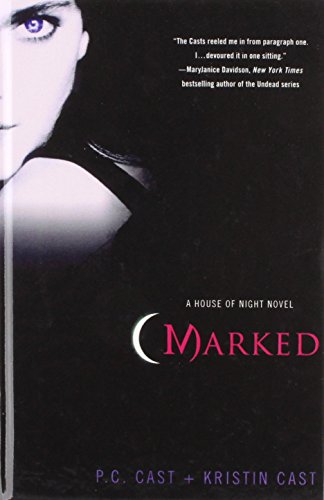
House of Night is a series of young adult vampire-themed fantasy novels by American author P. C. Cast and her daughter Kristin Cast. It follows the adventures of Zoey Redbird, a 16-year-old girl who is "marked", becomes a fledgling vampyre and is required to attend the House of Night boarding school in Tulsa, Oklahoma. Books in the series have been on the New York Times Best Seller list for 63 weeks and have sold over seven million copies in North America, and more than ten million books worldwide, in 39 countries.
- Dogsbody
Diana Wynne Jonesstandalone novel1975
similar byadventurouscontemporaryour worldfantasymythic fantasy+1 more
Sirius the dog star, is reborn on earth as a puppy with a mission to search for the lost Zoi, the murder weapon of the stars.
- Young Wizards
series24 books1983
similar bycoming of ageadventurouscontemporaryour worldfantasy+1 more
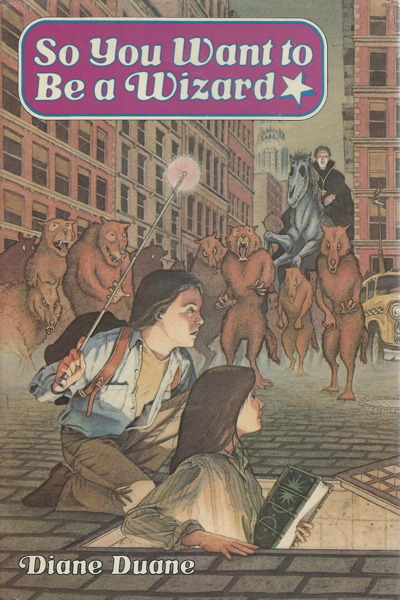
Diane Duane's Young Wizards series begins with thirteen-year-old Nita, bullied and friendless, who borrows a library book on wizardry and discovers it's the real thing: an apprenticeship into a covert order that fights entropy, alongside a classmate named Kit. Across fifteen books published between 1983 and 2019, the two age forward in something close to real time as their missions escalate from New York streets to alien worlds and beyond. The series centers on the wizard's Oath and the idea that magic is a responsibility taken on to slow the universe's decay, not a power to be enjoyed for its own sake.
- Lewis Barnavelt
series12 books1973
similar bycontemporaryfantasymiddle grade+2 more
Lewis Barnavelt is a lonely orphan who moves in with his uncle Jonathan, an amateur wizard, in a rambling old house that turns out to hide a doomsday clock built into its walls by a previous, malevolent owner. John Bellairs introduced the character in The House with a Clock in Its Walls (1973), illustrated by Edward Gorey, and after Bellairs's death Brad Strickland continued the series from his notes and outlines for most of its later volumes. It blends gothic horror atmosphere with a gentler, more whimsical strain of children's fantasy.
- Otherworld (Kelley Armstrong)
series100 books1996
similar bycontemporaryour world+2 more
Women of the Otherworld is Kelley Armstrong's long-running urban fantasy series about werewolves, witches, sorcerers, and other supernatural beings trying to pass as ordinary people in the contemporary world, told across thirteen novels plus assorted novellas published between 2001 and 2012. Each book tends to follow a different member of this hidden community while slowly building a shared, continuing world.
- Spooksville
series24 books1995
similar bycontemporaryhorror+1 more
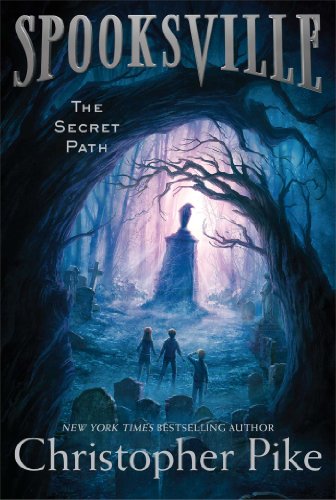
Spooksville is a series of 24 children's horror fiction books by American writer Christopher Pike. All 24 books were first published between 1995 and 1998. The series is set in a remote town in the USA and revolves around the lives of five of its young inhabitants. Although intended for a younger audience than his adult and young adult literature, they contain some violence and may be considered unsuitable for younger children. A television series based on the books was commissioned and premiered on October 26, 2013, on the Hub Network.
- Bromeliad
series3 books1989
completed
similar byadventurouscontemporaryour worldfantasy
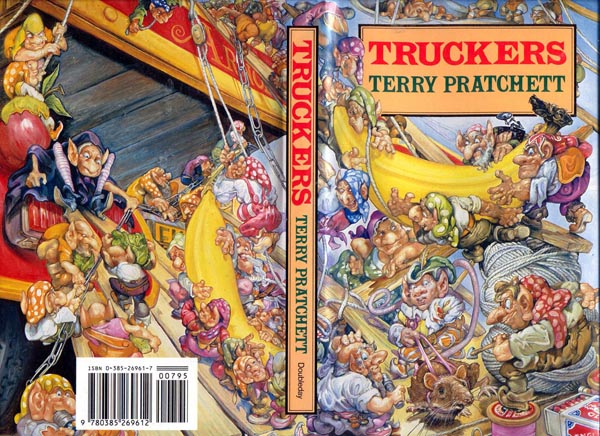
The Nome Trilogy, also known as The Bromeliad, is a trilogy of children's books by British writer Terry Pratchett, consisting of the books Truckers (1989), Diggers (1990) and Wings (1990). The trilogy tells the story of the Nomes, a race of tiny people from another world who now live hidden among humans. Through the books they struggle to survive in the human world and, once they learn of their history from an artefact known as "The Thing", make plans to return home.
- The World of Skulduggery Pleasant
series38 books2007
similar byadventurouscontemporaryour worldyoung adult+2 more
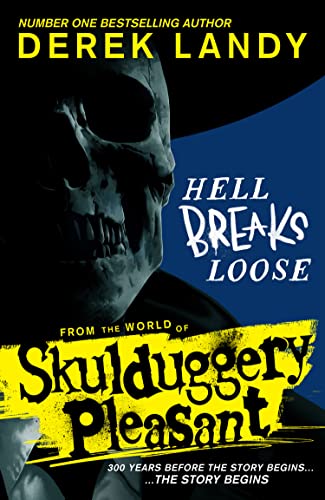
These are standalone companion stories set in Derek Landy's Skulduggery Pleasant world, rather than a numbered sequence of their own. Hell Breaks Loose is a one-off prequel following the skeleton detective Skulduggery on a solo hunt years before the main series begins; The Haunted House on Hollow Hill and A Small Matter of Impending Catastrophe are novellas slotted between the main series' sixteenth and seventeenth books, the former adapted from an audio drama. None require following a separate ongoing plot of their own.