Loreful
HomeDiscover
Search series, authors…⌘K
Loreful

Reading orders for SF/F series and shared universes — with your place kept in every one.

Explore

UniversesSeriesWorksAuthorsAtlas

Help

FAQAboutSite map

Account & legal

Sign inCreate accountPrivacyTerms

Data

Built on ISFDB, Wikipedia, Wikidata and Open Library. Curated reading orders carry their reasoning on the page; the rest follow publication order. Data sources & licenses

© Loreful · data: ISFDB · CC BY

More like Lost Burgundy

anchored on:historical fantasyalternate historywareuroperenaissance and early moderndark+3 more

but

Mood

The mood the book leaves you in.

  • The reading experience is propelled by journeys, exploration, and physical risk; excitement and forward momentum dominate over dread or introspection.
  • Joy and loss are deliberately mixed; the resolution grants characters something real while taking something else away, leaving warmth and sorrow together.
  • The book demands work from the reader — dense prose, difficult structure, unfamiliar ideas, or morally uncomfortable material — as part of its intended effect.
  • Grim events, cruelty, or despair dominate the atmosphere, and the book does not soften them with comfort or comic relief.
  • The atmosphere is quietly unsettling — wrongness, unease, and the uncanny pervade the book without necessarily escalating into overt horror.
  • The book is built to move the reader; character feeling is foregrounded and major scenes aim at a strong emotional response.
  • Humor is a primary aim and the prose plays for laughs — comic situations, wit, or dialogue produce sustained comedy, not occasional levity.
  • The book insists that things can improve; effort and decency are shown to matter, and the arc bends toward better outcomes even through hardship.
  • The book teaches as it goes — real facts, history, science, or craft are conveyed in enough depth that learning is part of the reading experience.
  • The book is designed to uplift and motivate, presenting perseverance or achievement in a way that invites the reader to aspire or act.
  • The overall register is cheerful and easygoing; stakes are kept gentle and the book avoids dwelling on pain or dread.
  • Withheld information drives the experience; the book sustains enigmas and secrets the reader wants resolved, whatever its genre.
  • The book is contemplative and inward-looking, giving more weight to thought, memory, and meaning than to external events.
  • The book works as comfort reading — low tension, a soothing pace, and an atmosphere the reader can unwind in.
  • Grief, loss, or melancholy set the dominant register, and the book lets sorrow stand rather than resolving it into comfort.
  • Sustained suspense is the point; the book keeps the reader braced for what happens next through danger, pressure, or impending revelation.
  • Playful invention and charm define the register — fanciful conceits, light absurdity, and a narration that delights in its own oddity.

About

What the story runs on.

  • Stories in which extraterrestrial beings are central — as characters, cultures, or the object of the plot.
  • Stories structured as a quest — a journey undertaken to find, deliver, or destroy something of great import.
  • Stories in which staying alive against nature, catastrophe, or scarcity is the central problem.
  • Stories of lovers kept apart by law, family, faith, or station, where the obstacle to love is the plot.
  • Stories of growing up — a young protagonist crossing from childhood into adult knowledge and responsibility.
  • Stories about who a character truly is — self-discovery, doubled lives, and the search for a self.
  • Stories about mental unraveling — descent into madness, delusion, and minds at war with themselves.
  • Stories in which a buried family truth — hidden parentage, crimes, or shames — surfaces and reorders the present.
  • Stories driven by maneuvering for power — factions, conspiracies, and statecraft conducted in shadow.
  • Stories about rising against rulers — uprisings, resistance movements, and revolutions and their aftermaths.
  • Stories in which war itself is the subject — combat, occupation, and what warfare does to soldiers and civilians.
  • Stories organized around investigating a killing — the case, the clues, and the pursuit of the killer, in any genre's clothing.

Shelf

Where it sits in the library.

    • Fiction built on magic or other supernatural elements that have no scientific explanation.
    • Secondary-world fantasy at large scale, where the fate of nations or the world turns on the protagonists' struggle.
    • Fantasy set in a recognizably modern city or contemporary world where the supernatural intrudes on everyday life.
    • Fantasy that blends in horror's atmosphere and imagery, keeping a fantastical frame around grim or frightening material.
    • Action-driven fantasy following warriors or rogues with personal stakes against sorcerous threats, rather than world-spanning conflicts.
    • Fantasy set in a real historical period or a close analogue of one, with magic woven into the era.
    • Fantasy in which protagonists cross from the ordinary world into another world through a portal or similar passage.
    • Fiction that retells or reworks a traditional fairy tale in a new form or setting.
    • Fantasy drawing directly on myths, legends, and folklore, retelling them or building on their figures and logic.
    • Fantasy of ghosts, vampires, shapeshifters, psychics, and similar phenomena, usually set in an otherwise ordinary world.
    • Fiction mixing science-fictional trappings with overtly magical or impossible elements in one setting.
    • Low-stakes fantasy emphasizing comfort, community, and everyday pleasures over conflict and peril.
    • Speculative fiction of pervasive moral ambiguity, violence, and cynicism that rejects heroic conventions — fantasy and SF alike.
      • Fiction that extrapolates from science and technology — future societies, space travel, or speculative inventions — within at least nominally natural laws.
      • Science fiction of interstellar scope — starships, galactic polities, and adventure across star systems.
      • Science fiction committed to scientific rigor, where technical plausibility constrains the story.
      • Science fiction centered on armed forces and warfare, told largely from a military point of view.
      • Science fiction of networked, corporate-dominated near futures, pairing high technology with social decay.
      • Science fiction styled on nineteenth-century steam-powered technology, often in a Victorian or pseudo-Victorian setting.
      • Fiction depicting an oppressive or catastrophic society, presented as a warning.
      • Fiction set after civilization's collapse, following survivors in the ruins of the old world.
      • Fiction in which characters move between past and future, and the mechanics or consequences of that travel drive the plot.
      • Fiction exploring a world where a historical event went differently and history diverged from ours.
      • Science fiction about humanity's first encounter and communication with an alien intelligence.
      • Science fiction in which extraterrestrial forces attack or occupy Earth and humanity resists.
      • Fiction whose primary aim is to frighten or unsettle the reader through dread, menace, or the monstrous.
      • Horror of vast, indifferent, incomprehensible entities before which humanity is insignificant, in the Lovecraft tradition.
      • Horror of decaying houses, buried family secrets, and oppressive atmosphere in the Gothic literary tradition.
      • Horror centered on hauntings and the returning dead.
      • Horror located in the mind — paranoia, obsession, and unreliable perception rather than external monsters.
      • Horror built around the reanimated dead and survival amid their outbreaks.
      • Horror defined by explicit, transgressive gore that refuses to cut away from violence.
      • Speculative fiction of the strange and uncanny that resists both natural explanation and standard genre categories.
      • Fiction organized around solving a crime or puzzle, typically following an investigator toward the identification of a culprit.
      • A puzzle-first mystery that lays out clues so the culprit's identity can be deduced before the reveal.
      • Crime fiction of moral ambiguity, fatalism, and hard-edged style, set among the corrupt and the doomed.
      • A mystery following the realistic routines of police work — forensics, interviews, and case-building.
      • A gentle mystery with an amateur sleuth, a small community, and violence kept off the page.
      • A mystery set in a past era, where the investigation works within that period's methods and society.
      • Fast-paced fiction driven by imminent danger, pursuit, or high-stakes conspiracy, built to sustain tension.
      • A thriller of espionage — agents, tradecraft, and intelligence services in conflict.
      • A thriller centered on lawyers and the courtroom, where litigation carries the suspense.
      • A thriller driven by detailed contemporary or near-future technology, often military or scientific.
      • A thriller whose tension comes from mental states and manipulation between characters rather than external action.
      • Fiction whose central plot is a romantic relationship and its development toward an emotionally satisfying resolution.
      • Romance in which one or both partners are supernatural beings, blending fantasy elements into the love story.
      • A fantasy-romance hybrid in which the romantic arc and the fantasy plot carry equal weight.
      • Romance set in a past era, with courtship shaped by the period's society and manners.
      • Romance set in the present day, without supernatural or historical elements.
      • Fiction set in a real past period, where the historical setting materially shapes characters and events.
        • General and literary fiction emphasizing prose style, character interiority, or formal ambition over genre plot conventions.
        • Fiction in a realistic world where magical events occur and are treated as ordinary, in the tradition of Latin American literature.
        • Fiction that ridicules people, institutions, or society in order to criticize them.
        • Fiction of dreamlike, irrational imagery and logic that breaks from realistic representation.
        • Fiction that plays with narrative convention through metafiction, fragmentation, and self-reference.
        • Fiction propelled by journeys, exploration, and physical peril, where action and survival carry the plot.
        • Adventure fiction of ships and seafaring — naval engagements, voyages, and life at sea.
        • Fiction of the American frontier West — gunmen, ranchers, and lawmen, typically in the late nineteenth century.
        • Fiction centered on soldiers, campaigns, and the experience of warfare, historical or imagined.
          • Fiction written primarily to amuse, using comedic situations, wit, or parody as its organizing principle.
            • Multi-generational fiction following a family or dynasty across decades, with inheritance and kinship as the through-line.
              • Fiction whose world runs on explicit game mechanics — levels, stats, and skills that characters can see and exploit.
                • Fiction about costumed or superpowered heroes and their conflicts with comparable villains.

                Practical

                How long a commitment, whether it stands alone, and whether it has finished.

                Tap a chip to ask for it · tap again to rule it out · once more to clear. Numbers show what would be left.

                • TF
                  The First History

                  series · 8 books · 1999

                  similar byrenaissance and early moderneuropehistorical fantasydarkalternate historywar+3 more

                • Cover of Mircea Basarab
                  Mircea Basarab

                  series · 1 book · 2014

                  part of Cassandra Palmer

                  similar byeuroperenaissance and early modernhistorical fantasydarkpolitical intrigue+1 more

                • Cover of The Man with the Iron Heart
                  The Man with the Iron Heart

                  Harry Turtledove · standalone novel · 2008

                  similar byeuropealternate historywardarktensepolitical intrigue

                  The Man with the Iron Heart is an alternate history novel by Harry Turtledove. Published in 2008, it takes as its premise the survival by Reinhard Heydrich of his 1942 assassination in Czechoslovakia and his subsequent leadership of the postwar Werwolf insurgency in occupied Germany, which Turtledove depicts as growing into a far more formidable force than was the case historically.

                • Cover of Heirs of Alexandria
                  Heirs of Alexandria

                  series · 7 books · 2002

                  similar byrenaissance and early moderneuropehistorical fantasyalternate historypolitical intrigue+1 more

                  Heirs of Alexandria is an alternate history/historical fantasy series introduced in 2002 and set primarily in the Republic of Venice in the 1530s. The books are written by three authors, Mercedes Lackey, Eric Flint and Dave Freer. The books combine elements from the styles of all three authors, such as Lackey's approach to tolerance and magic and Flint's sense of history alteration.

                • Cover of Mirror Mirror
                  Mirror Mirror

                  Gregory Maguire · standalone novel · 2003

                  similar byeuroperenaissance and early modernhistorical fantasydark

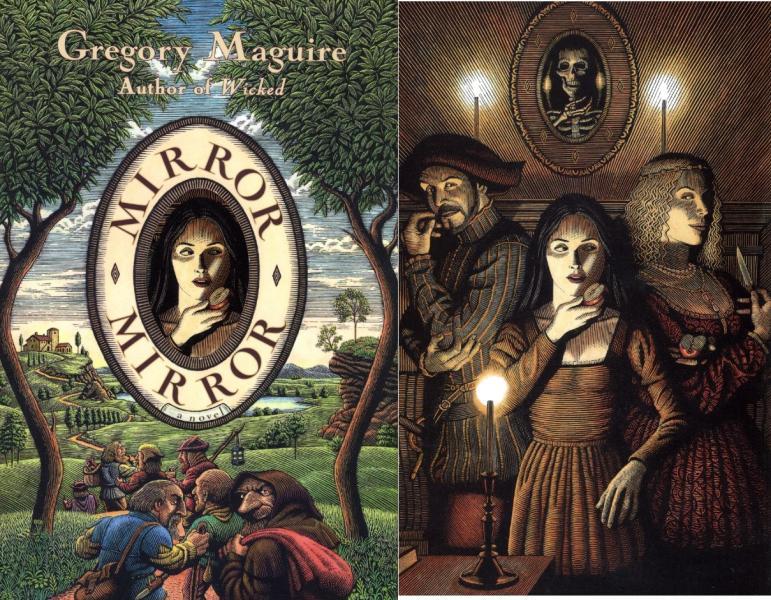
                  Mirror, Mirror is a fantasy novel by American writer Gregory Maguire, published in 2003. The novel is a revisionist version of the tale of Snow White set in rural Italy and featuring the historical Borgia family, with Lucrezia Borgia in the role of the Evil Queen.

                • Cover of The Familiar
                  The Familiar

                  Leigh Bardugo · standalone novel · 2024

                  similar byeuroperenaissance and early modernhistorical fantasytense+1 more

                  The Familiar is a historical fantasy novel written by Leigh Bardugo, published by Flatiron Books on April 9, 2024. The novel follows Luzia Cotado, a scullion with a gift for "little miracles", who must use her magic to survive and gain favor in the royal court all while hiding the truth about her ancestry. The book is not part of a series.

                • Cover of The Milkweed Triptych
                  The Milkweed Triptych

                  series · 3 books · 2010

                  similar byalternate historydarktenseeuropewarhistorical fantasy+1 more

                • Cover of The Hot War
                  The Hot War

                  series · 3 books · 2015

                  similar bydarkalternate historywartensesurvivalpolitical intrigue+1 more

                • Cover of Fatherland
                  Fatherland

                  Robert Harris · standalone novel · 1992

                  similar byeuropealternate historydarktensepolitical intrigue

                  Twenty years after Nazi Germany won the Second World War, Berlin is preparing to celebrate Adolf Hitler's seventy-fifth birthday when detective Xavier March is called to investigate a body pulled from a lake, ostensibly an accident, but one that leads him to a string of suspiciously staged deaths among senior Nazi officials. Ordered off the case by the Gestapo but quietly told to keep going by his own superior, March teams up with an American journalist, Charlie Maguire, and starts following a trail toward Swiss bank accounts and a secret the regime has spent two decades burying. Robert Harris's alternate-history debut novel.

                • Cover of The Sound of His Horn
                  The Sound of His Horn

                  Sarban · standalone novel · 1952

                  similar bydarkalternate historyeuropetensesurvival

                  The Sound of His Horn is a 1952 dystopian time travel/alternative history novel by the senior British diplomat John William Wall, written under the pseudonym Sarban. The novel has been included in several lists of the greatest fantasy novels of all time.

                • Cover of The Monk
                  The Monk

                  Matthew Gregory Lewis · standalone novel · 1796

                  similar byeuroperenaissance and early moderndarktense

                  The Monk: A Romance is a Gothic novel by Matthew Gregory Lewis, published in 1796 across three volumes. Written early in Lewis's career, it was published anonymously when he was 20. It tells the story of a virtuous Catholic monk who gives in to his violent and lustful urges, setting off a chain of events that leave him damned. It is a prime example of the type of Gothic that specializes in horror.

                • Cover of The Drawing of the Dark
                  The Drawing of the Dark

                  Tim Powers · standalone novel · 1979

                  similar byeuroperenaissance and early modernhistorical fantasywar

                  Brian Duffy is a weary, aging Irish mercenary hired in Venice, for reasons he isn't given, to work as a bouncer at a Vienna inn that also happens to be Europe's oldest brewery -- one that produces a legendary dark beer only once every seven hundred years. He arrives just as the Ottoman army under Suleiman the Magnificent marches on Vienna, and just as strange visions and stranger company start converging on the inn: an old flame, her father's uncanny unfinished painting, and Duffy's mysterious employer, who has plans for him well beyond keeping the peace at closing time. Tim Powers's historical fantasy set during the 1529 siege of Vienna.

                • Cover of Age of Unreason
                  Age of Unreason

                  series · 4 books · 1998

                  similar byrenaissance and early moderneuropehistorical fantasyalternate historypolitical intrigue

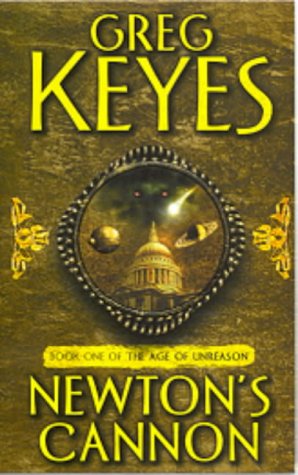
                  The Age of Unreason is a series of four novels in the historical fantasy genre written by Gregory Keyes:Newton's Cannon (1998), ISBN 1-56865-829-X A Calculus of Angels (1999), ISBN 0-7394-0260-9 Empire of Unreason (2000), ISBN 0-345-40609-5 The Shadows of God (2001), ISBN 0-345-43904-X

                • Cover of The Dragon Waiting
                  The Dragon Waiting

                  John M. Ford · standalone novel · 1983

                  similar byhistorical fantasyalternate historyeuropedarkpolitical intrigue

                  The Dragon Waiting: A Masque of History is a 1983 historical fantasy novel by American writer John M. Ford. It won the 1984 World Fantasy Award for Best Novel. This book, set in an alternate history, contains such plot elements as vampirism, the House of Medici, and the convoluted English politics surrounding Edward IV and Richard III. It also deals with the fate of the Princes in the Tower.

                • Cover of Ludis Kristaps
                  Ludis Kristaps

                  series · 3 books · 2011

                  similar byeuropedarkhistorical fantasywartense

                • Cover of The Conqueror's Trilogy
                  The Conqueror's Trilogy

                  series · 3 books · 2016

                  similar byrenaissance and early moderneuropedarktensepolitical intrigue+1 more

                • Cover of The Werewolf of Paris
                  The Werewolf of Paris

                  Guy Endore · standalone novel · 1933

                  similar byeuropedarktensewar

                  The Werewolf of Paris (1933) is a Gothic horror novel by American writer Guy Endore. The novel follows Bertrand Caillet, the eponymous werewolf, throughout the tumultuous events of the Franco-Prussian War and the Paris Commune of 1870–71. Some literature experts have compared this book with Dracula by Bram Stoker and they have identified it as the Dracula of werewolf fiction.

                • Cover of The War That Came Early
                  The War That Came Early

                  series · 6 books · 2009

                  similar byeuropealternate historywartensepolitical intrigue+1 more

                  The War That Came Early is a six-novel series by Harry Turtledove depicting an alternate history of World War II. As is typical of Turtledove's alternate histories, the narrative follows a large cast of both fictional and historical characters.

                • Cover of Shards of Empire
                  Shards of Empire

                  series · 2 books · 1996

                  similar byeuropehistorical fantasytensewarpolitical intrigue+1 more

                • Cover of Days of Infamy
                  Days of Infamy

                  series · 2 books · 2004

                  similar byalternate historywartensedark+1 more

                  Harry Turtledove's Days of Infamy duology reimagines the Pacific theater of World War II with an alternate outcome at Pearl Harbor: a Japanese invasion and occupation of Hawaii rather than a single carrier strike. Days of Infamy covers the invasion itself, while End of the Beginning follows the ensuing occupation and eventual counter-invasion. As in his other alternate-history work, Turtledove follows the changed war through a wide, rotating cast of civilian and military viewpoints.

                • Cover of Germanica
                  Germanica

                  Robert Conroy · standalone novel · 2015

                  similar byeuropealternate historywartensepolitical intrigue+1 more

                  Germanica is an alternate history novel written by Robert Conroy. It was published by Baen Books online as an ebook on August 16, 2015 before being published as a physical book on September 1, 2015. As Conroy had died eight months before the book was published, it was released posthumously.

                • Cover of The Angel and the Sword
                  The Angel and the Sword

                  Cecelia Holland · standalone novel · 2000

                  similar byeuropewartensesurvivalpolitical intrigue+1 more

                  "It is the waning days of the ninth century. The vast dominion won by the great Emperor Charlemagne has been torn apart by his heirs and successors. In Paris, once the heart of that realm, the Emperor's irresolute grandson, Charles the Bald, battles desperately to preserve his kingdom from the ravages of Viking raiders. If the city falls, its people will perish, and along with them the precious remnants of culture and learning rescued from the ashes of Rome." -- Jacket.

                • Cover of Bitter Greens
                  Bitter Greens

                  Kate Forsyth · standalone novel · 2012

                  similar byeuroperenaissance and early modernhistorical fantasy+1 more

                  "After Margherita's father steals parsley from the walled garden of the courtesan Selena Leonelli, he is threatened with having both hands cut off, unless he and his wife relinquish their precious little girl. Selena is the famous red-haired muse of the artist Tiziano, first painted by him in 1512 and still inspiring him at the time of his death. She is at the center of Renaissance life in Venice, a world of beauty and danger, seduction and betrayal, love and superstition. Locked away in a tower, Margherita sings in the hope that someone will hear her. One day, a young man does"--Amazon.com.

                • Cover of North Reich
                  North Reich

                  Robert Conroy · standalone novel · 2012

                  similar byeuropealternate historywardarktense+1 more

                  Joseph Robert Conroy was an American author of alternate history novels.