Loreful
HomeDiscover
Search series, authors…⌘K
Loreful

Reading orders for SF/F series and shared universes — with your place kept in every one.

Explore

UniversesSeriesWorksAuthorsAtlas

Help

FAQAboutSite map

Account & legal

Sign inCreate accountPrivacyTerms

Data

Built on ISFDB, Wikipedia, Wikidata and Open Library. Curated reading orders carry their reasoning on the page; the rest follow publication order. Data sources & licenses

© Loreful · data: ISFDB · CC BY

More like Lost Epiphany

anchored on:europe

but

Mood

The mood the book leaves you in.

  • The reading experience is propelled by journeys, exploration, and physical risk; excitement and forward momentum dominate over dread or introspection.
  • Joy and loss are deliberately mixed; the resolution grants characters something real while taking something else away, leaving warmth and sorrow together.
  • The book demands work from the reader — dense prose, difficult structure, unfamiliar ideas, or morally uncomfortable material — as part of its intended effect.
  • Grim events, cruelty, or despair dominate the atmosphere, and the book does not soften them with comfort or comic relief.
  • The atmosphere is quietly unsettling — wrongness, unease, and the uncanny pervade the book without necessarily escalating into overt horror.
  • The book is built to move the reader; character feeling is foregrounded and major scenes aim at a strong emotional response.
  • Humor is a primary aim and the prose plays for laughs — comic situations, wit, or dialogue produce sustained comedy, not occasional levity.
  • The book insists that things can improve; effort and decency are shown to matter, and the arc bends toward better outcomes even through hardship.
  • The book teaches as it goes — real facts, history, science, or craft are conveyed in enough depth that learning is part of the reading experience.
  • The book is designed to uplift and motivate, presenting perseverance or achievement in a way that invites the reader to aspire or act.
  • The overall register is cheerful and easygoing; stakes are kept gentle and the book avoids dwelling on pain or dread.
  • Withheld information drives the experience; the book sustains enigmas and secrets the reader wants resolved, whatever its genre.
  • The book is contemplative and inward-looking, giving more weight to thought, memory, and meaning than to external events.
  • The book works as comfort reading — low tension, a soothing pace, and an atmosphere the reader can unwind in.
  • Grief, loss, or melancholy set the dominant register, and the book lets sorrow stand rather than resolving it into comfort.
  • Sustained suspense is the point; the book keeps the reader braced for what happens next through danger, pressure, or impending revelation.
  • Playful invention and charm define the register — fanciful conceits, light absurdity, and a narration that delights in its own oddity.

About

What the story runs on.

  • Stories about characters who cannot die, or lives radically extended, and the price of endless time.
  • Stories centered on vampires — blood-drinking undead — whether as predators, love interests, or protagonists.
  • Stories structured as a quest — a journey undertaken to find, deliver, or destroy something of great import.
  • Stories in which staying alive against nature, catastrophe, or scarcity is the central problem.
  • Stories of lovers kept apart by law, family, faith, or station, where the obstacle to love is the plot.
  • Stories of growing up — a young protagonist crossing from childhood into adult knowledge and responsibility.
  • Stories about who a character truly is — self-discovery, doubled lives, and the search for a self.
  • Stories about mourning — living through the death of a loved one and what loss does to the survivors.
  • Stories in which a buried family truth — hidden parentage, crimes, or shames — surfaces and reorders the present.
  • Stories driven by maneuvering for power — factions, conspiracies, and statecraft conducted in shadow.
  • Stories in which war itself is the subject — combat, occupation, and what warfare does to soldiers and civilians.
  • Stories organized around investigating a killing — the case, the clues, and the pursuit of the killer, in any genre's clothing.

Shelf

Where it sits in the library.

    • Fiction built on magic or other supernatural elements that have no scientific explanation.
    • Secondary-world fantasy at large scale, where the fate of nations or the world turns on the protagonists' struggle.
    • Fantasy set in a recognizably modern city or contemporary world where the supernatural intrudes on everyday life.
    • Fantasy that blends in horror's atmosphere and imagery, keeping a fantastical frame around grim or frightening material.
    • Action-driven fantasy following warriors or rogues with personal stakes against sorcerous threats, rather than world-spanning conflicts.
    • Fantasy set in a real historical period or a close analogue of one, with magic woven into the era.
    • Fantasy in which protagonists cross from the ordinary world into another world through a portal or similar passage.
    • Fiction that retells or reworks a traditional fairy tale in a new form or setting.
    • Fantasy drawing directly on myths, legends, and folklore, retelling them or building on their figures and logic.
    • Fantasy of ghosts, vampires, shapeshifters, psychics, and similar phenomena, usually set in an otherwise ordinary world.
    • Fiction mixing science-fictional trappings with overtly magical or impossible elements in one setting.
    • Low-stakes fantasy emphasizing comfort, community, and everyday pleasures over conflict and peril.
    • Speculative fiction of pervasive moral ambiguity, violence, and cynicism that rejects heroic conventions — fantasy and SF alike.
      • Fiction that extrapolates from science and technology — future societies, space travel, or speculative inventions — within at least nominally natural laws.
      • Science fiction of interstellar scope — starships, galactic polities, and adventure across star systems.
      • Science fiction committed to scientific rigor, where technical plausibility constrains the story.
      • Science fiction centered on armed forces and warfare, told largely from a military point of view.
      • Science fiction of networked, corporate-dominated near futures, pairing high technology with social decay.
      • Science fiction styled on nineteenth-century steam-powered technology, often in a Victorian or pseudo-Victorian setting.
      • Fiction depicting an oppressive or catastrophic society, presented as a warning.
      • Fiction set after civilization's collapse, following survivors in the ruins of the old world.
      • Fiction in which characters move between past and future, and the mechanics or consequences of that travel drive the plot.
      • Fiction exploring a world where a historical event went differently and history diverged from ours.
      • Science fiction about humanity's first encounter and communication with an alien intelligence.
      • Science fiction in which extraterrestrial forces attack or occupy Earth and humanity resists.
      • Fiction whose primary aim is to frighten or unsettle the reader through dread, menace, or the monstrous.
      • Horror of vast, indifferent, incomprehensible entities before which humanity is insignificant, in the Lovecraft tradition.
      • Horror of decaying houses, buried family secrets, and oppressive atmosphere in the Gothic literary tradition.
      • Horror centered on hauntings and the returning dead.
      • Horror located in the mind — paranoia, obsession, and unreliable perception rather than external monsters.
      • Horror built around the reanimated dead and survival amid their outbreaks.
      • Horror defined by explicit, transgressive gore that refuses to cut away from violence.
      • Speculative fiction of the strange and uncanny that resists both natural explanation and standard genre categories.
      • Fiction organized around solving a crime or puzzle, typically following an investigator toward the identification of a culprit.
      • A puzzle-first mystery that lays out clues so the culprit's identity can be deduced before the reveal.
      • Crime fiction of moral ambiguity, fatalism, and hard-edged style, set among the corrupt and the doomed.
      • A mystery following the realistic routines of police work — forensics, interviews, and case-building.
      • A gentle mystery with an amateur sleuth, a small community, and violence kept off the page.
      • A mystery set in a past era, where the investigation works within that period's methods and society.
      • Fast-paced fiction driven by imminent danger, pursuit, or high-stakes conspiracy, built to sustain tension.
      • A thriller of espionage — agents, tradecraft, and intelligence services in conflict.
      • A thriller centered on lawyers and the courtroom, where litigation carries the suspense.
      • A thriller driven by detailed contemporary or near-future technology, often military or scientific.
      • A thriller whose tension comes from mental states and manipulation between characters rather than external action.
      • Fiction whose central plot is a romantic relationship and its development toward an emotionally satisfying resolution.
      • Romance in which one or both partners are supernatural beings, blending fantasy elements into the love story.
      • A fantasy-romance hybrid in which the romantic arc and the fantasy plot carry equal weight.
      • Romance set in a past era, with courtship shaped by the period's society and manners.
      • Romance set in the present day, without supernatural or historical elements.
      • Fiction set in a real past period, where the historical setting materially shapes characters and events.
        • General and literary fiction emphasizing prose style, character interiority, or formal ambition over genre plot conventions.
        • Fiction in a realistic world where magical events occur and are treated as ordinary, in the tradition of Latin American literature.
        • Fiction that ridicules people, institutions, or society in order to criticize them.
        • Fiction of dreamlike, irrational imagery and logic that breaks from realistic representation.
        • Fiction that plays with narrative convention through metafiction, fragmentation, and self-reference.
        • Fiction propelled by journeys, exploration, and physical peril, where action and survival carry the plot.
        • Adventure fiction of ships and seafaring — naval engagements, voyages, and life at sea.
        • Fiction of the American frontier West — gunmen, ranchers, and lawmen, typically in the late nineteenth century.
        • Fiction centered on soldiers, campaigns, and the experience of warfare, historical or imagined.
          • Fiction written primarily to amuse, using comedic situations, wit, or parody as its organizing principle.
            • Multi-generational fiction following a family or dynasty across decades, with inheritance and kinship as the through-line.
              • Fiction whose world runs on explicit game mechanics — levels, stats, and skills that characters can see and exploit.
                • Fiction about costumed or superpowered heroes and their conflicts with comparable villains.

                Practical

                How long a commitment, whether it stands alone, and whether it has finished.

                Tap a chip to ask for it · tap again to rule it out · once more to clear. Numbers show what would be left.

                • Cover of Sarantine Universe
                  Sarantine Universe

                  series · 8 books · 1995

                  similar byreflectivehistorical fantasy+2 more

                  Guy Gavriel Kay's Sarantine-world novels are loosely connected historical fantasies sharing one invented history rather than a fixed cast: The Lions of Al-Rassan (1995, an analogue of medieval Spain), The Last Light of the Sun (2004, drawing on the Viking-age raids of Alfred the Great's Britain), Children of Earth and Sky (2016, a world modeled on Venice, Istanbul, and the Balkans in the 15th century), its prequel A Brightness Long Ago (2019), and its sequel All the Seas of the World (2022, set amid wars between Christendom and the Ottoman Empire). Each novel stands alone, but together they trace centuries of the same fictional world, distinct from Kay's separate Sarantine Mosaic duology.

                • Cover of Galileo's Dream
                  Galileo's Dream

                  Kim Stanley Robinson · standalone novel · 2009

                  similar byreflectiveeuroperenaissance and early modern+1 more

                  Galileo's Dream (2009) is a science fiction novel with elements of historical fiction, written by Kim Stanley Robinson. In the book, 17th-century scientist Galileo Galilei is visited by far-future time travelers living on the Galilean moons of Jupiter. Italicized portions of text within the novel are "mostly from Galileo's writing or that of his contemporaries."

                • Cover of Immortal Muse
                  Immortal Muse

                  Stephen Leigh · standalone novel · 2014

                  similar byreflectiveart and artistseuropehistorical fantasyimmortality+1 more

                  Immortal Muse is a tale that takes the reader on a fascinating journey from Paris of the late 1300s with the alchemists Perenelle and Nicolas Flamel, to contemporary New York City. Along the way, there are interludes with Bernini in Rome in 1635; with Vivaldi in Venice of 1737; with Antoine-Laurent de Lavoisier and Robespierre in the Paris of the French Revolution; with William Blake and John Polidori in 1814; with Gustav Klimt in fin de siècle Vienna; with Charlotte Salomon in WWII France. And in modern-day New York, a complicated dance of love and violence finally brings a resolution to the centuries-old deadly feud.

                • Cover of All Souls
                  All Souls

                  series · 5 books · 2011

                  similar byhistorical fantasyeuropevampires

                  A Discovery of Witches is a 2011 historical-fantasy novel and the debut novel by American scholar Deborah Harkness. It follows Diana Bishop, a history of science professor at Yale University, as she embraces her magical blood after finding a long-thought-lost manuscript and engages in a forbidden romance with a charming vampire, Matthew Clairmont.

                • Cover of The Invisible Life of Addie LaRue
                  The Invisible Life of Addie LaRue

                  Victoria Schwab · standalone novel · 2020

                  similar byreflectiveeuropehistorical fantasyimmortality+2 more

                  The Invisible Life of Addie LaRue is a fantasy novel by the American author V. E. Schwab. It was published by Tor Books on October 6, 2020. The story follows a young French woman who in 1714 makes a bargain with the Dark that makes her immortal, but curses her to be forgotten by everyone she meets. It was nominated for the 2021 Locus Award for Best Fantasy Novel.

                • Cover of Hiddensee
                  Hiddensee

                  Gregory Maguire · standalone novel · 2017

                  similar byreflectiveart and artistseuropehistorical fantasy

                  Presents an imaginative tale rooted in early nineteenth-century German Romanticism that explores parallels between the origin legend of the famous Nutcracker with the life of Drosselmeier, the toymaker who carves him.

                • Cover of Immortal
                  Immortal

                  Traci L. Slatton · standalone novel · 2008

                  similar byreflectiveart and artistseuroperenaissance and early modernhistorical fantasyimmortality

                  In an age of wonderous beauty and terrible secrets,one man searches for his destiny...In the majestic heart of Florence, a beautiful golden-haired boy is abandoned and subjected to cruelty beyond words. But Luca Bastardo is anything but an ordinary boy. Across two centuries of passion and intrigue, Luca will discover an astonishing gift--one that will lead him to embrace the ancient mysteries of alchemy and healing and to become a trusted confidant to the powerful Medicis...even as he faces persecution from a sadistic cabal determined to wrest his secrets for themselves.But as the Black Death and the Inquisition wreak havoc on his beloved city, Luca's survival lies in the quest to solve two riddles. One is the enigma of his parents and his ageless beauty. The other is a choice between immortality and the only chance to find his one true love. As Luca journeys through the heights of the Renaissance, befriends Giotto and Leonardo Da Vinci--140 years apart--and pursues the most closely guarded secrets of religious faith and science for the answers to his own burning questions, his remarkable search will not only change him...but will change the course of history.From the Trade Paperback edition.

                • S
                  Saint-Germain

                  series · 44 books · 1978

                  completed

                  similar by+4 more

                • Cover of The Little Animals
                  The Little Animals

                  Sarah Tolmie · standalone novel · 2019

                  similar byreflectiveart and artistseuroperenaissance and early modernhistorical fantasy

                  The Little Animals is a 2019 historical fantasy novel by Sarah Tolmie, about Antonie van Leeuwenhoek.

                • Cover of Pasquale's Angel
                  Pasquale's Angel

                  Paul J. McAuley · standalone novel · 1994

                  similar byart and artistseuroperenaissance and early modern+1 more

                  Alternative history about Rosso Fiorentino.

                • Cover of Lent
                  Lent

                  Jo Walton · standalone novel · 2019

                  similar byreflectiveeuroperenaissance and early modernhistorical fantasy

                  "Young Girolamo's life is a series of miracles. It's a miracle that he can see demons, plain as day, and that he can cast them out with the force of his will. It's a miracle that he's friends with Pico della Mirandola, the Count of Concordia. It's a miracle that when Girolamo visits the deathbed of Lorenzo "the Magnificent," the dying Medici is wreathed in celestial light, a surprise to everyone, Lorenzo included. It's a miracle that when Charles VIII of France invades northern Italy, Girolamo meets him in the field, and convinces him to not only spare Florence but also protect it. It's a miracle than whenever Girolamo preaches, crowds swoon. It's a miracle that, despite the Pope's determination to bring young Girolamo to heel, he's still on the loose...and, now, running Florence in all but name. That's only the beginning. Because Girolamo Savanarola is not who--or what--he thinks he is. He will discover the truth about himself at the most startling possible time. And this will be only the beginning of his many lives." - publisher

                • Cover of Bitter Greens
                  Bitter Greens

                  Kate Forsyth · standalone novel · 2012

                  similar byart and artistseuroperenaissance and early modernhistorical fantasy

                  "After Margherita's father steals parsley from the walled garden of the courtesan Selena Leonelli, he is threatened with having both hands cut off, unless he and his wife relinquish their precious little girl. Selena is the famous red-haired muse of the artist Tiziano, first painted by him in 1512 and still inspiring him at the time of his death. She is at the center of Renaissance life in Venice, a world of beauty and danger, seduction and betrayal, love and superstition. Locked away in a tower, Margherita sings in the hope that someone will hear her. One day, a young man does"--Amazon.com.

                • Cover of The Vampire Chronicles
                  The Vampire Chronicles

                  series · 15 books · 1976

                  completed

                  similar byimmortalityvampires+3 more

                  The Vampire Chronicles is a series of Gothic vampire novels and a media franchise, created by American author Anne Rice, that revolves around the fictional character Lestat de Lioncourt, a French nobleman turned into a vampire in the 18th century.

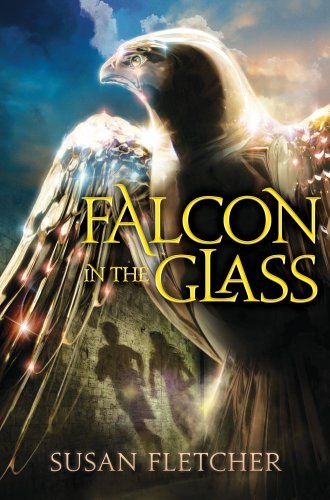
                • Cover of Falcon in the Glass
                  Falcon in the Glass

                  Susan Fletcher · standalone novel · 2013

                  similar byart and artistseuroperenaissance and early modern+1 more

                  "Eleven-year-old Renzo must teach himself to blow glass with the help of a girl who has a mysterious connection to her falcon"--

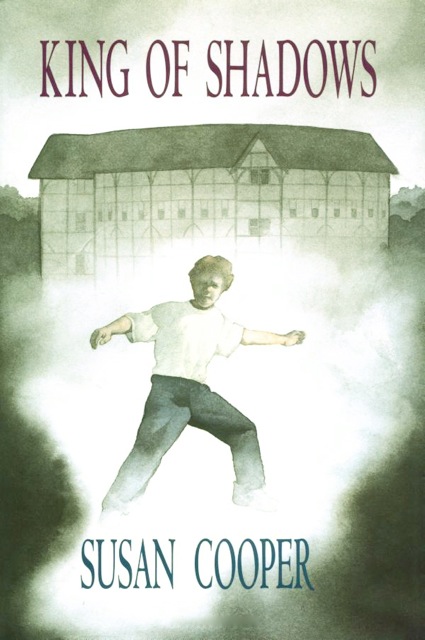
                • Cover of King of Shadows
                  King of Shadows

                  Susan Cooper · standalone novel · 1999

                  similar byreflectiveart and artistsrenaissance and early modern

                  King of Shadows is a children's historical novel by Susan Cooper published in 1999 by Penguin In the United Kingdom. It was a finalist for both the Carnegie Medal and the Guardian Children's Fiction Prize.

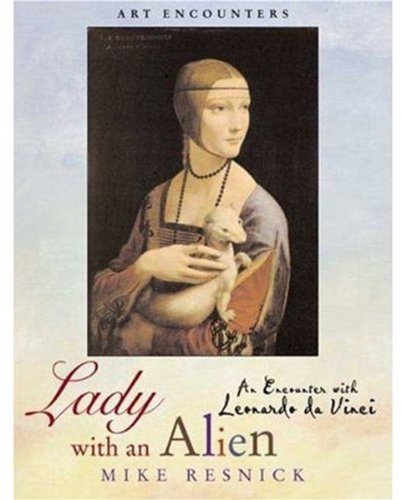
                • Cover of Lady with an Alien: An Encounter with Leonardo da Vinci
                  Lady with an Alien: An Encounter with Leonardo da Vinci

                  Mike Resnick · standalone novel · 2005

                  similar byreflectiveart and artistseuroperenaissance and early modern

                  A young boy, Mario Ravelli, develops a unique relationship with the great painter and inventor, Leonardo da Vinci, particularly because Mario is a time traveler from the year 2523 A.D.

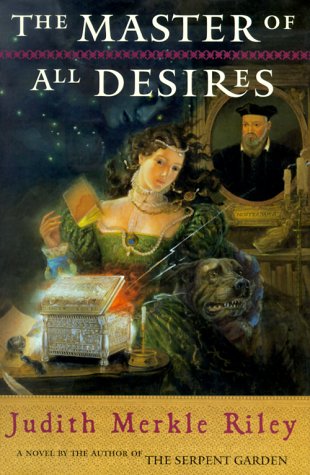
                • Cover of The Master of All Desires
                  The Master of All Desires

                  Judith Merkle Riley · standalone novel · 1999

                  similar byeuroperenaissance and early modern+1 more

                • Cover of Confessions of an Ugly Stepsister
                  Confessions of an Ugly Stepsister

                  Gregory Maguire · standalone novel · 1999

                  similar byreflectiveeuroperenaissance and early modern

                  Confessions of an Ugly Stepsister is a 1999 fantasy novel by American writer Gregory Maguire, retelling the tale of Cinderella through the eyes of one of her "ugly stepsisters." In 2002, the book was adapted into a TV movie of the same name directed by Gavin Millar. The book is dedicated to Andy Newman, Maguire's husband.

                • Cover of The Martian
                  The Martian

                  George du Maurier · standalone novel · 1897

                  similar byreflectiveeurope+1 more

                  The Martian, by George du Maurier, is a largely autobiographical novel published in 1898 and the author's third. It describes the life of Barty Josselin as told by his close friend Robert Maurice, starting from their school days in Paris in the 1850s. Written in long descriptive passages with very little dialogue and many digressions, the book had considerably less success in its time than its predecessor, the popular Trilby.

                • Cover of The Memory Cathedral
                  The Memory Cathedral

                  Jack Dann · standalone novel · 1995

                  similar byart and artistseuroperenaissance and early modernhistorical fantasy

                  The Memory Cathedral: A Secret History of Leonardo da Vinci is a 1995 historical fantasy fiction novel by Jack Dann. It follows Leonardo da Vinci constructing his flying machine and then travelling to the East.

                • Cover of Mircea Basarab
                  Mircea Basarab

                  series · 1 book · 2014

                  part of Cassandra Palmer

                  similar byeuroperenaissance and early modernhistorical fantasyparanormalvampires

                • Cover of As Above, So Below: A Novel of Peter Bruegel
                  As Above, So Below: A Novel of Peter Bruegel

                  Rudy Rucker · standalone novel · 2002

                  similar byreflectiveart and artistseuroperenaissance and early modern

                  About the artist {{A|Pieter Bruegel the Elder}}

                • Cover of Here Lies Arthur
                  Here Lies Arthur

                  Philip Reeve · standalone novel · 2007

                  similar byreflectivehistorical fantasy+1 more

                  Here Lies Arthur is a young-adult novel by Philip Reeve, published by Scholastic in 2007. Set in fifth or sixth century Britain and the Anglo-Saxon invasion, it features a girl who participates in the deliberate construction of legendary King Arthur during the man's lifetime, orchestrated by a bard. Reeve calls it a back-creation: not a genuine historical novel as it is not based on actual specific events; rather it is "back-created" from the legends, giving them a "realistic" origin.

                • Cover of Pastwatch
                  Pastwatch

                  series · 2 books · 1996

                  similar byreflectiveeuroperenaissance and early modern

                  Pastwatch: The Redemption of Christopher Columbus (1996) is a science fiction novel by American writer Orson Scott Card, the first in a proposed Pastwatch series. The book's focus is the life and activities of explorer Christopher Columbus. Much of the action deals with a group of scientists from the future who travel back to the 15th century in order to change the pattern of European contact with the Americas. These alternate with chapters describing Columbus' career and his efforts to obtain backing to his project of travelling across the ocean - much of which can be considered as historical fiction.