More like Lost Tale
anchored on:science fictionpost-apocalyptic
but
- The Triffids
series3 books1951
similar bysurvivaldarkour worldscience fictionpost-apocalyptic
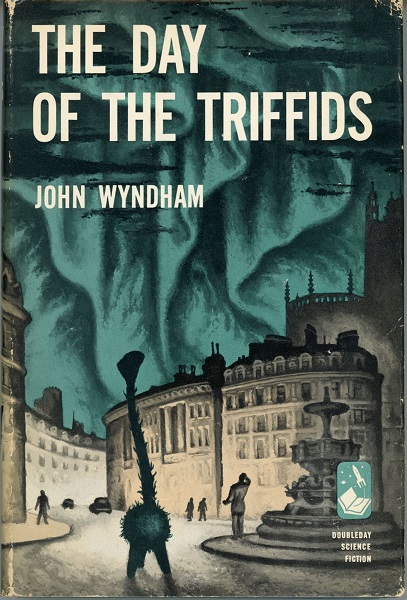
John Wyndham's The Day of the Triffids (1951) opens with a meteor-shower-like event that leaves most of Britain's population blind, throwing civilization into collapse just as triffids, an aggressive and mobile species of poisonous plant, become free to hunt the helpless survivors. Simon Clark's authorized sequel The Night of the Triffids (2001) picks up a generation later, narrated by the original protagonist's son as he confronts a new triffid-dominated world, and John Whitbourn's The Age of the Triffids extends the shared setting further still. Together the three novels form a loose post-apocalyptic trilogy built on Wyndham's original premise rather than a tightly plotted single story.
- H. G. Wells' War of the Worlds
universe65 books1898
Start hereThe War of the Worlds · Start here
similar byscience fiction+1 more
No one would have believed, in the closing years of the nineteenth century, that human affairs were being watched keenly and closely from the timeless worlds of space. And then the cylinders fell. H. G. Wells' War of the Worlds opens in the quiet of the Surrey commons, where a falling star proves to be the first Martian craft — and from the pit rise the towering tripods, the Heat-Ray, the choking Black Smoke and the creeping red weed, wielded by minds that regard mankind much as we regard the creatures we boil for supper. This is invasion rendered as natural disaster: cold, methodical, and vast beyond argument. Wells' 1898 novel is the seed; everything else grows from that Martian soil. The catalogue gathers direct sequels and continuations alongside a wide field of other hands. In War of the Worlds: Global Dispatches the invasion is retold across the whole planet through the eyes of Twain, Verne, Tolstoy, Lowell and Kipling; in the Manly Wade and Wade Wellman crossover, Sherlock Holmes, Watson and Professor Challenger take the field against the machines; and Scott Washburn's Great Martian War stretches the fighting into a decades-long alternate history of steam, artillery and grinding attrition. It is a loose shared world — no single decreed sequence, many voices answering one calamity. What sets this world apart is its refusal of heroics: the invaders fall not to generals but to the smallest things of Earth, humbling and indifferent. Begin, always, with Wells' original novel — it is short, and it is the ground every later book stands upon. From there follow your appetite: Global Dispatches for the panorama, the Holmes campaign for adventure, Washburn for the long war.
- Saint Leibowitz
series6 books1955
completed
similar byscience fictionpost-apocalyptic+2 more
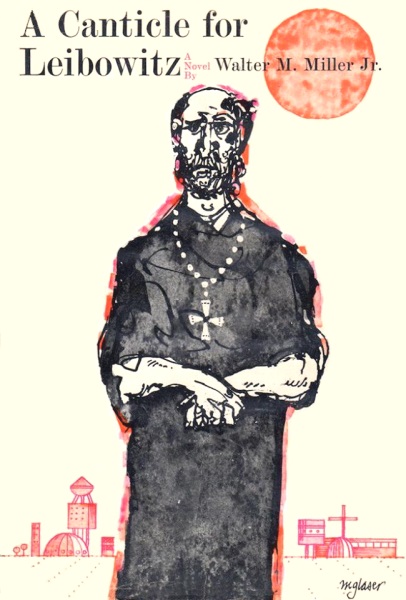
Walter M. Miller Jr.'s A Canticle for Leibowitz (1959), assembled from three novellas he had published earlier in the decade, follows the monks of a Catholic monastery in the post-nuclear American Southwest as they preserve fragments of scientific knowledge across centuries, watching civilization slowly rebuild itself and edge back toward the mistakes that destroyed it. Miller's posthumous sequel, Saint Leibowitz and the Wild Horse Woman, completed by Terry Bisson from his notes after his death and published in 1997, returns to the same abbey and its world decades later. Together the two novels form a sparse, decades-spanning series about memory, faith, and the cycles of civilization.
- I Am Legend
Richard Mathesonstandalone novel1954
similar bysurvivaldarkour worldscience fictionpost-apocalyptic
The last human survivor of the vampire epidemic has to maintain his defences against their onslaught, while attempting to research the cause and possibly solution to the plague. Robert Neville is the last living man on Earth... but he is not alone. Every other man, woman and child on the planet has become a vampire, and they are hungry for Neville's blood. By day he is the hunter, stalking the undead through the ruins of civilization. By night, he barricades himself in his home and prays for the dawn. How long can a man survive like this?
- The Kraken Wakes
John Wyndhamstandalone novel1953
similar bysurvivaldarkour worldscience fictionpost-apocalyptic
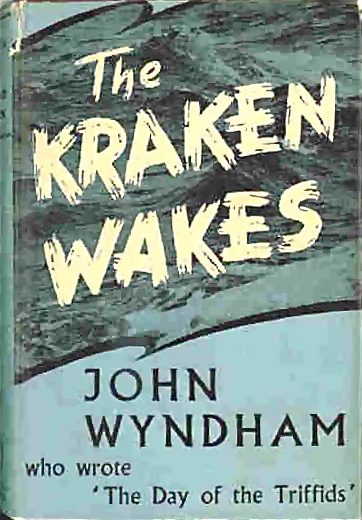
" Behind a spectacular meteor shower actually hides the beginning of an invasion by a mysterious and powerful alien race. Earth's life is disrupted by the attacks of extraterrestrials whose war machines, emerging from the depths of the oceans, seem indestructible. The coalitioned forces of the whole world are worthless, powerless in the face of the indecipherable and deadly plans of a superior intelligence, capable of bringing the entire planet to the brink of catastrophe" Goodreads May 20, 2022
- Tripods
series4 books1967
completed
similar byour worldscience fictionpost-apocalyptic+1 more
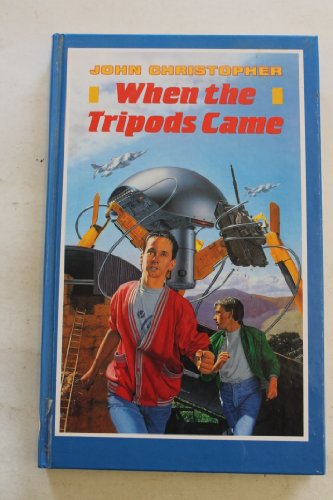
The Tripods is a series of young adult science fiction novels by John Christopher. The series takes place in a post-apocalyptic world where humanity is enslaved by "Tripods"—gigantic three-legged walking machines piloted by an alien race later identified as the "Masters". The first two books were the basis of a science fiction TV series, produced in the United Kingdom in the 1980s.
- Maze Runner
series11 books2009
similar bysurvivalscience fictionpost-apocalyptic+2 more
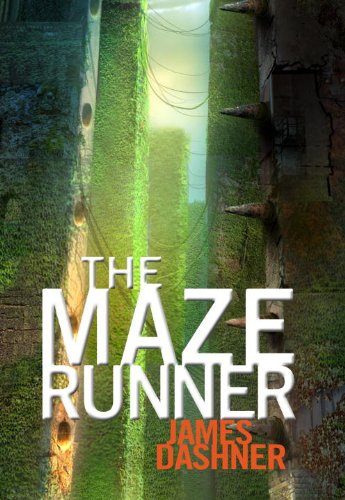
The Maze Runner is a series of young adult dystopian science fiction novels written by American author James Dashner. The series consists of the trilogy The Maze Runner (2009), The Scorch Trials (2010) and The Death Cure (2011), as well as two prequel novels, The Kill Order (2012) and The Fever Code (2016). A novella titled Crank Palace (2020) and a companion book titled The Maze Runner Files (2013) have also been released. A sequel trilogy in the series titled The Maze Cutter takes place 73 years following the events of The Death Cure and consists of the novels The Maze Cutter (2022), The Godhead Complex (2023), and The Infinite Glade (2025).
- Cell
Stephen Kingstandalone novel2006
similar bysurvivaldarkour worldscience fictionpost-apocalyptic
In Cell, King taps into readers fears of technological warfare and terrorism. Mobile phones deliver the apocalypse to millions of unsuspecting humans by wiping their brains of any humanity, leaving only aggressive and destructive impulses behind. Those without cell phones, like illustrator Clayton Riddell and his small band of "normies," must fight for survival, and their journey to find Clayton's estranged wife and young son rockets the book toward resolution.
- The Purple Cloud
M. P. Shielstandalone novel1901
similar bysurvivaldarkour worldscience fictionpost-apocalyptic
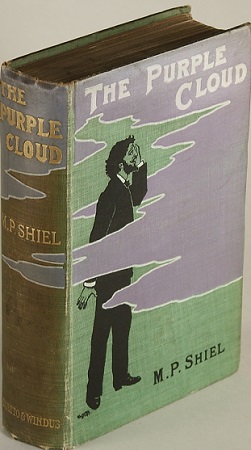
Around 1900, the author receives a packet of writings of a psychic, who recounts her vision of the multi-decade diary of an arctic explorer of the future, the first to reach the north pole; but during his multiyear trek, an unknown eruption temporarily poisons the atmosphere with cyanide, killing all human and animal life, sparing only the arctic latitudes and leaving him the last man on earth.
- City at World's End
Edmond Hamiltonstandalone novel1951
similar bysurvivaldarkour worldscience fictionpost-apocalyptic
An experimental atomic weapons test in small-town America goes catastrophically wrong, hurling the entire town of Middletown, buildings, streets and all, untold ages into Earth's future, to a time when the sun is dying and humanity's last city struggles on beneath a darkening sky. Cut off from everything and everyone they knew, the townspeople have to find a way to survive in a world that has nothing left to spare for latecomers. Edmond Hamilton's novel strands a slice of mid-century America at the literal end of the world.
- Where Late the Sweet Birds Sang
Kate Wilhelmstandalone novel1976
similar bysurvivaldarkour worldscience fictionpost-apocalyptic
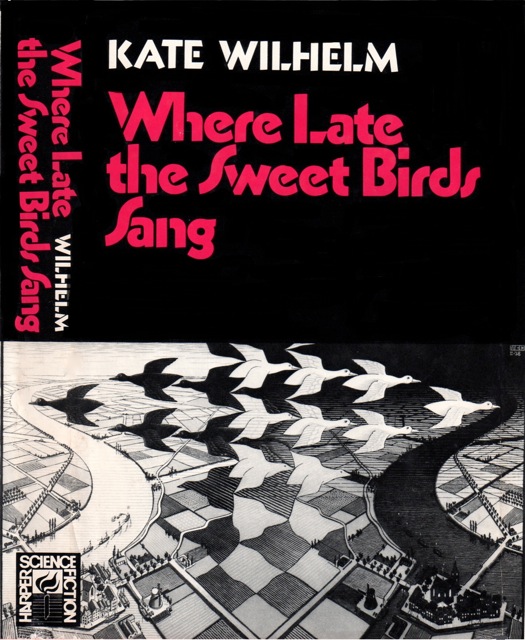
Where Late the Sweet Birds Sang is a science fiction novel by American writer Kate Wilhelm, published in 1976. The novel is composed of three parts, "Where Late the Sweet Birds Sang," "Shenandoah," and "At the Still Point," and is set in a post-apocalyptic era, a concept popular among authors who took part in the New Wave Science Fiction movement in the 1960s.
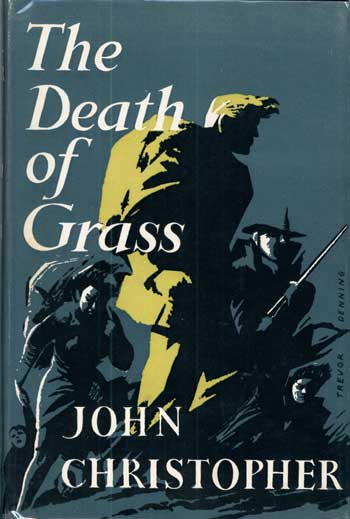
- The Death of Grass
John Christopherstandalone novel1956
similar bysurvivaldarkour worldscience fictionpost-apocalyptic
The Death of Grass is a 1956 post-apocalyptic science fiction novel written by the English author Sam Youd under the pen name John Christopher. The plot concerns a virus that kills off grass species, including rice and wheat. The Death of Grass was the first of several post-apocalyptic novels written by Youd. The novel was written in a matter of weeks and liberated him from his day job.
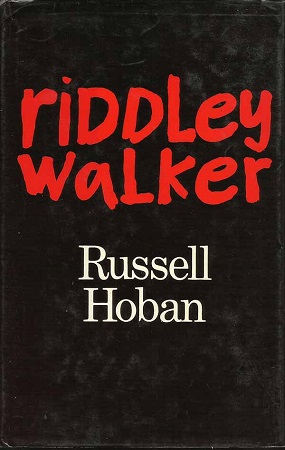
- Riddley Walker
Russell Hobanstandalone novel1980
similar bysurvivaldarkour worldscience fictionpost-apocalyptic
WorldCat: Composed in an English which has never been spoken and laced with a storytelling tradition that predates the written word, RIDDLEY WALKER is the world waiting for us at the bitter end of the nuclear road. It is desolate, dangerous and harrowing, and a modern masterpiece.
- The Andromeda Strain
series2 books1969
similar bysurvivalscience fiction+2 more
Michael Crichton's 1969 novel The Andromeda Strain follows a team of scientists racing to contain a lethal extraterrestrial microorganism that crash-lands in Arizona, told in the clinical, document-driven style that helped establish the techno-thriller genre. Daniel H. Wilson's authorized 2019 sequel The Andromeda Evolution revisits the same threat five decades later. Together the two books form a two-part outbreak story separated by a fifty-year gap in publication.
- The Fireman
Joe Hillstandalone novel2016
similar bysurvivaldarkour worldscience fictionpost-apocalyptic
The Fireman is a novel set in a post-apocalyptic time by American author Joe Hill. The novel, Hill's fourth, tells the tale of a deadly spore that has infected most of the world's population. Hill first spoke of the novel in 2013 in promotional interviews for his then-new novel NOS4A2. The novel was released on May 17, 2016.
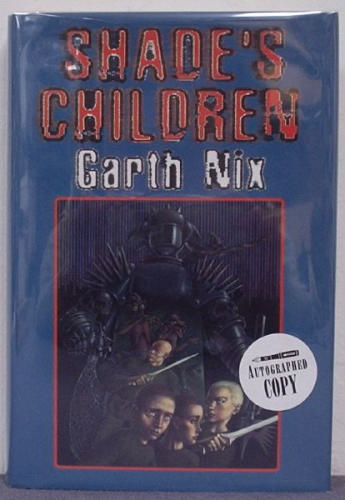
- Shade's Children milieu
series2 books1997
similar bysurvivaldarkscience fictionpost-apocalyptic+1 more
Shade's Children is set on an Earth where all adults vanished overnight fourteen years earlier, leaving children to be harvested at puberty by the machines that now run the world, unless they escape into hiding with Shade, a mysterious AI-like protector. Garth Nix's 1997 novel is a single, self-contained book rather than a series, though its bleak post-apocalyptic premise has drawn comparisons to his other work.
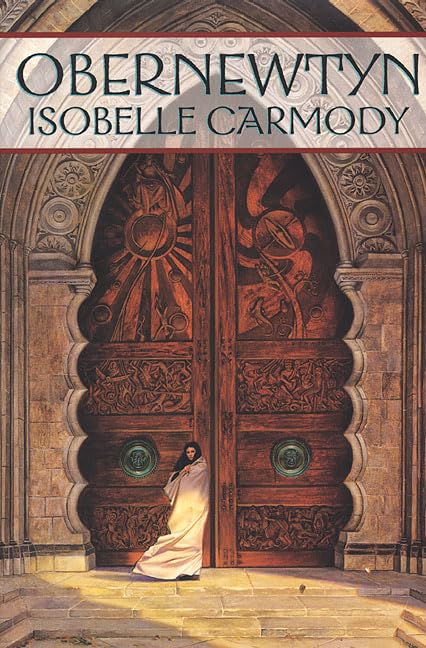
- The Obernewtyn Chronicles
series9 books1987
similar byscience fictionpost-apocalyptic+3 more
The Obernewtyn Chronicles is a series of science fiction and fantasy novels by Australian author Isobelle Carmody. The series has a post apocalyptic setting and depicts a world long after its destruction by a global nuclear holocaust.
- The Drought
J. G. Ballardstandalone novel1964
similar bysurvivaldarkour worldscience fictionpost-apocalyptic
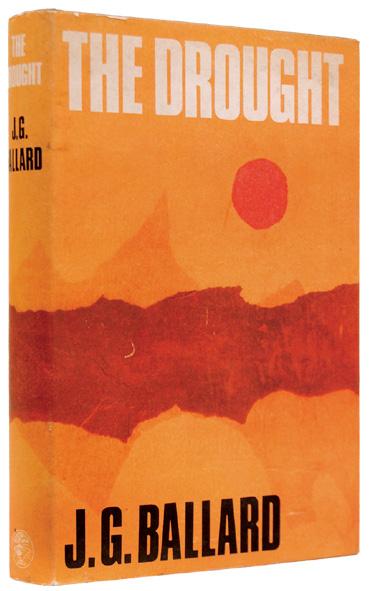
Dr. Charles Ransom watches his world dry up along with his marriage: an industrial film has coated the oceans, evaporation has stalled, and rivers, lakes and reservoirs are shrinking into cracked mud across the globe. As neighbors flee the drying city for the coast, Ransom refuses to leave, staying behind on his houseboat with others unwilling to go -- a woman running an improvised zoo, a boatman, an architect turning his estate into something like a fortress. As the water keeps disappearing and order breaks down, each of them must decide what survival looks like now. J. G. Ballard's second novel, published in the US as The Burning World.
- Breed to Come
Andre Nortonstandalone novel1972
similar byscience fictionpost-apocalyptic+2 more
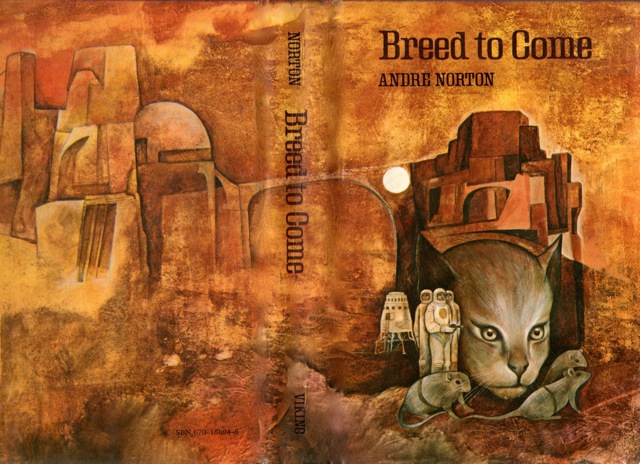
"When desperate measures failed to control what men had begun and could not stop, they fled their polluted planet, leaving behind an epidemic virus born of experimentation. Yet unlike men, whom the disease could destroy, the animals of the planet thrived. Each generation was more forceful and intelligent than the last. In the ruins of what was once a university complex, a vast band of cats, more highly evolved than those on the outside, sought to master the works of men. And they learned that the demons (as men were called) were not legendary but real. Then one day a spaceship landed..." from Goodreads.com
- The Mormon Sea
series6 books1985
similar byscience fictionpost-apocalyptic+2 more
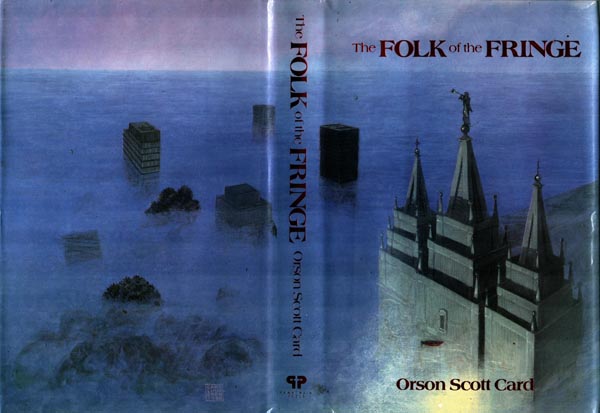
Orson Scott Card's Folk of the Fringe stories follow small communities of Mormon survivors rebuilding after a devastating nuclear war has reduced America to scattered, struggling settlements. Linked by recurring characters rather than a single continuous plot, stories like 'West' and 'Pageant Wagon' trace refugees making the long journey toward a resettled Utah, a region reimagined as the state of Deseret. The stories combine hard survivalist detail with Card's interest in faith and community under pressure.
- Ship Breaker
series3 books2010
similar bysurvivaldarkscience fictionpost-apocalyptic+1 more
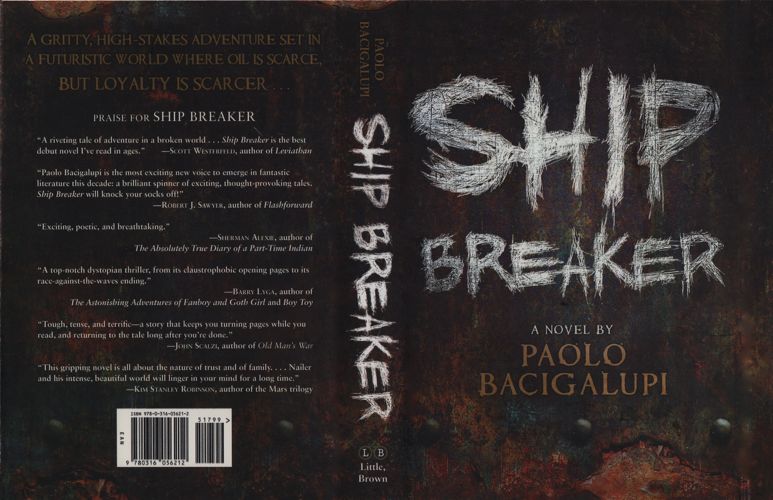
Nailer works a light-crew scavenging copper wire and scrap from beached oil tankers on a Gulf Coast reshaped by rising seas and vanished order, until a wrecked clipper ship washes ashore carrying a half-drowned girl from the wealthy world he'll never belong to. Paolo Bacigalupi's Ship Breaker follows Nailer as helping her pulls him out of his abusive father's orbit and into a much larger, more dangerous game involving her family's fortune. The sequels The Drowned Cities and Tool of War widen the same flooded, resource-scavenging future to new characters and coastlines.
- Final Blackout
L. Ron Hubbardstandalone novel1948
similar bydarkour worldscience fictionpost-apocalyptic+1 more
Final Blackout is a dystopic science fiction novel by American writer L. Ron Hubbard. The novel is set in the future and follows a man known as "the Lieutenant" as he restores order to England after a world war. First published in serialized format in 1940 in the science fiction magazine Astounding Science Fiction, Final Blackout was published in book form in 1948 by The Hadley Publishing Co. Author Services Inc. published a hardcover edition of the book in 1988, and in 1989 the Church of Scientology-affiliated organization Bridge Publications said that a film director named Christopher Cain had signed a contract to write and direct a movie version based on the book.