Loreful
HomeDiscover
Search series, authors…⌘K
Loreful

Reading orders for SF/F series and shared universes — with your place kept in every one.

Explore

UniversesSeriesWorksAuthorsAtlas

Help

FAQAboutSite map

Account & legal

Sign inCreate accountPrivacyTerms

Data

Built on ISFDB, Wikipedia, Wikidata and Open Library. Curated reading orders carry their reasoning on the page; the rest follow publication order. Data sources & licenses

© Loreful · data: ISFDB · CC BY

More like Lost Things

but

Mood

The mood the book leaves you in.

  • The reading experience is propelled by journeys, exploration, and physical risk; excitement and forward momentum dominate over dread or introspection.
  • Joy and loss are deliberately mixed; the resolution grants characters something real while taking something else away, leaving warmth and sorrow together.
  • The book demands work from the reader — dense prose, difficult structure, unfamiliar ideas, or morally uncomfortable material — as part of its intended effect.
  • Grim events, cruelty, or despair dominate the atmosphere, and the book does not soften them with comfort or comic relief.
  • The atmosphere is quietly unsettling — wrongness, unease, and the uncanny pervade the book without necessarily escalating into overt horror.
  • The book is built to move the reader; character feeling is foregrounded and major scenes aim at a strong emotional response.
  • Humor is a primary aim and the prose plays for laughs — comic situations, wit, or dialogue produce sustained comedy, not occasional levity.
  • The book insists that things can improve; effort and decency are shown to matter, and the arc bends toward better outcomes even through hardship.
  • The book teaches as it goes — real facts, history, science, or craft are conveyed in enough depth that learning is part of the reading experience.
  • The book is designed to uplift and motivate, presenting perseverance or achievement in a way that invites the reader to aspire or act.
  • The overall register is cheerful and easygoing; stakes are kept gentle and the book avoids dwelling on pain or dread.
  • Withheld information drives the experience; the book sustains enigmas and secrets the reader wants resolved, whatever its genre.
  • The book is contemplative and inward-looking, giving more weight to thought, memory, and meaning than to external events.
  • The book works as comfort reading — low tension, a soothing pace, and an atmosphere the reader can unwind in.
  • Grief, loss, or melancholy set the dominant register, and the book lets sorrow stand rather than resolving it into comfort.
  • Sustained suspense is the point; the book keeps the reader braced for what happens next through danger, pressure, or impending revelation.
  • Playful invention and charm define the register — fanciful conceits, light absurdity, and a narration that delights in its own oddity.

About

What the story runs on.

  • Stories in which extraterrestrial beings are central — as characters, cultures, or the object of the plot.
  • Stories about venturing into space to explore — survey missions, astronauts, and the frontier of the unknown beyond Earth.
  • Stories centered on witches and the practice of witchcraft — covens, hedge magic, familiars, and the witch's place in her community.
  • Stories structured as a quest — a journey undertaken to find, deliver, or destroy something of great import.
  • Stories in which staying alive against nature, catastrophe, or scarcity is the central problem.
  • Stories of lovers kept apart by law, family, faith, or station, where the obstacle to love is the plot.
  • Stories in which a friendship — its making, testing, or loss — is the emotional center.
  • Stories of growing up — a young protagonist crossing from childhood into adult knowledge and responsibility.
  • Stories about who a character truly is — self-discovery, doubled lives, and the search for a self.
  • Stories in which a buried family truth — hidden parentage, crimes, or shames — surfaces and reorders the present.
  • Stories driven by maneuvering for power — factions, conspiracies, and statecraft conducted in shadow.
  • Stories in which war itself is the subject — combat, occupation, and what warfare does to soldiers and civilians.

Shelf

Where it sits in the library.

    • Fiction built on magic or other supernatural elements that have no scientific explanation.
    • Secondary-world fantasy at large scale, where the fate of nations or the world turns on the protagonists' struggle.
    • Fantasy set in a recognizably modern city or contemporary world where the supernatural intrudes on everyday life.
    • Fantasy that blends in horror's atmosphere and imagery, keeping a fantastical frame around grim or frightening material.
    • Action-driven fantasy following warriors or rogues with personal stakes against sorcerous threats, rather than world-spanning conflicts.
    • Fantasy set in a real historical period or a close analogue of one, with magic woven into the era.
    • Fantasy in which protagonists cross from the ordinary world into another world through a portal or similar passage.
    • Fiction that retells or reworks a traditional fairy tale in a new form or setting.
    • Fantasy drawing directly on myths, legends, and folklore, retelling them or building on their figures and logic.
    • Fantasy of ghosts, vampires, shapeshifters, psychics, and similar phenomena, usually set in an otherwise ordinary world.
    • Fiction mixing science-fictional trappings with overtly magical or impossible elements in one setting.
    • Low-stakes fantasy emphasizing comfort, community, and everyday pleasures over conflict and peril.
    • Speculative fiction of pervasive moral ambiguity, violence, and cynicism that rejects heroic conventions — fantasy and SF alike.
      • Fiction that extrapolates from science and technology — future societies, space travel, or speculative inventions — within at least nominally natural laws.
      • Science fiction of interstellar scope — starships, galactic polities, and adventure across star systems.
      • Science fiction committed to scientific rigor, where technical plausibility constrains the story.
      • Science fiction centered on armed forces and warfare, told largely from a military point of view.
      • Science fiction of networked, corporate-dominated near futures, pairing high technology with social decay.
      • Science fiction styled on nineteenth-century steam-powered technology, often in a Victorian or pseudo-Victorian setting.
      • Fiction depicting an oppressive or catastrophic society, presented as a warning.
      • Fiction set after civilization's collapse, following survivors in the ruins of the old world.
      • Fiction in which characters move between past and future, and the mechanics or consequences of that travel drive the plot.
      • Fiction exploring a world where a historical event went differently and history diverged from ours.
      • Science fiction about humanity's first encounter and communication with an alien intelligence.
      • Science fiction in which extraterrestrial forces attack or occupy Earth and humanity resists.
      • Fiction whose primary aim is to frighten or unsettle the reader through dread, menace, or the monstrous.
      • Horror of vast, indifferent, incomprehensible entities before which humanity is insignificant, in the Lovecraft tradition.
      • Horror of decaying houses, buried family secrets, and oppressive atmosphere in the Gothic literary tradition.
      • Horror centered on hauntings and the returning dead.
      • Horror located in the mind — paranoia, obsession, and unreliable perception rather than external monsters.
      • Horror built around the reanimated dead and survival amid their outbreaks.
      • Horror defined by explicit, transgressive gore that refuses to cut away from violence.
      • Speculative fiction of the strange and uncanny that resists both natural explanation and standard genre categories.
      • Fiction organized around solving a crime or puzzle, typically following an investigator toward the identification of a culprit.
      • A puzzle-first mystery that lays out clues so the culprit's identity can be deduced before the reveal.
      • Crime fiction of moral ambiguity, fatalism, and hard-edged style, set among the corrupt and the doomed.
      • A mystery following the realistic routines of police work — forensics, interviews, and case-building.
      • A gentle mystery with an amateur sleuth, a small community, and violence kept off the page.
      • A mystery set in a past era, where the investigation works within that period's methods and society.
      • Fast-paced fiction driven by imminent danger, pursuit, or high-stakes conspiracy, built to sustain tension.
      • A thriller of espionage — agents, tradecraft, and intelligence services in conflict.
      • A thriller centered on lawyers and the courtroom, where litigation carries the suspense.
      • A thriller driven by detailed contemporary or near-future technology, often military or scientific.
      • A thriller whose tension comes from mental states and manipulation between characters rather than external action.
      • Fiction whose central plot is a romantic relationship and its development toward an emotionally satisfying resolution.
      • Romance in which one or both partners are supernatural beings, blending fantasy elements into the love story.
      • A fantasy-romance hybrid in which the romantic arc and the fantasy plot carry equal weight.
      • Romance set in a past era, with courtship shaped by the period's society and manners.
      • Romance set in the present day, without supernatural or historical elements.
      • Fiction set in a real past period, where the historical setting materially shapes characters and events.
        • General and literary fiction emphasizing prose style, character interiority, or formal ambition over genre plot conventions.
        • Fiction in a realistic world where magical events occur and are treated as ordinary, in the tradition of Latin American literature.
        • Fiction that ridicules people, institutions, or society in order to criticize them.
        • Fiction of dreamlike, irrational imagery and logic that breaks from realistic representation.
        • Fiction that plays with narrative convention through metafiction, fragmentation, and self-reference.
        • Fiction propelled by journeys, exploration, and physical peril, where action and survival carry the plot.
        • Adventure fiction of ships and seafaring — naval engagements, voyages, and life at sea.
        • Fiction of the American frontier West — gunmen, ranchers, and lawmen, typically in the late nineteenth century.
        • Fiction centered on soldiers, campaigns, and the experience of warfare, historical or imagined.
          • Fiction written primarily to amuse, using comedic situations, wit, or parody as its organizing principle.
            • Multi-generational fiction following a family or dynasty across decades, with inheritance and kinship as the through-line.
              • Fiction whose world runs on explicit game mechanics — levels, stats, and skills that characters can see and exploit.
                • Fiction about costumed or superpowered heroes and their conflicts with comparable villains.

                Practical

                How long a commitment, whether it stands alone, and whether it has finished.

                Tap a chip to ask for it · tap again to rule it out · once more to clear. Numbers show what would be left.

                • Cover of Five Children Universe
                  Five Children Universe

                  series · 27 books · 1902

                  completed

                  similar byearly 20th centuryfantasy+1 more

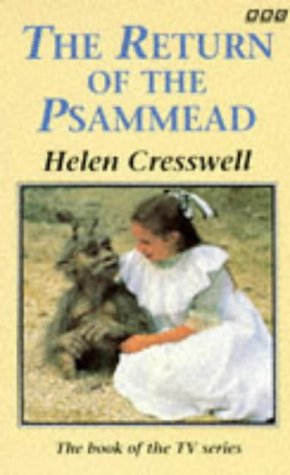
                  Two separate modern continuations of E. Nesbit's Psammead stories were written decades apart by different authors: Helen Cresswell's The Return of the Psammead (1992) brings the wish-granting sand fairy back for a new set of children, while Kate Saunders's Five Children on the Western Front (2014) follows the now-grown Lamb and his siblings as the First World War arrives, in a more somber sequel to Nesbit's original trilogy. Neither book is by Nesbit herself, and the two have no direct connection to each other beyond both drawing on her creation. Later writers have kept returning to Nesbit's premise long after her own trilogy ended.

                • Cover of The Drawing of the Dark
                  The Drawing of the Dark

                  Tim Powers · standalone novel · 1979

                  similar byadventurousfantasyhistorical fantasy+1 more

                  Brian Duffy is a weary, aging Irish mercenary hired in Venice, for reasons he isn't given, to work as a bouncer at a Vienna inn that also happens to be Europe's oldest brewery -- one that produces a legendary dark beer only once every seven hundred years. He arrives just as the Ottoman army under Suleiman the Magnificent marches on Vienna, and just as strange visions and stranger company start converging on the inn: an old flame, her father's uncanny unfinished painting, and Duffy's mysterious employer, who has plans for him well beyond keeping the peace at closing time. Tim Powers's historical fantasy set during the 1529 siege of Vienna.

                • Cover of The Spirit Ring
                  The Spirit Ring

                  Lois McMaster Bujold · standalone novel · 1992

                  similar byadventurousfantasyhistorical fantasy+1 more

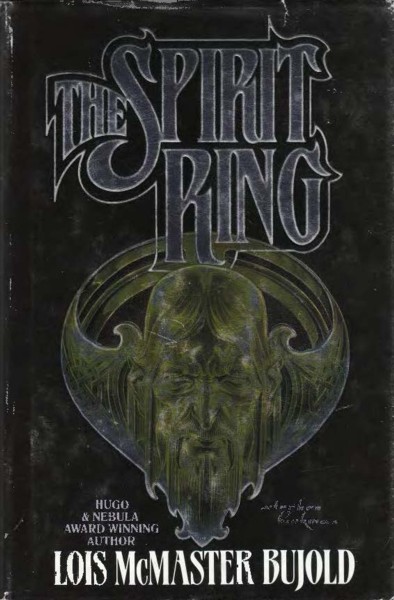
                  The Spirit Ring is a 1992 historical fantasy by Lois McMaster Bujold based on Agricola's De re metallica. It was combined with the folkloric tradition of the grateful dead and the life of Benvenuto Cellini.

                • Cover of Elemental Masters
                  Elemental Masters

                  series · 59 books · 1995

                  similar byfantasyhistorical fantasy+2 more

                  Mercedes Lackey's Elemental Masters series reimagines classic fairy tales in various historical settings, with mages who each command one of the four elements — fire, water, earth, or air. The opening novel, The Fire Rose, retells Beauty and the Beast around a fire mage trapped in a werewolf-like curse; later volumes retell other tales and, from Elemental Magic on, bring in numerous co-authors and short-story contributors across more than twenty books.

                • Cover of Blythewood
                  Blythewood

                  series · 3 books · 2013

                  similar byfantasyhistorical fantasy+3 more

                • Cover of Chrestomanci
                  Chrestomanci

                  series · 12 books · 1977

                  completed

                  similar byfantasy+2 more

                  Chrestomanci, sometimes branded The Worlds of Chrestomanci, is a heptalogy of children's fantasy books written by British author Diana Wynne Jones, published from 1977 to 2006. In the context of the parallel universe setting of the books, Chrestomanci refers to both the British government office that is responsible for supervising the use of magic and Chrestomanci Castle in southern England, which is both residence and headquarters.

                • Cover of The Kingkiller Chronicle
                  The Kingkiller Chronicle

                  series · 8 books · 2002

                  similar byfantasy+2 more

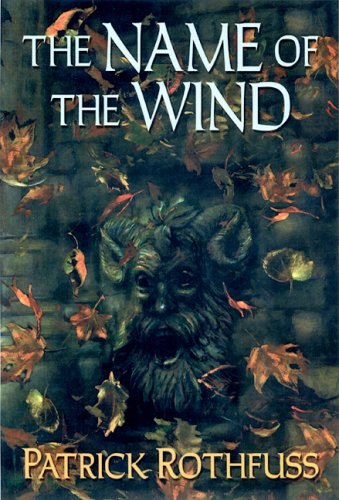
                  The Kingkiller Chronicle is a planned fantasy trilogy by the American writer Patrick Rothfuss. The first two books, The Name of the Wind and The Wise Man's Fear, were released in 2007 and 2011. The books released in the series have sold over 10 million copies.

                • Cover of The Troy Game
                  The Troy Game

                  series · 4 books · 2002

                  completed

                  similar byfantasy+3 more

                  The Troy Game is a quartet of fantasy novels by Australian author Sara Douglass consisting of four books: Hades' Daughter, God's Concubine, Darkwitch Rising and Druid's Sword. It centres on a group of characters who are reincarnated at the end of each book and take the form of renowned historical figures from different ages. The entire series is set in London and focuses on the characters trying to complete the Troy Game, a kind of spell cast in the first book to protect the city.

                • WS
                  World of Septimus Heap

                  series · 12 books · 2005

                  similar byadventurousfantasy+1 more

                • Cover of Fillory
                  Fillory

                  series · 7 books · 2009

                  similar bymagic schoolsfantasy+1 more

                  Lev Grossman's Magicians trilogy (The Magicians, The Magician King, The Magician's Land, 2009-2014) follows Quentin Coldwater from a secretive college of magic in upstate New York into Fillory, a fantasy world he grew up reading about in a series of children's books that turns out to be real. As Quentin, his classmates, and his old friend Julia become entangled in ruling and defending Fillory, the trilogy pushes past the wish-fulfillment of a classic portal fantasy to ask what happens once getting everything you wanted stops being enough.

                • Cover of The Black Magician Trilogy
                  The Black Magician Trilogy

                  series · 3 books · 2001

                  part of Kyralia series

                  similar bymagic schoolsfantasy+1 more

                  Trudi Canavan's Black Magician Trilogy (The Magicians' Guild, The Novice, The High Lord, 2001-2003) opens in the city of Imardin, where the ruling magicians' guild's annual purge of the slums goes wrong when a street girl named Sonea unknowingly shatters their protective shield with raw, untrained power. The guild must hunt her down and decide whether to control her or train her, and the trilogy follows Sonea's forced initiation into magical society and the guild's internal politics. It's Canavan's best-known trilogy and the founding story of her Kyralia setting.

                • Cover of Jack of Shadows
                  Jack of Shadows

                  series · 4 books · 1971

                  similar byadventurousfantasy+1 more

                  Roger Zelazny's Jack of Shadows (1971) is a single novel set on a tidally locked world split between a permanently lit hemisphere ruled by science and a permanently dark one ruled by magic. Its protagonist, Jack of Shadows, draws his power from shadow itself and is nearly helpless in full light or full darkness but formidable wherever shadows fall; the book follows his quest to recover a lost artifact, the Key called Kolwynia, and the power -- and responsibility -- that comes with finding it.

                • Cover of Princess Academy
                  Princess Academy

                  series · 3 books · 2005

                  similar bymagic schoolsfantasy

                  Shannon Hale's Princess Academy trilogy (Princess Academy, 2005; Palace of Stone, 2009; The Forgotten Sisters, 2015) begins with Miri, a mountain quarry girl sent to a school built to prepare local girls for the chance that the prince will choose one of them as his bride. The sequels follow Miri to the capital, where she navigates court intrigue while studying, and then out to a remote swamp kingdom as tutor to three sisters caught up in a succession crisis.

                • Cover of The Guardian (Mary Jo Putney)
                  The Guardian (Mary Jo Putney)

                  series · 10 books · 2004

                  similar byhistorical fantasy+2 more

                • Cover of Frontier Magic
                  Frontier Magic

                  series · 3 books · 2009

                  similar byfantasyhistorical fantasy+2 more

                • Cover of The Wind in the Willows Universe
                  The Wind in the Willows Universe

                  series · 17 books · 1908

                  similar byfantasy

                • Cover of Tarzan
                  Tarzan

                  series · 50 books · 1912

                  part of Tarzan Universe

                  similar byadventurousearly 20th century+1 more

                  Tarzan is a series of 24 adventure novels written by Edgar Rice Burroughs (1875–1950) and published between 1912 and 1966, followed by several novels either co-written by Burroughs, or officially authorized by his estate. There are also two works written by Burroughs especially for children that are not related to the main series.

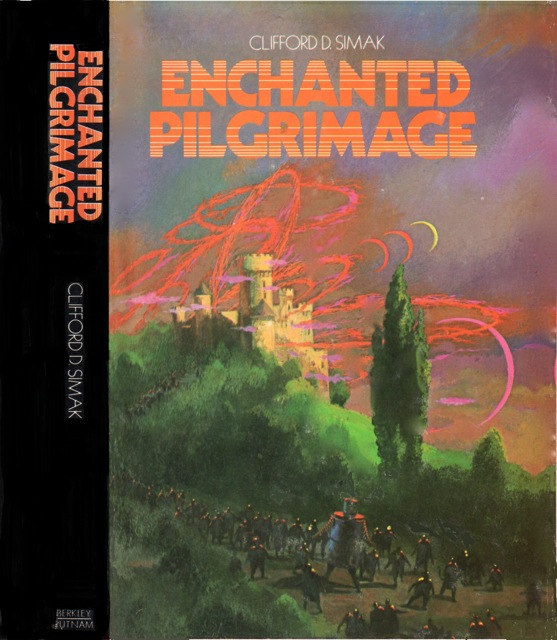
                • Cover of Enchanted Pilgrimage
                  Enchanted Pilgrimage

                  Clifford D. Simak · standalone novel · 1975

                  similar byadventurousfantasy+1 more

                  A scholar at a remote university stumbles onto a manuscript that hints at forgotten secrets buried in the Wasteland, a blighted region where magic and monsters still linger at the edge of an otherwise rational world. Setting out to track the manuscript's truth to its source, he gathers a company of odd fellow travelers along the way -- the kind of companions a quest like this tends to attract -- each with their own stake in what they might find. Clifford D. Simak folds his familiar pastoral, faintly melancholy tone into a full-blown fantasy quest, blending scholarly curiosity with old magic. A standalone fantasy novel by Clifford D. Simak.

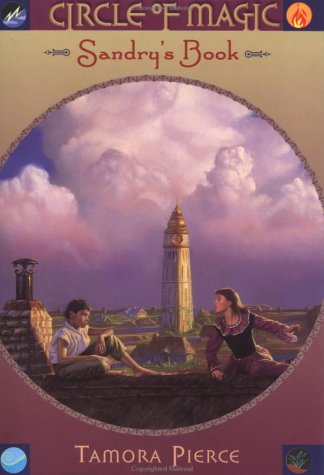
                • Cover of Circle of Magic (Tamora Pierce)
                  Circle of Magic (Tamora Pierce)

                  series · 4 books · 1997

                  part of Circle of Magic

                  similar bymagic schoolsfantasy+1 more

                  Four children who don't fit in anywhere else -- Sandry, Tris, Daja, and Briar -- are brought together at the Winding Circle temple community, where each discovers a form of magic no one recognized in them: thread, weather, smithcraft, and plants. Tamora Pierce's Circle of Magic quartet follows their training under unconventional teachers and their growing bond as chosen family, as they learn to turn overlooked, everyday skills into real power. Set in the world of Emelan, it treats craft-based magic as seriously as any wizard's spellbook.

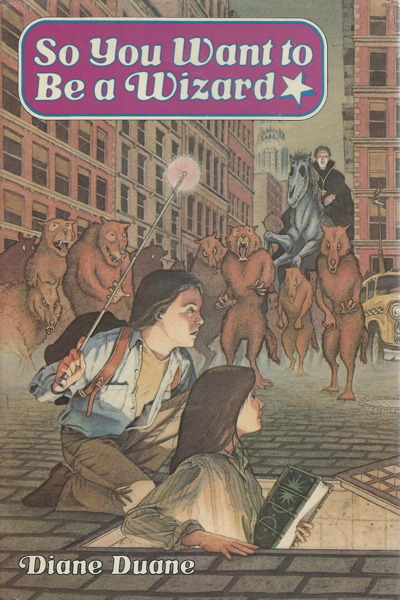
                • Cover of Young Wizards
                  Young Wizards

                  series · 24 books · 1983

                  similar byadventurousfantasy+1 more

                  Diane Duane's Young Wizards series begins with thirteen-year-old Nita, bullied and friendless, who borrows a library book on wizardry and discovers it's the real thing: an apprenticeship into a covert order that fights entropy, alongside a classmate named Kit. Across fifteen books published between 1983 and 2019, the two age forward in something close to real time as their missions escalate from New York streets to alien worlds and beyond. The series centers on the wizard's Oath and the idea that magic is a responsibility taken on to slow the universe's decay, not a power to be enjoyed for its own sake.

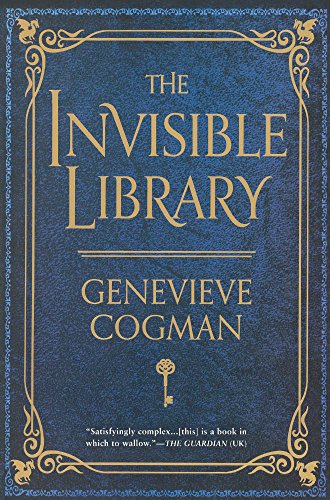
                • Cover of The Invisible Library
                  The Invisible Library

                  series · 12 books · 2014

                  similar byfantasy+2 more

                  Genevieve Cogman's Invisible Library series follows Irene, an agent of an interdimensional Library that collects rare and dangerous books from across a multiverse of alternate worlds touched by varying degrees of magic and technology. Beginning with The Invisible Library (2014), the eight-book series continues through The Masked City and The Lost Plot on to The Untold Story (2021).

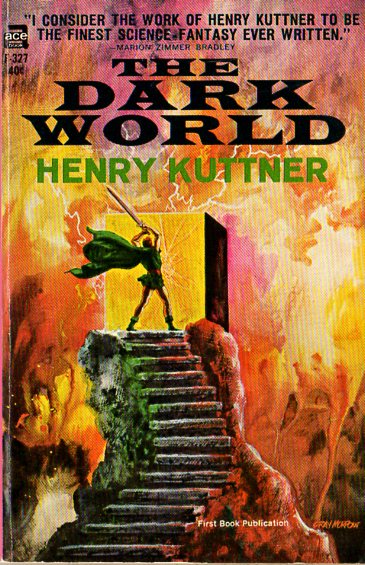
                • Cover of The Dark World
                  The Dark World

                  Henry Kuttner · standalone novel · 1965

                  similar byadventurousfantasy+1 more

                  The Dark World is a science fantasy novel credited to Henry Kuttner, although his wife C. L. Moore may have been an uncredited collaborator, or possibly even the author. The novel was first published in the July 1946 issue of Startling Stories, then reprinted in the Winter 1954 issue of Fantastic Story Magazine. Its first book edition was issued by Ace in 1965, followed by a British edition by Mayflower Books in 1966. A French translation appeared in 1972. The novel was reprinted in full in Issue #5 of Amberzine in 1992, and also collected in a 1997 paperback omnibus, The Startling Worlds of Henry Kuttner. Roger Zelazny, author of The Chronicles of Amber, credits this book as being one of his primary influences during his youth.

                • Cover of The Circle Opens
                  The Circle Opens

                  series · 4 books · 2000

                  part of Circle of Magic

                  similar bymagic schoolsfantasy+1 more

                  The Circle Opens is a quartet of novels written by Tamora Pierce and set in a pseudo-medieval/renaissance era. It mainly revolves around four teenage mages, each specializing in a different kind of magic, as they find that they are forced to deal with mages whose powers are similarly unusual to their own. The series consists of the books Magic Steps (2000), Street Magic (2001), Cold Fire (2002), and Shatterglass (2003). The Circle Opens Quartet is the sequel quartet to The Circle Of Magic Quartet, and is followed by "Battle Magic" and The Will of the Empress.

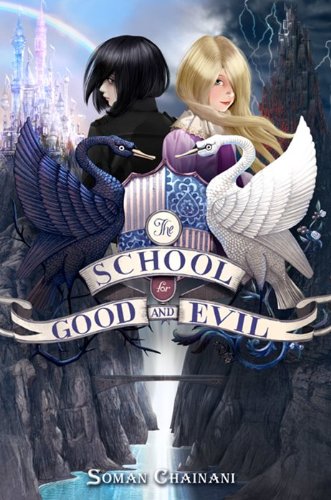
                • Cover of The School for Good and Evil
                  The School for Good and Evil

                  series · 8 books · 2013

                  similar bymagic schoolsadventurousfantasy

                  The School for Good and Evil is a series of books by Soman Chainani based on fairy tales. The first novel in the series was published on May 14, 2013. The series is set in a fictional widespread location known as the Endless Woods.