Loreful
HomeDiscover
Search series, authors…⌘K
Loreful

Reading orders for SF/F series and shared universes — with your place kept in every one.

Explore

UniversesSeriesWorksAuthorsAtlas

Help

FAQAboutSite map

Account & legal

Sign inCreate accountPrivacyTerms

Data

Built on ISFDB, Wikipedia, Wikidata and Open Library. Curated reading orders carry their reasoning on the page; the rest follow publication order. Data sources & licenses

© Loreful · data: ISFDB · CC BY

More like Louise's Ghost

but

Mood

The mood the book leaves you in.

  • The reading experience is propelled by journeys, exploration, and physical risk; excitement and forward momentum dominate over dread or introspection.
  • Joy and loss are deliberately mixed; the resolution grants characters something real while taking something else away, leaving warmth and sorrow together.
  • The book demands work from the reader — dense prose, difficult structure, unfamiliar ideas, or morally uncomfortable material — as part of its intended effect.
  • Grim events, cruelty, or despair dominate the atmosphere, and the book does not soften them with comfort or comic relief.
  • The atmosphere is quietly unsettling — wrongness, unease, and the uncanny pervade the book without necessarily escalating into overt horror.
  • The book is built to move the reader; character feeling is foregrounded and major scenes aim at a strong emotional response.
  • Humor is a primary aim and the prose plays for laughs — comic situations, wit, or dialogue produce sustained comedy, not occasional levity.
  • The book insists that things can improve; effort and decency are shown to matter, and the arc bends toward better outcomes even through hardship.
  • The book teaches as it goes — real facts, history, science, or craft are conveyed in enough depth that learning is part of the reading experience.
  • The book is designed to uplift and motivate, presenting perseverance or achievement in a way that invites the reader to aspire or act.
  • The overall register is cheerful and easygoing; stakes are kept gentle and the book avoids dwelling on pain or dread.
  • Withheld information drives the experience; the book sustains enigmas and secrets the reader wants resolved, whatever its genre.
  • The book is contemplative and inward-looking, giving more weight to thought, memory, and meaning than to external events.
  • The book works as comfort reading — low tension, a soothing pace, and an atmosphere the reader can unwind in.
  • Grief, loss, or melancholy set the dominant register, and the book lets sorrow stand rather than resolving it into comfort.
  • Sustained suspense is the point; the book keeps the reader braced for what happens next through danger, pressure, or impending revelation.
  • Playful invention and charm define the register — fanciful conceits, light absurdity, and a narration that delights in its own oddity.

About

What the story runs on.

  • Stories centered on vampires — blood-drinking undead — whether as predators, love interests, or protagonists.
  • Stories centered on witches and the practice of witchcraft — covens, hedge magic, familiars, and the witch's place in her community.
  • Stories in which demons or devils — infernal beings, their bargains, possessions, and hierarchies — drive the plot.
  • Stories structured as a quest — a journey undertaken to find, deliver, or destroy something of great import.
  • Stories in which staying alive against nature, catastrophe, or scarcity is the central problem.
  • Stories in which a friendship — its making, testing, or loss — is the emotional center.
  • Stories of growing up — a young protagonist crossing from childhood into adult knowledge and responsibility.
  • Stories about who a character truly is — self-discovery, doubled lives, and the search for a self.
  • Stories about mental unraveling — descent into madness, delusion, and minds at war with themselves.
  • Stories about mourning — living through the death of a loved one and what loss does to the survivors.
  • Stories in which a buried family truth — hidden parentage, crimes, or shames — surfaces and reorders the present.
  • Stories organized around investigating a killing — the case, the clues, and the pursuit of the killer, in any genre's clothing.

Shelf

Where it sits in the library.

    • Fiction built on magic or other supernatural elements that have no scientific explanation.
    • Secondary-world fantasy at large scale, where the fate of nations or the world turns on the protagonists' struggle.
    • Fantasy set in a recognizably modern city or contemporary world where the supernatural intrudes on everyday life.
    • Fantasy that blends in horror's atmosphere and imagery, keeping a fantastical frame around grim or frightening material.
    • Action-driven fantasy following warriors or rogues with personal stakes against sorcerous threats, rather than world-spanning conflicts.
    • Fantasy set in a real historical period or a close analogue of one, with magic woven into the era.
    • Fantasy in which protagonists cross from the ordinary world into another world through a portal or similar passage.
    • Fiction that retells or reworks a traditional fairy tale in a new form or setting.
    • Fantasy drawing directly on myths, legends, and folklore, retelling them or building on their figures and logic.
    • Fantasy of ghosts, vampires, shapeshifters, psychics, and similar phenomena, usually set in an otherwise ordinary world.
    • Fiction mixing science-fictional trappings with overtly magical or impossible elements in one setting.
    • Low-stakes fantasy emphasizing comfort, community, and everyday pleasures over conflict and peril.
    • Speculative fiction of pervasive moral ambiguity, violence, and cynicism that rejects heroic conventions — fantasy and SF alike.
      • Fiction that extrapolates from science and technology — future societies, space travel, or speculative inventions — within at least nominally natural laws.
      • Science fiction of interstellar scope — starships, galactic polities, and adventure across star systems.
      • Science fiction committed to scientific rigor, where technical plausibility constrains the story.
      • Science fiction centered on armed forces and warfare, told largely from a military point of view.
      • Science fiction of networked, corporate-dominated near futures, pairing high technology with social decay.
      • Science fiction styled on nineteenth-century steam-powered technology, often in a Victorian or pseudo-Victorian setting.
      • Fiction depicting an oppressive or catastrophic society, presented as a warning.
      • Fiction set after civilization's collapse, following survivors in the ruins of the old world.
      • Fiction in which characters move between past and future, and the mechanics or consequences of that travel drive the plot.
      • Fiction exploring a world where a historical event went differently and history diverged from ours.
      • Science fiction about humanity's first encounter and communication with an alien intelligence.
      • Science fiction in which extraterrestrial forces attack or occupy Earth and humanity resists.
      • Fiction whose primary aim is to frighten or unsettle the reader through dread, menace, or the monstrous.
      • Horror of vast, indifferent, incomprehensible entities before which humanity is insignificant, in the Lovecraft tradition.
      • Horror of decaying houses, buried family secrets, and oppressive atmosphere in the Gothic literary tradition.
      • Horror centered on hauntings and the returning dead.
      • Horror located in the mind — paranoia, obsession, and unreliable perception rather than external monsters.
      • Horror built around the reanimated dead and survival amid their outbreaks.
      • Horror defined by explicit, transgressive gore that refuses to cut away from violence.
      • Speculative fiction of the strange and uncanny that resists both natural explanation and standard genre categories.
      • Fiction organized around solving a crime or puzzle, typically following an investigator toward the identification of a culprit.
      • A puzzle-first mystery that lays out clues so the culprit's identity can be deduced before the reveal.
      • Crime fiction of moral ambiguity, fatalism, and hard-edged style, set among the corrupt and the doomed.
      • A mystery following the realistic routines of police work — forensics, interviews, and case-building.
      • A gentle mystery with an amateur sleuth, a small community, and violence kept off the page.
      • A mystery set in a past era, where the investigation works within that period's methods and society.
      • Fast-paced fiction driven by imminent danger, pursuit, or high-stakes conspiracy, built to sustain tension.
      • A thriller of espionage — agents, tradecraft, and intelligence services in conflict.
      • A thriller centered on lawyers and the courtroom, where litigation carries the suspense.
      • A thriller driven by detailed contemporary or near-future technology, often military or scientific.
      • A thriller whose tension comes from mental states and manipulation between characters rather than external action.
      • Fiction whose central plot is a romantic relationship and its development toward an emotionally satisfying resolution.
      • Romance in which one or both partners are supernatural beings, blending fantasy elements into the love story.
      • A fantasy-romance hybrid in which the romantic arc and the fantasy plot carry equal weight.
      • Romance set in a past era, with courtship shaped by the period's society and manners.
      • Romance set in the present day, without supernatural or historical elements.
      • Fiction set in a real past period, where the historical setting materially shapes characters and events.
        • General and literary fiction emphasizing prose style, character interiority, or formal ambition over genre plot conventions.
        • Fiction in a realistic world where magical events occur and are treated as ordinary, in the tradition of Latin American literature.
        • Fiction that ridicules people, institutions, or society in order to criticize them.
        • Fiction of dreamlike, irrational imagery and logic that breaks from realistic representation.
        • Fiction that plays with narrative convention through metafiction, fragmentation, and self-reference.
        • Fiction propelled by journeys, exploration, and physical peril, where action and survival carry the plot.
        • Adventure fiction of ships and seafaring — naval engagements, voyages, and life at sea.
        • Fiction of the American frontier West — gunmen, ranchers, and lawmen, typically in the late nineteenth century.
        • Fiction centered on soldiers, campaigns, and the experience of warfare, historical or imagined.
          • Fiction written primarily to amuse, using comedic situations, wit, or parody as its organizing principle.
            • Multi-generational fiction following a family or dynasty across decades, with inheritance and kinship as the through-line.
              • Fiction whose world runs on explicit game mechanics — levels, stats, and skills that characters can see and exploit.
                • Fiction about costumed or superpowered heroes and their conflicts with comparable villains.

                Practical

                How long a commitment, whether it stands alone, and whether it has finished.

                Tap a chip to ask for it · tap again to rule it out · once more to clear. Numbers show what would be left.

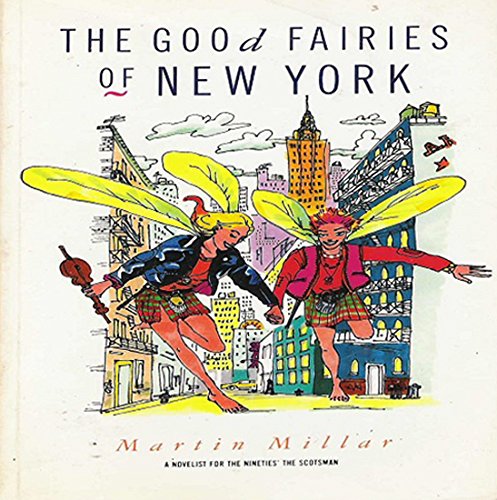
                • Cover of The Good Fairies of New York
                  The Good Fairies of New York

                  Martin Millar · standalone novel · 1992

                  similar byfriendshipurban fantasy+1 more

                  Finding themselves in the very unusual world of Manhattan, a pair of Scottish thimble fairies apply their folk wisdom to assist a pair of down-and-out humans, including Kerry, who struggles with a colostomy bag, and Dinnie, who exhibits anti-social behaviors.

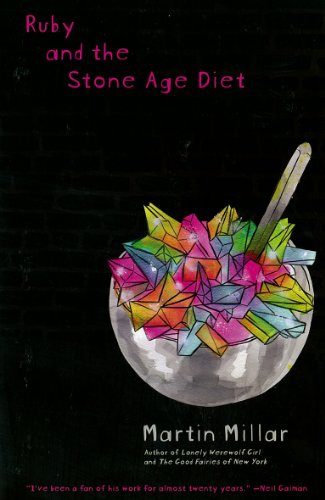
                • Cover of Ruby and the Stone Age Diet
                  Ruby and the Stone Age Diet

                  Martin Millar · standalone novel · 2009

                  similar byfriendshiplonelinessurban fantasy

                  Two eccentric London squatters--one pining for an ex-girlfriend that left only a plant behind, the other who never wears shoes even in the dead of winter--provide each other with the support and friendship they each desperately need. From now on," Ruby says to her friend, the narrator, "We're going on the Stone Age diet. It means we only eat the sort of healthy things our ancestors would have eaten. Raw grains and fruits and stuff like that. Thats what our bodies are made for." An admirable plan, but Ruby never eats, and the narrator's attention span doesn't lend itself to routine. He's too busy pining for his ex-girlfriend Cis, who broke up with him and left him with self-pity and a plant: an Aphrodite Cactus that, when it flowers, is supposed to seal the love of the giver to the receiver, according to Ruby. Ruby, who never wears any shoes (even in the dead of winter). Though lovelorn and lonely, the narrator's life is rich with myth, demons, werewolves, gods and goddesses; everything is imbued with a spirit. There's Helena, goddess of electric guitar players; Ascanazl, an ancient and powerful Inca spirit who looks after lonely people; Shumash the sun god; the war and sexuality goddess Astarte; the muse Clio. In fact the only thing stronger and more sustaining than the narrator's fantasy life is his friendship with Ruby--the kind of friendship a body is made for.

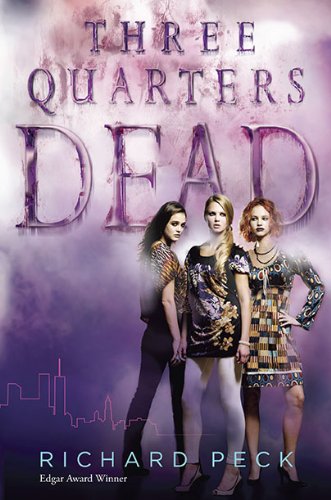
                • Cover of Three Quarters Dead
                  Three Quarters Dead

                  Richard Peck · standalone novel · 2010

                  similar byfriendshiphorror+1 more

                  Sophomore loner Kerry is overjoyed when three popular senior girls pick her to be in their clique until the seniors die in a car crash, return from the dead, and insist that Kerry help them exact revenge on a disloyal classmate.

                • Cover of A Little Princess
                  A Little Princess

                  Frances Hodgson Burnett · standalone novel · 1905

                  similar by+2 more

                  A Little Princess is a work by British-American author Frances Hodgson Burnett, presented as a 1888 novella, a 1902 play and a 1905 children's novel. All three versions tell the story of Sara Crewe, a wealthy young girl and the prize student of a private London boarding school who is reduced to poverty and forced to endure the life of a servant under the school's cruel headmistress.

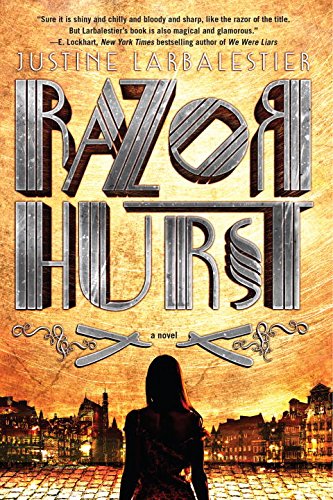
                • Cover of Razorhurst
                  Razorhurst

                  Justine Larbalestier · standalone novel · 2014

                  similar byfriendship+2 more

                  In 1932, in Sydney's deadly Razorhurst neighborhood, where crime and razor-wielding men rule, two girls with contrasting lives who share the ability to see ghosts meet over a dead body and find themselves on the run from mob bosses.

                • Cover of The House on the Borderland
                  The House on the Borderland

                  William Hope Hodgson · standalone novel · 1908

                  similar byhorror+1 more

                  The House on the Borderland (1908) is a supernatural horror novel by British fantasist William Hope Hodgson. The novel is a hallucinatory account of a recluse's stay at a remote house, and his experiences of supernatural creatures and otherworldly dimensions.

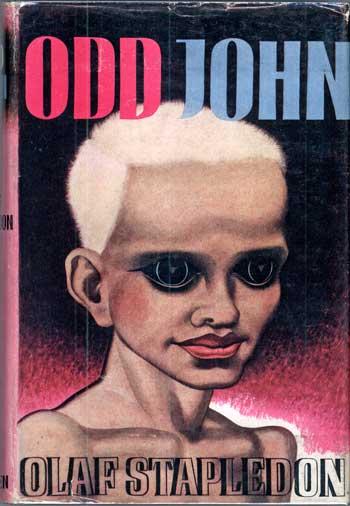
                • Cover of Odd John
                  Odd John

                  Olaf Stapledon · standalone novel · 1935

                  similar by+2 more

                  Odd John: A Story Between Jest and Earnest is a 1935 science fiction novel by the British author Olaf Stapledon. The novel explores the theme of the Übermensch (superman) in the character of John Wainwright, whose supernormal human mentality inevitably leads to conflict with normal human society and to the destruction of the utopian colony founded by John and other superhumans.

                • Cover of I Am Legend
                  I Am Legend

                  Richard Matheson · standalone novel · 1954

                  similar bylonelinesshorror

                  The last human survivor of the vampire epidemic has to maintain his defences against their onslaught, while attempting to research the cause and possibly solution to the plague. Robert Neville is the last living man on Earth... but he is not alone. Every other man, woman and child on the planet has become a vampire, and they are hungry for Neville's blood. By day he is the hunter, stalking the undead through the ruins of civilization. By night, he barricades himself in his home and prays for the dawn. How long can a man survive like this?

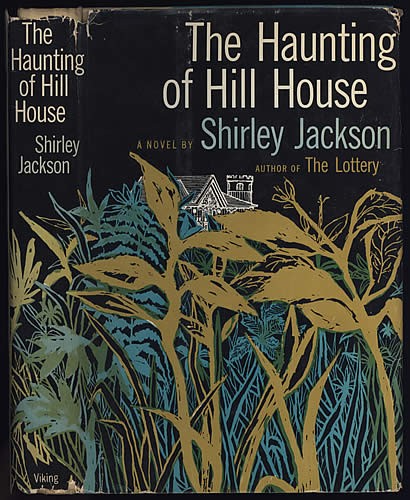
                • Cover of The Haunting of Hill House
                  The Haunting of Hill House

                  Shirley Jackson · standalone novel · 1959

                  similar byhorror+1 more

                  The Haunting of Hill House is a 1959 gothic horror novel by American author Shirley Jackson. It was a finalist for the National Book Award and has been made into two feature films, a play, and is the basis of a Netflix series.

                • Cover of I Will Kill Your Imaginary Friend for $200
                  I Will Kill Your Imaginary Friend for $200

                  Robert Brockway · standalone novel · 2026

                  similar byfriendshiplonelinessurban fantasy

                  To bright and anxious eight-year-old Kay Washington, the worst thing in the world is being alone with the quiet. That's why Eddie Video makes the perfect imaginary friend: He's smart, he's loud, he loves pulling pranks, and he's always there to chase away the silence. To mid-forties, down-on-his-luck Ivan, the worst thing in the world happened when he lost his imaginary friend. Now cursed with the ability to see everyone else's, Ivan makes a living by killing the imaginary friends of adults who couldn't let go. But when one of Eddie Video's "pranks" goes too far, Ivan agrees to make an exception and help Kay. Only Ivan will soon learn that Eddie Video is nothing like the talking ostriches, star bears, and goblin princesses he's encountered in the past, and it's going to take a lot more than clumsy haymakers and steak knives to bring him down. A balance of comedy and catharsis, this dual-narrative tackles both the fear of growing up and the scars our childhood leaves behind.

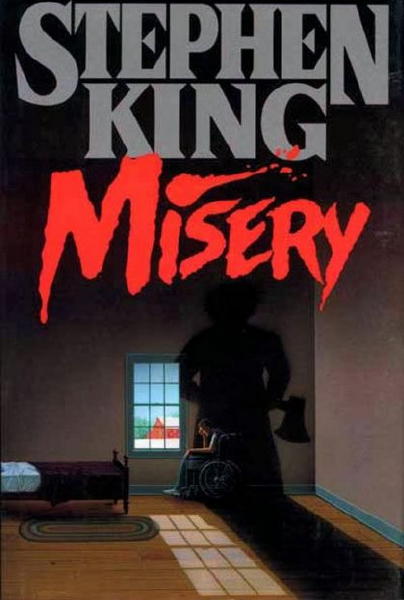
                • Cover of Misery
                  Misery

                  Stephen King · standalone novel · 1987

                  similar byhorror+1 more

                  Novelist Paul Sheldon finishes the manuscript that will finally kill off Misery Chastain, the heroine who made his career, when a snowstorm sends his car off a Colorado road. He wakes with both legs shattered, in the care of Annie Wilkes, a former nurse and 'number one fan' with no intention of taking him to a hospital. Annie manages his pain with drugs he comes to depend on, and her moods swing between doting and violent. When she learns Misery doesn't survive his new manuscript, her reaction makes clear Paul isn't just her patient, he's her hostage. A Stephen King novel about a writer at his most devoted fan's mercy.

                • Cover of Remarkably Bright Creatures
                  Remarkably Bright Creatures

                  Shelby Van Pelt · standalone novel · 2022

                  similar byfriendshiploneliness

                  Remarkably Bright Creatures is a novel by American author Shelby Van Pelt. It was published in May 2022 by Ecco Press. It has been on the New York Times hardcover fiction best-seller list multiple times.

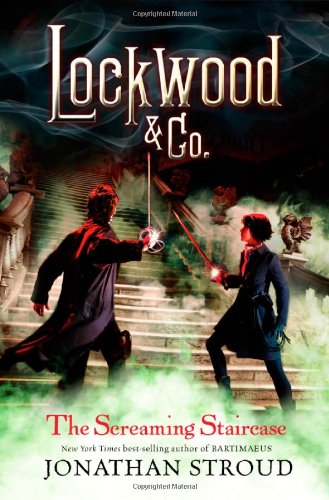
                • Cover of Lockwood & Co.
                  Lockwood & Co.

                  series · 6 books · 2013

                  similar byfriendship

                  Lockwood & Co. is a young adult supernatural thriller series by Jonathan Stroud. It follows three young operatives of a psychic detection agency as they fight ghosts in London, England.

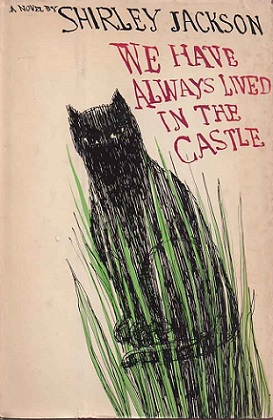
                • Cover of We Have Always Lived in the Castle
                  We Have Always Lived in the Castle

                  Shirley Jackson · standalone novel · 1962

                  similar bylonelinesshorror

                  A young woman lives with her older sister and sickly uncle in their old family house, after a mysterious tragedy turns the townsfolk against them.

                • Cover of The Ocean at the End of the Lane
                  The Ocean at the End of the Lane

                  Neil Gaiman · standalone novel · 2013

                  similar byfriendship+1 more

                  A seven year old farm boy becomes friends with an eleven year old neighbor girl, who he discovers is ancient and powerful and intervenes when a nonhuman entity attempts to make a home in earthly reality.

                • Cover of The Purple Cloud
                  The Purple Cloud

                  M. P. Shiel · standalone novel · 1901

                  similar byloneliness+1 more

                  Around 1900, the author receives a packet of writings of a psychic, who recounts her vision of the multi-decade diary of an arctic explorer of the future, the first to reach the north pole; but during his multiyear trek, an unknown eruption temporarily poisons the atmosphere with cyanide, killing all human and animal life, sparing only the arctic latitudes and leaving him the last man on earth.

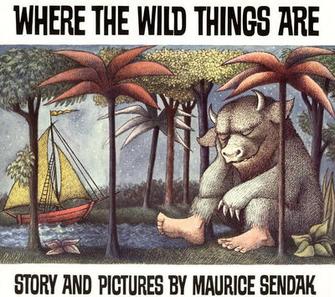
                • Cover of Where the Wild Things Are
                  Where the Wild Things Are

                  series · 2 books · 1963

                  similar byfriendshiploneliness

                  The Wild Things (2009) is Dave Eggers's novel adaptation of his own screenplay for the Where the Wild Things Are film, itself based on Maurice Sendak's classic 1963 picture book about a boy named Max who sails to an island of monstrous creatures. Eggers expands Sendak's brief story into a full novel while keeping its outline intact.

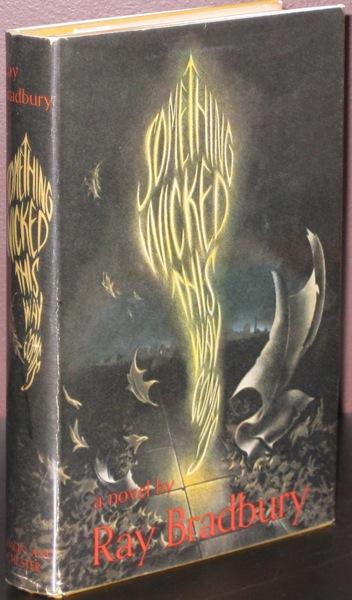
                • Cover of Green Town
                  Green Town

                  series · 31 books · 1946

                  completed

                  similar by+1 more

                  Green Town gathers two of Ray Bradbury's loosely linked novels set in his fictionalized version of his childhood home of Waukegan, Illinois: the dark fantasy Something Wicked This Way Comes (1962), in which a sinister traveling carnival led by the mysterious Mr. Dark descends on a small town and preys on its residents' desires, and the later Farewell Summer (2006), which follows Douglas Spaulding through an autumn stand-off between the town's boys and its elders. Written more than four decades apart, the two novels share Bradbury's recurring setting and nostalgic, myth-making tone rather than a single continuous plot.

                • Cover of Black Dragon
                  Black Dragon

                  series · 2 books · 1983

                  similar byfriendshipurban fantasy

                  R. A. MacAvoy's Tea with the Black Dragon pairs Martha Macnamara, a folk musician searching for her missing daughter, with Mayland Long, a courtly stranger who reveals himself to be a dragon living in human form, as they investigate a computer-fraud scheme in 1980s San Francisco. Its low-key blend of contemporary mystery and gentle fantasy proved popular enough to spawn a sequel, Twisting the Rope, following the same pair into a new case years later.

                • Cover of Weetzie Bat
                  Weetzie Bat

                  series · 7 books · 1989

                  similar byurban fantasy+1 more

                  Dangerous Angels, also known as the Weetzie Bat series, is a young adult fiction series by Francesca Lia Block. The series consists of seven novels: Weetzie Bat, Witch Baby, Cherokee Bat and the Goat Guys, Missing Angel Juan, Baby Be-Bop, Necklace of Kisses and Pink Smog: Becoming Weetzie Bat. The books follow main character, Weetzie Bat and her friends and family members, who all live in Los Angeles.

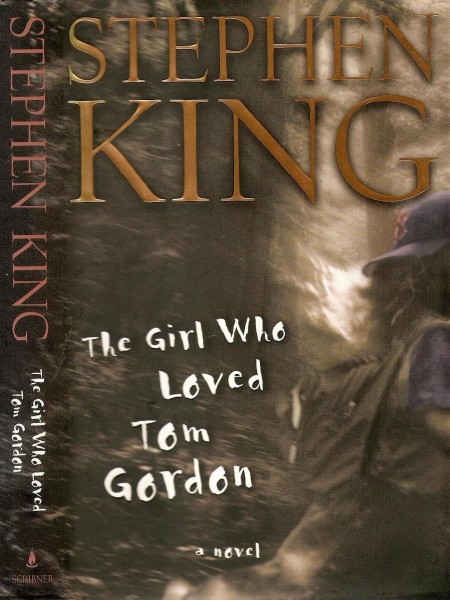
                • Cover of The Girl Who Loved Tom Gordon
                  The Girl Who Loved Tom Gordon

                  Stephen King · standalone novel · 1999

                  similar bylonelinesshorror

                  A nine year old girl becomes lost in the Maine forest while on a day hike with her family, and finds the strength to survive in her idolizing of the Red Sox closing pitcher.

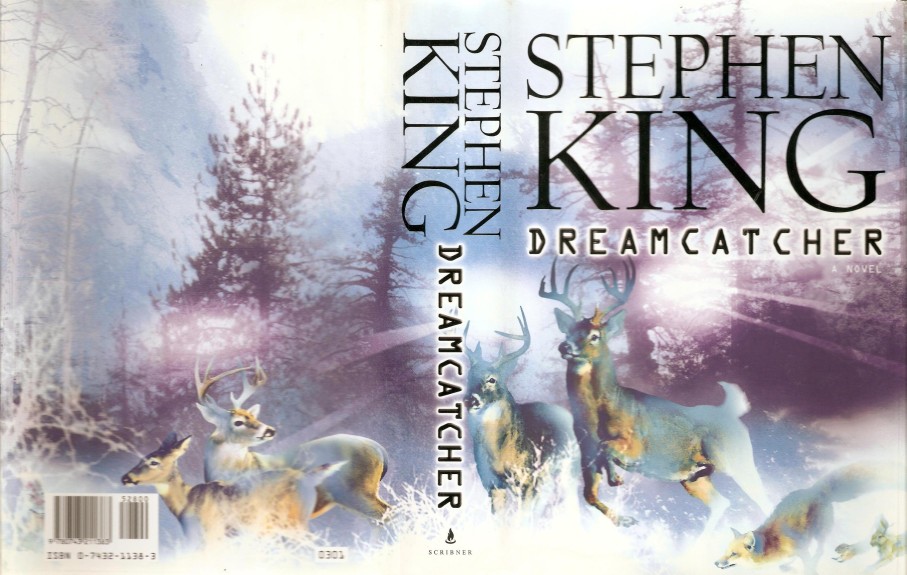
                • Cover of Dreamcatcher
                  Dreamcatcher

                  Stephen King · standalone novel · 2001

                  similar byfriendshiphorror

                  Dreamcatcher is a 2001 science fiction horror novel by American writer Stephen King, featuring elements of body horror, suspense and alien invasion. The book, written in longhand, helped the author recuperate from a 1999 car crash, and was completed in half a year. According to the author in his afterword, the working title was Cancer. His wife, Tabitha King, persuaded him to change the title. A film adaptation was released in 2003.

                • Cover of Turtle Diary
                  Turtle Diary

                  Russell Hoban · standalone novel · 1975

                  similar byfriendshiploneliness

                  Two lonely Londoners plan to release the captive turtles from the London Zoo.

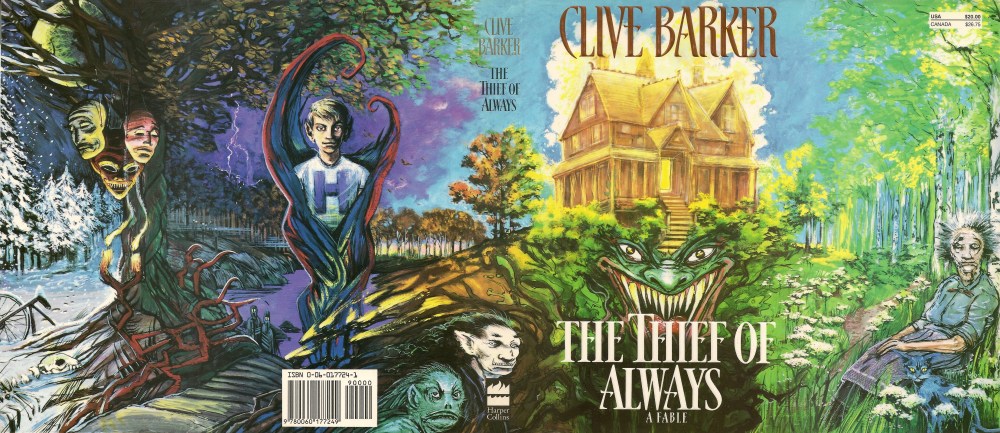
                • Cover of The Thief of Always
                  The Thief of Always

                  Clive Barker · standalone novel · 1992

                  similar by+2 more

                  Ten-year-old Harvey Swick is bored out of his mind when a stranger named Rictus offers him a way out: Holiday House, a place where every season of the year -- Christmas, Halloween, summer -- arrives in a single glorious day, one after another. Once inside, Harvey meets fellow children Wendell and Lulu, the elderly caretaker Mrs. Griffin and her cats, and settles into a routine of enchantment that starts to feel too perfect. Their host, the mysterious Mr. Hood, never appears, rumors about a figure called Carna keep surfacing, and something in the nearby lake is very wrong. One of Clive Barker's best-known standalone books, written for younger readers.