More like Lowball
anchored on:science fictionsuperheronorth americamid 20th centuryalternate historygenetic engineering+3 more
but
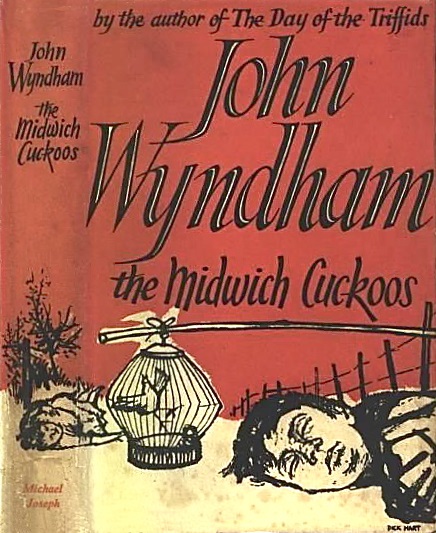
- The Midwich Cuckoos
John Wyndhamstandalone novel1957
similar bymid 20th centurydarktensescience fictionaliens
The Midwich Cuckoos is a 1957 science fiction novel written by the English author John Wyndham. It tells the tale of an English village in which the women become pregnant by brood parasitic aliens. The book has been praised by many critics, including the dramatist Dan Rebellato, who called it "a searching novel of moral ambiguities", and the novelist Margaret Atwood, who called the book Wyndham's "chef d'œuvre". The book has been adapted for film, radio, and television.
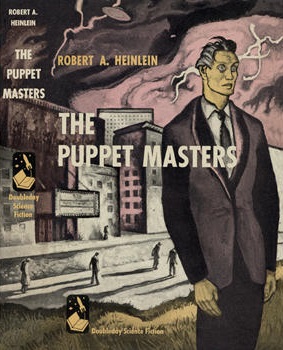
- The Puppet Masters
Robert A. Heinleinstandalone novel1951
similar bymid 20th centurytensescience fictionnorth americaaliens+1 more
Parasitical aliens attach themselves to human hosts and take over their bodies. Two spies are sent to find out what's happening, but the extent is much farther than they knew. With access to the humans' memories, the aliens quietly invade the government and start taking over.
- A Report from Group 17
Robert C. O'Brienstandalone novel1972
similar bymid 20th centurydarktensegenetic engineeringscience fictionnorth americapolitical intrigue
A Report from Group 17, published in 1972, is a science-fiction thriller written by Robert Leslie Conly under his pen name Robert C. O'Brien. Set in Washington, D.C., during the Cold War, the story deals particularly with the danger of developing bioweapons. The potential cause of conflict is a resurgence of Nazism in Europe. A 12-year-old girl who lives near a Soviet estate in Maryland becomes a victim of intrigue when she is kidnapped for use as an experimental subject. Themes include the threat of modern war to human survival, the moral responsibility of scientists, and the importance of both individual freedom and sympathetic instincts. Following two novels for children, A Report from Group 17 was the first of two dystopian novels that O'Brien wrote for adults. His last novel, Z for Zachariah (1974), depicts a conflict between two survivors of a nuclear war and deals with similar themes.
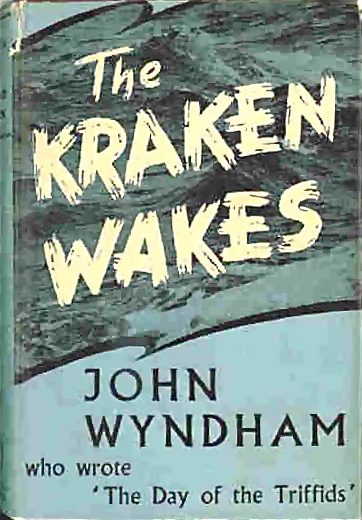
- The Kraken Wakes
John Wyndhamstandalone novel1953
similar bymid 20th centurydarktensescience fictionaliens
" Behind a spectacular meteor shower actually hides the beginning of an invasion by a mysterious and powerful alien race. Earth's life is disrupted by the attacks of extraterrestrials whose war machines, emerging from the depths of the oceans, seem indestructible. The coalitioned forces of the whole world are worthless, powerless in the face of the indecipherable and deadly plans of a superior intelligence, capable of bringing the entire planet to the brink of catastrophe" Goodreads May 20, 2022
- I Am Legend
Richard Mathesonstandalone novel1954
similar bymid 20th centurydarktensescience fictionnorth america
The last human survivor of the vampire epidemic has to maintain his defences against their onslaught, while attempting to research the cause and possibly solution to the plague. Robert Neville is the last living man on Earth... but he is not alone. Every other man, woman and child on the planet has become a vampire, and they are hungry for Neville's blood. By day he is the hunter, stalking the undead through the ruins of civilization. By night, he barricades himself in his home and prays for the dawn. How long can a man survive like this?
- Bioshock: Rapture
John Shirleystandalone novel2011
similar bymid 20th centurydarktensescience fictionpolitical intrigueclass conflict
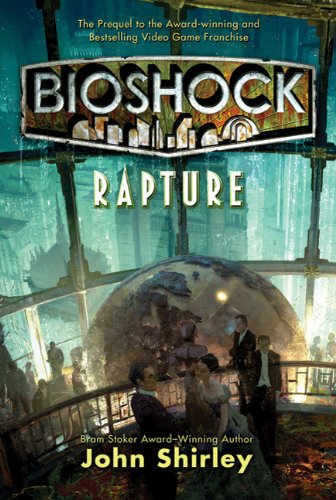
BioShock: Rapture is a 2011 science fiction novel written by John Shirley, published by Tor Books in the United States and by Titan Books in the United Kingdom. Rapture forms part of the BioShock retrofuturistic media franchise created by Ken Levine and published by 2K Games and developed by several studios, including Irrational Games and 2K Marin. A prequel to the first BioShock game the novel tells the story of how Andrew Ryan founded the underwater city of Rapture. The book follows multiple BioShock characters. The cover art was designed by Craig Mullins, who also produced the cover art for BioShock 2. It was released July 19, 2011.
- Fatherland
Robert Harrisstandalone novel1992
similar bymid 20th centurydarktensealternate historybig citypolitical intrigue
Twenty years after Nazi Germany won the Second World War, Berlin is preparing to celebrate Adolf Hitler's seventy-fifth birthday when detective Xavier March is called to investigate a body pulled from a lake, ostensibly an accident, but one that leads him to a string of suspiciously staged deaths among senior Nazi officials. Ordered off the case by the Gestapo but quietly told to keep going by his own superior, March teams up with an American journalist, Charlie Maguire, and starts following a trail toward Swiss bank accounts and a secret the regime has spent two decades burying. Robert Harris's alternate-history debut novel.
- The Child Buyer
John Herseystandalone novel1960
similar bymid 20th centurydarkgenetic engineeringnorth americascience fiction+1 more
The Child Buyer is John Hersey's 1960 novel about a project to engineer super-intelligent persons for a project whose aim is never definitely stated. Told entirely in the form of minutes from a State Senate Standing Committee, it relates the story of the appearance and efforts of a mysterious stranger in the small town of Pequot, and the repercussions of his attempt to buy a boy, Barry Rudd.
- Fail-Safe
Harvey Wheeler & Eugene Burdickstandalone novel1962
similar bymid 20th centurydarktensenorth america+1 more
Fail-Safe is a bestselling American novel by Eugene Burdick and Harvey Wheeler. Expanded from Wheeler's short story "Abraham '59", it was initially serialized in three installments in the Saturday Evening Post on October 13, 20, and 27, 1962, during the Cuban Missile Crisis.
- The Hunger Games Universe
universe5 books2008
Start hereThe Hunger Games · Start here
similar bydarktensescience fictionnorth america+1 more
Panem, they call it now — a nation raised on the drowned bones of North America, a glittering Capitol ringed by twelve districts it once starved into obedience. Every year the Capitol collects its debt in children: two tributes from each district, drawn by lottery, dropped into an engineered arena, and made to kill one another on live television while the whole country is required to watch. This is the Hunger Games — entertainment, punishment, and government at once. Suzanne Collins tells it in a compact, unified body of work. The founding trilogy — The Hunger Games, Catching Fire, and Mockingjay — follows Katniss Everdeen, a girl from the coal-mining District 12 who volunteers in her sister's place and becomes something the Capitol never scripted. Two prequels reach back into the same machinery: The Ballad of Songbirds and Snakes traces a young Coriolanus Snow long before he is President, and Sunrise on the Reaping returns to District 12 a generation ahead of Katniss. Begin with the trilogy, in order — it is Katniss's voice, close and present-tense, that makes Panem breathe, and the prequels land hardest once you know how her story ends. Beneath the spectacle sits one steady, uncomfortable question: who profits when we agree to look away.
- Lord of the Flies
William Goldingstandalone novel1954
similar bymid 20th centurydarktense+2 more
Lord of the Flies is the 1954 debut novel of British author William Golding. The plot concerns a group of prepubescent British boys who are stranded on an uninhabited island and their disastrous attempts to govern themselves that lead to a descent into savagery. The novel's themes include morality, leadership, and the tension between civility and chaos.
- The Hunger Games
series3 books2008
part of The Hunger Games Universe
similar bydarktensescience fictionnorth america
The Hunger Games is a series of young adult dystopian novels written by American author Suzanne Collins. The series consists of a trilogy that follows teenage protagonist Katniss Everdeen, as well as two prequels. The Hunger Games universe is a dystopia set in Panem, a post-apocalyptic North American country consisting of the wealthy Capitol and 12 districts in varying states of poverty. As punishment for rebellion, the Capitol hosts an annual battle royale competition called The Hunger Games. Each of the 12 districts must send two children between the ages of 12 and 18 to participate, and the last surviving child is dubbed the victor.
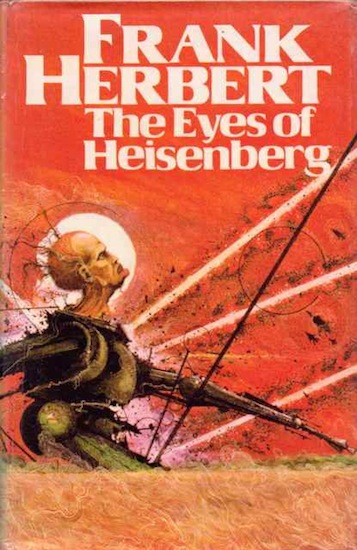
- The Eyes of Heisenberg
Frank Herbertstandalone novel1966
similar bydarktensegenetic engineeringscience fictionclass conflict
Tens of thousands of years in the future, Earth is ruled by the Optimen, a genetically engineered aristocracy that has made itself functionally immortal, while ordinary people, the Folk, live under strict reproductive control. When Harvey and Lizbeth Durant arrive to have their embryo genetically screened, the examining doctor finds something in the child no one has seen in a very long time: real potential for both fertility and life span, traits the Optimen have arrogated to themselves. Rather than destroy the embryo as policy demands, the doctor hesitates, setting off a chain of surveillance, suspicion and resistance. A tightly wound Frank Herbert thriller about genetic caste and rebellion.
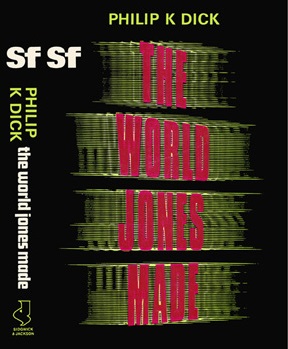
- The World Jones Made
Philip K. Dickstandalone novel1956
similar bydarktensescience fictionnorth americapolitical intrigue+2 more
The World Jones Made is a 1956 science fiction novel by American writer Philip K. Dick, examining notions of precognition, humanity, and politics. It was first published by Ace Books as one half of Ace Double D-150, bound dos-à-dos with Agent of the Unknown by Margaret St. Clair.The story takes place after a nuclear war in which society is dominated by relativism, which rejects absolute truths and preaches tolerance as the highest principle. The mutant Floyd Jones, who can see into the future, plans to overthrow the system and colonise space. The story ends with the defeat of Jones, whose plans fail despite his ability to see the future due to the immutability of fate.
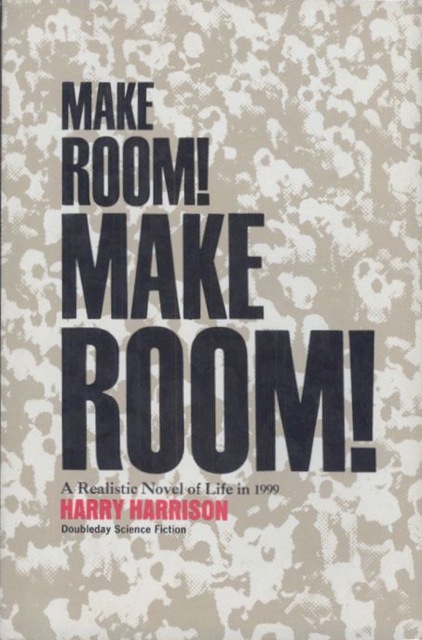
- Make Room! Make Room!
Harry Harrisonstandalone novel1966
similar bydarktensescience fictionnorth americabig cityclass conflict
Make Room! Make Room! is a 1966 science fiction novel written by Harry Harrison exploring the consequences of both unchecked population growth on society and the hoarding of resources by a wealthy minority. It was originally serialized in Impulse magazine.
- Alas, Babylon
Pat Frankstandalone novel1959
similar bymid 20th centurytensescience fictionnorth america+1 more
Classic novel of nuclear war and aftermath in rural Florida. From the back cover of a Bantam Pathfinder edition: "The day that the bomb dropped the thousands of years of "progress" that had covered the treacheries and weaknesses of ordinary man with a thin veneer of civilization were dissolved and melted like snow on the desert's dusty face. Then - the law of the jungle reigned but in the wreckage a few courageous survivors, men and women with the guts to have hope, were determined to build a new and better world on the ruins of the old. This is their story."
- The Handmaid's Tale
series3 books1985
similar bydarktensenorth americascience fiction+1 more
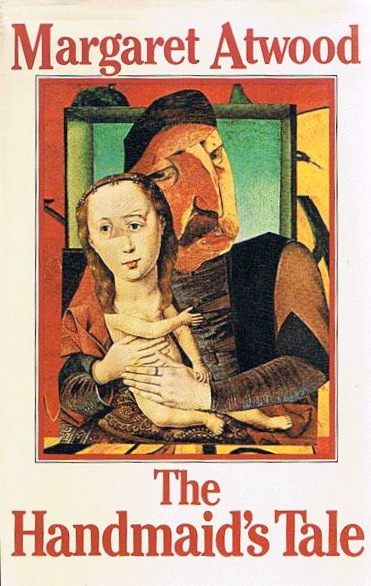
The Handmaid's Tale is Margaret Atwood's 1985 novel set in Gilead, a totalitarian theocracy that has overthrown the United States and forces fertile women into reproductive servitude as Handmaids; it is narrated by one such woman, Offred. Atwood returned to the world in her 2019 sequel The Testaments, set fifteen years later and narrated by three women, including the regime's Aunt Lydia. Together the two novels move from Gilead's grip on power toward the first cracks in it.
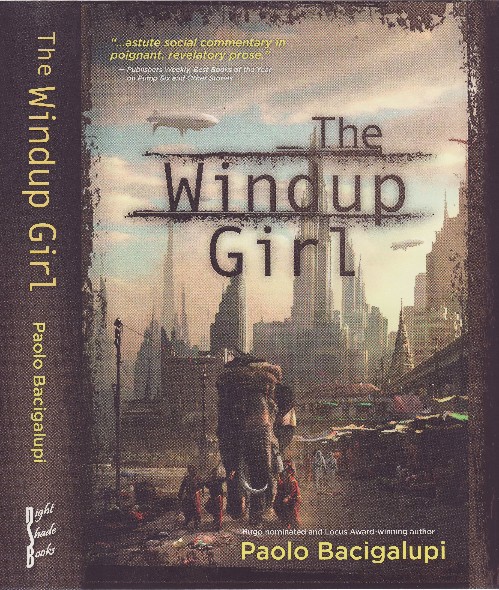
- The Water Knife
Paolo Bacigalupistandalone novel2015
similar bydarktensescience fictionnorth americaclass conflict+1 more
The Water Knife is a 2015 science fiction novel by Paolo Bacigalupi. It is Bacigalupi's sixth novel, and is based on his short story, The Tamarisk Hunter, first published in the news magazine High Country News. It takes place in the near future, where drought brought on by climate change has devastated the Southwestern United States.
- Slave Ship
Frederik Pohlstandalone novel1957
similar bymid 20th centurydarktensescience fiction+1 more
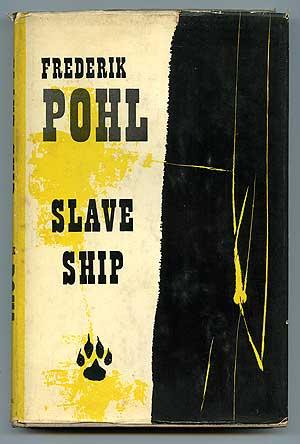
Slave Ship is a 1956 short science fiction novel by American writer Frederik Pohl, originally serialized in Galaxy. The scene is a world in the throes of a low-intensity global war, which appears to be an amplified representation of the Vietnam War, in which the U.S. was just beginning to be involved. The plot involves telepathy, speaking to animals, and, in the last few pages, an invasion by extraterrestrials.
- The Black Cloud
Fred Hoylestandalone novel1957
similar bymid 20th centurytensescience fictionaliens+1 more
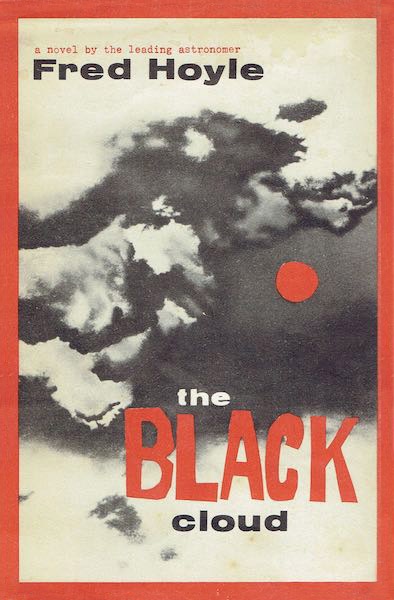
The Black Cloud is a 1957 science fiction novel by British astrophysicist Fred Hoyle. It details the arrival of an enormous cloud of gas that enters the Solar System and appears about to destroy most of the life on Earth by blocking the Sun's radiation.
- The Thousandth Floor
series3 books2016
similar bytensescience fictionnorth americabig cityclass conflict+3 more
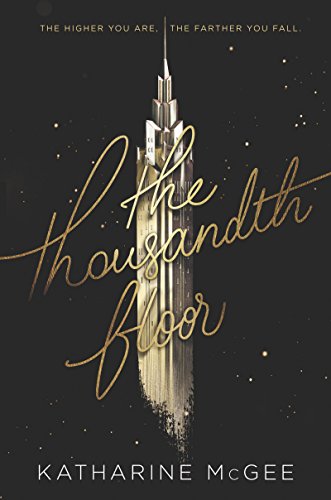
Katharine McGee's trilogy imagines Manhattan in 2118 as a single thousand-story tower housing every stratum of society, following five teenagers whose ambitions collide as they climb toward, or fall from, its highest floors. Across The Thousandth Floor, The Dazzling Heights, and The Towering Sky, addiction, surveillance, genetic privilege, and family betrayal play out as soap-opera drama in a meticulously built near-future setting.
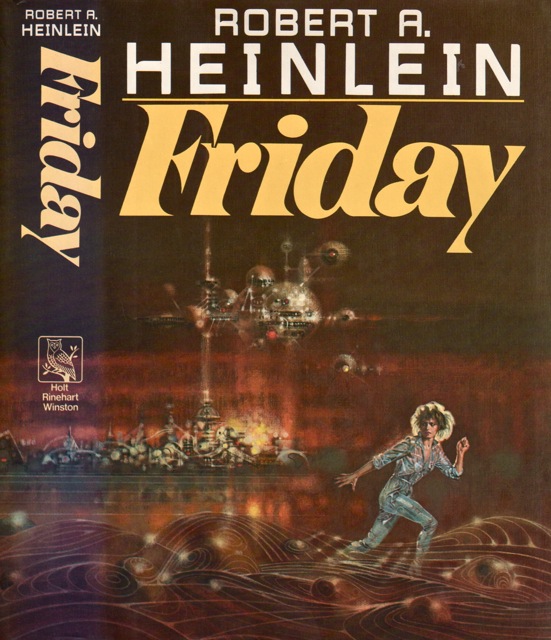
- Friday
Robert A. Heinleinstandalone novel1982
similar bytensegenetic engineeringscience fictionnorth america+1 more
Friday is a 1982 science fiction novel by American writer Robert A. Heinlein. It is the story of a female "artificial person", the eponymous Friday, genetically engineered to be stronger, faster, smarter, and generally better than normal humans. Artificial humans are widely resented, and much of the story deals with Friday's struggle both against prejudice and to conceal her enhanced attributes from other humans. The story is set in a Balkanized 21st century, in which the nations of the North American continent have been split up into a number of smaller states.
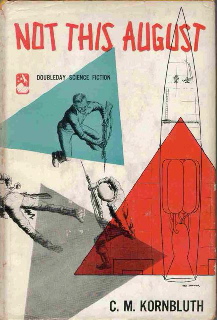
- Not This August
C. M. Kornbluthstandalone novel1955
similar bymid 20th centurydarkscience fictionnorth americaalternate history+1 more
Not This August, also known as Christmas Eve, is a Hugo Award shortlisted science fiction novel by Cyril M. Kornbluth. It was originally published in 1955 by Doubleday. It was serialized in Maclean's magazine (Canada) in May and June 1955. A revised edition with a new foreword and afterword by Frederik Pohl was published in 1981 by Tor Books, ISBN 0-523-48518-2. The title comes from author Ernest Hemingway's "Notes on the Next War".