More like Mage Fall
but
- A Song of Ice and Fire
series14 books1996
part of World of Ice and Fire
similar byfantasypolitical intrigue+1 more
A Song of Ice and Fire is a series of high fantasy novels by the American author George R. R. Martin. Martin began writing the first volume, A Game of Thrones, in 1991, and published it in 1996. Martin, who originally envisioned the series as a trilogy, has released five out of seven planned volumes. The most recent entry in the series, A Dance with Dragons, was published in 2011. Since then, Martin has been working on the sixth novel, titled The Winds of Winter. A seventh novel, A Dream of Spring, is planned to follow.
- The Riftwar Universe
universe44 books1982
Start hereRiftwar Saga · Start here
similar byfantasy+3 more
On the world of Midkemia a tear opens in the air itself, a rift hung between stars, and through it march the armies of an empire from another world entirely. So begins the chronicle Raymond E. Feist has kept for three decades: the tale of Pug, a castle kitchen boy apprenticed to a magician on the very day the invasion lands, and of Tomas, his friend, who inherits the armor and the ancient fury of a dead dragon-lord. Around these two the Riftwar Cycle turns, widening book by book from one besieged frontier keep into the whole history of a world of kingdoms, guilds, thieves' dens and mage-towers. The cycle runs to roughly thirty novels, gathered into arcs a newcomer can enter and finish on their own. The founding Riftwar Saga (Magician, Silverthorn, A Darkness at Sethanon) sets the board; the Serpentwar Saga, Krondor's Sons and the Conclave of Shadows carry the story down the generations; the Darkwar, Demonwar and Chaoswar sagas bring it toward its close. Crossing the rift to the rival world of Kelewan, Feist and Janny Wurts wrote the Empire trilogy, opening with Daughter of the Empire, a court intrigue told wholly from the invaders' side and for many the finest thing here. Shorter Legends of the Riftwar and the game-born Riftwar Legacy fill the corners; later still, Feist opens an altogether new world in the Firemane books. Feist writes fantasy in its most companionable key: apprentices who grow into archmages, tavern boys who become spies and dukes, a world you return to the way you return to an old inn. The mood is adventure before dread, friendship and rank and hard-won craft, wars that cost something, all of it rendered plainly and at a gallop. Begin where it began, with Magician, then follow the arcs in the order they were written, and the rift will carry you the rest of the way.
- Dragon Trilogies
series6 books1988
similar byfantasypolitical intriguetense+1 more
The Dragon Prince and Dragon Star trilogies comprise six connected fantasy novels written by Melanie Rawn. The Dragon Prince trilogy focuses on Prince Rohan of the Desert and his Sunrunner wife, Sioned, while the Dragon Star trilogy focuses on their son, Pol. The Dragon Prince trilogy consists of novels Dragon Prince, The Star Scroll, and Sunrunner's Fire. The books in the Dragon Star trilogy are Stronghold, The Dragon Token, and Skybowl.
- Chronicles of the Deryni
series4 books1970
part of Deryni
similar byfantasypolitical intriguetensewizards
Katherine Kurtz's Chronicles of the Deryni trilogy (Deryni Rising, Deryni Checkmate, High Deryni, 1970-1973) follows the young King Kelson Haldane defending his throne in Gwynedd, a kingdom modeled on 10th-to-12th-century Britain, against ecclesiastical opposition and foreign invasion. Central to the conflict is the Deryni, a persecuted human-like people with inherited psychic and magical powers, whose presence in and around the crown makes Kelson's reign a lightning rod for religious and political tension.
- The Traitor Spy Trilogy
series3 books2010
part of Kyralia series
similar byfantasypolitical intriguewizardsadventurous+1 more
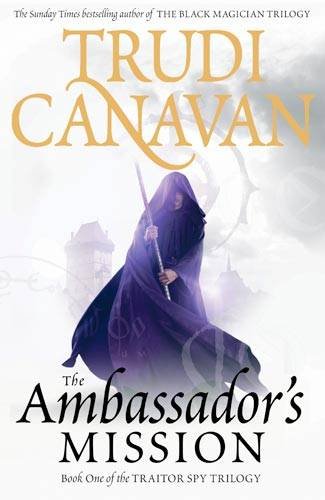
Trudi Canavan is an Australian writer of fantasy novels, best known for her best-selling fantasy trilogies The Black Magician and Age of the Five. While establishing her writing career she worked as a graphic designer. She completed her third trilogy, The Traitor Spy trilogy, in August 2012 with The Traitor Queen. Subsequently, Canavan has written a series called Millennium's Rule, with a completely new setting consisting of multiple worlds which characters can cross between. Though originally planned as a trilogy, a fourth and final book in the Millennium's Rule series was published.
- Imperial Galaxy
series2 books2012
similar bypolitical intriguefirst personadventurous+2 more
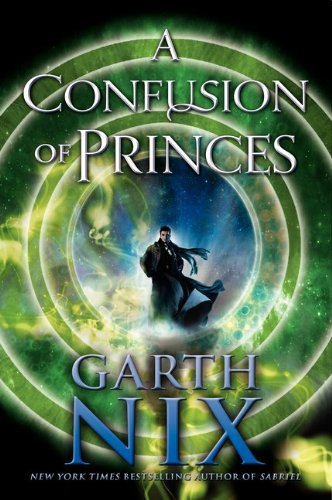
Prince Khemri has spent his life as one of ten thousand princes bred and trained by a sprawling galactic empire, expecting eventual rule -- until he learns just how disposable princes actually are, and how routinely they're assassinated by their own siblings. Garth Nix's A Confusion of Princes follows Khemri through the empire's ruthless military, its secret intelligence service, and a deadly, decades-long competition to determine who might one day take the throne. It's a single, self-contained space opera rather than an ongoing series.
- The Powder Mage
universe19 books2013
Start hereThe Powder Mage Trilogy · Start here
similar byfantasypolitical intriguetense+1 more
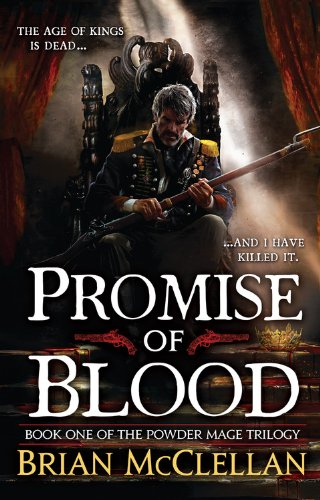
Load your powder, and pray your sorcery outruns their cannon. Here the age of kings is ending at musket-point: a world where black powder is not merely fired but eaten, and the men and women called powder mages snort a pinch of it to burn a trance across the battlefield — igniting an enemy's cartridges from a mile off, bending a bullet mid-flight, reading a room by the taste of the air. Against them stand the Privileged, glove-fingered sorcerers of the old order who summon fire and frost, and above both, gods who have not finished walking the earth. Brian McClellan builds this flintlock world across two linked trilogies. The Powder Mage Trilogy — Promise of Blood, The Crimson Campaign, The Autumn Republic — opens with a field marshal's coup against a rotten monarchy and the invasion, revolution, and divine reckoning that follow. Gods of Blood and Powder — Sins of Empire, Wrath of Empire, Blood of Empire — crosses the ocean a decade on to the colonial frontier of Fatrasta, where old soldiers, spies, and a heretic goddess collide. A run of novellas and short stories fills the corners between. Expect grapeshot and gunsmoke, siege lines and back-alley intrigue, generals and con men given equal weight. Begin at Promise of Blood and read in publication order — the trilogies run in sequence, and the short work is seasoning, not prerequisite.
- Alliance-Union Universe
universe173 books1976
Start hereCompany Wars · The central sequence
similar by+3 more
The dark between the stars belongs to no one, and everyone who lives out here knows it: the merchanter Families hauling cargo between stations that cannot feed themselves, the Earth Company clutching at colonies it can no longer supply, the Union breeding its cloned azi to settle worlds faster than birth allows. C. J. Cherryh's Alliance-Union is a future history of humankind's spread across the third and fourth millennia, told from inside the pressure — no clean empires, only stations, ships, treaties, and the people caught in the machinery of who holds the jump-points. The sequence runs from the first laborious pre-FTL stations through the Company Wars, the independence struggle that breaks over Pell in Downbelow Station (Hugo, 1981), to the genetics and cold politics of Union's homeworld in Cyteen (Hugo, 1988) and its sequel Regenesis. Around that spine cluster the merchanter novels of trader Families, the Faded Sun trilogy of human envoys among the martial alien Mri, and the Chanur books, narrated from the hierarchical, whiskered viewpoint of the hani. On the isolated world of Merovin, the Merovingen Nights anthologies open the setting to other hands — Mercedes Lackey, Janet and Chris Morris, Nancy Asire — a shared world braided into the whole. What sets it apart is intimacy at scale. Cherryh drops you without a map into a single skull and lets you assemble the politics from what that person fears and bargains for; the aliens are genuinely alien, loyalty is always provisional, and the real antagonist is usually logistics. Most books stand alone, in her words, "like real history." The surest way in is Downbelow Station — the war seen from one besieged station — then Cyteen, for the mind that shaped the other side.
- Sparhawk
universe6 books1989
Start hereElenium · Start here
similar byfantasyadventurous+2 more
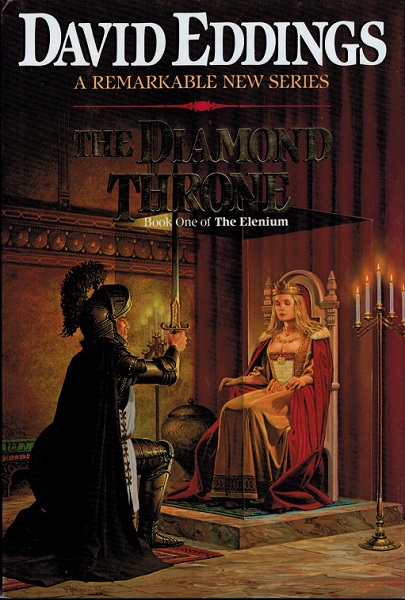
Sir Sparhawk is not a young man, and he has little patience for the pageantry his order pretends to. A Pandion Knight of the militant Elene Church, he rides home from a long exile to find his kingdom rotten with intrigue and his young queen, Ehlana, poisoned — kept alive only inside a shell of living crystal. To wake her he must find Bhelliom, a jewel with the power to remake the world or unmake it. So begins a long ride across the continent of Eosia. This is warm, character-first epic fantasy from David Eddings, told across two trilogies. The Elenium — The Diamond Throne, The Ruby Knight, The Sapphire Rose — pits Sparhawk against a corrupt church and a hungry elder god. The Tamuli — Domes of Fire, The Shining Ones, The Hidden City — carries him east into the vast Tamul Empire, where older enemies stir. Around him gathers a quarrelsome company: the Styric sorceress Sephrenia, the thief-boy Talen, the plain-spoken squire Kurik, and a small, imperious goddess who plays a set of pipes and always, somehow, gets her way. The pleasure here is the talk — grizzled knights trading dry insults between miracles and murders, a hero who solves as many problems with patience as with a sword. It never reaches for grimness or grand obscurity; it wants your good company for a long journey. Newcomers begin with The Diamond Throne and read the six in order: the Elenium stands whole on its own before the Tamuli widens the map.
- The Powder Mage Trilogy
series15 books2013
part of The Powder Mage
similar bypolitical intriguetense+2 more
The Powder Mage trilogy is a series of epic fantasy novels written by American author Brian McClellan. It consists of the novels Promise of Blood (2013), The Crimson Campaign (2014) and The Autumn Republic (2015). In 2014, Promise of Blood received the Morningstar Award for Best Fantasy Newcomer. Several short stories and novellas set in the world of The Powder Mage trilogy have been published, as well as an additional trilogy called Gods of Blood and Powder.
- Laundry Files
series22 books2004
similar by+3 more
The Laundry Files is a series of novels by British writer Charles Stross. They mix the genres of Lovecraftian horror, spy thriller, science fiction, and workplace humour. Their main character for the first five novels is "Bob Howard", a one-time I.T. consultant turned occult field agent. Howard is recruited to work for the Q-Division of SOE, otherwise known as "the Laundry", the British government agency which deals with occult threats. "Magic" is described as being a branch of applied computation (mathematics), therefore computers and equations are just as useful as, and perhaps more potent than, classical spellbooks, pentagrams, and sigils for the purpose of influencing ancient powers and opening gates to other dimensions. These occult struggles happen largely out of view of the public, as the Laundry seeks to keep the methods for contacting such powers under wraps. There are also elements of dry humour and satirisation of bureaucracy.
- Lightbringer
series5 books2010
similar by+4 more
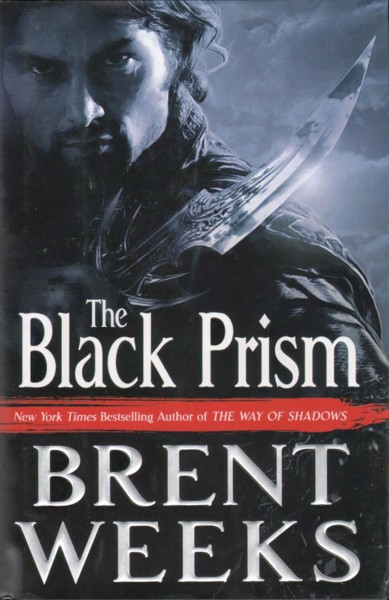
The Black Prism introduces Gavin Guile, the Prism — supreme religious and political authority over the Seven Satrapies, and the only person able to draft every color of magical light into solid, structural "luxin" — as an uprising and a hidden family secret both threaten to unravel the fragile peace he's built. Brent Weeks's five-book Lightbringer series pushes its chromaturgy magic system toward its physical and moral limits: drafters who overuse their color eventually "break the halo" and turn into monsters called wights.
- Meredith Gentry
series10 books2000
similar bypolitical intriguefirst person+2 more
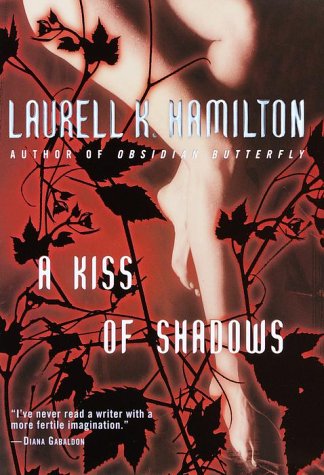
The Merry Gentry series is a series of urban fantasy novels by New York Times bestselling author Laurell K. Hamilton. The series is told through the lens of the titular character Meredith "Merry" Gentry, a faerie princess turned private investigator in a world where faeries exist and are known to the general public. The first book in the series, A Kiss of Shadows, was released by Del Rey on October 3, 2000. There are currently nine books in the series.
- The Dresden Files
series56 books2000
similar byfirst personwizards+3 more
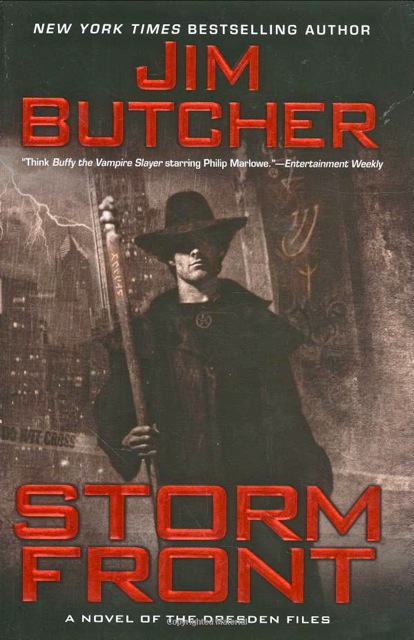
The Dresden Files is an urban fantasy series written by American author Jim Butcher. The novels are narrated from the first-person perspective of Harry Dresden, a private detective and wizard, as he investigates supernatural disturbances in contemporary Chicago. The first entry, Storm Front, was published in 2000 by Roc Books.
- Bartimaeus
series4 books2003
similar byfantasypolitical intriguewizardsadventurous
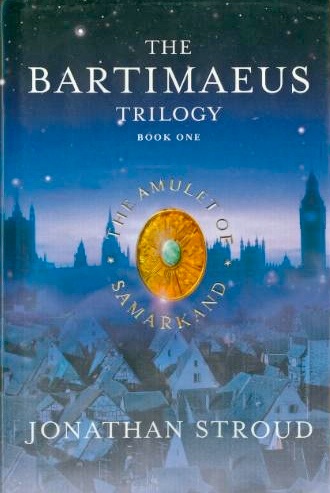
The Bartimaeus Sequence is a series of young adult novels of alternate history, fantasy and magic. It was written by British writer Jonathan Stroud and consists of a trilogy published from 2003 to 2005 and a prequel novel published in 2010. The story follows the career of a teenage magician Nathaniel and a five-thousand-year-old djinni Bartimaeus, whom he has summoned and nominally controls, through the alternate history of the peak of London's domination as a magical oligarchy.
- The Histories of King Kelson
series4 books1984
part of Deryni
similar byfantasypolitical intriguetensewizards
Katherine Kurtz's Histories of King Kelson, part of her Deryni universe, follows King Kelson of Gwynedd's reign as he balances a kingdom uneasily shared between ordinary humans and the magically gifted Deryni against continuing prejudice and political threats from within and beyond his borders. The four novels, opening with The Bishop's Heir, continue the Deryni chronicles a generation on from Kurtz's earlier trilogies.
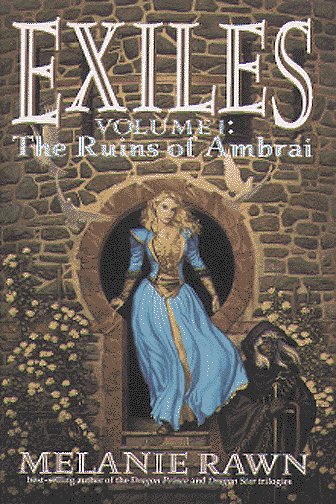
- Exiles (Melanie Rawn)
series3 books1994
similar bypolitical intrigue+4 more
Melanie Rawn is an American author of fantasy literature. She received a BA in history from Scripps College and worked as a teacher and editor before becoming a writer.
- Checquy Files
series4 books2012
similar byfantasy+4 more
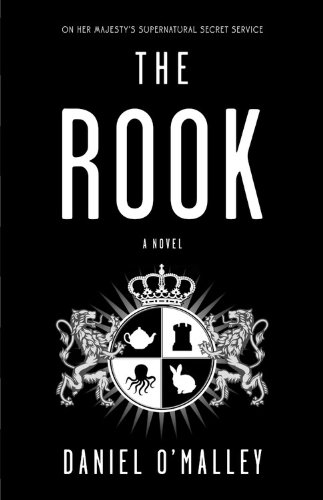
The Rook opens Daniel O'Malley's Checquy Files with Myfanwy Thomas waking up with no memory, surrounded by dead bodies and a letter from her former self explaining that she runs a secretive British agency defending the country from supernatural threats. She has to reconstruct her identity and hunt a traitor inside the organization while keeping up appearances at a job she can no longer remember how to do. The premise of paranormal bureaucracy and espionage continues across the rest of the Checquy novels.
- Alex Verus
series14 books2012
similar by+4 more
Benedict Jacka's urban fantasy series follows Alex Verus, a diviner - a mage who can see probable futures - running a small magic shop in London while trying to stay independent of the Light and Dark mage councils that both distrust him for his past as apprentice to a dark mage. Starting with Fated, the series escalates from small jobs and favors into open conflict with the Council structure and Alex's own former master, as his precognitive gift proves more dangerous to wield than it first appears. It is a long-running, tightly serialized series rather than standalone urban-fantasy cases.
- Legends of Saint Camber
series3 books1976
part of Deryni
similar byfantasypolitical intriguetense+1 more
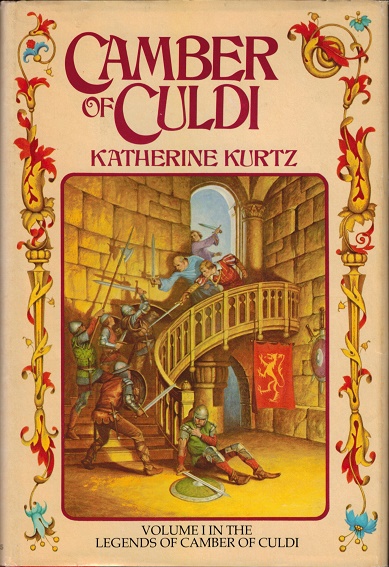
Legends of Saint Camber tells the story of Camber MacRorie, a Deryni lord who helps restore a persecuted human dynasty to the throne of Gwynedd and is venerated as a saint after his death, at a cost the trilogy gradually reveals. Camber of Culdi, Saint Camber, and Camber the Heretic were published as the fourth Deryni novel onward but are set two centuries before Katherine Kurtz's original Chronicles of the Deryni trilogy. They lay the groundwork - persecution of Deryni magic-users - that shapes the political and religious world of everything published earlier in reading order.
- The Black Magician Trilogy
series3 books2001
part of Kyralia series
similar byfantasy+4 more
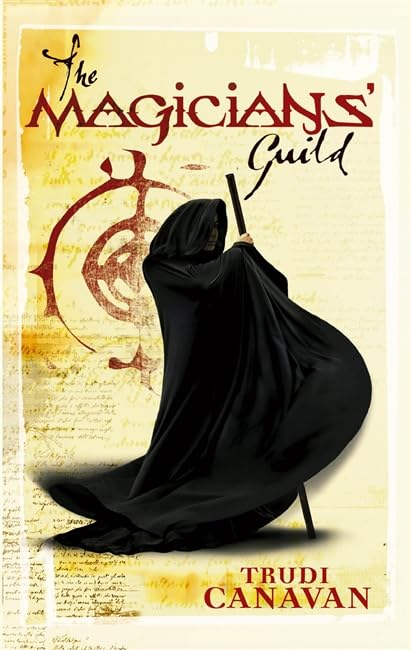
Trudi Canavan's Black Magician Trilogy (The Magicians' Guild, The Novice, The High Lord, 2001-2003) opens in the city of Imardin, where the ruling magicians' guild's annual purge of the slums goes wrong when a street girl named Sonea unknowingly shatters their protective shield with raw, untrained power. The guild must hunt her down and decide whether to control her or train her, and the trilogy follows Sonea's forced initiation into magical society and the guild's internal politics. It's Canavan's best-known trilogy and the founding story of her Kyralia setting.