Loreful
HomeDiscover
Search series, authors…⌘K
Loreful

Reading orders for SF/F series and shared universes — with your place kept in every one.

Explore

UniversesSeriesWorksAuthorsAtlas

Help

FAQAboutSite map

Account & legal

Sign inCreate accountPrivacyTerms

Data

Built on ISFDB, Wikipedia, Wikidata and Open Library. Curated reading orders carry their reasoning on the page; the rest follow publication order. Data sources & licenses

© Loreful · data: ISFDB · CC BY

More like Mail Stop

anchored on:alternate historyeurope

but

Mood

The mood the book leaves you in.

  • The reading experience is propelled by journeys, exploration, and physical risk; excitement and forward momentum dominate over dread or introspection.
  • Joy and loss are deliberately mixed; the resolution grants characters something real while taking something else away, leaving warmth and sorrow together.
  • The book demands work from the reader — dense prose, difficult structure, unfamiliar ideas, or morally uncomfortable material — as part of its intended effect.
  • Grim events, cruelty, or despair dominate the atmosphere, and the book does not soften them with comfort or comic relief.
  • The atmosphere is quietly unsettling — wrongness, unease, and the uncanny pervade the book without necessarily escalating into overt horror.
  • The book is built to move the reader; character feeling is foregrounded and major scenes aim at a strong emotional response.
  • Humor is a primary aim and the prose plays for laughs — comic situations, wit, or dialogue produce sustained comedy, not occasional levity.
  • The book insists that things can improve; effort and decency are shown to matter, and the arc bends toward better outcomes even through hardship.
  • The book teaches as it goes — real facts, history, science, or craft are conveyed in enough depth that learning is part of the reading experience.
  • The book is designed to uplift and motivate, presenting perseverance or achievement in a way that invites the reader to aspire or act.
  • The overall register is cheerful and easygoing; stakes are kept gentle and the book avoids dwelling on pain or dread.
  • Withheld information drives the experience; the book sustains enigmas and secrets the reader wants resolved, whatever its genre.
  • The book is contemplative and inward-looking, giving more weight to thought, memory, and meaning than to external events.
  • The book works as comfort reading — low tension, a soothing pace, and an atmosphere the reader can unwind in.
  • Grief, loss, or melancholy set the dominant register, and the book lets sorrow stand rather than resolving it into comfort.
  • Sustained suspense is the point; the book keeps the reader braced for what happens next through danger, pressure, or impending revelation.
  • Playful invention and charm define the register — fanciful conceits, light absurdity, and a narration that delights in its own oddity.

About

What the story runs on.

  • Stories in which extraterrestrial beings are central — as characters, cultures, or the object of the plot.
  • Stories driven by deliberate modification of genomes — designer organisms, engineered humans, and the consequences of remaking life.
  • Stories about venturing into space to explore — survey missions, astronauts, and the frontier of the unknown beyond Earth.
  • Stories structured as a quest — a journey undertaken to find, deliver, or destroy something of great import.
  • Stories in which staying alive against nature, catastrophe, or scarcity is the central problem.
  • Stories of growing up — a young protagonist crossing from childhood into adult knowledge and responsibility.
  • Stories about who a character truly is — self-discovery, doubled lives, and the search for a self.
  • Stories in which belief, doubt, and religious life are the central subject, from crises of faith to life inside a religious community.
  • Stories driven by maneuvering for power — factions, conspiracies, and statecraft conducted in shadow.
  • Stories about rising against rulers — uprisings, resistance movements, and revolutions and their aftermaths.
  • Stories in which war itself is the subject — combat, occupation, and what warfare does to soldiers and civilians.
  • Stories organized around investigating a killing — the case, the clues, and the pursuit of the killer, in any genre's clothing.

Shelf

Where it sits in the library.

    • Fiction built on magic or other supernatural elements that have no scientific explanation.
    • Secondary-world fantasy at large scale, where the fate of nations or the world turns on the protagonists' struggle.
    • Fantasy set in a recognizably modern city or contemporary world where the supernatural intrudes on everyday life.
    • Fantasy that blends in horror's atmosphere and imagery, keeping a fantastical frame around grim or frightening material.
    • Action-driven fantasy following warriors or rogues with personal stakes against sorcerous threats, rather than world-spanning conflicts.
    • Fantasy set in a real historical period or a close analogue of one, with magic woven into the era.
    • Fantasy in which protagonists cross from the ordinary world into another world through a portal or similar passage.
    • Fiction that retells or reworks a traditional fairy tale in a new form or setting.
    • Fantasy drawing directly on myths, legends, and folklore, retelling them or building on their figures and logic.
    • Fantasy of ghosts, vampires, shapeshifters, psychics, and similar phenomena, usually set in an otherwise ordinary world.
    • Fiction mixing science-fictional trappings with overtly magical or impossible elements in one setting.
    • Low-stakes fantasy emphasizing comfort, community, and everyday pleasures over conflict and peril.
    • Speculative fiction of pervasive moral ambiguity, violence, and cynicism that rejects heroic conventions — fantasy and SF alike.
      • Fiction that extrapolates from science and technology — future societies, space travel, or speculative inventions — within at least nominally natural laws.
      • Science fiction of interstellar scope — starships, galactic polities, and adventure across star systems.
      • Science fiction committed to scientific rigor, where technical plausibility constrains the story.
      • Science fiction centered on armed forces and warfare, told largely from a military point of view.
      • Science fiction of networked, corporate-dominated near futures, pairing high technology with social decay.
      • Science fiction styled on nineteenth-century steam-powered technology, often in a Victorian or pseudo-Victorian setting.
      • Fiction depicting an oppressive or catastrophic society, presented as a warning.
      • Fiction set after civilization's collapse, following survivors in the ruins of the old world.
      • Fiction in which characters move between past and future, and the mechanics or consequences of that travel drive the plot.
      • Fiction exploring a world where a historical event went differently and history diverged from ours.
      • Science fiction about humanity's first encounter and communication with an alien intelligence.
      • Science fiction in which extraterrestrial forces attack or occupy Earth and humanity resists.
      • Fiction whose primary aim is to frighten or unsettle the reader through dread, menace, or the monstrous.
      • Horror of vast, indifferent, incomprehensible entities before which humanity is insignificant, in the Lovecraft tradition.
      • Horror of decaying houses, buried family secrets, and oppressive atmosphere in the Gothic literary tradition.
      • Horror centered on hauntings and the returning dead.
      • Horror located in the mind — paranoia, obsession, and unreliable perception rather than external monsters.
      • Horror built around the reanimated dead and survival amid their outbreaks.
      • Horror defined by explicit, transgressive gore that refuses to cut away from violence.
      • Speculative fiction of the strange and uncanny that resists both natural explanation and standard genre categories.
      • Fiction organized around solving a crime or puzzle, typically following an investigator toward the identification of a culprit.
      • A puzzle-first mystery that lays out clues so the culprit's identity can be deduced before the reveal.
      • Crime fiction of moral ambiguity, fatalism, and hard-edged style, set among the corrupt and the doomed.
      • A mystery following the realistic routines of police work — forensics, interviews, and case-building.
      • A gentle mystery with an amateur sleuth, a small community, and violence kept off the page.
      • A mystery set in a past era, where the investigation works within that period's methods and society.
      • Fast-paced fiction driven by imminent danger, pursuit, or high-stakes conspiracy, built to sustain tension.
      • A thriller of espionage — agents, tradecraft, and intelligence services in conflict.
      • A thriller centered on lawyers and the courtroom, where litigation carries the suspense.
      • A thriller driven by detailed contemporary or near-future technology, often military or scientific.
      • A thriller whose tension comes from mental states and manipulation between characters rather than external action.
      • Fiction whose central plot is a romantic relationship and its development toward an emotionally satisfying resolution.
      • Romance in which one or both partners are supernatural beings, blending fantasy elements into the love story.
      • A fantasy-romance hybrid in which the romantic arc and the fantasy plot carry equal weight.
      • Romance set in a past era, with courtship shaped by the period's society and manners.
      • Romance set in the present day, without supernatural or historical elements.
      • Fiction set in a real past period, where the historical setting materially shapes characters and events.
        • General and literary fiction emphasizing prose style, character interiority, or formal ambition over genre plot conventions.
        • Fiction in a realistic world where magical events occur and are treated as ordinary, in the tradition of Latin American literature.
        • Fiction that ridicules people, institutions, or society in order to criticize them.
        • Fiction of dreamlike, irrational imagery and logic that breaks from realistic representation.
        • Fiction that plays with narrative convention through metafiction, fragmentation, and self-reference.
        • Fiction propelled by journeys, exploration, and physical peril, where action and survival carry the plot.
        • Adventure fiction of ships and seafaring — naval engagements, voyages, and life at sea.
        • Fiction of the American frontier West — gunmen, ranchers, and lawmen, typically in the late nineteenth century.
        • Fiction centered on soldiers, campaigns, and the experience of warfare, historical or imagined.
          • Fiction written primarily to amuse, using comedic situations, wit, or parody as its organizing principle.
            • Multi-generational fiction following a family or dynasty across decades, with inheritance and kinship as the through-line.
              • Fiction whose world runs on explicit game mechanics — levels, stats, and skills that characters can see and exploit.
                • Fiction about costumed or superpowered heroes and their conflicts with comparable villains.

                Practical

                How long a commitment, whether it stands alone, and whether it has finished.

                Tap a chip to ask for it · tap again to rule it out · once more to clear. Numbers show what would be left.

                • Cover of Making History
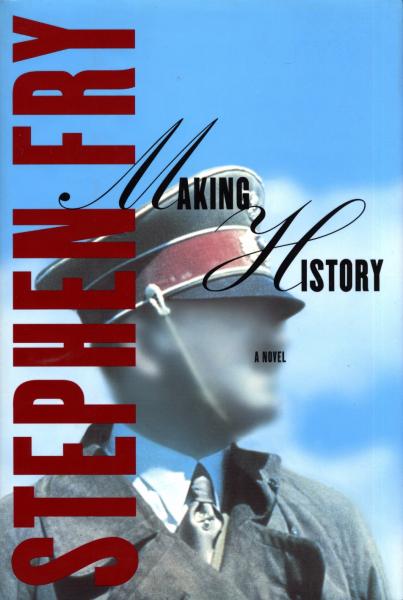
                  Making History

                  Stephen Fry · standalone novel · 1996

                  similar bypolitical intriguealternate historyeuropescience fiction+1 more

                  Making History (1996) is the third novel by Stephen Fry. Its plot involves the creation of an alternative historical timeline in which Adolf Hitler never existed. While most of the book is written in standard prose, a couple of chapters are written in the format of a screenplay. The book won the Sidewise Award for Alternate History.

                • Cover of Roma Eterna
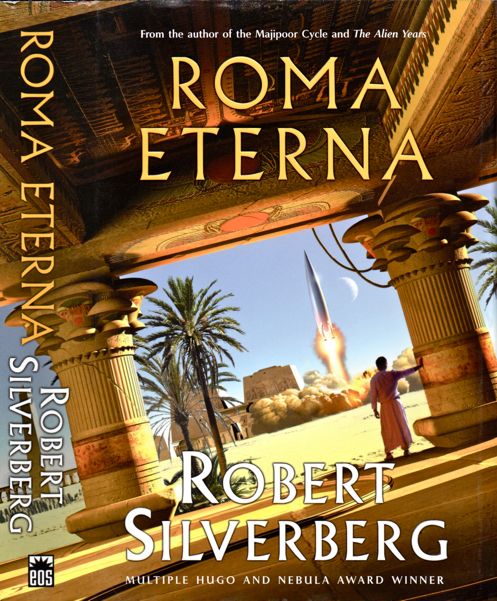
                  Roma Eterna

                  series · 11 books · 1989

                  similar byalternate history+4 more

                  Robert Silverberg's Roma Eterna imagines an alternate history in which the Roman Empire never fell and endures into the present day, tracing its long, uneven survival through a sequence of pivotal moments across two millennia. Rather than one continuous plot, the book is a fix-up of ten linked stories, most first published in Asimov's Science Fiction over a fourteen-year span, each set in a different era of this unbroken Rome. It reads as the chronicle of a civilization rather than a story following a single cast of characters.

                • Cover of Pavane
                  Pavane

                  series · 9 books · 1966

                  completed

                  similar byreflectivealternate history+2 more

                  Keith Roberts' Pavane (1968) is a single fix-up novel built from linked stories rather than a multi-book series: in an alternate 20th century where Elizabeth I was assassinated and Spain conquered England, the Catholic Church suppresses Protestantism and keeps technology frozen at a steam-powered, feudal level. The interconnected stories follow different Dorset families across generations as long-suppressed dissent against Church rule begins to stir.

                • Cover of The Last Man
                  The Last Man

                  Mary Shelley · standalone novel · 1826

                  similar byeuropescience fiction+2 more

                  The Last Man is an apocalyptic, dystopian science fiction novel by Mary Shelley, first published in 1826. The narrative concerns Europe in the late 21st century, ravaged by the rise of a bubonic plague pandemic that rapidly sweeps across the entire globe, ultimately resulting in the near-extinction of humanity. It also includes discussion of the British state as a republic, for which Shelley sat in meetings of the House of Commons to gain insight to the governmental system of the Romantic era. The novel includes many fictive allusions to her husband Percy Bysshe Shelley, who drowned in a shipwreck four years before the book's publication, as well as their close friend Lord Byron, who had died two years previously.

                • Cover of The Malacia Tapestry
                  The Malacia Tapestry

                  Brian W. Aldiss · standalone novel · 1976

                  similar bypolitical intriguereflectivealternate history+1 more

                  The Malacia Tapestry is a fantasy-historical novel by British writer Brian Aldiss, published in 1976. The story takes place in a fictional port city called Malacia, which is an alternate history version of a Renaissance city-state. It tells the story of a poor young actor named Perian de Chirolo who hopes to change his station in life so he can marry a wealthy merchant's daughter. While Malacia is considered a near-utopia, the happiness in the city belies the authoritarian rule of the powerful Supreme Council, which uses fear to prevent progress.

                • Cover of Cahokia Jazz
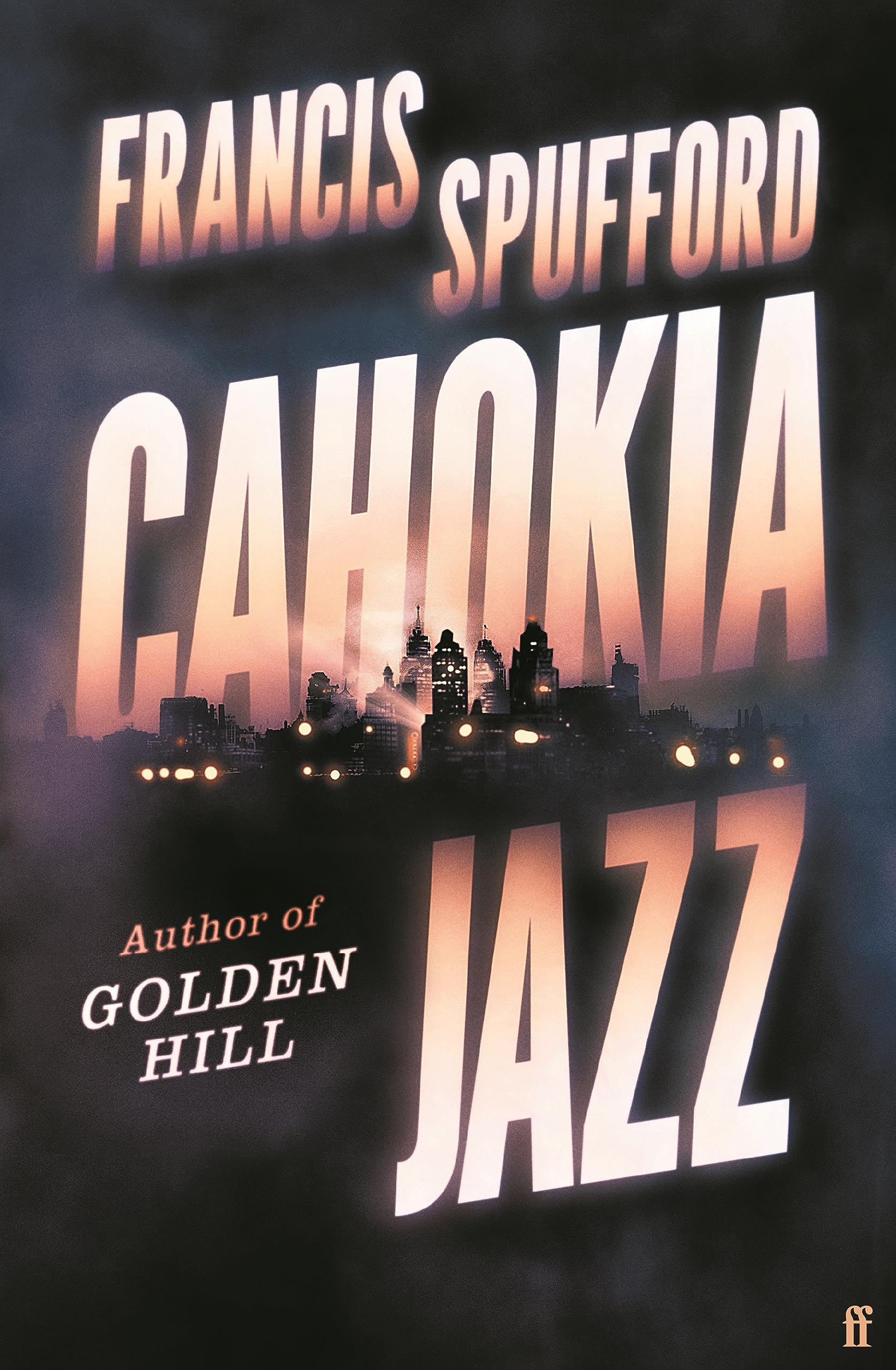
                  Cahokia Jazz

                  Francis Spufford · standalone novel · 2023

                  similar bypolitical intriguealternate history+1 more

                  Cahokia Jazz is an alternate-history detective novel by Francis Spufford released in Great Britain in 2023 and the United States in 2024.

                • Cover of Through Darkest Europe
                  Through Darkest Europe

                  Harry Turtledove · standalone novel · 2018

                  similar bypolitical intriguealternate historyeuropescience fiction+1 more

                  Through Darkest Europe is an alternate history novel by Harry Turtledove. The book is set in an alternate present in which Islamic countries form a prosperous, democratic and progressive First World, while underdeveloped Christian countries suffer from religious fanaticism.

                • Cover of The Smithsonian Institution
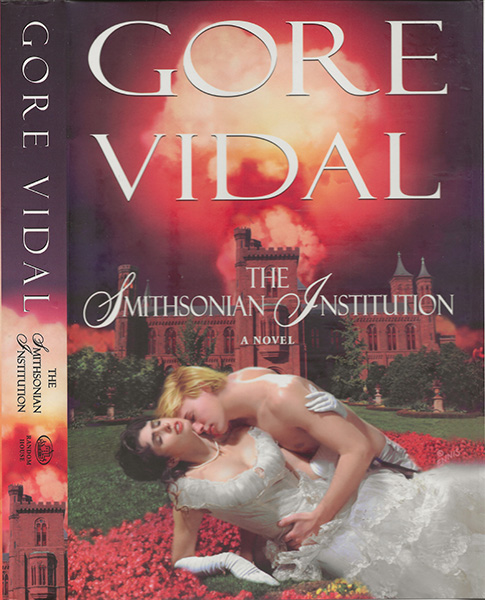
                  The Smithsonian Institution

                  Gore Vidal · standalone novel · 1998

                  similar bypolitical intriguealternate historyscience fiction+1 more

                  The Smithsonian Institution is an alternate history novel by Gore Vidal, first published in 1998.

                • Cover of Fatherland
                  Fatherland

                  Robert Harris · standalone novel · 1992

                  similar bypolitical intriguealternate historyeurope

                  Twenty years after Nazi Germany won the Second World War, Berlin is preparing to celebrate Adolf Hitler's seventy-fifth birthday when detective Xavier March is called to investigate a body pulled from a lake, ostensibly an accident, but one that leads him to a string of suspiciously staged deaths among senior Nazi officials. Ordered off the case by the Gestapo but quietly told to keep going by his own superior, March teams up with an American journalist, Charlie Maguire, and starts following a trail toward Swiss bank accounts and a secret the regime has spent two decades burying. Robert Harris's alternate-history debut novel.

                • Cover of Beyond This Horizon
                  Beyond This Horizon

                  Robert A. Heinlein · standalone novel · 1948

                  similar byreflectivescience fiction+1 more

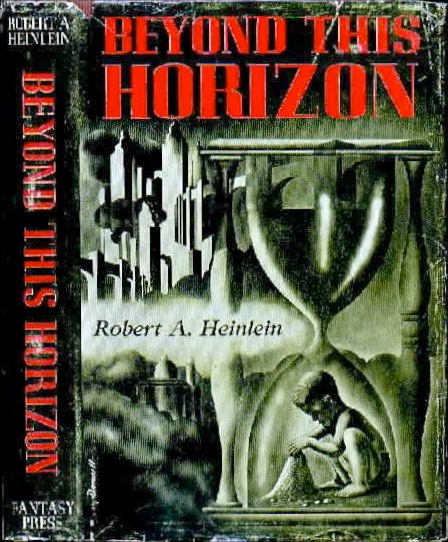
                  From the front flap of a 2001 Baen reprint: "Utopia has been achieved. For centuries, disease, hunger, poverty, and war have been things found only in the history tapes. And applied genetics has given men and women the bodies of athletes and a lifespan of over a century. They should all have been very happy... But Hamilton Felix is bored. And he is the culmination of a star line, each of his last thirty ancestors chosen for superior genes. Hamilton is, as far as genetics can produce one, the ultimate man. And this ultimate man can see no reason why the human race should survive, and has no intention of continuing the pointless comedy. However, Hamilton's life is about to become less boring. A secret cabal of revolutionaries who find utopia not just boring, but desperately in need of leaders who know just What Needs to be Done, are planning to revolt and put themselves in charge. Knowing of Hamilton's disenchantment with the modern world, they have recruited him to join their Glorious Revolution. Big mistake! The revolutionaries are about to find out that recruiting a superman was definitely not a good idea..."

                • Cover of That Inevitable Victorian Thing
                  That Inevitable Victorian Thing

                  E. K. Johnston · standalone novel · 2017

                  similar byalternate history+2 more

                • Cover of Imperial Earth
                  Imperial Earth

                  Arthur C. Clarke · standalone novel · 1975

                  similar byreflectivescience fiction+1 more

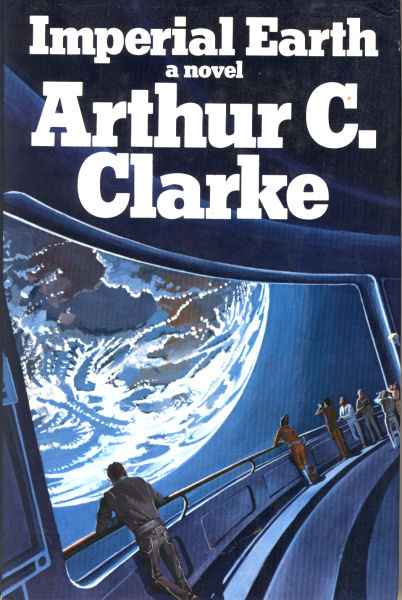
                  Imperial Earth is a science fiction novel by British writer Sir Arthur C. Clarke, published in 1975 by Gollancz Books. The plot follows the protagonist, Duncan Makenzie, on a trip to Earth from his home on Titan, in large part as a diplomatic visit to the U.S. for its quincentennial in 2276, but also to have a clone of himself produced. The book was published in time for the U.S. bicentennial in 1976.

                • Cover of Mars (Kim Stanley Robinson)
                  Mars (Kim Stanley Robinson)

                  series · 36 books · 1982

                  similar byscience fiction+2 more

                  The Mars trilogy is a series of science fiction novels by Kim Stanley Robinson that chronicles the settlement and terraforming of the planet Mars through the personal and detailed viewpoints of a wide variety of characters spanning 187 years, from 2026 to 2212. Ultimately more utopian than dystopian, the story focuses on egalitarian, sociological, and scientific advances made on Mars, while Earth suffers from overpopulation and ecological disaster.

                • Cover of The Alteration
                  The Alteration

                  Kingsley Amis · standalone novel · 1976

                  similar bypolitical intriguealternate historyeuropescience fiction

                  The Reformation does not take place, Martin Luther becomes pope, Italy never unites…

                • Cover of Julian Comstock: A Story of 22nd-Century America
                  Julian Comstock: A Story of 22nd-Century America

                  Robert Charles Wilson · standalone novel · 2009

                  similar bypolitical intriguereflectivealternate historyscience fiction

                  Julian Comstock: A Story of 22nd-Century America is a dystopian speculative fiction novel written by Robert Charles Wilson, and an expansion of Wilson's 2006 novella Julian: A Christmas Story.

                • Cover of The Dragon Waiting
                  The Dragon Waiting

                  John M. Ford · standalone novel · 1983

                  similar bypolitical intriguealternate historyeurope

                  The Dragon Waiting: A Masque of History is a 1983 historical fantasy novel by American writer John M. Ford. It won the 1984 World Fantasy Award for Best Novel. This book, set in an alternate history, contains such plot elements as vampirism, the House of Medici, and the convoluted English politics surrounding Edward IV and Richard III. It also deals with the fate of the Princes in the Tower.

                • Cover of Dune
                  Dune

                  series · 20 books · 1963

                  part of Dune Universe

                  similar bypolitical intriguescience fiction+1 more

                  Frank Herbert's Dune Chronicles opens with 1965's Dune, set on the desert planet Arrakis where House Atreides takes control of the only source of the vital spice melange and young Paul Atreides is pulled into a struggle over its politics and religion. Herbert carried the story forward across five further novels — Dune Messiah, Children of Dune, God Emperor of Dune, Heretics of Dune, and Chapterhouse: Dune — following Paul's line over the following millennia, before Brian Herbert and Kevin J. Anderson later extended the saga. Many other editions of these six novels are omnibus and box-set repackagings rather than separate stories.

                • Cover of Zimiamvian Trilogy
                  Zimiamvian Trilogy

                  series · 4 books · 1922

                  completed

                  similar bypolitical intrigue+1 more

                  The Zimiamvian Trilogy is a series of fantasy novels by English author E. R. Eddison.Mistress of Mistresses (1935) A Fish Dinner in Memison (1941) The Mezentian Gate (1958)

                • Cover of Lent
                  Lent

                  Jo Walton · standalone novel · 2019

                  similar bypolitical intriguereflectiveeurope

                  "Young Girolamo's life is a series of miracles. It's a miracle that he can see demons, plain as day, and that he can cast them out with the force of his will. It's a miracle that he's friends with Pico della Mirandola, the Count of Concordia. It's a miracle that when Girolamo visits the deathbed of Lorenzo "the Magnificent," the dying Medici is wreathed in celestial light, a surprise to everyone, Lorenzo included. It's a miracle that when Charles VIII of France invades northern Italy, Girolamo meets him in the field, and convinces him to not only spare Florence but also protect it. It's a miracle than whenever Girolamo preaches, crowds swoon. It's a miracle that, despite the Pope's determination to bring young Girolamo to heel, he's still on the loose...and, now, running Florence in all but name. That's only the beginning. Because Girolamo Savanarola is not who--or what--he thinks he is. He will discover the truth about himself at the most startling possible time. And this will be only the beginning of his many lives." - publisher

                • Cover of Trouble with Lichen
                  Trouble with Lichen

                  John Wyndham · standalone novel · 1960

                  similar byreflectivescience fiction+1 more

                  Biochemists Diana Brackley and Francis Saxover, working independently, both isolate a compound from a rare lichen that appears to dramatically slow the aging process. Francis quietly doses himself and his family and says nothing; Diana takes the opposite approach, opening exclusive beauty spas as cover to give the drug to well-connected women across Britain, reasoning that if longevity becomes known before women have a foothold, men will simply monopolize it as they have everything else. The secret can only hold so long, and the novel's tension builds toward the moment it gets out. A quietly subversive social science-fiction novel from John Wyndham.

                • Cover of Ring of Fire (1632)
                  Ring of Fire (1632)

                  universe · 687 books · 2000

                  Start here1632 · Start here

                  similar byalternate historyeurope+2 more

                  Somewhere in the spring of 1631, the sky over a stretch of Thuringian farmland cracks open, and when it closes a piece of the year 2000 is sitting in the middle of the Thirty Years' War. Grantville — a played-out coal town lifted whole out of West Virginia, high-school gym and pizza parlor and all — has landed three miles of the twentieth century three and a half centuries upstream, in the bloodiest war Europe would ever fight. The town does the only thing it knows how to do: it holds a meeting, elects a government, and gets to work. What Eric Flint began with 1632 he almost at once threw open to everyone else, and this is a shared world built the way Grantville rebuilds — by committee, by many hands, in public. The spine runs 1632, then 1633 and 1634: The Baltic War (written with David Weber), after which the timeline forks across a continent: the war in the north, the Roman intrigues of the Galileo Affair, Bavaria, the Ottomans, Russia, each carried in its own novel and its own numbered year. Feeding it is the Grantville Gazette, a running magazine of fan-then-professional fiction, and the Ring of Fire anthologies, where authors like Virginia DeMarce, Gorg Huff and Kerryn Offord supply the machinists, printers and lawyers one narrator never could. The same cosmic accident — the Assiti Shards — maroons other towns in other centuries in Time Spike and The Alexander Inheritance. There are no chosen ones here and no magic, only the terrifying leverage of already knowing how the next four hundred years turn out. The pleasure is procedural and democratic: union halls and lathes outfighting kings, down-timers and up-timers arguing their way toward a republic. Sprawling, uneven, warm-blooded, it rewards browsing over marching. Begin with 1632, read 1633 next, then follow whichever thread — sea, siege, or senate — pulls you in.

                • Cover of The Leviathan Trilogy
                  The Leviathan Trilogy

                  series · 3 books · 2009

                  similar byalternate historyeuropescience fiction+1 more

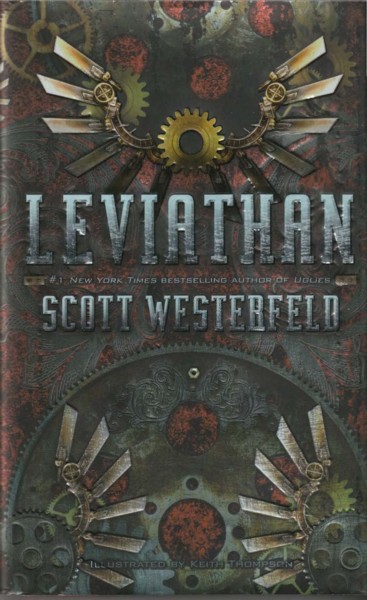
                  Set in an alternate First World War, Leviathan splits the belligerents into Clankers, who fight with mechanical walkers, and Darwinists, who fight with fabricated living creatures built from spliced DNA. Scott Westerfeld follows a British girl disguised as a boy to serve on a living airship and the exiled heir to the Austro-Hungarian throne as their paths collide, continuing across Behemoth and Goliath. Keith Thompson's illustrations are integral to all three books, alternating text chapters with illustrated sequences.

                • Cover of The Separation
                  The Separation

                  Christopher Priest · standalone novel · 2002

                  similar byreflectivealternate historyeuropescience fiction

                  The Separation is a novel by British writer Christopher Priest, published in 2002. It is an alternate history revolving around the experiences of identical twin brothers during the Second World War, during which one becomes a pilot for the RAF, and the other, a conscientious objector, becomes an ambulance driver for the Red Cross. The author introduces a deliberate confusion by giving these brothers identical initials – J.L. Sawyer – one known as Jack and the other as Joe.

                • Cover of 2312
                  2312

                  Kim Stanley Robinson · standalone novel · 2012

                  similar byreflectivescience fiction+1 more

                  In the eponymous year, when Earth's ecology is degraded and humanity has settled throughout the solar system by terraforming and genetic engineering, mysterious disasters strike some human communities and an assortment of human types from throughout the system seek to find and eliminate the cause.