Loreful
HomeDiscover
Search series, authors…⌘K
Loreful

Reading orders for SF/F series and shared universes — with your place kept in every one.

Explore

UniversesSeriesWorksAuthorsAtlas

Help

FAQAboutSite map

Account & legal

Sign inCreate accountPrivacyTerms

Data

Built on ISFDB, Wikipedia, Wikidata and Open Library. Curated reading orders carry their reasoning on the page; the rest follow publication order. Data sources & licenses

© Loreful · data: ISFDB · CC BY

More like Malarkoi

anchored on:secondary worldfantasy

but

Mood

The mood the book leaves you in.

  • The reading experience is propelled by journeys, exploration, and physical risk; excitement and forward momentum dominate over dread or introspection.
  • Joy and loss are deliberately mixed; the resolution grants characters something real while taking something else away, leaving warmth and sorrow together.
  • The book demands work from the reader — dense prose, difficult structure, unfamiliar ideas, or morally uncomfortable material — as part of its intended effect.
  • Grim events, cruelty, or despair dominate the atmosphere, and the book does not soften them with comfort or comic relief.
  • The atmosphere is quietly unsettling — wrongness, unease, and the uncanny pervade the book without necessarily escalating into overt horror.
  • The book is built to move the reader; character feeling is foregrounded and major scenes aim at a strong emotional response.
  • Humor is a primary aim and the prose plays for laughs — comic situations, wit, or dialogue produce sustained comedy, not occasional levity.
  • The book insists that things can improve; effort and decency are shown to matter, and the arc bends toward better outcomes even through hardship.
  • The book teaches as it goes — real facts, history, science, or craft are conveyed in enough depth that learning is part of the reading experience.
  • The book is designed to uplift and motivate, presenting perseverance or achievement in a way that invites the reader to aspire or act.
  • The overall register is cheerful and easygoing; stakes are kept gentle and the book avoids dwelling on pain or dread.
  • Withheld information drives the experience; the book sustains enigmas and secrets the reader wants resolved, whatever its genre.
  • The book is contemplative and inward-looking, giving more weight to thought, memory, and meaning than to external events.
  • The book works as comfort reading — low tension, a soothing pace, and an atmosphere the reader can unwind in.
  • Grief, loss, or melancholy set the dominant register, and the book lets sorrow stand rather than resolving it into comfort.
  • Sustained suspense is the point; the book keeps the reader braced for what happens next through danger, pressure, or impending revelation.
  • Playful invention and charm define the register — fanciful conceits, light absurdity, and a narration that delights in its own oddity.

About

What the story runs on.

  • Stories structured as a quest — a journey undertaken to find, deliver, or destroy something of great import.
  • Stories in which staying alive against nature, catastrophe, or scarcity is the central problem.
  • Stories of lovers kept apart by law, family, faith, or station, where the obstacle to love is the plot.
  • Stories in which a friendship — its making, testing, or loss — is the emotional center.
  • Stories of growing up — a young protagonist crossing from childhood into adult knowledge and responsibility.
  • Stories about who a character truly is — self-discovery, doubled lives, and the search for a self.
  • Stories about mental unraveling — descent into madness, delusion, and minds at war with themselves.
  • Stories about mourning — living through the death of a loved one and what loss does to the survivors.
  • Stories in which a buried family truth — hidden parentage, crimes, or shames — surfaces and reorders the present.
  • Stories driven by maneuvering for power — factions, conspiracies, and statecraft conducted in shadow.
  • Stories in which war itself is the subject — combat, occupation, and what warfare does to soldiers and civilians.
  • Stories organized around investigating a killing — the case, the clues, and the pursuit of the killer, in any genre's clothing.

Shelf

Where it sits in the library.

    • Fiction built on magic or other supernatural elements that have no scientific explanation.
    • Secondary-world fantasy at large scale, where the fate of nations or the world turns on the protagonists' struggle.
    • Fantasy set in a recognizably modern city or contemporary world where the supernatural intrudes on everyday life.
    • Fantasy that blends in horror's atmosphere and imagery, keeping a fantastical frame around grim or frightening material.
    • Action-driven fantasy following warriors or rogues with personal stakes against sorcerous threats, rather than world-spanning conflicts.
    • Fantasy set in a real historical period or a close analogue of one, with magic woven into the era.
    • Fantasy in which protagonists cross from the ordinary world into another world through a portal or similar passage.
    • Fiction that retells or reworks a traditional fairy tale in a new form or setting.
    • Fantasy drawing directly on myths, legends, and folklore, retelling them or building on their figures and logic.
    • Fantasy of ghosts, vampires, shapeshifters, psychics, and similar phenomena, usually set in an otherwise ordinary world.
    • Fiction mixing science-fictional trappings with overtly magical or impossible elements in one setting.
    • Low-stakes fantasy emphasizing comfort, community, and everyday pleasures over conflict and peril.
    • Speculative fiction of pervasive moral ambiguity, violence, and cynicism that rejects heroic conventions — fantasy and SF alike.
      • Fiction that extrapolates from science and technology — future societies, space travel, or speculative inventions — within at least nominally natural laws.
      • Science fiction of interstellar scope — starships, galactic polities, and adventure across star systems.
      • Science fiction committed to scientific rigor, where technical plausibility constrains the story.
      • Science fiction centered on armed forces and warfare, told largely from a military point of view.
      • Science fiction of networked, corporate-dominated near futures, pairing high technology with social decay.
      • Science fiction styled on nineteenth-century steam-powered technology, often in a Victorian or pseudo-Victorian setting.
      • Fiction depicting an oppressive or catastrophic society, presented as a warning.
      • Fiction set after civilization's collapse, following survivors in the ruins of the old world.
      • Fiction in which characters move between past and future, and the mechanics or consequences of that travel drive the plot.
      • Fiction exploring a world where a historical event went differently and history diverged from ours.
      • Science fiction about humanity's first encounter and communication with an alien intelligence.
      • Science fiction in which extraterrestrial forces attack or occupy Earth and humanity resists.
      • Fiction whose primary aim is to frighten or unsettle the reader through dread, menace, or the monstrous.
      • Horror of vast, indifferent, incomprehensible entities before which humanity is insignificant, in the Lovecraft tradition.
      • Horror of decaying houses, buried family secrets, and oppressive atmosphere in the Gothic literary tradition.
      • Horror centered on hauntings and the returning dead.
      • Horror located in the mind — paranoia, obsession, and unreliable perception rather than external monsters.
      • Horror built around the reanimated dead and survival amid their outbreaks.
      • Horror defined by explicit, transgressive gore that refuses to cut away from violence.
      • Speculative fiction of the strange and uncanny that resists both natural explanation and standard genre categories.
      • Fiction organized around solving a crime or puzzle, typically following an investigator toward the identification of a culprit.
      • A puzzle-first mystery that lays out clues so the culprit's identity can be deduced before the reveal.
      • Crime fiction of moral ambiguity, fatalism, and hard-edged style, set among the corrupt and the doomed.
      • A mystery following the realistic routines of police work — forensics, interviews, and case-building.
      • A gentle mystery with an amateur sleuth, a small community, and violence kept off the page.
      • A mystery set in a past era, where the investigation works within that period's methods and society.
      • Fast-paced fiction driven by imminent danger, pursuit, or high-stakes conspiracy, built to sustain tension.
      • A thriller of espionage — agents, tradecraft, and intelligence services in conflict.
      • A thriller centered on lawyers and the courtroom, where litigation carries the suspense.
      • A thriller driven by detailed contemporary or near-future technology, often military or scientific.
      • A thriller whose tension comes from mental states and manipulation between characters rather than external action.
      • Fiction whose central plot is a romantic relationship and its development toward an emotionally satisfying resolution.
      • Romance in which one or both partners are supernatural beings, blending fantasy elements into the love story.
      • A fantasy-romance hybrid in which the romantic arc and the fantasy plot carry equal weight.
      • Romance set in a past era, with courtship shaped by the period's society and manners.
      • Romance set in the present day, without supernatural or historical elements.
      • Fiction set in a real past period, where the historical setting materially shapes characters and events.
        • General and literary fiction emphasizing prose style, character interiority, or formal ambition over genre plot conventions.
        • Fiction in a realistic world where magical events occur and are treated as ordinary, in the tradition of Latin American literature.
        • Fiction that ridicules people, institutions, or society in order to criticize them.
        • Fiction of dreamlike, irrational imagery and logic that breaks from realistic representation.
        • Fiction that plays with narrative convention through metafiction, fragmentation, and self-reference.
        • Fiction propelled by journeys, exploration, and physical peril, where action and survival carry the plot.
        • Adventure fiction of ships and seafaring — naval engagements, voyages, and life at sea.
        • Fiction of the American frontier West — gunmen, ranchers, and lawmen, typically in the late nineteenth century.
        • Fiction centered on soldiers, campaigns, and the experience of warfare, historical or imagined.
          • Fiction written primarily to amuse, using comedic situations, wit, or parody as its organizing principle.
            • Multi-generational fiction following a family or dynasty across decades, with inheritance and kinship as the through-line.
              • Fiction whose world runs on explicit game mechanics — levels, stats, and skills that characters can see and exploit.
                • Fiction about costumed or superpowered heroes and their conflicts with comparable villains.

                Practical

                How long a commitment, whether it stands alone, and whether it has finished.

                Tap a chip to ask for it · tap again to rule it out · once more to clear. Numbers show what would be left.

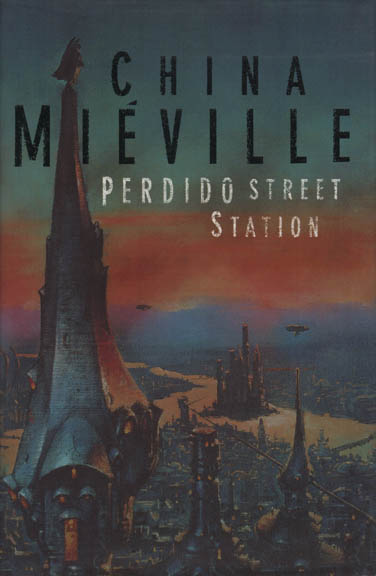
                • Cover of New Crobuzon
                  New Crobuzon

                  series · 4 books · 2000

                  similar byfantasysecondary worldchallengingdarkweird fiction+1 more

                  The New Crobuzon books are three standalone novels by China Miéville set in and around New Crobuzon, a vast, corrupt industrial city in his invented world of Bas-Lag where magic, biopunk technology, and several sentient species coexist. Perdido Street Station follows a renegade scientist and his lover after an experiment unleashes something monstrous on the city, while The Scar and Iron Council return to the same setting with different casts and only loose continuity between books.

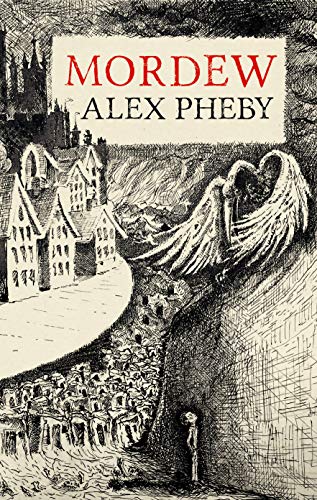
                • Cover of Cities of the Weft
                  Cities of the Weft

                  series · 4 books · 2020

                  similar byfantasysecondary world+3 more

                  Alex Pheby's Cities of the Weft trilogy is set in a world where reality itself is woven from a substance called 'weft.' It begins with Mordew (2020), continues through Malarkoi (2022), and concludes with Waterblack (2025).

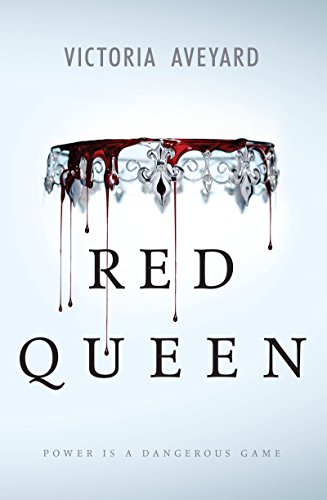
                • Cover of Red Queen
                  Red Queen

                  series · 14 books · 2015

                  similar byclass conflictfantasysecondary worlddark

                  Red Queen is set in a world split between Reds, an oppressed servant class, and Silvers, a ruling class with superhuman abilities, where a Red girl discovers she has Silver-like powers of her own and is forced into the royal court to hide what she is. Victoria Aveyard's debut novel opens a four-book main sequence - Red Queen, Glass Sword, King's Cage, War Storm - plus the interstitial novella Cruel Crown and the epilogue novella Broken Throne. It's YA dystopian fantasy built around a class-based magic system and a slow-burn political rebellion.

                • Cover of Forgotten Gods
                  Forgotten Gods

                  series · 2 books · 2020

                  similar byclass conflictfantasysecondary world+1 more

                  Marie Rutkoski's The Midnight Lie is set in the world of her Winner's Trilogy: Nirrim lives in the Ward, a district of the city ruled by a harsh tribunal that reserves every pleasure and privilege for the High Kith, until a rakish traveler named Sid arrives with rumors that magic could be hers if she's willing to give up the life she knows. The Hollow Heart continues Nirrim and Sid's story.

                • Cover of Erewhon
                  Erewhon

                  series · 4 books · 1872

                  completed

                  similar byclass conflictsecondary world+2 more

                • Cover of Neveryon
                  Neveryon

                  series · 19 books · 1979

                  similar bysecondary worldchallenging+2 more

                  Return to Nevèrÿon is a series of eleven sword and sorcery stories by Samuel R. Delany, originally published in four volumes during the years 1979–1987. Those volumes are:Tales of Nevèrÿon Neveryóna, or: The Tale of Signs and Cities Flight from Nevèrÿon Return to Nevèrÿon

                • Cover of Gormenghast
                  Gormenghast

                  series · 6 books · 1946

                  completed

                  similar byfantasysecondary worlddark

                  Gormenghast is a fantasy series by British author Mervyn Peake, about the inhabitants of Castle Gormenghast, a sprawling, decaying, Gothic structure. Originally conceived as a single on-going novel, the series was ended by Peake's death and comprises three novels: Titus Groan (1946), Gormenghast (1950) and Titus Alone (1959); and a novella, Boy in Darkness (1956). Peake was writing a fourth novel, Titus Awakes, at the time of his death in 1968. The book was completed by Peake's widow Maeve Gilmore in the 1970s, but was not published until 2011 after it was discovered by their family.

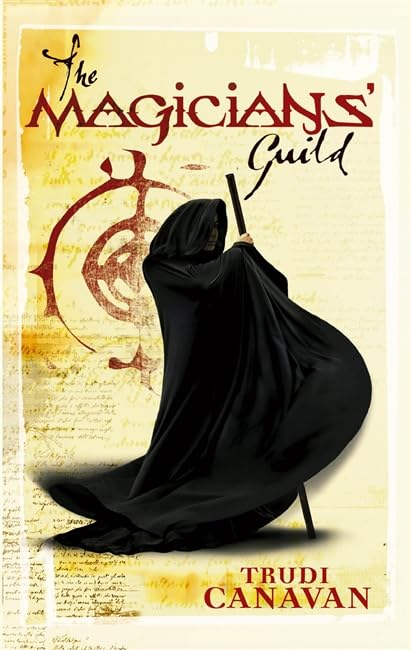
                • Cover of The Black Magician Trilogy
                  The Black Magician Trilogy

                  series · 3 books · 2001

                  part of Kyralia series

                  similar byfantasysecondary world+1 more

                  Trudi Canavan's Black Magician Trilogy (The Magicians' Guild, The Novice, The High Lord, 2001-2003) opens in the city of Imardin, where the ruling magicians' guild's annual purge of the slums goes wrong when a street girl named Sonea unknowingly shatters their protective shield with raw, untrained power. The guild must hunt her down and decide whether to control her or train her, and the trilogy follows Sonea's forced initiation into magical society and the guild's internal politics. It's Canavan's best-known trilogy and the founding story of her Kyralia setting.

                • Cover of The Dagger and the Coin
                  The Dagger and the Coin

                  series · 6 books · 2011

                  similar byclass conflictfantasysecondary world+1 more

                  The Dagger and the Coin is an epic fantasy series by Daniel Abraham, published between 2011 and 2016. The series explores the acquisition and exercise of power by individuals ill-prepared for it, persistence of institutions beyond their usefulness, and the intersection of ideology, economics, and fear. These themes are reflected in the series title, contrasting violence with economic power.

                • Cover of Blood Over Bright Haven
                  Blood Over Bright Haven

                  M. L. Wang · standalone novel · 2023

                  similar byclass conflictfantasysecondary worlddark

                  Magic has made the city of Tiran an industrial utopia, but magic has a cost—and the collectors have come calling. An orphan since the age of four, Sciona has always had more to prove than her fellow students. For twenty years, she has devoted every waking moment to the study of magic, fueled by a mad desire to achieve the impossible: to be the first woman ever admitted to the High Magistry. When she finally claws her way up the ranks to become a highmage, however, she finds that her challenges have just begun. Her new colleagues will stop at nothing to let her know she is unwelcome, beginning with giving her a janitor instead of a qualified lab assistant. What neither Sciona nor her peers realize is that her taciturn assistant was once more than a janitor; before he mopped floors for the mages, Thomil was a nomadic hunter from beyond Tiran’s magical barrier. Ten years have passed since he survived the perilous crossing that killed his family. But working for a highmage, he sees the opportunity to finally understand the forces that decimated his tribe, drove him from his homeland, and keep the Tiranish in power. Through their fractious relationship, mage and outsider uncover an ancient secret that could change the course of magic forever—if it doesn’t get them killed first. Sciona has defined her life by the pursuit of truth, but how much is one truth worth with the fate of civilization in the balance? A standalone dark academia brimming with mystery, tragedy, and the damning echoes of the past. For fans of Leigh Bardugo, V. E. Schwab, and Fullmetal Alchemist.

                • Cover of The Founders
                  The Founders

                  series · 3 books · 2018

                  similar byfantasysecondary world+1 more

                • Cover of A Song of Ice and Fire
                  A Song of Ice and Fire

                  series · 14 books · 1996

                  part of World of Ice and Fire

                  similar byfantasysecondary worlddark

                  A Song of Ice and Fire is a series of high fantasy novels by the American author George R. R. Martin. Martin began writing the first volume, A Game of Thrones, in 1991, and published it in 1996. Martin, who originally envisioned the series as a trilogy, has released five out of seven planned volumes. The most recent entry in the series, A Dance with Dragons, was published in 2011. Since then, Martin has been working on the sixth novel, titled The Winds of Winter. A seventh novel, A Dream of Spring, is planned to follow.

                • TC
                  Thomas Covenant the Unbeliever

                  series · 11 books · 1977

                  similar byfantasysecondary worlddark+1 more

                  The Chronicles of Thomas Covenant is a series of ten high fantasy novels written by American author Stephen R. Donaldson. The series began as a trilogy, The Chronicles of Thomas Covenant the Unbeliever. This was followed by another trilogy, The Second Chronicles of Thomas Covenant, and finally a tetralogy, The Last Chronicles of Thomas Covenant.

                • Cover of Blood of Lilith
                  Blood of Lilith

                  series · 1 book · 2025

                  similar byfantasysecondary worlddark+1 more

                • Cover of The Powerless Trilogy
                  The Powerless Trilogy

                  series · 5 books · 2023

                  similar byfantasysecondary world+1 more

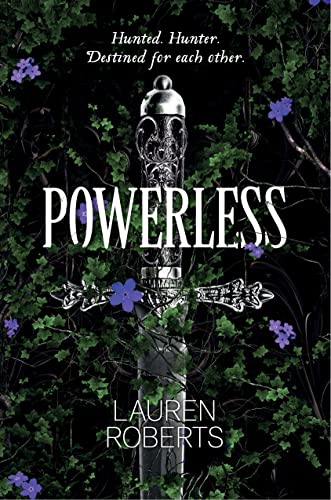
                  The Powerless Trilogy is set in a kingdom where people without magical abilities are treated as outcasts, following Paedyn Gray, a powerless girl disguising herself as a magic-wielder, who is drawn into the royal court and a survival competition after crossing paths with the crown prince. Lauren Roberts' trilogy, beginning with Powerless, was later expanded with a further Fearless duology set in the same world.

                • Cover of Selling Water by the River
                  Selling Water by the River

                  series · 2 books · 2006

                  similar byfantasysecondary world+2 more

                • Cover of Rojan Dizon
                  Rojan Dizon

                  series · 3 books · 2013

                  similar byfantasysecondary worlddark+1 more

                • Cover of Legacy of Orisha
                  Legacy of Orisha

                  series · 3 books · 2018

                  similar byfantasysecondary world+2 more

                  Tomi Adeyemi's Legacy of Orïsha trilogy opens with Children of Blood and Bone, following Zélie, a girl from a persecuted caste of former magic-users, on a quest to restore magic to a kingdom that outlawed and hunted her people. Children of Virtue and Vengeance and Children of Anguish and Anarchy continue the fallout of that restoration as new factions fight over who gets to wield the returned power. The series draws on West African mythology and languages for its magic system and setting.

                • Cover of The Legacy of Gird
                  The Legacy of Gird

                  series · 2 books · 1990

                  part of Paksenarrion

                  similar byfantasysecondary world+1 more

                • Cover of Malazan Book of the Fallen
                  Malazan Book of the Fallen

                  series · 20 books · 1999

                  part of Malazan

                  similar byfantasysecondary worlddark+1 more

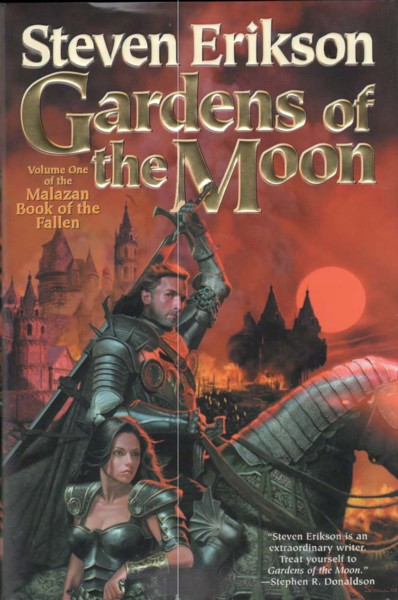
                  The Malazan Book of the Fallen is a series of epic fantasy novels written by the Canadian author Steven Erikson. The series, published by Bantam Books in the U.K. and Tor Books in the U.S., consists of ten volumes, beginning with Gardens of the Moon (1999) and concluding with The Crippled God (2011). Erikson's series presents the narratives of a large cast of characters spanning thousands of years across multiple continents.

                • Cover of Tooth and Claw
                  Tooth and Claw

                  Jo Walton · standalone novel · 2003

                  similar byfantasysecondary world+1 more

                  Tooth and Claw is a fantasy novel by Welsh-Canadian writer Jo Walton, published by Tor Books on November 1, 2003. It won the World Fantasy Award for Best Novel in 2004.

                • Cover of Malazan
                  Malazan

                  universe · 36 books · 1999

                  Start hereMalazan Book of the Fallen · Start here

                  similar bysecondary worlddark+2 more

                  Pity the historian who tries to map this world; pity more the god who thinks he rules it. The Malazan Empire marches across continents on the boots of its common soldiers, and above them move Ascendants — mortals grown into something like gods, and gods worn thin as old coin. Magic is drawn from Warrens, roads of power threaded through reality; the dead keep their grudges; and every empire, however vast, is a wager against time. This is epic fantasy told from the mud, where a sapper cracking a joke weighs as much as an immortal settling a feud older than the human race. The world began as a tabletop campaign two friends built in the 1980s, and it still moves by two hands. Steven Erikson's ten-volume Malazan Book of the Fallen is the spine — Gardens of the Moon, Deadhouse Gates, Memories of Ice, on through The Crippled God — each book a near-standalone campaign that only later reveals how it locks together. Ian C. Esslemont walks the same years from a different vantage in his Novels of the Malazan Empire (Night of Knives, Return of the Crimson Guard onward). Around them stand the prequels: Erikson's Kharkanas Trilogy, archaic and elegiac, chronicling a doomed elder people, and Esslemont's brisker Path to Ascendancy, following two adventurers before they became legends. Erikson's Witness sequence carries the tale forward, and novellas of the genial necromancers Bauchelain and Korbal Broach supply the gallows comedy. Nothing is explained to you; comprehension is earned, and that is the pleasure. The themes run deep — compassion set against cruelty, the toll empires charge, civilizations that fall and are mourned. Begin where the saga does, with Erikson's Gardens of the Moon, and read the ten in publication order; the prequels are for the already-initiated. Trust that confusion is the price of entry.

                • Cover of The Beautiful Ones
                  The Beautiful Ones

                  Silvia Moreno-Garcia · standalone novel · 2017

                  similar byfantasysecondary world+1 more

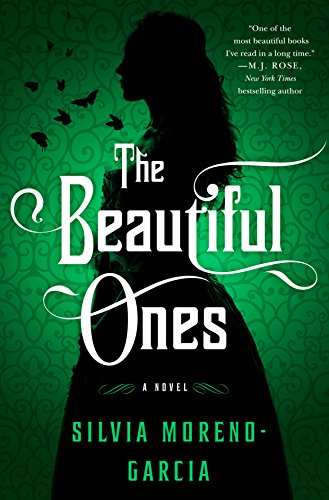
                  323 pages ; 24 cm

                • Cover of The World of Riverside
                  The World of Riverside

                  series · 72 books · 1982

                  similar byfantasysecondary world+1 more

                  Ellen Kushner's Riverside sequence begins with Swordspoint (1987), a genre-defining 'fantasy of manners' novel about hired swordsmen and aristocratic intrigue in a nameless city, and continues through The Privilege of the Sword and The Fall of the Kings (co-written with Delia Sherman). The wider World of Riverside has since expanded into shared-world short fiction and anthologies, such as Swords of Riverside, contributed to by numerous other writers.