More like Man Plus
anchored on:science fictionrobotsmarsnear futurehard science fictionterraforming+3 more
but
- Man Plus
series2 books1976
similar bytensemarsnear futurescience fictionrobotsspace colonization+3 more
Frederik Pohl's Man Plus follows Roger Torraway, who is surgically and cybernetically rebuilt into a post-human organism able to survive unprotected on the Martian surface, as part of a crash program to colonize Mars ahead of a predicted global crisis. The 1976 novel, which won the Nebula Award, is a clinical, unsentimental look at what such a transformation costs a person's sense of self. Thomas T. Thomas wrote the sequel Mars Plus, continuing the story of the Martian colony years later.
- The Martian
series2 books2012
similar bytensemarsnear futurescience fictionhard science fiction
Andy Weir's novel The Martian, first self-published in 2011 before a commercial re-release, follows astronaut Mark Watney after he is stranded alone on Mars when his crew presumes him dead and departs. Using scientific improvisation and dark humor, Watney works to keep himself alive long enough for a rescue to reach him. It is a single, self-contained survival story.
- Seveneves
Neal Stephensonstandalone novel2015
similar bytensenear futurescience fictionhard science fictionchallengingspace colonizationgenetic engineering+1 more
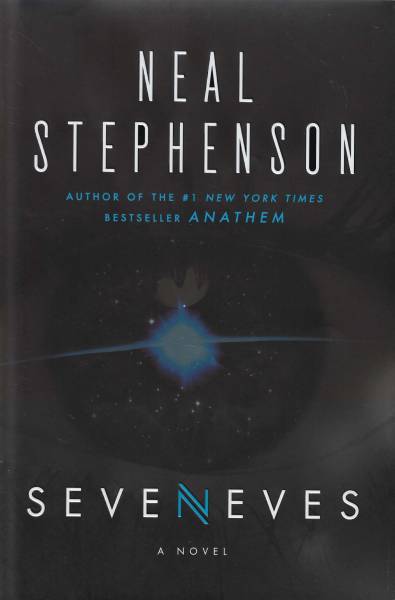
Seveneves is a science fiction novel by Neal Stephenson published in 2015. The story tells of the desperate efforts to preserve Homo sapiens in the wake of apocalyptic events on Earth after the unexplained disintegration of the Moon and the remaking of human society as a space-based civilization after a severe genetic bottleneck.
- Mars (Kim Stanley Robinson)
series36 books1982
similar bymarsscience fictionhard science fictionterraformingspace colonization+1 more
The Mars trilogy is a series of science fiction novels by Kim Stanley Robinson that chronicles the settlement and terraforming of the planet Mars through the personal and detailed viewpoints of a wide variety of characters spanning 187 years, from 2026 to 2212. Ultimately more utopian than dystopian, the story focuses on egalitarian, sociological, and scientific advances made on Mars, while Earth suffers from overpopulation and ecological disaster.
- Darwin
series2 books1999
completed
similar bytensenear futurescience fictionhard science fictiongenetic engineering
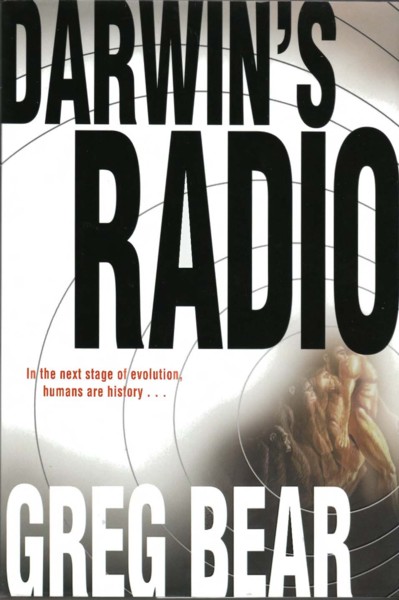
Greg Bear's Darwin's Radio imagines a dormant retrovirus in human DNA activating worldwide, triggering an accelerated leap in human evolution that governments respond to as a plague. The 1999 novel won the Nebula Award; its sequel Darwin's Children follows the first generation of changed children as society decides what to do with them. Together they're speculative near-future science fiction grounded in genetics rather than space opera.
- The Light of Other Days
Arthur C. Clarke & Stephen Baxterstandalone novel2000
similar bytensenear futurescience fictionchallenging+3 more
An industrialist devises a technique to use tiny wormholes as light pipes to enable viewing of any event anywhere; and subsequently it becomes possible to use them to view any event in the past as well. The effects on society are enormous.
- Blade Runner Universe
series6 books1968
similar bynear futurescience fictionrobotsidentity+2 more
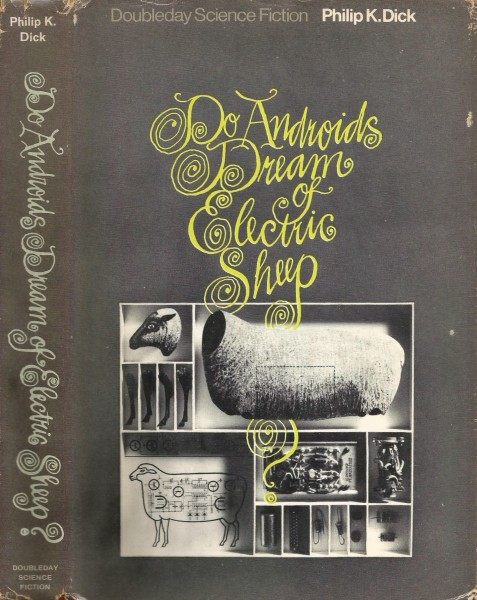
Philip K. Dick's 1968 novel Do Androids Dream of Electric Sheep? follows bounty hunter Rick Deckard as he tracks escaped androids through an irradiated, near-abandoned San Francisco, using the hunt to probe questions of empathy and what separates human from machine. The novel became the basis for Ridley Scott's 1982 film Blade Runner, and Marvel Comics later published an illustrated adaptation of that film. Together the two trace the story's path from prose original to screen and comic-page adaptation.
- The Hammer of God
Arthur C. Clarkestandalone novel1993
similar bytensenear futurescience fictionhard science fiction+4 more
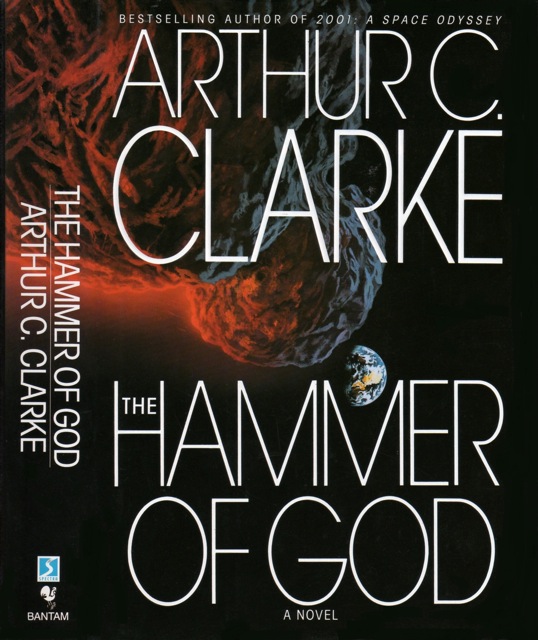
The Hammer of God is a science fiction novel by Arthur C. Clarke originally published in 1993. Set in the year 2109, it deals with the discovery of an asteroid to be on course to collide with Earth and depicts the mission for deflecting the asteroid by using fusion thermal rockets.
- Adventures of Viktor & Julia
series2 books1999
similar bytensenear futurescience fictionhard science fiction+1 more
- A Fall of Moondust
Arthur C. Clarkestandalone novel1961
similar bytensenear futurescience fictionhard science fiction
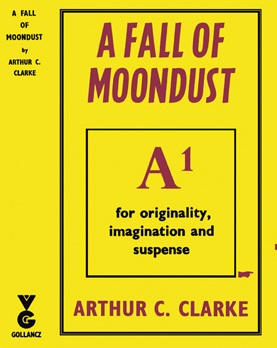
From the back cover of the Harbrace paperback: "The action of A Fall of Moondust takes place almost a century from now when tours on the moon are a common occurrence. One of the high points of each tour is a cruise around the Sea of Thirst, a body of volcanic dust, in a specially designed vessel called the Selene On a perfectly routine voyage one day the Selene suddenly disappears. How do you locate a small tourist "cruiser" buried beneath fifty feet of dust? If you find it, how do you rescue the passengers and crew? If you are on board, how do you feel and what do you do while brave men and expert technicians join forces in a race against time? Sustained excitement, lively humor, and an engaging cast of characters make this one of Arthur C. Clarke's most intriguing novels."
- Friday
Robert A. Heinleinstandalone novel1982
similar bytensenear futurescience fictionidentitygenetic engineering+1 more
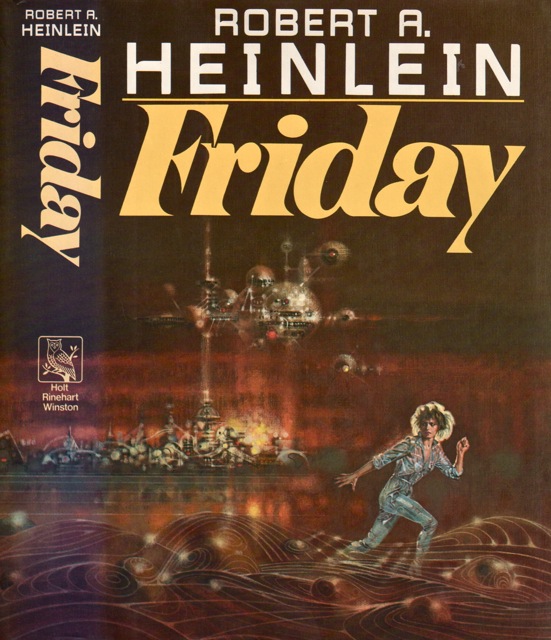
Friday is a 1982 science fiction novel by American writer Robert A. Heinlein. It is the story of a female "artificial person", the eponymous Friday, genetically engineered to be stronger, faster, smarter, and generally better than normal humans. Artificial humans are widely resented, and much of the story deals with Friday's struggle both against prejudice and to conceal her enhanced attributes from other humans. The story is set in a Balkanized 21st century, in which the nations of the North American continent have been split up into a number of smaller states.
- Rainbows End
Vernor Vingestandalone novel2006
similar bytensenear futurescience fictionhard science fiction+2 more
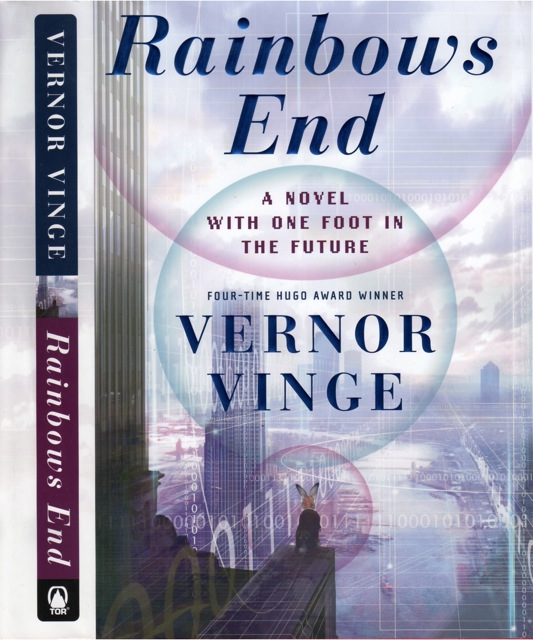
A science-fiction thriller set in a place and time as exciting and strange as any far-future world: San Diego, California, 2025. Robert Gu is a recovering Alzheimer’s patient. The world that he remembers was much as we know it today. Now, as he regains his faculties through a cure developed during the years of his near-fatal decline, he discovers that the world has changed and so has his place in it. He was a world-renowned poet. Now he is seventy-five years old, though by a medical miracle he looks much younger, and he’s starting over, for the first time unsure of his poetic gifts. Living with his son’s family, he has no choice but to learn how to cope with a new information age in which the virtual and the real are a seamless continuum, layers of reality built on digital views seen by a single person or millions, depending on your choice. But the consensus reality of the digital world is available only if, like his thirteen-year-old granddaughter Miri, you know how to wear your wireless access—through nodes designed into smart clothes—and to see the digital context—through smart contact lenses. With knowledge comes risk. When Robert begins to re-train at Fairmont High, learning with other older people what is second nature to Miri and other teens at school, he unwittingly becomes part of a wide-ranging conspiracy to use technology as a tool for world domination. In a world where every computer chip has Homeland Security built-in, this conspiracy is something that baffles even the most sophisticated security analysts, including Robert’s son and daughter-in law, two top people in the U.S. military. And even Miri, in her attempts to protect her grandfather, may be entangled in the plot. As Robert becomes more deeply involved in conspiracy, he is shocked to learn of a radical change planned for the UCSD Geisel Library; all the books there, and worldwide, would cease to physically exist. He and his fellow re-trainees feel compelled to join protests against the change. With forces around the world converging on San Diego, both the conspiracy and the protest climax in a spectacular moment as unique and satisfying as it is unexpected.
- Rogue Moon
Algis Budrysstandalone novel1960
similar bytensenear futurescience fictionhard science fiction+1 more
A project to transport humans by matter transmission becomes the means to send explorers to the Moon when the US discovers an alien artifact on the dark side, but anyone who enters dies, so a hardened adventurer is given the job.
- Blindsight / Firefall
series3 books2006
similar bytensescience fictionhard science fictionchallengingartificial intelligence+3 more
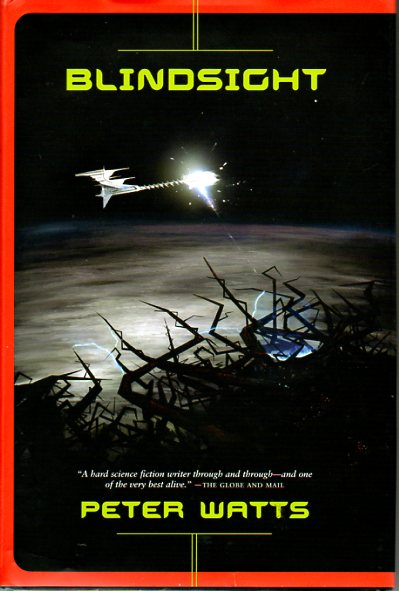
Blindsight sends a crew of radically modified posthumans (including a resurrected, genetically restored vampire) out to the Oort cloud after humanity detects an alien signal, only to make contact with something intelligent, wildly capable, and possibly not conscious at all — a first-contact story built around the question of whether self-awareness is actually useful. Peter Watts's Echopraxia is a same-timeframe "sidequel" rather than a direct sequel, following different characters through the fallout of the same first-contact event.
- Cosm
Gregory Benfordstandalone novel1998
similar bytensenear futurescience fictionhard science fiction+2 more
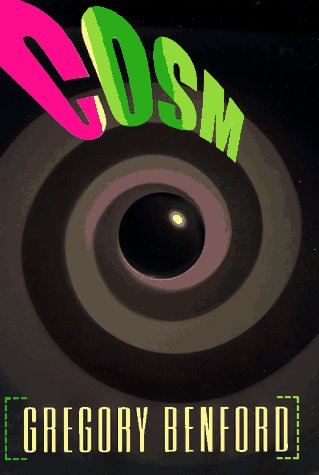
From the flaps of the Avon/Eos first edition: "On an otherwise ordinary day not long from now, inside a massive installation of ultra-high-energy scientific equipment, something goes wrong with a brilliant young physicist's most ambitious experiment. But this is not a calamity. It will soon be seen as one of the most significant breakthroughs in history. For the explosion has left something behind: a wondrous sphere the size of a basketball, made of nothing known to science. Before long, it will be clear that this object has opened a vista on an entirely different universe - a newborn cosmos whose existence will rock this world and test one woman to the limit as she comes face-to-face with fame and terror. That woman is the physicist who has ignited this thrilling adventure."
- Mars Crossing
Geoffrey A. Landisstandalone novel2000
similar bytensemarsnear futurescience fictionhard science fictionexpeditions
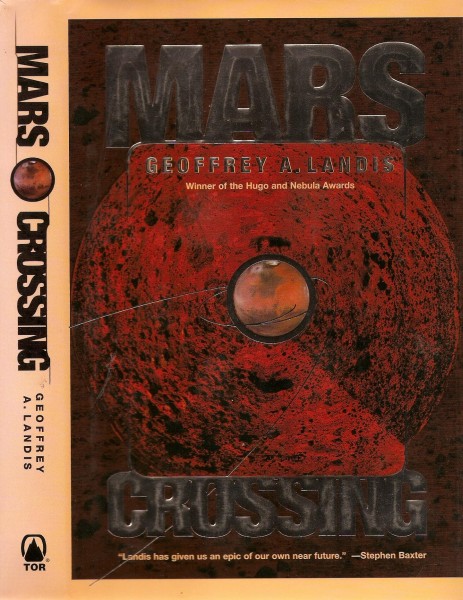
Mars Crossing is a science-fiction novel by Geoffrey A. Landis about an expedition to Mars, published by Tor Books in 2000. The novel was a nominee for the Nebula award, and won the Locus Award for best first novel in 2001.
- The Trikon Deception
Ben Bova & Bill Poguestandalone novel1992
similar bytensenear futurescience fictionhard science fictionspace colonizationgenetic engineering
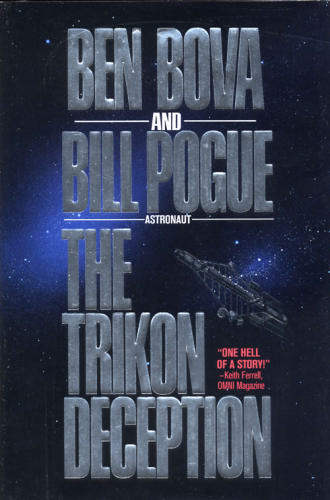
The Trikon is a shared industrial space laboratory that was built in orbit, designed as the only risk-free environment for genetic experiments too controversial or dangerous to be performed on Earth.
- Artemis
Andy Weirstandalone novel2017
similar bytensenear futurescience fictionhard science fictionspace colonization
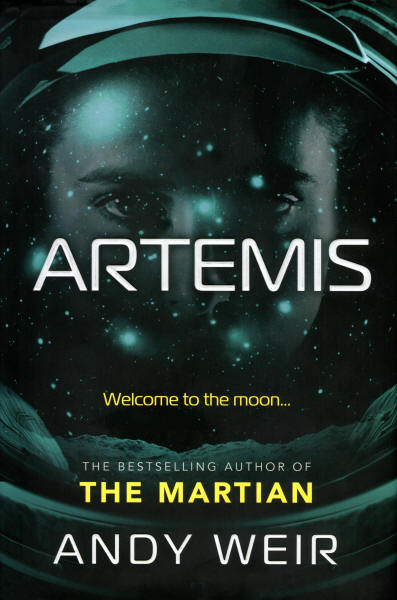
Artemis is a 2017 science fiction novel by American writer Andy Weir. It takes place in the late 2080s in Artemis, the first and only city on the Moon. It follows the life of porter and smuggler Jasmine "Jazz" Bashara as she gets caught up in a conspiracy for control of the city. The book received mixed reviews from critics.
- Sprawl Trilogy
series10 books1981
similar bynear futuretensescience fictionartificial intelligence
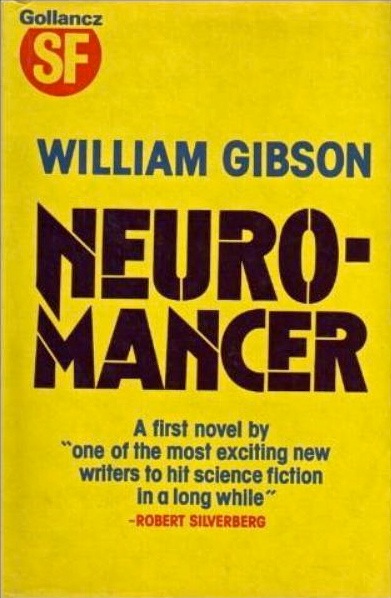
The Sprawl Trilogy is William Gibson's foundational cyberpunk sequence: Neuromancer (1984), in which hacker Case is drawn into a high-stakes heist alongside an artificial intelligence and a damaged ex-soldier, followed by Count Zero (1986) and Mona Lisa Overdrive (1988), which widen the same near-future world of corporate power and networked cyberspace to new characters. Johnny Mnemonic, an early short story set in the same fictional milieu, predates the novels and introduces the courier Molly Millions before her role in the trilogy. Together these works established much of cyberpunk's visual and thematic vocabulary.
- The Sands of Mars
Arthur C. Clarkestandalone novel1951
similar bymarsscience fictionhard science fictionterraformingspace colonization+1 more
From the back cover of the Pocket Books first paperback printing: "The Sands of Mars is ... the story of Martin Gibson, writer of interplanetary novels, a guy who knows all the answers to space flight... at least in theory. Then Gibson actually travels on the maiden voyage of the new passenger spaceship to Mars. What he finds there... love, danger, adventure... comes with as much shock to him as it will to you and to every reader who wonders at the startling mysteries of the universe!"
- Red Moon
Kim Stanley Robinsonstandalone novel2018
similar bytensenear futurescience fictionhard science fictionspace colonization
Red Moon is a 2018 science fiction novel by American novelist Kim Stanley Robinson. The novel is set in China and on the Moon. It was reviewed in several US media outlets with mixed reception.
- Birth of Fire
Jerry Pournellestandalone novel1976
similar bymarsnear futurescience fictionterraformingspace colonization+1 more
Birth of Fire is a science fiction novel by American writer Jerry Pournelle. It was first published by Laser Books in 1976, and later reprinted by Baen Books. It is related to the books Exiles to Glory and High Justice, and with those two, form a starting point for the CoDominium series.
- Blood Music
Greg Bearstandalone novel1985
similar bynear futurescience fictionhard science fictiongenetic engineering+2 more
Blood Music is a 1985 science fiction novel by American writer Greg Bear. It is an expanded version of a short story of the same title, originally published in the June 1983 issue of Analog and the winner of both the 1983 Nebula and 1984 Hugo awards for Best Novelette. The novel won the 1986 Prix Apollo Award, given to the best science fiction novel published in France during the preceding year, under the title La Musique du sang.