Loreful
HomeDiscover
Search series, authors…⌘K
Loreful

Reading orders for SF/F series and shared universes — with your place kept in every one.

Explore

UniversesSeriesWorksAuthorsAtlas

Help

FAQAboutSite map

Account & legal

Sign inCreate accountPrivacyTerms

Data

Built on ISFDB, Wikipedia, Wikidata and Open Library. Curated reading orders carry their reasoning on the page; the rest follow publication order. Data sources & licenses

© Loreful · data: ISFDB · CC BY

More like Manalive

anchored on:literary & generalour worldearly 20th centuryidentityfaith and religionwhimsical

but

Mood

The mood the book leaves you in.

  • The reading experience is propelled by journeys, exploration, and physical risk; excitement and forward momentum dominate over dread or introspection.
  • Joy and loss are deliberately mixed; the resolution grants characters something real while taking something else away, leaving warmth and sorrow together.
  • The book demands work from the reader — dense prose, difficult structure, unfamiliar ideas, or morally uncomfortable material — as part of its intended effect.
  • Grim events, cruelty, or despair dominate the atmosphere, and the book does not soften them with comfort or comic relief.
  • The atmosphere is quietly unsettling — wrongness, unease, and the uncanny pervade the book without necessarily escalating into overt horror.
  • The book is built to move the reader; character feeling is foregrounded and major scenes aim at a strong emotional response.
  • Humor is a primary aim and the prose plays for laughs — comic situations, wit, or dialogue produce sustained comedy, not occasional levity.
  • The book insists that things can improve; effort and decency are shown to matter, and the arc bends toward better outcomes even through hardship.
  • The book teaches as it goes — real facts, history, science, or craft are conveyed in enough depth that learning is part of the reading experience.
  • The book is designed to uplift and motivate, presenting perseverance or achievement in a way that invites the reader to aspire or act.
  • The overall register is cheerful and easygoing; stakes are kept gentle and the book avoids dwelling on pain or dread.
  • Withheld information drives the experience; the book sustains enigmas and secrets the reader wants resolved, whatever its genre.
  • The book is contemplative and inward-looking, giving more weight to thought, memory, and meaning than to external events.
  • The book works as comfort reading — low tension, a soothing pace, and an atmosphere the reader can unwind in.
  • Grief, loss, or melancholy set the dominant register, and the book lets sorrow stand rather than resolving it into comfort.
  • Sustained suspense is the point; the book keeps the reader braced for what happens next through danger, pressure, or impending revelation.
  • Playful invention and charm define the register — fanciful conceits, light absurdity, and a narration that delights in its own oddity.

About

What the story runs on.

  • Stories in which extraterrestrial beings are central — as characters, cultures, or the object of the plot.
  • Stories structured as a quest — a journey undertaken to find, deliver, or destroy something of great import.
  • Stories in which staying alive against nature, catastrophe, or scarcity is the central problem.
  • Stories of lovers kept apart by law, family, faith, or station, where the obstacle to love is the plot.
  • Stories in which a friendship — its making, testing, or loss — is the emotional center.
  • Stories of growing up — a young protagonist crossing from childhood into adult knowledge and responsibility.
  • Stories about who a character truly is — self-discovery, doubled lives, and the search for a self.
  • Stories about mourning — living through the death of a loved one and what loss does to the survivors.
  • Stories in which a buried family truth — hidden parentage, crimes, or shames — surfaces and reorders the present.
  • Stories driven by maneuvering for power — factions, conspiracies, and statecraft conducted in shadow.
  • Stories in which war itself is the subject — combat, occupation, and what warfare does to soldiers and civilians.
  • Stories organized around investigating a killing — the case, the clues, and the pursuit of the killer, in any genre's clothing.

Shelf

Where it sits in the library.

    • Fiction built on magic or other supernatural elements that have no scientific explanation.
    • Secondary-world fantasy at large scale, where the fate of nations or the world turns on the protagonists' struggle.
    • Fantasy set in a recognizably modern city or contemporary world where the supernatural intrudes on everyday life.
    • Fantasy that blends in horror's atmosphere and imagery, keeping a fantastical frame around grim or frightening material.
    • Action-driven fantasy following warriors or rogues with personal stakes against sorcerous threats, rather than world-spanning conflicts.
    • Fantasy set in a real historical period or a close analogue of one, with magic woven into the era.
    • Fantasy in which protagonists cross from the ordinary world into another world through a portal or similar passage.
    • Fiction that retells or reworks a traditional fairy tale in a new form or setting.
    • Fantasy drawing directly on myths, legends, and folklore, retelling them or building on their figures and logic.
    • Fantasy of ghosts, vampires, shapeshifters, psychics, and similar phenomena, usually set in an otherwise ordinary world.
    • Fiction mixing science-fictional trappings with overtly magical or impossible elements in one setting.
    • Low-stakes fantasy emphasizing comfort, community, and everyday pleasures over conflict and peril.
    • Speculative fiction of pervasive moral ambiguity, violence, and cynicism that rejects heroic conventions — fantasy and SF alike.
      • Fiction that extrapolates from science and technology — future societies, space travel, or speculative inventions — within at least nominally natural laws.
      • Science fiction of interstellar scope — starships, galactic polities, and adventure across star systems.
      • Science fiction committed to scientific rigor, where technical plausibility constrains the story.
      • Science fiction centered on armed forces and warfare, told largely from a military point of view.
      • Science fiction of networked, corporate-dominated near futures, pairing high technology with social decay.
      • Science fiction styled on nineteenth-century steam-powered technology, often in a Victorian or pseudo-Victorian setting.
      • Fiction depicting an oppressive or catastrophic society, presented as a warning.
      • Fiction set after civilization's collapse, following survivors in the ruins of the old world.
      • Fiction in which characters move between past and future, and the mechanics or consequences of that travel drive the plot.
      • Fiction exploring a world where a historical event went differently and history diverged from ours.
      • Science fiction about humanity's first encounter and communication with an alien intelligence.
      • Science fiction in which extraterrestrial forces attack or occupy Earth and humanity resists.
      • Fiction whose primary aim is to frighten or unsettle the reader through dread, menace, or the monstrous.
      • Horror of vast, indifferent, incomprehensible entities before which humanity is insignificant, in the Lovecraft tradition.
      • Horror of decaying houses, buried family secrets, and oppressive atmosphere in the Gothic literary tradition.
      • Horror centered on hauntings and the returning dead.
      • Horror located in the mind — paranoia, obsession, and unreliable perception rather than external monsters.
      • Horror built around the reanimated dead and survival amid their outbreaks.
      • Horror defined by explicit, transgressive gore that refuses to cut away from violence.
      • Speculative fiction of the strange and uncanny that resists both natural explanation and standard genre categories.
      • Fiction organized around solving a crime or puzzle, typically following an investigator toward the identification of a culprit.
      • A puzzle-first mystery that lays out clues so the culprit's identity can be deduced before the reveal.
      • Crime fiction of moral ambiguity, fatalism, and hard-edged style, set among the corrupt and the doomed.
      • A mystery following the realistic routines of police work — forensics, interviews, and case-building.
      • A gentle mystery with an amateur sleuth, a small community, and violence kept off the page.
      • A mystery set in a past era, where the investigation works within that period's methods and society.
      • Fast-paced fiction driven by imminent danger, pursuit, or high-stakes conspiracy, built to sustain tension.
      • A thriller of espionage — agents, tradecraft, and intelligence services in conflict.
      • A thriller centered on lawyers and the courtroom, where litigation carries the suspense.
      • A thriller driven by detailed contemporary or near-future technology, often military or scientific.
      • A thriller whose tension comes from mental states and manipulation between characters rather than external action.
      • Fiction whose central plot is a romantic relationship and its development toward an emotionally satisfying resolution.
      • Romance in which one or both partners are supernatural beings, blending fantasy elements into the love story.
      • A fantasy-romance hybrid in which the romantic arc and the fantasy plot carry equal weight.
      • Romance set in a past era, with courtship shaped by the period's society and manners.
      • Romance set in the present day, without supernatural or historical elements.
      • Fiction set in a real past period, where the historical setting materially shapes characters and events.
        • General and literary fiction emphasizing prose style, character interiority, or formal ambition over genre plot conventions.
        • Fiction in a realistic world where magical events occur and are treated as ordinary, in the tradition of Latin American literature.
        • Fiction that ridicules people, institutions, or society in order to criticize them.
        • Fiction of dreamlike, irrational imagery and logic that breaks from realistic representation.
        • Fiction that plays with narrative convention through metafiction, fragmentation, and self-reference.
        • Fiction propelled by journeys, exploration, and physical peril, where action and survival carry the plot.
        • Adventure fiction of ships and seafaring — naval engagements, voyages, and life at sea.
        • Fiction of the American frontier West — gunmen, ranchers, and lawmen, typically in the late nineteenth century.
        • Fiction centered on soldiers, campaigns, and the experience of warfare, historical or imagined.
          • Fiction written primarily to amuse, using comedic situations, wit, or parody as its organizing principle.
            • Multi-generational fiction following a family or dynasty across decades, with inheritance and kinship as the through-line.
              • Fiction whose world runs on explicit game mechanics — levels, stats, and skills that characters can see and exploit.
                • Fiction about costumed or superpowered heroes and their conflicts with comparable villains.

                Practical

                How long a commitment, whether it stands alone, and whether it has finished.

                Tap a chip to ask for it · tap again to rule it out · once more to clear. Numbers show what would be left.

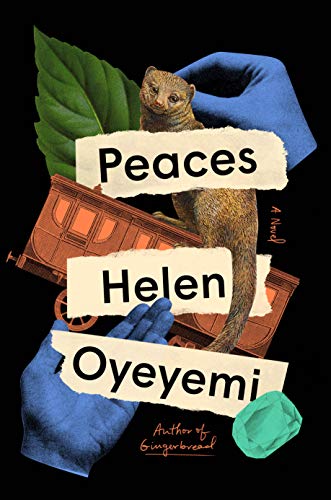
                • Cover of Peaces
                  Peaces

                  Helen Oyeyemi · standalone novel · 2021

                  similar byliterary & generalwhimsicalidentityour world

                  Peaces is a 2021 novel by Helen Oyeyemi. The novel takes place on a train with several passengers.

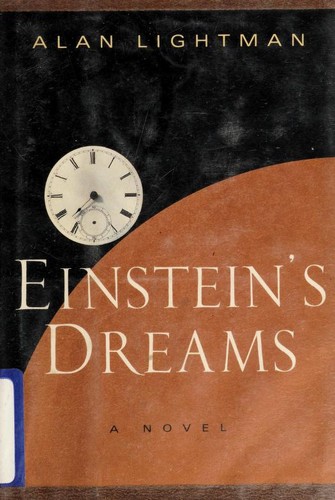
                • Cover of Einstein's Dreams
                  Einstein's Dreams

                  Alan Lightman · standalone novel · 1993

                  similar byliterary & generalwhimsicalearly 20th centuryidentityour world

                  Einstein's Dreams is a 1992 novel by Alan Lightman that was an international bestseller and has been translated into thirty languages. It was runner up for the 1994 L. L. Winship/PEN New England Award. Einstein's Dreams was also the March 1998 selection for National Public Radio's "Talk of the Nation" Book Club. The novel has been used in numerous colleges and universities, in many cases for university-wide adoptions in "common-book" programs. New York Times book critic Michiko Kakutani wrote about the book: "As in Calvino's work, the fantastical elements of the stories are grounded in precise, crystalline prose. As in Jorge Luis Borges's ficciones, carefully observed particulars open out, like doors in an advent calendar, to disclose a magical, metaphysical realm beyond."

                • Cover of The Satanic Verses
                  The Satanic Verses

                  Salman Rushdie · standalone novel · 1988

                  similar byliterary & generalidentityfaith and religionour worldbritish isles

                  The Satanic Verses is the fourth novel by British–Indian writer Salman Rushdie. First published in September 1988, the book was inspired by the life of the Islamic prophet Muhammad. As with his previous books, Rushdie used magical realism and relied on contemporary events and people to create his characters. The title refers to the Satanic Verses, a group of Quranic verses about three pagan Meccan goddesses: Allāt, Al-Uzza, and Manāt. The part of the story that deals with the satanic verses was based on accounts from the historians al-Waqidi and al-Tabari.

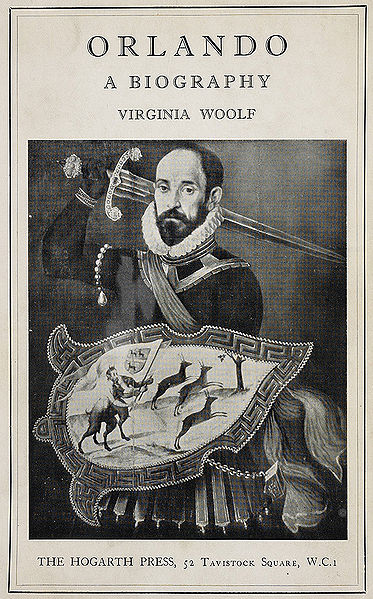
                • Cover of Orlando: A Biography
                  Orlando: A Biography

                  Virginia Woolf · standalone novel · 1928

                  similar byliterary & generalwhimsicalidentitybritish isles

                  Orlando: A Biography is a novel by Virginia Woolf, first published on 11 October 1928, inspired by the tumultuous family history of the aristocratic poet and novelist Vita Sackville-West, Woolf's lover and close friend. It is a history of English literature in satiric form. The book describes the adventures of a poet who changes from man to woman and lives for centuries, meeting the key figures of English literary history. Considered a feminist classic, the book has been written about extensively by scholars of women's writing and gender and transgender studies.

                • Cover of Still Life with Woodpecker
                  Still Life with Woodpecker

                  Tom Robbins · standalone novel · 1980

                  similar byliterary & generalwhimsicalidentityour world

                  WorldCat: Still Life with Woodpecker is a sort of a love story that takes place inside a pack of Camel cigarettes. It reveals the purpose of the moon, explains the difference between criminals and outlaws, examines the conflict between social activism and romantic individualism, and paints a portrait of contemporary society that includes powerful Arabs, exiled royalty, and pregnant cheerleaders. It also deals with the problem of redheads.

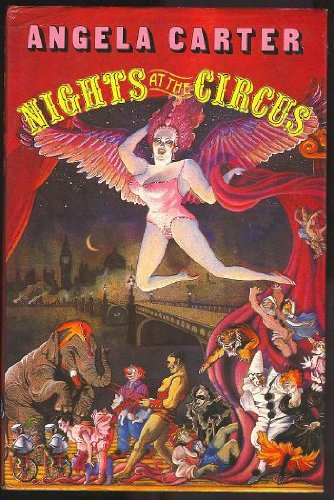
                • Cover of Nights at the Circus
                  Nights at the Circus

                  Angela Carter · standalone novel · 1984

                  similar byliterary & generalwhimsicalidentitybritish isles

                  Nights at the Circus is a novel by British writer Angela Carter, first published in 1984 and the winner of the 1984 James Tait Black Memorial Prize for fiction. The novel focuses on the life and exploits of Sophie Fevvers, a woman who is – or so she would have people believe – a Cockney virgin, hatched from an egg laid by unknown parents and ready to develop fully fledged wings. At the time of the story, she has become a celebrated aerialiste. She captivates the young journalist Jack Walser, who runs away with the circus and falls into a world that his journalistic exploits had not prepared him to encounter.

                • Cover of Gingerbread
                  Gingerbread

                  Helen Oyeyemi · standalone novel · 2019

                  similar byliterary & generalwhimsicalidentityour world

                  Gingerbread is a 2019 novel by Helen Oyeyemi.

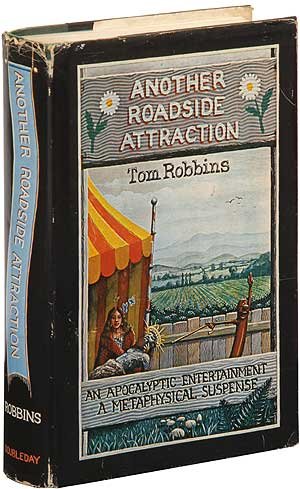
                • Cover of Another Roadside Attraction
                  Another Roadside Attraction

                  Tom Robbins · standalone novel · 1971

                  similar byliterary & generalwhimsicalfaith and religionour world

                  Speculative elements are primarily centered around Plucky Purcell, when the Vatican is cracked open by an earthquake, finding the corpse of Jesus hidden in the Vatican. He smuggles the body out, and the story follows what happens with that body.

                • Cover of Even Cowgirls Get the Blues
                  Even Cowgirls Get the Blues

                  Tom Robbins · standalone novel · 1976

                  similar byliterary & generalwhimsicalidentity

                  Sissy Hankshaw was born with unusually oversized thumbs, and instead of seeing them as a flaw turns them into a gift: the greatest hitchhiking thumbs in America, carrying her across the country on a restless road life. Her travels take her to New York, where she becomes star model for the Countess, a feminine-hygiene tycoon, before a stint at a Dakota ranch called the Rubber Rose brings her into the orbit of Bonanza Jellybean's cowgirls and a mountain mystic known only as the Chink. Around Sissy's wandering, Robbins builds a philosophical comedy about freedom and gender, with a flock of endangered whooping cranes crossing her path. Tom Robbins's best-known novel.

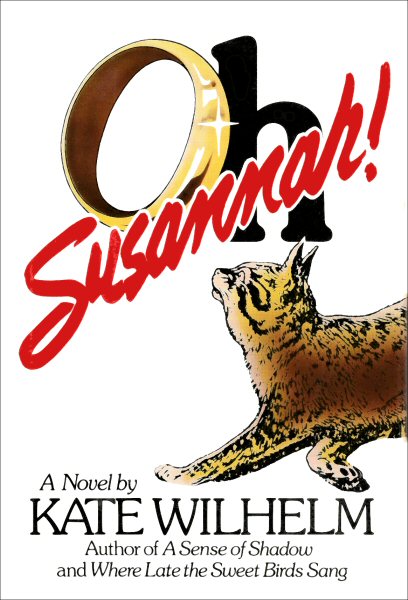
                • Cover of Oh, Susannah!
                  Oh, Susannah!

                  Kate Wilhelm · standalone novel · 1982

                  similar byliterary & generalwhimsicalidentityour world

                  Susannah has amnesia, of a particular type: she remembers nothing until asked a question, then spontaneously creates a scenario for who she is and what has happened. Another question, another random scenario. Delightful!

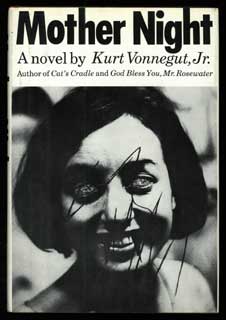
                • Cover of Mother Night
                  Mother Night

                  Kurt Vonnegut & Jr. · standalone novel · 1962

                  similar byliterary & generalidentityour world+1 more

                  Howard W. Campbell Jr., an American playwright who grew up in Germany, writes his memoirs from an Israeli prison cell awaiting trial for war crimes. As the Nazis rose to power, Campbell stayed on, married a German actress, and was recruited by an American agent to serve as a double agent, broadcasting Nazi propaganda over the radio while secretly passing coded intelligence to the Allies. The catch, as Campbell tells it, is that he became one of the war's most effective propagandists in the process, whatever his loyalties. Kurt Vonnegut's darkest novel asks what a person becomes when the mask he wears for a cause is indistinguishable from his face.

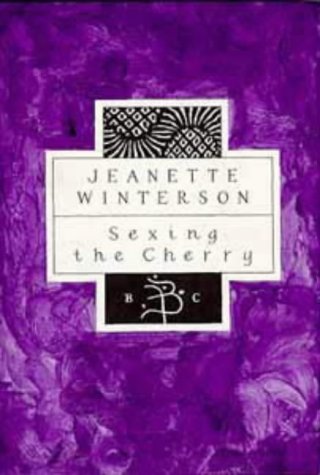
                • Cover of Sexing the Cherry
                  Sexing the Cherry

                  Jeanette Winterson · standalone novel · 1989

                  similar byliterary & generalwhimsicalidentitybritish isles

                  Sexing the Cherry is a 1989 novel by Jeanette Winterson.

                • Cover of Lost Horizon
                  Lost Horizon

                  James Hilton · standalone novel · 1933

                  similar byliterary & generalearly 20th centuryfaith and religion

                  Lost Horizon is a 1933 novel by the English writer James Hilton. The book was adapted into a film, also called Lost Horizon, in 1937 by director Frank Capra; and a musical film remake in 1973 by producer Ross Hunter with music by Burt Bacharach. It is the origin of Shangri-La, a fictional utopian lamasery located high in the mountains of Tibet.

                • Cover of C
                  C

                  Tom McCarthy · standalone novel · 2010

                  similar byliterary & generalearly 20th centuryidentityour world

                  C is a 2010 novel written by Tom McCarthy. C is McCarthy's third novel and sixth book. The novel was shortlisted for the Booker Prize. Critics were polarized by the work.

                • Cover of The Private Memoirs and Confessions of a Justified Sinner
                  The Private Memoirs and Confessions of a Justified Sinner

                  James Hogg · standalone novel · 1824

                  similar byliterary & generalidentityfaith and religionbritish isles

                  The Private Memoirs and Confessions of a Justified Sinner: Written by Himself: With a detail of curious traditionary facts and other evidence by the editor is a novel by the Scottish author James Hogg, published anonymously in 1824.

                • Cover of Mr. Vertigo
                  Mr. Vertigo

                  Paul Auster · standalone novel · 1994

                  similar byliterary & generalwhimsicalearly 20th century+1 more

                  In the 1920s, an orphan is rescued from the streets of St. Louis by a mysterious foreigner who teaches him to fly and walk on water. Now an octogenarian, he tells the story of his vaudeville act.

                • Cover of Illywhacker
                  Illywhacker

                  Peter Carey · standalone novel · 1984

                  similar byliterary & generalwhimsicalidentity

                  Illywhacker is a novel by Australian writer Peter Carey. It was published in 1985 to commercial and critical success, winning a number of awards and being short-listed for the Booker Prize.

                • Cover of Mr. Pye
                  Mr. Pye

                  Mervyn Peake · standalone novel · 1953

                  similar bywhimsicalliterary & generalfaith and religionbritish isles

                  Mr Pye is a 1953 novel by English novelist Mervyn Peake, first published by Heinemann.

                • Cover of Kleinzeit
                  Kleinzeit

                  Russell Hoban · standalone novel · 1974

                  similar byliterary & generalwhimsicalidentity

                  Kleinzeit is a metaphysical novel by Russell Hoban.

                • Cover of Quichotte
                  Quichotte

                  Salman Rushdie · standalone novel · 2019

                  similar byliterary & generalwhimsicalidentity

                  Quichotte is a 2019 novel by Salman Rushdie. It is his fourteenth novel, published on 29 August 2019 by Jonathan Cape in the United Kingdom and Penguin Books India in India. It was published in the United States on 3 September 2019 by Random House. Inspired by Miguel de Cervantes's classic novel Don Quixote, Quichotte is a metafiction that tells the story of an addled Indian-American man who travels across America in pursuit of a celebrity television host with whom he has become obsessed.

                • Cover of Fludd
                  Fludd

                  Hilary Mantel · standalone novel · 1989

                  similar byliterary & generalidentityfaith and religionour worldbritish isles

                  Fludd is a novel by Hilary Mantel. First published by Viking Press in 1989, it won the Winifred Holtby Memorial Prize that year.

                • Cover of Time Must Have a Stop
                  Time Must Have a Stop

                  Aldous Huxley · standalone novel · 1944

                  similar byliterary & generalearly 20th centuryidentityfaith and religion

                  Time Must Have a Stop is a novel by Aldous Huxley, first published in 1944 by Chatto & Windus. It follows the story of Sebastian Barnack, a young poet who holidays with his hedonistic uncle in Florence. Many of the philosophical themes discussed in the novel are explored further in Huxley's 1945 work The Perennial Philosophy.

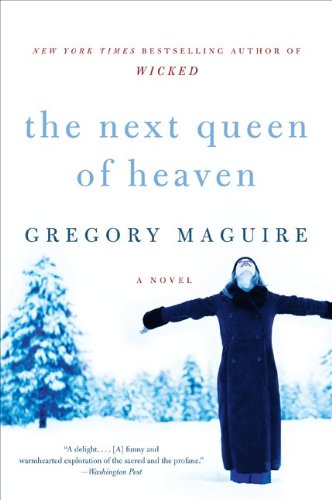
                • Cover of The Next Queen of Heaven
                  The Next Queen of Heaven

                  Gregory Maguire · standalone novel · 2010

                  similar byliterary & generalfaith and religionour world+1 more

                  Gregory Maguire is an American novelist. He is the author of Wicked, Confessions of an Ugly Stepsister, and several dozen other novels for adults and children. Many of Maguire's adult novels are inspired by classic children's stories. Maguire published his first novel, The Lightning Time, in 1978. Wicked, published in 1995, was his first novel for adults. It was adapted into a popular Broadway musical in 2003, which was later adapted into a two-part musical film series with the first film released in 2024 and the second film released in 2025.

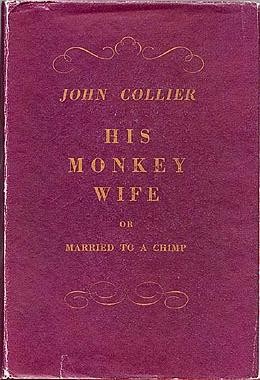
                • Cover of His Monkey Wife, or Married to a Chimp
                  His Monkey Wife, or Married to a Chimp

                  John Collier · standalone novel · 1930

                  similar byliterary & generalearly 20th centuryidentityour world

                  "Alike in tone to his short fiction, his first novel, His Monkey Wife, or, Married to a Chimp (1930), is an Equipoisal Apes as Human tale whose treatment of the theme is conspicuously ruthless." (underscores represent two linked cross-references) --SFE3, biographical entry by John Clute