Loreful
HomeDiscover
Search series, authors…⌘K
Loreful

Reading orders for SF/F series and shared universes — with your place kept in every one.

Explore

UniversesSeriesWorksAuthorsAtlas

Help

FAQAboutSite map

Account & legal

Sign inCreate accountPrivacyTerms

Data

Built on ISFDB, Wikipedia, Wikidata and Open Library. Curated reading orders carry their reasoning on the page; the rest follow publication order. Data sources & licenses

© Loreful · data: ISFDB · CC BY

More like Mandragon

but

Mood

The mood the book leaves you in.

  • The reading experience is propelled by journeys, exploration, and physical risk; excitement and forward momentum dominate over dread or introspection.
  • Joy and loss are deliberately mixed; the resolution grants characters something real while taking something else away, leaving warmth and sorrow together.
  • The book demands work from the reader — dense prose, difficult structure, unfamiliar ideas, or morally uncomfortable material — as part of its intended effect.
  • Grim events, cruelty, or despair dominate the atmosphere, and the book does not soften them with comfort or comic relief.
  • The atmosphere is quietly unsettling — wrongness, unease, and the uncanny pervade the book without necessarily escalating into overt horror.
  • The book is built to move the reader; character feeling is foregrounded and major scenes aim at a strong emotional response.
  • Humor is a primary aim and the prose plays for laughs — comic situations, wit, or dialogue produce sustained comedy, not occasional levity.
  • The book insists that things can improve; effort and decency are shown to matter, and the arc bends toward better outcomes even through hardship.
  • The book teaches as it goes — real facts, history, science, or craft are conveyed in enough depth that learning is part of the reading experience.
  • The book is designed to uplift and motivate, presenting perseverance or achievement in a way that invites the reader to aspire or act.
  • The overall register is cheerful and easygoing; stakes are kept gentle and the book avoids dwelling on pain or dread.
  • Withheld information drives the experience; the book sustains enigmas and secrets the reader wants resolved, whatever its genre.
  • The book is contemplative and inward-looking, giving more weight to thought, memory, and meaning than to external events.
  • The book works as comfort reading — low tension, a soothing pace, and an atmosphere the reader can unwind in.
  • Grief, loss, or melancholy set the dominant register, and the book lets sorrow stand rather than resolving it into comfort.
  • Sustained suspense is the point; the book keeps the reader braced for what happens next through danger, pressure, or impending revelation.
  • Playful invention and charm define the register — fanciful conceits, light absurdity, and a narration that delights in its own oddity.

About

What the story runs on.

  • Stories in which extraterrestrial beings are central — as characters, cultures, or the object of the plot.
  • Stories structured as a quest — a journey undertaken to find, deliver, or destroy something of great import.
  • Stories in which staying alive against nature, catastrophe, or scarcity is the central problem.
  • Stories of lovers kept apart by law, family, faith, or station, where the obstacle to love is the plot.
  • Stories of growing up — a young protagonist crossing from childhood into adult knowledge and responsibility.
  • Stories about who a character truly is — self-discovery, doubled lives, and the search for a self.
  • Stories about mourning — living through the death of a loved one and what loss does to the survivors.
  • Stories in which a buried family truth — hidden parentage, crimes, or shames — surfaces and reorders the present.
  • Stories driven by maneuvering for power — factions, conspiracies, and statecraft conducted in shadow.
  • Stories about rising against rulers — uprisings, resistance movements, and revolutions and their aftermaths.
  • Stories in which war itself is the subject — combat, occupation, and what warfare does to soldiers and civilians.
  • Stories organized around investigating a killing — the case, the clues, and the pursuit of the killer, in any genre's clothing.

Shelf

Where it sits in the library.

    • Fiction built on magic or other supernatural elements that have no scientific explanation.
    • Secondary-world fantasy at large scale, where the fate of nations or the world turns on the protagonists' struggle.
    • Fantasy set in a recognizably modern city or contemporary world where the supernatural intrudes on everyday life.
    • Fantasy that blends in horror's atmosphere and imagery, keeping a fantastical frame around grim or frightening material.
    • Action-driven fantasy following warriors or rogues with personal stakes against sorcerous threats, rather than world-spanning conflicts.
    • Fantasy set in a real historical period or a close analogue of one, with magic woven into the era.
    • Fantasy in which protagonists cross from the ordinary world into another world through a portal or similar passage.
    • Fiction that retells or reworks a traditional fairy tale in a new form or setting.
    • Fantasy drawing directly on myths, legends, and folklore, retelling them or building on their figures and logic.
    • Fantasy of ghosts, vampires, shapeshifters, psychics, and similar phenomena, usually set in an otherwise ordinary world.
    • Fiction mixing science-fictional trappings with overtly magical or impossible elements in one setting.
    • Low-stakes fantasy emphasizing comfort, community, and everyday pleasures over conflict and peril.
    • Speculative fiction of pervasive moral ambiguity, violence, and cynicism that rejects heroic conventions — fantasy and SF alike.
      • Fiction that extrapolates from science and technology — future societies, space travel, or speculative inventions — within at least nominally natural laws.
      • Science fiction of interstellar scope — starships, galactic polities, and adventure across star systems.
      • Science fiction committed to scientific rigor, where technical plausibility constrains the story.
      • Science fiction centered on armed forces and warfare, told largely from a military point of view.
      • Science fiction of networked, corporate-dominated near futures, pairing high technology with social decay.
      • Science fiction styled on nineteenth-century steam-powered technology, often in a Victorian or pseudo-Victorian setting.
      • Fiction depicting an oppressive or catastrophic society, presented as a warning.
      • Fiction set after civilization's collapse, following survivors in the ruins of the old world.
      • Fiction in which characters move between past and future, and the mechanics or consequences of that travel drive the plot.
      • Fiction exploring a world where a historical event went differently and history diverged from ours.
      • Science fiction about humanity's first encounter and communication with an alien intelligence.
      • Science fiction in which extraterrestrial forces attack or occupy Earth and humanity resists.
      • Fiction whose primary aim is to frighten or unsettle the reader through dread, menace, or the monstrous.
      • Horror of vast, indifferent, incomprehensible entities before which humanity is insignificant, in the Lovecraft tradition.
      • Horror of decaying houses, buried family secrets, and oppressive atmosphere in the Gothic literary tradition.
      • Horror centered on hauntings and the returning dead.
      • Horror located in the mind — paranoia, obsession, and unreliable perception rather than external monsters.
      • Horror built around the reanimated dead and survival amid their outbreaks.
      • Horror defined by explicit, transgressive gore that refuses to cut away from violence.
      • Speculative fiction of the strange and uncanny that resists both natural explanation and standard genre categories.
      • Fiction organized around solving a crime or puzzle, typically following an investigator toward the identification of a culprit.
      • A puzzle-first mystery that lays out clues so the culprit's identity can be deduced before the reveal.
      • Crime fiction of moral ambiguity, fatalism, and hard-edged style, set among the corrupt and the doomed.
      • A mystery following the realistic routines of police work — forensics, interviews, and case-building.
      • A gentle mystery with an amateur sleuth, a small community, and violence kept off the page.
      • A mystery set in a past era, where the investigation works within that period's methods and society.
      • Fast-paced fiction driven by imminent danger, pursuit, or high-stakes conspiracy, built to sustain tension.
      • A thriller of espionage — agents, tradecraft, and intelligence services in conflict.
      • A thriller centered on lawyers and the courtroom, where litigation carries the suspense.
      • A thriller driven by detailed contemporary or near-future technology, often military or scientific.
      • A thriller whose tension comes from mental states and manipulation between characters rather than external action.
      • Fiction whose central plot is a romantic relationship and its development toward an emotionally satisfying resolution.
      • Romance in which one or both partners are supernatural beings, blending fantasy elements into the love story.
      • A fantasy-romance hybrid in which the romantic arc and the fantasy plot carry equal weight.
      • Romance set in a past era, with courtship shaped by the period's society and manners.
      • Romance set in the present day, without supernatural or historical elements.
      • Fiction set in a real past period, where the historical setting materially shapes characters and events.
        • General and literary fiction emphasizing prose style, character interiority, or formal ambition over genre plot conventions.
        • Fiction in a realistic world where magical events occur and are treated as ordinary, in the tradition of Latin American literature.
        • Fiction that ridicules people, institutions, or society in order to criticize them.
        • Fiction of dreamlike, irrational imagery and logic that breaks from realistic representation.
        • Fiction that plays with narrative convention through metafiction, fragmentation, and self-reference.
        • Fiction propelled by journeys, exploration, and physical peril, where action and survival carry the plot.
        • Adventure fiction of ships and seafaring — naval engagements, voyages, and life at sea.
        • Fiction of the American frontier West — gunmen, ranchers, and lawmen, typically in the late nineteenth century.
        • Fiction centered on soldiers, campaigns, and the experience of warfare, historical or imagined.
          • Fiction written primarily to amuse, using comedic situations, wit, or parody as its organizing principle.
            • Multi-generational fiction following a family or dynasty across decades, with inheritance and kinship as the through-line.
              • Fiction whose world runs on explicit game mechanics — levels, stats, and skills that characters can see and exploit.
                • Fiction about costumed or superpowered heroes and their conflicts with comparable villains.

                Practical

                How long a commitment, whether it stands alone, and whether it has finished.

                Tap a chip to ask for it · tap again to rule it out · once more to clear. Numbers show what would be left.

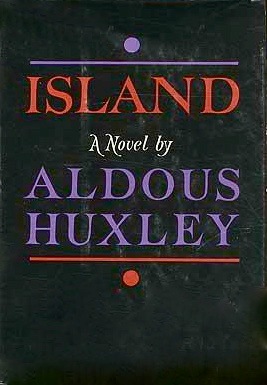
                • Cover of Island
                  Island

                  Aldous Huxley · standalone novel · 1962

                  similar bychallengingliterary & generalmid 20th century+1 more

                  Island is a 1962 utopian manifesto and novel by English writer Aldous Huxley, the author's final work before his death in 1963. Although it has a plot, the plot largely serves to further conceptual explorations rather than setting up and resolving conventional narrative tension.

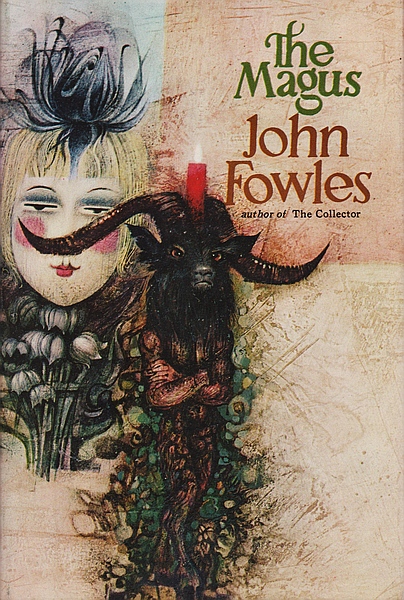
                • Cover of The Magus
                  The Magus

                  John Fowles · standalone novel · 1965

                  similar bychallengingliterary & generalidentitymid 20th century

                  The Magus (1965) is a postmodern novel by British author John Fowles, telling the story of Nicholas Urfe, a young British graduate who is teaching English on a small Greek island. Urfe becomes embroiled in the psychological illusions of a master trickster, which become increasingly dark and serious. Considered an example of metafiction, it was the first novel written by Fowles but his third book to be published. A revised edition was published in 1977.

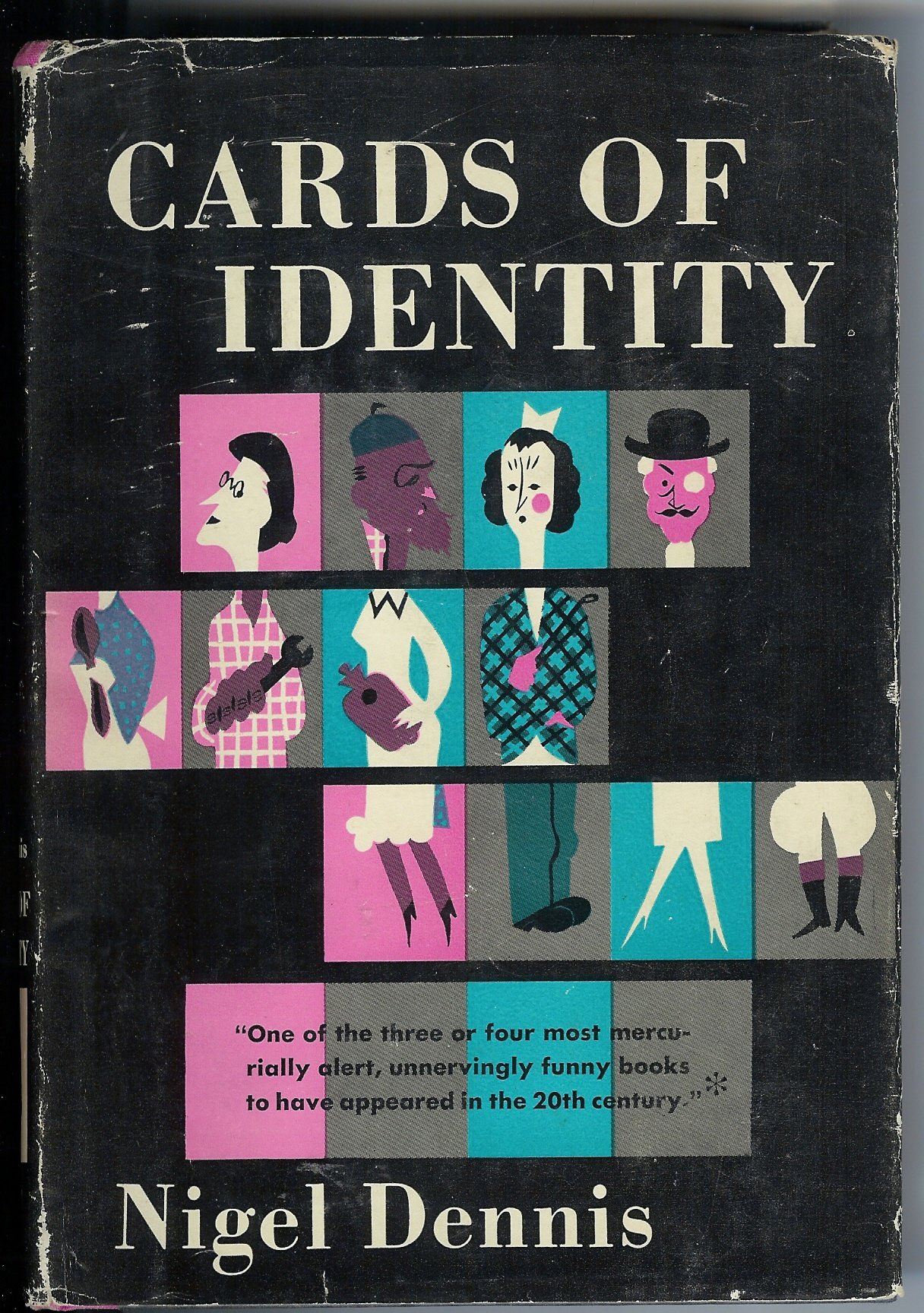
                • Cover of Cards of Identity
                  Cards of Identity

                  Nigel Dennis · standalone novel · 1955

                  similar bychallengingliterary & generalidentitymid 20th century+1 more

                  Cards Of Identity is a novel by Nigel Dennis, first published in 1955 by Weidenfeld & Nicolson in the UK and Vanguard Press in the US. A satire on psychology, identity theory and class prejudice, the novel is centred on the Identity Club, a group of men who call themselves psychologists and meet once a year to present case histories promoting their chosen theory of identity. The case histories are in fact fictional representations of a character in line with their theoretical biases, rather than analyses of real patients. Surrounding this plot is the story of the local townspeople, who are brainwashed into being servants for the Identity Club. The book culminates with the performance of a pastiche Shakespearian play, The Prince of Antioch.

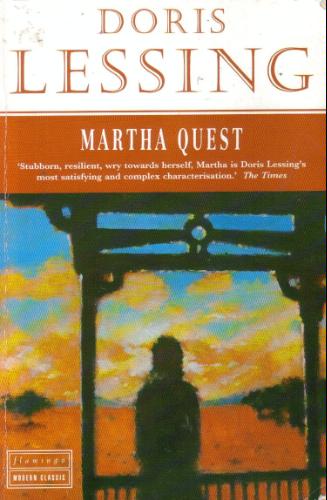
                • Cover of Children of Violence
                  Children of Violence

                  series · 5 books · 1952

                  completed

                  similar byliterary & generalidentitymid 20th century+2 more

                  Children of Violence is a sequence of five semi-autobiographical novels by British Nobel Prize in Literature-winner Doris Lessing: Martha Quest (1952), A Proper Marriage (1954), A Ripple from the Storm (1958), Landlocked (1965), and The Four-Gated City (1969). The novels "are strongly influenced by Lessing's rejection of a domestic family role and her involvement with communism." Lessing identified the series as a bildungsroman.

                • Cover of Cities of the Red Night
                  Cities of the Red Night

                  series · 3 books · 1981

                  completed

                  similar bychallengingliterary & general+1 more

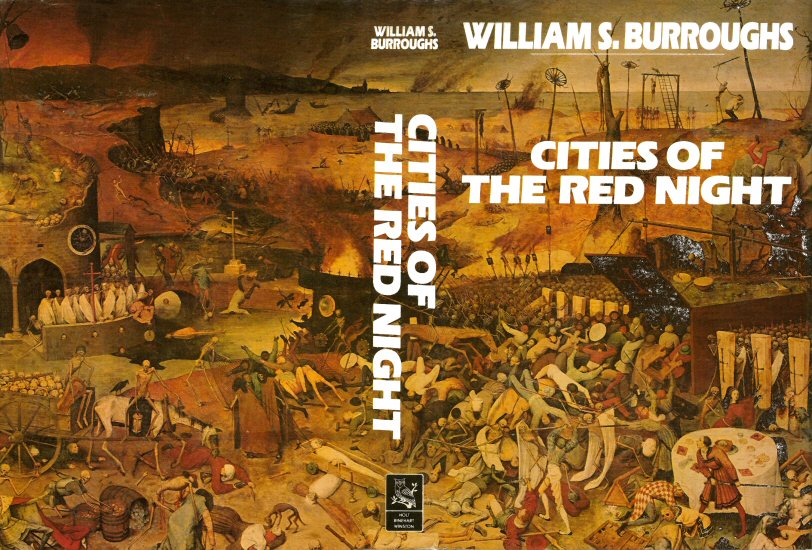
                  William S. Burroughs's Cities of the Red Night opens his final trilogy with two interwoven stories: a pirate utopia loosely modeled on the historical Captain Mission, and a present-day detective's investigation into a ritual killing, both shadowed by a plague spreading from a set of lost cities. The Place of Dead Roads and The Western Lands continue in the same fragmented, cut-up-influenced style rather than a conventional through-line. The three books are linked more by recurring imagery and obsessions, control, contagion, alternate history, than by a shared cast.

                • Cover of V.
                  V.

                  Thomas Pynchon · standalone novel · 1963

                  similar bychallengingliterary & generalidentitymid 20th century

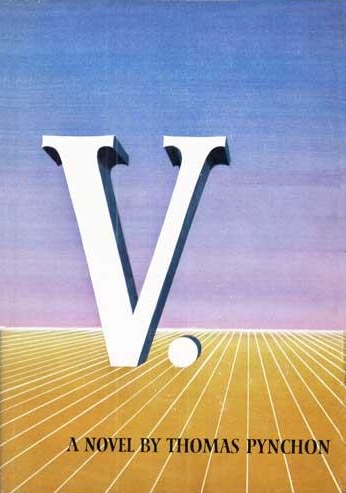
                  V. is a satirical postmodern novel and the debut novel of Thomas Pynchon, published on March 18, 1963. It describes the exploits of a discharged U.S. Navy sailor named Benny Profane, his reconnection in New York with a group of pseudo-bohemian artists and hangers-on known as the Whole Sick Crew, and the quest of an aging traveler named Herbert Stencil to identify and locate the mysterious entity he knows only as "V." It was nominated for a National Book Award.

                • Cover of The Brief Wondrous Life of Oscar Wao
                  The Brief Wondrous Life of Oscar Wao

                  Junot Díaz · standalone novel · 2007

                  similar bychallengingliterary & generalidentitylatin america

                  Dark fantasy novel. A young man who dreams of being “the Dominican J.R.R. Tolkien” is doomed by a family curse, traced across generations.

                • Cover of The Third Policeman
                  The Third Policeman

                  Flann O'Brien · standalone novel · 1967

                  similar bychallengingliterary & generalmid 20th century+1 more

                  The Third Policeman is a novel by Irish writer Brian O'Nolan, writing under the pseudonym Flann O'Brien. It was written in 1939 and 1940, but after it initially failed to find a publisher, the author withdrew the manuscript from circulation and claimed he had lost it. The book remained unpublished at the time of his death in 1966. It was published by MacGibbon & Kee in 1967.

                • Cover of Ada or Ardor: A Family Chronicle
                  Ada or Ardor: A Family Chronicle

                  Vladimir Nabokov · standalone novel · 1969

                  similar bychallengingliterary & general+2 more

                  An alternate-world novel by the celebrated author of "Lolita" in which North America is a 19th- and early 20th-century province of Russia still ruled by Tsars.

                • Cover of Pincher Martin
                  Pincher Martin

                  William Golding · standalone novel · 1956

                  similar bychallengingliterary & generalidentitymid 20th century

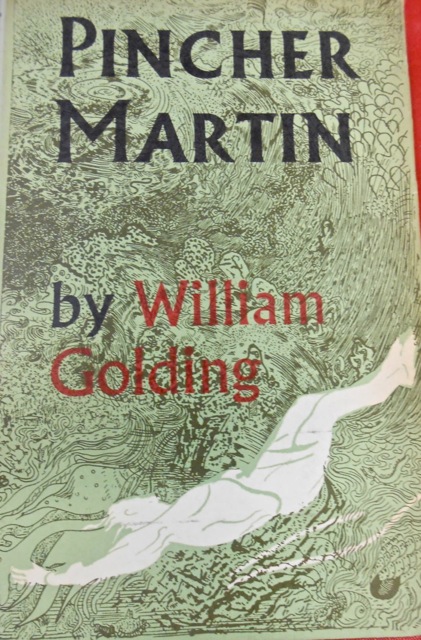
                  Pincher Martin is a novel by British writer William Golding, first published in 1956. It is Golding's third novel, following The Inheritors and his debut Lord of the Flies. It is one of Golding's best-known novels, noted for being existential and minimalistic in setting.

                • Cover of The Actual Star
                  The Actual Star

                  Monica Byrne · standalone novel · 2021

                  similar bychallengingliterary & generallatin america+1 more

                  [Publisher:] The Actual Star takes readers on a journey over two millennia and six continents–telling three powerful tales a thousand years apart, all of them converging in the same cave in the Belizean jungle. Braided together are the stories of a pair of teenage twins who ascend the throne of a Maya kingdom; a young American woman on a trip of self-discovery in Belize; and two dangerous charismatics vying for the leadership of a new religion and racing toward a confrontation that will determine the fate of the few humans left on Earth after massive climate change. In each era, a reincarnated trinity of souls navigates the entanglements of tradition and progress, sister and stranger, and love and hate–until all of their age-old questions about the nature of existence converge deep underground, where only in complete darkness can they truly see. The Actual Star is a feast of ideas about where humanity came from, where we are now, and where we're going–and how, in every age, the same forces that drive us apart also bind us together.

                • Cover of Nova Trilogy
                  Nova Trilogy

                  series · 3 books · 1961

                  completed

                  similar bychallengingliterary & generalmid 20th century+1 more

                  William S. Burroughs's Nova Trilogy -- The Soft Machine, The Ticket That Exploded, and Nova Express -- extends the fragmented cut-up and fold-in techniques he developed with Brion Gysin into a paranoid, hallucinatory sequence about control itself. Across the three books, the shadowy Nova Mob, personified as viral, parasitic forces of language and image, is opposed by an equally strange Nova Police, in an allegory for how societies are manipulated through media and addiction. It continues directly from the world and method of Naked Lunch rather than telling a conventional linear story.

                • Cover of Crash
                  Crash

                  J. G. Ballard · standalone novel · 1973

                  similar bychallengingliterary & general+1 more

                  Crash is a novel by J. G. Ballard, first published in 1973 with a cover designed by Bill Botten. It follows a group of car-crash fetishists who, inspired by the famous crashes of celebrities, become sexually aroused by staging and participating in car accidents.

                • Cover of Dhalgren
                  Dhalgren

                  Samuel R. Delany · standalone novel · 1975

                  similar bychallengingliterary & generalidentity

                  Dhalgren is a 1975 science fiction novel by American writer Samuel R. Delany. It features an extended trip to and through Bellona, a fictional city in the American Midwest cut off from the rest of the world by an unknown catastrophe. It is number 33 on the 20th Century's Greatest Hits: 100 English-Language Books of Fiction list.

                • Cover of VALIS
                  VALIS

                  series · 4 books · 1981

                  completed

                  similar bychallengingidentity+1 more

                  The VALIS trilogy is a set of science fiction/philosophical novels by author Philip K. Dick which include VALIS (1981), The Divine Invasion (1981), and The Transmigration of Timothy Archer (1982). Dick's first novel about the VALIS concept originally titled "VALISystem A", was published as Radio Free Albemuth after Dick's death in 1985.

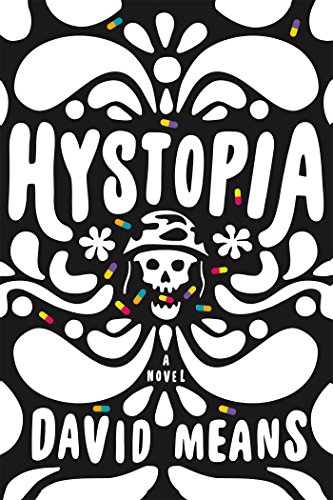
                • Cover of Hystopia
                  Hystopia

                  David Means · standalone novel · 2016

                  similar bychallengingliterary & generalmid 20th century+1 more

                  Hystopia is a 2016 novel by David Means. Literary critic Christian Lorentzen described the novel as "a counterfactual narrative by a Vietnam veteran, named Eugene Allen about his experience in a therapeutic, psychedelics-based trauma recovery program initiated, in the novel's alternate history, by John F. Kennedy." In July 2016, it was longlisted for the 2016 Man Booker Prize.

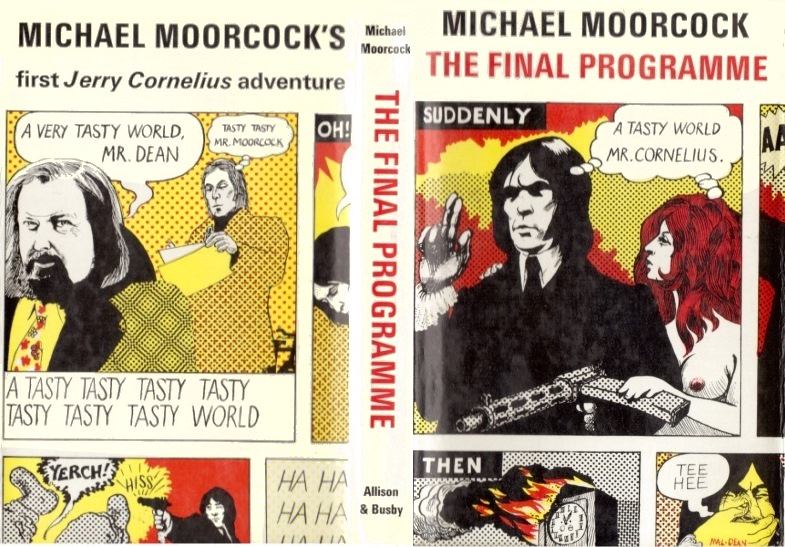
                • Cover of Jerry Cornelius
                  Jerry Cornelius

                  series · 50 books · 1965

                  similar bychallengingidentity+2 more

                  Jerry Cornelius is a fictional character created by English author Michael Moorcock. The character is an urban adventurer and an incarnation of the author's Eternal Champion concept. Cornelius is a hipster of ambiguous and occasionally polymorphous gender. Many of the same characters feature in each of several Cornelius books, though the individual books have little connection with one another, having a more metafictional than causal relationship. The first Jerry Cornelius book, The Final Programme, was made into a 1973 film starring Jon Finch and Jenny Runacre. Notting Hill in London features prominently in the stories.

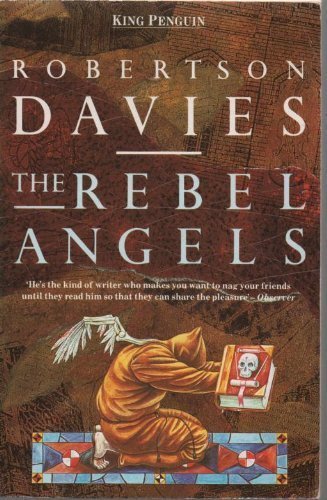
                • Cover of Cornish Trilogy
                  Cornish Trilogy

                  series · 3 books · 1981

                  completed

                  similar byliterary & general+3 more

                • Cover of Underworld
                  Underworld

                  Don DeLillo · standalone novel · 1997

                  similar bychallengingliterary & generalidentitymid 20th century

                  Underworld is a 1997 novel by American writer Don DeLillo. The novel is centered on the efforts of Nick Shay, a waste management executive who grew up in the Bronx, to trace the history of the baseball that won the New York Giants the pennant in 1951, and encompasses numerous subplots drawn from American history in the second half of the twentieth century. Described as both postmodernist and a reaction to postmodernism, it examines themes of nuclear proliferation, waste, and the contribution of individual lives to the course of history.

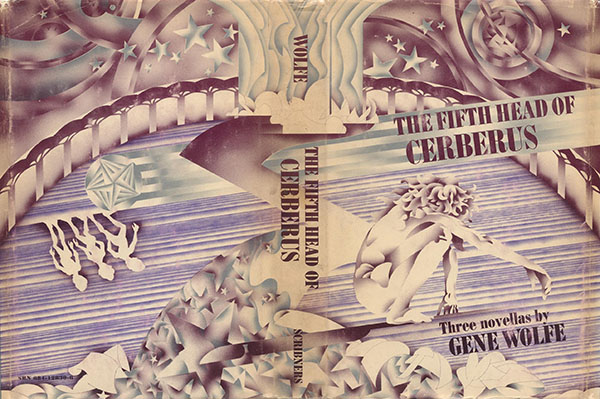
                • Cover of The Fifth Head of Cerberus
                  The Fifth Head of Cerberus

                  series · 4 books · 1972

                  similar byidentity+2 more

                • Cover of The Crying of Lot 49
                  The Crying of Lot 49

                  Thomas Pynchon · standalone novel · 1966

                  similar byliterary & generalmid 20th century+2 more

                  The Crying of Lot 49 is a novel by the American author Thomas Pynchon. It was published by J. B. Lippincott & Co. on April 27, 1966. The shortest of Pynchon's novels, the plot follows Oedipa Maas, a young Californian woman who begins to embrace a conspiracy theory as she possibly unearths a centuries-old feud between two mail distribution companies. One of these companies, Thurn and Taxis, actually existed; operating from 1806 to 1867, Thurn and Taxis was the first private firm to distribute postal mail. Like most of Pynchon's writing, The Crying of Lot 49 is often described as postmodernist literature. Time magazine included the book in its list of the 100 best English-language novels from 1923 to 2005.

                • Cover of Deptford Trilogy
                  Deptford Trilogy

                  series · 3 books · 1970

                  completed

                  similar byliterary & generalidentitymid 20th century+1 more

                • Cover of Whileaway
                  Whileaway

                  series · 4 books · 1972

                  completed

                  similar bychallenging+2 more

                  Joanna Russ's The Female Man (1975) is a single feminist science fiction novel, not a multi-book series, built around four women from parallel timelines with very different gender arrangements. One of them, Janet, comes from Whileaway, an all-female utopian Earth ten centuries in the future where men died out in a plague; the other three come from realities closer to Russ's own, and their collisions are used to interrogate what womanhood and equality could mean under different social rules.

                • Cover of The Private Memoirs and Confessions of a Justified Sinner
                  The Private Memoirs and Confessions of a Justified Sinner

                  James Hogg · standalone novel · 1824

                  similar bychallengingliterary & generalidentity

                  The Private Memoirs and Confessions of a Justified Sinner: Written by Himself: With a detail of curious traditionary facts and other evidence by the editor is a novel by the Scottish author James Hogg, published anonymously in 1824.