Loreful
HomeDiscover
Search series, authors…⌘K
Loreful

Reading orders for SF/F series and shared universes — with your place kept in every one.

Explore

UniversesSeriesWorksAuthorsAtlas

Help

FAQAboutSite map

Account & legal

Sign inCreate accountPrivacyTerms

Data

Built on ISFDB, Wikipedia, Wikidata and Open Library. Curated reading orders carry their reasoning on the page; the rest follow publication order. Data sources & licenses

© Loreful · data: ISFDB · CC BY

More like Mapping the Bones

anchored on:historical fictioneuropeearly 20th centurysurvivalgrief and lossdark+1 more

but

Mood

The mood the book leaves you in.

  • The reading experience is propelled by journeys, exploration, and physical risk; excitement and forward momentum dominate over dread or introspection.
  • Joy and loss are deliberately mixed; the resolution grants characters something real while taking something else away, leaving warmth and sorrow together.
  • The book demands work from the reader — dense prose, difficult structure, unfamiliar ideas, or morally uncomfortable material — as part of its intended effect.
  • Grim events, cruelty, or despair dominate the atmosphere, and the book does not soften them with comfort or comic relief.
  • The atmosphere is quietly unsettling — wrongness, unease, and the uncanny pervade the book without necessarily escalating into overt horror.
  • The book is built to move the reader; character feeling is foregrounded and major scenes aim at a strong emotional response.
  • Humor is a primary aim and the prose plays for laughs — comic situations, wit, or dialogue produce sustained comedy, not occasional levity.
  • The book insists that things can improve; effort and decency are shown to matter, and the arc bends toward better outcomes even through hardship.
  • The book teaches as it goes — real facts, history, science, or craft are conveyed in enough depth that learning is part of the reading experience.
  • The book is designed to uplift and motivate, presenting perseverance or achievement in a way that invites the reader to aspire or act.
  • The overall register is cheerful and easygoing; stakes are kept gentle and the book avoids dwelling on pain or dread.
  • Withheld information drives the experience; the book sustains enigmas and secrets the reader wants resolved, whatever its genre.
  • The book is contemplative and inward-looking, giving more weight to thought, memory, and meaning than to external events.
  • The book works as comfort reading — low tension, a soothing pace, and an atmosphere the reader can unwind in.
  • Grief, loss, or melancholy set the dominant register, and the book lets sorrow stand rather than resolving it into comfort.
  • Sustained suspense is the point; the book keeps the reader braced for what happens next through danger, pressure, or impending revelation.
  • Playful invention and charm define the register — fanciful conceits, light absurdity, and a narration that delights in its own oddity.

About

What the story runs on.

  • Stories in which extraterrestrial beings are central — as characters, cultures, or the object of the plot.
  • Stories structured as a quest — a journey undertaken to find, deliver, or destroy something of great import.
  • Stories in which staying alive against nature, catastrophe, or scarcity is the central problem.
  • Stories of lovers kept apart by law, family, faith, or station, where the obstacle to love is the plot.
  • Stories in which a friendship — its making, testing, or loss — is the emotional center.
  • Stories of growing up — a young protagonist crossing from childhood into adult knowledge and responsibility.
  • Stories about who a character truly is — self-discovery, doubled lives, and the search for a self.
  • Stories about mourning — living through the death of a loved one and what loss does to the survivors.
  • Stories in which a buried family truth — hidden parentage, crimes, or shames — surfaces and reorders the present.
  • Stories driven by maneuvering for power — factions, conspiracies, and statecraft conducted in shadow.
  • Stories in which war itself is the subject — combat, occupation, and what warfare does to soldiers and civilians.
  • Stories organized around investigating a killing — the case, the clues, and the pursuit of the killer, in any genre's clothing.

Shelf

Where it sits in the library.

    • Fiction built on magic or other supernatural elements that have no scientific explanation.
    • Secondary-world fantasy at large scale, where the fate of nations or the world turns on the protagonists' struggle.
    • Fantasy set in a recognizably modern city or contemporary world where the supernatural intrudes on everyday life.
    • Fantasy that blends in horror's atmosphere and imagery, keeping a fantastical frame around grim or frightening material.
    • Action-driven fantasy following warriors or rogues with personal stakes against sorcerous threats, rather than world-spanning conflicts.
    • Fantasy set in a real historical period or a close analogue of one, with magic woven into the era.
    • Fantasy in which protagonists cross from the ordinary world into another world through a portal or similar passage.
    • Fiction that retells or reworks a traditional fairy tale in a new form or setting.
    • Fantasy drawing directly on myths, legends, and folklore, retelling them or building on their figures and logic.
    • Fantasy of ghosts, vampires, shapeshifters, psychics, and similar phenomena, usually set in an otherwise ordinary world.
    • Fiction mixing science-fictional trappings with overtly magical or impossible elements in one setting.
    • Low-stakes fantasy emphasizing comfort, community, and everyday pleasures over conflict and peril.
    • Speculative fiction of pervasive moral ambiguity, violence, and cynicism that rejects heroic conventions — fantasy and SF alike.
      • Fiction that extrapolates from science and technology — future societies, space travel, or speculative inventions — within at least nominally natural laws.
      • Science fiction of interstellar scope — starships, galactic polities, and adventure across star systems.
      • Science fiction committed to scientific rigor, where technical plausibility constrains the story.
      • Science fiction centered on armed forces and warfare, told largely from a military point of view.
      • Science fiction of networked, corporate-dominated near futures, pairing high technology with social decay.
      • Science fiction styled on nineteenth-century steam-powered technology, often in a Victorian or pseudo-Victorian setting.
      • Fiction depicting an oppressive or catastrophic society, presented as a warning.
      • Fiction set after civilization's collapse, following survivors in the ruins of the old world.
      • Fiction in which characters move between past and future, and the mechanics or consequences of that travel drive the plot.
      • Fiction exploring a world where a historical event went differently and history diverged from ours.
      • Science fiction about humanity's first encounter and communication with an alien intelligence.
      • Science fiction in which extraterrestrial forces attack or occupy Earth and humanity resists.
      • Fiction whose primary aim is to frighten or unsettle the reader through dread, menace, or the monstrous.
      • Horror of vast, indifferent, incomprehensible entities before which humanity is insignificant, in the Lovecraft tradition.
      • Horror of decaying houses, buried family secrets, and oppressive atmosphere in the Gothic literary tradition.
      • Horror centered on hauntings and the returning dead.
      • Horror located in the mind — paranoia, obsession, and unreliable perception rather than external monsters.
      • Horror built around the reanimated dead and survival amid their outbreaks.
      • Horror defined by explicit, transgressive gore that refuses to cut away from violence.
      • Speculative fiction of the strange and uncanny that resists both natural explanation and standard genre categories.
      • Fiction organized around solving a crime or puzzle, typically following an investigator toward the identification of a culprit.
      • A puzzle-first mystery that lays out clues so the culprit's identity can be deduced before the reveal.
      • Crime fiction of moral ambiguity, fatalism, and hard-edged style, set among the corrupt and the doomed.
      • A mystery following the realistic routines of police work — forensics, interviews, and case-building.
      • A gentle mystery with an amateur sleuth, a small community, and violence kept off the page.
      • A mystery set in a past era, where the investigation works within that period's methods and society.
      • Fast-paced fiction driven by imminent danger, pursuit, or high-stakes conspiracy, built to sustain tension.
      • A thriller of espionage — agents, tradecraft, and intelligence services in conflict.
      • A thriller centered on lawyers and the courtroom, where litigation carries the suspense.
      • A thriller driven by detailed contemporary or near-future technology, often military or scientific.
      • A thriller whose tension comes from mental states and manipulation between characters rather than external action.
      • Fiction whose central plot is a romantic relationship and its development toward an emotionally satisfying resolution.
      • Romance in which one or both partners are supernatural beings, blending fantasy elements into the love story.
      • A fantasy-romance hybrid in which the romantic arc and the fantasy plot carry equal weight.
      • Romance set in a past era, with courtship shaped by the period's society and manners.
      • Romance set in the present day, without supernatural or historical elements.
      • Fiction set in a real past period, where the historical setting materially shapes characters and events.
        • General and literary fiction emphasizing prose style, character interiority, or formal ambition over genre plot conventions.
        • Fiction in a realistic world where magical events occur and are treated as ordinary, in the tradition of Latin American literature.
        • Fiction that ridicules people, institutions, or society in order to criticize them.
        • Fiction of dreamlike, irrational imagery and logic that breaks from realistic representation.
        • Fiction that plays with narrative convention through metafiction, fragmentation, and self-reference.
        • Fiction propelled by journeys, exploration, and physical peril, where action and survival carry the plot.
        • Adventure fiction of ships and seafaring — naval engagements, voyages, and life at sea.
        • Fiction of the American frontier West — gunmen, ranchers, and lawmen, typically in the late nineteenth century.
        • Fiction centered on soldiers, campaigns, and the experience of warfare, historical or imagined.
          • Fiction written primarily to amuse, using comedic situations, wit, or parody as its organizing principle.
            • Multi-generational fiction following a family or dynasty across decades, with inheritance and kinship as the through-line.
              • Fiction whose world runs on explicit game mechanics — levels, stats, and skills that characters can see and exploit.
                • Fiction about costumed or superpowered heroes and their conflicts with comparable villains.

                Practical

                How long a commitment, whether it stands alone, and whether it has finished.

                Tap a chip to ask for it · tap again to rule it out · once more to clear. Numbers show what would be left.

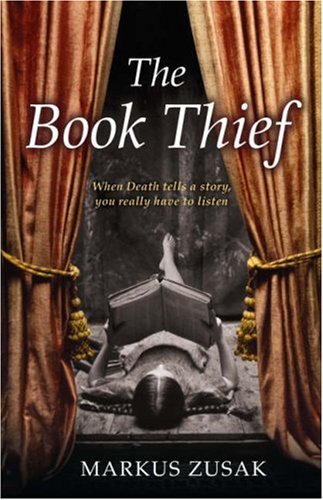
                • Cover of The Book Thief
                  The Book Thief

                  Markus Zusak · standalone novel · 2005

                  similar byhistorical fictioneuropeearly 20th centurysadgrief and loss

                  The Book Thief is a historical fiction novel by the Australian author Markus Zusak, set in Nazi Germany during World War II. Published in 2005, The Book Thief became an international bestseller and was translated into 63 languages and sold 17 million copies. It was adapted into the 2013 feature film, The Book Thief.

                • Cover of The Devil's Arithmetic
                  The Devil's Arithmetic

                  Jane Yolen · standalone novel · 1988

                  similar byhistorical fictioneuropeearly 20th centurysad+1 more

                  Hannah resents the traditions of her Jewish heritage until time travel places her in the middle of a small Jewish village in Nazi-occupied Poland.

                • Cover of Flanders
                  Flanders

                  Patricia Anthony · standalone novel · 1998

                  similar byhistorical fictioneuropeearly 20th centurydarksadgrief and loss

                  From the front flap of the Ace first edition: Last night while I was walking the graveyard alone, I heard someone signing... World War I, Flanders, Northern France: The British trenches grow wet and foul. For Travis Lee Stanhope, a Texan sharpshooter serving in an English unit, the war is not hell, but home. Each night he ventures into No-Man's Land between his comrades and the German trenches, and waits. At dawn, he begins the methodical killing of enemy troops. Then he returns. His numbers are exemplary. But Travis Lee is changing. He senses are ravaged by the unending scream of shells overhead. His mind numbed by too many rations of rum. His soul bled dry by the constant death all around him.. But in his dreams, something still lives. He sees a world like the war, where living is the same as walking dead. But the people there are his comrades killed in action. Sometimes they lay in glass-covered graves in an Eden-like cemetery. He speaks to them. He tries to ease their pain. But no one can ease his pain. And it will take more than death, and more than dreams, to make Travis Lee realize that he may have a fuction in this war beyond killing his enemies."

                • Cover of The Winter Ghosts
                  The Winter Ghosts

                  Kate Mosse · standalone novel · 2009

                  similar byhistorical fictioneuropeearly 20th centurysadgrief and loss

                  The Winter Ghosts is a 2009 historical fiction novel by English author Kate Mosse based on The Cave, a novella she wrote earlier that year as part of the Quick Reads initiative.

                • Cover of Dawn of Fear
                  Dawn of Fear

                  Susan Cooper · standalone novel · 1970

                  similar byhistorical fictioneuropeearly 20th centurydarkyoung adult+1 more

                  "A study not a story, really, demonstrating--decisively--just what the title says." --Kirkus Reviews 1970-09-01 "Dawn of Fear (1970) is a[n] effective though nonfantastic Young Adult novel set during World War Two." --SFE3

                • Cover of The Foreshadowing
                  The Foreshadowing

                  Marcus Sedgwick · standalone novel · 2005

                  similar byhistorical fictioneuropeearly 20th centurydarkyoung adult+1 more

                  The Foreshadowing is a historical fiction novel by Marcus Sedgwick published in 2005. It takes place during the beginning of World War I, following a 17-year-old British girl named Sasha who has premonitions of death.

                • Cover of Angel Down
                  Angel Down

                  Daniel Kraus · standalone novel · 2025

                  similar byhistorical fictioneuropeearly 20th centurydarksurvival

                  Angel Down is a World War I novel, written as a single unbroken sentence, by American author Daniel Kraus. The protagonist is a draft dodger and then an army private who encounters an angel on the battlefield. It was published by Atria Books, an imprint of Simon & Schuster, in July 2025. The book won the 2026 Pulitzer Prize for Fiction.

                • Cover of The Reformatory
                  The Reformatory

                  Tananarive Due · standalone novel · 2023

                  similar byhistorical fictionearly 20th centurydarksurvivalgrief and loss

                  The Reformatory is a 2023 novel by Tananarive Due which combines elements of horror, historical fiction, and literary fiction. It is loosely based on the Dozier School for Boys and the atrocities committed there. The novel received critical acclaim, including a win for the 2024 Bram Stoker Award for Best Novel and 2024 World Fantasy Award for Best Novel.

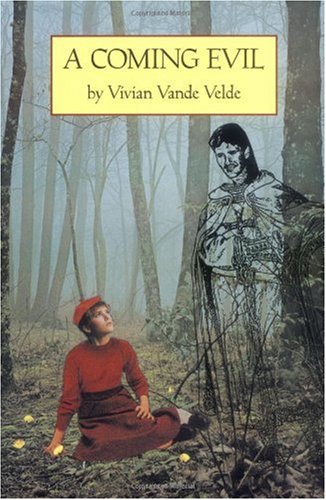
                • Cover of A Coming Evil
                  A Coming Evil

                  Vivian Vande Velde · standalone novel · 1998

                  similar byhistorical fictioneuropeearly 20th century+2 more

                  During the German occupation of France in 1940, thirteen-year-old Lisette meets a ghost while living with her aunt who harbors Jewish and Gypsy children in the French countryside.

                • Cover of Fall-Out
                  Fall-Out

                  Gudrun Pausewang · standalone novel · 1987

                  similar byeuropedarksadsurvivalgrief and lossyoung adult

                  Novel is about a breakdown of a nuclear power station in Germany and the story of two teenager-lovers Hannah and Elmar who take refuge. 38.000 people die and Hannah unfortunately becomes contaminated.

                • Cover of Incantation
                  Incantation

                  Alice Hoffman · standalone novel · 2006

                  similar byhistorical fictioneuropesadgrief and loss+1 more

                  Estrella is a Marrano: During the time of the Spanish Inquisition, she is one of a community of Spanish Jews living double lives as Catholics. And she is living in a house of secrets, raised by a family who practices underground the ancient and mysterious way of wisdom known as kabbalah. When Estrella discovers her family's true identity--and her family's secrets are made public--she confronts a world she's never imagined, where new love burns and where friendship ends in flame and ash, where trust is all but vanquished and betrayal has tragic and bitter consequences.Infused with the rich context of history and faith, in her most profoundly moving work to date, Alice Hoffman's first historical novel is a transcendent journey of discovery and loss, rebirth and remembrance.

                • Cover of The Beardless Warriors
                  The Beardless Warriors

                  Richard Matheson · standalone novel · 1960

                  similar byhistorical fictioneuropeearly 20th centurydark

                  The Beardless Warriors is a 1960 World War II novel by American writer Richard Matheson. It was based on his experiences as a young infantryman in the 87th Division in France and Germany.

                • Cover of The Dark Descent of Elizabeth Frankenstein
                  The Dark Descent of Elizabeth Frankenstein

                  Kiersten White · standalone novel · 2018

                  similar byhistorical fictioneuropedarksurvivalyoung adult

                  Elizabeth Lavenza hasn't had a proper meal in weeks. Her thin arms are covered with bruises from her "caregiver," and she is on the verge of being thrown into the streets . . . until she is brought to the home of Victor Frankenstein, an unsmiling, solitary boy who has everything--except a friend. Victor is her escape from misery. Elizabeth does everything she can to make herself indispensable--and it works. She is taken in by the Frankenstein family and rewarded with a warm bed, delicious food, and dresses of the finest silk. Soon she and Victor are inseparable. But her new life comes at a price. As the years pass, Elizabeth's survival depends on managing Victor's dangerous temper and entertaining his every whim, no matter how depraved. Behind her blue eyes and sweet smile lies the calculating heart of a girl determined to stay alive no matter the cost . . . as the world she knows is consumed by darkness.

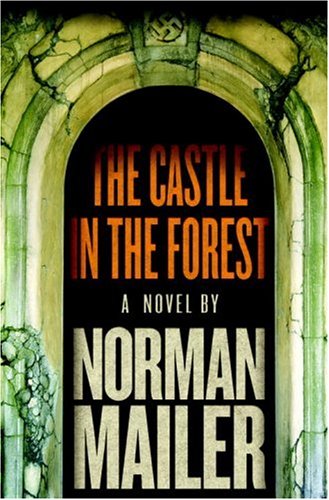
                • Cover of The Castle in the Forest
                  The Castle in the Forest

                  Norman Mailer · standalone novel · 2007

                  similar byhistorical fictioneuropeearly 20th centurydark

                  The Castle in the Forest is the last novel by writer Norman Mailer, published in the year of his death, 2007. It is the story of Adolf Hitler's childhood as seen through the eyes of Dieter, a demon sent to put him on his destructive path. The novel explores the idea that Hitler was the product of incest. It forms a thematic contrast with the writer's immediately previous novel The Gospel According to the Son (1999), which deals with the early life of Jesus. It received a good deal of praise, including a glowing review from Lee Siegel of The New York Times Book Review, and was a New York Times Bestseller in 2007.

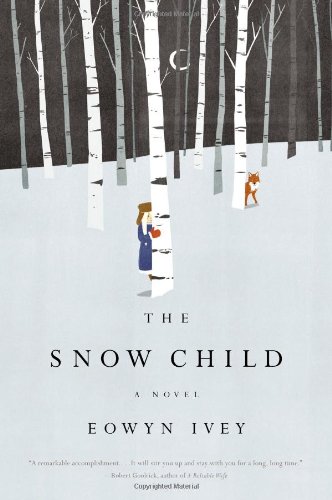
                • Cover of The Snow Child
                  The Snow Child

                  Eowyn Ivey · standalone novel · 2012

                  similar byhistorical fictionearly 20th centurysurvivalgrief and loss

                  The Snow Child is the debut novel by Eowyn Ivey. It was first published on February 1, 2012, by Little, Brown and Company. The novel was a finalist for the 2013 Pulitzer Prize for Fiction and was generally well received by critics.

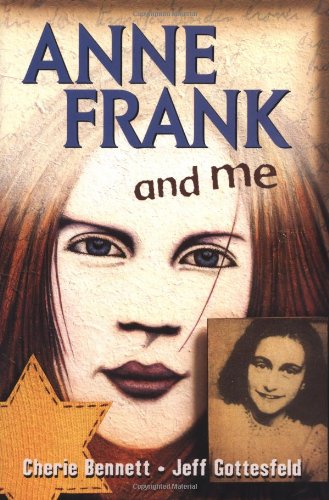
                • Cover of Anne Frank and Me
                  Anne Frank and Me

                  Cherie Bennett & Jeff Gottesfeld · standalone novel · 2001

                  similar byhistorical fictioneuropeearly 20th centurysadyoung adult

                  Anne Frank and Me is a 2001 novel by husband and wife writing team Cherie Bennett and Jeff Gottesfeld. Inspired by the life of Anne Frank, it follows a teenage girl named Nicole Burns who travels back in time to 1942 and inhabits the body of a Jewish Holocaust victim. The novel was adapted from a play written and directed by Bennett in 1996.

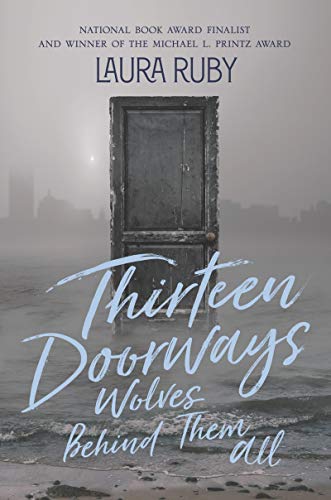
                • Cover of Thirteen Doorways, Wolves Behind Them All
                  Thirteen Doorways, Wolves Behind Them All

                  Laura Ruby · standalone novel · 2019

                  similar byhistorical fictionearly 20th centurysadgrief and lossyoung adult

                  Thirteen Doorways, Wolves Behind Them All is a young adult novel by Laura Ruby, published October 1, 2019, by Balzer + Bray.

                • Cover of The Devil's Voyage
                  The Devil's Voyage

                  Jack L. Chalker · standalone novel · 1981

                  similar byhistorical fictionearly 20th centurydarksurvival+1 more

                  The Devil's Voyage is a historical novel by science fiction writer Jack Chalker. It describes the final voyage of the heavy cruiser USS Indianapolis, which was sunk during World War II in the Pacific by Japanese submarine action, with the loss of many of the initial survivors to sharks.

                • Cover of The Deep
                  The Deep

                  Alma Katsu · standalone novel · 2020

                  similar byhistorical fictionearly 20th centurydarkgrief and loss

                  The Deep is a 2020 historical fiction horror novel written by Alma Katsu. It was published in the United Kingdom through Bantam Press and in the United States through G. P. Putnam's Sons.

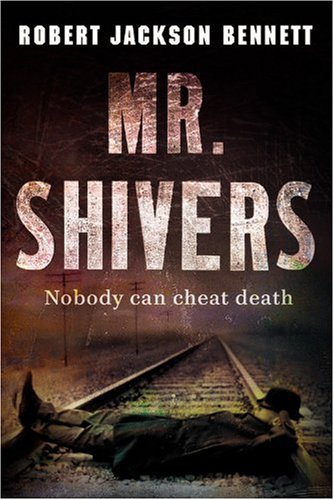
                • Cover of Mr. Shivers
                  Mr. Shivers

                  Robert Jackson Bennett · standalone novel · 2009

                  similar byhistorical fictionearly 20th centurydarkgrief and loss+1 more

                  Mr. Shivers is a 2010 novel by Robert Jackson Bennett and marks his literary debut. It was first published in hardback in the United States by Orbit Books on January 15, 2010. A paperback and audiobook release was also published during the same year; the audiobook is narrated by T. Ryder Smith. Set during the Great Depression, the book follows one man's attempt to take his revenge against the one who murdered his daughter. It has been described by the Los Angeles Review of Books as featuring "a band of Depression-era hobo vigilantes who trek across the Dust Bowl after the supernatural boogeyman, a metaphorical specter who haunts the starved nation".

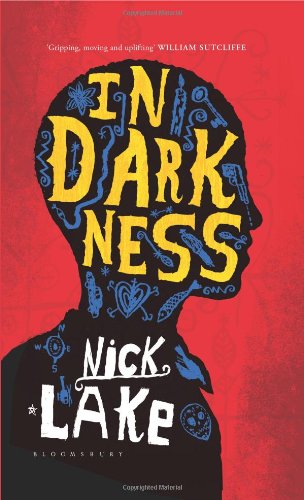
                • Cover of In Darkness
                  In Darkness

                  Nick Lake · standalone novel · 2012

                  similar byhistorical fictiondarksurvivalgrief and lossyoung adult

                  In the aftermath of the Haitian earthquake, fifteen-year-old Shorty, a poor gang member from the slums of Site Soleil, is trapped in the rubble of a ruined hospital, and as he grows weaker he has visions and memories of his life of violence, his lost twin sister, and of Toussaint L'Ouverture, who liberated Haiti from French rule in the 1804.

                • Cover of Gravity's Rainbow
                  Gravity's Rainbow

                  Thomas Pynchon · standalone novel · 1973

                  similar byeuropeearly 20th centurydark+1 more

                  Gravity's Rainbow is a 1973 postmodern novel by Thomas Pynchon. The narrative is set primarily in Europe at the end of World War II and centers on the design, production and dispatch of V-2 rockets by the German military. In particular, it features the quest undertaken by several characters to uncover the secret of a mysterious device, the Schwarzgerät, which is slated to be installed in a rocket with the serial number "00000".

                • Cover of The Last Man
                  The Last Man

                  Mary Shelley · standalone novel · 1826

                  similar byeuropedarksadgrief and loss

                  The Last Man is an apocalyptic, dystopian science fiction novel by Mary Shelley, first published in 1826. The narrative concerns Europe in the late 21st century, ravaged by the rise of a bubonic plague pandemic that rapidly sweeps across the entire globe, ultimately resulting in the near-extinction of humanity. It also includes discussion of the British state as a republic, for which Shelley sat in meetings of the House of Commons to gain insight to the governmental system of the Romantic era. The novel includes many fictive allusions to her husband Percy Bysshe Shelley, who drowned in a shipwreck four years before the book's publication, as well as their close friend Lord Byron, who had died two years previously.

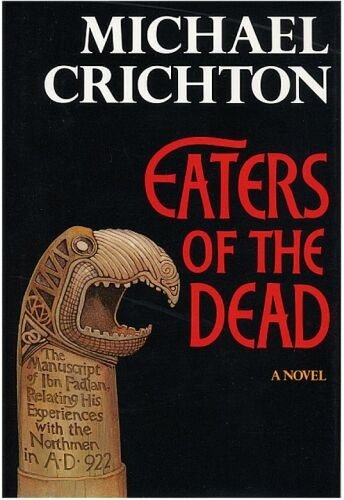
                • Cover of Eaters of the Dead
                  Eaters of the Dead

                  Michael Crichton · standalone novel · 1976

                  similar byhistorical fictioneuropesurvival+1 more

                  Eaters of the Dead: The Manuscript of Ibn Fadlan Relating His Experiences with the Northmen in AD 922 is a 1976 novel by Michael Crichton, the fourth novel under his own name and his 14th overall. The story is about a 10th-century Muslim Arab who travels with a group of Vikings to their settlement.