More like Marriages
anchored on:contemporary
but
- Kairos
series11 books1962
completed
similar by+3 more
The Time Quintet is a science fantasy series of five young adult novels written by American author Madeleine L'Engle and made up of A Wrinkle in Time (1962), A Wind in the Door (1973), A Swiftly Tilting Planet (1978), Many Waters (1986), and An Acceptable Time (1989).
- Lost
Gregory Maguirestandalone novel2001
similar byliterary & generalreflectivecontemporaryour worldidentityfamily secrets
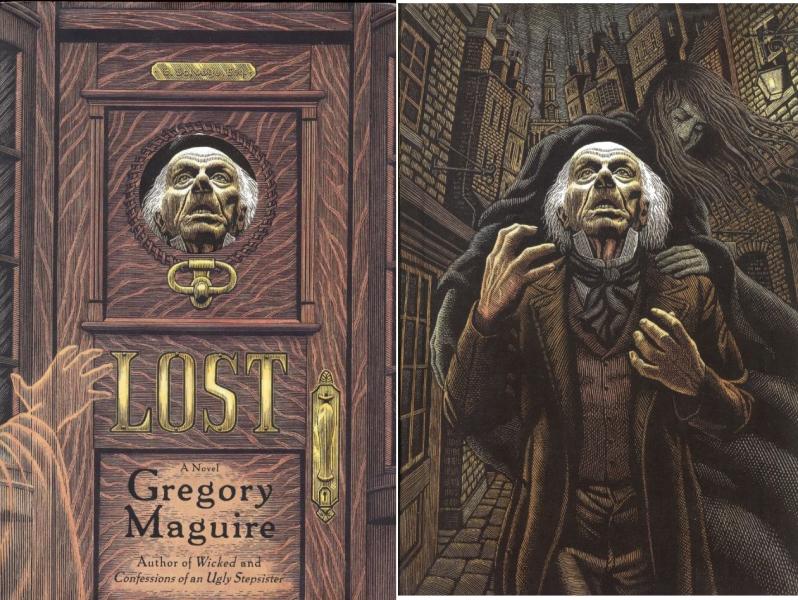
Lost is a 2001 novel by American author Gregory Maguire. Unlike many of Maguire's other adult novels, Lost is set in the real world. The novel's concept is that the protagonist is a distant relative of the man who inspired Charles Dickens' character of Ebenezer Scrooge.
- A Visit from the Goon Squad
series2 books2010
similar byliterary & generalreflectivecontemporary+1 more
Jennifer Egan's A Visit from the Goon Squad follows a loosely connected group of characters orbiting the music industry across several decades, told through interlocking chapters that jump between narrators, timelines, and, in one chapter, a PowerPoint presentation. The Candy House returns to several of the same characters and their descendants a decade later, in a world reshaped by a technology that lets people access and share their memories. Egan links the two books through recurring characters more than a continuous plot.
- The Blue Ant Trilogy
series3 books2003
similar bycontemporary+2 more
Hubertus Bigend is a fictional character appearing in the third trilogy of novels of science fiction and literary author William Gibson. Bigend is the antihero of Gibson's Pattern Recognition (2003), Spook Country (2007) and Zero History (2010). In an interview Gibson says "I've always had a sense of Bigend as someone who presents himself as though he knows what's going on, but who in fact doesn't. It's just my sense of the subtext of the character: he's bullshitting himself, at the same time as he's bullshitting all of us."
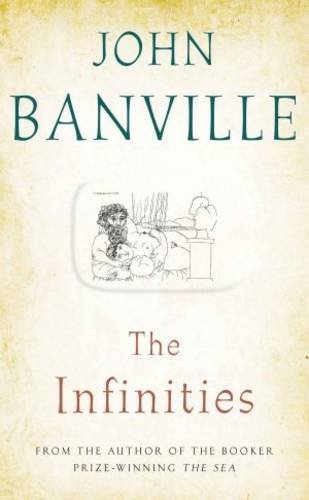
- The Infinities
series1 book2009
similar byliterary & generalreflectivecontemporaryour worldfamily secrets+1 more
- Concrete Island
J. G. Ballardstandalone novel1974
similar byliterary & generalreflectivecontemporaryour worldidentity
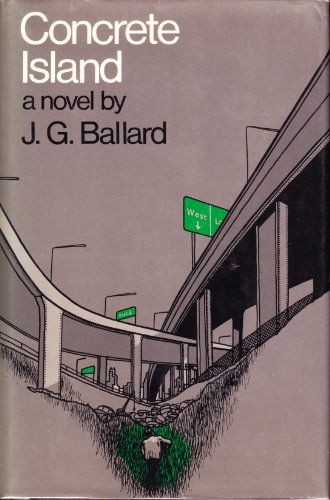
Architect Robert Maitland crashes his car onto a stretch of wasteland trapped between three converging motorways -- visible from thousands of cars, reachable by none of them. Injured and unable to climb back to the road, Maitland adapts to life on what he starts calling the Island, scavenging food thrown from car windows, and discovers he isn't alone: a runaway sex worker hiding in a bunker, and a brain-damaged former circus acrobat, both long past expecting rescue. What begins as a survival story turns into a question of whether Maitland even wants to leave. A J. G. Ballard novel of urban isolation, grouped with Crash and High-Rise.
- The Opposite House
Helen Oyeyemistandalone novel2007
similar byliterary & generalreflectivecontemporaryour worldidentity+1 more
The Opposite House is a novel by British author Helen Oyeyemi first published by Bloomsbury Press in 2007.
- Whileaway
series4 books1972
completed
similar byreflectivecontemporary+3 more
Joanna Russ's The Female Man (1975) is a single feminist science fiction novel, not a multi-book series, built around four women from parallel timelines with very different gender arrangements. One of them, Janet, comes from Whileaway, an all-female utopian Earth ten centuries in the future where men died out in a plague; the other three come from realities closer to Russ's own, and their collisions are used to interrogate what womanhood and equality could mean under different social rules.
- The Satanic Verses
Salman Rushdiestandalone novel1988
similar byliterary & generalcontemporaryour worldidentity+1 more
The Satanic Verses is the fourth novel by British–Indian writer Salman Rushdie. First published in September 1988, the book was inspired by the life of the Islamic prophet Muhammad. As with his previous books, Rushdie used magical realism and relied on contemporary events and people to create his characters. The title refers to the Satanic Verses, a group of Quranic verses about three pagan Meccan goddesses: Allāt, Al-Uzza, and Manāt. The part of the story that deals with the satanic verses was based on accounts from the historians al-Waqidi and al-Tabari.
- American Gods
series10 books1999
similar bycontemporaryour world+3 more
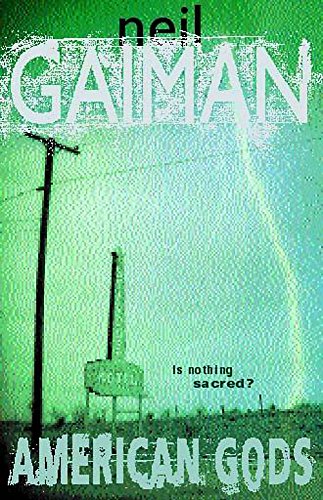
Neil Gaiman's American Gods (2001) follows Shadow Moon, an ex-convict who takes a job as bodyguard to a mysterious drifter who is secretly the Norse god Odin, and is drawn into a brewing conflict between the old immigrant gods of myth and the new gods of media, technology, and modern American life. Gaiman's 2005 novel Anansi Boys is set in the same mythological world and shares the trickster god Mr. Nancy, but follows a different protagonist and story, making it a loose companion rather than a direct sequel.
- The Snake-Stone
Berlie Dohertystandalone novel1995
similar byliterary & generalcontemporaryour worldidentityfamily secrets+1 more
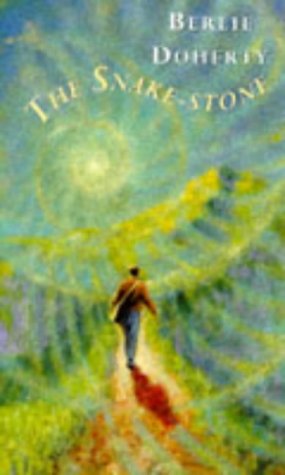
"James is a championship diver, with a shot for the Olympics. But when he thinks about his birth mother, something in him sinks like a stone. His adoptive parents love him, and his father is a terrific diving coach--yet even they cannot tell him who he really is. So James breaks training and runs off to the farmland of his birth, with nothing but a mysterious stone shaped like a snake. Can he use it to unlock his past?"
- The Tragedy of Arthur
Arthur Phillipsstandalone novel2011
similar byliterary & generalreflectivecontemporaryour worldidentityfamily secrets
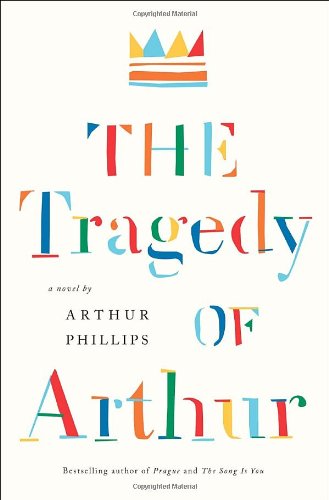
The Tragedy of Arthur is a 2011 novel by the American author Arthur Phillips. The narrative concerns the publication of a recently discovered Arthurian play attributed to William Shakespeare, which the main narrator, "Arthur Phillips", believes to be a forgery produced by his father. It was published by Random House.
- VALIS
series4 books1981
completed
similar byreflectiveidentity+3 more
The VALIS trilogy is a set of science fiction/philosophical novels by author Philip K. Dick which include VALIS (1981), The Divine Invasion (1981), and The Transmigration of Timothy Archer (1982). Dick's first novel about the VALIS concept originally titled "VALISystem A", was published as Radio Free Albemuth after Dick's death in 1985.
- Jonathan Livingston Seagull
Richard Bachstandalone novel1970
similar byliterary & generalreflectivecontemporaryour worldidentity
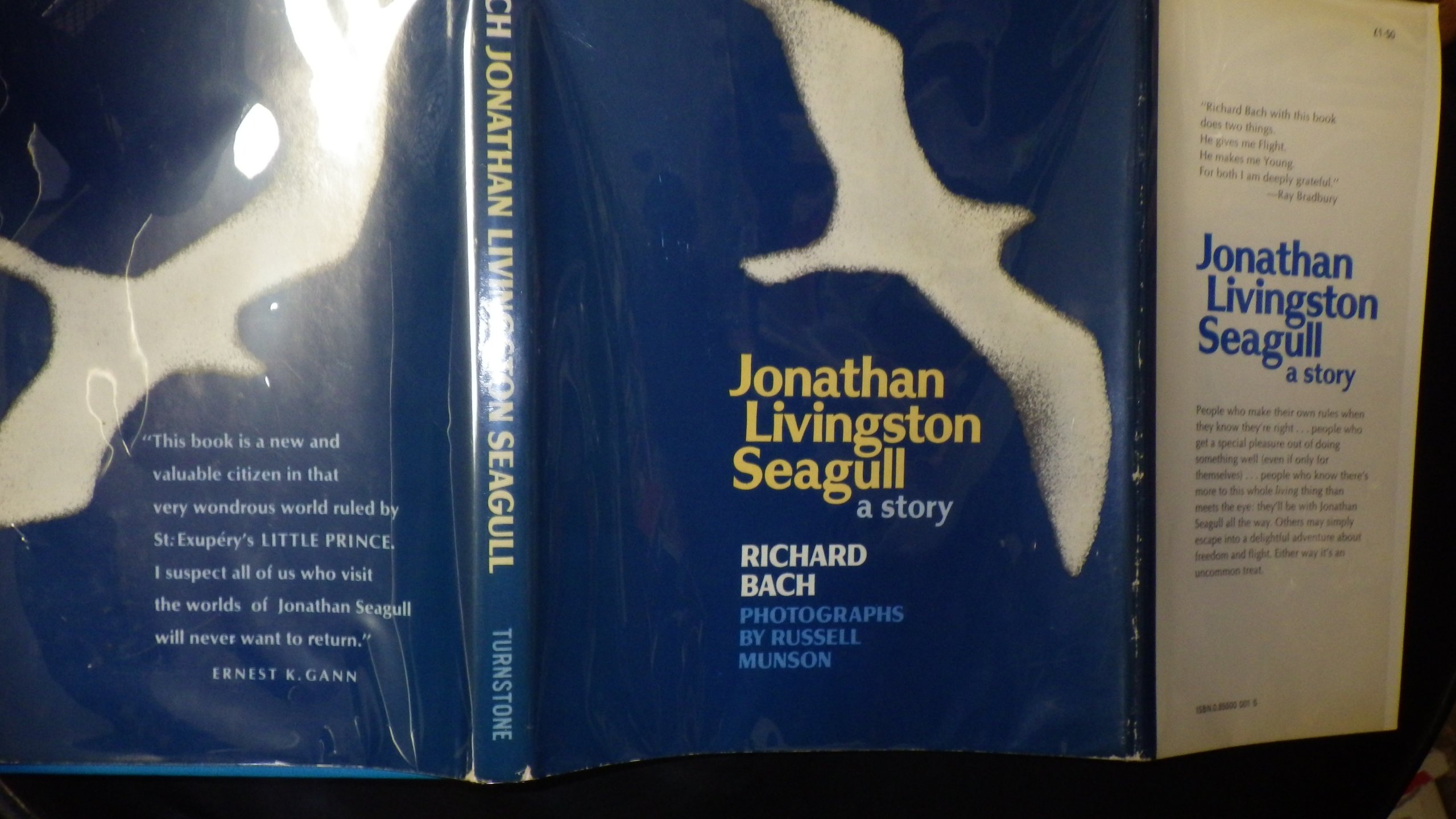
Jonathan Livingston Seagull is an allegorical fable in novella form written by American author Richard Bach and illustrated with black-and-white photographs shot by Russell Munson. It is about a seagull who is trying to learn about flying, personal reflection, freedom, and self-realization. It was first published in book form in 1970 with little advertising or expectations; by the end of 1972, over a million copies were in print, the book having reached the number-one spot on bestseller lists mostly through word of mouth recommendations.