More like Marsbound
anchored on:science fictionmarsnear future
but
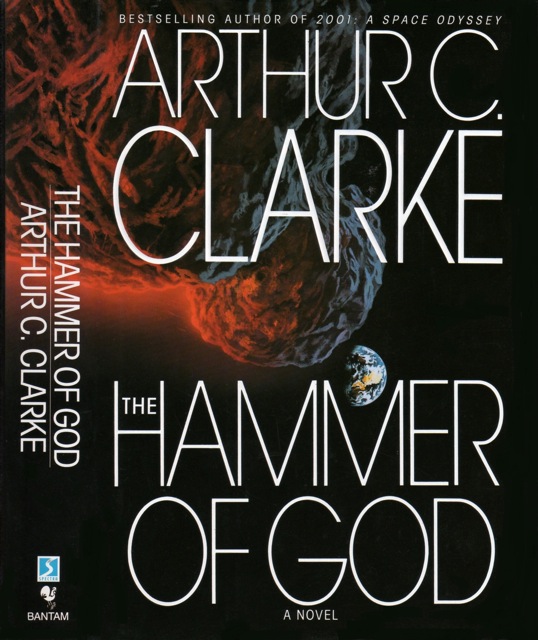
- The Hammer of God
Arthur C. Clarkestandalone novel1993
similar byinformativescience fictionnear futuresurvivalhard science fiction+2 more
The Hammer of God is a science fiction novel by Arthur C. Clarke originally published in 1993. Set in the year 2109, it deals with the discovery of an asteroid to be on course to collide with Earth and depicts the mission for deflecting the asteroid by using fusion thermal rockets.
- The Martian
series2 books2012
similar byscience fictionmarsnear futuresurvivalhard science fiction
Andy Weir's novel The Martian, first self-published in 2011 before a commercial re-release, follows astronaut Mark Watney after he is stranded alone on Mars when his crew presumes him dead and departs. Using scientific improvisation and dark humor, Watney works to keep himself alive long enough for a rescue to reach him. It is a single, self-contained survival story.
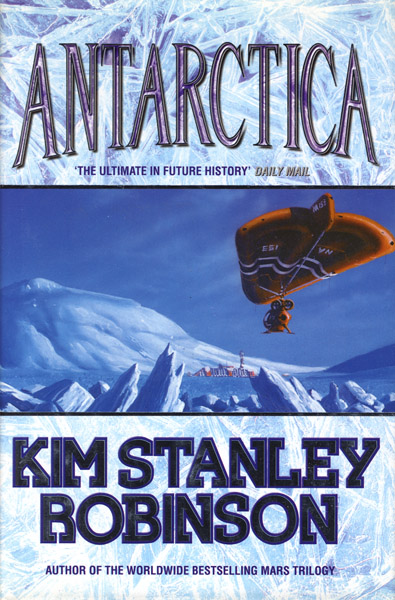
- Antarctica
Kim Stanley Robinsonstandalone novel1997
similar byinformativescience fictionnear future+1 more
Antarctica (1997) is a science fiction novel by American writer Kim Stanley Robinson. It deals with a variety of characters living at or visiting an Antarctic research station. The novel incorporates many of Robinson's frequent themes, including scientific process and the importance of environmental protection.
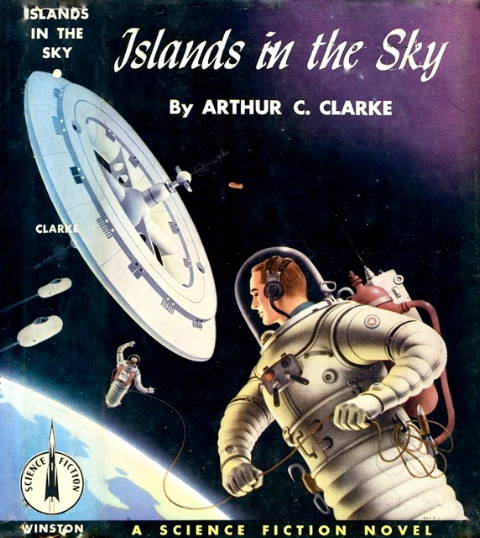
- Islands in the Sky
Arthur C. Clarkestandalone novel1952
similar byscience fictionnear futureadventurousspace colonization+1 more
Islands in the Sky is a 1952 science fiction novel by British writer Arthur C. Clarke. It is one of his earliest works. Clarke wrote the story as a travelogue of human settlement of cislunar space in the last half of the twenty-first century.
- Man Plus
series2 books1976
similar byscience fictionmarsnear futurespace colonization+2 more
Frederik Pohl's Man Plus follows Roger Torraway, who is surgically and cybernetically rebuilt into a post-human organism able to survive unprotected on the Martian surface, as part of a crash program to colonize Mars ahead of a predicted global crisis. The 1976 novel, which won the Nebula Award, is a clinical, unsentimental look at what such a transformation costs a person's sense of self. Thomas T. Thomas wrote the sequel Mars Plus, continuing the story of the Martian colony years later.
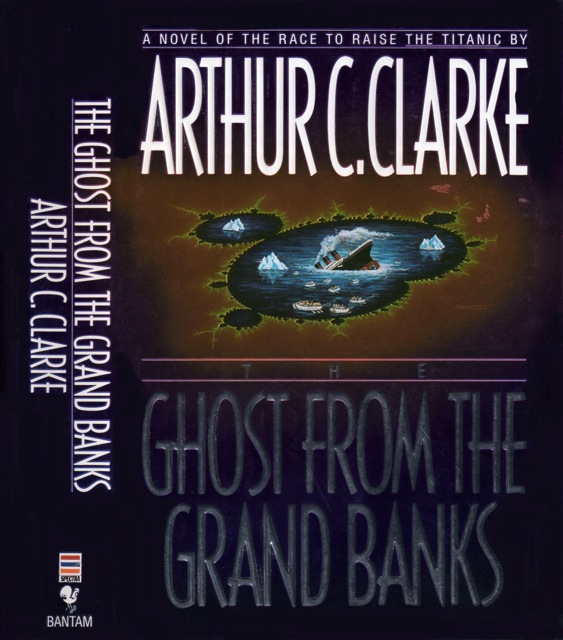
- The Ghost from the Grand Banks
Arthur C. Clarkestandalone novel1990
similar byscience fictionnear futuresurvival+1 more
As the centennial of the Titanic's sinking approaches in 2012, two rival teams race to be the ones who raise a piece of the wreck from the floor of the Atlantic, one betting on brute engineering, the other on a wilder, more mathematical approach rooted in fractal geometry. Clarke weaves in a fictional newspaper editorial warning against disturbing the wreck at all, framing the expeditions as a test of the very hubris that sank the ship in the first place. A late Clarke novel that trades space opera for the ocean floor, with a running fascination with the Mandelbrot set along for the ride.
- Dragon's Egg
series3 books1980
completed
similar byinformativescience fictionhard science fiction+3 more
Robert L. Forward's Dragon's Egg (1980) follows first contact with the cheela, intelligent beings the size of sesame seeds living on the surface of a neutron star, where crushing gravity and fast-moving physics let them evolve from primitive agriculture to advanced technology in about a month of Earth time while human observers watch from orbit. The sequel Starquake (1985) follows the cheela's own development of space travel and a catastrophic starquake that devastates their neutron-star home, alongside the continuing story of the human crew observing them.
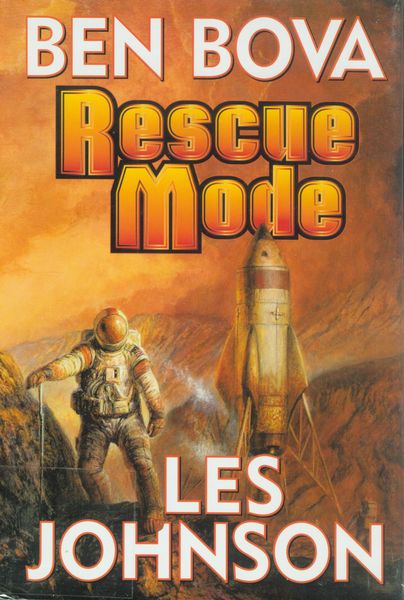
- Rescue Mode
Ben Bova & Les Johnsonstandalone novel2014
similar byscience fictionmarsnear futuresurvivalhard science fiction+1 more
"The first human mission to Mars meets with near-disaster when a meteoroid strikes the spacecraft, almost destroying it. The ship is too far from Earth to simply turn around and return home. The eight-person crew must ride their crippled ship to Mars while they desperately struggle to survive. On Earth, powerful political forces that oppose human spaceflight try to use the accident as proof that sending humans into space is too dangerous to continue. The whole human space flight program hangs in the balance. And if the astronauts can't nurse their ship to Mars and back, the voyagers will become either the first Martian colonists--or the first humans to perish on another planet"--
- How to Live on Mars: A Trusty Guidebook to Surviving and Thriving on the Red Planet
Robert Zubrinstandalone novel2008
similar byinformativescience fictionmarsnear futuresurvivalterraformingspace colonization
A thinly fictionalized treatise on colonizing Mars.
- Podkayne of Mars
Robert A. Heinleinstandalone novel1963
similar byscience fictionnear futuremarsadventurousspace opera
From the back cover of the Baen 1995 edition: "Meet Podkayne Fries, a thoroughly modern Martian Ms. who thinks that Earth is not really fit for habitation and that humanity evolved in the now-exploded Fifth Planet. Poddy has one goal in life, to be the first female starship captain. She has her strategy all scoped out, and with her determination, looks and I.Q. she'll get there, never you doubt! But all work and no play would make Poddy a Dull Girl, so when a chance comes her way to travel to distant Earth via Venus with her elderly uncle, Poddy jumps at it, even if it does mean having her loathsome little brother along for the trip: Travel, Adventure, the chance to cuddle up (in a nice way) with real spaceship officers and ruthlessly pump their brains - she'll have it all. What Poddy doesn't know is that "Unca Tom" is more than her warmly supportive relative: he is also the Ambassador Plenipotentiary from Mars to the Three Planets Conference (travelling not quite incognito enough) and that certain people will stop at nothing to gain control of his vote - including kidnapping and doing terrible things to sweetly innocent Poddy Fries..."
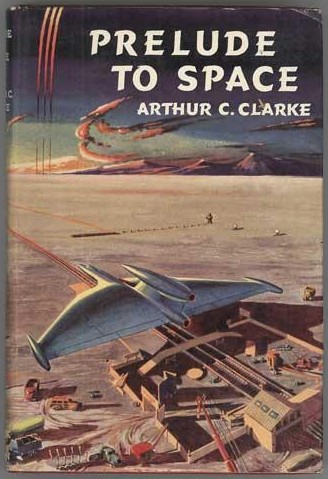
- Prelude to Space
Arthur C. Clarkestandalone novel1951
similar byinformativescience fictionnear futurehard science fiction+1 more
Prelude to Space is a science fiction novel written by British author Arthur C. Clarke in 1947. It appeared for the first time in 1951 as a paperback from World Editions Inc, as number three in its series of Galaxy novels. Sidgwick & Jackson published it in the UK in 1953, followed the next year by a United States hardcover edition from Gnome Press and a paperback from Ballantine Books.
- The Angry Planet
series2 books1945
completed
similar byscience fictionmarsnear futuresurvivaladventurousspace opera
- First Landing
Robert Zubrinstandalone novel2001
similar byinformativescience fictionmarsnear futuresurvivaladventurousspace colonizationhard science fiction
First Landing is a 2002 science fiction novel by Robert Zubrin that tells the story of the first crewed space expedition to Mars. Zubrin is the head of the Mars Society, an organization lobbying the real world NASA to send astronauts to Mars. The plan used to accomplish their mission in the book is the same one advocated by his group.
- Thunder and Lightning
series4 books2003
completed
similar byscience fictionnear futureadventurous+4 more
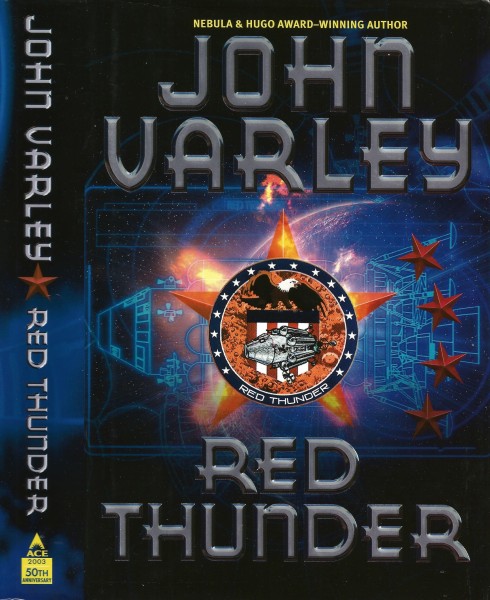
John Varley's Thunder and Lightning books follow the Broussard family across two generations as a backyard fusion-power breakthrough turns an eccentric Florida inventor's homemade spacecraft into the opening move of an independent human expansion to Mars and beyond. Red Thunder and Red Lightning follow the first generation's improvised trip to Mars; Rolling Thunder and Dark Lightning pick up decades later with their descendants.
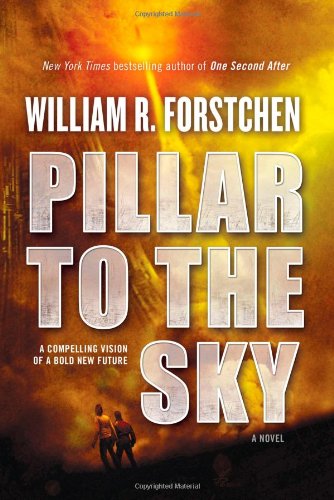
- Pillar to the Sky
William R. Forstchenstandalone novel2014
similar byscience fictionnear future+2 more
- Adventures of Viktor & Julia
series2 books1999
similar byscience fictionnear futuresurvivaladventuroushard science fiction+1 more
- Have Space Suit - Will Travel
Robert A. Heinleinstandalone novel1958
similar byscience fictionnear futuresurvivaladventurousspace opera
From the back cover of the Del Rey 9th printing: "Skyjacked - Everything happened at once. One minute Kip Russell was walking about in his own backyard, testing out an old space suit and dreaming about going to the moon - and the next he was out cold and the captive of an insidious space pirate. The whole thing seemed like a very bad dream until he discovered he wasn't the only prisoner on board. Then the reality of the situation became inescapable. He - along with the daughter of a world-renowned scientist and a beautiful creature from an alien planet - had been skyjacked by a monstrous extraterrestrial and they were on their way to the Moon... a journey toward a fate worse than death!"
- A Fall of Moondust
Arthur C. Clarkestandalone novel1961
similar byscience fictionnear futuresurvivaladventuroushard science fiction
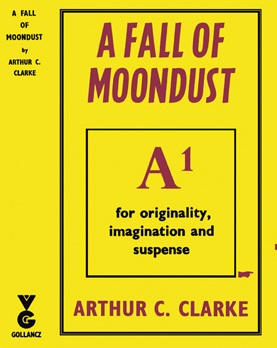
From the back cover of the Harbrace paperback: "The action of A Fall of Moondust takes place almost a century from now when tours on the moon are a common occurrence. One of the high points of each tour is a cruise around the Sea of Thirst, a body of volcanic dust, in a specially designed vessel called the Selene On a perfectly routine voyage one day the Selene suddenly disappears. How do you locate a small tourist "cruiser" buried beneath fifty feet of dust? If you find it, how do you rescue the passengers and crew? If you are on board, how do you feel and what do you do while brave men and expert technicians join forces in a race against time? Sustained excitement, lively humor, and an engaging cast of characters make this one of Arthur C. Clarke's most intriguing novels."
- Mars (Kim Stanley Robinson)
series36 books1982
similar byscience fictionmarsterraformingspace colonizationhard science fiction+1 more
The Mars trilogy is a series of science fiction novels by Kim Stanley Robinson that chronicles the settlement and terraforming of the planet Mars through the personal and detailed viewpoints of a wide variety of characters spanning 187 years, from 2026 to 2212. Ultimately more utopian than dystopian, the story focuses on egalitarian, sociological, and scientific advances made on Mars, while Earth suffers from overpopulation and ecological disaster.
- The Martian Chronicles
series30 books1946
completed
similar byscience fictionmarsnear futurespace colonization
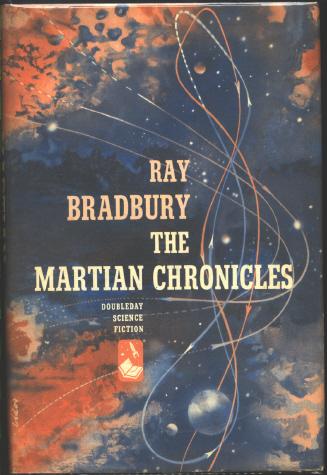
The Martian Chronicles (1950) is Ray Bradbury's fix-up novel, a chain of linked short stories following waves of settlers leaving a troubled Earth to colonize Mars and encountering its native Martians, before Earth itself is ultimately consumed by nuclear war.
- Life and Death on Mars
Edward M. Lernerstandalone novel2023
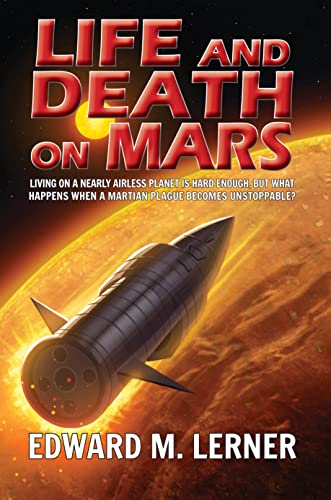
similar byscience fictionmarsnear futurehard science fiction+2 more
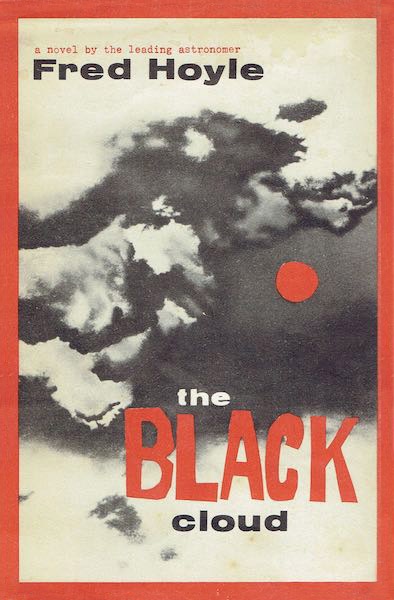
- The Black Cloud
Fred Hoylestandalone novel1957
similar byscience fictionsurvivalhard science fiction+1 more
The Black Cloud is a 1957 science fiction novel by British astrophysicist Fred Hoyle. It details the arrival of an enormous cloud of gas that enters the Solar System and appears about to destroy most of the life on Earth by blocking the Sun's radiation.
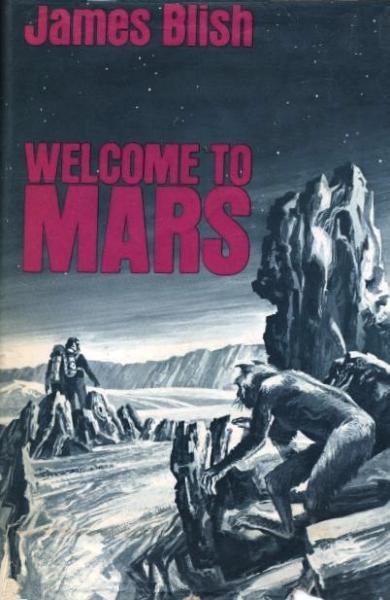
- Welcome to Mars
James Blishstandalone novel1967
similar byscience fictionmarsnear futuresurvivaladventuroushard science fiction
Two teenagers, dissatisfied with the slow progress of space science, plan and carry through their own trips to Mars where they explore, compile data, and solve the first problems of survival on the Red planet.