Loreful
HomeDiscover
Search series, authors…⌘K
Loreful

Reading orders for SF/F series and shared universes — with your place kept in every one.

Explore

UniversesSeriesWorksAuthorsAtlas

Help

FAQAboutSite map

Account & legal

Sign inCreate accountPrivacyTerms

Data

Built on ISFDB, Wikipedia, Wikidata and Open Library. Curated reading orders carry their reasoning on the page; the rest follow publication order. Data sources & licenses

© Loreful · data: ISFDB · CC BY

More like Masked

anchored on:superherocontemporaryscience fictionidentityour worldadventurous+1 more

but

Mood

The mood the book leaves you in.

  • The reading experience is propelled by journeys, exploration, and physical risk; excitement and forward momentum dominate over dread or introspection.
  • Joy and loss are deliberately mixed; the resolution grants characters something real while taking something else away, leaving warmth and sorrow together.
  • The book demands work from the reader — dense prose, difficult structure, unfamiliar ideas, or morally uncomfortable material — as part of its intended effect.
  • Grim events, cruelty, or despair dominate the atmosphere, and the book does not soften them with comfort or comic relief.
  • The atmosphere is quietly unsettling — wrongness, unease, and the uncanny pervade the book without necessarily escalating into overt horror.
  • The book is built to move the reader; character feeling is foregrounded and major scenes aim at a strong emotional response.
  • Humor is a primary aim and the prose plays for laughs — comic situations, wit, or dialogue produce sustained comedy, not occasional levity.
  • The book insists that things can improve; effort and decency are shown to matter, and the arc bends toward better outcomes even through hardship.
  • The book teaches as it goes — real facts, history, science, or craft are conveyed in enough depth that learning is part of the reading experience.
  • The book is designed to uplift and motivate, presenting perseverance or achievement in a way that invites the reader to aspire or act.
  • The overall register is cheerful and easygoing; stakes are kept gentle and the book avoids dwelling on pain or dread.
  • Withheld information drives the experience; the book sustains enigmas and secrets the reader wants resolved, whatever its genre.
  • The book is contemplative and inward-looking, giving more weight to thought, memory, and meaning than to external events.
  • The book works as comfort reading — low tension, a soothing pace, and an atmosphere the reader can unwind in.
  • Grief, loss, or melancholy set the dominant register, and the book lets sorrow stand rather than resolving it into comfort.
  • Sustained suspense is the point; the book keeps the reader braced for what happens next through danger, pressure, or impending revelation.
  • Playful invention and charm define the register — fanciful conceits, light absurdity, and a narration that delights in its own oddity.

About

What the story runs on.

  • Stories in which extraterrestrial beings are central — as characters, cultures, or the object of the plot.
  • Stories structured as a quest — a journey undertaken to find, deliver, or destroy something of great import.
  • Stories in which staying alive against nature, catastrophe, or scarcity is the central problem.
  • Stories of lovers kept apart by law, family, faith, or station, where the obstacle to love is the plot.
  • Stories in which a friendship — its making, testing, or loss — is the emotional center.
  • Stories of growing up — a young protagonist crossing from childhood into adult knowledge and responsibility.
  • Stories about who a character truly is — self-discovery, doubled lives, and the search for a self.
  • Stories about mourning — living through the death of a loved one and what loss does to the survivors.
  • Stories in which a buried family truth — hidden parentage, crimes, or shames — surfaces and reorders the present.
  • Stories driven by maneuvering for power — factions, conspiracies, and statecraft conducted in shadow.
  • Stories in which war itself is the subject — combat, occupation, and what warfare does to soldiers and civilians.
  • Stories organized around investigating a killing — the case, the clues, and the pursuit of the killer, in any genre's clothing.

Shelf

Where it sits in the library.

    • Fiction built on magic or other supernatural elements that have no scientific explanation.
    • Secondary-world fantasy at large scale, where the fate of nations or the world turns on the protagonists' struggle.
    • Fantasy set in a recognizably modern city or contemporary world where the supernatural intrudes on everyday life.
    • Fantasy that blends in horror's atmosphere and imagery, keeping a fantastical frame around grim or frightening material.
    • Action-driven fantasy following warriors or rogues with personal stakes against sorcerous threats, rather than world-spanning conflicts.
    • Fantasy set in a real historical period or a close analogue of one, with magic woven into the era.
    • Fantasy in which protagonists cross from the ordinary world into another world through a portal or similar passage.
    • Fiction that retells or reworks a traditional fairy tale in a new form or setting.
    • Fantasy drawing directly on myths, legends, and folklore, retelling them or building on their figures and logic.
    • Fantasy of ghosts, vampires, shapeshifters, psychics, and similar phenomena, usually set in an otherwise ordinary world.
    • Fiction mixing science-fictional trappings with overtly magical or impossible elements in one setting.
    • Low-stakes fantasy emphasizing comfort, community, and everyday pleasures over conflict and peril.
    • Speculative fiction of pervasive moral ambiguity, violence, and cynicism that rejects heroic conventions — fantasy and SF alike.
      • Fiction that extrapolates from science and technology — future societies, space travel, or speculative inventions — within at least nominally natural laws.
      • Science fiction of interstellar scope — starships, galactic polities, and adventure across star systems.
      • Science fiction committed to scientific rigor, where technical plausibility constrains the story.
      • Science fiction centered on armed forces and warfare, told largely from a military point of view.
      • Science fiction of networked, corporate-dominated near futures, pairing high technology with social decay.
      • Science fiction styled on nineteenth-century steam-powered technology, often in a Victorian or pseudo-Victorian setting.
      • Fiction depicting an oppressive or catastrophic society, presented as a warning.
      • Fiction set after civilization's collapse, following survivors in the ruins of the old world.
      • Fiction in which characters move between past and future, and the mechanics or consequences of that travel drive the plot.
      • Fiction exploring a world where a historical event went differently and history diverged from ours.
      • Science fiction about humanity's first encounter and communication with an alien intelligence.
      • Science fiction in which extraterrestrial forces attack or occupy Earth and humanity resists.
      • Fiction whose primary aim is to frighten or unsettle the reader through dread, menace, or the monstrous.
      • Horror of vast, indifferent, incomprehensible entities before which humanity is insignificant, in the Lovecraft tradition.
      • Horror of decaying houses, buried family secrets, and oppressive atmosphere in the Gothic literary tradition.
      • Horror centered on hauntings and the returning dead.
      • Horror located in the mind — paranoia, obsession, and unreliable perception rather than external monsters.
      • Horror built around the reanimated dead and survival amid their outbreaks.
      • Horror defined by explicit, transgressive gore that refuses to cut away from violence.
      • Speculative fiction of the strange and uncanny that resists both natural explanation and standard genre categories.
      • Fiction organized around solving a crime or puzzle, typically following an investigator toward the identification of a culprit.
      • A puzzle-first mystery that lays out clues so the culprit's identity can be deduced before the reveal.
      • Crime fiction of moral ambiguity, fatalism, and hard-edged style, set among the corrupt and the doomed.
      • A mystery following the realistic routines of police work — forensics, interviews, and case-building.
      • A gentle mystery with an amateur sleuth, a small community, and violence kept off the page.
      • A mystery set in a past era, where the investigation works within that period's methods and society.
      • Fast-paced fiction driven by imminent danger, pursuit, or high-stakes conspiracy, built to sustain tension.
      • A thriller of espionage — agents, tradecraft, and intelligence services in conflict.
      • A thriller centered on lawyers and the courtroom, where litigation carries the suspense.
      • A thriller driven by detailed contemporary or near-future technology, often military or scientific.
      • A thriller whose tension comes from mental states and manipulation between characters rather than external action.
      • Fiction whose central plot is a romantic relationship and its development toward an emotionally satisfying resolution.
      • Romance in which one or both partners are supernatural beings, blending fantasy elements into the love story.
      • A fantasy-romance hybrid in which the romantic arc and the fantasy plot carry equal weight.
      • Romance set in a past era, with courtship shaped by the period's society and manners.
      • Romance set in the present day, without supernatural or historical elements.
      • Fiction set in a real past period, where the historical setting materially shapes characters and events.
        • General and literary fiction emphasizing prose style, character interiority, or formal ambition over genre plot conventions.
        • Fiction in a realistic world where magical events occur and are treated as ordinary, in the tradition of Latin American literature.
        • Fiction that ridicules people, institutions, or society in order to criticize them.
        • Fiction of dreamlike, irrational imagery and logic that breaks from realistic representation.
        • Fiction that plays with narrative convention through metafiction, fragmentation, and self-reference.
        • Fiction propelled by journeys, exploration, and physical peril, where action and survival carry the plot.
        • Adventure fiction of ships and seafaring — naval engagements, voyages, and life at sea.
        • Fiction of the American frontier West — gunmen, ranchers, and lawmen, typically in the late nineteenth century.
        • Fiction centered on soldiers, campaigns, and the experience of warfare, historical or imagined.
          • Fiction written primarily to amuse, using comedic situations, wit, or parody as its organizing principle.
            • Multi-generational fiction following a family or dynasty across decades, with inheritance and kinship as the through-line.
              • Fiction whose world runs on explicit game mechanics — levels, stats, and skills that characters can see and exploit.
                • Fiction about costumed or superpowered heroes and their conflicts with comparable villains.

                Practical

                How long a commitment, whether it stands alone, and whether it has finished.

                Tap a chip to ask for it · tap again to rule it out · once more to clear. Numbers show what would be left.

                • Cover of Renegades (Marissa Meyer)
                  Renegades (Marissa Meyer)

                  series · 3 books · 2017

                  similar byidentitysuperheroscience fictionour worldtensebig city+2 more

                  Renegades is set in Gatlon City after a civil war between the superheroic Renegades and the villainous Anarchists, and follows Nova, a young woman with the power to put people to sleep by touch, as she infiltrates the Renegades as a spy for her uncle's Anarchists and falls for Adrian, the adopted son of the Renegades' leaders. Marissa Meyer's trilogy, continuing through Archenemies and Supernova, plays the two factions' history against the leads' divided loyalties; Meyer has said she doesn't plan to extend the series further.

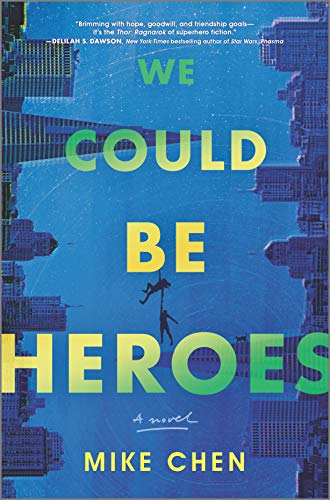
                • Cover of We Could Be Heroes
                  We Could Be Heroes

                  Mike Chen · standalone novel · 2021

                  similar byidentitycontemporarysuperheroscience fictionour world+2 more

                  "An extraordinary and emotional adventure about unlikely friends and the power of choosing who you want to be... Jamie woke up in an empty apartment with no memory and only a few clues to his identity, but with the ability to read and erase other people's memories - a power he uses to hold up banks to buy coffee, cat food and books. Zoe is also searching for her past, and using her abilities of speed and strength... to deliver fast food. And she'll occasionally put on a cool suit and beat up bad guys, if she feels like it. When the archrivals meet in a memory-loss support group, they realize the only way to reveal their hidden pasts might be through each other. As they uncover an ongoing threat, suddenly much more is at stake than their fragile friendship. With countless people at risk, Zoe and Jamie will have to recognize that sometimes being a hero starts with trusting someone else - and yourself."--Publisher.

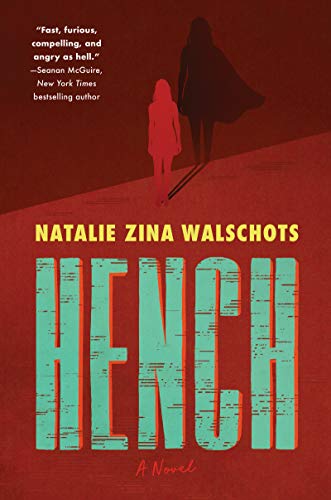
                • Cover of Hench
                  Hench

                  Natalie Zina Walschots · standalone novel · 2020

                  similar byidentitycontemporarysuperheroscience fictionbig city+1 more

                  Hench is a 2020 superhero fiction novel by Natalie Zina Walschots.

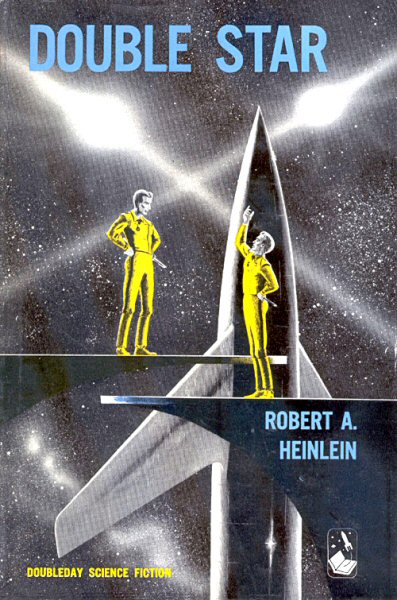
                • Cover of Double Star
                  Double Star

                  Robert A. Heinlein · standalone novel · 1956

                  similar byidentityadventurousscience fiction+1 more

                  Lorenzo Smythe, the excellent yet unemployed actor, meets Dak Broadbent in a bar. Broadbent hires Lorenzo for an unspecified role, and hustles him onto a rocket ship. Broadbent turns out to be an assistant to the famous interplanetary politician and leader of the Expansionist party: John J. Bonforte. Bonforte, however, has been kidnapped by the political opposition on Mars, and due to Lorenzo's physical similarity to Bonforte, his staff wants Lorenzo to impersonate the politician for an important Martian ceremony.

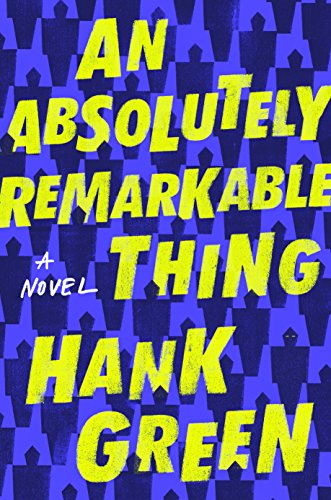
                • Cover of An Absolutely Remarkable Thing / The Carls
                  An Absolutely Remarkable Thing / The Carls

                  series · 2 books · 2018

                  similar byidentitycontemporaryadventurousscience fictionour world+1 more

                • Cover of Dark Matter
                  Dark Matter

                  Blake Crouch · standalone novel · 2016

                  similar byidentitycontemporaryscience fictionour worldtense

                  Jason Dessen, college physics professor, husband and father, is kidnapped and taken to a parallel universe where his counterpart had dedicated his life to inventing a method of traveling between an infinity of parallel universes.

                • Cover of Icarus Project
                  Icarus Project

                  series · 2 books · 2009

                  similar byidentitycontemporarysuperherotensescience fiction+3 more

                • Cover of Friday
                  Friday

                  Robert A. Heinlein · standalone novel · 1982

                  similar byidentityadventurousscience fictiontense

                  Friday is a 1982 science fiction novel by American writer Robert A. Heinlein. It is the story of a female "artificial person", the eponymous Friday, genetically engineered to be stronger, faster, smarter, and generally better than normal humans. Artificial humans are widely resented, and much of the story deals with Friday's struggle both against prejudice and to conceal her enhanced attributes from other humans. The story is set in a Balkanized 21st century, in which the nations of the North American continent have been split up into a number of smaller states.

                • Cover of End of the World Blues
                  End of the World Blues

                  Jon Courtenay Grimwood · standalone novel · 2006

                  similar byidentitycontemporaryscience fictionour worldtensebig city

                  "Kit Nouveau didn't escape himself when he fled to Japan. Now running a biker bar in the Roppongi district of Tokyo, he's also sleeping with the wife of a High Yakusa ganglord. All things considered, being held up at gunpoint isn't a complete shock. The pale girl in the red cloak appearing from nowhere and punching an ivory spike into his attacker's head on the other hand." "Nijie has stolen fifteen million dollars, she's on the run, she's just killed a man and she has a cat who knows more than it should. It's a lot to deal with when you haven't even left school." "But Nijie is also Lady Neku, and in a sentient castle at the end of the world Lady Neku otherwise known as Baroness Nawa-no-ukiyo. Countess High Strange and chatelaine of Schlass Omga realizes that Kit has stolen some of her memories. What happens to a man who finally realises he can't outrun himself? Kit Nouveau is about to find out."--BOOK JACKET. "Kit Nouveau figured he'd already come to the end of the world. An Iraqi war veteran, expatriate, and part owner of Pirate Mary's, the best Irish bar in Tokyo, Kit had settled down to await the inevitable with barely a whimper. It wasn't exactly how Kit thought he'd end up, and he was right." "It's going to end up a lot worse." "A teenage runaway with fifteen million dollars in stolen cash and a taste for cosplay is about to save Kit's life in a lethal swirl of scarlet and bridal lace. Lady Neku, a.k.a. Countess of High Strange, has her own dangerous destiny to fulfill and it's mysteriously connected to Kit's ravaged past. Now Kit's only hope for redemption is to save an ex-girlfriend he tragically failed once before. But everyone says it's already too late. And she's left behind only one ominous clue: her suicide note."--BOOK JACKET.

                • Cover of Legion / Stephen Leeds
                  Legion / Stephen Leeds

                  series · 5 books · 2012

                  similar byidentitycontemporaryscience fictionour world+1 more

                  Legion, or the Stephen Leeds series, is a series of science fiction novellas created by American author Brandon Sanderson. Sanderson authored the first three stories : Legion, first published on August 31, 2012, Legion: Skin Deep in November 2014, and Legion: Lies of the Beholder in September 2018. Death and Faxes, co-authored by Max Epstein, David Pace, and Michael Harkins, was released in June 2022. The books have received favorable reviews.

                • Cover of Cas Russell / Russell's Attic
                  Cas Russell / Russell's Attic

                  series · 5 books · 2014

                  similar byidentityadventurousscience fictionour worldtense+2 more

                • Cover of Hero
                  Hero

                  Perry Moore · standalone novel · 2007

                  similar byidentitycontemporarysuperheroour worldtense

                  Hero is a 2007 Lambda-winning novel, and the only novel by film producer and novelist Perry Moore. The fantasy novel is about a teenage superhero, Thom Creed, who must deal with his ex-superhero father's disgrace, his own sexuality, and a murderer stalking the world's heroes.

                • Cover of Soon I Will Be Invincible
                  Soon I Will Be Invincible

                  Austin Grossman · standalone novel · 2007

                  similar byidentitycontemporarysuperheroscience fiction+1 more

                  Soon I Will Be Invincible is a novel by Austin Grossman, published by Pantheon Books and released on June 5, 2007. The novel uses two alternating first person narratives—the first told from the point of view of Fatale, a female cyborg recruited by the superhero group The New Champions as they investigate the disappearance of a superhero named CoreFire. The other narrative is told from the point of view of Dr. Impossible, a supervillain possessing super-human strength and intellect who suffers from Malign Hypercognition Disorder. The plot follows Impossible's thirteenth attempt to take over the world after escaping from prison.

                • Cover of The Dreaming Jewels
                  The Dreaming Jewels

                  Theodore Sturgeon · standalone novel · 1950

                  similar byidentitycontemporaryscience fictionour world

                  The Dreaming Jewels (1950), also known as The Synthetic Man, is a science fiction novel by American writer Theodore Sturgeon. It was his first published novel.

                • Cover of The Missing
                  The Missing

                  series · 10 books · 2008

                  similar byidentitycontemporaryscience fiction+3 more

                  The Missing is a series of young adult novels written by Margaret Peterson Haddix. It tells the story of famous children from history stolen from their place in time by futuristic time travelers and accidentally sent to the 21st century as babies. Jonah Skidmore is one of the stolen children, and he, along with his non-adopted sister Katherine, must help return the missing kids to their rightful places in history and fix time before it is destroyed. The first book in the series, Found, was published on April 22, 2008. The series continued with book titles Sent, Sabotaged, Torn, Caught, Risked, and Revealed. The eighth and final book, Redeemed, was released on September 8, 2015. There are also two ebook short stories, Sought and Rescued . Haddix originally intended the series to consist of only seven books. However, she stated that she had trouble closing out the series in seven books; leading to her decision to write Redeemed.

                • Cover of More Than Human
                  More Than Human

                  Theodore Sturgeon · standalone novel · 1953

                  similar byidentityscience fictionour worldshort story cycle

                  More Than Human is a 1953 science fiction fix-up novel by American writer Theodore Sturgeon. It is a revision and expansion of his 1952 novella Baby Is Three, which is bracketed by two additional parts written for the novel, "The Fabulous Idiot" and "Morality". It won the 1954 International Fantasy Award, which was also given to works in science fiction. It was additionally nominated in 2004 for a "Retro Hugo" award for the year 1954. Science fiction critic and editor David Pringle included it in his book Science Fiction: The 100 Best Novels.

                • Cover of Turbulence (Samit Basu)
                  Turbulence (Samit Basu)

                  series · 2 books · 2012

                  similar byadventuroussuperheroscience fictionbig city+4 more

                • Cover of Escape from Memory
                  Escape from Memory

                  Margaret Peterson Haddix · standalone novel · 2003

                  similar byidentitycontemporaryscience fictionour world+1 more

                  Escape from Memory is a young adult novel by Margaret Peterson Haddix. It was published in 2003 by Simon & Schuster.

                • Cover of Free Live Free
                  Free Live Free

                  Gene Wolfe · standalone novel · 1984

                  similar byidentitycontemporaryscience fictionour worldbig city

                  Free Live Free is a novel by American writer Gene Wolfe, first published in 1984.

                • Cover of Destination Earth
                  Destination Earth

                  series · 1 book · 2014

                  similar byidentityadventurouscontemporaryscience fictionour worldtense

                • Cover of Jumper
                  Jumper

                  series · 6 books · 1992

                  similar byadventurouscontemporaryscience fictiontense+2 more

                  Jumper follows David Rice, a teenager who discovers he can teleport anywhere he's been and uses the power to escape an abusive home, only to find that ability alone doesn't solve the harder problems of finding his absent mother, building an honest relationship, or staying off the radar of people who'd exploit him. Steven Gould's series continues across Reflex, Impulse, and Exo, later following his and his wife's daughter as a second-generation jumper. A 2008 film loosely adapted the first novel.

                • Cover of Legacy
                  Legacy

                  Thomas E. Sniegoski · standalone novel · 2009

                  similar byidentitycontemporarysuperheroour worldtensebig city

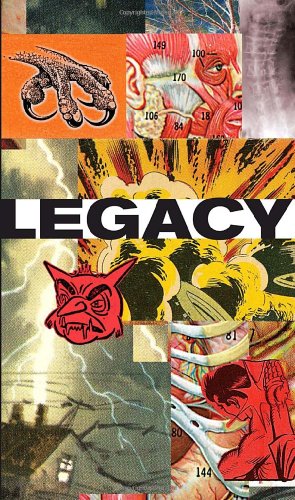
                  What if your deadbeat dad was a superhero?What if you found out your deadbeat father is a superhero? Would you leave your small-town life to take up the mantle of a father you never knew? For 18-year-old Lucas, the choice is an easy one: he's not going to leave behind his mother and his comfortable life for a father who's never shown any interest in him. But his father--known officially as billionaire Clayton Hartwell, and secretly as the vigilante superhero The Raptor--tells Lucas that as he is dying, evil is growing, and the world needs Lucas to become the new Raptor. When Lucas's mother is killed by mysterious warriors, he realizes that his father is right. Once in Seraph City, Lucas is stunned by the amount of poverty and crime. But after observing his father's "heroic" behavior up close, Lucas is left wondering about the line between good and evil. And eventually, he must decide whether to take a stand against the one man who loves him in order to defend a world that desperately needs him.From the Hardcover edition.

                • Cover of Playing for Keeps
                  Playing for Keeps

                  Mur Lafferty · standalone novel · 2007

                  similar byidentityadventurouscontemporarysuperheroour world

                  Mur Lafferty is an American podcaster and writer based in Durham, North Carolina. She was the editor and host of Escape Pod from 2010, when she took over from Serah Eley, until 2012, when she was replaced by Norm Sherman. She is also the host and creator of the podcast I Should Be Writing. Until July 2007, she was host and co-editor of Pseudopod. She was the editor-in-chief of the Escape Artists short fiction magazine Mothership Zeta until it went on hiatus in 2016.

                • Cover of Coils
                  Coils

                  Roger Zelazny & Fred Saberhagen · standalone novel · 1982

                  similar byidentitycontemporaryscience fictionour worldtense

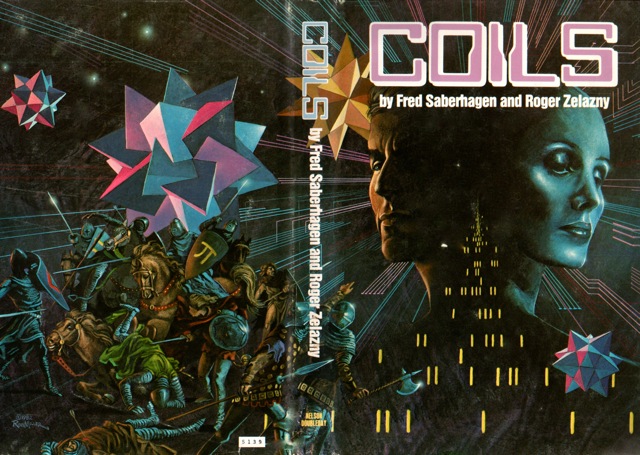
                  A man discovers that his memories of childhood are false, and when he begins to investigate his psychiatrist is murdered and his girlfriend is kidnapped. As his actual past begins to return to his memory, he realizes that he has the ability to mentally connect to computer circuitry, an ability he used to use for illegal advantage for the corporation which employed him, along with a small group of others with paranormal powers. He concludes that the corporation is behind all this and sets out to find and rescue his girlfriend while the corporation pursues him.