Loreful
HomeDiscover
Search series, authors…⌘K
Loreful

Reading orders for SF/F series and shared universes — with your place kept in every one.

Explore

UniversesSeriesWorksAuthorsAtlas

Help

FAQAboutSite map

Account & legal

Sign inCreate accountPrivacyTerms

Data

Built on ISFDB, Wikipedia, Wikidata and Open Library. Curated reading orders carry their reasoning on the page; the rest follow publication order. Data sources & licenses

© Loreful · data: ISFDB · CC BY

More like Masterminds

anchored on:science fictionnorth americacontemporarythriller & suspensecloninggenetic engineering+4 more

but

Mood

The mood the book leaves you in.

  • The reading experience is propelled by journeys, exploration, and physical risk; excitement and forward momentum dominate over dread or introspection.
  • Joy and loss are deliberately mixed; the resolution grants characters something real while taking something else away, leaving warmth and sorrow together.
  • The book demands work from the reader — dense prose, difficult structure, unfamiliar ideas, or morally uncomfortable material — as part of its intended effect.
  • Grim events, cruelty, or despair dominate the atmosphere, and the book does not soften them with comfort or comic relief.
  • The atmosphere is quietly unsettling — wrongness, unease, and the uncanny pervade the book without necessarily escalating into overt horror.
  • The book is built to move the reader; character feeling is foregrounded and major scenes aim at a strong emotional response.
  • Humor is a primary aim and the prose plays for laughs — comic situations, wit, or dialogue produce sustained comedy, not occasional levity.
  • The book insists that things can improve; effort and decency are shown to matter, and the arc bends toward better outcomes even through hardship.
  • The book teaches as it goes — real facts, history, science, or craft are conveyed in enough depth that learning is part of the reading experience.
  • The book is designed to uplift and motivate, presenting perseverance or achievement in a way that invites the reader to aspire or act.
  • The overall register is cheerful and easygoing; stakes are kept gentle and the book avoids dwelling on pain or dread.
  • Withheld information drives the experience; the book sustains enigmas and secrets the reader wants resolved, whatever its genre.
  • The book is contemplative and inward-looking, giving more weight to thought, memory, and meaning than to external events.
  • The book works as comfort reading — low tension, a soothing pace, and an atmosphere the reader can unwind in.
  • Grief, loss, or melancholy set the dominant register, and the book lets sorrow stand rather than resolving it into comfort.
  • Sustained suspense is the point; the book keeps the reader braced for what happens next through danger, pressure, or impending revelation.
  • Playful invention and charm define the register — fanciful conceits, light absurdity, and a narration that delights in its own oddity.

About

What the story runs on.

  • Stories in which extraterrestrial beings are central — as characters, cultures, or the object of the plot.
  • Stories structured as a quest — a journey undertaken to find, deliver, or destroy something of great import.
  • Stories in which staying alive against nature, catastrophe, or scarcity is the central problem.
  • Stories of lovers kept apart by law, family, faith, or station, where the obstacle to love is the plot.
  • Stories in which a friendship — its making, testing, or loss — is the emotional center.
  • Stories of growing up — a young protagonist crossing from childhood into adult knowledge and responsibility.
  • Stories about who a character truly is — self-discovery, doubled lives, and the search for a self.
  • Stories about mourning — living through the death of a loved one and what loss does to the survivors.
  • Stories in which a buried family truth — hidden parentage, crimes, or shames — surfaces and reorders the present.
  • Stories driven by maneuvering for power — factions, conspiracies, and statecraft conducted in shadow.
  • Stories in which war itself is the subject — combat, occupation, and what warfare does to soldiers and civilians.
  • Stories organized around investigating a killing — the case, the clues, and the pursuit of the killer, in any genre's clothing.

Shelf

Where it sits in the library.

    • Fiction built on magic or other supernatural elements that have no scientific explanation.
    • Secondary-world fantasy at large scale, where the fate of nations or the world turns on the protagonists' struggle.
    • Fantasy set in a recognizably modern city or contemporary world where the supernatural intrudes on everyday life.
    • Fantasy that blends in horror's atmosphere and imagery, keeping a fantastical frame around grim or frightening material.
    • Action-driven fantasy following warriors or rogues with personal stakes against sorcerous threats, rather than world-spanning conflicts.
    • Fantasy set in a real historical period or a close analogue of one, with magic woven into the era.
    • Fantasy in which protagonists cross from the ordinary world into another world through a portal or similar passage.
    • Fiction that retells or reworks a traditional fairy tale in a new form or setting.
    • Fantasy drawing directly on myths, legends, and folklore, retelling them or building on their figures and logic.
    • Fantasy of ghosts, vampires, shapeshifters, psychics, and similar phenomena, usually set in an otherwise ordinary world.
    • Fiction mixing science-fictional trappings with overtly magical or impossible elements in one setting.
    • Low-stakes fantasy emphasizing comfort, community, and everyday pleasures over conflict and peril.
    • Speculative fiction of pervasive moral ambiguity, violence, and cynicism that rejects heroic conventions — fantasy and SF alike.
      • Fiction that extrapolates from science and technology — future societies, space travel, or speculative inventions — within at least nominally natural laws.
      • Science fiction of interstellar scope — starships, galactic polities, and adventure across star systems.
      • Science fiction committed to scientific rigor, where technical plausibility constrains the story.
      • Science fiction centered on armed forces and warfare, told largely from a military point of view.
      • Science fiction of networked, corporate-dominated near futures, pairing high technology with social decay.
      • Science fiction styled on nineteenth-century steam-powered technology, often in a Victorian or pseudo-Victorian setting.
      • Fiction depicting an oppressive or catastrophic society, presented as a warning.
      • Fiction set after civilization's collapse, following survivors in the ruins of the old world.
      • Fiction in which characters move between past and future, and the mechanics or consequences of that travel drive the plot.
      • Fiction exploring a world where a historical event went differently and history diverged from ours.
      • Science fiction about humanity's first encounter and communication with an alien intelligence.
      • Science fiction in which extraterrestrial forces attack or occupy Earth and humanity resists.
      • Fiction whose primary aim is to frighten or unsettle the reader through dread, menace, or the monstrous.
      • Horror of vast, indifferent, incomprehensible entities before which humanity is insignificant, in the Lovecraft tradition.
      • Horror of decaying houses, buried family secrets, and oppressive atmosphere in the Gothic literary tradition.
      • Horror centered on hauntings and the returning dead.
      • Horror located in the mind — paranoia, obsession, and unreliable perception rather than external monsters.
      • Horror built around the reanimated dead and survival amid their outbreaks.
      • Horror defined by explicit, transgressive gore that refuses to cut away from violence.
      • Speculative fiction of the strange and uncanny that resists both natural explanation and standard genre categories.
      • Fiction organized around solving a crime or puzzle, typically following an investigator toward the identification of a culprit.
      • A puzzle-first mystery that lays out clues so the culprit's identity can be deduced before the reveal.
      • Crime fiction of moral ambiguity, fatalism, and hard-edged style, set among the corrupt and the doomed.
      • A mystery following the realistic routines of police work — forensics, interviews, and case-building.
      • A gentle mystery with an amateur sleuth, a small community, and violence kept off the page.
      • A mystery set in a past era, where the investigation works within that period's methods and society.
      • Fast-paced fiction driven by imminent danger, pursuit, or high-stakes conspiracy, built to sustain tension.
      • A thriller of espionage — agents, tradecraft, and intelligence services in conflict.
      • A thriller centered on lawyers and the courtroom, where litigation carries the suspense.
      • A thriller driven by detailed contemporary or near-future technology, often military or scientific.
      • A thriller whose tension comes from mental states and manipulation between characters rather than external action.
      • Fiction whose central plot is a romantic relationship and its development toward an emotionally satisfying resolution.
      • Romance in which one or both partners are supernatural beings, blending fantasy elements into the love story.
      • A fantasy-romance hybrid in which the romantic arc and the fantasy plot carry equal weight.
      • Romance set in a past era, with courtship shaped by the period's society and manners.
      • Romance set in the present day, without supernatural or historical elements.
      • Fiction set in a real past period, where the historical setting materially shapes characters and events.
        • General and literary fiction emphasizing prose style, character interiority, or formal ambition over genre plot conventions.
        • Fiction in a realistic world where magical events occur and are treated as ordinary, in the tradition of Latin American literature.
        • Fiction that ridicules people, institutions, or society in order to criticize them.
        • Fiction of dreamlike, irrational imagery and logic that breaks from realistic representation.
        • Fiction that plays with narrative convention through metafiction, fragmentation, and self-reference.
        • Fiction propelled by journeys, exploration, and physical peril, where action and survival carry the plot.
        • Adventure fiction of ships and seafaring — naval engagements, voyages, and life at sea.
        • Fiction of the American frontier West — gunmen, ranchers, and lawmen, typically in the late nineteenth century.
        • Fiction centered on soldiers, campaigns, and the experience of warfare, historical or imagined.
          • Fiction written primarily to amuse, using comedic situations, wit, or parody as its organizing principle.
            • Multi-generational fiction following a family or dynasty across decades, with inheritance and kinship as the through-line.
              • Fiction whose world runs on explicit game mechanics — levels, stats, and skills that characters can see and exploit.
                • Fiction about costumed or superpowered heroes and their conflicts with comparable villains.

                Practical

                How long a commitment, whether it stands alone, and whether it has finished.

                Tap a chip to ask for it · tap again to rule it out · once more to clear. Numbers show what would be left.

                • Cover of Double Helix
                  Double Helix

                  Nancy Werlin · standalone novel · 2004

                  similar bycontemporaryscience fictionmysterioustensethriller & suspensenorth americacloninggenetic engineering+3 more

                  Double Helix (2004) is a novel by American writer Nancy Werlin about 18-year-old Eli Samuels, who works for a famous molecular biologist named Dr. Quincy Wyatt. There is a mysterious connection between Dr. Wyatt and Eli's parents, and all Eli knows about the connection is that it has something to do with his mother, who has Huntington's disease. Because of the connection between Dr. Wyatt and the Samuels family, Eli's father is strongly against Eli working there. The job is perfect, and the wages are great, but Eli can't help but notice that Dr. Wyatt seems to be a little too interested in him. Later on, as Eli continues to work in the lab, he discovers with the help of Kayla Matheson, Dr. Wyatt's supposed "niece," that he and Kayla are the product of a highly unethical eugenics experiment.

                • Cover of The Man from Primrose Lane
                  The Man from Primrose Lane

                  James Renner · standalone novel · 2012

                  similar bycontemporaryscience fictionmysterioustensethriller & suspensenorth americasmall town+1 more

                  The Man From Primrose Lane is an adult science-fiction thriller novel by American author and investigative journalist James Renner. It was published by Sarah Crichton Books in 2012. A television adaptation of the novel was picked up by 20th Television and Working Title Films in 2017.

                • Cover of The Gardener
                  The Gardener

                  S. A. Bodeen · standalone novel · 2010

                  similar bycontemporaryscience fictionmysterioustensethriller & suspensegenetic engineeringyoung adult+2 more

                  When high school sophomore Mason finds a beautiful but catatonic girl in the nursing home where his mother works, the discovery leads him to revelations about a series of disturbing human experiments that have a connection to his own life.

                • Cover of The Experiment
                  The Experiment

                  John Darnton · standalone novel · 1999

                  similar bycontemporaryscience fictionmysterioustensethriller & suspensenorth americagenetic engineering+1 more

                  A member of a group of children being raised in an isolated colony becomes curious and suspicious, and escapes to the US mainland to try and discover what is going on.

                • Cover of Triggers
                  Triggers

                  Robert J. Sawyer · standalone novel · 2012

                  similar bycontemporaryscience fictionmysterioustensethriller & suspensenorth america

                  Triggers is a science fiction novel by Canadian writer Robert J. Sawyer. It was originally serialized in Analog.

                • Cover of Anna to the Infinite Power
                  Anna to the Infinite Power

                  Mildred Ames · standalone novel · 1981

                  similar bycontemporaryscience fictionmysterioustensenorth americacloningidentity

                  A 12-year-old math whiz accidentally learns the startling facts about her true identity and her role in an important secret experiment.

                • Cover of Sphere
                  Sphere

                  Michael Crichton · standalone novel · 1987

                  similar bycontemporaryscience fictionmysterioustensethriller & suspense

                  Keeping Top Secret, the US Navy is guarding a gigantic spaceship that has been lying on the Pacific ocean floor for centuries, overgrown with corals. A group of highly qualified scientists is assembled to investigate this mysterious discovery. When the team boards the ship via an underwater station, they come into confrontation with the evil.

                • Cover of Frameshift
                  Frameshift

                  Robert J. Sawyer · standalone novel · 1997

                  similar bycontemporaryscience fictiontensethriller & suspensenorth americagenetic engineeringfamily secrets

                  Winner of Japan's Seiun Award and Hugo Award finalist Pierre Tardivel is a scientist working on the Human Genome Project with the Nobel Prize winner, Dr. Burian Klimus. A driven man, Pierre works with the awareness that he may not have long to live: he has a fifty-fifty chance of dying from Huntington's disease, an incurable hereditary disorder of the central nervous system. While he still has his health, Pierre and his wife decide to have a child, and they search for a sperm donor. When Pierre informs Dr. Klimus of their plan, Klimus makes an odd but generous offer: to be the sperm donor as well as to pay for the expensive in vitro fertilization. Shortly thereafter it transpires that Klimus might be hiding a grim past: he may be Ivan Marchenko, the notorious Treblinka death-camp guard known as Ivan the Terrible. While digging into Klimus's past with the help of Nazi hunter Avi Meyer, Pierre and his wife discover that Pierre's insurance company has been illegally screening clients for genetic defects. The two lines of investigation begin to coverage in a sinister manner, while they worry about the possibility of bearing the child of an evil, sadistic killer.

                • Cover of Bad Monkeys
                  Bad Monkeys

                  Matt Ruff · standalone novel · 2007

                  similar bycontemporarymysterioustensethriller & suspensenorth americaidentity+1 more

                  Bad Monkeys is a 2007 psychological thriller novel by American author Matt Ruff. It received mixed reviews in national media, but was subsequently optioned for film.

                • Cover of Remember
                  Remember

                  Eileen Cook · standalone novel · 2015

                  similar bycontemporaryscience fictionmysterioustensethriller & suspenseidentitynorth americayoung adult+1 more

                  Harper, whose father's company trademarked the "Memtex" procedure for wiping out bad memories, is surprised when her father objects to her having a treatment but afterwards, she begins having strange flashes about her own life and she joins forces with Neil, one of the company's protesters, to find the truth.

                • Cover of The Santaroga Barrier
                  The Santaroga Barrier

                  Frank Herbert · standalone novel · 1968

                  similar bycontemporaryscience fictionmysteriousnorth americasmall town+1 more

                  Santaroga seemed to be nothing more than a prosperous farm community. But there was something . .. different . .. about Santaroga. Santaroga had no juvenile delinquency, or any crime at all. Outsiders found no house for sale or rent in this valley, and no one ever moved out. No one bought cigarettes in Santaroga. No cheese, wine, beer or produce from outside the valley could be sold there. The list went on and on and grew stranger and stranger.Maybe Santaroga was the last outpost of American individualism. Maybe they were just a bunch of religious kooks... Or maybe there was something extraordinary at work in Santaroga. Something far more disturbing than anyone could imagine. (Publisher's blurb)

                • Cover of Dark Matter
                  Dark Matter

                  Blake Crouch · standalone novel · 2016

                  similar bycontemporaryscience fictiontensethriller & suspenseidentitynorth america

                  Jason Dessen, college physics professor, husband and father, is kidnapped and taken to a parallel universe where his counterpart had dedicated his life to inventing a method of traveling between an infinity of parallel universes.

                • Cover of Double Identity
                  Double Identity

                  Margaret Peterson Haddix · standalone novel · 2005

                  similar bycontemporarymysteriousscience fictionnorth americacloningidentityyoung adultfamily secrets

                  Double Identity is a 2005 young adult novel by Margaret Peterson Haddix.

                • Cover of Firestarter
                  Firestarter

                  Stephen King · standalone novel · 1980

                  similar bycontemporarytensescience fictionthriller & suspensenorth america+1 more

                  WorldCat: Innocence and beauty ignite with evil and terror... First, a man and a woman are subjects of a top-secret government experiment designed to produce extraordinary psychic powers. Then, they are married and have a child. A daughter. Early on the daughter shows signs of a wild and horrifying force growing within her. Desperately, her parents try to train her to keep that force in check, to 'act normal'. Now the government wants its brainchild back for its own insane ends.

                • Cover of Masterminds
                  Masterminds

                  series · 3 books · 2015

                  similar byscience fictioncontemporarytensecloningnorth america+6 more

                • Cover of When the Wind Blows
                  When the Wind Blows

                  series · 2 books · 1998

                  similar bycontemporaryscience fictiontensethriller & suspensegenetic engineeringnorth america+1 more

                • Cover of Flowers for Algernon
                  Flowers for Algernon

                  Daniel Keyes · standalone novel · 1966

                  similar bycontemporaryscience fictionnorth americagenetic engineeringidentity

                  A man with a low IQ becomes the subject of an experimental medical procedure which raises his IQ well over genius level.

                • Cover of Feedback
                  Feedback

                  D. L. Richardson · standalone novel · 2012

                  similar bycontemporaryscience fictionmysterioustensethriller & suspenseidentityyoung adult

                  ● "Three teenagers have one thing in common: they're kidnapped two weeks after receiving life-saving organ transplants. Their abductor is a man who believes the memories of the host are retained in the organs. Extracting these memories is just the beginning. Something else is awakening inside their minds. If they trust this voice they might save the world. But it might also get them killed." ― paraphrased from this book's product page on Amazon.com as of 2024-04-03.

                • Cover of The Grays
                  The Grays

                  Whitley Strieber · standalone novel · 2006

                  similar bycontemporaryscience fictiontensethriller & suspensenorth americagenetic engineeringsmall town

                  Millions of people are confronting aliens that authorities say do not exist. Whitley Strieber -- author of the legendary, #1 bestseller Communion, which detailed his own close encounters -- now returns to the riddle of aliens with The Grays. Drawing on a lifetime of research, Strieber offers up a fictional account of the conspiracy behind alien presence on Earth while also giving us a startling look inside the alien mind that will astound, frighten, and enthrall readers. Meet the Three Thieves, a group of Grays assigned to duty in a small Kentucky town. For decades, they have abducted its residents and manipulated bloodlines trying to create an ultra-intelligent human being. Nine year-old Conner Callahan will face the ultimate terror as he struggles to understand who he has been bred to be, and what he must do to save humanity. Meet Colonel Michael Wilkes, the head of a select group of government and military officials who have been monitoring the Grays for years. Wilkes has done everything in his power to keep the secret of the Grays from the public. But when the Grays begin to reveal themselves, Wilkess fear of occupation forces him to set in motion his own sinister plan to ensure the survival of humanity, but at what cost? The fate of the human race lies with one woman, Lauren Glass, whose unique ability to communicate with the last remaining captive Gray, known as A for Adam, may be the only way humans can truly unravel the Grays ultimate plan. The Grays is a mind-bending journey behind the curtain of secrecy that surrounds the subject of aliens, written by the fields great master. This book will make you think deeply, not only about the mystery of who the Grays are, but who exactly we are.

                • Cover of Vitals
                  Vitals

                  Greg Bear · standalone novel · 2002

                  similar bycontemporaryscience fictiontensethriller & suspensegenetic engineeringnorth america

                  From the flaps of the Del Rey first edition: "Hal Cousins is one of a handful of scientists nearing the most sought after discovery in human history: the key to short-circuiting the aging process. Fueled by a wealth of research, an overdose of self-confidence, and the money of influential patrons to whom he makes outrageous promises, Hal experiments with organisms living in the hot thermal plumes in the ocean depths. But as he journeys beneath the sea, his other world is falling apart. Across the country, scientists are being inexplicably murdered - including Hal's identical twin brother, who is also working to unlock the key to immortality. Hal himself barely eludes a cold-blooded attack at sea, and when he returns home to Seattle, he finds himself walking into an eerie realm where voices speak to him from the dead ... where a once-brilliant historian turned crackpot is leading him on a deadly game of hide-and-seek ... and where the beautiful, rich widow of his twin is more than willing to pick up the pieces of Hal's life-and take him places he's never been before. Suddenly Hal is trapped inside an ever-twisting maze of shocking revelations. For he is not the first person to come close to ending aging forever - and those who came before him will stop at nothing to keep the secret to themselves. Now every person on earth is at risk of being made an unsuspecting player in one man's spectacular and horrifying master plan. From the bottom of Russia's Lake Baikal to a billionaire's bionic house built into the cliffs of the Washington seashore, from the darkest days of World War II and the reign of Josef Stalin to the capitalist free-for-all that is the United States, Vitals tells an astounding tale of the most unimaginable scientific secret of all - exposed by the quest for immortality itself..."

                • Cover of Master of Murder
                  Master of Murder

                  Christopher Pike · standalone novel · 1992

                  similar bycontemporarymysterioustensethriller & suspensenorth americaidentityyoung adult+1 more

                  Marvin was an eighteen-year old senior in high school. He was also America's bestselling author of teenage fiction, writing under a pen name. One day he opened a fan letter postmarked from his local town which said, "I know who you are." More letters arrive, and soon Marvin is caught up in a web of mystery more complex and frightening than his own books.

                • Cover of The Terminal Man
                  The Terminal Man

                  Michael Crichton · standalone novel · 1972

                  similar bycontemporaryscience fictiontensethriller & suspensenorth america

                  The Terminal Man is a novel by American writer Michael Crichton. It is his second novel under his own name, his 12th overall, and is about the dangers of mind control. It was published in April 1972 and also serialized in Playboy in March, April, and May 1972. In 1974, it was made into a film of the same name.

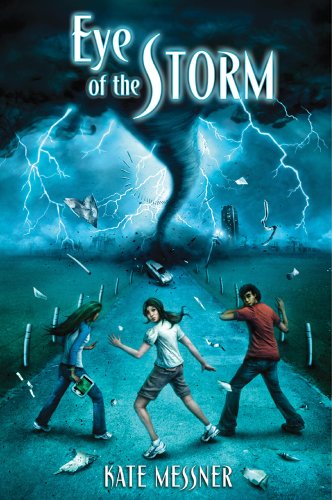
                • Cover of Eye of the Storm
                  Eye of the Storm

                  Kate Messner · standalone novel · 2012

                  similar bycontemporaryscience fictionmysterioustensethriller & suspensenorth americafamily secretsmiddle grade

                  Jaden's summer visit with her meteorologist father, who has just returned from spending four years in Russia conducting weather experiments not permitted in the United States, fills her with apprehension and fear as she discovers that living at her father's planned community, Placid Meadows, is anything but placid.

                • Cover of The Third Twin
                  The Third Twin

                  Ken Follett · standalone novel · 1996

                  similar bycontemporarytensethriller & suspensenorth americacloninggenetic engineeringidentity

                  The Third Twin is a 1996 techno-thriller book by Ken Follett. A New York Times bestseller, the book deals with genetic engineering and the nature and nurture debate through the subject of identical twins raised apart.