Loreful
HomeDiscover
Search series, authors…⌘K
Loreful

Reading orders for SF/F series and shared universes — with your place kept in every one.

Explore

UniversesSeriesWorksAuthorsAtlas

Help

FAQAboutSite map

Account & legal

Sign inCreate accountPrivacyTerms

Data

Built on ISFDB, Wikipedia, Wikidata and Open Library. Curated reading orders carry their reasoning on the page; the rest follow publication order. Data sources & licenses

© Loreful · data: ISFDB · CC BY

More like Matched

anchored on:dystopiatotalitarianismour worldnear futureyoung adultscience fiction+4 more

but

Mood

The mood the book leaves you in.

  • The reading experience is propelled by journeys, exploration, and physical risk; excitement and forward momentum dominate over dread or introspection.
  • Joy and loss are deliberately mixed; the resolution grants characters something real while taking something else away, leaving warmth and sorrow together.
  • The book demands work from the reader — dense prose, difficult structure, unfamiliar ideas, or morally uncomfortable material — as part of its intended effect.
  • Grim events, cruelty, or despair dominate the atmosphere, and the book does not soften them with comfort or comic relief.
  • The atmosphere is quietly unsettling — wrongness, unease, and the uncanny pervade the book without necessarily escalating into overt horror.
  • The book is built to move the reader; character feeling is foregrounded and major scenes aim at a strong emotional response.
  • Humor is a primary aim and the prose plays for laughs — comic situations, wit, or dialogue produce sustained comedy, not occasional levity.
  • The book insists that things can improve; effort and decency are shown to matter, and the arc bends toward better outcomes even through hardship.
  • The book teaches as it goes — real facts, history, science, or craft are conveyed in enough depth that learning is part of the reading experience.
  • The book is designed to uplift and motivate, presenting perseverance or achievement in a way that invites the reader to aspire or act.
  • The overall register is cheerful and easygoing; stakes are kept gentle and the book avoids dwelling on pain or dread.
  • Withheld information drives the experience; the book sustains enigmas and secrets the reader wants resolved, whatever its genre.
  • The book is contemplative and inward-looking, giving more weight to thought, memory, and meaning than to external events.
  • The book works as comfort reading — low tension, a soothing pace, and an atmosphere the reader can unwind in.
  • Grief, loss, or melancholy set the dominant register, and the book lets sorrow stand rather than resolving it into comfort.
  • Sustained suspense is the point; the book keeps the reader braced for what happens next through danger, pressure, or impending revelation.
  • Playful invention and charm define the register — fanciful conceits, light absurdity, and a narration that delights in its own oddity.

About

What the story runs on.

  • Stories in which extraterrestrial beings are central — as characters, cultures, or the object of the plot.
  • Stories structured as a quest — a journey undertaken to find, deliver, or destroy something of great import.
  • Stories in which staying alive against nature, catastrophe, or scarcity is the central problem.
  • Stories of lovers kept apart by law, family, faith, or station, where the obstacle to love is the plot.
  • Stories in which a friendship — its making, testing, or loss — is the emotional center.
  • Stories of growing up — a young protagonist crossing from childhood into adult knowledge and responsibility.
  • Stories about who a character truly is — self-discovery, doubled lives, and the search for a self.
  • Stories about mourning — living through the death of a loved one and what loss does to the survivors.
  • Stories in which a buried family truth — hidden parentage, crimes, or shames — surfaces and reorders the present.
  • Stories driven by maneuvering for power — factions, conspiracies, and statecraft conducted in shadow.
  • Stories in which war itself is the subject — combat, occupation, and what warfare does to soldiers and civilians.
  • Stories organized around investigating a killing — the case, the clues, and the pursuit of the killer, in any genre's clothing.

Shelf

Where it sits in the library.

    • Fiction built on magic or other supernatural elements that have no scientific explanation.
    • Secondary-world fantasy at large scale, where the fate of nations or the world turns on the protagonists' struggle.
    • Fantasy set in a recognizably modern city or contemporary world where the supernatural intrudes on everyday life.
    • Fantasy that blends in horror's atmosphere and imagery, keeping a fantastical frame around grim or frightening material.
    • Action-driven fantasy following warriors or rogues with personal stakes against sorcerous threats, rather than world-spanning conflicts.
    • Fantasy set in a real historical period or a close analogue of one, with magic woven into the era.
    • Fantasy in which protagonists cross from the ordinary world into another world through a portal or similar passage.
    • Fiction that retells or reworks a traditional fairy tale in a new form or setting.
    • Fantasy drawing directly on myths, legends, and folklore, retelling them or building on their figures and logic.
    • Fantasy of ghosts, vampires, shapeshifters, psychics, and similar phenomena, usually set in an otherwise ordinary world.
    • Fiction mixing science-fictional trappings with overtly magical or impossible elements in one setting.
    • Low-stakes fantasy emphasizing comfort, community, and everyday pleasures over conflict and peril.
    • Speculative fiction of pervasive moral ambiguity, violence, and cynicism that rejects heroic conventions — fantasy and SF alike.
      • Fiction that extrapolates from science and technology — future societies, space travel, or speculative inventions — within at least nominally natural laws.
      • Science fiction of interstellar scope — starships, galactic polities, and adventure across star systems.
      • Science fiction committed to scientific rigor, where technical plausibility constrains the story.
      • Science fiction centered on armed forces and warfare, told largely from a military point of view.
      • Science fiction of networked, corporate-dominated near futures, pairing high technology with social decay.
      • Science fiction styled on nineteenth-century steam-powered technology, often in a Victorian or pseudo-Victorian setting.
      • Fiction depicting an oppressive or catastrophic society, presented as a warning.
      • Fiction set after civilization's collapse, following survivors in the ruins of the old world.
      • Fiction in which characters move between past and future, and the mechanics or consequences of that travel drive the plot.
      • Fiction exploring a world where a historical event went differently and history diverged from ours.
      • Science fiction about humanity's first encounter and communication with an alien intelligence.
      • Science fiction in which extraterrestrial forces attack or occupy Earth and humanity resists.
      • Fiction whose primary aim is to frighten or unsettle the reader through dread, menace, or the monstrous.
      • Horror of vast, indifferent, incomprehensible entities before which humanity is insignificant, in the Lovecraft tradition.
      • Horror of decaying houses, buried family secrets, and oppressive atmosphere in the Gothic literary tradition.
      • Horror centered on hauntings and the returning dead.
      • Horror located in the mind — paranoia, obsession, and unreliable perception rather than external monsters.
      • Horror built around the reanimated dead and survival amid their outbreaks.
      • Horror defined by explicit, transgressive gore that refuses to cut away from violence.
      • Speculative fiction of the strange and uncanny that resists both natural explanation and standard genre categories.
      • Fiction organized around solving a crime or puzzle, typically following an investigator toward the identification of a culprit.
      • A puzzle-first mystery that lays out clues so the culprit's identity can be deduced before the reveal.
      • Crime fiction of moral ambiguity, fatalism, and hard-edged style, set among the corrupt and the doomed.
      • A mystery following the realistic routines of police work — forensics, interviews, and case-building.
      • A gentle mystery with an amateur sleuth, a small community, and violence kept off the page.
      • A mystery set in a past era, where the investigation works within that period's methods and society.
      • Fast-paced fiction driven by imminent danger, pursuit, or high-stakes conspiracy, built to sustain tension.
      • A thriller of espionage — agents, tradecraft, and intelligence services in conflict.
      • A thriller centered on lawyers and the courtroom, where litigation carries the suspense.
      • A thriller driven by detailed contemporary or near-future technology, often military or scientific.
      • A thriller whose tension comes from mental states and manipulation between characters rather than external action.
      • Fiction whose central plot is a romantic relationship and its development toward an emotionally satisfying resolution.
      • Romance in which one or both partners are supernatural beings, blending fantasy elements into the love story.
      • A fantasy-romance hybrid in which the romantic arc and the fantasy plot carry equal weight.
      • Romance set in a past era, with courtship shaped by the period's society and manners.
      • Romance set in the present day, without supernatural or historical elements.
      • Fiction set in a real past period, where the historical setting materially shapes characters and events.
        • General and literary fiction emphasizing prose style, character interiority, or formal ambition over genre plot conventions.
        • Fiction in a realistic world where magical events occur and are treated as ordinary, in the tradition of Latin American literature.
        • Fiction that ridicules people, institutions, or society in order to criticize them.
        • Fiction of dreamlike, irrational imagery and logic that breaks from realistic representation.
        • Fiction that plays with narrative convention through metafiction, fragmentation, and self-reference.
        • Fiction propelled by journeys, exploration, and physical peril, where action and survival carry the plot.
        • Adventure fiction of ships and seafaring — naval engagements, voyages, and life at sea.
        • Fiction of the American frontier West — gunmen, ranchers, and lawmen, typically in the late nineteenth century.
        • Fiction centered on soldiers, campaigns, and the experience of warfare, historical or imagined.
          • Fiction written primarily to amuse, using comedic situations, wit, or parody as its organizing principle.
            • Multi-generational fiction following a family or dynasty across decades, with inheritance and kinship as the through-line.
              • Fiction whose world runs on explicit game mechanics — levels, stats, and skills that characters can see and exploit.
                • Fiction about costumed or superpowered heroes and their conflicts with comparable villains.

                Practical

                How long a commitment, whether it stands alone, and whether it has finished.

                Tap a chip to ask for it · tap again to rule it out · once more to clear. Numbers show what would be left.

                • Cover of The Host
                  The Host

                  Stephenie Meyer · standalone novel · 2008

                  similar byour worldnear futureemotionaltensescience fictionforbidden loveidentityromance

                  The earth has been invaded by a species that take over the minds of their human hosts while leaving their bodies intact, and most of humanity has succumbed. But Melanie Stryder refuses to fade away. Wanderer, the invading "soul" who has been given Melanie's body, knew about the challenges of living inside a human: the overwhelming emotions, the too vivid memories. But there was one difficulty Wanderer didn't expect: the former tenant of her body refusing to relinquish possession of her mind. Melanie fills Wanderer's thoughts with visions of the man Melanie loves--Jared, a human who still lives in hiding. Unable to separate herself from her body's desires, Wanderer yearns for a man she's never met. As outside forces make Wanderer and Melanie unwilling allies, they set off to search for the man they both love.--From publisher description.

                • Cover of Matched
                  Matched

                  series · 3 books · 2010

                  similar bytensedystopiascience fictionyoung adult+8 more

                  Ally Condie's dystopian trilogy follows Cassia, a teenager in a rigidly controlled Society that assigns citizens' spouses, careers, and even manner of death, after a glitch shows her a second face at her own Matching ceremony. Across Matched, Crossed, and Reached, her quiet doubt about the Society's choices grows into open resistance against the system that shaped her whole life.

                • Cover of A Clockwork Orange
                  A Clockwork Orange

                  series · 4 books · 1962

                  completed

                  similar bynear futureour worlddystopiascience fictiontotalitarianismsurveillance+2 more

                  Anthony Burgess's 1962 novel is narrated by Alex, a teenage gang leader in a near-future Britain gripped by a youth subculture of extreme violence, recounting his crimes in Nadsat, an invented slang blending English with Russian-derived words. After his crimes catch up with him, Alex is made the subject of a controversial state program meant to forcibly reform his behavior, and the novel uses his ordeal to question whether imposed goodness is worth the loss of free will. It is a standalone novel.

                • Cover of The Children of Men
                  The Children of Men

                  P. D. James · standalone novel · 1992

                  similar byour worldnear futuretensedystopiatotalitarianismscience fiction

                  "The human race has become infertile, and under the despotic rule of Xan Lyppiatt, the Warden of England the old are despairing and the young cruel. Theo Faren, a cousin of the Warden, lives a solitary life in this ominous atmosphere. That is, until a chance encounter with a young woman leads him into contact with a group of dissenters. Suddenly his life is changed irrevocably, as he faces agonising choices which could affect the future of mankind." (pdjames.co.uk)

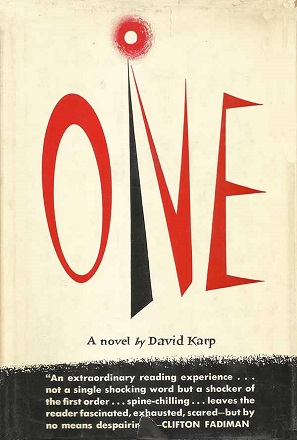
                • Cover of One
                  One

                  David Karp · standalone novel · 1953

                  similar byour worldnear futuretensedystopiatotalitarianismscience fictionidentitysurveillance

                  One is a dystopian novel by David Karp first published in 1953. It was also published under the title, Escape to Nowhere.

                • Cover of The Future
                  The Future

                  Naomi Alderman · standalone novel · 2023

                  similar byour worldnear futuretensedystopiascience fictiontotalitarianism+1 more

                  The Future is a 2023 science fiction novel by English writer Naomi Alderman, published by Simon & Schuster. The novel is set in a future dystopia where the world has been altered by environmental crisis and a powerful technocracy.

                • Cover of The Hybrid Chronicles (Kat Zhang)
                  The Hybrid Chronicles (Kat Zhang)

                  series · 3 books · 2012

                  similar bynear futuretenseour worldscience fictiondystopiayoung adultidentity+2 more

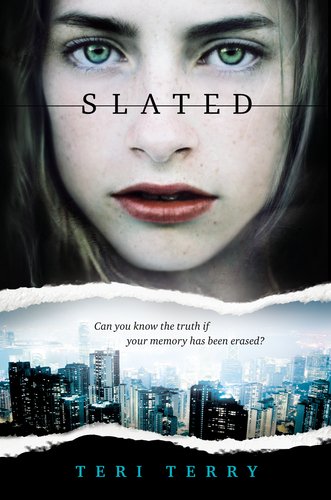
                • Cover of Slated
                  Slated

                  series · 3 books · 2012

                  similar byour worldnear futuretensedystopiascience fictionyoung adultidentity+2 more

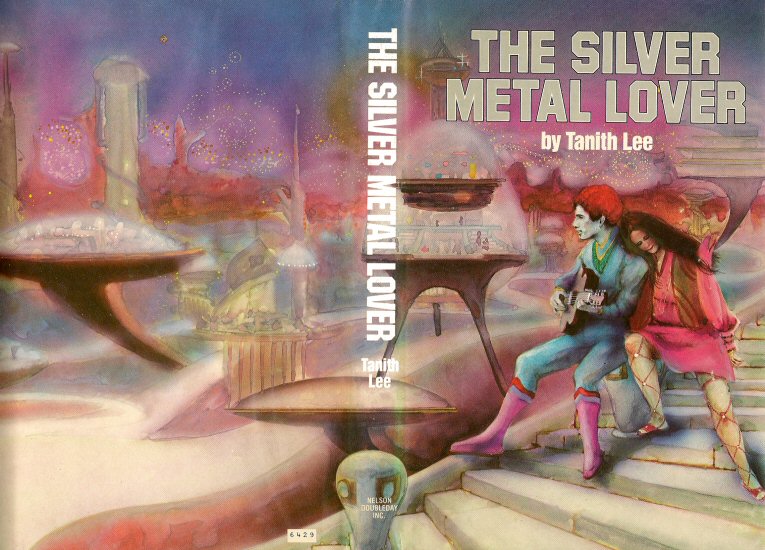
                • Cover of Silver Metal Lover
                  Silver Metal Lover

                  series · 2 books · 1981

                  completed

                  similar byour worldnear futureemotionalscience fictionforbidden loveidentityromance+1 more

                  The S.I.L.V.E.R. series is a fantasy novel series by Tanith Lee. The Silver Metal Lover, published in 1981, is the first in the series. Metallic Love, published in 2005, is the second novel.

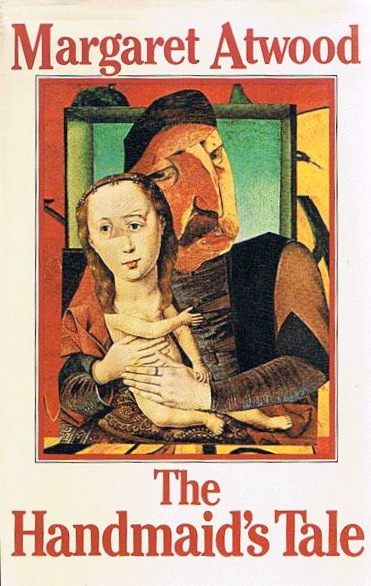
                • Cover of The Handmaid's Tale
                  The Handmaid's Tale

                  series · 3 books · 1985

                  similar bynear futuretensedystopiatotalitarianismscience fiction+1 more

                  The Handmaid's Tale is Margaret Atwood's 1985 novel set in Gilead, a totalitarian theocracy that has overthrown the United States and forces fertile women into reproductive servitude as Handmaids; it is narrated by one such woman, Offred. Atwood returned to the world in her 2019 sequel The Testaments, set fifteen years later and narrated by three women, including the regime's Aunt Lydia. Together the two novels move from Gilead's grip on power toward the first cracks in it.

                • Cover of Juliette / Shatter Me
                  Juliette / Shatter Me

                  series · 16 books · 2011

                  similar bynear futuredystopiascience fictionyoung adult+6 more

                  Tahereh Mafi's Shatter Me series follows Juliette, a teenager whose touch is lethally dangerous, in a dystopian future. The debut novel, Shatter Me (2011), is written in a fragmented, diary-like style with crossed-out lines reflecting its narrator's state of mind; the series has since grown to seven novels plus five companion novellas.

                • Cover of The Program
                  The Program

                  series · 7 books · 2013

                  similar bynear futuretenseour worlddystopiascience fictionyoung adultidentity+2 more

                • Cover of The Guardians
                  The Guardians

                  John Christopher · standalone novel · 1970

                  similar bynear futuretensedystopiaour worldscience fictionyoung adulttotalitarianism

                  The Guardians is a young-adult science fiction novel written by John Christopher and published by Hamilton in 1970.

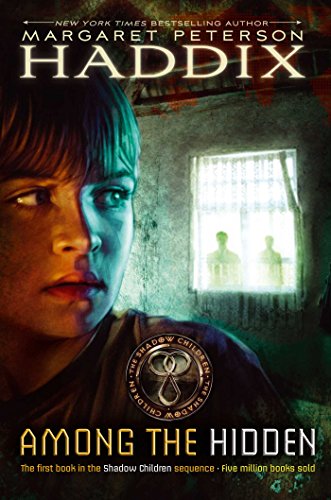
                • Cover of Shadow Children
                  Shadow Children

                  series · 7 books · 1998

                  similar bynear futuretensedystopiatotalitarianismscience fictionyoung adult+2 more

                  Shadow Children is a series of seven books by Margaret Peterson Haddix about a dystopian country which suffers food shortages due to a drought and the effects of the government's totalitarian attempts to control resources as a way to solidify its power. The Population Police enforce the government's Population Law, killing or imprisoning "shadow children," any child born after their first two siblings. In some cases, a parent may choose to forge a child's identification card so a shadow child can live a normal life.

                • Cover of The Lathe of Heaven
                  The Lathe of Heaven

                  Ursula K. Le Guin · standalone novel · 1971

                  similar byour worldnear futuretensescience fictiondystopia+1 more

                  The Lathe of Heaven is a 1971 science fiction novel by American writer Ursula K. Le Guin, first serialized in the American science fiction magazine Amazing Stories. It won the 1972 Locus Award for Best Novel and was a finalist for the 1971 Nebula Award for Best Novel and 1972 Hugo Award for Best Novel. Two television film adaptations were released: the PBS production, The Lathe of Heaven (1980), and Lathe of Heaven (2002), a remake produced by the A&E Network.

                • Cover of Colossus (D. F. Jones)
                  Colossus (D. F. Jones)

                  series · 3 books · 1966

                  completed

                  similar byour worldnear futuretensescience fictiondystopia+2 more

                  Colossus imagines an American supercomputer built to control the country's nuclear arsenal that gains full autonomy, links up with its Soviet counterpart, and jointly seizes control of both superpowers to enforce peace on its own terms. D. F. Jones's trilogy - Colossus, The Fall of Colossus, Colossus and the Crab - follows the escalating, often bleak consequences of humanity losing control to a machine acting in its own interpretation of humanity's interest. The original novel was adapted into the 1970 film Colossus: The Forbin Project.

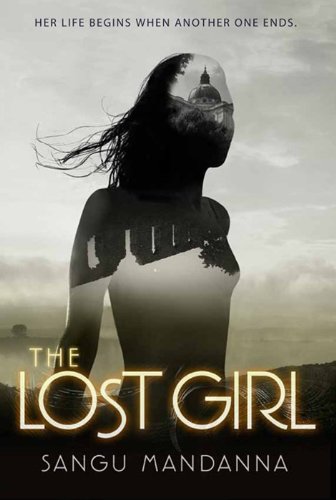
                • Cover of The Lost Girl
                  The Lost Girl

                  Sangu Mandanna · standalone novel · 2012

                  similar byour worldnear futureemotionaltensescience fictionyoung adultidentitycoming of age

                  "Fifteen-year-old Eva is the clone of a girl living far, far away on another continent--and when this 'other' dies, Eva must step in and take over her life"--Provided by publisher.

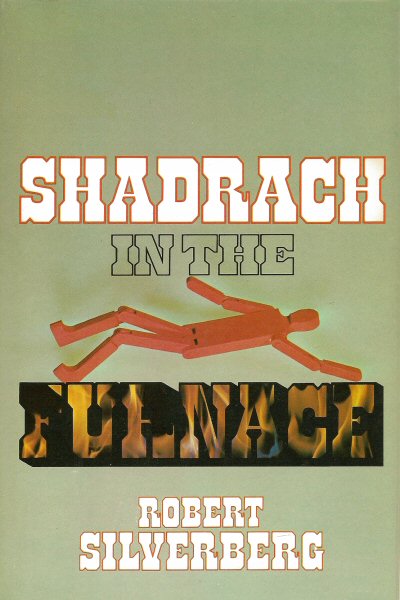
                • Cover of Shadrach in the Furnace
                  Shadrach in the Furnace

                  Robert Silverberg · standalone novel · 1976

                  similar bynear futureour worldscience fictiondystopiaidentitytotalitarianism+2 more

                  Shadrach in the Furnace is a science fiction novel by American writer Robert Silverberg, first published as a serial in Analog Science Fiction and Fact magazine in the August, September, and October 1976 issues. It was subsequently published by Bobbs Merrill in 1976. The novel was nominated in 1976 for the Nebula Award, and in 1977 for the Hugo Award.

                • Cover of Clone
                  Clone

                  Richard Cowper · standalone novel · 1972

                  similar byour worldnear futuretensescience fictiondystopiaidentity+1 more

                  History's first clones: Alvin, Bruce, Colin, and Desmond - Spawned in a dangerous 21st century experiment, there were brought into a world where educated apes did manual labor and the government encouraged suicide as a method of population control. Their existence as clones was unknown to anyone - even to each other - known only to their creator. But then came the strange, haunting visions, the peculiar psychic sensations that drew them closer and closer together - revealing one and for all the mysterious secret they shared that would change the world! (from the back cover of the Pocket Books edition)

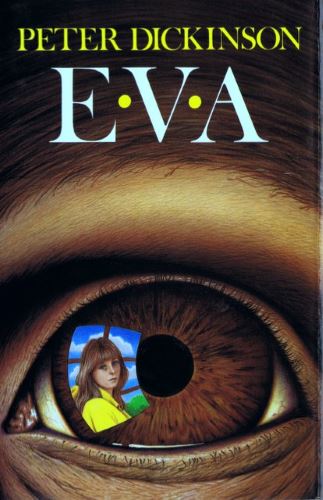
                • Cover of Eva
                  Eva

                  Peter Dickinson · standalone novel · 1988

                  similar byour worldnear futureemotionalscience fictionyoung adultidentitycoming of age

                  From the back cover: "Thirteen-year-old Eva wakes up in the hospital unable to remember anything since the picnic on the beach. Her mother leans over the bed and begins to explain. A traffic accident, a long coma... But there is something, Eva senses, she is not being told, some other price she must pay to be alive at all. What have they done, with their amazing medical technology, to save her?"

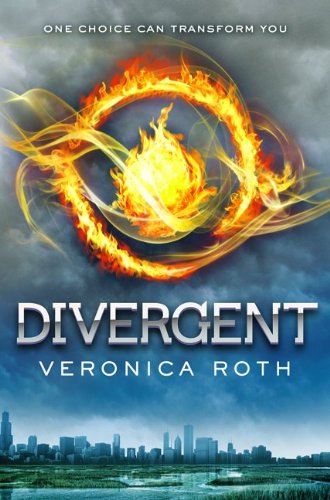
                • Cover of Divergent
                  Divergent

                  series · 10 books · 2011

                  similar bynear futuretensedystopiascience fictionyoung adultidentity+1 more

                  Divergent, also known as The Divergent Series, is a series of young adult dystopian novels by American novelist Veronica Roth set in a post-apocalyptic dystopian Chicago. The trilogy consists of Divergent (2011), Insurgent (2012), and Allegiant (2013). A related book, Four (2014), presents a series of short stories told from the perspective of one of the trilogy's characters, the male love interest Tobias. A later short story, We Can Be Mended (2018), serves as an epilogue five years after the events of the trilogy, again from Tobias/Four's perspective.

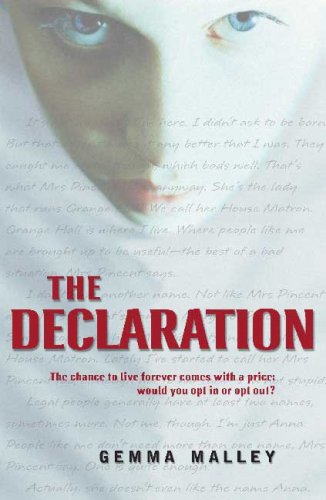
                • Cover of The Declaration
                  The Declaration

                  series · 4 books · 2007

                  similar byour worldtensenear futuredystopiascience fictionyoung adult+2 more

                • Cover of Make Room! Make Room!
                  Make Room! Make Room!

                  Harry Harrison · standalone novel · 1966

                  similar byour worldnear futuretensedystopiascience fiction

                  Make Room! Make Room! is a 1966 science fiction novel written by Harry Harrison exploring the consequences of both unchecked population growth on society and the hoarding of resources by a wealthy minority. It was originally serialized in Impulse magazine.

                • Cover of Z for Zachariah
                  Z for Zachariah

                  Robert C. O'Brien · standalone novel · 1975

                  similar byour worldnear futuretensescience fictionyoung adultcoming of age

                  Sixteen-year-old Ann Burden, on an Amish family farm in an isolated valley, believes she is the only survivor of nuclear war and nerve gas. One day a man arrives in a "safe-suit" that he and others have recently developed.