More like Max
but
- Cell
Stephen Kingstandalone novel2006
similar bydystopiaour worldcontemporaryscience fiction
In Cell, King taps into readers fears of technological warfare and terrorism. Mobile phones deliver the apocalypse to millions of unsuspecting humans by wiping their brains of any humanity, leaving only aggressive and destructive impulses behind. Those without cell phones, like illustrator Clayton Riddell and his small band of "normies," must fight for survival, and their journey to find Clayton's estranged wife and young son rockets the book toward resolution.
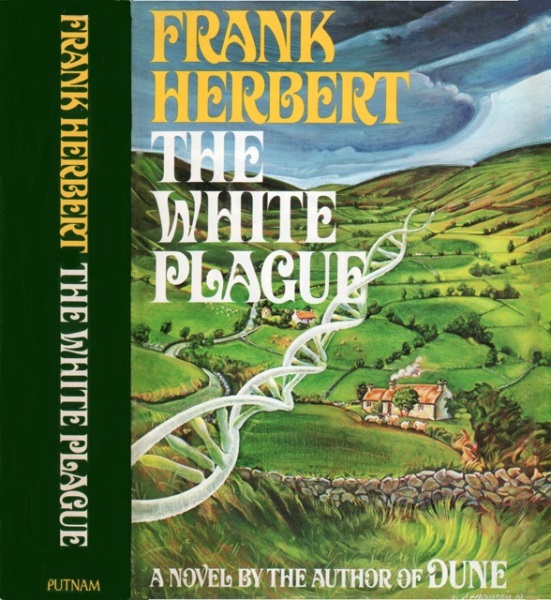
- The White Plague
Frank Herbertstandalone novel1982
similar bydystopiaour worldscience fiction+1 more
The White Plague is a 1982 science fiction novel by American author Frank Herbert about an engineered disease which kills only women. It was nominated for a best science fiction novel Locus Award in 1983.
- The Fourth Realm
series3 books2005
similar bydystopiaour worldcontemporaryscience fiction
The Fourth Realm Trilogy refers to the trilogy of books written by pseudonymous author John Twelve Hawks and published between 2004 and 2009. The trilogy has been translated into 25 languages and has sold more than 1.5 million books.
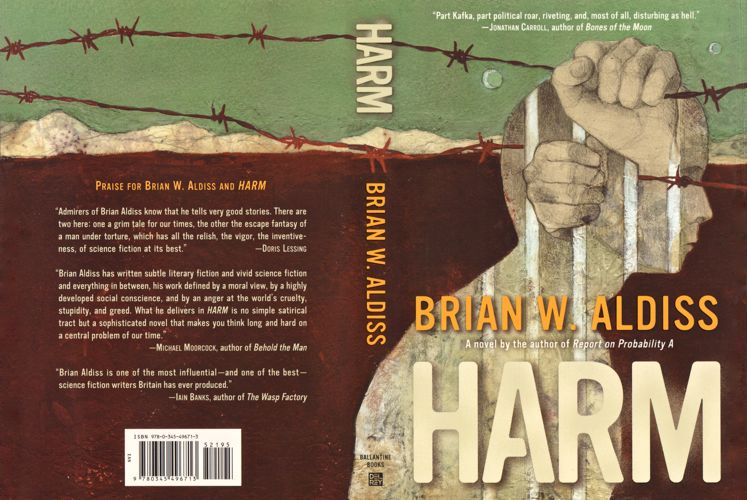
- HARM
Brian W. Aldissstandalone novel2007
similar byour worldcontemporaryscience fiction+1 more
"... a young writer of light fiction with a Muslim heritage has been arrested for no compelling reason. He is held as Prisoner B, in HARM ... and isolated. To evade this misery Prisoner B escapes - through his split personality - to a science fiction-like planet ruled by insects. But gradually the two worlds start to converge ..."
- Richard Forthrast
series2 books2011
similar byour worldscience fiction+1 more
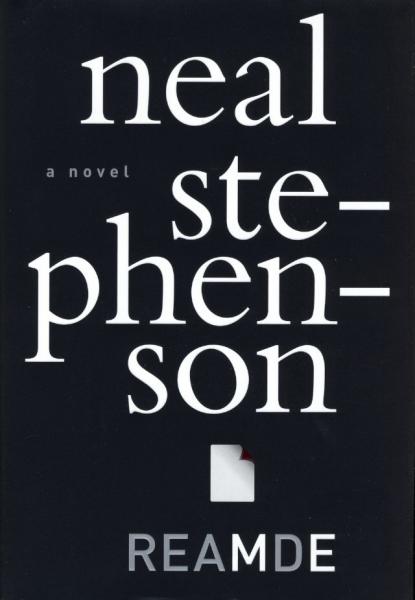
Neal Stephenson's Richard 'Dodge' Forthrast novels open with Reamde, a globe-spanning thriller that starts when ransomware inside an MMORPG economy pulls Richard's extended family into a real-world hostage crisis involving hackers, jihadists and Russian mobsters. The sequel Fall; or, Dodge in Hell shifts registers entirely, following Richard's digitally preserved mind after death into an afterlife simulation built from his scanned brain. The two books share a protagonist and family but differ sharply in genre and scale.
- A Clockwork Orange
series4 books1962
completed
similar bydystopiaour worldscience fiction
Anthony Burgess's 1962 novel is narrated by Alex, a teenage gang leader in a near-future Britain gripped by a youth subculture of extreme violence, recounting his crimes in Nadsat, an invented slang blending English with Russian-derived words. After his crimes catch up with him, Alex is made the subject of a controversial state program meant to forcibly reform his behavior, and the novel uses his ordeal to question whether imposed goodness is worth the loss of free will. It is a standalone novel.
- Spark
John Twelve Hawksstandalone novel2014
similar byour worldcontemporaryscience fiction+1 more
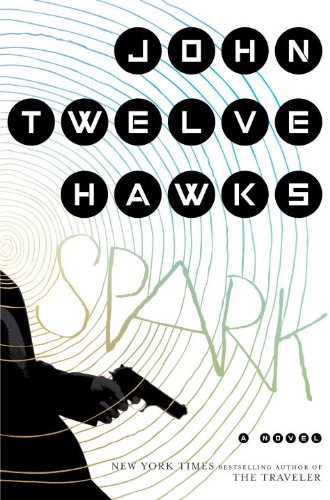
Spark is John Twelve Hawks's fourth novel, published in 2014 in the United States and Great Britain. It is a stand-alone novel that does not use the characters or setting of Hawks's Fourth Realm Trilogy. Film rights for the book were sold to DreamWorks.
- Little Brother
series7 books2008
similar bycontemporaryscience fiction+2 more
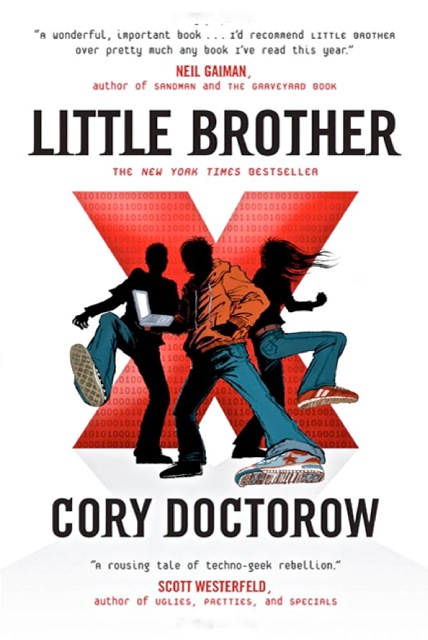
Cory Doctorow's Little Brother follows Marcus, a San Francisco teenager who builds a covert mesh network, the Xnet, to organize resistance after the Department of Homeland Security uses a terrorist attack as pretext for mass surveillance and civil-rights violations. Homeland continues Marcus's fight years later, and Attack Surface completes the trilogy; a companion story, 'Lawful Interception,' and other short pieces extend the same near-future world. Throughout, the series doubles as a working explanation of the surveillance and cryptography tools its characters use.
- Left Behind: The Kids
series40 books1998
part of Left Behind
similar bydystopiaour worldscience fiction+1 more
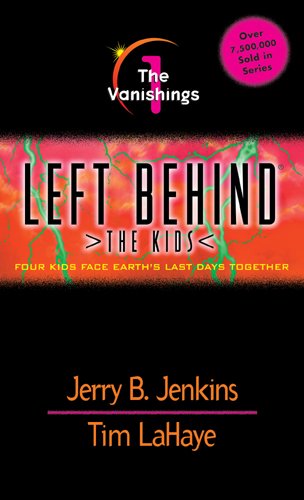
Left Behind: The Kids is a series of young adult speculative fiction novellas based on the Left Behind series, published by Tyndale House from 1998 to 2005. Written by Jerry B. Jenkins, Tim LaHaye, with uncredited contributions from Chris Fabry, The Kids follows a group of young Christians as they experience the Rapture and Great Tribulation.
- I Will Fear No Evil
Robert A. Heinleinstandalone novel1970
similar bydystopiaour worldscience fiction
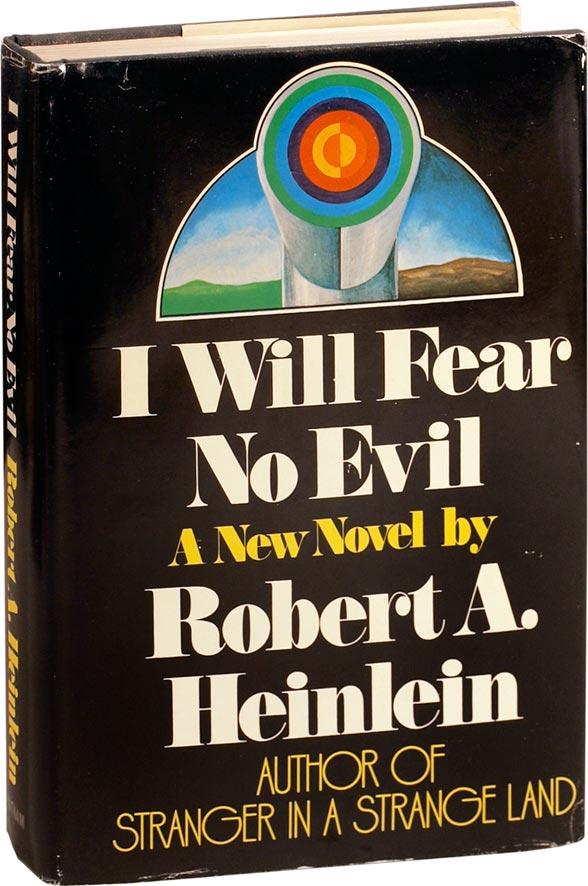
I Will Fear No Evil is a science fiction novel by American writer Robert A. Heinlein, originally serialised in Galaxy and published in hardcover in 1970. The title is taken from Psalm 23:4.
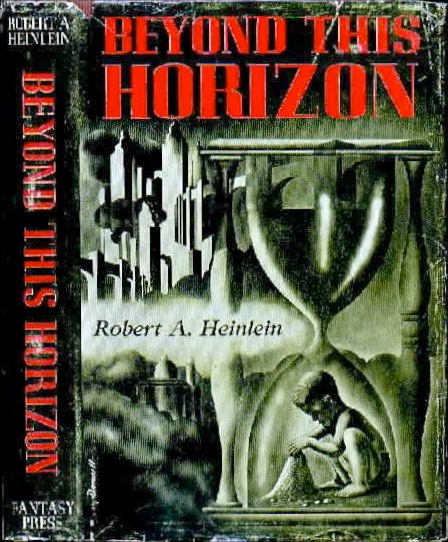
- Beyond This Horizon
Robert A. Heinleinstandalone novel1948
similar bydystopiaour worldscience fiction
From the front flap of a 2001 Baen reprint: "Utopia has been achieved. For centuries, disease, hunger, poverty, and war have been things found only in the history tapes. And applied genetics has given men and women the bodies of athletes and a lifespan of over a century. They should all have been very happy... But Hamilton Felix is bored. And he is the culmination of a star line, each of his last thirty ancestors chosen for superior genes. Hamilton is, as far as genetics can produce one, the ultimate man. And this ultimate man can see no reason why the human race should survive, and has no intention of continuing the pointless comedy. However, Hamilton's life is about to become less boring. A secret cabal of revolutionaries who find utopia not just boring, but desperately in need of leaders who know just What Needs to be Done, are planning to revolt and put themselves in charge. Knowing of Hamilton's disenchantment with the modern world, they have recruited him to join their Glorious Revolution. Big mistake! The revolutionaries are about to find out that recruiting a superman was definitely not a good idea..."
- I Am Legend
Richard Mathesonstandalone novel1954
similar bydystopiaour worldscience fiction
The last human survivor of the vampire epidemic has to maintain his defences against their onslaught, while attempting to research the cause and possibly solution to the plague. Robert Neville is the last living man on Earth... but he is not alone. Every other man, woman and child on the planet has become a vampire, and they are hungry for Neville's blood. By day he is the hunter, stalking the undead through the ruins of civilization. By night, he barricades himself in his home and prays for the dawn. How long can a man survive like this?
- The Testimony
James Smythestandalone novel2012
similar byour worldcontemporaryscience fiction+1 more
From the publisher's website: A global thriller presenting an apocalyptic vision of a world on the brink of despair and destruction.What would you do if the world was brought to a standstill? If you heard deafening static followed by the words, 'My children. Do not be afraid'? Would you turn to God? Subscribe to the conspiracy theories? Or put your faith in science and a rational explanation? The lives of all twenty-six people in this account are affected by the message. Most because they heard it. Some because they didn't. The Testimony – a gripping story of the world brought to its knees and of its people, confused and afraid.
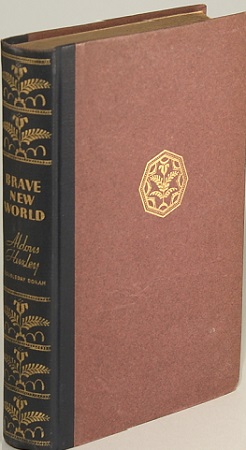
- Brave New World
series8 books1932
similar bydystopiascience fiction+1 more
Aldous Huxley's 1932 novel imagines a future World State where reproduction, social caste, and desire are all engineered before birth, and the population is kept content through conditioning, sleep-hypnosis, and a mood-altering drug called soma. The story follows the disruption this seemingly stable order suffers when an outsider raised beyond its reach is brought into it, exposing what the society traded away for comfort and order. Some editions pair the novel with Huxley's own 1958 nonfiction essay collection, Brave New World Revisited, which reassesses the book's ideas rather than continuing its story.
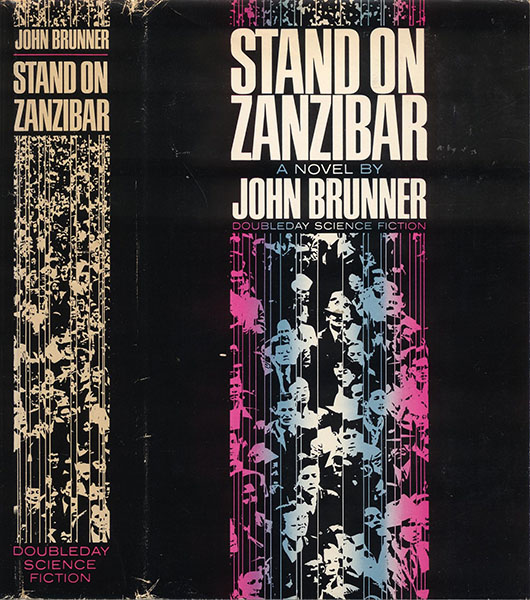
- Stand on Zanzibar
John Brunnerstandalone novel1968
similar bydystopiaour worldscience fiction
Stand on Zanzibar is a dystopian New Wave science fiction novel written by John Brunner and first in part published in New Worlds magazine in 1967 and in book form in 1968. The book won a Hugo Award for Best Novel at the 27th World Science Fiction Convention in 1969, as well as the 1969 BSFA Award and the 1973 Prix Tour-Apollo Award.
- Lord of the Flies
William Goldingstandalone novel1954
similar byour world+2 more
Lord of the Flies is the 1954 debut novel of British author William Golding. The plot concerns a group of prepubescent British boys who are stranded on an uninhabited island and their disastrous attempts to govern themselves that lead to a descent into savagery. The novel's themes include morality, leadership, and the tension between civility and chaos.