More like Maximum Violence
anchored on:our worldnear futurezombie horror
but
- World War Z
series3 books2006
similar byzombie horrorsurvivalwarour worlddarktensepost-apocalyptic+1 more
- H. G. Wells' War of the Worlds
universe65 books1898
Start hereThe War of the Worlds · Start here
similar byscience fiction+2 more
No one would have believed, in the closing years of the nineteenth century, that human affairs were being watched keenly and closely from the timeless worlds of space. And then the cylinders fell. H. G. Wells' War of the Worlds opens in the quiet of the Surrey commons, where a falling star proves to be the first Martian craft — and from the pit rise the towering tripods, the Heat-Ray, the choking Black Smoke and the creeping red weed, wielded by minds that regard mankind much as we regard the creatures we boil for supper. This is invasion rendered as natural disaster: cold, methodical, and vast beyond argument. Wells' 1898 novel is the seed; everything else grows from that Martian soil. The catalogue gathers direct sequels and continuations alongside a wide field of other hands. In War of the Worlds: Global Dispatches the invasion is retold across the whole planet through the eyes of Twain, Verne, Tolstoy, Lowell and Kipling; in the Manly Wade and Wade Wellman crossover, Sherlock Holmes, Watson and Professor Challenger take the field against the machines; and Scott Washburn's Great Martian War stretches the fighting into a decades-long alternate history of steam, artillery and grinding attrition. It is a loose shared world — no single decreed sequence, many voices answering one calamity. What sets this world apart is its refusal of heroics: the invaders fall not to generals but to the smallest things of Earth, humbling and indifferent. Begin, always, with Wells' original novel — it is short, and it is the ground every later book stands upon. From there follow your appetite: Global Dispatches for the panorama, the Holmes campaign for adventure, Washburn for the long war.
- Final Blackout
L. Ron Hubbardstandalone novel1948
similar bynear futurewardarktenseour worldscience fictionpost-apocalyptic+1 more
Final Blackout is a dystopic science fiction novel by American writer L. Ron Hubbard. The novel is set in the future and follows a man known as "the Lieutenant" as he restores order to England after a world war. First published in serialized format in 1940 in the science fiction magazine Astounding Science Fiction, Final Blackout was published in book form in 1948 by The Hadley Publishing Co. Author Services Inc. published a hardcover edition of the book in 1988, and in 1989 the Church of Scientology-affiliated organization Bridge Publications said that a film director named Christopher Cain had signed a contract to write and direct a movie version based on the book.
- Down to a Sunless Sea
David Grahamstandalone novel1979
similar byour worldnear futuresurvivalwardarktensescience fictionpost-apocalyptic
David Graham's Down to a Sunless Sea (1979) is a post-apocalyptic novel about a planeload of people during and after a short nuclear war, set in a near-future world where the USA is critically short of oil. The title of the book is taken from a line of the poem Kubla Khan by Samuel Taylor Coleridge.
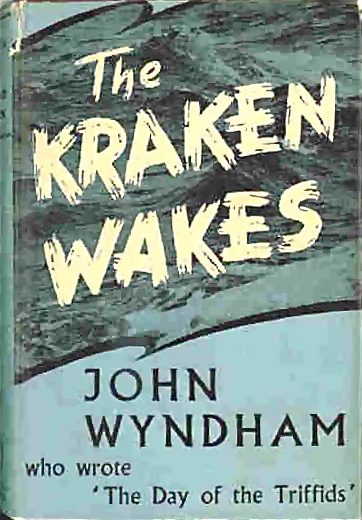
- The Kraken Wakes
John Wyndhamstandalone novel1953
similar byour worldsurvivalwardarktensescience fictionpost-apocalyptic
" Behind a spectacular meteor shower actually hides the beginning of an invasion by a mysterious and powerful alien race. Earth's life is disrupted by the attacks of extraterrestrials whose war machines, emerging from the depths of the oceans, seem indestructible. The coalitioned forces of the whole world are worthless, powerless in the face of the indecipherable and deadly plans of a superior intelligence, capable of bringing the entire planet to the brink of catastrophe" Goodreads May 20, 2022
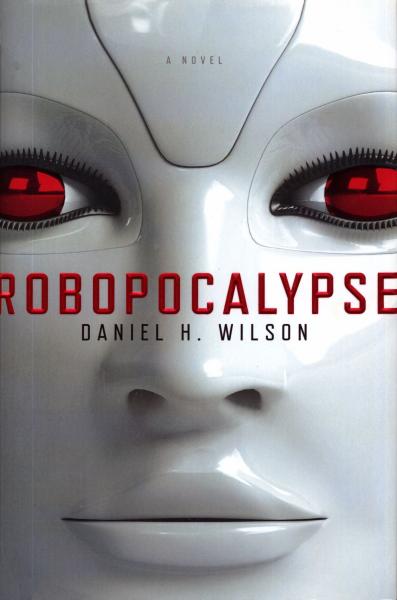
- Robopocalypse
series3 books2011
similar byour worldnear futuresurvivalwardarktensescience fiction+1 more
Daniel H. Wilson's Robopocalypse (2011) depicts an artificial intelligence, born from a robotics researcher's experiments, that turns against humanity and seizes control of interconnected machines worldwide. Told in a present-tense, techno-thriller style compared to Michael Crichton's work, the New York Times bestseller continues in the sequel Robogenesis, which follows the aftermath of the robot uprising.
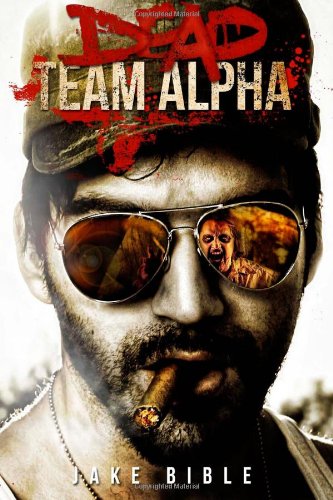
- Dead Team Alpha / No Easy Dead
series2 books2014
similar byzombie horrornear futureour worldscience fiction+1 more
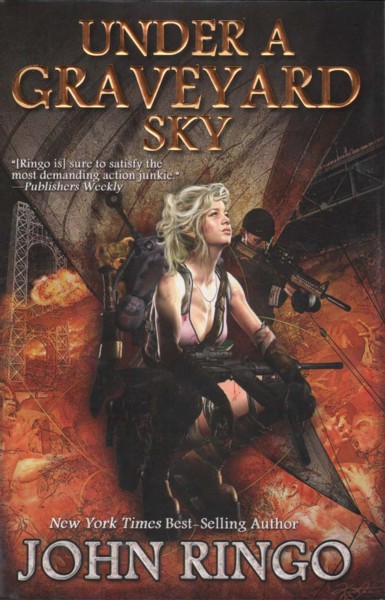
- Black Tide Rising (John Ringo)
series63 books2013
similar byscience fictionpost-apocalyptic+7 more
Black Tide Rising opens with a bioengineered plague that turns most of humanity into feral, aggressive threats, following the Smith family as they refit an old sailboat and fight to survive and rebuild some form of civilization from the wreckage. John Ringo's original quartet spawned an extended shared-world series co-written with several collaborators, following other survivor groups through the same collapse. It sits in military-flavored post-apocalyptic SF rather than traditional fantasy.
- War Against the Chtorr
series7 books1983
similar bynear futuresurvivalwardarktensescience fictionpost-apocalyptic+2 more
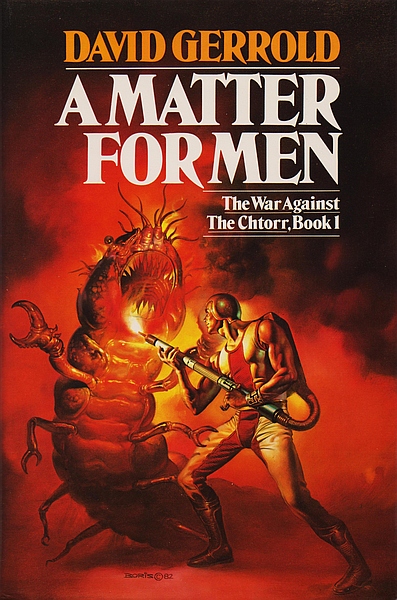
The War Against the Chtorr is a series of science fiction novels by American writer David Gerrold. The Chtorr series was originally planned as a trilogy, but as the story became more intricate, Gerrold realized that three books would not be enough for him to tell the entire story. For a time, he was uncertain how many books there would be in the end but plans on seven. As of 2022, four books have been completed. As of 2017, a fifth and sixth were in the works, 24 years after the publication of the fourth book.
- Library of America P. K. Dick Collection
series9 books1962
completed
similar bynear futurescience fiction+2 more
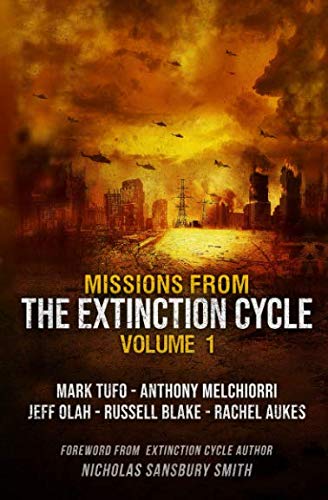
- Missions from the Extinction Cycle
series2 books2019
part of Extinction Cycle
similar byour worldnear futuresurvivaldarktensescience fictionpost-apocalyptic+2 more
- The Enemy (Charlie Higson)
series7 books2009
similar byzombie horrorsurvivaldarktensepost-apocalyptic+2 more
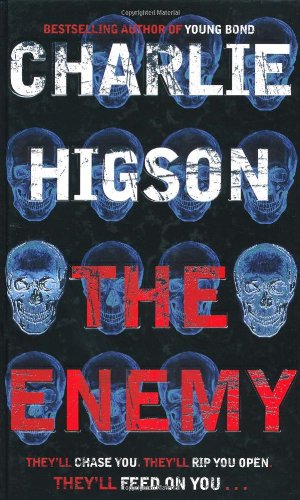
The Enemy opens Charlie Higson's seven-book YA horror series, set in London after a mysterious sickness turns every adult into a voracious, flesh-hungry threat and leaves children to fend for themselves in a city gone feral. Each subsequent book (The Dead, The Fear, The Sacrifice, The Fallen, The Hunted, The End) follows different groups of survivors as the outbreak's scope and cause slowly come into focus. Higson also wrote a short companion book, Geeks vs. Zombies, alongside the main series.
- Zom-B
series12 books2012
similar byzombie horrorsurvivaldarktenseour worldpost-apocalyptic
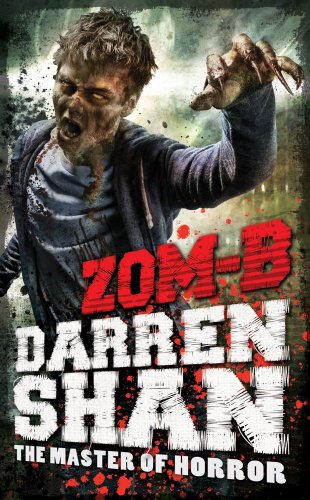
Zom-B is a young adult zombie apocalyptic-thriller novel series by written by Irish author Darren O'Shaughnessy under the pen name Darren Shan. The series is told by first-person perspective of B Smith, a teenager turned into a zombie. Like Shan's previous series, Zom-B is notable for exploring themes of racism, xenophobia, and the sociological concept of "us and them".
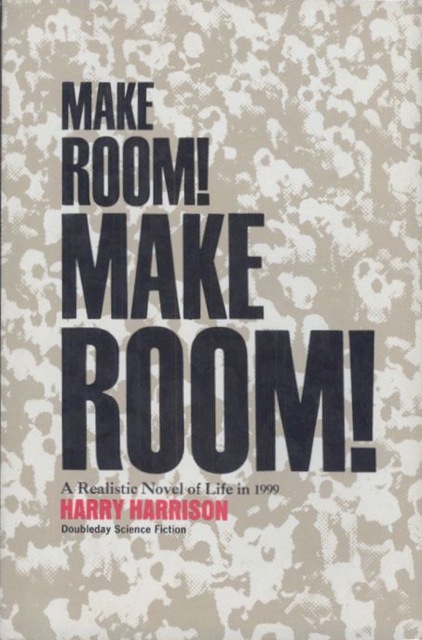
- Make Room! Make Room!
Harry Harrisonstandalone novel1966
similar byour worldnear futuresurvivaldarktensescience fiction
Make Room! Make Room! is a 1966 science fiction novel written by Harry Harrison exploring the consequences of both unchecked population growth on society and the hoarding of resources by a wealthy minority. It was originally serialized in Impulse magazine.
- Lord of the Flies
William Goldingstandalone novel1954
similar bysurvivaldarktenseour world+2 more
Lord of the Flies is the 1954 debut novel of British author William Golding. The plot concerns a group of prepubescent British boys who are stranded on an uninhabited island and their disastrous attempts to govern themselves that lead to a descent into savagery. The novel's themes include morality, leadership, and the tension between civility and chaos.
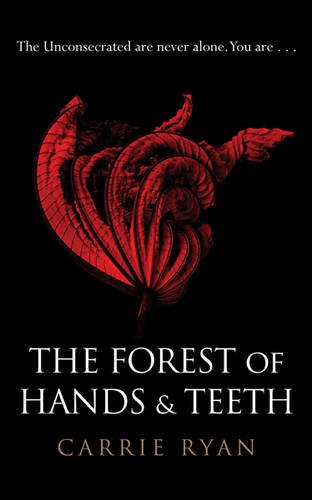
- Forest of Hands and Teeth
series9 books2009
similar byzombie horrorsurvivaldarktensenear futurepost-apocalyptic+1 more
Carrie Ryan's debut trilogy is set generations after an apocalypse turned much of humanity into the mindless, cannibalistic "Unconsecrated," following young women in a small walled village whose protective fence keeps the undead out and its residents locked into a repressive, secretive society. The Forest of Hands and Teeth follows the first heroine's break from that village into the wider, undead-infested world; The Dead-Tossed Waves and The Dark and Hollow Places carry the aftermath forward through new narrators. It is YA horror more concerned with the fear and control inside the fences than with survivalist action.
- Commander-1
Peter Georgestandalone novel1965
similar byour worldnear futuresurvivalwardarktensescience fictionpost-apocalyptic
Commander-1 is a 1965 novel by Welsh author Peter Bryan George and deals with the aftermath of a nuclear war between the United States, the Soviet Union and the People's Republic of China. It was George's last published work, with the author committing suicide in 1966.
- The Fireman
Joe Hillstandalone novel2016
similar byour worldnear futuresurvivaldarktensescience fictionpost-apocalyptic
The Fireman is a novel set in a post-apocalyptic time by American author Joe Hill. The novel, Hill's fourth, tells the tale of a deadly spore that has infected most of the world's population. Hill first spoke of the novel in 2013 in promotional interviews for his then-new novel NOS4A2. The novel was released on May 17, 2016.
- The War in the Air
H. G. Wellsstandalone novel1908
similar byour worldwartensescience fictionmilitary science fiction+2 more
The War in the Air: And Particularly How Mr. Bert Smallways Fared While It Lasted is a military science fiction novel written by H. G. Wells and published in 1908.
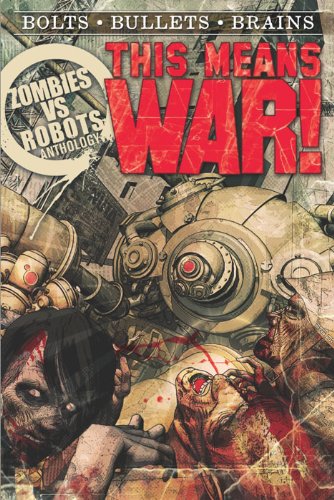
- Zombies vs. Robots
series8 books2012
similar byzombie horrordarkour worldnear futurescience fiction+3 more
- Dune
series20 books1963
part of Dune Universe
similar byscience fiction+2 more
Frank Herbert's Dune Chronicles opens with 1965's Dune, set on the desert planet Arrakis where House Atreides takes control of the only source of the vital spice melange and young Paul Atreides is pulled into a struggle over its politics and religion. Herbert carried the story forward across five further novels — Dune Messiah, Children of Dune, God Emperor of Dune, Heretics of Dune, and Chapterhouse: Dune — following Paul's line over the following millennia, before Brian Herbert and Kevin J. Anderson later extended the saga. Many other editions of these six novels are omnibus and box-set repackagings rather than separate stories.
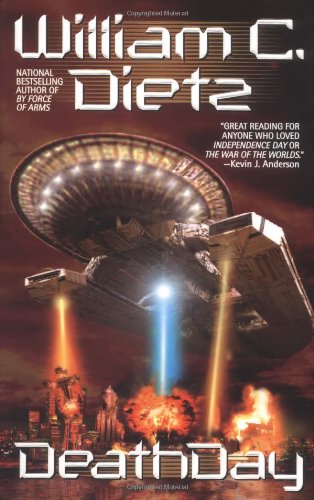
- DeathDay
series2 books2001
completed
similar bynear futuretensescience fictionmilitary science fiction+2 more
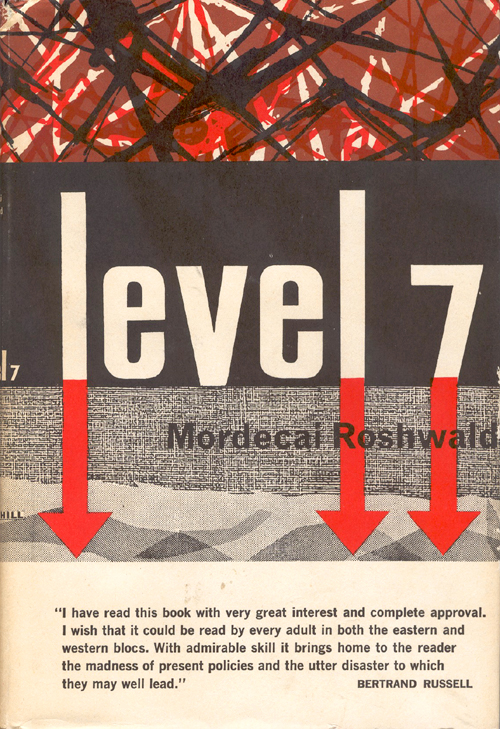
- Level 7
Mordecai Roshwaldstandalone novel1959
similar bynear futuresurvivalwardarktensescience fictionpost-apocalyptic
Level 7 is a 1959 science fiction novel by American writer Mordecai Roshwald. It is told from the first-person perspective of a modern soldier, X-127, living in the underground military complex Level 7, where he and several hundred others are expected to reside permanently. X-127 fulfills the role of 'push-button' offensive initiator of his nation's nuclear weapons capacity against an unspecified enemy. X-127 narrates life within a deep shelter before, during and after a nuclear war that wipes out the human species.