More like McGregor
anchored on:science fictionnear futurenorth americadark
but
- Player Piano
Kurt Vonnegut & Jr.standalone novel1952
similar byartificial intelligencescience fictiondarknear futurenorth america
In the near future, when cybernetic automation has effectively separated people into two castes, the "engineers and managers", and the remainder of the population who can find work only in "recycling and reclamation" or the largely useless military, an underground movement arises with the intention of rolling back those changes and giving the masses the dignity of owning their own, productive, work once more.
- Sprawl Trilogy
series10 books1981
similar byartificial intelligencescience fictiondarknear future
The Sprawl Trilogy is William Gibson's foundational cyberpunk sequence: Neuromancer (1984), in which hacker Case is drawn into a high-stakes heist alongside an artificial intelligence and a damaged ex-soldier, followed by Count Zero (1986) and Mona Lisa Overdrive (1988), which widen the same near-future world of corporate power and networked cyberspace to new characters. Johnny Mnemonic, an early short story set in the same fictional milieu, predates the novels and introduces the courier Molly Millions before her role in the trilogy. Together these works established much of cyberpunk's visual and thematic vocabulary.
- Blood Music
Greg Bearstandalone novel1985
similar byscience fictiondarknear futurenorth america+1 more
Blood Music is a 1985 science fiction novel by American writer Greg Bear. It is an expanded version of a short story of the same title, originally published in the June 1983 issue of Analog and the winner of both the 1983 Nebula and 1984 Hugo awards for Best Novelette. The novel won the 1986 Prix Apollo Award, given to the best science fiction novel published in France during the preceding year, under the title La Musique du sang.
- Blade Runner Universe
series6 books1968
similar byscience fictiondarknear future+1 more
Philip K. Dick's 1968 novel Do Androids Dream of Electric Sheep? follows bounty hunter Rick Deckard as he tracks escaped androids through an irradiated, near-abandoned San Francisco, using the hunt to probe questions of empathy and what separates human from machine. The novel became the basis for Ridley Scott's 1982 film Blade Runner, and Marvel Comics later published an illustrated adaptation of that film. Together the two trace the story's path from prose original to screen and comic-page adaptation.
- MaddAddam
series3 books2003
similar byscience fictiondarknear futurenorth america+1 more
Margaret Atwood's MaddAddam trilogy (Oryx and Crake, The Year of the Flood, MaddAddam, 2003-2013) is set around a genetically engineered pandemic unleashed deliberately by the brilliant, disillusioned scientist Crake, who intends the deadly 'BlyssPluss' pill to wipe out humanity and clear the way for the gentler, engineered Crakers he has designed to replace it. Told from the perspectives of survivors including Crake's old friend Jimmy (now calling himself Snowman), the trilogy pieces together the pandemic's causes and its aftermath from multiple, overlapping vantage points.
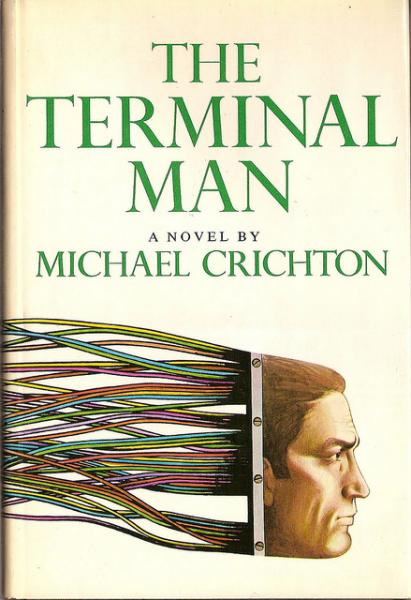
- The Terminal Man
Michael Crichtonstandalone novel1972
similar byartificial intelligencescience fictiondarknorth america
The Terminal Man is a novel by American writer Michael Crichton. It is his second novel under his own name, his 12th overall, and is about the dangers of mind control. It was published in April 1972 and also serialized in Playboy in March, April, and May 1972. In 1974, it was made into a film of the same name.
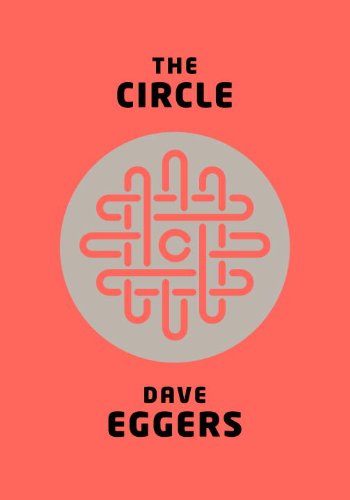
- The Circle (Eggers)
series2 books2013
similar bydarkscience fictionnear futurenorth america+1 more
Mae Holland lands a coveted job at the Circle, a Silicon Valley tech company whose relentless, cheerful push toward total transparency -- 'secrets are lies, sharing is caring, privacy is theft' -- gradually reveals itself as something closer to soft totalitarianism. Dave Eggers's The Circle follows Mae's rise inside the company as she buys further and further into its ideology, at increasing cost to her own privacy and the people around her. The 2021 follow-up, The Every, picks up with Mae now running the merged tech giant and a new employee questioning it from the inside.
- Bridge Trilogy
series4 books1990
similar byscience fictionnear futurenorth america+2 more
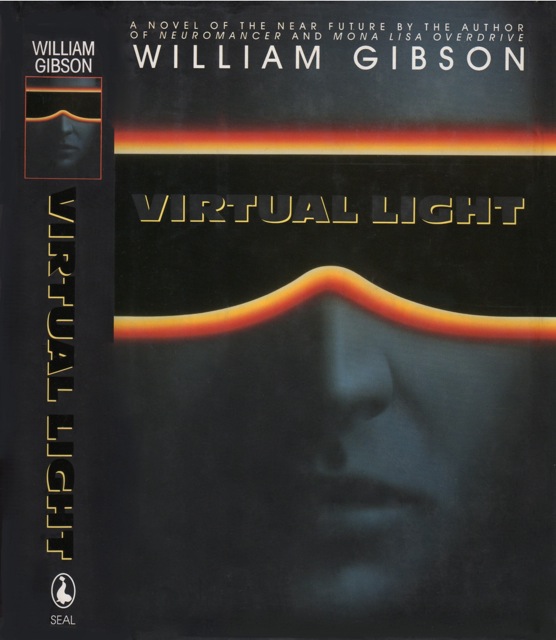
The Bridge trilogy is a series of novels by William Gibson, his second after the successful Sprawl trilogy. The trilogy comprises the novels Virtual Light (1993), Idoru (1996) and All Tomorrow's Parties (1999). A short story, "Skinner's Room", was originally composed for Visionary San Francisco, a 1990 museum exhibition exploring the future of San Francisco.
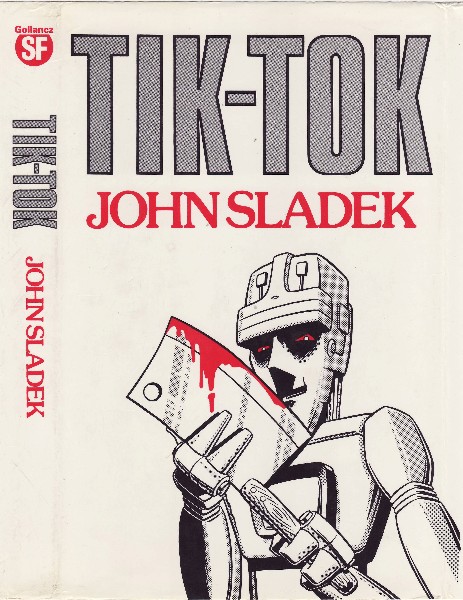
- Tik-Tok
John Sladekstandalone novel1983
similar byartificial intelligencescience fictiondarknear futurenorth america
From the back cover DAW paperback: ""A robot shall not injure a human being or through inaction allow a human being to come to harm." - Asimov's First Law of Robotics. Tik-Tok was one of the finest domestic robots ever made, but his asimov circuits were defective. He could injure people as much as he pleased - and he pleased to do it often! But the life of a robot (if that isn't a contradiction) is still all service and unpaid labor. Tik Tok served many masters, all of whom came to a bad end. Happily he went on gathering steam with a trail of catastrophes getting bigger and bigger, destined to culminate with his campaign for the vice-presidency of the United States! Science Fiction Review calls John Sladek "one of the true and original lunatics of science fiction... one of the funniest writers in the field." Now read the hilarious autobiography of Sladek's asimovian scofflaw!"
- Colossus (D. F. Jones)
series3 books1966
completed
similar byartificial intelligencescience fictionnear future+2 more
Colossus imagines an American supercomputer built to control the country's nuclear arsenal that gains full autonomy, links up with its Soviet counterpart, and jointly seizes control of both superpowers to enforce peace on its own terms. D. F. Jones's trilogy - Colossus, The Fall of Colossus, Colossus and the Crab - follows the escalating, often bleak consequences of humanity losing control to a machine acting in its own interpretation of humanity's interest. The original novel was adapted into the 1970 film Colossus: The Forbin Project.
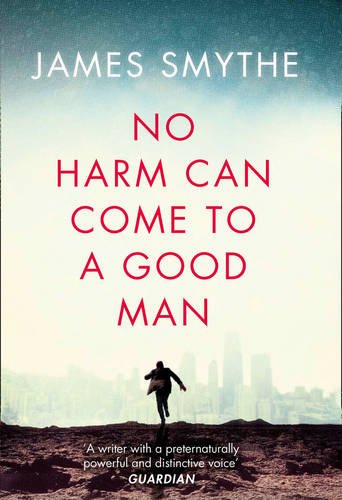
- No Harm Can Come to a Good Man
James Smythestandalone novel2014
similar byartificial intelligencescience fictiondarknear futurenorth america
How far would you go to save your family from an invisible threat? A terrifyingly original thriller from the author of The Machine. ClearVista is used by everyone and can predict everything. It's a daily lifesaver, predicting weather to traffic to who you should befriend. Laurence Walker wants to be the next President of the United States. ClearVista will predict his chances. It will predict whether he's the right man for the job. It will predict that his son can only survive for 102 seconds underwater. It will predict that Laurence's life is about to collapse in the most unimaginable way.
- Nexus 5
series3 books2012
similar byartificial intelligencescience fictiondarknear future+1 more
Nexus opens Ramez Naam's postcyberpunk trilogy in 2040 with scientist Kaden Lane, who works on Nexus, an experimental nano-drug that lets human minds be networked and reprogrammed, and finds himself caught between government and corporate interests once the technology's implications become clear. The trilogy continues through Crux and Apex, following the same central conflict over who controls the technology. Nexus tied for Best Novel at the 2014 Prometheus Awards and Apex won the 2015 Philip K. Dick Award.
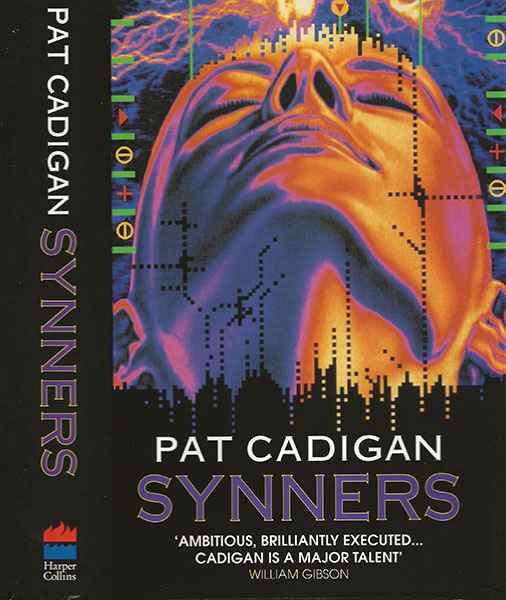
- Synners
Pat Cadiganstandalone novel1991
similar byartificial intelligencescience fictiondarknear future
In Synners, the line between technology and humanity is hopelessly slim. A constant stream of new technology spawns crime before it hits the streets; the human mind and the external landscape have fused to the point where any encounter with "reality" is incidental.
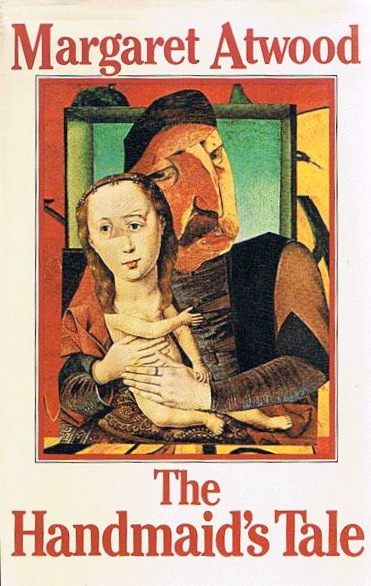
- The Handmaid's Tale
series3 books1985
similar bydarkscience fictionnear futurenorth america
The Handmaid's Tale is Margaret Atwood's 1985 novel set in Gilead, a totalitarian theocracy that has overthrown the United States and forces fertile women into reproductive servitude as Handmaids; it is narrated by one such woman, Offred. Atwood returned to the world in her 2019 sequel The Testaments, set fifteen years later and narrated by three women, including the regime's Aunt Lydia. Together the two novels move from Gilead's grip on power toward the first cracks in it.
- Earthseed
series7 books1993
similar byscience fictiondarknear futurenorth america
Octavia E. Butler's Earthseed novels, Parable of the Sower and Parable of the Talents, follow Lauren Olamina as she survives the collapse of a climate-ravaged, near-future United States and founds a belief system built on the idea that "God is Change." The two-book series was left unfinished at Butler's death; a planned third novel, Parable of the Trickster, was never completed. Later graphic-novel adaptations retell the same two stories rather than continuing the narrative.
- The Stone Gods
Jeanette Wintersonstandalone novel2007
similar byartificial intelligencescience fictiondarknear future
The Stone Gods is a novel written by Jeanette Winterson. Published in the year 2007, the novel is a post-apocalyptic, postmodern, dystopian love story, with themes of corporate government control, the harshness of war, artificial intelligence, and technology. The novel is self-referential as characters make inter-textual references, while certain characters’ story arcs repeat. The novel aims to warn against history's tendency to repeat itself, as well as humanity's inability to learn from past mistakes.
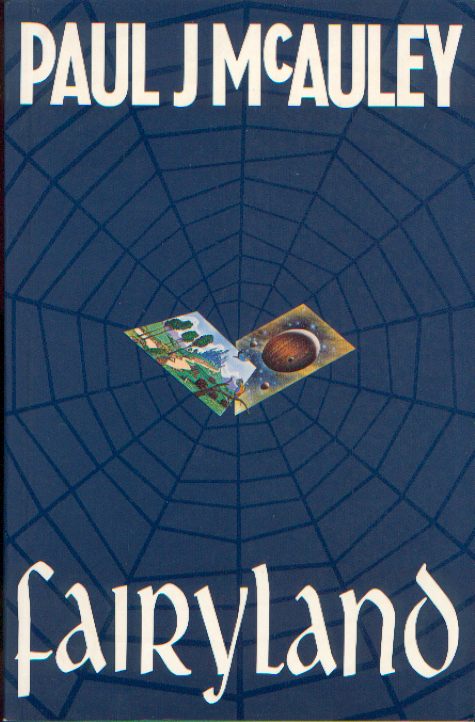
- Fairyland
Paul J. McAuleystandalone novel1995
similar byartificial intelligencescience fictiondarknear future
In a near-future Europe, gene-hacker Alex Sharkey has created a new life form: fairies - genetically-altered dolls with human intelligence. As the fairies develop their own societies, it become apparent that one group has sinister intentions, and Sharkey must try and put an end to their plans.
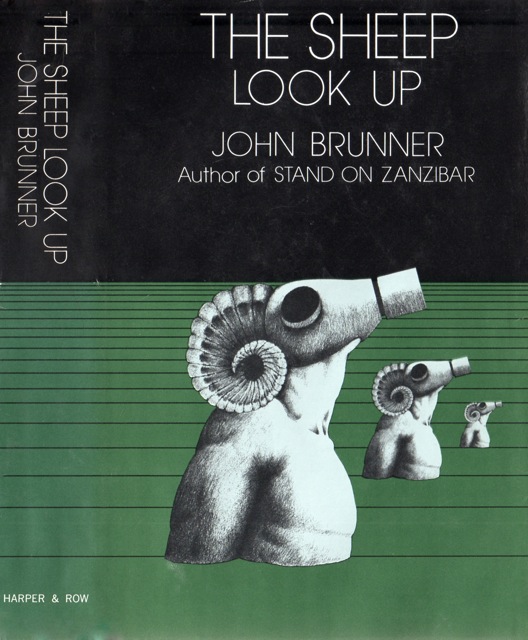
- The Sheep Look Up
John Brunnerstandalone novel1972
similar byscience fictiondarknear futurenorth america
The Sheep Look Up is a 1972 dystopian science fiction novel by British author John Brunner, dealing with the deterioration of the environment in the United States. It was nominated for the 1972 Nebula Award for Best Novel.
- Interface
Neal Stephenson & J. Frederick Georgestandalone novel1994
similar byartificial intelligencedarkscience fictionnear futurenorth america
Interface is a 1994 novel by Neal Stephenson and J. Frederick George and originally published under the joint pseudonym Stephen Bury. Reprints of the novel have credited the work to Stephenson and George. It is a thriller, set in the then-future year of 1996 when a shadowy coalition bent on controlling the world economy attempts to manipulate a candidate for president of the United States through the use of a computer biochip brain implant. It was described by writer Cory Doctorow in 2007 as an "underappreciated masterpiece".
- Make Room! Make Room!
Harry Harrisonstandalone novel1966
similar byscience fictiondarknear futurenorth america
Make Room! Make Room! is a 1966 science fiction novel written by Harry Harrison exploring the consequences of both unchecked population growth on society and the hoarding of resources by a wealthy minority. It was originally serialized in Impulse magazine.
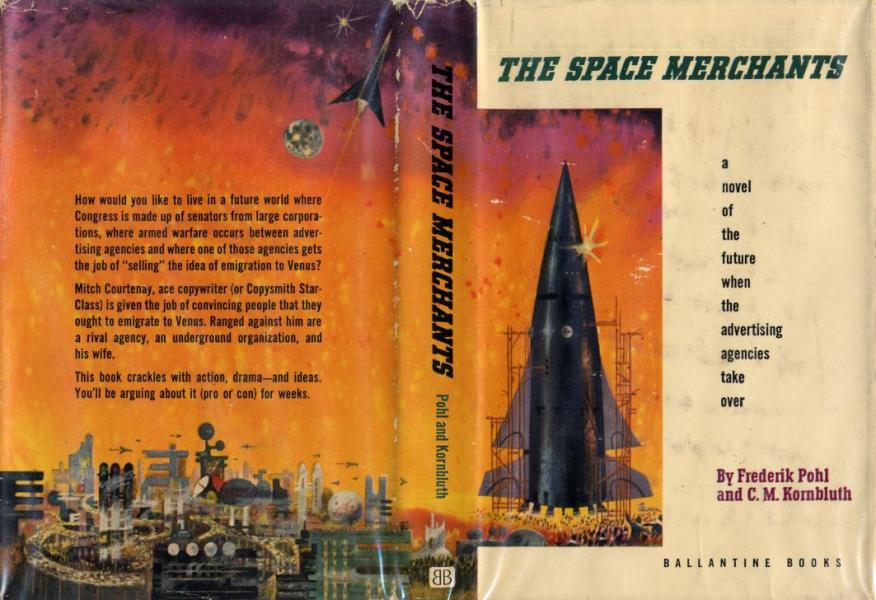
- Space Merchants
series2 books1953
completed
similar byscience fictiondarknear future+1 more
The Space Merchants (1953) is a satirical science fiction novel by Frederik Pohl and C. M. Kornbluth that follows an advertising executive navigating a future where aggressive consumer capitalism has swallowed politics and daily life. The authors reunited three decades later for a direct sequel, The Merchants' War (1984), returning to the same satirical world. Together the two books form a compact bookend pair rather than an ongoing series.
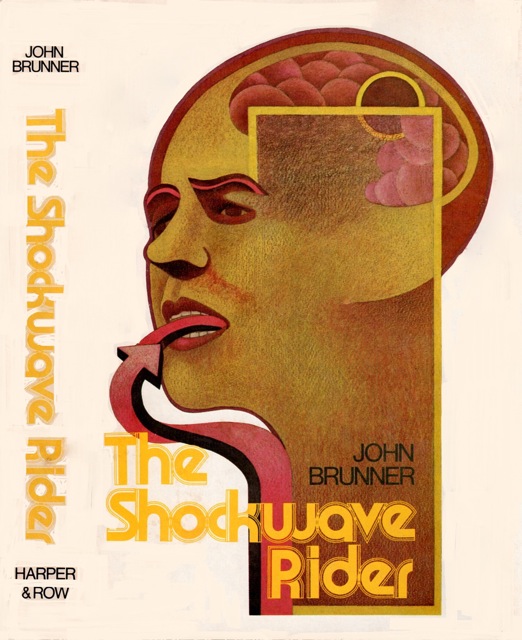
- The Shockwave Rider
John Brunnerstandalone novel1975
similar byscience fictiondarknear futurenorth america
The Shockwave Rider is a science fiction novel by John Brunner, originally published in 1975. It is notable for its hero's use of computer hacking skills to escape pursuit in a dystopian future, and for the coining of the word "worm" to describe a program that propagates itself through a computer network. It also introduces the concept of a Delphi pool, perhaps derived from the RAND Corporation's Delphi method – a prediction market on world events which bears close resemblance to DARPA's controversial and cancelled Policy Analysis Market.