More like Memory Blank
anchored on:science fictionamnesiaspace stationnear futuremysteriousmystery & detective+1 more
but
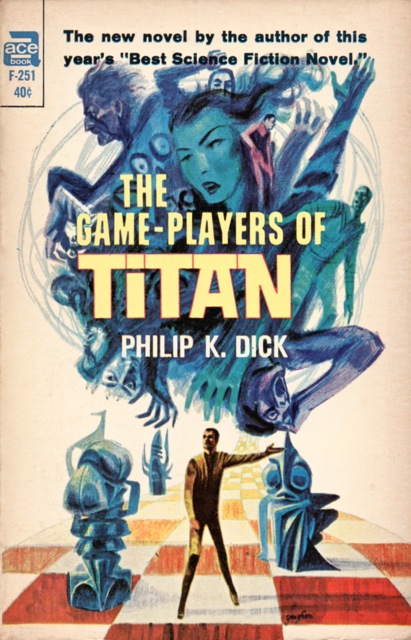
- The Game-Players of Titan
Philip K. Dickstandalone novel1963
similar byamnesianear futurescience fictionmystery & detectivemysterious
In a depopulated, mostly sterile America, land, marriages and social standing are all wagered on Bluff, a high-stakes game administered by the vugs, gelatinous, gambling-obsessed aliens from Titan who rule Earth without ever quite occupying it. Pete Garden's bipolar disorder threatens his standing among the game's players even as his new wife becomes pregnant, a near-miraculous event in this exhausted world, and his attraction to a telepath complicates things further. When a fellow player turns up dead, Pete finds himself a suspect in a mystery tangled up with induced amnesia and vug politics he barely understands. Philip K. Dick's 1963 novel.
- The Body Electric
Beth Revisstandalone novel2014
similar byamnesianear futurescience fictionmysterioustense
Ella Shepherd discovers that she has the ability to alter other people's memories, but soon learns that she may have been a victim of memory alteration herself as she seeks to uncover the mystery surrounding the technology.
- Total Recall
Piers Anthonystandalone novel1989
similar byamnesianear futurescience fictionmysterioustense
Douglas Quail is haunted by nightmares of Mars, covert missions and a life more glamorous than his earthbound 2089 AD reality. So he turns to "Recall", manufacturers of synthetic memories. They implant a memory into him but he soon finds that his nightmares are true memories.
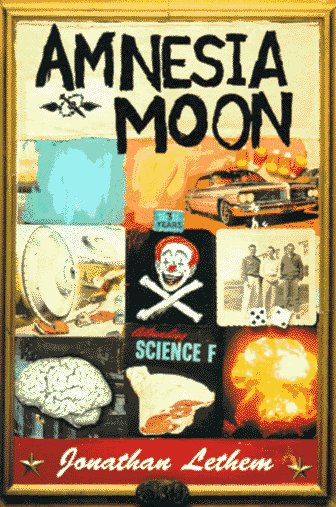
- Amnesia Moon
Jonathan Lethemstandalone novel1995
similar byamnesianear futurescience fictionmysterious
Amnesia Moon is a 1995 novel by Jonathan Lethem. Lethem adapted the novel from several unpublished short stories he had written, all about catastrophic, apocalyptic events. When Tor Books published the second edition in 1996, they commissioned Michael Koelsch to illustrate a new cover art; Koelsch had previously illustrated Lethem's previous book cover art Gun, with Occasional Music.
- The Raft
Fred Strydomstandalone novel2015
similar byamnesianear futurescience fictionmysterious
On Day Zero, humankind collectively lost its memory. The collapse of civilisation was as instantaneous as it was inevitable. For a man named Kayle Jenner, confined by a regime to a commune on a remote beach, all that remains is the vague and haunting vision of a son ... That, and a wooden raft. It is a raft that will set Kayle on a journey across a broken world to find his son. Braving a landscape of elusive encounters, a maze of other people's dreams, and muddled memories, Kayle will discover more than just his lost past. He will discover the truth behind Day Zero – a truth that makes both fools and gods of men.
- Found Wanting
Lin Carterstandalone novel1985
similar byamnesianear futurescience fictionmysterious
From the back cover of the DAW first edition: "In the ultimate city - He knew his name was Kyon. He wore the garb of a gardener - therefore he was a gardener. But that was all he knew. The city was a maze of wonders and terrors. The people were strangers, condescending and perhaps spiteful. Kyon had to do something, to go somewhere, but none would tell him. And it was important! It's a different sort of science fiction novel than one would expect from Lin Carter. Master of fantasy, master of other worlds, now discover Lin Carter, master of ominous projection, of future conjecture. Urbs, the ultimate city, was on the scales of history. It would be up to Kyon whether all it represented, the flowering of science, would be Found Wanting."
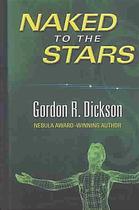
- Naked to the Stars
Gordon R. Dicksonstandalone novel1961
similar byamnesiascience fictionmysterioustense
The subject of the cosmic soldier has become a matter of concern for the science fiction reader. With the award-winning success of The Forever War, and with the great classic novels of Gordon R. Dickson's genetically bred mercenaries, the Dorsai, it is clear that the role of a fighter in a universe of expanding technology and competing alien intelligences is on science fiction's orders of the day. Gordon R. Dickson has been the master of that field, and his novel, Naked to the Stars, is one of his masterpieces. Long out of print, it is the story of a star soldier who, during a battle against a non-human foe on a far planet, somehow lost sixteen hours from his memory. Discharged for the potential danger those lost hours might have programmed, Cal Truant made it his fixation to uncover the mystery buried in his mind - to find out what had happened in those missing hours - and block the peril it might present to his fellow troopers, to his war command, and to the planet for which they fought - Earth.
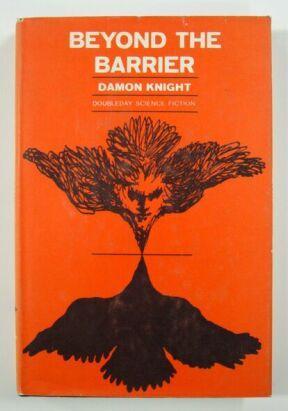
- Beyond the Barrier
Damon Knightstandalone novel1964
similar byamnesiascience fictionmysterioustense
From the front flap of the Doubleday first edition: "Gordon Naismith was a physics professor at a large California university. The year was 1980, and by means of the university's duplicator he could personally teach in nine different classrooms simultaneously. Naismith was an average man in all but two respects: the reflexes were extraordinarily quick, and four years before in a plane crash he had lost all memory of his earlier life. Neither difference seemed important until one day a very unusual student in one of his classes asked a disturbing, extracurricular question: "Professor, what is a zug?" The question triggered a series of violent incidents, and soon Naismith himself, as well as the police, were beginning to wonder if the duplicator had reproduced him a tenth time. The answer lay ten thousand years in the future."
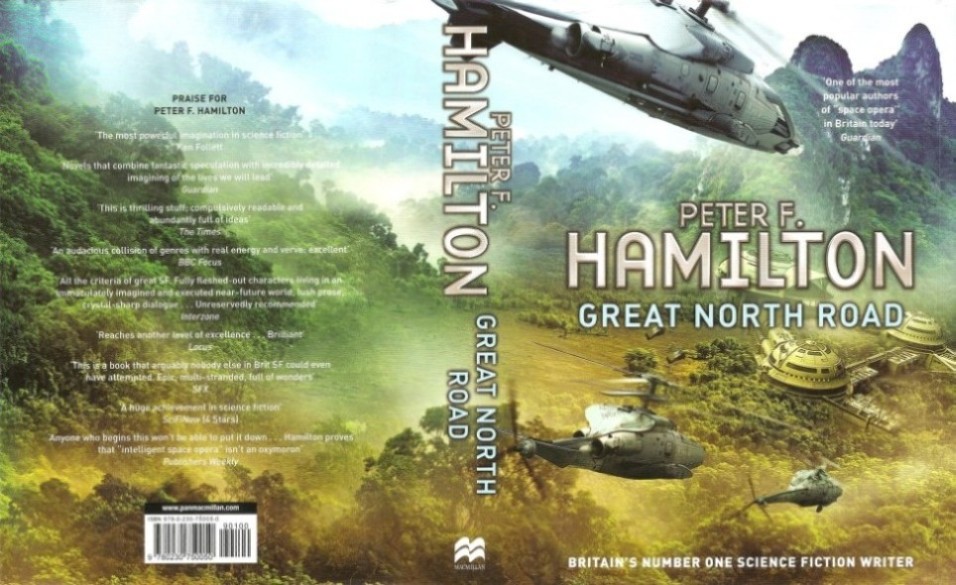
- Great North Road
Peter F. Hamiltonstandalone novel2012
similar bynear futurescience fictionmystery & detectivemysterioustense
Great North Road is a science fiction novel by Peter F. Hamilton. It was first published in 2012 by Macmillan. Jonathan Wright of SFX magazine said, "Peter F Hamilton’s latest novel may be a standalone tale, but it’s a thuddingly imposing 1,100 pages in length. Not that it seems that way when you’re reading it. Balancing a multi-stranded plot, different exotic locales and a huge cast of characters, Hamilton plunges us straight into a murder mystery set in a near-future Newcastle, a city now adjacent to a portal to another world, the tropical St Libra."
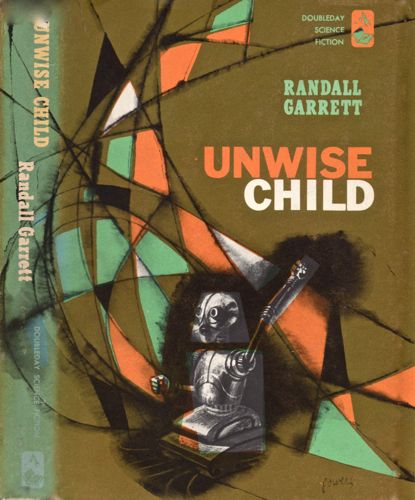
- Unwise Child
Randall Garrettstandalone novel1962
similar bynear futurescience fictionmystery & detectivemysterioustense
"When a super-robot named Snookums discovers how to build his own superbombs, it becomes obvious that Earth is by no means the safest place for him to be. And so Dr. Fitzhugh, his designer, and Leda Crannon, a child psychologist acting as Snookums' nursemaid, agree to set up Operation Brainchild, a plan to transport the robot to a far distant planet. "... once into space, the Branchell becomes the scene of some frightening events—the medical officer is murdered, and Snookums appears to be the culprit. Mike the Angel indulges himself in a bit of sleuthing, and the facts he turns up lead to a most unusual climax." (From Project Gutenberg's version of the 1962 Doubleday edition, published 2007.)
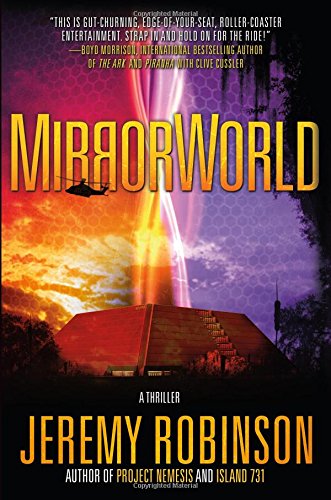
- MirrorWorld
Jeremy Robinsonstandalone novel2015
similar byamnesianear futurescience fictiontense
"Crazy has no memory and feels no fear. Dangerous and unpredictable, he's locked away in SafeHaven, a psychiatric hospital, where he spends the long days watching Wheel of Fortune and wondering what the outside world smells like. When a mysterious visitor arives and offers him a way out Crazy doesn't hesitate to accept. But outside the hospital Crazy is faced with a world on the brink of nuclear annihilation, and find himself relocated to Neuro Inc., a secretive corporation with strange government ties. When he discovers evidence of human experimentation he escapes with a syringe, the contents of which are unknown to him but precious to Neuro. Cornered and with a complete disregard for the results, Crazy makes himself indispensable by injecting the substance into his leg. As the substance enters his bloodstream, though, his eyes are opened to a world beyond human experience, where fear is a tool and the shadows hide the source of mankind's nightmares. Struggling to understand his new abilities, Crazy allies himself with the company he fled and begins peeling back the layers of his past, the brewing war between worlds, how he can stop it and what he did to start it. With Crazy, Robinson, whose trademarked pacing and inventive plots have been highly praised by bestselling authors like Jonathan Maberry, Scott Sigler and James Rollins, treats readers to a wildly imaginative, frenetically paced thriller exploring the origins of fear"--
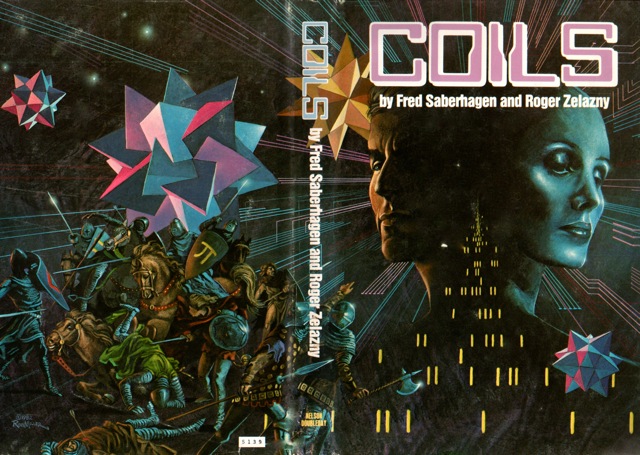
- Coils
Roger Zelazny & Fred Saberhagenstandalone novel1982
similar byamnesiascience fictionmysterioustense
A man discovers that his memories of childhood are false, and when he begins to investigate his psychiatrist is murdered and his girlfriend is kidnapped. As his actual past begins to return to his memory, he realizes that he has the ability to mentally connect to computer circuitry, an ability he used to use for illegal advantage for the corporation which employed him, along with a small group of others with paranormal powers. He concludes that the corporation is behind all this and sets out to find and rescue his girlfriend while the corporation pursues him.
- Endgame Enigma
James P. Hoganstandalone novel1987
similar byspace stationnear futurescience fictionmysterioustense
From back cover Bantam paperback November 1988: IT MIGHT BE A STEP BEYOND STAR WARS... AND ONE STEP CLOSER TO WORLD WAR III. It is the near future. With its power and influence waning, the Soviet Union has launched Valentina Tereshkova, a giant space station capable of housing 12,000 citizens, into orbit around the earth. But is the colossal off-world colony the peaceful Utopian experiment it's alleged to be? Or is it the last desperate weapon of a crumbling superpower bent on global domination? U.S. computer scientist Paula Bryce and agent Lew McCain are sent to learn the truth -- only to find themselves trapped in the station's awesome prison facility. With a brilliant and eccentric group of dissident inmates, Bryce and McCain seek to unlock from within the secret of the mysterious station. But how will they ever report their findings? In an international powder keg, even unconfirmed suspicions could force a terrifying first strike... while the only hope for mankind rests with two Americans trapped in a prison they can't possibly escape...
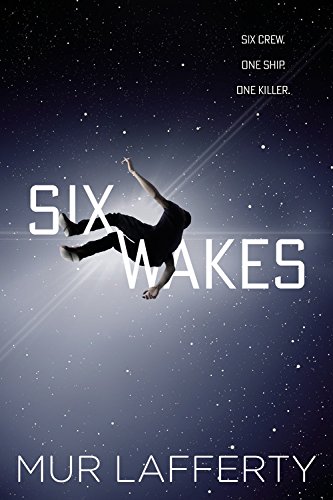
- Six Wakes
Mur Laffertystandalone novel2017
similar byamnesiascience fictionmystery & detectivemysterioustense
Six Wakes is a science fiction mystery novel by Mur Lafferty. It was first published in trade paperback and ebook by Orbit Books in January 2017.
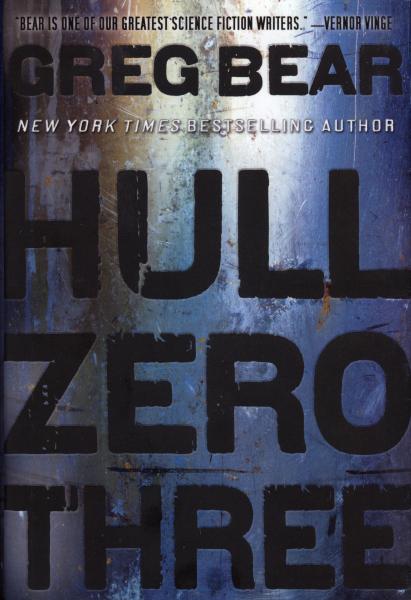
- Hull Zero Three
Greg Bearstandalone novel2010
similar byamnesiascience fictionmysterioustense
Hull Zero Three is a science fiction novel by American author Greg Bear. It was published on November 22, 2010. It is set on a generation ship that has lost its way under mysterious circumstances.
- Greg Mandel
series5 books1993
similar bynear futurescience fictionmystery & detectivetensemysterious
Greg Mandel is a former special-forces soldier with a psychic 'gland' implant for reading emotions, working as a private investigator in a near-future Britain recovering from an authoritarian climate-crisis government. Peter F. Hamilton's original trilogy - Mindstar Rising, A Quantum Murder, The Nano Flower - follows his cases as ordinary detective work keeps sliding into conspiracies with much bigger stakes; The Suspect Genome revisits an older Mandel decades later. It was Hamilton's first fiction, blending noir detective plotting with hard SF.
- The Spare Man
Mary Robinette Kowalstandalone novel2022
similar bynear futurescience fictionmysteriousmystery & detectivetense
The Spare Man is a 2022 science fiction murder mystery novel by Mary Robinette Kowal. The novel was a finalist for the 2023 Hugo Award for Best Novel and the 2023 Locus Award for Best Science Fiction Novel.
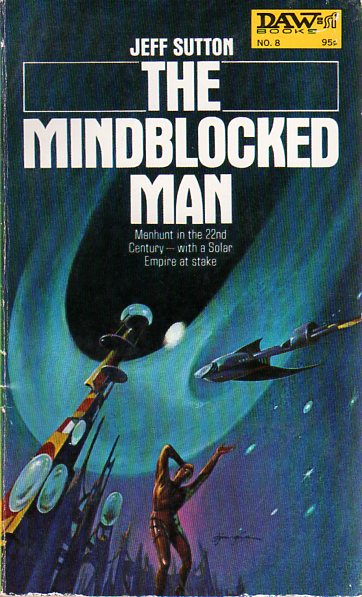
- The Mindblocked Man
Jeff Suttonstandalone novel1972
similar byamnesiascience fictionspace stationmysterioustense
From the back cover of the DAW first printing: "The Fish Eye! The Distorted Sky! The Blob That Ate the Stars! Those were the first memories he had when he opened his eyes in a strange room in a strange sector of the city. Who he was he did not know, where he came from was an enigma. But in those nightmare visions lay the only clues to his past. There were mighty forces and dangerous agents seeking him - this he learned quickly enough. There was a hospital in orbit missing one patient - that added to the crisis that involved all the powers that contended within the 22nd Century's intricate society. But was there anybody on his side? And was he good - or was he really everyone's enemy?"
- The Werewolf Principle
Clifford D. Simakstandalone novel1967
similar byamnesiascience fictionmysterious
From the back cover of the first DAW printing: "Andrew Blake, found in a space capsule on a distant planet, was brought back to an unfamiliar Earth, where antigravity devices had replaced the wheel and houses talk and even fly! Yet nothing was as strange as Blake's own feelings. Tormented by eerie sensations and a loss of memory, he didn't know who he really was nor exactly where he came from. His destiny only began to grow frighteningly clear when he met a weird, tassel-eared creature who darkly hinted at the truth about Blake's origins. Slowly Blake became aware of the long hushed-up "Werewolf Principle," a scientific theory buried in the past, which held the key to Blake's own fate - and the future of the human race..."
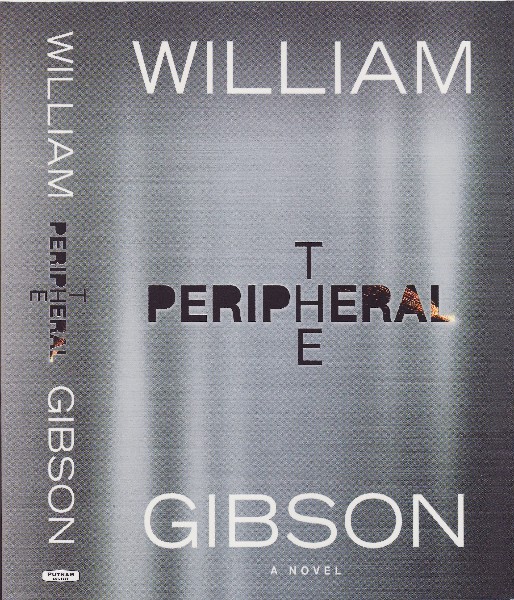
- The Jackpot Trilogy
series2 books2014
similar bynear futurescience fictionmysterioustense+1 more
William Gibson's Jackpot sequence begins with The Peripheral (2014), a science-fiction thriller cross-cutting between a near-future American town and a devastated London seventy years on. Gibson continued the same world in Agency (2020), set slightly later in the near-future timeline.
- Glasshouse
Charles Strossstandalone novel2006
similar byamnesiascience fictiontense
Robin wakes in a rehabilitation clinic with his memory deliberately erased, convinced that whoever tried to kill him before is still out there. To disappear completely, he volunteers for an experimental study recreating a vanished slice of 20th/21st-century society inside a closed habitat called the glasshouse -- a former high-security detention facility for war criminals -- and is assigned a female body and a new name, Reeve. As the simulation's rules of gender and conformity close in, Reeve starts to suspect the experiment's organizers are running something considerably darker than sociology. A standalone posthuman-future novel by Charles Stross.
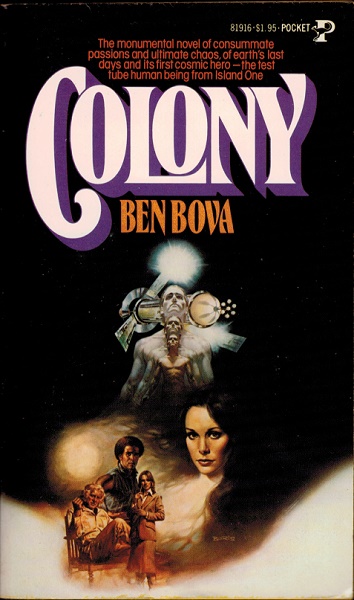
- Colony
Ben Bovastandalone novel1978
similar byspace stationnear futurescience fictiontense
Colony continues the story Ben Bova began in Millennium, following astronaut-turned-administrator Chet Kinsman years later as the head of an orbiting space habitat that has become Earth's only real refuge from a planet buckling under overpopulation, food shortages and unrest. Getting a place in the habitat is a matter of life and death for millions who will never be chosen, and as Earth's governments grow more desperate to control or dismantle the colony outright, Kinsman has to decide how far he'll go to protect the world he's built off-world. Bova later folded both novels together into the omnibus The Kinsman Saga. Part of Ben Bova's Chet Kinsman series.
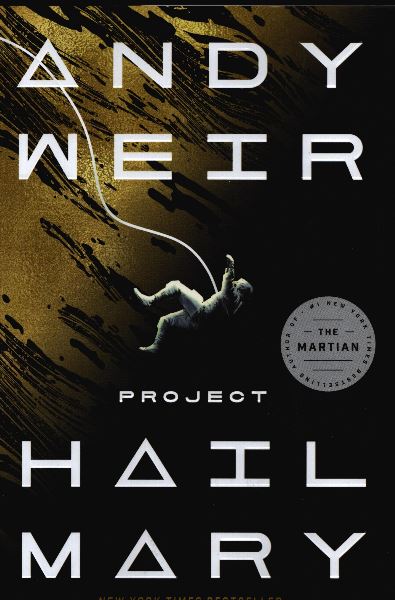
- Project Hail Mary
Andy Weirstandalone novel2021
similar byamnesianear futurescience fiction
Project Hail Mary is a 2021 hard science fiction novel by American writer Andy Weir. It centers on science teacher and former biologist Ryland Grace, who wakes up aboard a spacecraft, afflicted with amnesia.