More like Memory Reborn
anchored on:science fictionour worldnear future
but
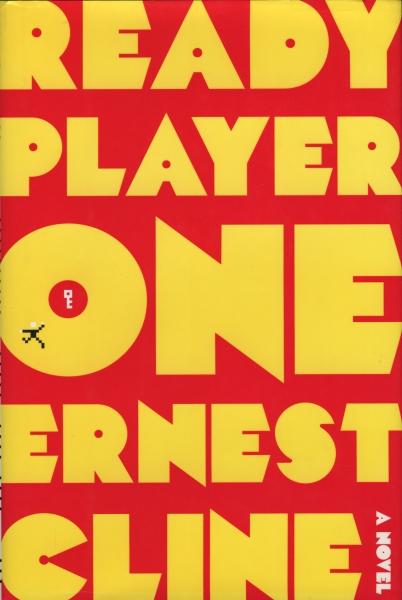
- Ready Player One
series3 books2011
similar byscience fictionnear future+4 more
Ernest Cline's Ready Player One (2011) is set in a near-future dystopia where much of humanity escapes into the OASIS, a vast virtual-reality universe, and follows teenager Wade Watts as he chases an Easter egg hidden by the OASIS's late creator in a puzzle-based hunt worth a fortune. The 2020 sequel, Ready Player Two, picks up after Wade has gained control of the OASIS and follows him and his friends into a new quest built around a brain-computer interface the creator left behind.
- Jenna Fox Chronicles
series4 books2008
similar byscience fictionnear futureidentity+4 more
The Jenna Fox Chronicles opens with a teenage girl waking from a year-long coma with gaps in her memory, only to uncover unsettling truths about the medical technology that saved her life. Mary E. Pearson's trilogy, beginning with The Adoration of Jenna Fox, explores questions of identity and what makes someone human as the story continues through The Fox Inheritance and Fox Forever.
- The Mind Cage
A. E. van Vogtstandalone novel1957
similar byscience fictionnear futureour worldtense+2 more
The Mind Cage is a 1957 science fiction novel by American writer A. E. van Vogt, adapted from the short story "The Great Judge" (1948).
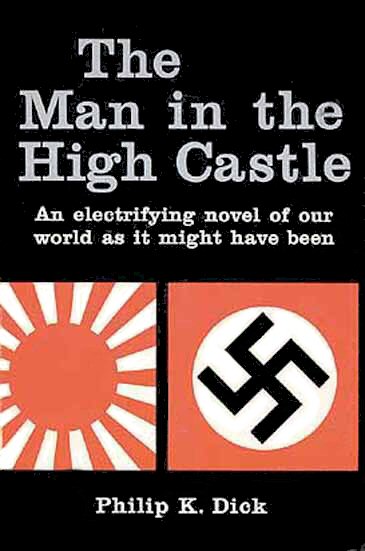
- Library of America P. K. Dick Collection
series9 books1962
completed
similar byscience fictionnear future+3 more
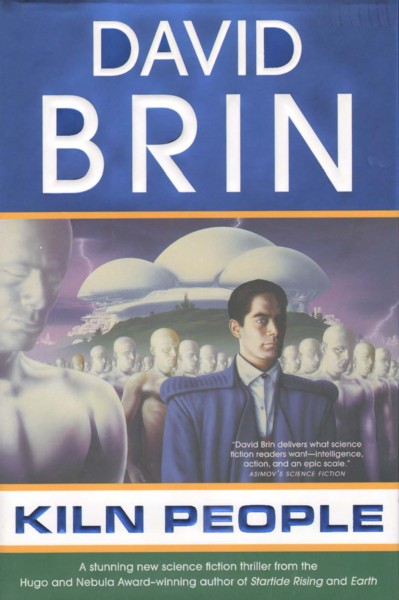
- Kiln People
David Brinstandalone novel2002
similar byscience fictionmind uploadingnear futureour worldtenseidentity
When people can just "bake" a temporary replacement body in a kiln (pottery-oven) and "upload" their conscience into it, and when it "expires" just "download" the experiences into their own mind, dangerous jobs and extreme sports lose their danger, but not their appeal.
- Flashforward
Robert J. Sawyerstandalone novel1999
similar byscience fictionnear futureour worldmysterioustenseidentity
Flashforward is a science fiction novel by Canadian author Robert J. Sawyer first published in 1999. The novel is set in 2009. At CERN, the Large Hadron Collider accelerator is performing a run to search for the Higgs boson. The experiment has a unique side effect; the entire human race loses their consciousness for about two minutes. During that time, nearly everyone sees themselves roughly twenty-one years and six months in the future. Each individual experiences the future through the senses of their future self. This "flashforward" results in countless deaths and accidents involving vehicles, aircraft, and any other device needing human control at the time of the experiment. The novel was adapted into the 2009 television series FlashForward.
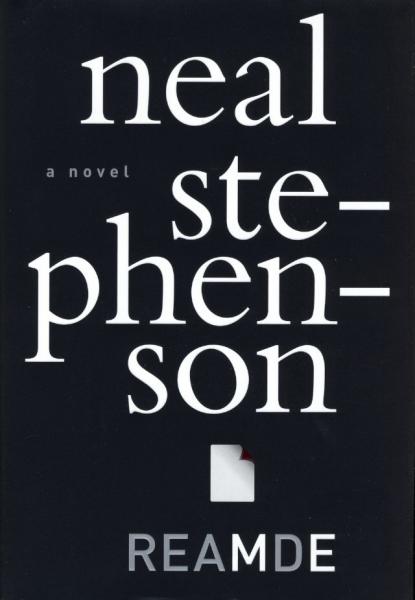
- Richard Forthrast
series2 books2011
similar byscience fictionour worldnorth america+3 more
Neal Stephenson's Richard 'Dodge' Forthrast novels open with Reamde, a globe-spanning thriller that starts when ransomware inside an MMORPG economy pulls Richard's extended family into a real-world hostage crisis involving hackers, jihadists and Russian mobsters. The sequel Fall; or, Dodge in Hell shifts registers entirely, following Richard's digitally preserved mind after death into an afterlife simulation built from his scanned brain. The two books share a protagonist and family but differ sharply in genre and scale.
- These Memories Do Not Belong to Us
Yiming Mastandalone novel2025
similar byscience fictionmind uploadingnear futureour worldtenseidentity
These Memories Do Not Belong To Us is a 2025 science fiction novel by Chinese Canadian author Yiming Ma, set in a world where memories can be transferred between minds, and a reimagined China known as the Qin Empire has become the sole global superpower.
- Total Recall
Piers Anthonystandalone novel1989
similar byscience fictionnear futureour worldmysterioustenseamnesiaidentity
Douglas Quail is haunted by nightmares of Mars, covert missions and a life more glamorous than his earthbound 2089 AD reality. So he turns to "Recall", manufacturers of synthetic memories. They implant a memory into him but he soon finds that his nightmares are true memories.
- Mindscan
Robert J. Sawyerstandalone novel2005
similar byscience fictionmind uploadingnear futureour worldtenseidentity
Transplanting his consciousness into an android body in order to escape death, Jake Sullivan falls in love with the android Karen, a situation that is further complicated when Jake's biological body takes hostages and demands its mind back.
- Greg Mandel
series5 books1993
similar byscience fictionnear futureour worldmysterioustense
Greg Mandel is a former special-forces soldier with a psychic 'gland' implant for reading emotions, working as a private investigator in a near-future Britain recovering from an authoritarian climate-crisis government. Peter F. Hamilton's original trilogy - Mindstar Rising, A Quantum Murder, The Nano Flower - follows his cases as ordinary detective work keeps sliding into conspiracies with much bigger stakes; The Suspect Genome revisits an older Mandel decades later. It was Hamilton's first fiction, blending noir detective plotting with hard SF.
- The Idlewild Trilogy
series3 books2003
similar byscience fictionnear futureour worldidentity+2 more
Nick Sagan's Idlewild trilogy opens with Idlewild (2003), a science-fiction novel that alternates between mid-21st-century interludes and events a generation later, following humanity's ten last survivors, cast in a modern mythological framework as god-like figures. It continues across Edenborn and Everfree.
- Sprawl Trilogy
series10 books1981
similar byscience fictionnear futuretense
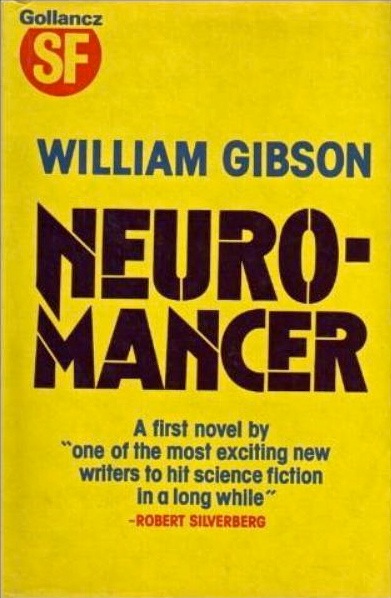
The Sprawl Trilogy is William Gibson's foundational cyberpunk sequence: Neuromancer (1984), in which hacker Case is drawn into a high-stakes heist alongside an artificial intelligence and a damaged ex-soldier, followed by Count Zero (1986) and Mona Lisa Overdrive (1988), which widen the same near-future world of corporate power and networked cyberspace to new characters. Johnny Mnemonic, an early short story set in the same fictional milieu, predates the novels and introduces the courier Molly Millions before her role in the trilogy. Together these works established much of cyberpunk's visual and thematic vocabulary.
- Otherland
series6 books1996
similar byscience fictionnear futuretenseour world+1 more
Otherland is a science fiction tetralogy by American writer Tad Williams, published between 1996 and 2001. The story is set on Earth near the end of the 21st century, probably between 2082 and 2089, in a world where technology has advanced somewhat beyond the present. The most notable advancement is the widespread availability of full-immersion virtual reality installations, which allow people from all walks of life to access an online world, called simply the Net. Tad Williams weaves an intricate plot spanning four thick volumes, and creates a picture of a future society where virtual worlds are fully integrated into everyday life.
- The Oracle Year
Charles Soulestandalone novel2018
similar byscience fictionnear futureour worldmysterioustenseidentitynorth america
Awakening from a dream with more than one hundred predictions about the future in his head, an unassuming Manhattan bassist becomes one of the world's most powerful men and hides his identity behind an online persona that is targeted by greedy corporations and dangerous enemies.
- The Zap Gun
Philip K. Dickstandalone novel1967
similar byscience fictionnear futureour worldnorth america+2 more
The Zap Gun is a 1967 science fiction novel by American writer Philip K. Dick. It was first published as the two-part serial Project Plowshare in Worlds of Tomorrow in 1965 and 1966, before Pyramid Books issued it in paperback under its present title. The novel originated in a title-first commission devised by Pyramid editor Don Bensen and was written in 1964 during a period of rapid production in Dick's career.
- Bridge Trilogy
series4 books1990
similar byscience fictionnear futurenorth america+2 more
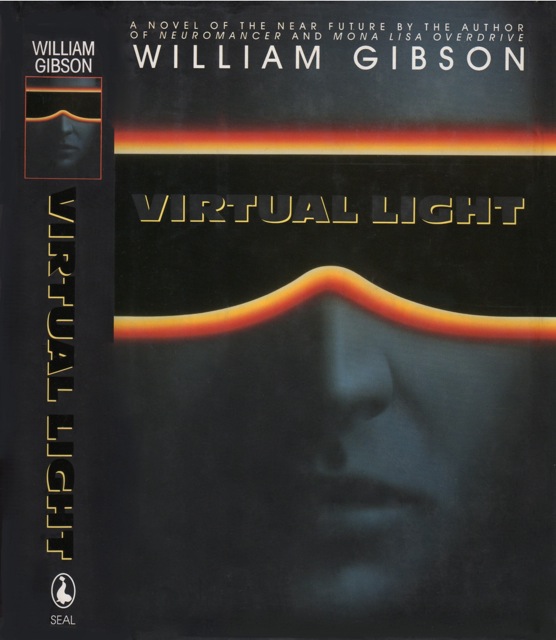
The Bridge trilogy is a series of novels by William Gibson, his second after the successful Sprawl trilogy. The trilogy comprises the novels Virtual Light (1993), Idoru (1996) and All Tomorrow's Parties (1999). A short story, "Skinner's Room", was originally composed for Visionary San Francisco, a 1990 museum exhibition exploring the future of San Francisco.
- Jean le Flambeur
series3 books2010
similar byscience fiction+3 more
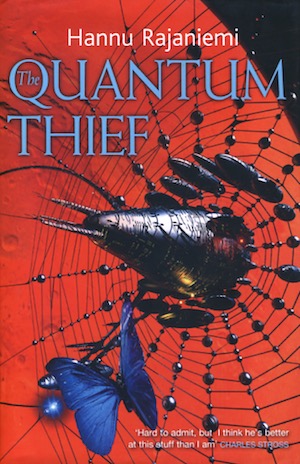
Jean le Flambeur is a master thief broken out of a virtual prison to pull off one more impossible heist, in a solar system reshaped by uploaded minds, post-human factions, and economies built on memory and privacy themselves. Hannu Rajaniemi's trilogy - The Quantum Thief, The Fractal Prince, The Causal Angel - is dense, idea-heavy hard SF that trusts readers to piece its future together from context rather than exposition.
- The Light of Other Days
Arthur C. Clarke & Stephen Baxterstandalone novel2000
similar byscience fictionnear futureour worldtense+1 more
An industrialist devises a technique to use tiny wormholes as light pipes to enable viewing of any event anywhere; and subsequently it becomes possible to use them to view any event in the past as well. The effects on society are enormous.
- Eva
Peter Dickinsonstandalone novel1988
similar byscience fictionnear futureour worldmysteriousidentity+1 more
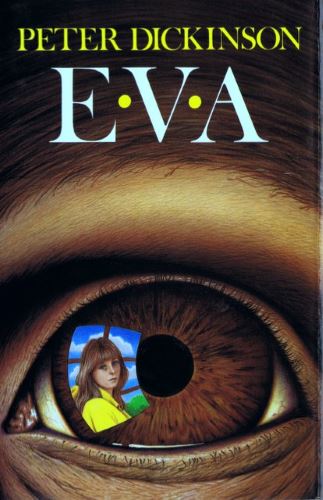
From the back cover: "Thirteen-year-old Eva wakes up in the hospital unable to remember anything since the picnic on the beach. Her mother leans over the bed and begins to explain. A traffic accident, a long coma... But there is something, Eva senses, she is not being told, some other price she must pay to be alive at all. What have they done, with their amazing medical technology, to save her?"
- Time Is the Simplest Thing
Clifford D. Simakstandalone novel1961
similar byscience fictionnear futureour worldnorth america+2 more
Time Is the Simplest Thing is a science fiction novel by American writer Clifford D. Simak, first published in 1961. The story combines paranormal abilities with themes of space and time travel. The underlying theme is intolerance of ordinary people towards those with unusual abilities.
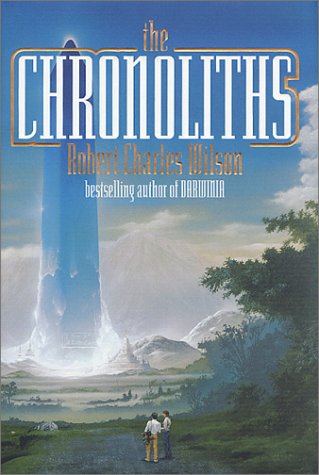
- The Chronoliths
Robert Charles Wilsonstandalone novel2001
similar byscience fictionnear futureour worldmysterioustensenorth america
The Chronoliths is a 2001 science fiction novel by American-Canadian writer Robert Charles Wilson. It was nominated for the 2002 Hugo Award for Best Novel and tied for the 2002 John W. Campbell Memorial Award for Best Science Fiction Novel.