Loreful
HomeDiscover
Search series, authors…⌘K
Loreful

Reading orders for SF/F series and shared universes — with your place kept in every one.

Explore

UniversesSeriesWorksAuthorsAtlas

Help

FAQAboutSite map

Account & legal

Sign inCreate accountPrivacyTerms

Data

Built on ISFDB, Wikipedia, Wikidata and Open Library. Curated reading orders carry their reasoning on the page; the rest follow publication order. Data sources & licenses

© Loreful · data: ISFDB · CC BY

More like Messiah

anchored on:literary & generalsatirefaith and religionour worldnorth americamid 20th century+2 more

but

Mood

The mood the book leaves you in.

  • The reading experience is propelled by journeys, exploration, and physical risk; excitement and forward momentum dominate over dread or introspection.
  • Joy and loss are deliberately mixed; the resolution grants characters something real while taking something else away, leaving warmth and sorrow together.
  • The book demands work from the reader — dense prose, difficult structure, unfamiliar ideas, or morally uncomfortable material — as part of its intended effect.
  • Grim events, cruelty, or despair dominate the atmosphere, and the book does not soften them with comfort or comic relief.
  • The atmosphere is quietly unsettling — wrongness, unease, and the uncanny pervade the book without necessarily escalating into overt horror.
  • The book is built to move the reader; character feeling is foregrounded and major scenes aim at a strong emotional response.
  • Humor is a primary aim and the prose plays for laughs — comic situations, wit, or dialogue produce sustained comedy, not occasional levity.
  • The book insists that things can improve; effort and decency are shown to matter, and the arc bends toward better outcomes even through hardship.
  • The book teaches as it goes — real facts, history, science, or craft are conveyed in enough depth that learning is part of the reading experience.
  • The book is designed to uplift and motivate, presenting perseverance or achievement in a way that invites the reader to aspire or act.
  • The overall register is cheerful and easygoing; stakes are kept gentle and the book avoids dwelling on pain or dread.
  • Withheld information drives the experience; the book sustains enigmas and secrets the reader wants resolved, whatever its genre.
  • The book is contemplative and inward-looking, giving more weight to thought, memory, and meaning than to external events.
  • The book works as comfort reading — low tension, a soothing pace, and an atmosphere the reader can unwind in.
  • Grief, loss, or melancholy set the dominant register, and the book lets sorrow stand rather than resolving it into comfort.
  • Sustained suspense is the point; the book keeps the reader braced for what happens next through danger, pressure, or impending revelation.
  • Playful invention and charm define the register — fanciful conceits, light absurdity, and a narration that delights in its own oddity.

About

What the story runs on.

  • Stories in which extraterrestrial beings are central — as characters, cultures, or the object of the plot.
  • Stories structured as a quest — a journey undertaken to find, deliver, or destroy something of great import.
  • Stories in which staying alive against nature, catastrophe, or scarcity is the central problem.
  • Stories of lovers kept apart by law, family, faith, or station, where the obstacle to love is the plot.
  • Stories in which a friendship — its making, testing, or loss — is the emotional center.
  • Stories of growing up — a young protagonist crossing from childhood into adult knowledge and responsibility.
  • Stories about who a character truly is — self-discovery, doubled lives, and the search for a self.
  • Stories about mourning — living through the death of a loved one and what loss does to the survivors.
  • Stories in which a buried family truth — hidden parentage, crimes, or shames — surfaces and reorders the present.
  • Stories driven by maneuvering for power — factions, conspiracies, and statecraft conducted in shadow.
  • Stories in which war itself is the subject — combat, occupation, and what warfare does to soldiers and civilians.
  • Stories organized around investigating a killing — the case, the clues, and the pursuit of the killer, in any genre's clothing.

Shelf

Where it sits in the library.

    • Fiction built on magic or other supernatural elements that have no scientific explanation.
    • Secondary-world fantasy at large scale, where the fate of nations or the world turns on the protagonists' struggle.
    • Fantasy set in a recognizably modern city or contemporary world where the supernatural intrudes on everyday life.
    • Fantasy that blends in horror's atmosphere and imagery, keeping a fantastical frame around grim or frightening material.
    • Action-driven fantasy following warriors or rogues with personal stakes against sorcerous threats, rather than world-spanning conflicts.
    • Fantasy set in a real historical period or a close analogue of one, with magic woven into the era.
    • Fantasy in which protagonists cross from the ordinary world into another world through a portal or similar passage.
    • Fiction that retells or reworks a traditional fairy tale in a new form or setting.
    • Fantasy drawing directly on myths, legends, and folklore, retelling them or building on their figures and logic.
    • Fantasy of ghosts, vampires, shapeshifters, psychics, and similar phenomena, usually set in an otherwise ordinary world.
    • Fiction mixing science-fictional trappings with overtly magical or impossible elements in one setting.
    • Low-stakes fantasy emphasizing comfort, community, and everyday pleasures over conflict and peril.
    • Speculative fiction of pervasive moral ambiguity, violence, and cynicism that rejects heroic conventions — fantasy and SF alike.
      • Fiction that extrapolates from science and technology — future societies, space travel, or speculative inventions — within at least nominally natural laws.
      • Science fiction of interstellar scope — starships, galactic polities, and adventure across star systems.
      • Science fiction committed to scientific rigor, where technical plausibility constrains the story.
      • Science fiction centered on armed forces and warfare, told largely from a military point of view.
      • Science fiction of networked, corporate-dominated near futures, pairing high technology with social decay.
      • Science fiction styled on nineteenth-century steam-powered technology, often in a Victorian or pseudo-Victorian setting.
      • Fiction depicting an oppressive or catastrophic society, presented as a warning.
      • Fiction set after civilization's collapse, following survivors in the ruins of the old world.
      • Fiction in which characters move between past and future, and the mechanics or consequences of that travel drive the plot.
      • Fiction exploring a world where a historical event went differently and history diverged from ours.
      • Science fiction about humanity's first encounter and communication with an alien intelligence.
      • Science fiction in which extraterrestrial forces attack or occupy Earth and humanity resists.
      • Fiction whose primary aim is to frighten or unsettle the reader through dread, menace, or the monstrous.
      • Horror of vast, indifferent, incomprehensible entities before which humanity is insignificant, in the Lovecraft tradition.
      • Horror of decaying houses, buried family secrets, and oppressive atmosphere in the Gothic literary tradition.
      • Horror centered on hauntings and the returning dead.
      • Horror located in the mind — paranoia, obsession, and unreliable perception rather than external monsters.
      • Horror built around the reanimated dead and survival amid their outbreaks.
      • Horror defined by explicit, transgressive gore that refuses to cut away from violence.
      • Speculative fiction of the strange and uncanny that resists both natural explanation and standard genre categories.
      • Fiction organized around solving a crime or puzzle, typically following an investigator toward the identification of a culprit.
      • A puzzle-first mystery that lays out clues so the culprit's identity can be deduced before the reveal.
      • Crime fiction of moral ambiguity, fatalism, and hard-edged style, set among the corrupt and the doomed.
      • A mystery following the realistic routines of police work — forensics, interviews, and case-building.
      • A gentle mystery with an amateur sleuth, a small community, and violence kept off the page.
      • A mystery set in a past era, where the investigation works within that period's methods and society.
      • Fast-paced fiction driven by imminent danger, pursuit, or high-stakes conspiracy, built to sustain tension.
      • A thriller of espionage — agents, tradecraft, and intelligence services in conflict.
      • A thriller centered on lawyers and the courtroom, where litigation carries the suspense.
      • A thriller driven by detailed contemporary or near-future technology, often military or scientific.
      • A thriller whose tension comes from mental states and manipulation between characters rather than external action.
      • Fiction whose central plot is a romantic relationship and its development toward an emotionally satisfying resolution.
      • Romance in which one or both partners are supernatural beings, blending fantasy elements into the love story.
      • A fantasy-romance hybrid in which the romantic arc and the fantasy plot carry equal weight.
      • Romance set in a past era, with courtship shaped by the period's society and manners.
      • Romance set in the present day, without supernatural or historical elements.
      • Fiction set in a real past period, where the historical setting materially shapes characters and events.
        • General and literary fiction emphasizing prose style, character interiority, or formal ambition over genre plot conventions.
        • Fiction in a realistic world where magical events occur and are treated as ordinary, in the tradition of Latin American literature.
        • Fiction that ridicules people, institutions, or society in order to criticize them.
        • Fiction of dreamlike, irrational imagery and logic that breaks from realistic representation.
        • Fiction that plays with narrative convention through metafiction, fragmentation, and self-reference.
        • Fiction propelled by journeys, exploration, and physical peril, where action and survival carry the plot.
        • Adventure fiction of ships and seafaring — naval engagements, voyages, and life at sea.
        • Fiction of the American frontier West — gunmen, ranchers, and lawmen, typically in the late nineteenth century.
        • Fiction centered on soldiers, campaigns, and the experience of warfare, historical or imagined.
          • Fiction written primarily to amuse, using comedic situations, wit, or parody as its organizing principle.
            • Multi-generational fiction following a family or dynasty across decades, with inheritance and kinship as the through-line.
              • Fiction whose world runs on explicit game mechanics — levels, stats, and skills that characters can see and exploit.
                • Fiction about costumed or superpowered heroes and their conflicts with comparable villains.

                Practical

                How long a commitment, whether it stands alone, and whether it has finished.

                Tap a chip to ask for it · tap again to rule it out · once more to clear. Numbers show what would be left.

                • Cover of Cat's Cradle
                  Cat's Cradle

                  Kurt Vonnegut & Jr. · standalone novel · 1963

                  similar bymid 20th centuryfaith and religionsatiredarkour world+1 more

                  Cat's Cradle is a satirical postmodern novel, with science fiction elements, by American writer Kurt Vonnegut. Vonnegut's fourth novel, it was first published on March 18, 1963, exploring and satirizing issues of science, technology, the purpose of religion, and the arms race, often through the use of morbid humor. The novel was nominated for the Hugo Award for Best Novel in 1964.

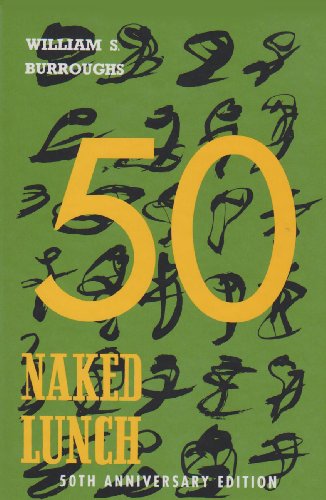
                • Cover of Naked Lunch
                  Naked Lunch

                  William S. Burroughs · standalone novel · 1959

                  similar bychallengingmid 20th centuryliterary & generalsatiredarkour world

                  Naked Lunch is a 1959 antinovel by American author William S. Burroughs. The novel does not follow a clear linear plot, but is instead structured as a series of non-chronological "routines". Many of these routines follow William Lee, an opioid addict who travels to the surreal city of Interzone and begins working for the organization "Islam Inc."

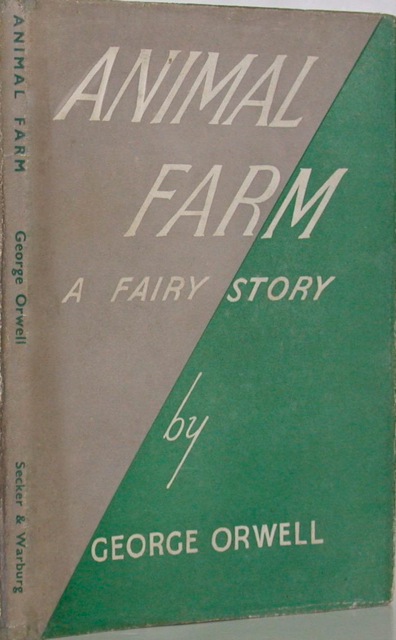
                • Cover of Animal Farm: A Fairy Story
                  Animal Farm: A Fairy Story

                  George Orwell · standalone novel · 1945

                  similar bymid 20th centurypolitical intriguesatiredark+2 more

                  WorldCat: "Fueled by Orwell's intense disillusionment with Soviet Communism, Animal Farm is a nearly perfect piece of writing, both an engaging story and an allegory that actually works. When the downtrodden beasts of Manor Farm oust their drunken human master and take over management of the land, all are awash in collectivist zeal."

                • Cover of It Happened in Boston?
                  It Happened in Boston?

                  Russell H. Greenan · standalone novel · 1968

                  similar bychallengingmid 20th centuryliterary & generaldarkour worldnorth america+1 more

                  It Happened in Boston? (1968) is a novel by Russell H. Greenan. It tells the story of an unreliable narrator, who is a disillusioned, paranoid painter, whose goal in life is to someday meet God and destroy him. He decided he wanted to hold God accountable for the evils in the world. The book follows a bizarre series of events in the lives of him and his painter friends and effectively documents his descent into paranoid delusions as he becomes more and more unreliable as a narrator leaving the reader to become more and more unsure about what exactly is happening in Boston.

                • Cover of Ape and Essence
                  Ape and Essence

                  Aldous Huxley · standalone novel · 1948

                  similar bychallengingmid 20th centurysatiredarkour world

                  Ape and Essence (1948) is a novel by Aldous Huxley, first published in August 1948 by Harper & Brothers in the US, and then in 1949 by Chatto & Windus in the UK. It is set in a dystopia, as is Brave New World, Huxley's more famous work. It is largely a satire of the rise of large-scale warfare and warmongering in the 20th century, and presents a pessimistic view of the politics of mutually assured destruction. The book makes extensive use of surreal imagery, depicting humans as apes who, as a whole, will inevitably kill themselves.

                • Cover of Island
                  Island

                  Aldous Huxley · standalone novel · 1962

                  similar bychallengingmid 20th centuryfaith and religionliterary & general

                  Island is a 1962 utopian manifesto and novel by English writer Aldous Huxley, the author's final work before his death in 1963. Although it has a plot, the plot largely serves to further conceptual explorations rather than setting up and resolving conventional narrative tension.

                • Cover of Stranger in a Strange Land
                  Stranger in a Strange Land

                  Robert A. Heinlein · standalone novel · 1961

                  similar byfaith and religionchallengingsatirenorth americaour world

                  Stranger in a Strange Land is a 1961 science fiction novel by the American author Robert A. Heinlein. It tells the story of Valentine Michael Smith, a human who comes to Earth in early adulthood after being born on the planet Mars and raised by Martians, and explores his interaction with and eventual transformation of Terran culture.

                • Cover of Nova Trilogy
                  Nova Trilogy

                  series · 3 books · 1961

                  completed

                  similar bychallengingmid 20th centuryliterary & generalour world+1 more

                  William S. Burroughs's Nova Trilogy -- The Soft Machine, The Ticket That Exploded, and Nova Express -- extends the fragmented cut-up and fold-in techniques he developed with Brion Gysin into a paranoid, hallucinatory sequence about control itself. Across the three books, the shadowy Nova Mob, personified as viral, parasitic forces of language and image, is opposed by an equally strange Nova Police, in an allegory for how societies are manipulated through media and addiction. It continues directly from the world and method of Naked Lunch rather than telling a conventional linear story.

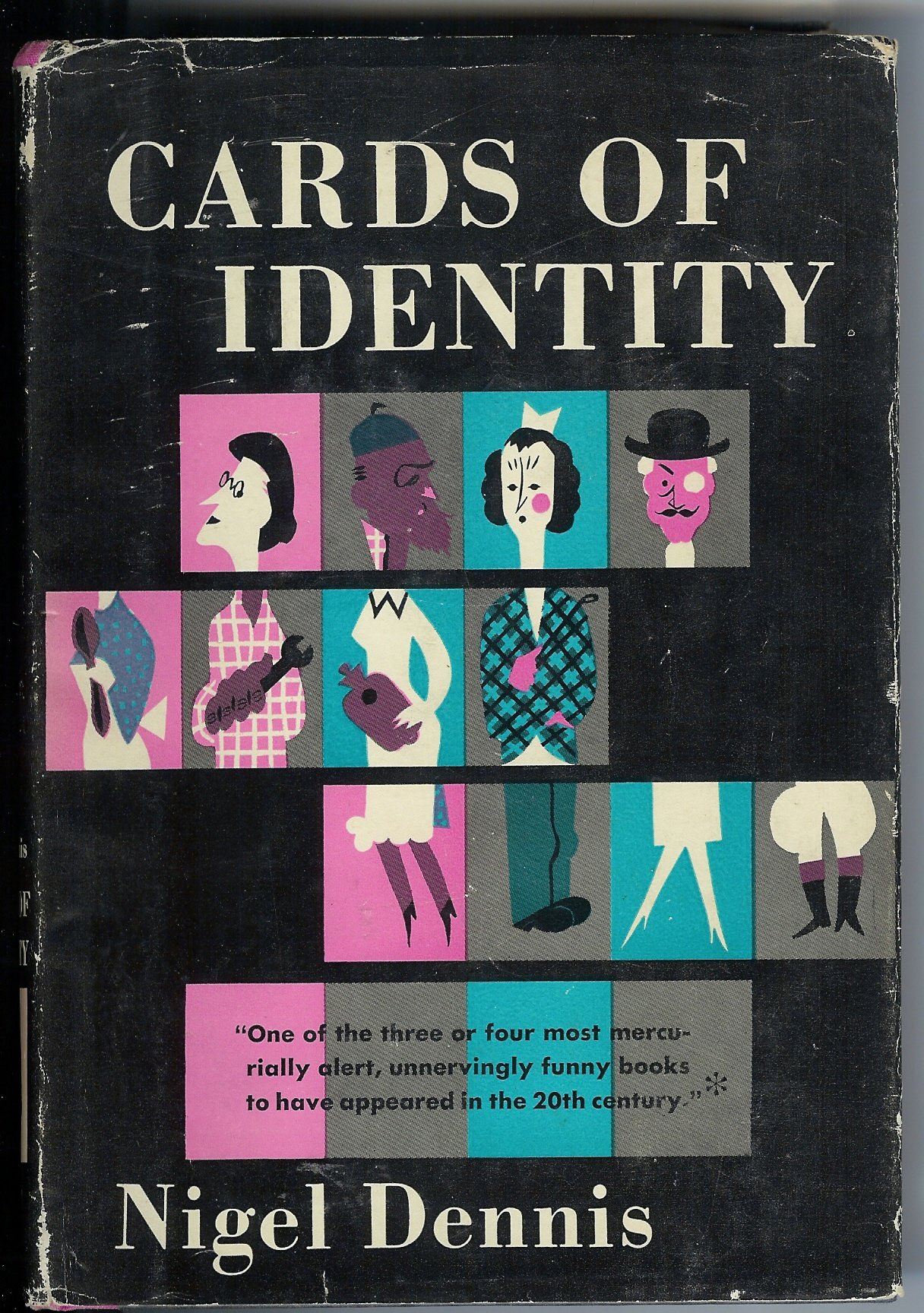
                • Cover of Cards of Identity
                  Cards of Identity

                  Nigel Dennis · standalone novel · 1955

                  similar bychallengingmid 20th centuryliterary & generalsatire+1 more

                  Cards Of Identity is a novel by Nigel Dennis, first published in 1955 by Weidenfeld & Nicolson in the UK and Vanguard Press in the US. A satire on psychology, identity theory and class prejudice, the novel is centred on the Identity Club, a group of men who call themselves psychologists and meet once a year to present case histories promoting their chosen theory of identity. The case histories are in fact fictional representations of a character in line with their theoretical biases, rather than analyses of real patients. Surrounding this plot is the story of the local townspeople, who are brainwashed into being servants for the Identity Club. The book culminates with the performance of a pastiche Shakespearian play, The Prince of Antioch.

                • Cover of The Private Memoirs and Confessions of a Justified Sinner
                  The Private Memoirs and Confessions of a Justified Sinner

                  James Hogg · standalone novel · 1824

                  similar byfaith and religionchallengingliterary & generaldark

                  The Private Memoirs and Confessions of a Justified Sinner: Written by Himself: With a detail of curious traditionary facts and other evidence by the editor is a novel by the Scottish author James Hogg, published anonymously in 1824.

                • Cover of The Good Man Jesus and the Scoundrel Christ
                  The Good Man Jesus and the Scoundrel Christ

                  Philip Pullman · standalone novel · 2009

                  similar byfaith and religionchallengingliterary & generalour worldmiddle east

                  Philip Pullman retells the gospel story with one change: Mary gives birth to twin sons, not one. Jesus grows into the moral teacher and healer familiar from scripture, while his brother, given the name Christ, watches from the sidelines, recording and reshaping his brother's story with an eye toward the institution he believes should be built on it. As Jesus preaches humility and doubt, Christ is drawn into a bargain with a mysterious stranger who wants his account shaped into something more useful for the church that will one day claim to speak for both of them. Part of Canongate's Myth series, Pullman's short, provocative reworking of the New Testament.

                • Cover of Lord of the Flies
                  Lord of the Flies

                  William Golding · standalone novel · 1954

                  similar bymid 20th centuryliterary & generaldarkour world+1 more

                  Lord of the Flies is the 1954 debut novel of British author William Golding. The plot concerns a group of prepubescent British boys who are stranded on an uninhabited island and their disastrous attempts to govern themselves that lead to a descent into savagery. The novel's themes include morality, leadership, and the tension between civility and chaos.

                • Cover of V.
                  V.

                  Thomas Pynchon · standalone novel · 1963

                  similar bychallengingmid 20th centuryliterary & generalsatirenorth america

                  V. is a satirical postmodern novel and the debut novel of Thomas Pynchon, published on March 18, 1963. It describes the exploits of a discharged U.S. Navy sailor named Benny Profane, his reconnection in New York with a group of pseudo-bohemian artists and hangers-on known as the Whole Sick Crew, and the quest of an aging traveler named Herbert Stencil to identify and locate the mysterious entity he knows only as "V." It was nominated for a National Book Award.

                • Cover of The Child Buyer
                  The Child Buyer

                  John Hersey · standalone novel · 1960

                  similar bychallengingmid 20th centurysatiredarknorth america

                  The Child Buyer is John Hersey's 1960 novel about a project to engineer super-intelligent persons for a project whose aim is never definitely stated. Told entirely in the form of minutes from a State Senate Standing Committee, it relates the story of the appearance and efforts of a mysterious stranger in the small town of Pequot, and the repercussions of his attempt to buy a boy, Barry Rudd.

                • Cover of Atlas Shrugged
                  Atlas Shrugged

                  Ayn Rand · standalone novel · 1957

                  similar bychallengingmid 20th centurypolitical intriguenorth america

                  Atlas Shrugged is a 1957 novel by Ayn Rand. It is her longest novel, the fourth and final one published during her lifetime, and the one she considered her magnum opus in the realm of fiction writing. She described the theme of Atlas Shrugged as "the role of man's mind in existence" and it includes elements of science fiction, mystery, and romance. The book explores a number of philosophical themes from which Rand would subsequently develop Objectivism, including reason, property rights, individualism, rational egoism, and laissez-faire capitalism and depicts what Rand saw as the evil of altruism and governmental coercion. Of Rand's works of fiction, it contains her most extensive statement of her philosophical system.

                • Cover of Hystopia
                  Hystopia

                  David Means · standalone novel · 2016

                  similar bychallengingmid 20th centuryliterary & generaldarknorth america

                  Hystopia is a 2016 novel by David Means. Literary critic Christian Lorentzen described the novel as "a counterfactual narrative by a Vietnam veteran, named Eugene Allen about his experience in a therapeutic, psychedelics-based trauma recovery program initiated, in the novel's alternate history, by John F. Kennedy." In July 2016, it was longlisted for the 2016 Man Booker Prize.

                • Cover of Gravity's Rainbow
                  Gravity's Rainbow

                  Thomas Pynchon · standalone novel · 1973

                  similar bychallengingpolitical intrigueliterary & generaldark

                  Gravity's Rainbow is a 1973 postmodern novel by Thomas Pynchon. The narrative is set primarily in Europe at the end of World War II and centers on the design, production and dispatch of V-2 rockets by the German military. In particular, it features the quest undertaken by several characters to uncover the secret of a mysterious device, the Schwarzgerät, which is slated to be installed in a rocket with the serial number "00000".

                • Cover of Eye in the Sky
                  Eye in the Sky

                  Philip K. Dick · standalone novel · 1957

                  similar bychallengingmid 20th centuryour worldnorth america+1 more

                  Eight visitors touring a particle-accelerator facility are caught in a catastrophic malfunction, a collapsing platform, a burst of radiation, that leaves them all unconscious. When protagonist Jack Hamilton, an engineer recently fired over Red Scare-era suspicions about his wife's politics, comes to, the world around him is subtly, then not so subtly, wrong: physics bends to fit one fellow victim's religious convictions, then to another's paranoid fears, as the group cycles through what turn out to be shared hallucinations built from each other's private belief systems. Philip K. Dick's early novel about how differently people actually see the same world.

                • Cover of White Noise
                  White Noise

                  Don DeLillo · standalone novel · 1985

                  similar bychallengingliterary & generalsatirenorth america+1 more

                  White Noise is the eighth novel by Don DeLillo, published by Viking Press in 1985. It won the U.S. National Book Award for Fiction.

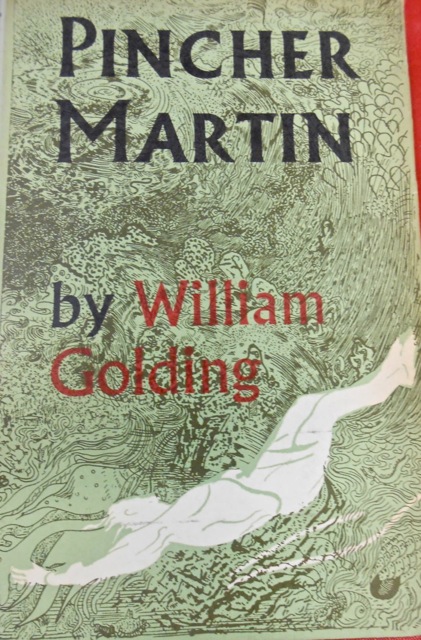
                • Cover of Pincher Martin
                  Pincher Martin

                  William Golding · standalone novel · 1956

                  similar bychallengingmid 20th centuryliterary & generaldarkour world

                  Pincher Martin is a novel by British writer William Golding, first published in 1956. It is Golding's third novel, following The Inheritors and his debut Lord of the Flies. It is one of Golding's best-known novels, noted for being existential and minimalistic in setting.

                • Cover of The Satanic Verses
                  The Satanic Verses

                  Salman Rushdie · standalone novel · 1988

                  similar byfaith and religionchallengingliterary & generalour world

                  The Satanic Verses is the fourth novel by British–Indian writer Salman Rushdie. First published in September 1988, the book was inspired by the life of the Islamic prophet Muhammad. As with his previous books, Rushdie used magical realism and relied on contemporary events and people to create his characters. The title refers to the Satanic Verses, a group of Quranic verses about three pagan Meccan goddesses: Allāt, Al-Uzza, and Manāt. The part of the story that deals with the satanic verses was based on accounts from the historians al-Waqidi and al-Tabari.

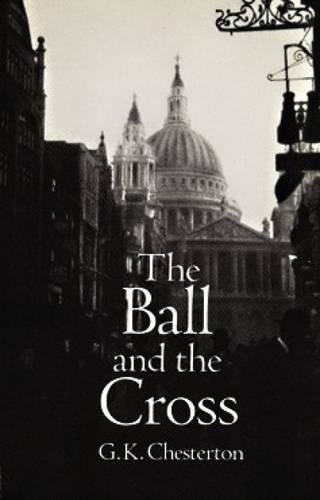
                • Cover of The Ball and the Cross
                  The Ball and the Cross

                  G. K. Chesterton · standalone novel · 1909

                  similar byfaith and religionchallengingliterary & generalsatire

                  The Ball and the Cross is a novel by G. K. Chesterton. The title refers to a more worldly and rationalist worldview, represented by a ball or sphere, and the cross representing Christianity. The first chapters of the book were serialized from 1905 to 1906 with the completed work published in 1909.

                • Cover of Godhead
                  Godhead

                  series · 4 books · 1994

                  similar bychallengingfaith and religionsatire+3 more

                • Cover of Dune
                  Dune

                  series · 20 books · 1963

                  part of Dune Universe

                  similar bypolitical intriguefaith and religion+2 more

                  Frank Herbert's Dune Chronicles opens with 1965's Dune, set on the desert planet Arrakis where House Atreides takes control of the only source of the vital spice melange and young Paul Atreides is pulled into a struggle over its politics and religion. Herbert carried the story forward across five further novels — Dune Messiah, Children of Dune, God Emperor of Dune, Heretics of Dune, and Chapterhouse: Dune — following Paul's line over the following millennia, before Brian Herbert and Kevin J. Anderson later extended the saga. Many other editions of these six novels are omnibus and box-set repackagings rather than separate stories.