More like Mindhopper
anchored on:science fictionpsychic powersnear futurespace explorationnorth americaadventurous+1 more
but
- Have Space Suit - Will Travel
Robert A. Heinleinstandalone novel1958
similar byscience fictionnear futurenorth americaadventuroustensespace exploration
From the back cover of the Del Rey 9th printing: "Skyjacked - Everything happened at once. One minute Kip Russell was walking about in his own backyard, testing out an old space suit and dreaming about going to the moon - and the next he was out cold and the captive of an insidious space pirate. The whole thing seemed like a very bad dream until he discovered he wasn't the only prisoner on board. Then the reality of the situation became inescapable. He - along with the daughter of a world-renowned scientist and a beautiful creature from an alien planet - had been skyjacked by a monstrous extraterrestrial and they were on their way to the Moon... a journey toward a fate worse than death!"
- Friday
Robert A. Heinleinstandalone novel1982
similar byscience fictionnear futurenorth americaadventuroustense
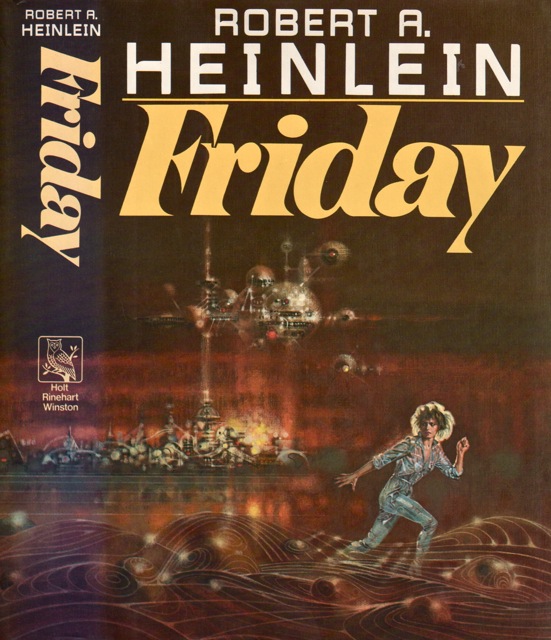
Friday is a 1982 science fiction novel by American writer Robert A. Heinlein. It is the story of a female "artificial person", the eponymous Friday, genetically engineered to be stronger, faster, smarter, and generally better than normal humans. Artificial humans are widely resented, and much of the story deals with Friday's struggle both against prejudice and to conceal her enhanced attributes from other humans. The story is set in a Balkanized 21st century, in which the nations of the North American continent have been split up into a number of smaller states.
- The World Jones Made
Philip K. Dickstandalone novel1956
similar byscience fictionnear futurenorth americapsychic powerstense
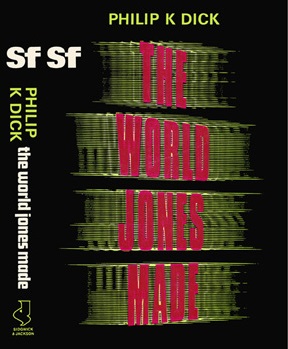
The World Jones Made is a 1956 science fiction novel by American writer Philip K. Dick, examining notions of precognition, humanity, and politics. It was first published by Ace Books as one half of Ace Double D-150, bound dos-à-dos with Agent of the Unknown by Margaret St. Clair.The story takes place after a nuclear war in which society is dominated by relativism, which rejects absolute truths and preaches tolerance as the highest principle. The mutant Floyd Jones, who can see into the future, plans to overthrow the system and colonise space. The story ends with the defeat of Jones, whose plans fail despite his ability to see the future due to the immutability of fate.
- Stranger in a Strange Land
Robert A. Heinleinstandalone novel1961
similar byscience fictionnorth americanear futurepsychic powers
Stranger in a Strange Land is a 1961 science fiction novel by the American author Robert A. Heinlein. It tells the story of Valentine Michael Smith, a human who comes to Earth in early adulthood after being born on the planet Mars and raised by Martians, and explores his interaction with and eventual transformation of Terran culture.
- A Fall of Moondust
Arthur C. Clarkestandalone novel1961
similar byscience fictionnear futureadventuroustense+1 more
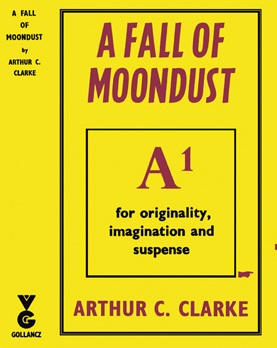
From the back cover of the Harbrace paperback: "The action of A Fall of Moondust takes place almost a century from now when tours on the moon are a common occurrence. One of the high points of each tour is a cruise around the Sea of Thirst, a body of volcanic dust, in a specially designed vessel called the Selene On a perfectly routine voyage one day the Selene suddenly disappears. How do you locate a small tourist "cruiser" buried beneath fifty feet of dust? If you find it, how do you rescue the passengers and crew? If you are on board, how do you feel and what do you do while brave men and expert technicians join forces in a race against time? Sustained excitement, lively humor, and an engaging cast of characters make this one of Arthur C. Clarke's most intriguing novels."
- The Door Into Summer
Robert A. Heinleinstandalone novel1957
similar byscience fictionnear futurenorth americaadventurous
From the first page of the Signet 6th printing: "An electronics engineer invents a wizard robot... only to find himself shanghaied by his ruthless partner and his gold-digging fiancee. The crafty pair forces him to submit to the "long sleep" - suspended animation for thirty years. But when he wakes up in the year 2000 A.D. the inventor makes a startling discovery. He learns that it is possible now to twist time forwards or backwards. And so he returns to the past bent on a mission... of revenge."
- Heavy Weather
Bruce Sterlingstandalone novel1994
similar byscience fictionnear futurenorth americaadventuroustense
Set in 2031 when global climatology has significantly changed the world's weather patterns, Jane Unger "rescues" her brother Alex from a Mexican clinic and takes him to the Storm Troupe. The troupe, under the leadership of Dr. Jerry Mulcahey, chases tornadoes primarily across northern Texas, gathering data in preparation for tracking the mythical F-6 tornado.
- Time Is the Simplest Thing
Clifford D. Simakstandalone novel1961
similar byscience fictionnear futurenorth americapsychic powers+1 more
Time Is the Simplest Thing is a science fiction novel by American writer Clifford D. Simak, first published in 1961. The story combines paranormal abilities with themes of space and time travel. The underlying theme is intolerance of ordinary people towards those with unusual abilities.
- Farnham's Freehold
Robert A. Heinleinstandalone novel1964
similar byscience fictionnear futurenorth americatense
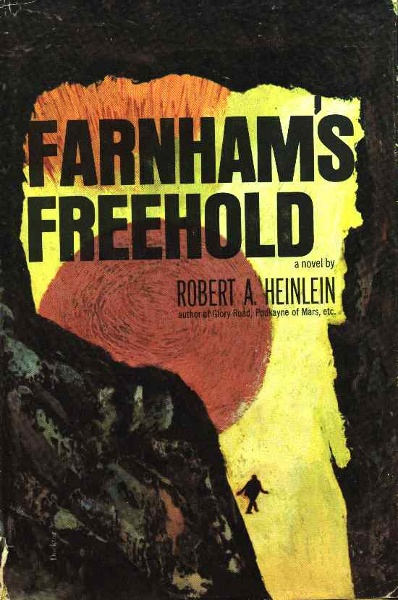
Farnham's Freehold is a science fiction novel by American writer Robert A. Heinlein. A serialized version, edited by Frederik Pohl, appeared in Worlds of If magazine. The complete version was published in novel form by G. P. Putnam later in 1964.
- Ready Player One
series3 books2011
similar byscience fictionnear futureadventurous+2 more
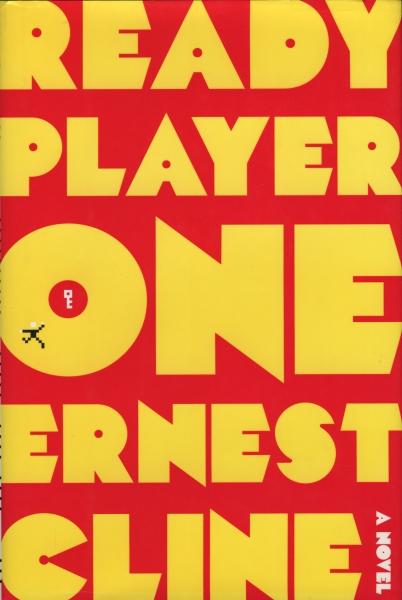
Ernest Cline's Ready Player One (2011) is set in a near-future dystopia where much of humanity escapes into the OASIS, a vast virtual-reality universe, and follows teenager Wade Watts as he chases an Easter egg hidden by the OASIS's late creator in a puzzle-based hunt worth a fortune. The 2020 sequel, Ready Player Two, picks up after Wade has gained control of the OASIS and follows him and his friends into a new quest built around a brain-computer interface the creator left behind.
- The Handmaid's Tale
series3 books1985
similar byscience fictionnear futurenorth americatense
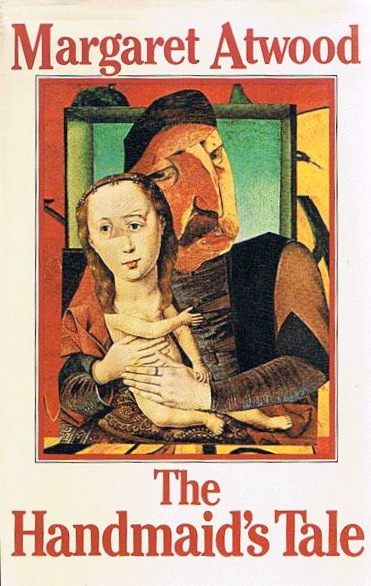
The Handmaid's Tale is Margaret Atwood's 1985 novel set in Gilead, a totalitarian theocracy that has overthrown the United States and forces fertile women into reproductive servitude as Handmaids; it is narrated by one such woman, Offred. Atwood returned to the world in her 2019 sequel The Testaments, set fifteen years later and narrated by three women, including the regime's Aunt Lydia. Together the two novels move from Gilead's grip on power toward the first cracks in it.
- Jumper
series6 books1992
similar byscience fictionadventuroustensepsychic powers+1 more
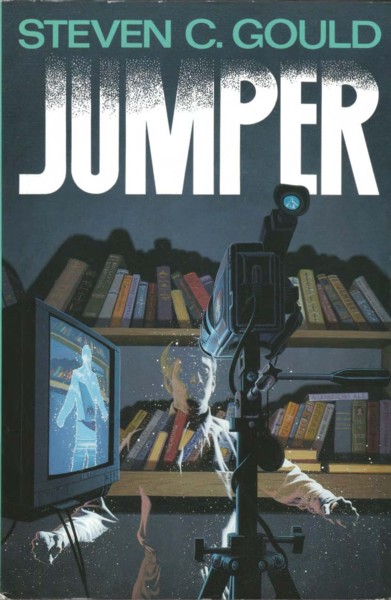
Jumper follows David Rice, a teenager who discovers he can teleport anywhere he's been and uses the power to escape an abusive home, only to find that ability alone doesn't solve the harder problems of finding his absent mother, building an honest relationship, or staying off the radar of people who'd exploit him. Steven Gould's series continues across Reflex, Impulse, and Exo, later following his and his wife's daughter as a second-generation jumper. A 2008 film loosely adapted the first novel.
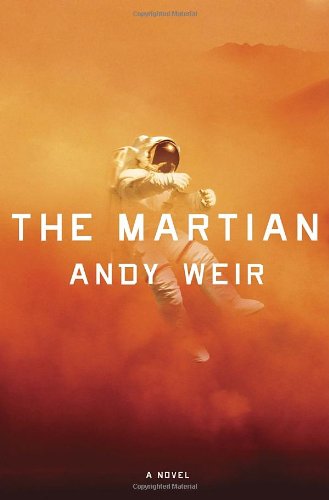
- The Martian
series2 books2012
similar byscience fictionnear futuretensespace exploration
Andy Weir's novel The Martian, first self-published in 2011 before a commercial re-release, follows astronaut Mark Watney after he is stranded alone on Mars when his crew presumes him dead and departs. Using scientific improvisation and dark humor, Watney works to keep himself alive long enough for a rescue to reach him. It is a single, self-contained survival story.
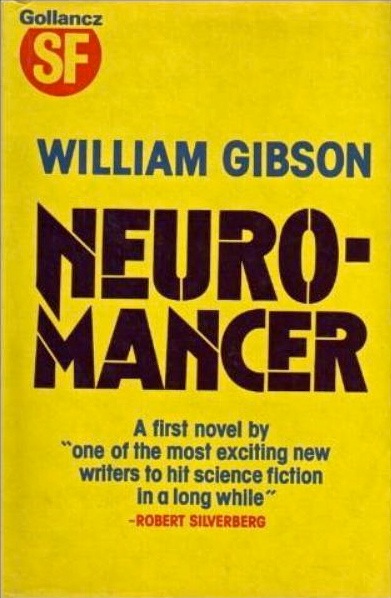
- Sprawl Trilogy
series10 books1981
similar byscience fictionnear futuretenseartificial intelligence
The Sprawl Trilogy is William Gibson's foundational cyberpunk sequence: Neuromancer (1984), in which hacker Case is drawn into a high-stakes heist alongside an artificial intelligence and a damaged ex-soldier, followed by Count Zero (1986) and Mona Lisa Overdrive (1988), which widen the same near-future world of corporate power and networked cyberspace to new characters. Johnny Mnemonic, an early short story set in the same fictional milieu, predates the novels and introduces the courier Molly Millions before her role in the trilogy. Together these works established much of cyberpunk's visual and thematic vocabulary.
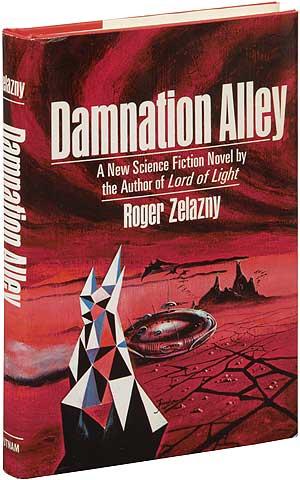
- Damnation Alley
Roger Zelaznystandalone novel1969
similar byscience fictionnear futurenorth americaadventurous
Damnation Alley is a 1969 science fiction novel by American writer Roger Zelazny, based on a novella of the same name published in 1967. A film adaptation of the novel was released in 1977.
- The Oracle Year
Charles Soulestandalone novel2018
similar byscience fictionnear futurenorth americapsychic powerstense
Awakening from a dream with more than one hundred predictions about the future in his head, an unassuming Manhattan bassist becomes one of the world's most powerful men and hides his identity behind an online persona that is targeted by greedy corporations and dangerous enemies.
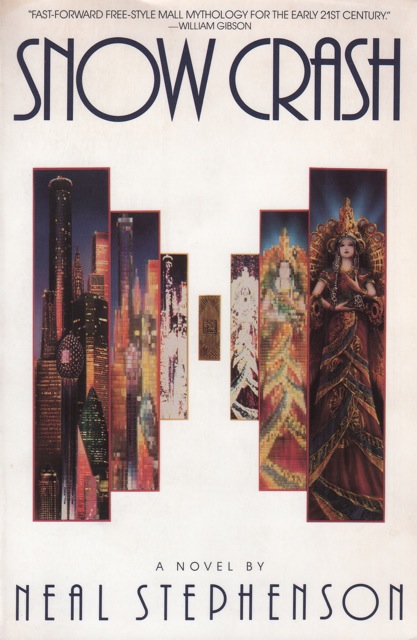
- Snow Crash
Neal Stephensonstandalone novel1992
similar byscience fictionnear futureadventuroustense
Snow Crash is a 1992 science fiction novel by Neal Stephenson. Like many of Stephenson's novels, its themes include history, linguistics, anthropology, archaeology, religion, computer science, politics, cryptography, memetics, and philosophy.
- Adventures of Viktor & Julia
series2 books1999
similar byscience fictionnear futuretensespace explorationadventurous
- The Steps of the Sun
Walter Tevisstandalone novel1983
similar byscience fictionnear futurenorth americatensespace exploration
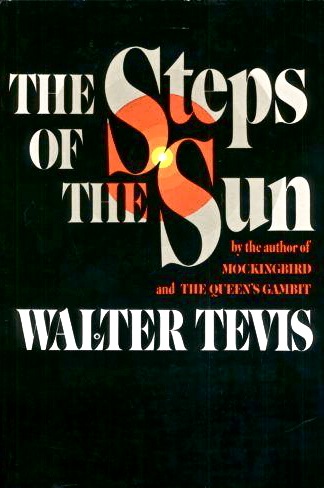
The Steps of the Sun is a 1983 science fiction novel by the American author Walter Tevis. It is about a future energy crisis, and a world in which China has become the leading superpower.
- Darwin
series2 books1999
completed
similar byscience fictionnear futurenorth americatense
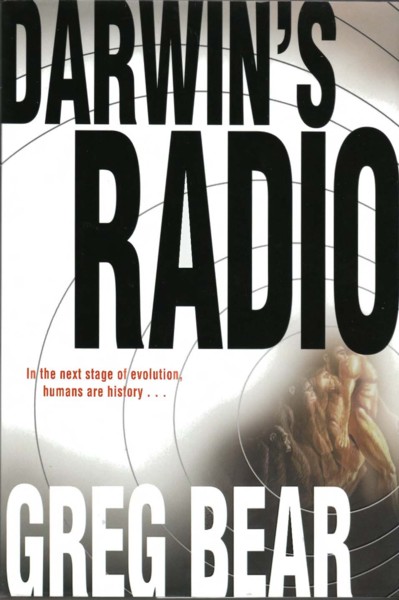
Greg Bear's Darwin's Radio imagines a dormant retrovirus in human DNA activating worldwide, triggering an accelerated leap in human evolution that governments respond to as a plague. The 1999 novel won the Nebula Award; its sequel Darwin's Children follows the first generation of changed children as society decides what to do with them. Together they're speculative near-future science fiction grounded in genetics rather than space opera.
- Make Room! Make Room!
Harry Harrisonstandalone novel1966
similar byscience fictionnear futurenorth americatense
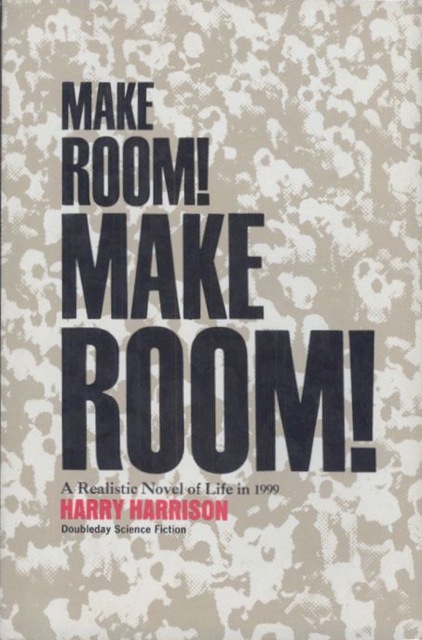
Make Room! Make Room! is a 1966 science fiction novel written by Harry Harrison exploring the consequences of both unchecked population growth on society and the hoarding of resources by a wealthy minority. It was originally serialized in Impulse magazine.
- Oath of Fealty
Larry Niven & Jerry Pournellestandalone novel1981
similar byscience fictionnear futurenorth americatense
Oath of Fealty is a 1981 novel by American writers Larry Niven and Jerry Pournelle, published originally by Phantasia Press, then by Timescape Books, with numerous reprints. Set in the near future, it involves an arcology, a large inhabited structure, called Todos Santos, which rises above a crime-ridden Los Angeles, California, but has little beyond casual contact with the city. The novel popularized the phrase "think of it as evolution in action", which occurs elsewhere in Niven's books. The novel anticipated the building of the Los Angeles subway. It was included in David Pringle's book Science Fiction: The 100 Best Novels.
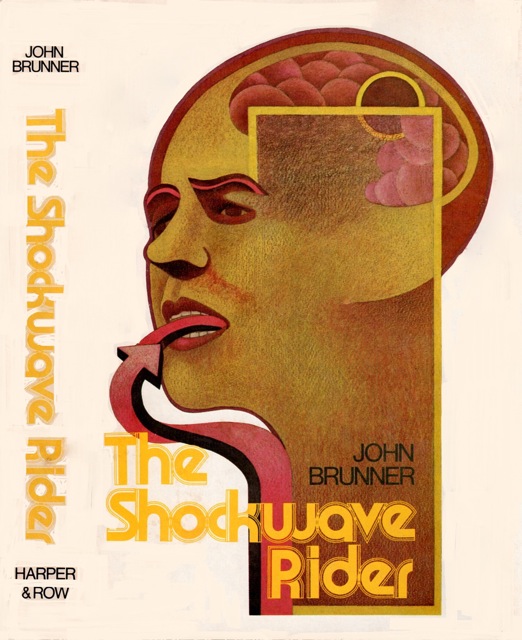
- The Shockwave Rider
John Brunnerstandalone novel1975
similar byscience fictionnear futurenorth americatense
The Shockwave Rider is a science fiction novel by John Brunner, originally published in 1975. It is notable for its hero's use of computer hacking skills to escape pursuit in a dystopian future, and for the coining of the word "worm" to describe a program that propagates itself through a computer network. It also introduces the concept of a Delphi pool, perhaps derived from the RAND Corporation's Delphi method – a prediction market on world events which bears close resemblance to DARPA's controversial and cancelled Policy Analysis Market.
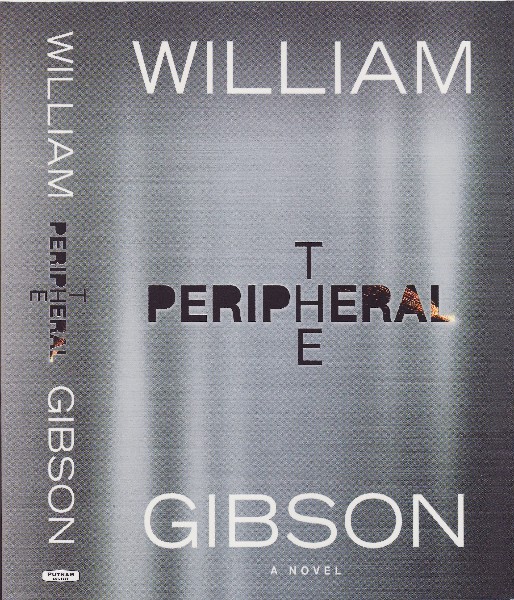
- The Jackpot Trilogy
series2 books2014
similar byscience fictionnear futurenorth americatense+1 more
William Gibson's Jackpot sequence begins with The Peripheral (2014), a science-fiction thriller cross-cutting between a near-future American town and a devastated London seventy years on. Gibson continued the same world in Agency (2020), set slightly later in the near-future timeline.