More like Mockingjay
anchored on:science fictiondystopiarebellion and revolutionnorth americafar futuredark+6 more
but
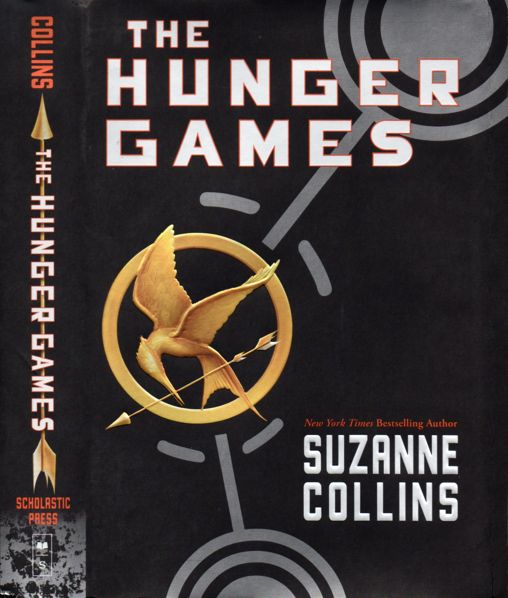
- The Hunger Games
series3 books2008
part of The Hunger Games Universe
similar bynorth americafar futuredarktensescience fictiondystopiayoung adultrebellion and revolution+5 more
The Hunger Games is a series of young adult dystopian novels written by American author Suzanne Collins. The series consists of a trilogy that follows teenage protagonist Katniss Everdeen, as well as two prequels. The Hunger Games universe is a dystopia set in Panem, a post-apocalyptic North American country consisting of the wealthy Capitol and 12 districts in varying states of poverty. As punishment for rebellion, the Capitol hosts an annual battle royale competition called The Hunger Games. Each of the 12 districts must send two children between the ages of 12 and 18 to participate, and the last surviving child is dubbed the victor.
- The Hunger Games Universe
universe5 books2008
Start hereThe Hunger Games · Start here
similar byfar futurenorth americadarktensedystopiascience fictionyoung adultrebellion and revolution+6 more
Panem, they call it now — a nation raised on the drowned bones of North America, a glittering Capitol ringed by twelve districts it once starved into obedience. Every year the Capitol collects its debt in children: two tributes from each district, drawn by lottery, dropped into an engineered arena, and made to kill one another on live television while the whole country is required to watch. This is the Hunger Games — entertainment, punishment, and government at once. Suzanne Collins tells it in a compact, unified body of work. The founding trilogy — The Hunger Games, Catching Fire, and Mockingjay — follows Katniss Everdeen, a girl from the coal-mining District 12 who volunteers in her sister's place and becomes something the Capitol never scripted. Two prequels reach back into the same machinery: The Ballad of Songbirds and Snakes traces a young Coriolanus Snow long before he is President, and Sunrise on the Reaping returns to District 12 a generation ahead of Katniss. Begin with the trilogy, in order — it is Katniss's voice, close and present-tense, that makes Panem breathe, and the prequels land hardest once you know how her story ends. Beneath the spectacle sits one steady, uncomfortable question: who profits when we agree to look away.
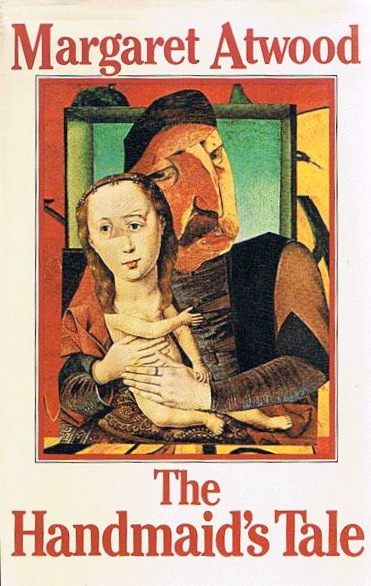
- The Handmaid's Tale
series3 books1985
similar bynorth americadarktensedystopiascience fictiontotalitarianismrebellion and revolution+2 more
The Handmaid's Tale is Margaret Atwood's 1985 novel set in Gilead, a totalitarian theocracy that has overthrown the United States and forces fertile women into reproductive servitude as Handmaids; it is narrated by one such woman, Offred. Atwood returned to the world in her 2019 sequel The Testaments, set fifteen years later and narrated by three women, including the regime's Aunt Lydia. Together the two novels move from Gilead's grip on power toward the first cracks in it.
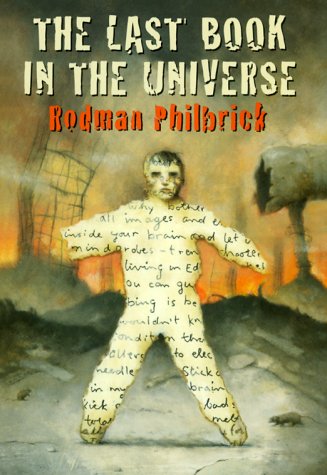
- The Last Book in the Universe
Rodman Philbrickstandalone novel2000
similar byfar futurenorth americadarktensescience fictionyoung adultfirst persondystopia+2 more
The Last Book in the Universe is a 2000 post-apocalyptic science fiction novel by Rodman Philbrick. Set in a cyberpunk dystopia, its protagonist and narrator is a teenage boy named Spaz who has epilepsy.
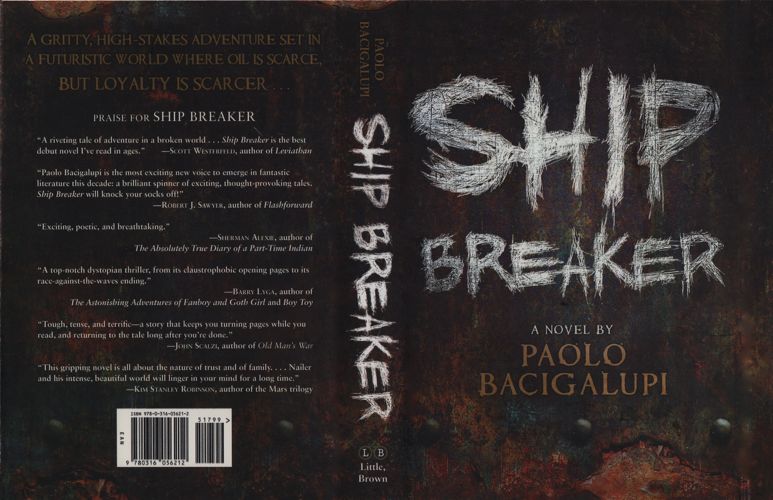
- Ship Breaker
series3 books2010
similar bydarktensenorth americascience fictionyoung adultpost-apocalypticsurvival+5 more
Nailer works a light-crew scavenging copper wire and scrap from beached oil tankers on a Gulf Coast reshaped by rising seas and vanished order, until a wrecked clipper ship washes ashore carrying a half-drowned girl from the wealthy world he'll never belong to. Paolo Bacigalupi's Ship Breaker follows Nailer as helping her pulls him out of his abusive father's orbit and into a much larger, more dangerous game involving her family's fortune. The sequels The Drowned Cities and Tool of War widen the same flooded, resource-scavenging future to new characters and coastlines.
- The Gate to Women's Country
Sheri S. Tepperstandalone novel1988
similar bynorth americafar futuredarkscience fictiondystopiapost-apocalypticwar+1 more
The Gate to Women's Country is a post-apocalyptic novel by American writer Sheri S. Tepper, published in 1988. It describes a world set three hundred years into the future after a catastrophic war which has fractured the United States into several nations.
- Chaos Walking
series5 books2008
similar byfar futuretensedarkscience fictiondystopiayoung adult+5 more
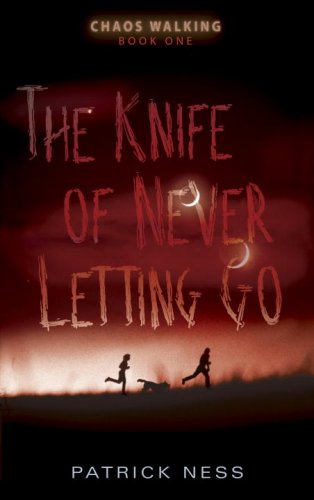
Chaos Walking is a young adult science fiction series written by American-British novelist Patrick Ness. It is set in a dystopian world where all living creatures can hear each other's thoughts in a stream of images, words, and sounds called Noise. The series is named after a line in the first book: "The Noise is a man unfiltered, and without a filter, a man is just chaos walking." The series consists of a trilogy of novels and three short stories.
- When the Sleeper Wakes
H. G. Wellsstandalone novel1899
similar byfar futuredarktensescience fictiondystopiarebellion and revolutiontotalitarianismpolitical intrigue
Graham, an insomniac Englishman in 1890s London, takes a course of sleep-inducing drugs and falls into a coma that lasts two centuries. He wakes in the year 2100 to find his investments have compounded, through a ruling body called the White Council, into effective ownership of most of the world's wealth and power, making him, on paper, humanity's master, and in practice, its prisoner, held under guard while the Council governs in his name. A rebel faction led by a man named Ostrog frees him, hoping to use his symbolic authority to spark an uprising against the Council. An early H. G. Wells dystopia about inherited power and manufactured consent.
- I Am Legend
Richard Mathesonstandalone novel1954
similar bydarknorth americatensescience fictionpost-apocalypticdystopiafirst personsurvival
The last human survivor of the vampire epidemic has to maintain his defences against their onslaught, while attempting to research the cause and possibly solution to the plague. Robert Neville is the last living man on Earth... but he is not alone. Every other man, woman and child on the planet has become a vampire, and they are hungry for Neville's blood. By day he is the hunter, stalking the undead through the ruins of civilization. By night, he barricades himself in his home and prays for the dawn. How long can a man survive like this?
- The Shockwave Rider
John Brunnerstandalone novel1975
similar bynorth americadarktensescience fictiondystopiapost-apocalyptictotalitarianism+1 more
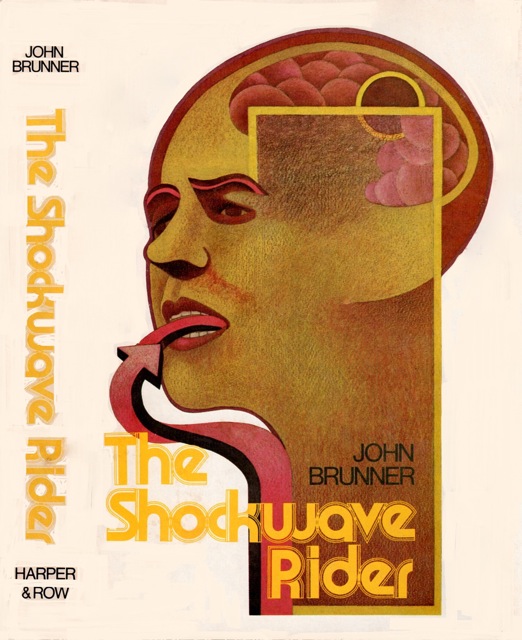
The Shockwave Rider is a science fiction novel by John Brunner, originally published in 1975. It is notable for its hero's use of computer hacking skills to escape pursuit in a dystopian future, and for the coining of the word "worm" to describe a program that propagates itself through a computer network. It also introduces the concept of a Delphi pool, perhaps derived from the RAND Corporation's Delphi method – a prediction market on world events which bears close resemblance to DARPA's controversial and cancelled Policy Analysis Market.
- Unwind Dystology
series5 books2007
similar bynorth americatensedarkscience fictiondystopiayoung adultrebellion and revolutiongenetic engineering+1 more
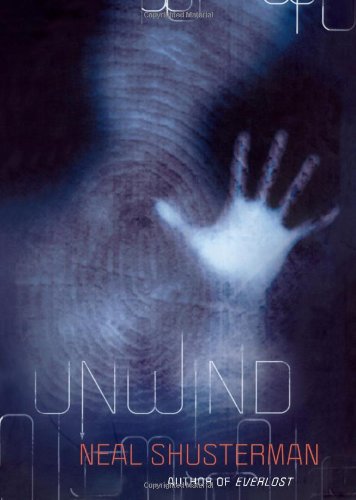
Neal Shusterman's Unwind Dystology opens in a United States reshaped by the resolution to a war over reproductive rights: parents can retroactively have a teenager "unwound," their body disassembled for transplant on the premise that nothing technically dies since every part lives on in someone else. The first novel follows three teens fleeing that fate, and the sequels widen the same dystopia's cast and consequences across a four-book arc plus companion material. It is grim speculative fiction built to ask hard bioethical questions rather than offer comfort.
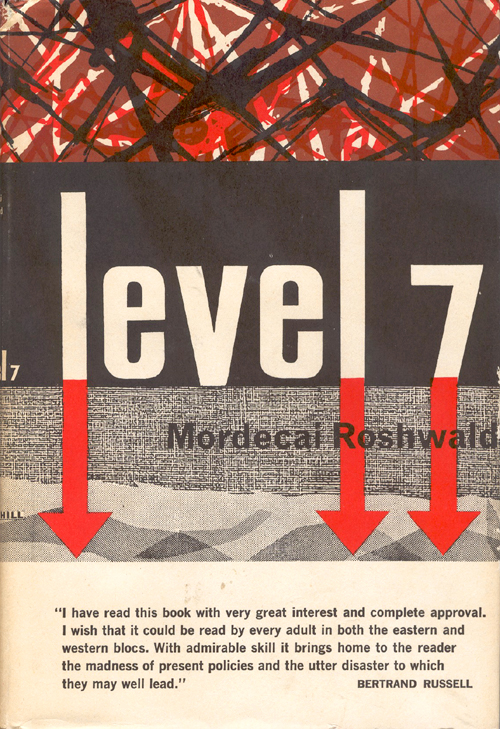
- Level 7
Mordecai Roshwaldstandalone novel1959
similar bydarktensescience fictionfirst persondystopiapost-apocalypticwartotalitarianism+1 more
Level 7 is a 1959 science fiction novel by American writer Mordecai Roshwald. It is told from the first-person perspective of a modern soldier, X-127, living in the underground military complex Level 7, where he and several hundred others are expected to reside permanently. X-127 fulfills the role of 'push-button' offensive initiator of his nation's nuclear weapons capacity against an unspecified enemy. X-127 narrates life within a deep shelter before, during and after a nuclear war that wipes out the human species.
- City at World's End
Edmond Hamiltonstandalone novel1951
similar byfar futurenorth americadarktensescience fictionpost-apocalypticsurvival
An experimental atomic weapons test in small-town America goes catastrophically wrong, hurling the entire town of Middletown, buildings, streets and all, untold ages into Earth's future, to a time when the sun is dying and humanity's last city struggles on beneath a darkening sky. Cut off from everything and everyone they knew, the townspeople have to find a way to survive in a world that has nothing left to spare for latecomers. Edmond Hamilton's novel strands a slice of mid-century America at the literal end of the world.
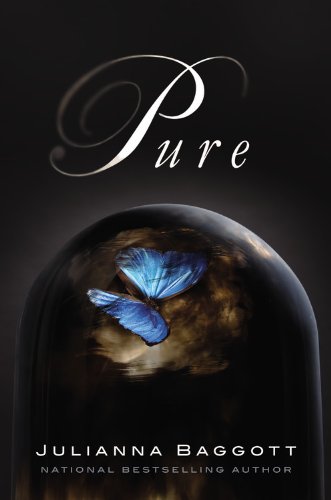
- The Pure Trilogy
series3 books2012
similar byfar futuredarktensescience fictiondystopia+7 more
Julianna Baggott's Pure opens a post-apocalyptic trilogy set after a catastrophic detonation: Pressia, a scarred survivor with a doll's head fused to one hand, crosses paths with Partridge, a sheltered 'Pure' from the domed enclave, who is searching for his mother. Their converging stories carry the series through Fuse and Burn as the divide between the ruined outside world and the domed elite comes under increasing pressure.
- This Perfect Day
Ira Levinstandalone novel1970
similar byfar futuredarktensescience fictiondystopiarebellion and revolutiontotalitarianism
This Perfect Day is a science fiction novel by American writer Ira Levin, about a technocratic dystopia. Levin won a Prometheus Award in 1992 for this novel. This Perfect Day is one of two Levin novels yet to be adapted to film.
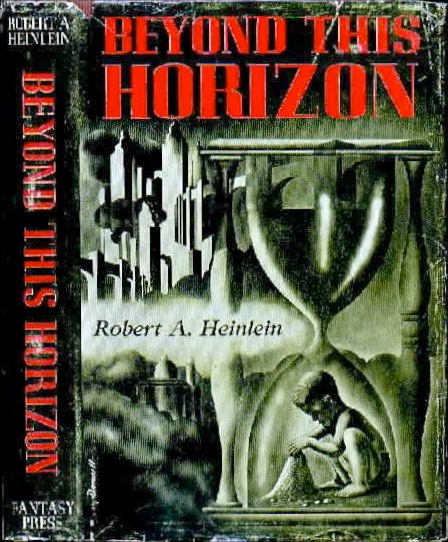
- Beyond This Horizon
Robert A. Heinleinstandalone novel1948
similar byfar futurenorth americascience fictiondystopiarebellion and revolutiongenetic engineering+2 more
From the front flap of a 2001 Baen reprint: "Utopia has been achieved. For centuries, disease, hunger, poverty, and war have been things found only in the history tapes. And applied genetics has given men and women the bodies of athletes and a lifespan of over a century. They should all have been very happy... But Hamilton Felix is bored. And he is the culmination of a star line, each of his last thirty ancestors chosen for superior genes. Hamilton is, as far as genetics can produce one, the ultimate man. And this ultimate man can see no reason why the human race should survive, and has no intention of continuing the pointless comedy. However, Hamilton's life is about to become less boring. A secret cabal of revolutionaries who find utopia not just boring, but desperately in need of leaders who know just What Needs to be Done, are planning to revolt and put themselves in charge. Knowing of Hamilton's disenchantment with the modern world, they have recruited him to join their Glorious Revolution. Big mistake! The revolutionaries are about to find out that recruiting a superman was definitely not a good idea..."
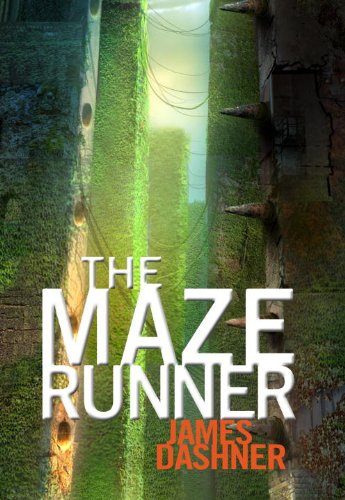
- Maze Runner
series11 books2009
similar bytensescience fictiondystopiayoung adultpost-apocalypticsurvival+3 more
The Maze Runner is a series of young adult dystopian science fiction novels written by American author James Dashner. The series consists of the trilogy The Maze Runner (2009), The Scorch Trials (2010) and The Death Cure (2011), as well as two prequel novels, The Kill Order (2012) and The Fever Code (2016). A novella titled Crank Palace (2020) and a companion book titled The Maze Runner Files (2013) have also been released. A sequel trilogy in the series titled The Maze Cutter takes place 73 years following the events of The Death Cure and consists of the novels The Maze Cutter (2022), The Godhead Complex (2023), and The Infinite Glade (2025).
- The 5th Wave
series4 books2013
similar bynorth americatensescience fictiondarkyoung adultpost-apocalypticsurvival
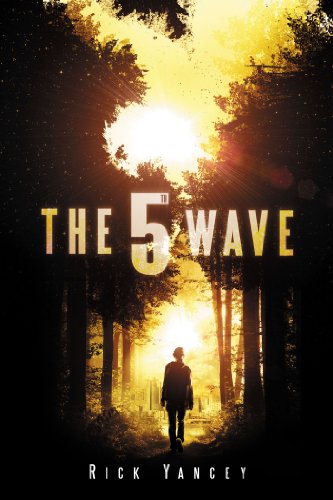
Rick Yancey's The 5th Wave opens after a series of escalating alien attacks has already devastated Earth's population and infrastructure, following sixteen-year-old survivor Cassie Sullivan as she searches for her younger brother while trying to work out who, among the remaining humans, can still be trusted. The trilogy is young-adult science fiction that treats its alien-invasion premise as a survival and paranoia story more than a war story.
- On Such a Full Sea
Chang-rae Leestandalone novel2014
similar bynorth americafar futuredarkscience fictiondystopiapost-apocalypticfirst person
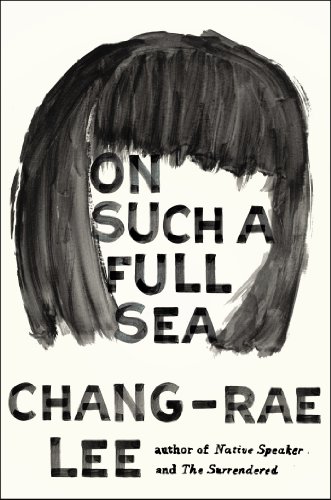
On Such a Full Sea is a speculative fiction novel by Chang-rae Lee, published on January 7, 2014, by Riverhead Books. It is Lee's fifth novel, and the story uses the first person plural to tell the journey of the young fish tank diver, Fan, as she pursues her missing boyfriend. The novel takes place in a post-apocalyptic dystopian world ruined by environmental disaster where the population is divided between those who live in Charter villages, highly regulated and self-contained labor settlements, and the open counties, land that is full of crime and unsupervised by the government. The entire population also is afflicted with "C," a disease affecting the rest of the population that eventually kills everyone who has it. The work deals with themes of capitalism, environmental concerns, healthcare, race, and postcolonialism. It received positive reception at the time of its release, and was a finalist for the National Book Critics Circle Award for Fiction in 2014 as well as shortlisted for the 2015 Andrew Carnegie Medal for Excellence in Fiction.
- Red Rising
series13 books2014
similar byfar futuretensescience fictiondarkdystopiarebellion and revolution+2 more
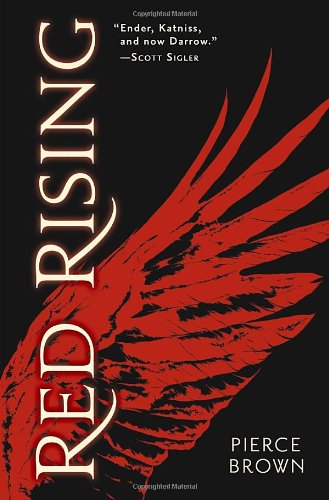
Pierce Brown's Red Rising follows Darrow, a lowborn 'Red' miner on a colonized Mars who discovers his caste's suffering is a lie sustained by the ruling Gold elite, and infiltrates their ranks to destroy the system from within. The series expands from a single-protagonist revenge story into a sprawling multi-book war across the solar system, eventually following an ensemble cast beyond Darrow alone, and combines Roman-inspired factional politics with brutal, competition-driven action set pieces.
- The Sheep Look Up
John Brunnerstandalone novel1972
similar bynorth americadarkscience fictiondystopia+3 more
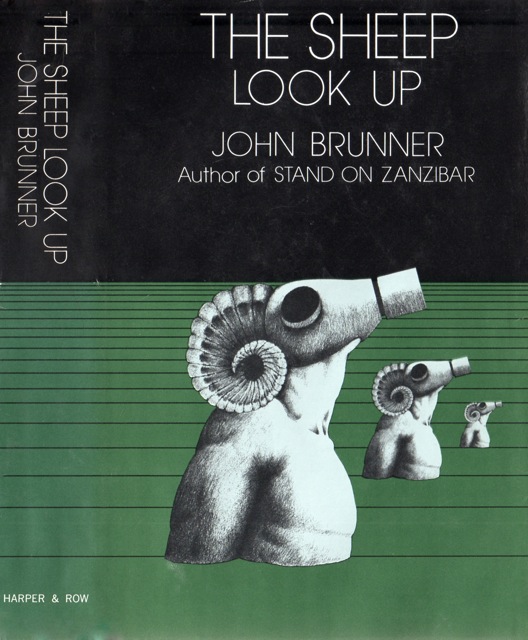
The Sheep Look Up is a 1972 dystopian science fiction novel by British author John Brunner, dealing with the deterioration of the environment in the United States. It was nominated for the 1972 Nebula Award for Best Novel.
- The Children of Men
P. D. Jamesstandalone novel1992
similar bydarktensescience fictiondystopiapost-apocalypticrebellion and revolutiontotalitarianismpolitical intrigue
"The human race has become infertile, and under the despotic rule of Xan Lyppiatt, the Warden of England the old are despairing and the young cruel. Theo Faren, a cousin of the Warden, lives a solitary life in this ominous atmosphere. That is, until a chance encounter with a young woman leads him into contact with a group of dissenters. Suddenly his life is changed irrevocably, as he faces agonising choices which could affect the future of mankind." (pdjames.co.uk)
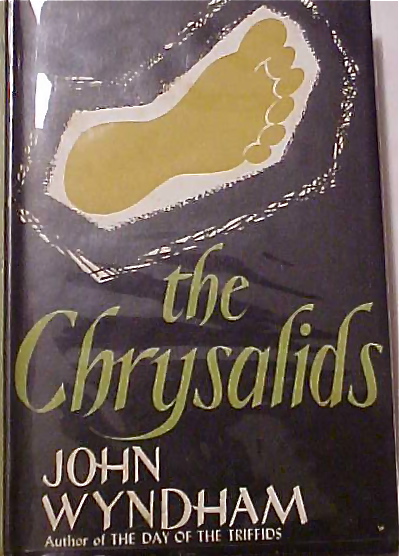
- The Chrysalids
John Wyndhamstandalone novel1955
similar byfar futuretensescience fictionpost-apocalypticsurvivalgenetic engineering+2 more
The Chrysalids is a science fiction novel by British writer John Wyndham, first published in 1955 by Michael Joseph. It is the least typical of Wyndham's major novels, but regarded by some as his best. An early manuscript version was entitled Time for a Change.
- It Can't Happen Here
Sinclair Lewisstandalone novel1935
similar bynorth americadarktensedystopiascience fictionrebellion and revolutiontotalitarianismpolitical intrigue
It Can't Happen Here is a 1935 dystopian political novel by the American author Sinclair Lewis. Set in a fictionalized version of the 1930s United States, it follows an American politician, Berzelius "Buzz" Windrip, who quickly rises to power to become the country's first outright dictator, and Doremus Jessup, a newspaper editor who sees Windrip's fascist policies for what they are ahead of time and who becomes Windrip's most ardent critic.