More like Monkeys
but
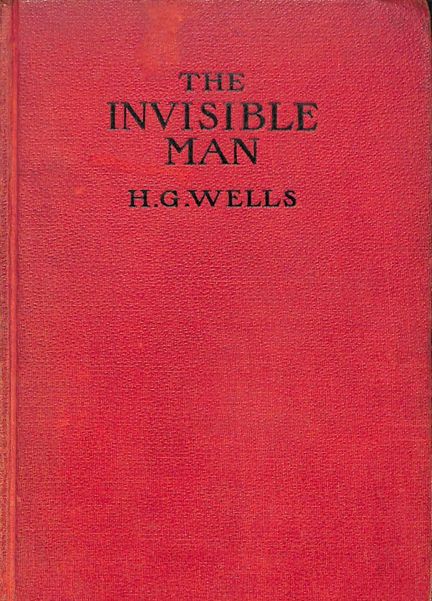
- The Invisible Man
series6 books1897
similar bybritish isles+1 more
The Invisible Man is H. G. Wells's 1897 science fiction novel about Griffin, a scientist who works out how to make living tissue invisible and tests the process on himself, only to discover he has no way to reverse it. Unseen and increasingly cut off from other people, he turns to theft and violence while trying to survive and find a cure, making the book as much about his moral collapse as about the invisibility premise itself. It's a single self-contained novel; the two listed titles here are duplicate editions rather than separate books.
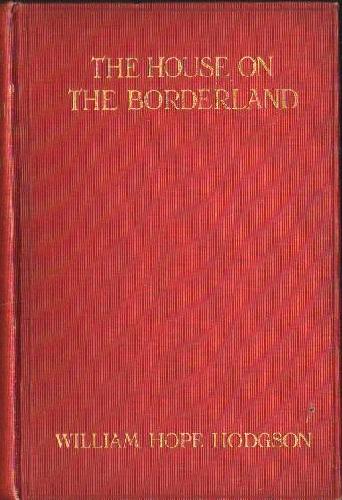
- The House on the Borderland
William Hope Hodgsonstandalone novel1908
similar byhorrorbritish isles
The House on the Borderland (1908) is a supernatural horror novel by British fantasist William Hope Hodgson. The novel is a hallucinatory account of a recluse's stay at a remote house, and his experiences of supernatural creatures and otherworldly dimensions.
- The Turn of the Screw
series3 books1898
similar bybritish isles+1 more
Henry James's 1898 novella The Turn of the Screw follows a governess at an isolated English country house who becomes convinced that the two children in her care are being stalked by malevolent ghosts, narrated entirely through her own increasingly uncertain account. Its ambiguity over whether the haunting is real has made it one of the most discussed ghost stories in English literature and prompted later works built around it, including Michael Hastings's The Nightcomers, a 1971 prequel imagining events at the house before the governess's arrival. A stage adaptation of James's original text also exists.
- The Lair of the White Worm
Bram Stokerstandalone novel1911
similar byhorrorbritish isles
A huge snake or dragon from prehistoric times survives in England, with intelligence and the ability to transform into a lady.
- Dracula
universe144 books1897
Start hereDracula · Start here
similar byhorror
"Come freely. Go safely. And leave something of the happiness you bring" — so the Count greets his guest at the threshold of the Carpathians, and the great door shuts behind. Bram Stoker's Dracula (1897) is the wellspring of the modern vampire: the account of a centuries-old Transylvanian nobleman who quits his crumbling castle for the crowded lodging-houses of London, and the handful of ordinary people — a young solicitor, a doctor of the mad, a professor of stranger learning — who must piece together what he is before he makes the whole city his fold. It is told wholly in fragments: journal entries, letters, telegrams, ships' logs, phonograph cylinders, each hand recording only its own sliver of the dark. Around that single novel a whole crypt of continuations has grown, raised by many writers across a century. Fred Saberhagen's Dracula Sequence hands the Count the microphone, retelling the old events from his own wry, aggrieved lips and following him into later intrigues. Robert Lory's brisk 1970s Dracula Horror Series revives him as a reluctant weapon turned against fouler things; Peter Tremayne's trilogy reaches back along his bloodline; and further sequels, a Quincey Morris spin-off, and Dracula's Children carry the shadow onward. This is a loose shared world built upon a public-domain figure, not one governed continuity — each author remakes him as villain, antihero, or sympathetic narrator. Begin, always, with Stoker's original; the letters and the mounting dread stand entirely on their own. From there follow whichever door tempts you — Saberhagen's The Dracula Tape for the monster's own confession, Lory or Tremayne for tales that never glance back at the Borgo Pass again.
- Bod Owens
series3 books2007
similar bybritish isles+1 more
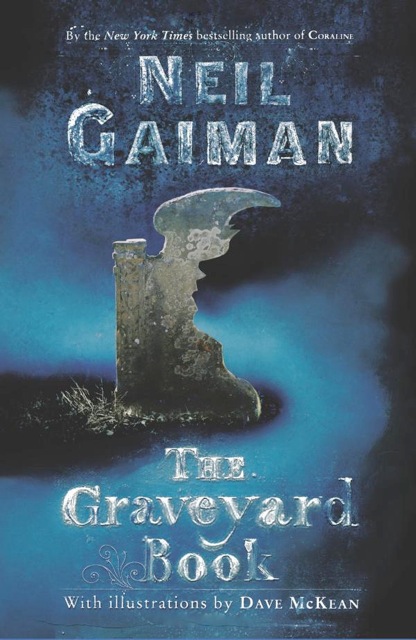
The Graveyard Book follows Nobody "Bod" Owens, a toddler who escapes the murder of his family and is raised among the ghosts of an old English graveyard, absorbing their otherworldly customs while a threat from his past waits beyond the gates. Neil Gaiman's 2008 novel won both the Newbery and Carnegie Medals, and illustrator P. Craig Russell later adapted it into a two-volume graphic novel. Bod's story spans the original novel and that graphic-novel retelling rather than continuing in a prose sequel.
- The Ocean at the End of the Lane
Neil Gaimanstandalone novel2013
similar bybritish isles+1 more
A seven year old farm boy becomes friends with an eleven year old neighbor girl, who he discovers is ancient and powerful and intervenes when a nonhuman entity attempts to make a home in earthly reality.
- Rats
series4 books1974
completed
similar byhorrorbritish isles
The Rats, James Herbert's 1974 debut novel, imagines a plague of giant mutant rats overrunning London, told through a rotating cast of victims and survivors in the tradition of British disaster horror. It was followed by two sequels, Lair and Domain, which widen the outbreak first to the countryside and then to a besieged, apocalyptic city, completing a three-book trilogy.
- Nineteen Eighty-Four
series4 books1949
similar by+1 more
Nineteen Eighty-Four (1949) is George Orwell's novel of a totalitarian future Britain kept under constant surveillance and thought control, following Winston Smith's doomed attempt at a private rebellion against the ruling Party. Sandra Newman's Julia (2023), written with the Orwell estate's authorization, retells the same events from the point of view of Winston's lover Julia, filling in a life and set of motives the original largely left offstage.
- Carnacki
universe102 books1909
Start hereCarnacki, the Ghost-Finder · Start here
similar byhorrorbritish isles
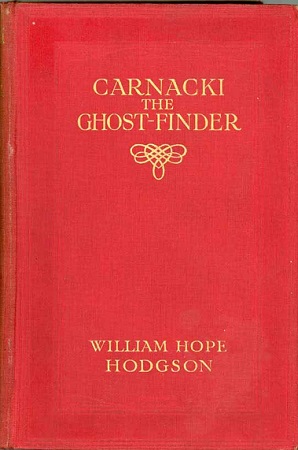
The card arrives without preamble: dinner at 472 Cheyne Walk, and afterward the tale. Thomas Carnacki explains nothing until his four friends are fed and settled by the fire — then, pipe lit, he recounts the thing he has just come back from, and at the last word turns them out into the Embankment dark with a curt "Out you go!" This is the world of the Ghost-Finder: an Edwardian London where a haunting is a case to be worked, and the man who works it trusts neither the credulous nor the smug. William Hope Hodgson raised Carnacki in a slim sheaf of stories — "The Gateway of the Monster," "The Whistling Room," "The Horse of the Invisible" and their fellows, gathered in 1913 and rounded out to nine. Each is a siege: Carnacki barricades himself inside a defended circle, half medieval and half modern — chalk, garlic, water-drawn pentacles and the glass tubes of his own Electric Pentacle humming against the dark — and consults the crumbling Sigsand Manuscript for a rite that may or may not hold. A century on, other hands keep the Chelsea rooms lit: William Meikle, the team of Chico Kidd and Rick Kennett, and editors such as John Linwood Grant, Robert M. Price and Sam Gafford send him after horrors Hodgson never named. What sets the cases apart is Carnacki's refusal to decide in advance. A whistling room may prove a swindle with a trick of plumbing behind it, or a genuine intrusion of the "ab-natural" pressing at the pentacle till the light fails — and until the last page neither he nor you can say which. Begin at the source: read Hodgson's 1913 collection in its own order, "The Gateway of the Monster" first. The later homages are a loose fraternity with no fixed sequence; take them up afterward, as the dark permits.
- The Private Memoirs and Confessions of a Justified Sinner
James Hoggstandalone novel1824
similar bybritish isles+1 more
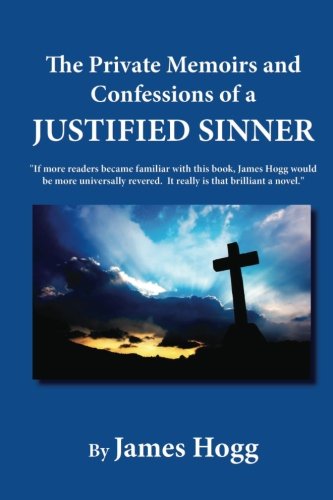
The Private Memoirs and Confessions of a Justified Sinner: Written by Himself: With a detail of curious traditionary facts and other evidence by the editor is a novel by the Scottish author James Hogg, published anonymously in 1824.
- The Fog
James Herbertstandalone novel1975
similar byhorrorbritish isles
The Fog is a horror novel by English writer James Herbert, published in 1975. It is about a deadly fog that drives its victims insane when they come into contact with it.
- A Night in the Lonesome October
Roger Zelaznystandalone novel1993
similar byhorrorbritish isles
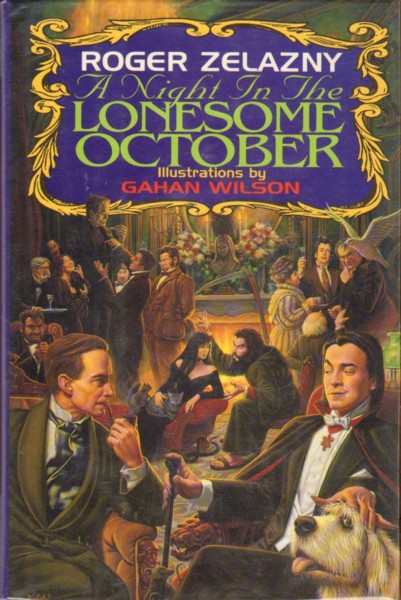
A Night in the Lonesome October is a novel by American writer Roger Zelazny published in 1993, near the end of his life. It was his final book, and one of his five personal favorites.
- The Prestige
Christopher Prieststandalone novel1995
similar bybritish isles+1 more
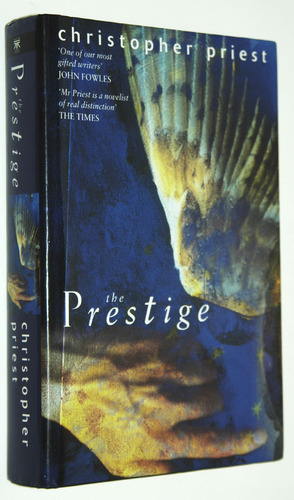
A magician called Borden (at least in private) writes his own version of his life as a magician. There's a lot of focus on a trick, where he seems to move across any width of stage in an instant, and on a feud with another magician, Angier. The account includes passages, where he can't decide what exactly to write, arguing with himself. 3 generations later a Borden (at least biologically) learns about his ancestor. He's also convinced, he somehow has a twin brother, who's happy about this development.
- The Green Man
Kingsley Amisstandalone novel1969
similar byhorrorbritish isles
The Green Man is a 1969 novel by British author Kingsley Amis. A Times Literary Supplement reviewer described The Green Man as "three genres of novel in one": ghost story, moral fable, and comic novel. The novel reflects Amis's willingness to experiment with genre novels while displaying many of the characteristics of his conventional novels, both in superficial aspects such as fogeyishness and problems with alcohol, and in more substantive aspects such as a self-reflective observation of human cruelty and selfishness in everyday relations.
- The Damnation Game
Clive Barkerstandalone novel1985
similar byhorrorbritish isles
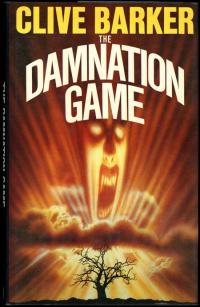
Marty Strauss is a compulsive gambler fresh out of prison when he's hired as bodyguard for Joseph Whitehead, a reclusive tycoon whose fortune and continued existence trace back to a bargain struck decades earlier, during World War II, with a man named Mamoulian. That bargain is coming due: Mamoulian, who commands powers reaching well past death, wants what he's owed, and Whitehead's household -- his wife, his daughter Carys, his previous bodyguard -- is caught in the middle of a decades-old debt finally being called in. Marty, out of his depth from the start, finds himself the only one willing to stand against Mamoulian. Clive Barker's first novel.
- The Haunting of Toby Jugg
Dennis Wheatleystandalone novel1948
similar byhorrorbritish isles
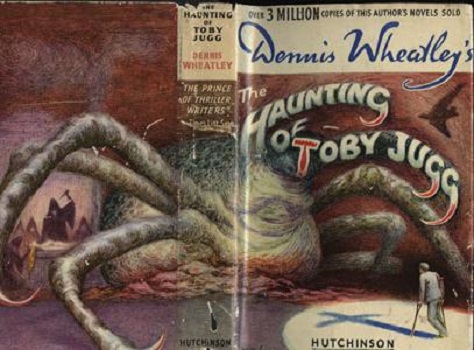
The Haunting of Toby Jugg is a 1948 psychological thriller novel on an occult theme by English writer Dennis Wheatley, incorporating his usual themes of satanic possession and madness, in what was at that time a fresh situation: a disabled British airman recovering from his experiences in the last stages of World War II, in which he played a part in the bombardment of Germany.
- The Nameless
Ramsey Campbellstandalone novel1981
similar byhorrorbritish isles
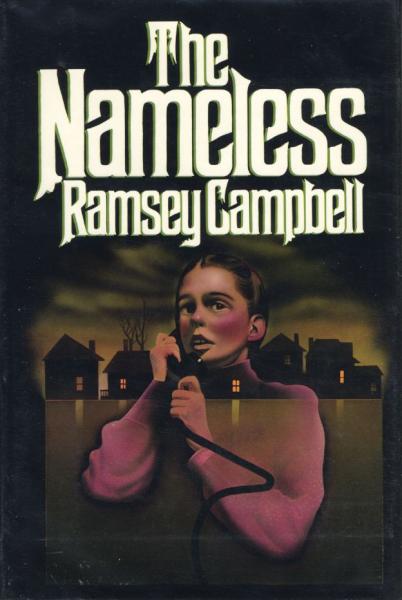
A call for help... from a little girl long dead. Barbara Waugh experienced the worst horror a mother can imagine. Her little girl, Angela, was murdered. Horribly. But now, years later, mysterious phone calls bring both hope and fear. Each time, the girl's voice on the other end simply pleads, 'Mummy, help me.' Could Angela still be alive after all? Barbara's desperate search for the truth - and her daughter - will lead her into a living nightmare, an evil world of torture, murder and gruesome rituals, where the initiated have abandoned their names... and are searching for new victims.
- To the Devil - a Daughter
Dennis Wheatleystandalone novel1953
similar byhorrorbritish isles
Beneath the azure sky of the French Riviera, Christina Mordant looks and behaves like any other attractive girl. But each night as darkness falls, the demon within her betrays its presence. A thousand miles away, deep in the Essex marshes, a priest of Satan is about to achieve his life's ambition: Canon Copely-Syle of Bentford Priory prepares for the virgin sacrifice which will give breath to the foul abomination he has created...
- Laundry Files
series22 books2004
similar bybritish isles+1 more
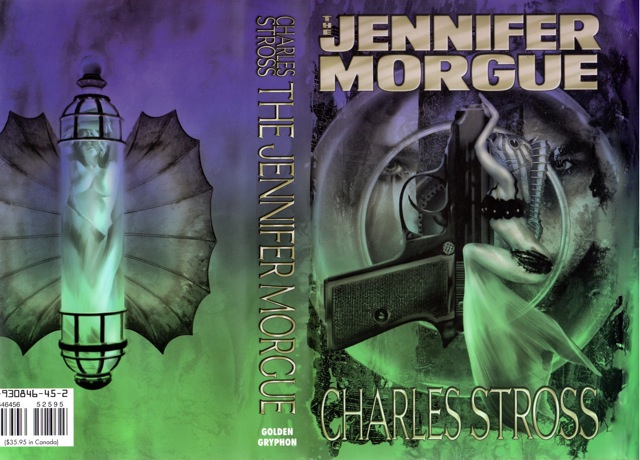
The Laundry Files is a series of novels by British writer Charles Stross. They mix the genres of Lovecraftian horror, spy thriller, science fiction, and workplace humour. Their main character for the first five novels is "Bob Howard", a one-time I.T. consultant turned occult field agent. Howard is recruited to work for the Q-Division of SOE, otherwise known as "the Laundry", the British government agency which deals with occult threats. "Magic" is described as being a branch of applied computation (mathematics), therefore computers and equations are just as useful as, and perhaps more potent than, classical spellbooks, pentagrams, and sigils for the purpose of influencing ancient powers and opening gates to other dimensions. These occult struggles happen largely out of view of the public, as the Laundry seeks to keep the methods for contacting such powers under wraps. There are also elements of dry humour and satirisation of bureaucracy.