More like Moon Six
anchored on:science fictionthe moonnear futurehard science fictionspace exploration
but
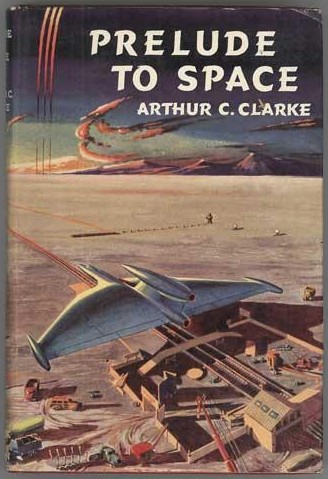
- Prelude to Space
Arthur C. Clarkestandalone novel1951
similar byspace explorationnear futurescience fictionhard science fictionthe moon
Prelude to Space is a science fiction novel written by British author Arthur C. Clarke in 1947. It appeared for the first time in 1951 as a paperback from World Editions Inc, as number three in its series of Galaxy novels. Sidgwick & Jackson published it in the UK in 1953, followed the next year by a United States hardcover edition from Gnome Press and a paperback from Ballantine Books.
- The Martian
series2 books2012
similar byspace explorationnear futurescience fictionhard science fiction
Andy Weir's novel The Martian, first self-published in 2011 before a commercial re-release, follows astronaut Mark Watney after he is stranded alone on Mars when his crew presumes him dead and departs. Using scientific improvisation and dark humor, Watney works to keep himself alive long enough for a rescue to reach him. It is a single, self-contained survival story.
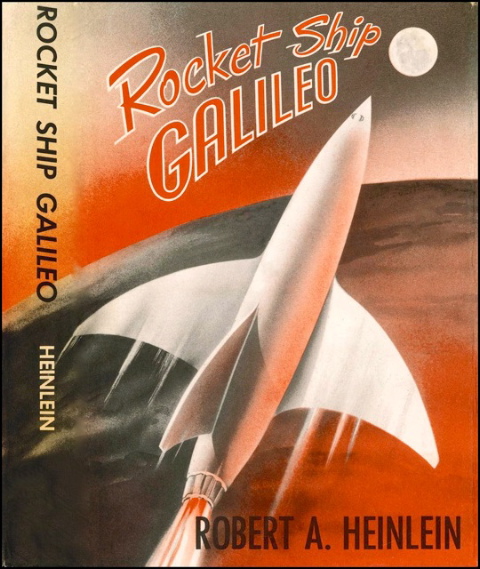
- Rocket Ship Galileo
Robert A. Heinleinstandalone novel1947
similar byspace explorationnear futurescience fictionthe moon
Three teenage boys do backyard experiments on powerful model rockets. An uncle who is an atomic engineer enlists them to make and fly the first rocket to the moon.
- A Fall of Moondust
Arthur C. Clarkestandalone novel1961
similar bynear futurescience fictionthe moonhard science fiction+1 more
From the back cover of the Harbrace paperback: "The action of A Fall of Moondust takes place almost a century from now when tours on the moon are a common occurrence. One of the high points of each tour is a cruise around the Sea of Thirst, a body of volcanic dust, in a specially designed vessel called the Selene On a perfectly routine voyage one day the Selene suddenly disappears. How do you locate a small tourist "cruiser" buried beneath fifty feet of dust? If you find it, how do you rescue the passengers and crew? If you are on board, how do you feel and what do you do while brave men and expert technicians join forces in a race against time? Sustained excitement, lively humor, and an engaging cast of characters make this one of Arthur C. Clarke's most intriguing novels."
- Have Space Suit - Will Travel
Robert A. Heinleinstandalone novel1958
similar byspace explorationnear futurescience fictionthe moon
From the back cover of the Del Rey 9th printing: "Skyjacked - Everything happened at once. One minute Kip Russell was walking about in his own backyard, testing out an old space suit and dreaming about going to the moon - and the next he was out cold and the captive of an insidious space pirate. The whole thing seemed like a very bad dream until he discovered he wasn't the only prisoner on board. Then the reality of the situation became inescapable. He - along with the daughter of a world-renowned scientist and a beautiful creature from an alien planet - had been skyjacked by a monstrous extraterrestrial and they were on their way to the Moon... a journey toward a fate worse than death!"
- Project Hail Mary
Andy Weirstandalone novel2021
similar byspace explorationnear futurescience fictionhard science fiction
Project Hail Mary is a 2021 hard science fiction novel by American writer Andy Weir. It centers on science teacher and former biologist Ryland Grace, who wakes up aboard a spacecraft, afflicted with amnesia.
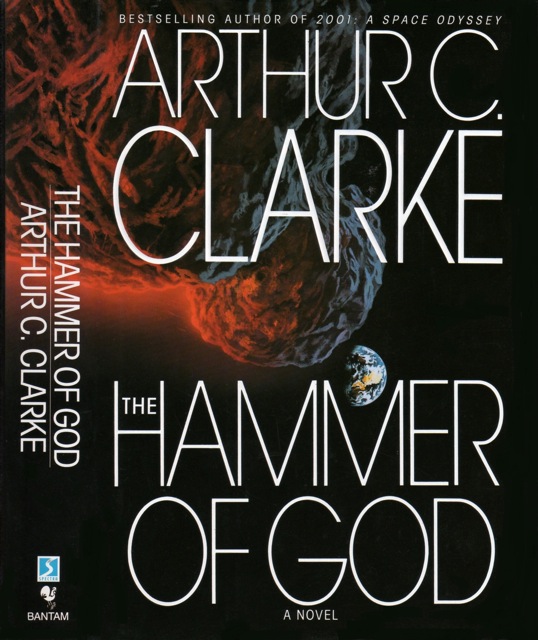
- The Hammer of God
Arthur C. Clarkestandalone novel1993
similar byspace explorationnear futurescience fictionhard science fiction+1 more
The Hammer of God is a science fiction novel by Arthur C. Clarke originally published in 1993. Set in the year 2109, it deals with the discovery of an asteroid to be on course to collide with Earth and depicts the mission for deflecting the asteroid by using fusion thermal rockets.
- The Rolling Stones
Robert A. Heinleinstandalone novel1952
similar byspace explorationnear futurescience fictionthe moon
The Stone family, lunar-born, technically minded, and perpetually restless, buy a secondhand spaceship and set off from the Moon on a family tour of the solar system. Teenage twins Castor and Pollux have their own side hustle in mind, planning to buy up used bicycles on Mars and resell them at a markup, but a small furry souvenir picked up along the way, a Martian 'flat cat' bought for their little brother, turns out to have habits that could sink the whole trip's finances. Robert A. Heinlein's family adventure blends hard-edged space travel with comic domestic chaos.
- Islands in the Sky
Arthur C. Clarkestandalone novel1952
similar byspace explorationnear futurescience fiction+1 more
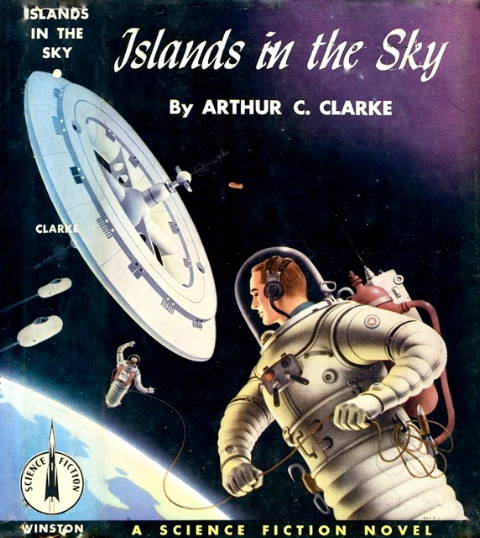
Islands in the Sky is a 1952 science fiction novel by British writer Arthur C. Clarke. It is one of his earliest works. Clarke wrote the story as a travelogue of human settlement of cislunar space in the last half of the twenty-first century.
- The Lotus Caves
John Christopherstandalone novel1969
similar byspace explorationnear futurescience fictionthe moon
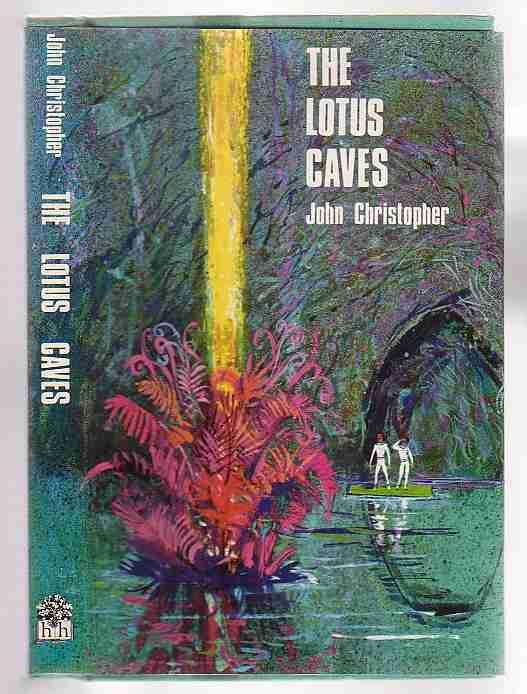
Two boys living in a moon colony find an unrestricted buggy, allowing them to travel beyond their usual boundary. The find the journal of a missing early colonist, and it leads them to discover a hidden cave system containing a powerful, intelligent and apparently friendly alien.
- Heart of the Comet
David Brin & Gregory Benfordstandalone novel1986
similar byspace explorationnear futurescience fictionhard science fiction
Heart of the Comet is a novel by David Brin and Gregory Benford about human space travel to Halley's Comet published in 1986. Its publication coincided with the comet's 1986 approach to the Earth.
- Adventures of Viktor & Julia
series2 books1999
similar byspace explorationnear futurescience fictionhard science fiction
- The Space Excursions Series
series2 books2010
similar byspace explorationnear futurescience fictionhard science fictionthe moon
- NASA Trilogy
series4 books1996
similar byspace explorationscience fictionhard science fictionalternate history+2 more
The NASA Trilogy consists of three hard science fiction novels written by British science fiction author Stephen Baxter. They were published from 1996 to 1998. These books explore the possibilities of the American space program if the circumstances had been different. They have generally darker tones than his other books and are critical of NASA. They consist of:
- Cavor
series2 books1901
similar byspace explorationscience fictionthe moon
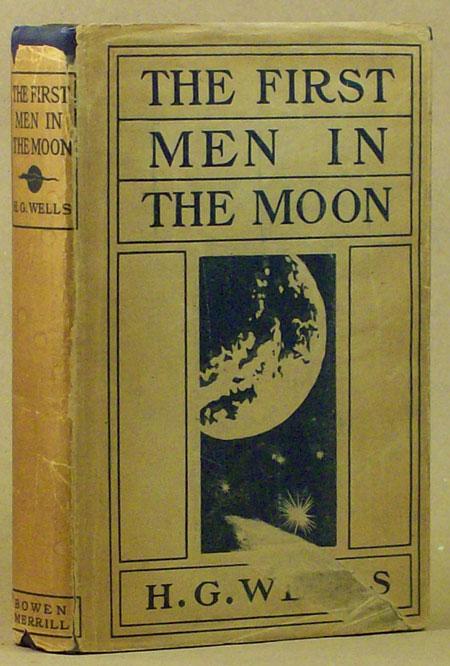
H. G. Wells's 1901 novel The First Men in the Moon is narrated by the businessman Bedford, who joins the reclusive scientist Cavor after Cavor invents cavorite, a gravity-blocking substance that carries the two men to the Moon. There they discover a vast underground civilization of insect-like Selenites, and the expedition that began as a hunt for lunar minerals turns into an encounter with an alien society. It is a standalone novel; later editions crediting Stephen Baxter add an introduction or afterword rather than a continuing story.
- High Vacuum
Charles Eric Mainestandalone novel1956
similar byspace explorationnear futurescience fictionthe moonhard science fiction
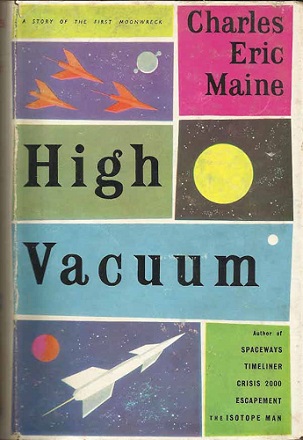
High Vacuum is a science fiction novel by Charles Eric Maine. It was first published in 1957 by Hodder & Stoughton.
- Earthlight
Arthur C. Clarkestandalone novel1955
similar byspace explorationscience fictionthe moon
Earthlight is a science fiction novel by British writer Arthur C. Clarke, published in 1955. It is an expansion to novel length of a novella of the same name that he had published four years earlier.
- Minervan Experiment / Giants
series5 books1977
completed
similar byspace explorationscience fictionhard science fiction+1 more
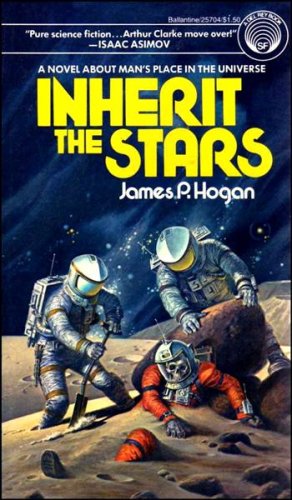
The Giants series is a quintet of science fiction novels by James P. Hogan, published between 1977 and 2005. The series began with Inherit the Stars, published by Del Rey Books in May 1977.
- Steal Across the Sky
Nancy Kressstandalone novel2009
similar byspace explorationnear futurescience fictionthe moon
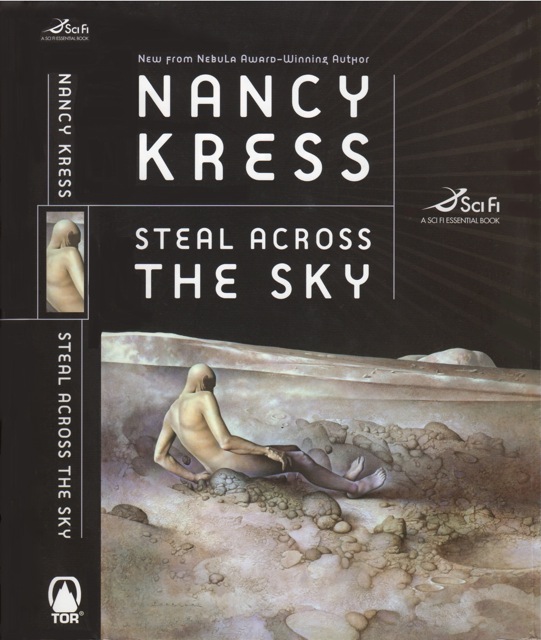
The aliens appeared one day, built a base on the moon, and put an ad on the internet. At first, everyone thought it was a joke. But it wasn't. This is the story of three volunteers who answered that ad, and what they found on Kular A and Kular B.
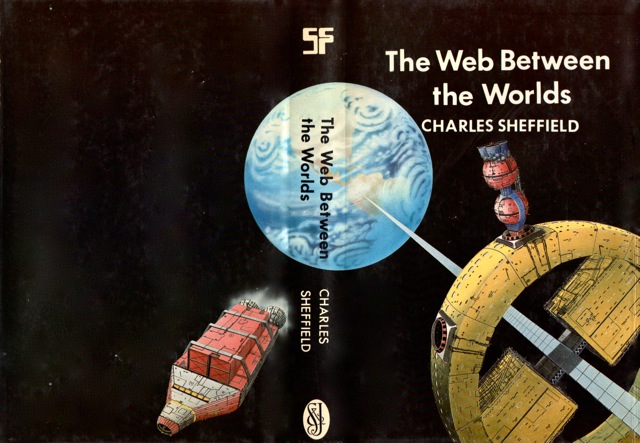
- The Web Between the Worlds
Charles Sheffieldstandalone novel1979
similar byspace explorationnear futurescience fictionhard science fiction
The Web Between the Worlds is the second science fiction novel by Charles Sheffield. It was first published as a trade paperback by Ace Books in 1979, by the first UK edition in hardcover by Sidgwick & Jackson Ltd the following year. Further editions were published by Arrow Books, Ace Books, Del Rey/Ballantyne and others; in 2001 Baen Books issued a revised edition. The novel has also been translated into German and French. This novel and the simultaneously published novel The Fountains of Paradise, by Arthur C. Clarke, are the first popularization of the space elevator.
- The Long Earth
series7 books2012
similar byspace explorationnear futurescience fictionparallel universe
Terry Pratchett and Stephen Baxter's Long Earth series (five novels, 2012-2016) begins when a cheap, simple device called a Stepper lets people step sideways into a vast, possibly infinite chain of parallel Earths, none of which developed human civilization. The books follow a natural stepper and an AI that believes itself the reincarnation of a Tibetan repairman as they travel millions of steps out along the chain, encountering other hominid species and the dangers, ecological and social, of an endless open frontier.
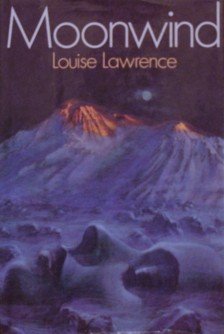
- Moonwind
Louise Lawrencestandalone novel1986
similar byspace explorationnear futurescience fictionthe moon
Moonwind is a 1986 science fiction novel by English author Louise Lawrence about two teenagers winning a trip to the Moon. One of them, Gareth, a rebellious Welsh child, falls in love with an alien, Bethkahn, after the two meet on a couple of brief encounters.
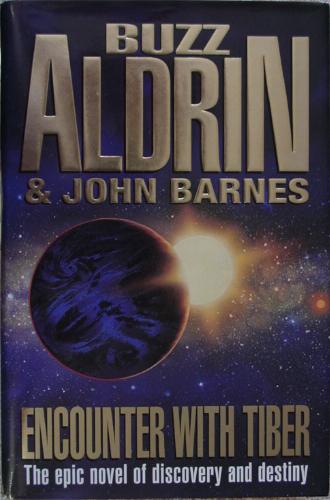
- Encounter with Tiber
John Barnes & Buzz Aldrinstandalone novel1996
similar byspace explorationnear futurescience fictionhard science fiction
Encounter With Tiber (ISBN 0-340-62451-5) is a 1996 science fiction novel written by former astronaut Buzz Aldrin and science fiction writer John Barnes. A working title, used on some advance covers for the British edition, was The Tides of Tiber.
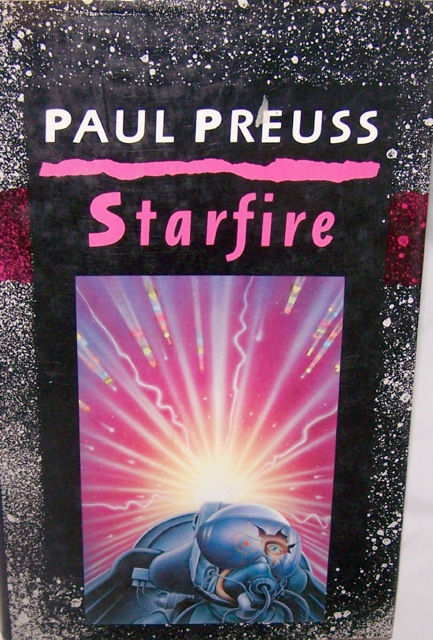
- Starfire
Paul Preussstandalone novel1988
similar byspace explorationnear futurescience fictionhard science fiction
Starfire is a science fiction novel by author Paul Preuss. First published in February 1988, it is about a group of NASA astronauts on a mission to an asteroid which is falling into the Sun.