More like Moonscapes
anchored on:science fictionspacefar futureshort story cyclespace operaspace exploration+1 more
but
- Heechee
series19 books1972
completed
similar byfar futurespace explorationscience fictionspace operaspacealiens+1 more
The Heechee Saga, also known as the Gateway series, is a series of science fiction novels and short stories by Frederik Pohl. The Heechee are an advanced alien race that visited the Solar System hundreds of millennia ago and then mysteriously disappeared. They left behind bases containing artifacts, including working starships, which are discovered and exploited by humanity.
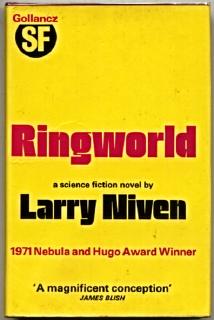
- Ringworld
series5 books1970
part of Known Space
similar byfar futurespace explorationscience fictionspace operaaliensspace+1 more
The Ringworld series is a series of science fiction novels written by American author Larry Niven. It is part of his Known Space series of stories. Its backdrop is the Ringworld, a giant artifact 3 million times the surface area of Earth circling a star. The series is composed of four standalone science fiction novels, the original award-winning book and its three sequels:1970: Ringworld 1979: The Ringworld Engineers 1996: The Ringworld Throne 2004: Ringworld's Children
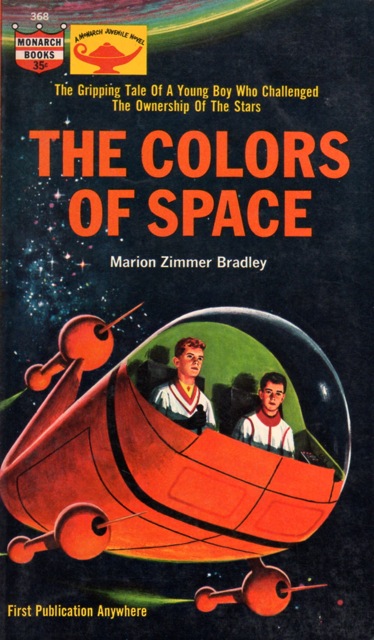
- The Colors of Space
Marion Zimmer Bradleystandalone novel1963
similar bymysteriousfar futurespace explorationscience fictionspace operaaliensspace
The Lhari seem peaceful and friendly, but they go to some lengths to protect their monopoly on faster-than-light travel. One young man is sent to discover their secrets.
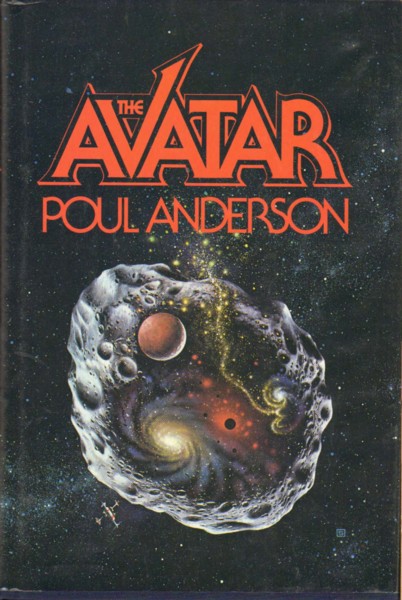
- The Avatar
Poul Andersonstandalone novel1978
similar bymysteriousfar futurespace explorationscience fictionspace operaaliensspace
After humanity discovers portals that transport a space vessel through time and space, a crew which has visited the planet of another species returns to Earth, only to find a political faction in power which seeks to conceal this knowledge in the name of social stability. With the aid of the political opposition, they escape and journey through the portal in search of knowledge, and perhaps even to meet those who created the portal system.
- Academy / Priscilla (Hutch) Hutchins
series16 books1983
similar byspace explorationscience fictionfar futurealiensspace+2 more
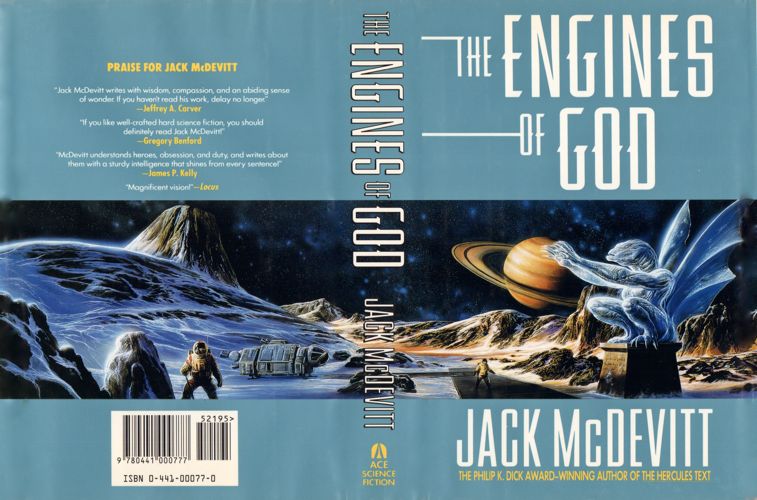
Jack McDevitt's Academy novels follow Priscilla 'Hutch' Hutchins, a starship pilot turned administrator, across a series of archaeological mysteries involving vanished alien civilizations and inexplicable ancient artifacts scattered through human space. Beginning with The Engines of God, the series treats deep time and the near-total absence of intelligent alien life as its central mystery, favoring slow-burn discovery over action. McDevitt returned to Hutch across three decades of publication.
- As on a Darkling Plain
Ben Bovastandalone novel1972
similar bymysteriousfar futurespace explorationscience fictionspace operaspacealiens
Humanity has explored the solar system and is in the beginnings of interstellar exploration. However, as the explorations proceed it becomes more and more apparent that people from Earth have already been there before. Was the Earth a spacefaring planet in prehistory and had that civilization been wiped out by aliens from elsewhere so that the people of Earth had to start all over again. The discovery of the remnants of an Earth colony in orbit around Sirius seems to confirm that supposition. There is alsoa large machine that is still functioning in the solar system.
- The Dark Side of the Sun
Terry Pratchettstandalone novel1976
similar byfar futurespace explorationscience fictionspace operaspacealiens+1 more
The Dark Side of the Sun is a science fiction novel by Terry Pratchett, first published in 1976.
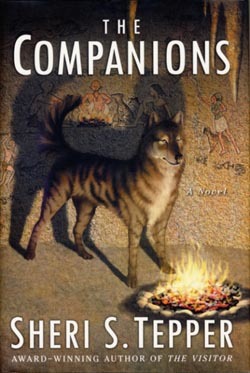
- The Companions
Sheri S. Tepperstandalone novel2003
similar bymysteriousfar futurespace explorationscience fictionspace operaaliensspace
Three planets in deep space were named by their human discoverers to reflect their environments: lush and foreboding Jungle, which swallowed up an exploratory team; Stone, phenomenally rich in rare ore; and Moss, the most enigmatic -- and dangerous -- of the trio.Joining her half-brother Paul, the famed linguist, on a two-person scientific expedition, Jewel Delis has come to Moss to observe the phenomenon of dancing light and to help decipher the strange musical "language" that accompanies it. But there are other mysteries alive on this exotic world covered in ever-shifting vegetation -- and something more than illuminations has enticed her away from a disastrously overpopulated homeworld to seek answers at the universe's unexplored edge. For Jewel herself is a question mark with a radical agenda that will put her at perilous odds with her planet's ruling powers -- and with the inscrutable alien races she encounters -- as she risks all for justice for the endangered beasts of the Earth.
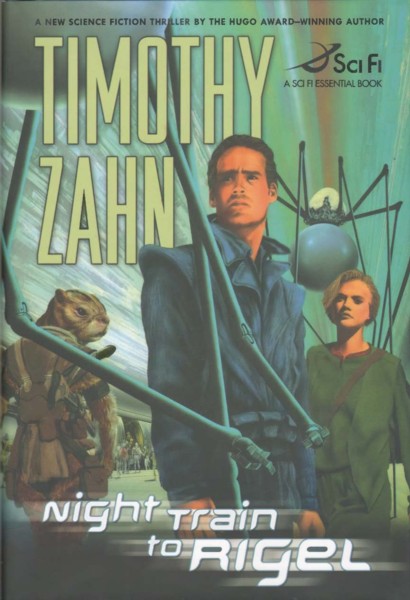
- Quadrail
series5 books2005
similar bymysteriousfar futurescience fictionspace operaaliensspace+1 more
Timothy Zahn's Quadrail series follows ex-intelligence operative Frank Compton, recruited by the enigmatic Spider caretakers of the Quadrail, an interstellar train network that lets a dozen alien empires travel between worlds at a light-year a minute. Paired with the telepathically gifted Bayta, Compton investigates and fights the Modhri, a parasitic group-mind quietly seizing control of galactic leaders from within. The five novels, published 2005-2012, follow one continuous investigation from first contact with the threat to its final confrontation.
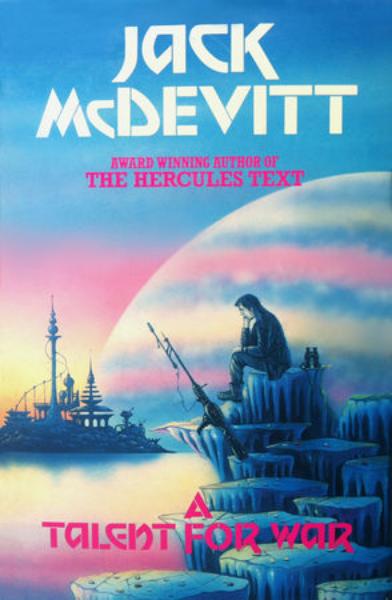
- Alex Benedict
series13 books1987
similar bymysteriousfar futurescience fictionspace+2 more
Alex Benedict is an antiques dealer and part-time interstellar investigator, generations removed from Earth's first starfaring age, who keeps stumbling into forgotten history through the objects and ruins he trades in. A Talent for War opens the series with his search for what his vanished uncle was really investigating before a doomed voyage, uncovering a buried chapter of an old human-alien war. Jack McDevitt built a long-running series, narrated by Benedict's pilot and partner Chase Kolpath, around this mix of archaeology, mystery, and deep time.
- Minervan Experiment / Giants
series5 books1977
completed
similar bymysteriousspace explorationscience fictionfar futurealiens+1 more
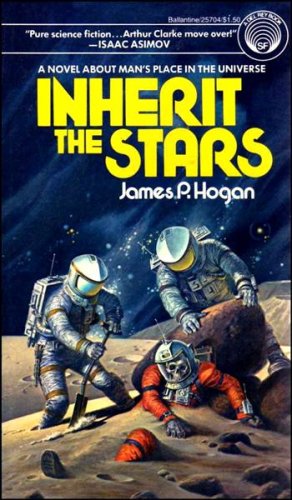
The Giants series is a quintet of science fiction novels by James P. Hogan, published between 1977 and 2005. The series began with Inherit the Stars, published by Del Rey Books in May 1977.
- Gaean
series3 books1979
completed
similar byscience fictionspace operafar futurealiensspace+2 more
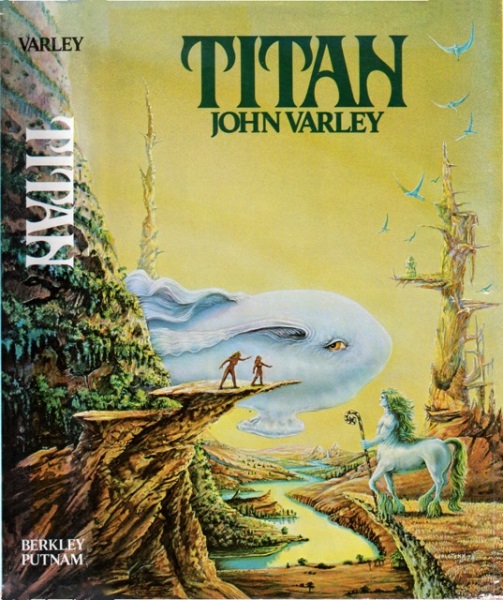
The Gaea Trilogy consists of three science fiction novels by John Varley. The stories tell of humanity's encounter with a living being in the shape of a 1,300 km diameter Stanford torus, inhabited by many different species, most notably the centaur-like Titanides, in orbit around the planet Saturn.
- Starman Jones
Robert A. Heinleinstandalone novel1953
similar byfar futurespace explorationscience fictionspace operaspace+1 more
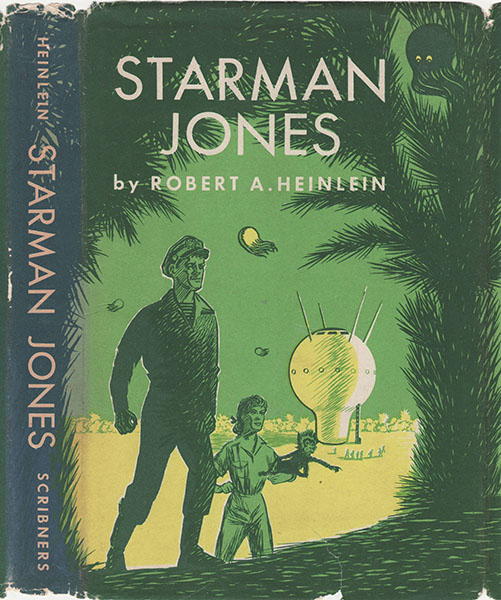
Starman Jones, a 1953 science fiction novel by Robert A. Heinlein, features a farm boy who wants to go to the stars. Charles Scribner's Sons published the book as part of the Heinlein juveniles series.
- Starstream
series2 books1989
completed
similar byfar futurescience fictionspace operaspace+2 more
Starstream groups Jeffrey A. Carver's two linked science-fiction novels, From a Changeling Star (1989) and its direct sequel Down the Stream of Stars (1990). The two were published within a year of each other under the same author.
- Fleet of Worlds
series5 books2007
part of Known Space
similar byfar futurescience fictionspace explorationspace operaspacealiens
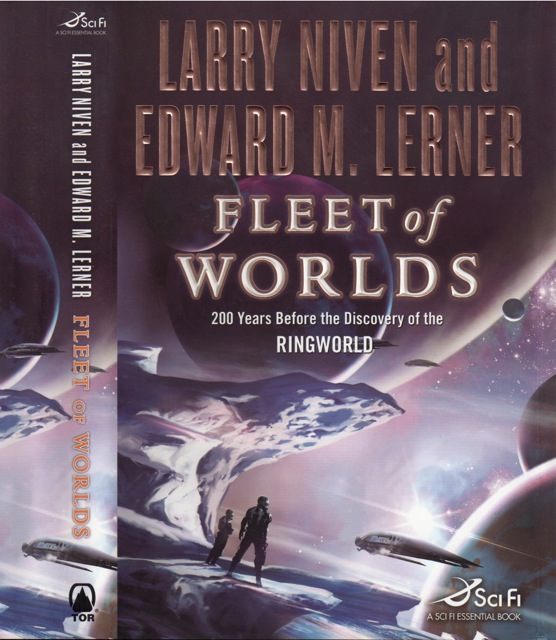
Fleet of Worlds opens a run of Known Space prequels co-written by Larry Niven and Edward M. Lerner, centered on the liberation of the human colony New Terra from the control of the Pierson's Puppeteers — the famously cowardly aliens who steer their fleet of five worlds away from any hint of danger. The series introduces a new Known Space species, the Gw'oth, across its run and eventually catches up to and continues past the original Ringworld novel in its fifth book, Fate of Worlds.
- Cavor
series2 books1901
similar byspace explorationscience fictionaliensthe moon+1 more
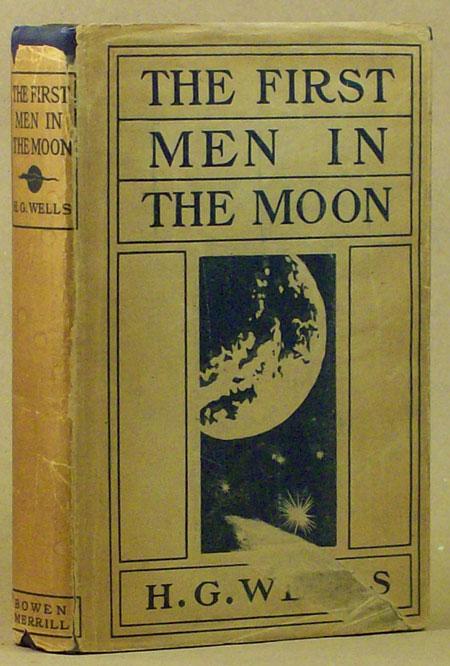
H. G. Wells's 1901 novel The First Men in the Moon is narrated by the businessman Bedford, who joins the reclusive scientist Cavor after Cavor invents cavorite, a gravity-blocking substance that carries the two men to the Moon. There they discover a vast underground civilization of insect-like Selenites, and the expedition that began as a hunt for lunar minerals turns into an encounter with an alien society. It is a standalone novel; later editions crediting Stephen Baxter add an introduction or afterword rather than a continuing story.
- Poseidon's Children
series3 books2012
similar bymysteriousscience fictionfar futurespace operaspace+3 more
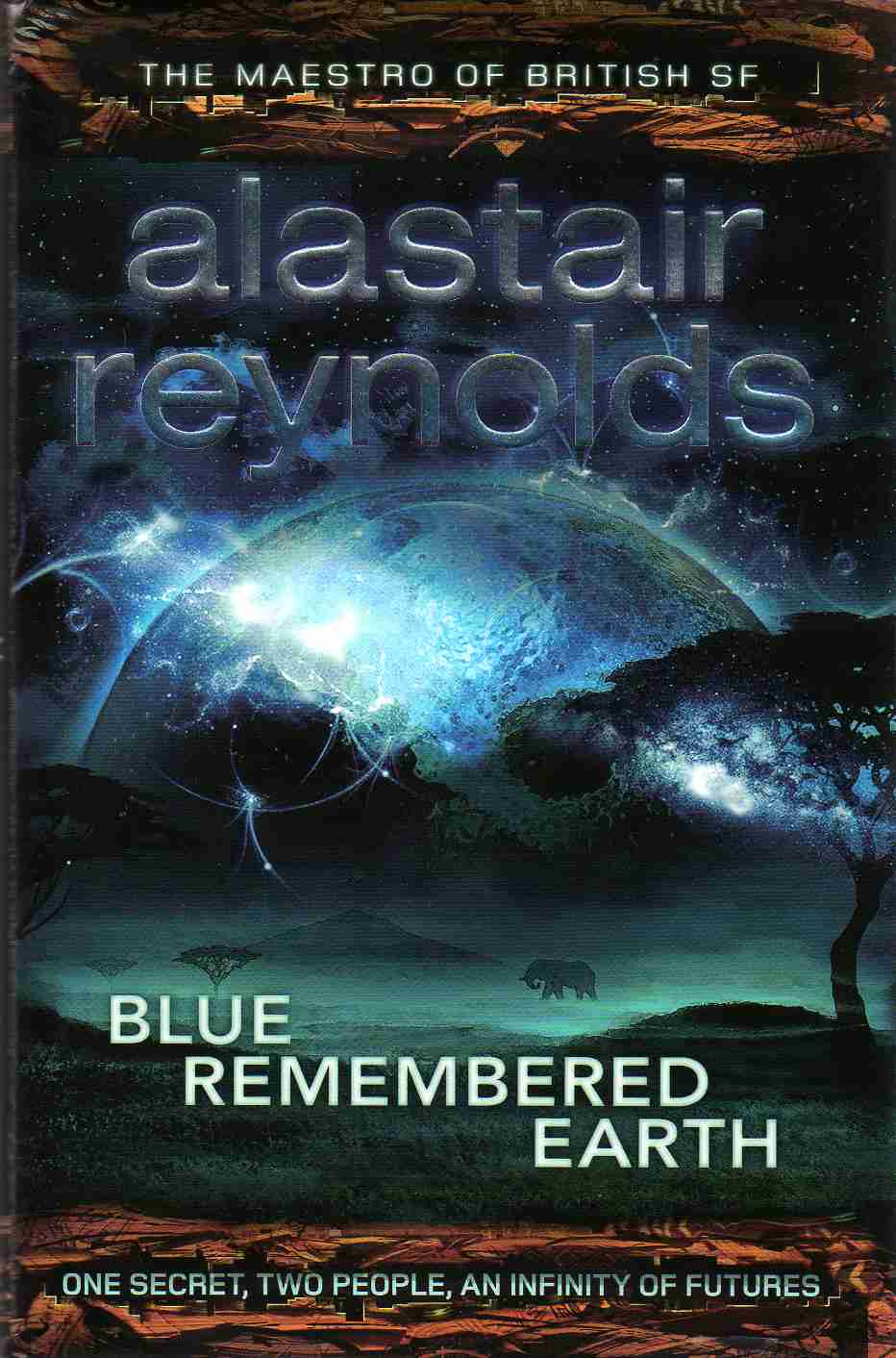
Alastair Reynolds' Poseidon's Children trilogy follows humanity — and its transhuman descendants — expanding into the galaxy over the course of centuries, beginning with Blue Remembered Earth (2012) and continuing through On the Steel Breeze and the concluding Poseidon's Wake (2015).
- Ship of Fools
Richard Paul Russostandalone novel2001
similar bymysteriousfar futurespace explorationscience fictionspace operaaliens
A generation ship searching for inhabited planets is drawn by a beacon to a planet where all human residents have died violently; upon leaving, it encounters a mysterious giant ship of alien origin.
- Against the Fall of Night
series2 books1953
similar byfar futurespace explorationscience fiction+1 more
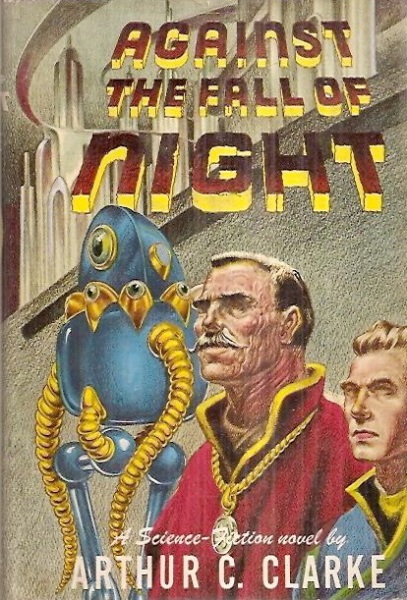
Against the Fall of Night is Arthur C. Clarke's 1953 novel of a stagnant, climate-controlled city called Diaspar a billion years in Earth's future, where a young man named Alvin becomes the first in living memory to want to leave it. Clarke later rewrote the book more expansively as The City and the Stars, and in 1990 Gregory Benford wrote Beyond the Fall of Night, an authorized sequel continuing on from this original, shorter version's ending.
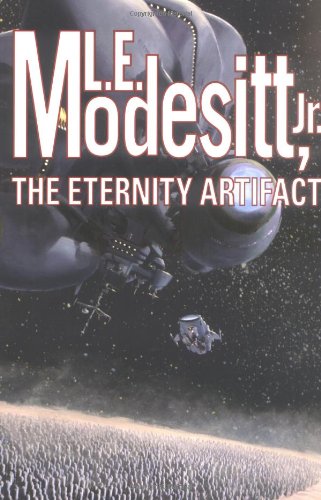
- The Eternity Artifact
L. E. Modesitt & Jr.standalone novel2005
similar bymysteriousfar futurespace explorationscience fictionaliensspace+1 more
The Eternity Artifact is a science fiction novel by American writer L. E. Modesitt, Jr., published in 2005. It is set in a future approximately 3,000 years hence, in a galaxy largely colonized by humans but divided into disparate polities who strive against each other in a manner similar to that of modern-day nations. Once such group, the Comity, discovers a planet that may be the first evidence of nonhuman intelligent life. The Comity mounts an expedition to investigate this world, and certain of the other groups attempt to interfere in various ways and for various reasons. The story discusses the expedition from the perspective of four viewpoint characters. It details the progress of the explorers and touches on the differences between the various human groups and how those inform their response to this discovery, and their goals regarding it.
- Alien Embassy
Ian Watsonstandalone novel1977
similar bymysteriousfar futurespace explorationscience fictionaliensspace
From the back cover of the Ace first printing: ""I am a womb-man, and my womb is space!" Lila was one of those who could, by diving deep, deep within herself, emerge in outer space. The few who could make that journey were honored above all other mortals; already the secrets brought back by the mind-travelers hand transformed Earth from the pig-sty of the 21st century to the paradise of the 22nd. But Lila was to learn something besides which the secrets brought back by previous psychic astronauts would pale to insignifance - she was to learn the Truth... and it would not make men free."
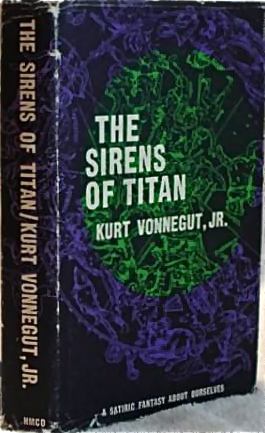
- The Sirens of Titan
Kurt Vonnegut & Jr.standalone novel1959
similar byfar futurescience fictionspace operaspacealiens+1 more
The Sirens of Titan is a comic science fiction novel by Kurt Vonnegut Jr., first published in 1959. His second novel, it involves issues of free will, omniscience, and the overall purpose of human history, with much of the story revolving around a Martian invasion of Earth.
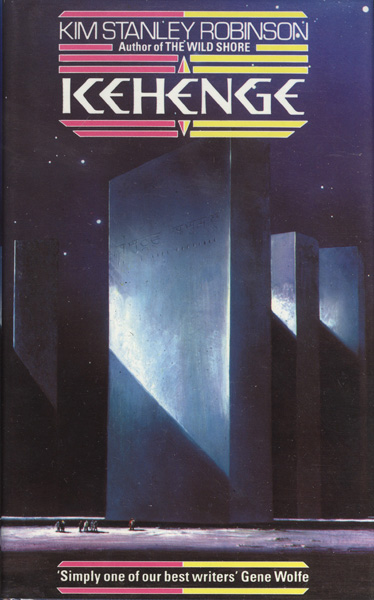
- Icehenge
Kim Stanley Robinsonstandalone novel1984
similar bymysteriousfar futurespace explorationscience fiction+1 more
Icehenge unfolds in three parts, narrated years or centuries apart by different investigators piecing together the same facts. The first is the diary of Emma Weil, an engineer swept into a Martian revolution in 2248, conscripted onto a rebel starship fitted for a voyage beyond the solar system, and forced to decide how far her sympathy for the uprising extends. Generations later, other narrators pick up the thread of what became of her and the ship, drawn toward a stone monument on a moon of Pluto that should not exist. An early standalone novel by Kim Stanley Robinson, revisiting the Martian-revolution material he later expanded into the Mars trilogy.