More like Mort(e)
anchored on:science fictionpost-apocalypticupliftour worldnear futuredark+2 more
but
- Down to a Sunless Sea
David Grahamstandalone novel1979
similar bydarkour worldnear futurescience fictionpost-apocalypticsurvivalwar
David Graham's Down to a Sunless Sea (1979) is a post-apocalyptic novel about a planeload of people during and after a short nuclear war, set in a near-future world where the USA is critically short of oil. The title of the book is taken from a line of the poem Kubla Khan by Samuel Taylor Coleridge.
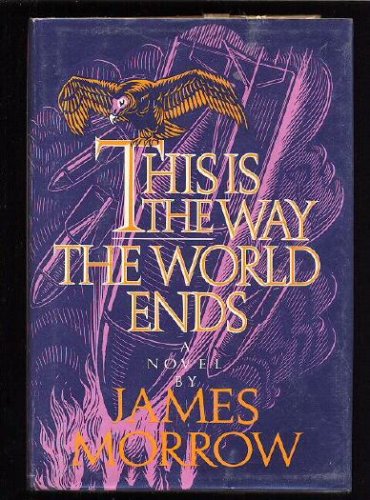
- This Is the Way the World Ends
James Morrowstandalone novel1986
similar bydarkour worldnear futurescience fictionpost-apocalypticsurvival
This Is the Way the World Ends is a post-apocalyptic novel by American writer James K. Morrow, published in 1986.
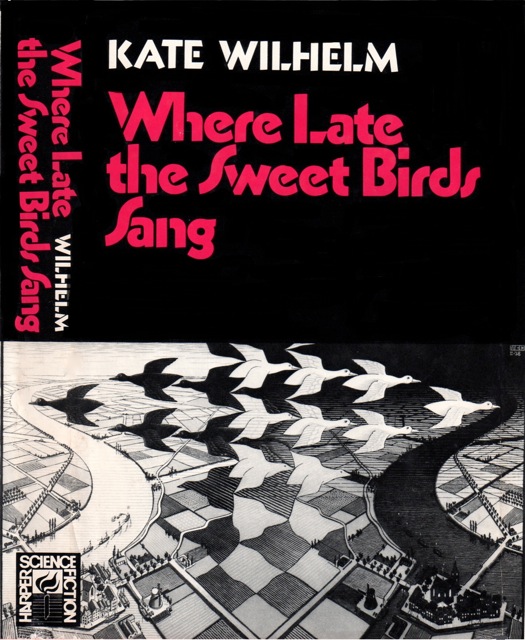
- Where Late the Sweet Birds Sang
Kate Wilhelmstandalone novel1976
similar bydarkour worldnear futurescience fictionpost-apocalypticsurvival
Where Late the Sweet Birds Sang is a science fiction novel by American writer Kate Wilhelm, published in 1976. The novel is composed of three parts, "Where Late the Sweet Birds Sang," "Shenandoah," and "At the Still Point," and is set in a post-apocalyptic era, a concept popular among authors who took part in the New Wave Science Fiction movement in the 1960s.
- The Fireman
Joe Hillstandalone novel2016
similar bydarkour worldnear futurescience fictionpost-apocalypticsurvival
The Fireman is a novel set in a post-apocalyptic time by American author Joe Hill. The novel, Hill's fourth, tells the tale of a deadly spore that has infected most of the world's population. Hill first spoke of the novel in 2013 in promotional interviews for his then-new novel NOS4A2. The novel was released on May 17, 2016.
- Commander-1
Peter Georgestandalone novel1965
similar bydarkour worldnear futurescience fictionpost-apocalypticsurvivalwar
Commander-1 is a 1965 novel by Welsh author Peter Bryan George and deals with the aftermath of a nuclear war between the United States, the Soviet Union and the People's Republic of China. It was George's last published work, with the author committing suicide in 1966.
- The Genocides
Thomas M. Dischstandalone novel1965
similar bydarkour worldnear futurescience fictionpost-apocalypticsurvival
The Genocides is a 1965 science fiction novel by Thomas M. Disch, first published by Berkley Books as a Berkley Medallion paperback. It was Disch's first novel and was nominated for the Nebula Award for Best Novel for 1965.
- I Am Legend
Richard Mathesonstandalone novel1954
similar bydarkour worldpost-apocalypticscience fictionsurvival
The last human survivor of the vampire epidemic has to maintain his defences against their onslaught, while attempting to research the cause and possibly solution to the plague. Robert Neville is the last living man on Earth... but he is not alone. Every other man, woman and child on the planet has become a vampire, and they are hungry for Neville's blood. By day he is the hunter, stalking the undead through the ruins of civilization. By night, he barricades himself in his home and prays for the dawn. How long can a man survive like this?
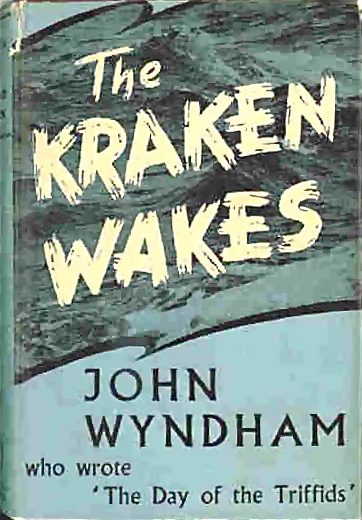
- The Kraken Wakes
John Wyndhamstandalone novel1953
similar bydarkour worldscience fictionpost-apocalypticsurvivalwar
" Behind a spectacular meteor shower actually hides the beginning of an invasion by a mysterious and powerful alien race. Earth's life is disrupted by the attacks of extraterrestrials whose war machines, emerging from the depths of the oceans, seem indestructible. The coalitioned forces of the whole world are worthless, powerless in the face of the indecipherable and deadly plans of a superior intelligence, capable of bringing the entire planet to the brink of catastrophe" Goodreads May 20, 2022
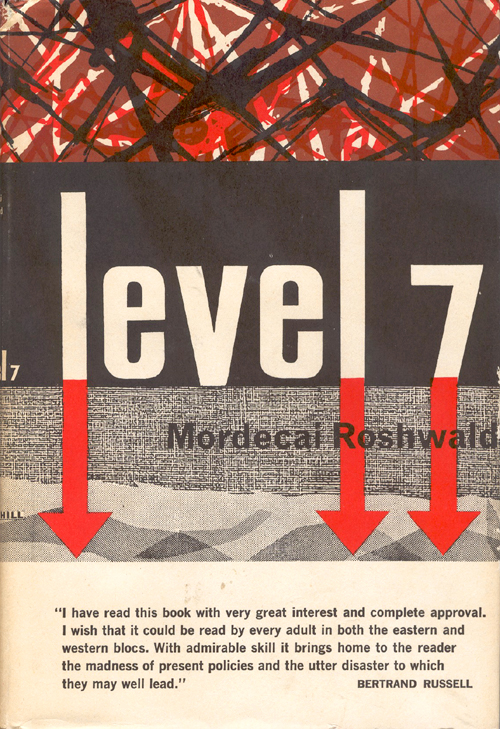
- Level 7
Mordecai Roshwaldstandalone novel1959
similar bydarknear futurescience fictionpost-apocalypticsurvivalwar
Level 7 is a 1959 science fiction novel by American writer Mordecai Roshwald. It is told from the first-person perspective of a modern soldier, X-127, living in the underground military complex Level 7, where he and several hundred others are expected to reside permanently. X-127 fulfills the role of 'push-button' offensive initiator of his nation's nuclear weapons capacity against an unspecified enemy. X-127 narrates life within a deep shelter before, during and after a nuclear war that wipes out the human species.
- The Children of Men
P. D. Jamesstandalone novel1992
similar bydarkour worldnear futurescience fictionpost-apocalyptic
"The human race has become infertile, and under the despotic rule of Xan Lyppiatt, the Warden of England the old are despairing and the young cruel. Theo Faren, a cousin of the Warden, lives a solitary life in this ominous atmosphere. That is, until a chance encounter with a young woman leads him into contact with a group of dissenters. Suddenly his life is changed irrevocably, as he faces agonising choices which could affect the future of mankind." (pdjames.co.uk)
- The Purple Cloud
M. P. Shielstandalone novel1901
similar bydarkour worldscience fictionpost-apocalypticsurvival
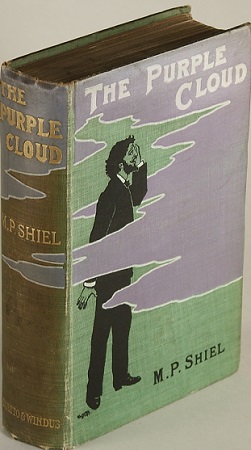
Around 1900, the author receives a packet of writings of a psychic, who recounts her vision of the multi-decade diary of an arctic explorer of the future, the first to reach the north pole; but during his multiyear trek, an unknown eruption temporarily poisons the atmosphere with cyanide, killing all human and animal life, sparing only the arctic latitudes and leaving him the last man on earth.
- The Hopkins Manuscript
R. C. Sherriffstandalone novel1939
similar bydarknear futurescience fictionour worldpost-apocalypticsurvival
The Hopkins Manuscript is a dystopian science fiction novel by R. C. Sherriff, first published in 1939 by Victor Gollancz. In 1958 it was reissued in a revised edition as a Pan paperback under the title The Cataclysm. The novel was later republished under its original title by The Macmillan Company in 1963 and by Persephone Books in 2002.
- Final Blackout
L. Ron Hubbardstandalone novel1948
similar bydarknear futurescience fictionour worldpost-apocalypticwar+1 more
Final Blackout is a dystopic science fiction novel by American writer L. Ron Hubbard. The novel is set in the future and follows a man known as "the Lieutenant" as he restores order to England after a world war. First published in serialized format in 1940 in the science fiction magazine Astounding Science Fiction, Final Blackout was published in book form in 1948 by The Hadley Publishing Co. Author Services Inc. published a hardcover edition of the book in 1988, and in 1989 the Church of Scientology-affiliated organization Bridge Publications said that a film director named Christopher Cain had signed a contract to write and direct a movie version based on the book.
- Ship Breaker
series3 books2010
similar bydarkscience fictionpost-apocalypticnear futuresurvival+2 more
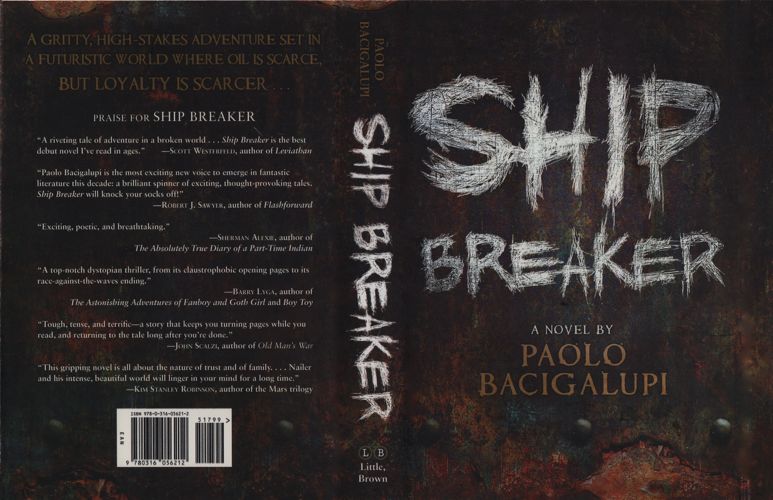
Nailer works a light-crew scavenging copper wire and scrap from beached oil tankers on a Gulf Coast reshaped by rising seas and vanished order, until a wrecked clipper ship washes ashore carrying a half-drowned girl from the wealthy world he'll never belong to. Paolo Bacigalupi's Ship Breaker follows Nailer as helping her pulls him out of his abusive father's orbit and into a much larger, more dangerous game involving her family's fortune. The sequels The Drowned Cities and Tool of War widen the same flooded, resource-scavenging future to new characters and coastlines.
- Riddley Walker
Russell Hobanstandalone novel1980
similar bydarkour worldscience fictionpost-apocalypticsurvival
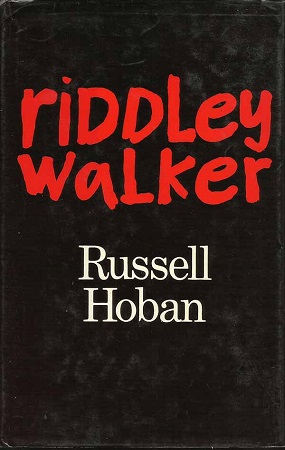
WorldCat: Composed in an English which has never been spoken and laced with a storytelling tradition that predates the written word, RIDDLEY WALKER is the world waiting for us at the bitter end of the nuclear road. It is desolate, dangerous and harrowing, and a modern masterpiece.
- Black Moon
Kenneth Calhounstandalone novel2014
similar bydarkour worldnear futurescience fictionpost-apocalypticsurvival
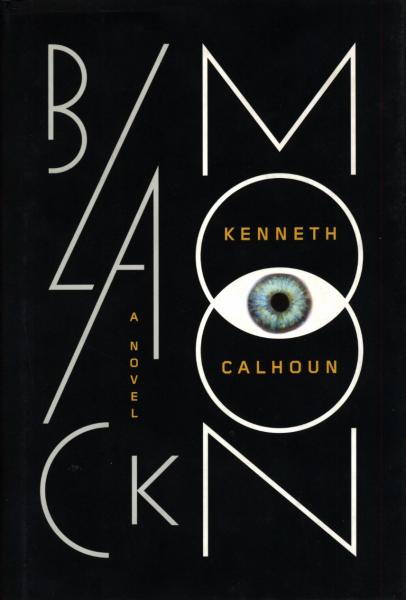
Insomnia has claimed everyone Biggs knows. Even his beloved wife, Carolyn, has succumbed to the telltale red-rimmed eyes, slurred speech and cloudy mind before disappearing into the quickly collapsing world. Yet Biggs can still sleep, and dream, so he sets out to find her.
- The Animals in That Country
Laura Jean McKaystandalone novel2020
similar bydarkour worldnear futurescience fictionpost-apocalypticsurvival
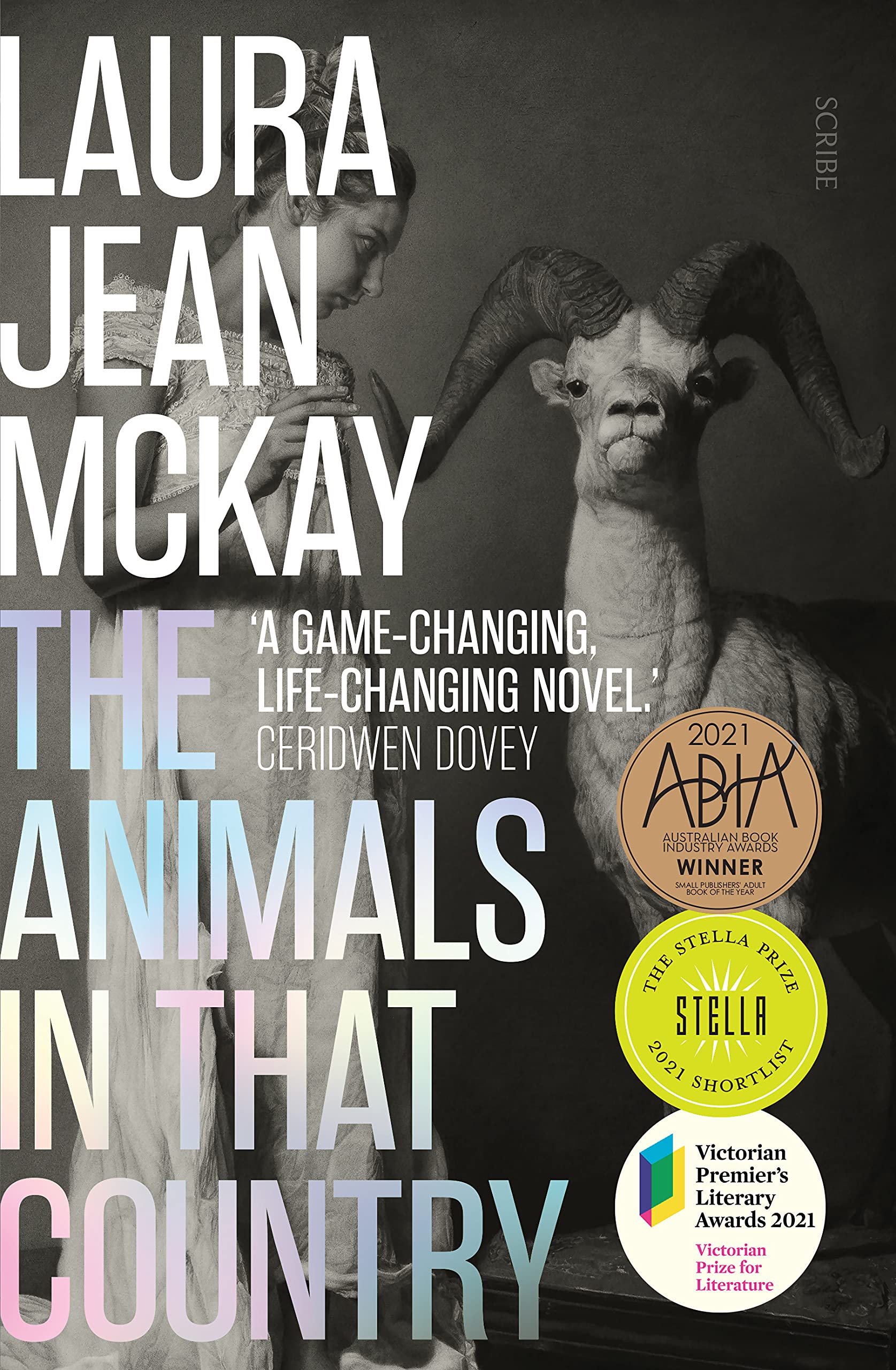
The Animals in That Country is a 2020 science fiction novel by Australian writer Laura Jean McKay, published by Scribe. The novel won the Aurealis Award for Best Science Fiction Novel (2020), Arthur C. Clarke Award (2021), Victorian Prize for Literature (2021), and Victorian Premier's Prize for Fiction (2021).
- Missions from the Extinction Cycle
series2 books2019
part of Extinction Cycle
similar bydarkour worldnear futurescience fictionpost-apocalypticsurvival+1 more
- The World Set Free
H. G. Wellsstandalone novel1914
similar bydarkour worldnear futurescience fictionwar
The World Set Free is a novel written in 1913 and published in 1914 by H. G. Wells. The book is based on a prediction of a more destructive and uncontrollable sort of weapon than the world has yet seen. It had appeared first in serialised form with a different ending as A Prophetic Trilogy, consisting of three books: A Trap to Catch the Sun, The Last War in the World and The World Set Free.
- American War
Omar El Akkadstandalone novel2017
similar bydarknear futurescience fictionpost-apocalypticsurvivalwar
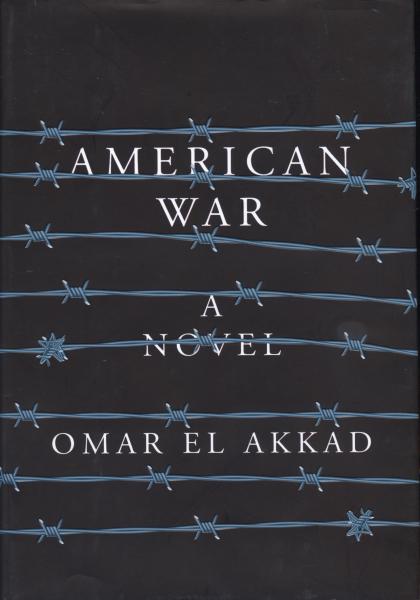
American War is the first novel by the Egyptian-Canadian journalist Omar El Akkad. It is set in the United States in the near future, ravaged by climate change and disease, in which the Second Civil War has broken out over the use of fossil fuels.
- The Drought
J. G. Ballardstandalone novel1964
similar bydarkour worldscience fictionpost-apocalypticsurvival
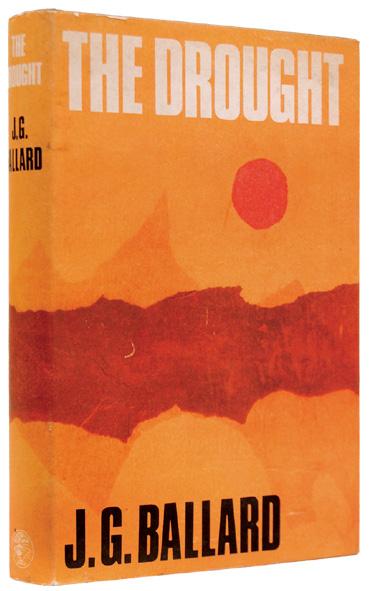
Dr. Charles Ransom watches his world dry up along with his marriage: an industrial film has coated the oceans, evaporation has stalled, and rivers, lakes and reservoirs are shrinking into cracked mud across the globe. As neighbors flee the drying city for the coast, Ransom refuses to leave, staying behind on his houseboat with others unwilling to go -- a woman running an improvised zoo, a boatman, an architect turning his estate into something like a fortress. As the water keeps disappearing and order breaks down, each of them must decide what survival looks like now. J. G. Ballard's second novel, published in the US as The Burning World.
- Cell
Stephen Kingstandalone novel2006
similar bydarkour worldpost-apocalypticscience fictionsurvival
In Cell, King taps into readers fears of technological warfare and terrorism. Mobile phones deliver the apocalypse to millions of unsuspecting humans by wiping their brains of any humanity, leaving only aggressive and destructive impulses behind. Those without cell phones, like illustrator Clayton Riddell and his small band of "normies," must fight for survival, and their journey to find Clayton's estranged wife and young son rockets the book toward resolution.
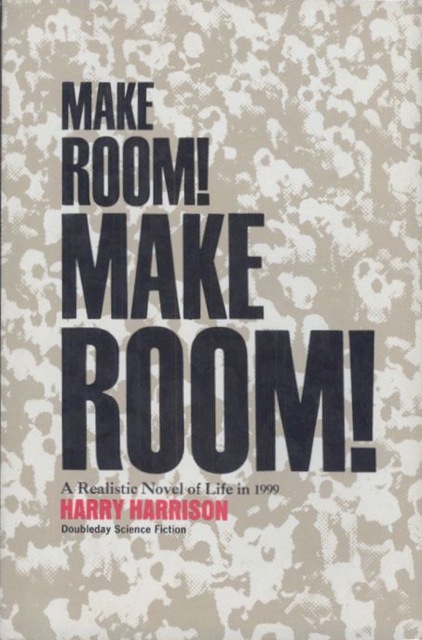
- Make Room! Make Room!
Harry Harrisonstandalone novel1966
similar bydarkour worldnear futurescience fictionsurvival
Make Room! Make Room! is a 1966 science fiction novel written by Harry Harrison exploring the consequences of both unchecked population growth on society and the hoarding of resources by a wealthy minority. It was originally serialized in Impulse magazine.
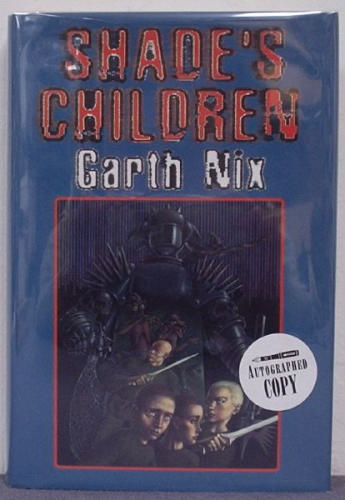
- Shade's Children milieu
series2 books1997
similar bydarknear futurescience fictionpost-apocalypticsurvival+1 more
Shade's Children is set on an Earth where all adults vanished overnight fourteen years earlier, leaving children to be harvested at puberty by the machines that now run the world, unless they escape into hiding with Shade, a mysterious AI-like protector. Garth Nix's 1997 novel is a single, self-contained book rather than a series, though its bleak post-apocalyptic premise has drawn comparisons to his other work.