More like Mortality
anchored on:science fictionsuperheronorth americamid 20th centuryalternate historygenetic engineering
but
- Way Station
Clifford D. Simakstandalone novel1963
similar bynorth americamid 20th centuryaliensscience fiction
The human operator of a transfer station for aliens traveling between planets, kept secret from the human race, deals with discovery by the US government and interplanetary political crisis, as well as his own emotional issues.
- The Child Buyer
John Herseystandalone novel1960
similar bygenetic engineeringnorth americamid 20th centuryscience fiction
The Child Buyer is John Hersey's 1960 novel about a project to engineer super-intelligent persons for a project whose aim is never definitely stated. Told entirely in the form of minutes from a State Senate Standing Committee, it relates the story of the appearance and efforts of a mysterious stranger in the small town of Pequot, and the repercussions of his attempt to buy a boy, Barry Rudd.
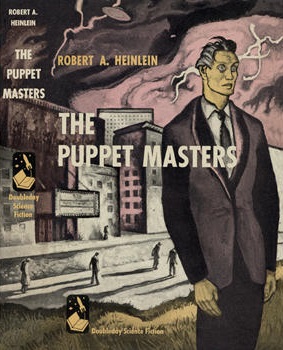
- The Puppet Masters
Robert A. Heinleinstandalone novel1951
similar bymid 20th centurynorth americaaliensscience fiction
Parasitical aliens attach themselves to human hosts and take over their bodies. Two spies are sent to find out what's happening, but the extent is much farther than they knew. With access to the humans' memories, the aliens quietly invade the government and start taking over.
- Flowers for Algernon
Daniel Keyesstandalone novel1966
similar bygenetic engineeringnorth americascience fiction
A man with a low IQ becomes the subject of an experimental medical procedure which raises his IQ well over genius level.
- All Flesh Is Grass
Clifford D. Simakstandalone novel1965
similar bynorth americamid 20th centuryaliensscience fiction
All Flesh is Grass is a science fiction novel by American author Clifford D. Simak, published in 1965. The book follows a small town in Wisconsin that is closed off from the outside world by a mysterious barrier, placed by extraterrestrial beings.
- The Man Who Fell to Earth
Walter Tevisstandalone novel1963
similar bymid 20th centurynorth americaaliensscience fiction
The Man Who Fell to Earth is a 1963 science-fiction novel by American writer Walter Tevis. Published by Gold Medal Books as a paperback original, it was Tevis's second novel, following The Hustler. The novel follows Thomas Jerome Newton, an extraterrestrial from the drought-stricken planet Anthea, who comes to Earth hoping to build a spacecraft that can save the surviving members of his species.
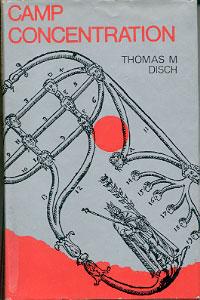
- Camp Concentration
Thomas M. Dischstandalone novel1968
similar bygenetic engineeringmid 20th centuryscience fiction+1 more
Camp Concentration is a science fiction novel by American writer Thomas M. Disch. It was first serialized in four parts in New Worlds from July to October 1967 and was published in book form in the United Kingdom in 1968, followed by a first U.S. edition in 1969.
- The Body Snatchers
Jack Finneystandalone novel1955
similar bynorth americamid 20th centuryaliensscience fiction
The Body Snatchers is a science fiction horror novel by American writer Jack Finney, originally serialized in Collier's magazine in November–December 1954 and published in book form the following year.
- Those Who Watch
Robert Silverbergstandalone novel1967
similar bynorth americamid 20th centuryaliensscience fiction
Those Who Watch is a science fiction novel by American writer Robert Silverberg, first published by Signet in 1967. The novel concerns a trio of alien explorers, each one surgically altered so as to appear outwardly human, who find themselves separated, and permanently stranded on Earth, after their ship explodes while hovering in low orbit. Each of the aliens is injured during the accident, and all are taken in and nursed back to health by kindly human beings.
- A Report from Group 17
Robert C. O'Brienstandalone novel1972
similar bygenetic engineeringnorth americamid 20th centuryscience fiction
A Report from Group 17, published in 1972, is a science-fiction thriller written by Robert Leslie Conly under his pen name Robert C. O'Brien. Set in Washington, D.C., during the Cold War, the story deals particularly with the danger of developing bioweapons. The potential cause of conflict is a resurgence of Nazism in Europe. A 12-year-old girl who lives near a Soviet estate in Maryland becomes a victim of intrigue when she is kidnapped for use as an experimental subject. Themes include the threat of modern war to human survival, the moral responsibility of scientists, and the importance of both individual freedom and sympathetic instincts. Following two novels for children, A Report from Group 17 was the first of two dystopian novels that O'Brien wrote for adults. His last novel, Z for Zachariah (1974), depicts a conflict between two survivors of a nuclear war and deals with similar themes.
- Alas, Babylon
Pat Frankstandalone novel1959
similar bynorth americamid 20th centuryscience fiction+1 more
Classic novel of nuclear war and aftermath in rural Florida. From the back cover of a Bantam Pathfinder edition: "The day that the bomb dropped the thousands of years of "progress" that had covered the treacheries and weaknesses of ordinary man with a thin veneer of civilization were dissolved and melted like snow on the desert's dusty face. Then - the law of the jungle reigned but in the wreckage a few courageous survivors, men and women with the guts to have hope, were determined to build a new and better world on the ruins of the old. This is their story."
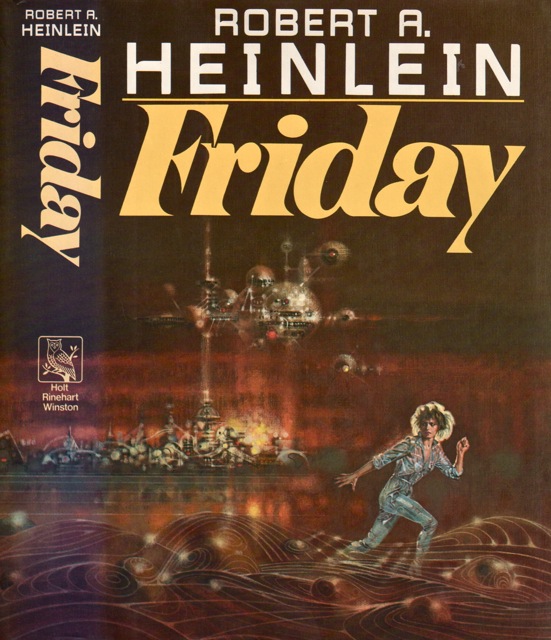
- Friday
Robert A. Heinleinstandalone novel1982
similar bygenetic engineeringnorth americascience fiction
Friday is a 1982 science fiction novel by American writer Robert A. Heinlein. It is the story of a female "artificial person", the eponymous Friday, genetically engineered to be stronger, faster, smarter, and generally better than normal humans. Artificial humans are widely resented, and much of the story deals with Friday's struggle both against prejudice and to conceal her enhanced attributes from other humans. The story is set in a Balkanized 21st century, in which the nations of the North American continent have been split up into a number of smaller states.
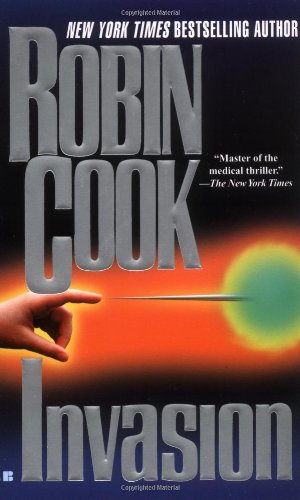
- Invasion
Robin Cookstandalone novel1997
similar bygenetic engineeringnorth americaaliensscience fiction
Earth is bombarded from space by small disks which, in addition to having powerful physical armaments, when handled activate latent viral DNA which causes humans to mutate into alien beings; a small group recognize the danger and attempt to develop a biological counterweapon.
- Trinity
A. J. Hartley & Tom DeLongestandalone novel2024
similar bynorth americamid 20th centuryaliensscience fictionalternate history
A thrilling new novel by the creators of Sekret Machines who, with the help of a team of government insiders, exposed the secret pentagon UFO program that captured America’s attention and led to the first public congressional hearings about unidentified flying objects. It’s 1962, in Trinity, Nevada, a small town on the edge of the desert, home to a military base serving the nuclear testing grounds. Van Lopez and his brother Andy have enough to do keeping their truck running and the local criminal gang happy to be concerned about nuclear tests. Van has dreams, or—he’s not sure what to call them—that he cannot explain or forget, but when he sees mysterious lights in the sky, he struggles to make sense of what now feel like his earliest memories. On the day of the atomic test, the nuclear blast brings down something over Trinity that wasn’t supposed to be there—something not of this world. Now Van is running for his life, pursued by a murderous Soviet agent and government forces bent on keeping all he has seen—and all he has remembered—from getting out. Romances and rivalries come to a head as he fights for the things he cares about most, and in that final battle he may have to make allies of his oldest enemies. A thrilling new novel by the creators of Sekret Machines who, with the help of a team of government insiders, exposed the secret pentagon UFO program that captured America’s attention and led to the first public congressional hearings about unidentified flying objects.
- The Grays
Whitley Strieberstandalone novel2006
similar bygenetic engineeringnorth americaaliensscience fiction
Millions of people are confronting aliens that authorities say do not exist. Whitley Strieber -- author of the legendary, #1 bestseller Communion, which detailed his own close encounters -- now returns to the riddle of aliens with The Grays. Drawing on a lifetime of research, Strieber offers up a fictional account of the conspiracy behind alien presence on Earth while also giving us a startling look inside the alien mind that will astound, frighten, and enthrall readers. Meet the Three Thieves, a group of Grays assigned to duty in a small Kentucky town. For decades, they have abducted its residents and manipulated bloodlines trying to create an ultra-intelligent human being. Nine year-old Conner Callahan will face the ultimate terror as he struggles to understand who he has been bred to be, and what he must do to save humanity. Meet Colonel Michael Wilkes, the head of a select group of government and military officials who have been monitoring the Grays for years. Wilkes has done everything in his power to keep the secret of the Grays from the public. But when the Grays begin to reveal themselves, Wilkess fear of occupation forces him to set in motion his own sinister plan to ensure the survival of humanity, but at what cost? The fate of the human race lies with one woman, Lauren Glass, whose unique ability to communicate with the last remaining captive Gray, known as A for Adam, may be the only way humans can truly unravel the Grays ultimate plan. The Grays is a mind-bending journey behind the curtain of secrecy that surrounds the subject of aliens, written by the fields great master. This book will make you think deeply, not only about the mystery of who the Grays are, but who exactly we are.
- Gladiator
Philip Wyliestandalone novel1930
similar bygenetic engineeringnorth americascience fiction
Gladiator is a science fiction novel by American author Philip Wylie, first published in 1930. The story concerns a scientist who invents an "alkaline free-radical" serum to "improve" humankind by granting the proportionate strength of an ant and the leaping ability of the grasshopper. The scientist injects his pregnant wife with the serum and his son Hugo Danner is born with superhuman strength, speed, and bulletproof skin. Hugo spends much of the novel hiding his powers, rarely getting a chance to openly use them.
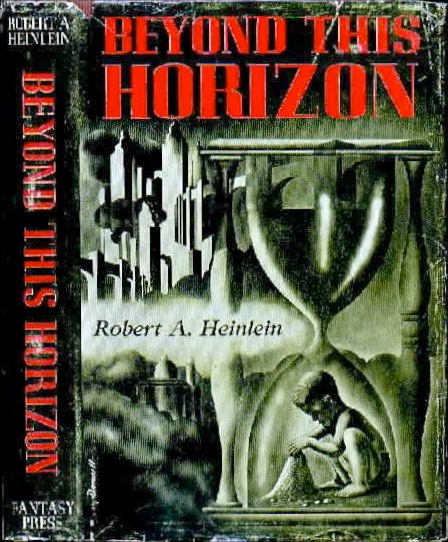
- Beyond This Horizon
Robert A. Heinleinstandalone novel1948
similar bygenetic engineeringnorth americascience fiction
From the front flap of a 2001 Baen reprint: "Utopia has been achieved. For centuries, disease, hunger, poverty, and war have been things found only in the history tapes. And applied genetics has given men and women the bodies of athletes and a lifespan of over a century. They should all have been very happy... But Hamilton Felix is bored. And he is the culmination of a star line, each of his last thirty ancestors chosen for superior genes. Hamilton is, as far as genetics can produce one, the ultimate man. And this ultimate man can see no reason why the human race should survive, and has no intention of continuing the pointless comedy. However, Hamilton's life is about to become less boring. A secret cabal of revolutionaries who find utopia not just boring, but desperately in need of leaders who know just What Needs to be Done, are planning to revolt and put themselves in charge. Knowing of Hamilton's disenchantment with the modern world, they have recruited him to join their Glorious Revolution. Big mistake! The revolutionaries are about to find out that recruiting a superman was definitely not a good idea..."
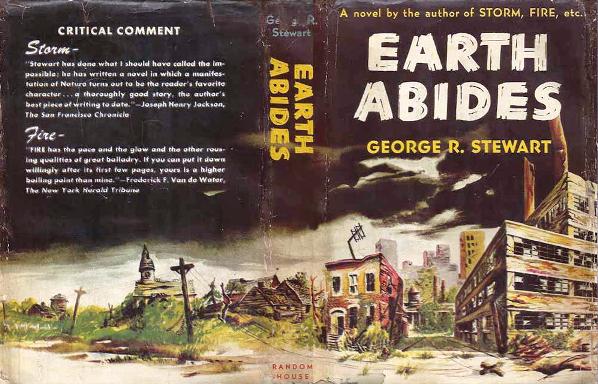
- Earth Abides
George R. Stewartstandalone novel1949
similar bynorth americamid 20th centuryscience fiction
The novel tells the story of the fall of civilization from deadly disease and the emergence of a new culture with simpler tools. Set in the 1940s in Berkeley, California, the story is told by Isherwood Williams, who emerges from isolation in the mountains to find almost everyone dead. en.wikipedia.org
- MaddAddam
series3 books2003
similar bygenetic engineeringnorth americascience fiction
Margaret Atwood's MaddAddam trilogy (Oryx and Crake, The Year of the Flood, MaddAddam, 2003-2013) is set around a genetically engineered pandemic unleashed deliberately by the brilliant, disillusioned scientist Crake, who intends the deadly 'BlyssPluss' pill to wipe out humanity and clear the way for the gentler, engineered Crakers he has designed to replace it. Told from the perspectives of survivors including Crake's old friend Jimmy (now calling himself Snowman), the trilogy pieces together the pandemic's causes and its aftermath from multiple, overlapping vantage points.
- Darwin
series2 books1999
completed
similar bygenetic engineeringnorth americascience fiction
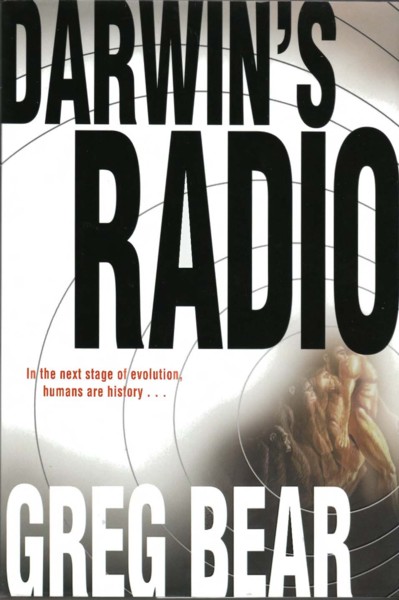
Greg Bear's Darwin's Radio imagines a dormant retrovirus in human DNA activating worldwide, triggering an accelerated leap in human evolution that governments respond to as a plague. The 1999 novel won the Nebula Award; its sequel Darwin's Children follows the first generation of changed children as society decides what to do with them. Together they're speculative near-future science fiction grounded in genetics rather than space opera.
- Majestic
Whitley Strieberstandalone novel1989
similar bynorth americamid 20th centuryaliensscience fiction
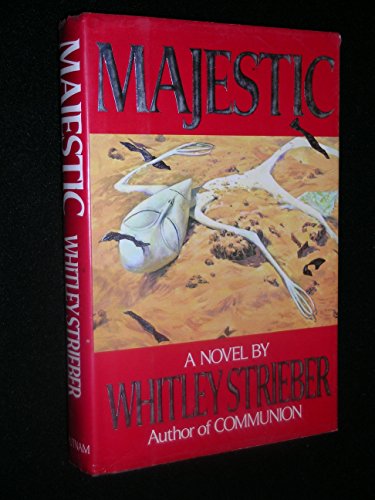
Putatively based on meticulously researched background detail, the novel incorporates – in the first edition without acknowledgement or permission – a summary derived from David Langford's spoof novel, An Account of a Meeting with Denizens of Another World, 1871 (1979) as by William Robert Loosley, edited by Langford - Clute/Nicholls, Encyclopedia of Science Fiction.
- 11/22/63
Stephen Kingstandalone novel2011
similar bynorth americamid 20th centuryscience fictionalternate history
11/22/63 is a novel by American author Stephen King about a time traveler who attempts to prevent the assassination of United States President John F. Kennedy, which occurred on November 22, 1963. It is the 60th book published by Stephen King, his 49th novel, and the 42nd under his own name. The novel required considerable research to accurately portray the late 1950s and early 1960s. King commented on the amount of research it required, saying, "I've never tried to write anything like this before. It was really strange at first, like breaking in a new pair of shoes."
- Blood Music
Greg Bearstandalone novel1985
similar bygenetic engineeringnorth americascience fiction
Blood Music is a 1985 science fiction novel by American writer Greg Bear. It is an expanded version of a short story of the same title, originally published in the June 1983 issue of Analog and the winner of both the 1983 Nebula and 1984 Hugo awards for Best Novelette. The novel won the 1986 Prix Apollo Award, given to the best science fiction novel published in France during the preceding year, under the title La Musique du sang.