More like Moth
anchored on:early 20th century
but
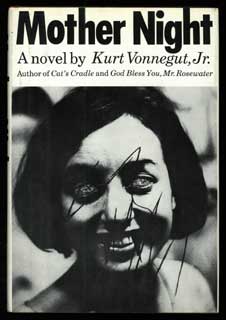
- Mother Night
Kurt Vonnegut & Jr.standalone novel1962
similar byidentityliterary & generalreflectiveour world+1 more
Howard W. Campbell Jr., an American playwright who grew up in Germany, writes his memoirs from an Israeli prison cell awaiting trial for war crimes. As the Nazis rose to power, Campbell stayed on, married a German actress, and was recruited by an American agent to serve as a double agent, broadcasting Nazi propaganda over the radio while secretly passing coded intelligence to the Allies. The catch, as Campbell tells it, is that he became one of the war's most effective propagandists in the process, whatever his loyalties. Kurt Vonnegut's darkest novel asks what a person becomes when the mask he wears for a cause is indistinguishable from his face.
- Empire of the Sun
series2 books1984
completed
similar byreflective+4 more
J. G. Ballard's Empire of the Sun draws on his own childhood to follow Jim, a British boy separated from his parents in Japanese-occupied Shanghai during World War II and interned in a civilian camp for the rest of the war. Ballard revisited the same period and a version of the same character years later in The Kindness of Women, a more explicitly fictionalized continuation into Jim's adult life. Empire of the Sun is the more directly autobiographical and better-known of the two.
- The Collected Science Fiction and Fantasy of Jack London
series6 books1906
completed
similar byour worldearly 20th century+1 more
- VALIS
series4 books1981
completed
similar byidentityreflective+2 more
The VALIS trilogy is a set of science fiction/philosophical novels by author Philip K. Dick which include VALIS (1981), The Divine Invasion (1981), and The Transmigration of Timothy Archer (1982). Dick's first novel about the VALIS concept originally titled "VALISystem A", was published as Radio Free Albemuth after Dick's death in 1985.
- Whileaway
series4 books1972
completed
similar byreflective+3 more
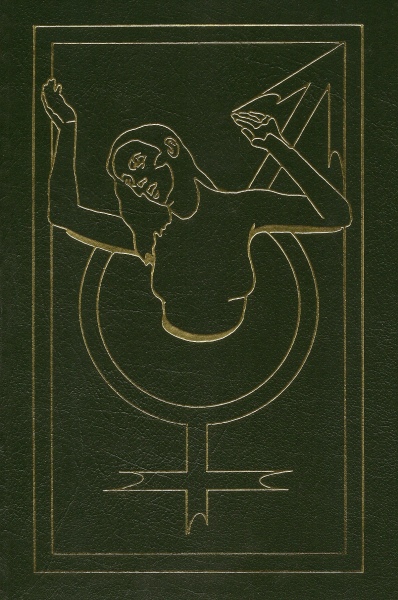
Joanna Russ's The Female Man (1975) is a single feminist science fiction novel, not a multi-book series, built around four women from parallel timelines with very different gender arrangements. One of them, Janet, comes from Whileaway, an all-female utopian Earth ten centuries in the future where men died out in a plague; the other three come from realities closer to Russ's own, and their collisions are used to interrogate what womanhood and equality could mean under different social rules.
- Kairos
series11 books1962
completed
similar by+1 more
The Time Quintet is a science fantasy series of five young adult novels written by American author Madeleine L'Engle and made up of A Wrinkle in Time (1962), A Wind in the Door (1973), A Swiftly Tilting Planet (1978), Many Waters (1986), and An Acceptable Time (1989).
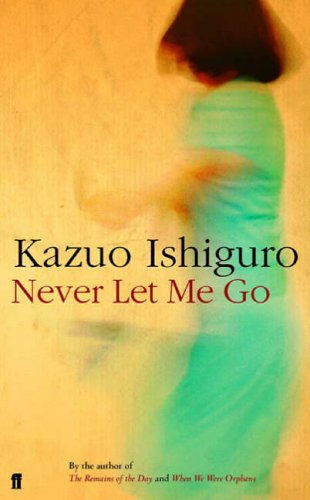
- Never Let Me Go
Kazuo Ishigurostandalone novel2005
similar byidentityliterary & generalreflectiveour world
Never Let Me Go is a 2005 science fiction novel by the British author Kazuo Ishiguro. It was shortlisted for the 2005 Man Booker Prize, for the 2006 Arthur C. Clarke Award and the 2005 National Book Critics Circle Award. Time magazine named it the best novel of 2005. It included the novel in its '100 Best English-language novels published since 1923—the beginning of TIME'. It also received an ALA Alex Award in 2006. A film adaptation directed by Mark Romanek was released in 2010.
- Black Oxen
Gertrude Athertonstandalone novel1923
similar byidentityliterary & generalreflectiveearly 20th century
"... Black Oxen was written in a burst of mental energy after Gertrude Atherton herself received an experimental anti-aging treatment; the introduction and appendices to this edition explore parallels between Atherton's medical treatment and that of her rejuvenated protagonist, as well as provide selections from other contemporary writings on aging, science, and the role of women in the 1920s. ..." --description of the 2012 Broadview ed. at Amazon 2019-09-05 (read in full, {{ASIN|1554810256}}
- The Edible Woman
Margaret Atwoodstandalone novel1969
similar byidentityliterary & generalreflectiveour world
The Edible Woman is the first published novel by Canadian writer Margaret Atwood, published in 1969. It is the story of a young woman, Marian, whose sane, structured, consumer-oriented world starts to slip out of focus. Following her engagement, Marian feels her body and her self are becoming separated. Marian begins endowing food with human qualities that cause her to identify with it, and finds herself unable to eat, repelled by metaphorical cannibalism. In a foreword written in 1979 for the Virago edition of the novel, Atwood described it as a protofeminist rather than feminist work.
- Concrete Island
J. G. Ballardstandalone novel1974
similar byidentityliterary & generalreflectiveour world
Architect Robert Maitland crashes his car onto a stretch of wasteland trapped between three converging motorways -- visible from thousands of cars, reachable by none of them. Injured and unable to climb back to the road, Maitland adapts to life on what he starts calling the Island, scavenging food thrown from car windows, and discovers he isn't alone: a runaway sex worker hiding in a bunker, and a brain-damaged former circus acrobat, both long past expecting rescue. What begins as a survival story turns into a question of whether Maitland even wants to leave. A J. G. Ballard novel of urban isolation, grouped with Crash and High-Rise.
- The Blue Ant Trilogy
series3 books2003
similar by+2 more
Hubertus Bigend is a fictional character appearing in the third trilogy of novels of science fiction and literary author William Gibson. Bigend is the antihero of Gibson's Pattern Recognition (2003), Spook Country (2007) and Zero History (2010). In an interview Gibson says "I've always had a sense of Bigend as someone who presents himself as though he knows what's going on, but who in fact doesn't. It's just my sense of the subtext of the character: he's bullshitting himself, at the same time as he's bullshitting all of us."
- Phases of Gravity
Dan Simmonsstandalone novel1989
similar byidentityliterary & generalreflectiveour world
Follows Richard Baedecker, an Apollo astronaut who walked on the moon, through his midlife crisis. He meanders through India, Glen Oak Illinois, the mountains of Colorado, and the coastline of Oregon, checking up on his son and his former Apollo crewmates.
- Todd Family
series2 books2013
similar byliterary & generalreflectiveearly 20th century+1 more
Kate Atkinson's Life After Life gives Ursula Todd, born on a snowy night in 1910, a strange gift: whenever she dies, she's born again into a slightly altered version of the same life, gradually piecing together enough intuition across her many deaths to try to change the course of the twentieth century's worst events. The companion novel A God in Ruins turns to Ursula's brother Teddy, a bomber pilot, following his one, single life forward from the war through old age. The two books share a family and a set of preoccupations -- memory, war, chance -- without forming a conventional sequential series.
- Wold Newton
series21 books1972
similar byour world+3 more
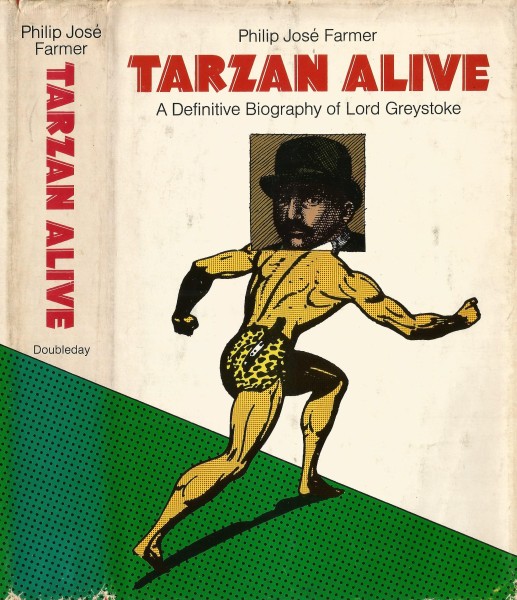
The Wold Newton family is a literary concept derived from a form of crossover fiction developed by the American science fiction writer Philip José Farmer.
- The Savage Gentleman
Philip Wyliestandalone novel1932
similar byidentityliterary & generalreflectiveour worldearly 20th century
Betrayed by his wife, Stephen Stone spirits his son, Henry, away to a remote tropical island and trains him to be an ideal physical specimen and a perfect gentleman. After years of isolation, Henry Stone is now a young man, standing a full six feet two inches tall and weighing 190 pounds. His hair is bronze, his eyes turquoise, his skin mahogany--a magnificent man. When Henry finally returns to civilization, he finds that his father's business has grown into a news empire. Though he is the owner of this huge conglomerate, a great conversationalist and excellent company, well versed in etiquette, and extraordinarily nice, Henry has never seen a woman. Indeed his father has taught him never to trust a female and that love itself is a myth. When Henry collides with the contemporary world and the modern woman, the collision is necessarily fascinating and complicated for both Henry and the society he is discovering.
- Lost
Gregory Maguirestandalone novel2001
similar byidentityliterary & generalreflectiveour world
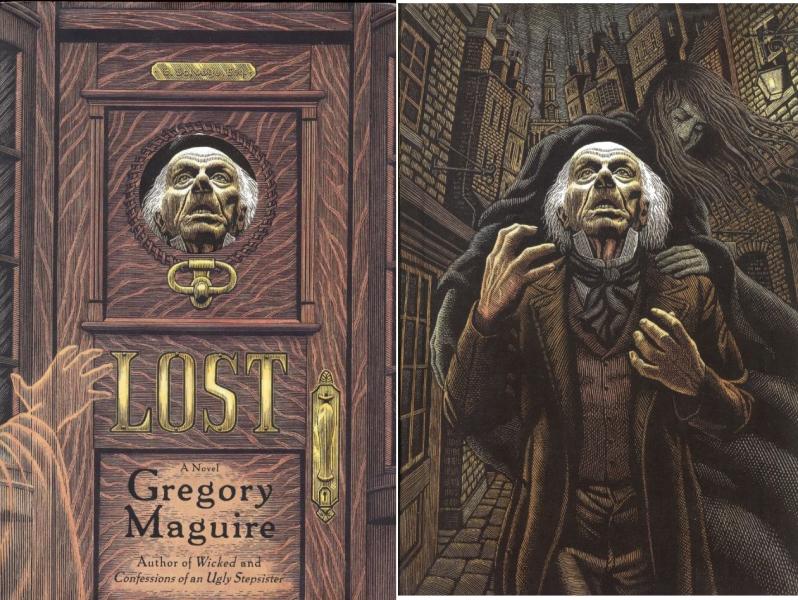
Lost is a 2001 novel by American author Gregory Maguire. Unlike many of Maguire's other adult novels, Lost is set in the real world. The novel's concept is that the protagonist is a distant relative of the man who inspired Charles Dickens' character of Ebenezer Scrooge.
- The Satanic Verses
Salman Rushdiestandalone novel1988
similar byidentityliterary & generalour world+1 more
The Satanic Verses is the fourth novel by British–Indian writer Salman Rushdie. First published in September 1988, the book was inspired by the life of the Islamic prophet Muhammad. As with his previous books, Rushdie used magical realism and relied on contemporary events and people to create his characters. The title refers to the Satanic Verses, a group of Quranic verses about three pagan Meccan goddesses: Allāt, Al-Uzza, and Manāt. The part of the story that deals with the satanic verses was based on accounts from the historians al-Waqidi and al-Tabari.
- A Visit from the Goon Squad
series2 books2010
similar byliterary & generalreflective+1 more
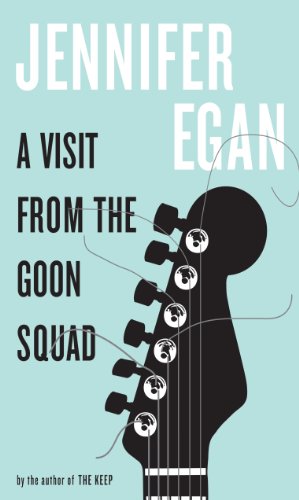
Jennifer Egan's A Visit from the Goon Squad follows a loosely connected group of characters orbiting the music industry across several decades, told through interlocking chapters that jump between narrators, timelines, and, in one chapter, a PowerPoint presentation. The Candy House returns to several of the same characters and their descendants a decade later, in a world reshaped by a technology that lets people access and share their memories. Egan links the two books through recurring characters more than a continuous plot.
- Stranger in a Strange Land
Robert A. Heinleinstandalone novel1961
similar byidentityreflectiveour world
Stranger in a Strange Land is a 1961 science fiction novel by the American author Robert A. Heinlein. It tells the story of Valentine Michael Smith, a human who comes to Earth in early adulthood after being born on the planet Mars and raised by Martians, and explores his interaction with and eventual transformation of Terran culture.
- Karl Glogauer
series2 books1969
similar byidentityreflective+2 more
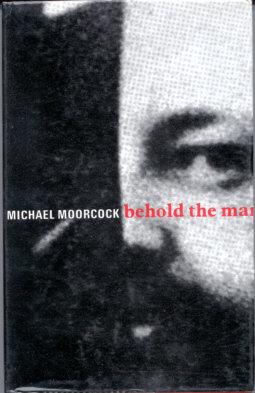
Michael Moorcock's two Karl Glogauer novels share a character rather than a plot. In Behold the Man (1969), Glogauer travels back in time seeking the historical Jesus, discovers the real man is severely disabled, and takes on the role of Christ himself, engineering his own crucifixion to fulfill the story he grew up reading. Breakfast in the Ruins (1972) recasts him across seventeen variant lives spanning 1871 to 1990, each one crueler than the last, framed around a present-day encounter in London -- using the same protagonist for a different formal experiment rather than continuing a single narrative.
- Castle Rock
series16 books1978
Castle Rock is the fictional Maine town that links a cluster of otherwise separate Stephen King novels and novellas, including The Dead Zone, Cujo, The Dark Half, Needful Things, and Elevation. Rather than telling one continuous story, the books share a setting and occasional recurring figures, such as Sheriff Alan Pangborn, while each follows its own self-contained plot and cast. Any title can be read on its own without needing the others.