More like Mourning
anchored on:science fantasygrief and lossother star systemsfar futurereflective
but
- Cards of Grief
Jane Yolenstandalone novel1984
similar bygrief and lossreflectiveother star systemsfar future
Cards of Grief is a novel by Jane Yolen published in 1984.
- The City and the Stars
Arthur C. Clarkestandalone novel1956
similar byreflectiveother star systemsfar future
The City and the Stars is a science fiction novel by British writer Arthur C. Clarke, published in 1956. This novel is a complete rewrite of Clarke's earlier Against the Fall of Night, his first novel, which had been published in Startling Stories magazine in 1948 after being rejected by the editor of Astounding Science-Fiction, according to the author.
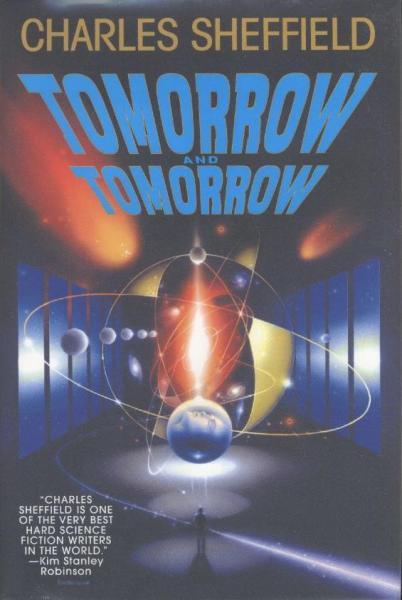
- Tomorrow and Tomorrow
Charles Sheffieldstandalone novel1997
similar bygrief and lossreflectivefar future
Tomorrow and Tomorrow is a 1997 science fiction novel by Charles Sheffield. The book starts in approximately the year 2020 and follows the protracted adventures of Drake Merlin, in his quest to save his wife from a terminal brain disease, over the course of eons. Similar premises are presented in the 2006 film The Fountain, as well as the Isaac Asimov story "The Last Question".
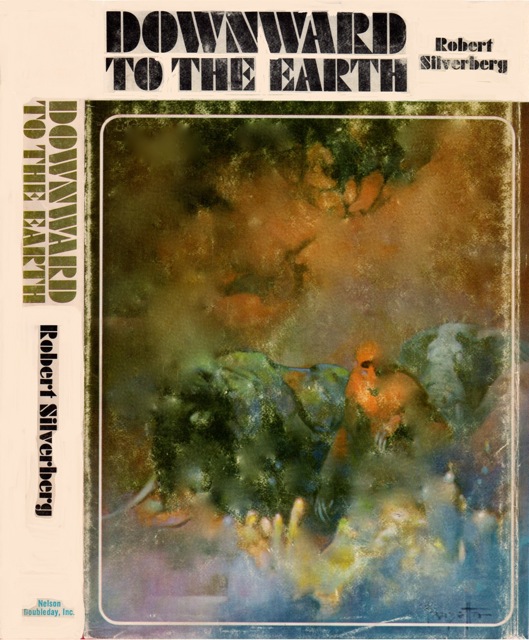
- Downward to the Earth
Robert Silverbergstandalone novel1969
similar byreflectiveother star systemsfar future
Edmund Gunderson was the Terran administrator of the colony world of Belzagor, and he returns to it after it has gained independence, feeling a sense of guilt for the way he has treated its dominant species, the elephant-like nildoror, whose animalistic appearance had kept Gunderson from taking them seriously as sentient beings. On his return, he feels a new sense of kinship with the natives, perhaps more than for the Terran tourists. The nildoror undergo a process of rebirth, and Gunderson's greatest guilt comes from having denied rebirth to seven nildoror to make them help him repair flood damage.(From Wikipedia)
- Hainish
series33 books1964
completed
similar byreflectivefar futureother star systems
The Hainish Cycle consists of a number of science fiction novels and stories by Ursula K. Le Guin. The cycle is set in a future history that features civilizations of human beings on planets orbiting a number of nearby stars, including Terra ("Earth"); these humans are contacting each other for the first time and establishing diplomatic relations, as well as setting up a confederacy under the guidance of the oldest of the human worlds, the peaceful planet Hain. In this history, human beings did not evolve on Earth, but they were instead the result of interstellar colonies planted by Hain in the distant past, after which interstellar travel ceased for an extended period. Some of the human races have new genetic traits, a result of ancient Hainish experiments in genetic engineering; this includes people who can dream while awake, and a world of hermaphroditic people who only enter active sexuality once per month, not knowing which sex will manifest in them. In keeping with Le Guin's narrative approach, she uses varied social and environmental settings to explore the anthropological and sociological outcomes of human evolution in those environments. The author often discounted the characterization of a so-called "Hainish Cycle".
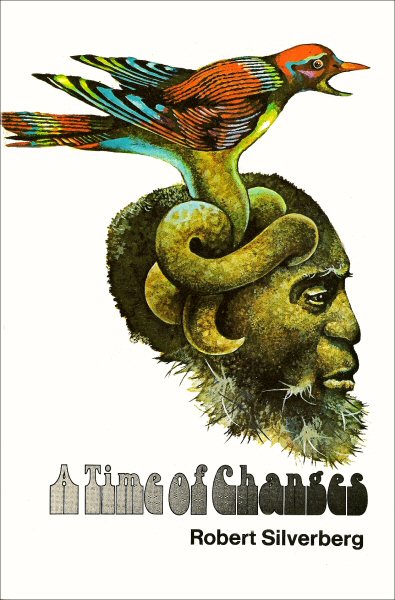
- A Time of Changes
Robert Silverbergstandalone novel1971
similar byreflectiveother star systemsfar future
A Time of Changes is a 1971 science fiction novel by American writer Robert Silverberg. It won the Nebula Award for that year, and was also nominated for the 1972 Hugo and Locus Awards.
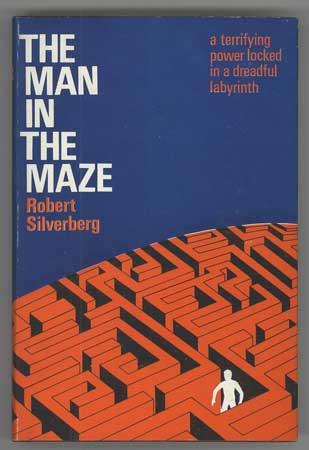
- The Man in the Maze
Robert Silverbergstandalone novel1969
similar byreflectiveother star systemsfar future
The Man in the Maze is a science fiction novel by American writer Robert Silverberg, originally serialized in the magazine Worlds of If in April and May 1968, and published in bookstores the following year. It tells the tale of a man rendered incapable of interacting normally with other human beings by his uncontrollable psychic abilities. The novel is inspired by Sophocles' play Philoctetes, with the roles of Odysseus, Neoptolemus and Philoctetes played by Boardman, Rawlins, and Muller, respectively.
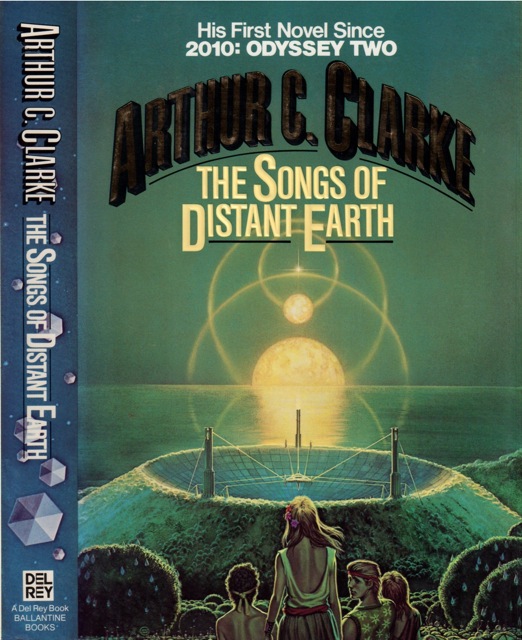
- The Songs of Distant Earth
Arthur C. Clarkestandalone novel1986
similar byreflectiveother star systemsfar future
The Songs of Distant Earth is a 1986 science fiction novel by British writer Arthur C. Clarke, based upon his 1958 short story of the same title. Of all of his novels, Clarke stated that this was his favourite. Prior to the publishing of the novel, Clarke also wrote a short step outline with the same title, published in Omni magazine and anthologised in The Sentinel in 1983.
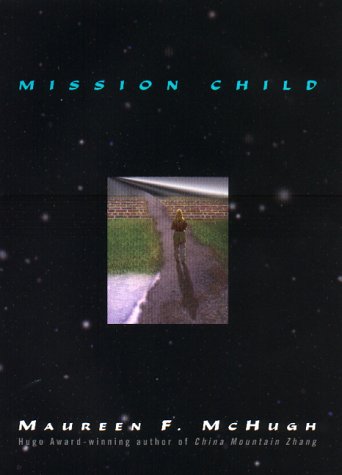
- Mission Child
Maureen F. McHughstandalone novel1998
similar byreflectiveother star systemsfar future+1 more
Mission Child is a science fiction novel by Maureen F. McHugh. Set on a once-forgotten colony planet, it follows the life of Janna, the titular mission child, who witnesses the massacre of her loved ones and is displaced time and again as her world is radically changed by contact with new colonists from Earth. The novel explores the impacts of colonization on colonized peoples, the estranging power of technology, and Janna's gender identity as she disguises herself as a young man, takes on a new name, and over time comes to identify as neither a man nor a woman.
- Triton
Samuel R. Delanystandalone novel1976
similar byreflectiveother star systemsfar future
Trouble on Triton: An Ambiguous Heterotopia (1976) is a science fiction novel by American writer Samuel R. Delany. It was nominated for the 1976 Nebula Award for Best Novel, and was shortlisted for a retrospective James Tiptree, Jr. Award in 1995. It was originally published under the shorter title Triton.
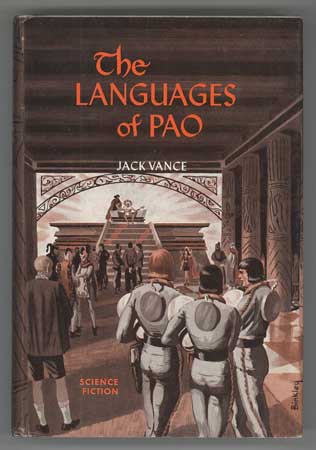
- The Languages of Pao
Jack Vancestandalone novel1958
similar byreflectiveother star systemsfar future
The Languages of Pao is a science fiction novel by American writer Jack Vance, first published in 1958, based on the Sapir–Whorf hypothesis, which asserts that a language's structure and grammar construct the perception and consciousness of its speakers. In the novel, the placid people from the planet Pao rely on other planets for technological innovations and manufactured goods and they do not resist when an invading force occupies the land and levies heavy taxes. To expel the aggressors and make the planet more independent, three new languages are introduced. A scientific language induces its speakers to innovate more; a well-ordered language encourages its speakers to be industrious; and a warlike language induces competitiveness and aggression. The new languages change the culture and Pao ousts their overlords and develops a sophisticated modern economy.
- Lord of Light
series5 books1967
similar byscience fantasyfar futureother star systems
Lord of Light is Roger Zelazny's 1967 science fantasy novel about the surviving crew of a colonizing starship who use salvaged technology and mind-transfer to make themselves effectively immortal, then rule their colony for a thousand years under the guises of Hindu gods. One of their own, called Sam, breaks with the pantheon to return forbidden knowledge to the ordinary people they rule, touching off a war among the self-styled gods. A standalone novel, it won the 1968 Hugo Award for Best Novel.
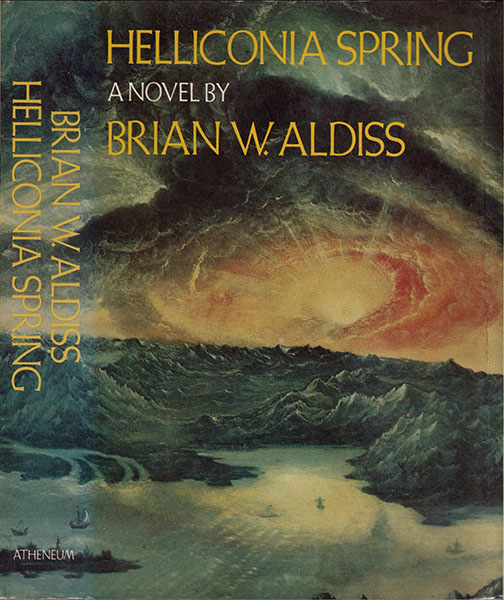
- Helliconia
series4 books1982
completed
similar byreflectiveother star systemsfar future
The Helliconia trilogy is a series of science fiction books by British writer Brian W. Aldiss, set on the Earth-like planet Helliconia. It is an epic chronicling the rise and fall of a civilisation over thousands of years as the planet progresses through its incredibly long seasons, which last for centuries.
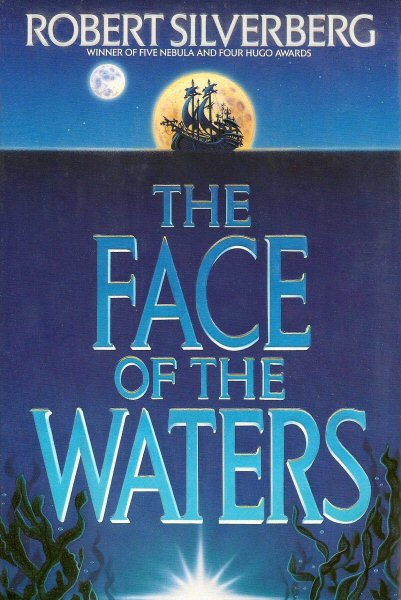
- The Face of the Waters
Robert Silverbergstandalone novel1991
similar byreflectiveother star systemsfar future
On the ocean world of Hydros -- a planet with no land beyond a scatter of artificial floating islands -- the human settlers of Sorve commit an offense against the native aquatic Hydrans serious enough to get their community banished, forbidden from settling on any other island. With nowhere else to go, Sorve's people set out across the water in a makeshift flotilla, chasing rumors of a mythical island called the Face of the Waters that may or may not exist, forced to reckon with what they owe the world they've spent generations treating as theirs. A Robert Silverberg novel of exile and search, told through Sorve's displaced islanders.
- The Last Man
Mary Shelleystandalone novel1826
similar bygrief and lossfar future+1 more
The Last Man is an apocalyptic, dystopian science fiction novel by Mary Shelley, first published in 1826. The narrative concerns Europe in the late 21st century, ravaged by the rise of a bubonic plague pandemic that rapidly sweeps across the entire globe, ultimately resulting in the near-extinction of humanity. It also includes discussion of the British state as a republic, for which Shelley sat in meetings of the House of Commons to gain insight to the governmental system of the Romantic era. The novel includes many fictive allusions to her husband Percy Bysshe Shelley, who drowned in a shipwreck four years before the book's publication, as well as their close friend Lord Byron, who had died two years previously.
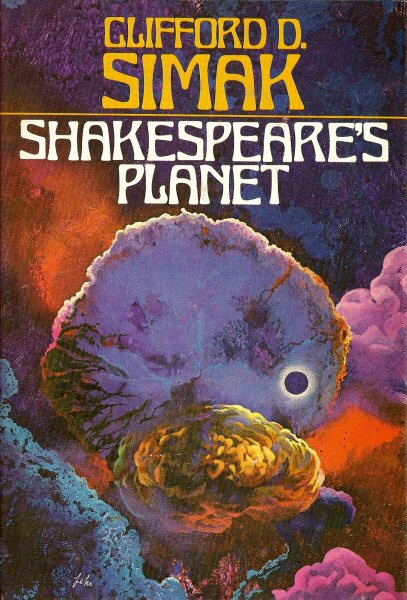
- Shakespeare's Planet
Clifford D. Simakstandalone novel1976
similar byreflectiveother star systemsfar future
Woken after a thousand-year voyage meant to find humanity a new home, Carter Horton finds his ship stranded for good, tended by the disembodied minds of three volunteers who gave up their bodies to fly it. Outside waits a world already crowded with strangers: a robot named Nicodemus, and an alien called the Carnivore who claims to have known a human, once, called Shakespeare, and to have arrived here through a tunnel across time. As more travelers arrive through that same tunnel, Horton has to work out what kind of planet he has actually landed on. A standalone novel from Clifford D. Simak.
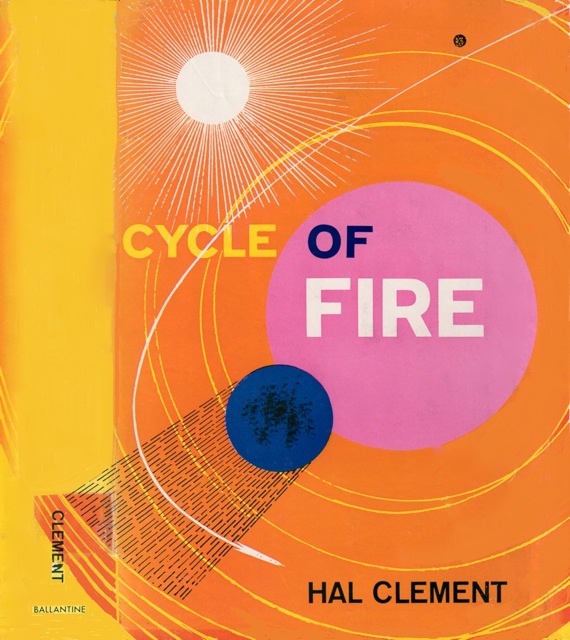
- Cycle of Fire
Hal Clementstandalone novel1957
similar byreflectiveother star systemsfar future
After his ship crashed on the inhospitable planet Abyorman, Nils Kruger had spent weeks wandering across the face of the planet.suffering from blistering heat, the searing cold of an alien climate. Now he had found a fellow wanderer, Dar, an alien castaway. They may both die. The human opts to do something about it. Dar, who knows the time of his death in advance, opts to do nothing. Which of them is right? Perhaps both
- Remnant Population
Elizabeth Moonstandalone novel1996
similar byreflectiveother star systemsfar future
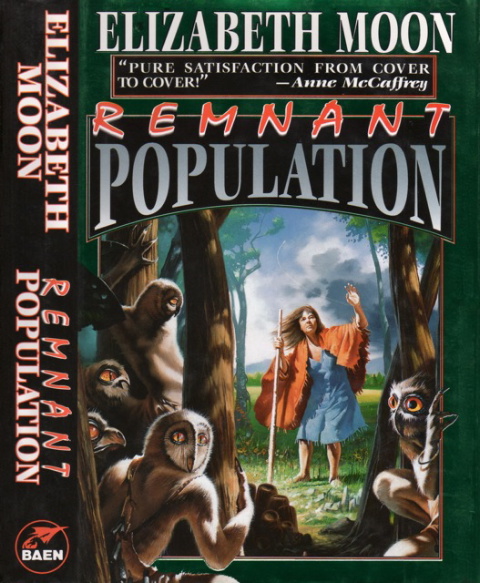
From the dust jacket front flap of the Baen first edition: Alone at last... People had always told Ofelia what to do; for once she was going to do what she wanted. She refused to get on the cryo ships, refused to leave the only world she could call home. And when they finally came for her, she hid, not that the authorities looked all that hard for one crazy old woman. Now Ofelia is alone, content to live with no more demands on her self or her time, the only remaining settler on an abandoned planet. The new settlers arrive. At first she fears that they have come to reoccupy the settlement she has come to think of as hers - but they land far away. And as Ofelia secretly listens, they are slaughtered to the last child by stone-age aliens no one knew were there. Now it will be up to Ofelia to save the aliens from Earth's wrath...
- Wyrms
Orson Scott Cardstandalone novel1987
similar byreflectiveother star systemsfar future
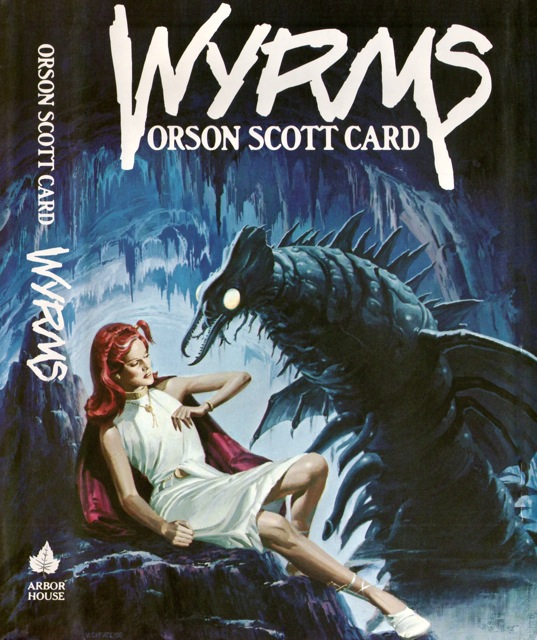
Wyrms (1987) is a science fiction novel by American writer Orson Scott Card. The story examines desire, wisdom, and human will. Card describes a version of the tri-partite soul, similar to that articulated by Plato in the Republic.
- 2312
Kim Stanley Robinsonstandalone novel2012
similar byreflectivefar futureother star systems
In the eponymous year, when Earth's ecology is degraded and humanity has settled throughout the solar system by terraforming and genetic engineering, mysterious disasters strike some human communities and an assortment of human types from throughout the system seek to find and eliminate the cause.
- Creatures of Light and Darkness
Roger Zelaznystandalone novel1969
similar byscience fantasyfar futureother star systems
Creatures of Light and Darkness is a 1969 science fiction novel by American writer Roger Zelazny. Long out of print, it was reissued in April 2010. The novel is set in the far future, with humans on many worlds. Some humans have god-like powers or perhaps are actually gods—the names and aspects of various Egyptian gods are used. Elements of horror and technology are mixed, and the novel shares elements with cyberpunk.