More like Mr. Splitfoot
anchored on:north america
but
- Jerusalem's Lot
series3 books1975
similar bygrief and lossnorth americacontemporaryhorroreerie+1 more
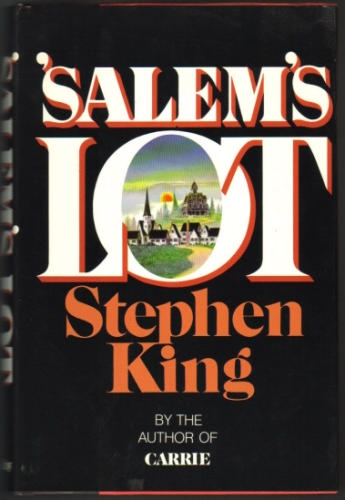
Stephen King's 1975 novel 'Salem's Lot follows writer Ben Mears as he returns to his childhood town of Jerusalem's Lot, Maine, only to discover that its residents are being turned into vampires by a newly arrived stranger. It transplants Gothic vampire horror into a small New England community, tracking that community's collapse under a supernatural siege. It is a single, self-contained novel.
- Pet Sematary
Stephen Kingstandalone novel1983
similar bygrief and lossnorth americacontemporaryhorroreerie+1 more
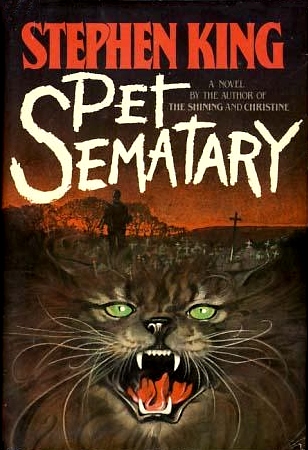
Pet Sematary is a 1983 horror novel by American writer Stephen King. It tells the story of a family moving to Maine and settling closer to a pet cemetery in the woods, which is home to a terrifying force that brings death and sorrow. The novel was nominated for a World Fantasy Award for Best Novel in 1984, and adapted into two films: one in 1989 and another in 2019 as well as several spinoffs.
- Lisey's Story
Stephen Kingstandalone novel2006
similar bygrief and lossnorth americacontemporaryhorroreeriegothic+1 more
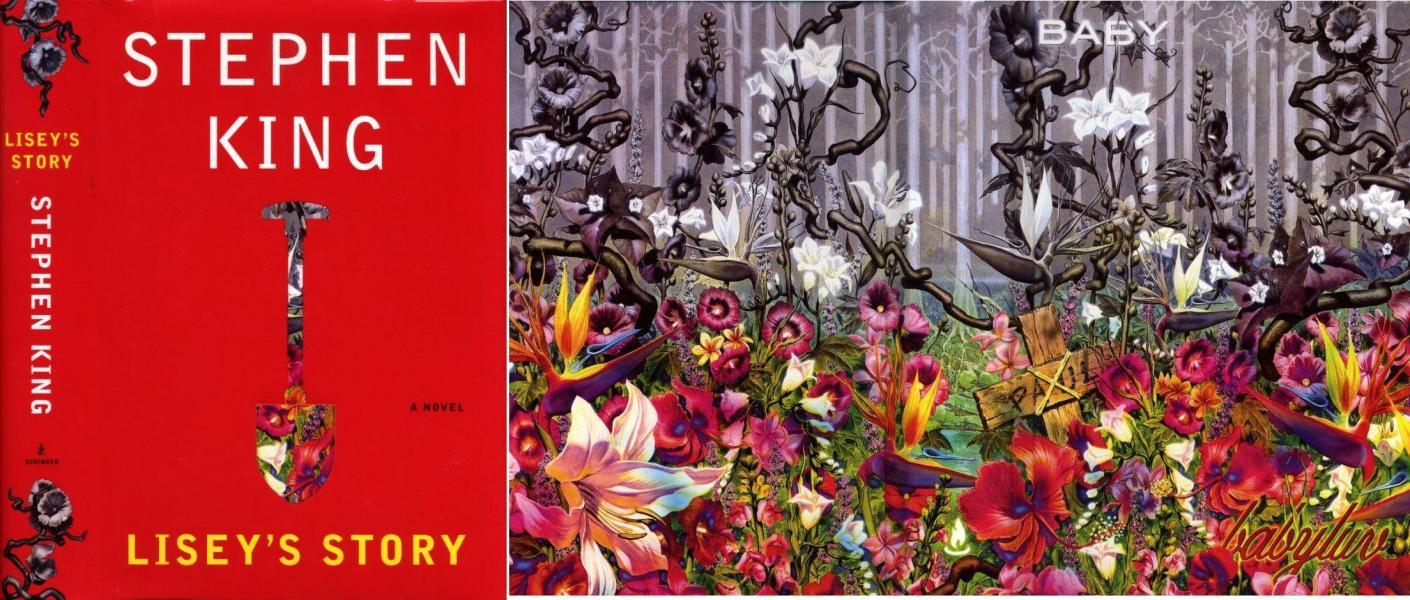
When the widow of a successful author is targeted by a psychopath, she must make use of the ability to shift to a parallel world, which she learned from her husband.
- If You Could See Me Now
Peter Straubstandalone novel1976
similar bygrief and lossnorth americacontemporaryhorroreeriegothic+1 more
If You Could See Me Now is a horror novel by American author Peter Straub. It is his third novel and his second work of gothic or supernatural fiction. The book was published by Jonathan Cape in June 1977 – the same London publisher who published Julia in 1976. Coward, McCann & Geoghegan published an American edition also in June 1977.
- Blue Rose (Peter Straub)
series9 books1985
completed
similar bynorth americahorror+3 more
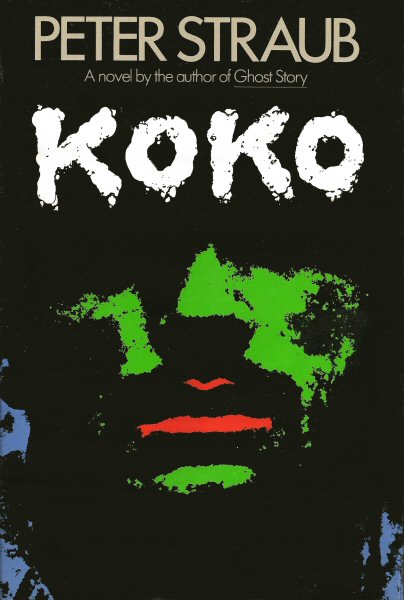
The Blue Rose novels are only loosely a series: Peter Straub's Koko, Mystery, and The Throat are separate suspense novels connected by recurring characters, a shared Midwestern town, and the shadow of a Vietnam-era program called Blue Rose that haunts several of the men at their centers. Koko follows a group of Vietnam veterans hunting a former comrade turned serial killer decades after the war. The 1985 novella Blue Rose and later story collections explore the same program's darker origins.
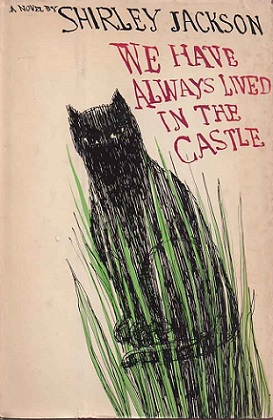
- We Have Always Lived in the Castle
Shirley Jacksonstandalone novel1962
similar bynorth americahorroreeriefamily secretsgothicliterary & general+1 more
A young woman lives with her older sister and sickly uncle in their old family house, after a mysterious tragedy turns the townsfolk against them.
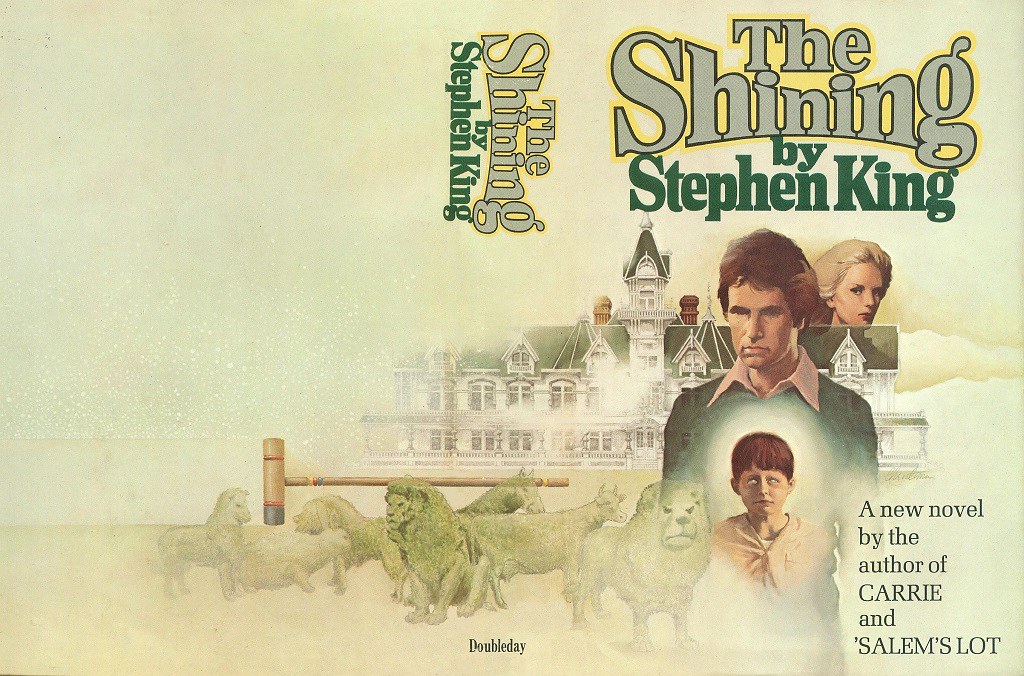
- The Shining
series5 books1977
similar bynorth americacontemporaryhorror+2 more
Stephen King's 1977 novel The Shining follows the Torrance family as winter caretakers of the isolated, malevolent Overlook Hotel, where father Jack is gradually consumed by the hotel's influence while his young son Danny's psychic "shining" draws its attention. Doctor Sleep (2013) picks up the story decades later, following Danny as an adult still marked by that childhood ordeal. Together the two form a horror duology spanning nearly forty years of real-world publication.
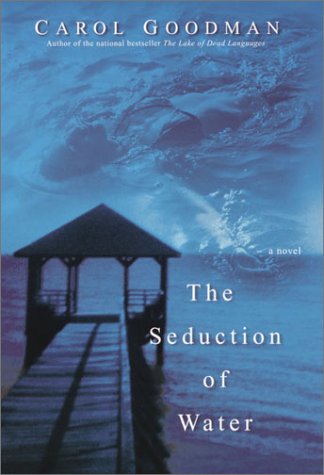
- The Seduction of Water
Carol Goodmanstandalone novel2003
similar bygrief and lossnorth americacontemporaryeeriemysteriousdual timelinefamily secretsgothic+1 more
"Iris Greenfeder, ABD (All But Dissertation), has just turned forty, lives in Manhattan, and works three teaching jobs to support herself. Recently she's felt that the "buts" are taking over her life: all but published, all but a professor, all but married (to Jack, her boyfriend of ten years). Yet the sudden impulse to write a story about her mother leads to a shot at literary success. The piece recounts an eerie Irish fairy tale her mother used to tell her at bedtime - and nestled inside it is the sad story of her mother's death...". "More than fifty years ago, Iris's mother, Katherine Morrissey, arrived at the Catskills's grand Hotel Equinox penniless, with almost no belongings. Kay was hired as a maid but refused to speak of her past or her family. One year later, she married Ben Greenfeder, the hotel's manager. During the hotel's off-season, Kay wrote the first two fantasy novels of a planned trilogy. There never was a third book. When Iris was nine, her mother left one day for a writer's conference - and never came back. Kay died that very night in a hotel fire on Coney Island, registered as another man's wife." "Now Hedda Wolfe, Kay's former literary agent, has a proposal: If Iris will return to the Hotel Equinox where she grew up, research her mother's life, and find the third and final manuscript that Hedda is convinced exists, then she can guarantee Iris a huge advance to write her mother's biography.". "Transfixed by the notion of a third book, Iris believes that it will hold clues to the mysteries of Kay's life - and death. But as she begins to peer into the thicket of her mother's hidden world, stinging revelations leave Iris with new questions. When a deadly "accident" befalls the one man who could shed some light on Kay, it becomes clear that Iris is not alone in her deep interest in her mother's past - or in her search for a lost manuscript that might hold more secrets than she ever expected."--BOOK JACKET.
- House of Leaves
series2 books2000
similar bynorth americacontemporaryhorroreerieliterary & general+2 more
House of Leaves is the debut novel by American author Mark Z. Danielewski, published in March 2000 by Pantheon Books. A bestseller, it has been translated into a number of languages, and is followed by a companion piece, The Whalestoe Letters.
- Insomnia
Stephen Kingstandalone novel1994
similar bygrief and lossnorth americacontemporaryhorroreerie
When an elderly widower in Maine finds himself with sleep maintenance insomnia, awakening early every morning, this state of exhaustion allows him to perceive a higher state of reality, where he learns of an impending disaster which will shake not just the Earthly reality. but all the higher realities, and which he has been recruited to prevent.
- Here I Stay
Barbara Michaelsstandalone novel1983
similar bynorth americacontemporaryhorroreeriefamily secretsgothic+1 more
Andrea Torgesen is certain that hard work is exactly what her younger brother Jim needs to help him recover from the trauma of a serious car accident—and turning a decrepit old mansion into a beautiful country inn seems to be the perfect project. But unearthly voices and eerie visions haunt Jim from almost the first instant he sets foot in the dreary old house. And his strange obsession with a long-neglected graveyard is most troubling to his concerned sibling. There is evil in this place where the unthinkable is possible—a terrifying force that Andrea and Jim must confront . . . or forfeit their lives.
- The Place Where They Buried Your Heart
Christina Henrystandalone novel2025
similar bygrief and lossnorth americacontemporaryhorroreeriefamily secretsgothic
On an otherwise ordinary street in Chicago, there is a house. An abandoned house where, once upon a time, terrible things happened. The children who live on this block are told by their parents to stay away from that house. But of course, children don’t listen. Children think it’s fun to be scared, to dare each other to go inside. Jessie Campanelli did what many older sisters do and dared her little brother Paul. But unlike all the other kids who went inside that abandoned house, Paul didn’t return. His two friends, Jake and Richie, said that the house ate Paul. Of course adults didn’t believe that. Adults never believe what kids say. They thought someone kidnapped Paul, or otherwise hurt him. They thought Paul had disappeared in a way that was ordinary, explainable. The disappearance of her little brother broke Jessie’s family apart in ways that would never be repaired. Jessie grew up, had a child of her own, kept living on the same street where the house that ate her brother sat, crouched and waiting. And darkness seemed to spread out from that house, a darkness that was alive—alive and hungry.
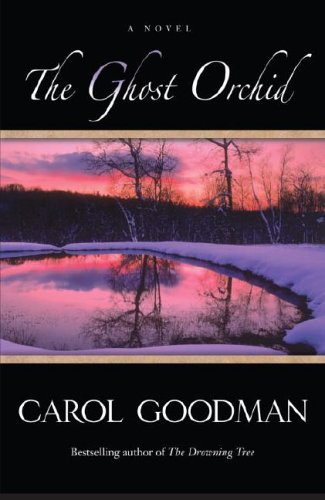
- The Ghost Orchid
Carol Goodmanstandalone novel2006
similar bynorth americacontemporaryeeriedual timelinefamily secretsgothic+2 more
In her enthralling novels of literary suspense, Carol Goodman writes stories that resonate with emotion set in lush landscapes that entice the senses. Now, with The Ghost Orchid, a narrative that seamlessly weaves together the past and the present, Goodman creates her most lyrical and haunting work to date. For more than one hundred years, creative souls have traveled to Upstate New York to work under the captivating spell of the Bosco estate. Cradled in silence, inspired by the rough beauty of overgrown gardens and crumbling statuary, these chosen few fashion masterworks--and have cemented Bosco's reputation as a premier artists' colony. This season, five talented artists-in-residence find themselves drawn to the history of Bosco, from the extensive network of fountains that were once its centerpiece but have long since run dry to the story of its enigmatic founder, Aurora Latham, and the series of tragic events that occurred more than a century ago.Ellis Brooks, a first-time novelist, has come to Bosco to write a book based on Aurora and the infamous summer of 1893, when wealthy, powerful Milo Latham brought the notorious medium Corinth Blackwell to the estate to help his wife contact three of the couple's children, lost the winter before in a diphtheria epidemic. But when a seance turned deadly, Corinth and her alleged accomplice, Tom Quinn, disappeared, taking with them the Lathams' only surviving child. The more time she spends at Bosco, the more Ellis becomes convinced that there is an even darker, more sinister end to the story. And she's not alone: biographer Bethesda Graham uncovers stunning revelations about Milo and Corinth; landscape architect David Fox discovers a series of hidden tunnels underneath the gardens; poet Zalman Bronsky hears the long-dry fountain's waters beckoning him; and novelist Nat Loomis feels something lingering just out of reach.After a bizarre series of accidents befalls them, the group cannot deny the connections between the long ago and now, the living and the dead . . . as Ellis realizes that the tangled truth may ensnare them all in its cool embrace.From the Hardcover edition.
- Castle Rock
series16 books1978
similar bynorth americacontemporaryhorror+1 more
Castle Rock is the fictional Maine town that links a cluster of otherwise separate Stephen King novels and novellas, including The Dead Zone, Cujo, The Dark Half, Needful Things, and Elevation. Rather than telling one continuous story, the books share a setting and occasional recurring figures, such as Sheriff Alan Pangborn, while each follows its own self-contained plot and cast. Any title can be read on its own without needing the others.
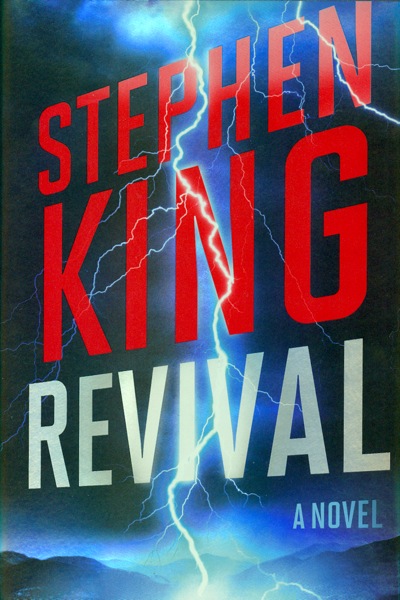
- Revival
Stephen Kingstandalone novel2014
similar bynorth americacontemporaryhorroreerie+1 more
The protagonist details how his life keeps intersecting with that of the man he first met as the pastor of his church in childhood, whose experiments with electricity lead to mastery of a cosmic power which he uses to help people, until his obsession leads to physical and spiritual disaster for all.
- Duma Key
Stephen Kingstandalone novel2008
similar bygrief and lossnorth americacontemporaryhorroreerie
A workplace accident crushes Edgar Freemantle's truck, costs him his right arm, and leaves him with brain damage that scrambles his speech and memory -- severe enough that his marriage doesn't survive. On his psychologist's advice, Edgar relocates alone to a beach house on Duma Key, a quiet stretch of Florida's Gulf coast, taking up sketching as therapy, hiring a local student as an assistant and befriending an elderly heiress with dementia and her caretaker. But the drawings that pour out of him start showing things he has no way of knowing -- secrets about the people he loves, and the island itself. A standalone novel by Stephen King.
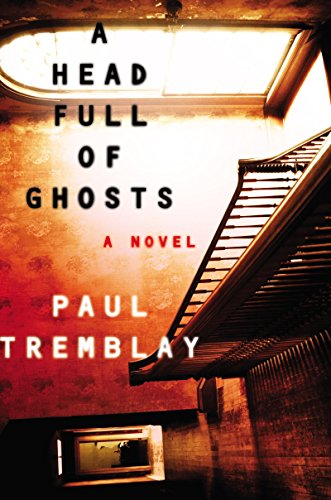
- A Head Full of Ghosts
Paul Tremblaystandalone novel2015
similar bynorth americacontemporaryhorroreeriefamily secrets+1 more
A Head Full of Ghosts is a 2015 horror novel by American writer Paul Tremblay. The plot involves a Massachusetts family under financial and emotional strain while their fourteen-year-old daughter, Marjorie Barrett, exhibits signs of severe mental illness. The Barretts come to believe she is possessed by a demon, and her behavior is publicized when the family stars in a reality TV show. Marjorie's younger sister, Merry Barrett, relays the experiences of her childhood fifteen years later. Themes include elements of Catholic exorcism and reality television exploitation.
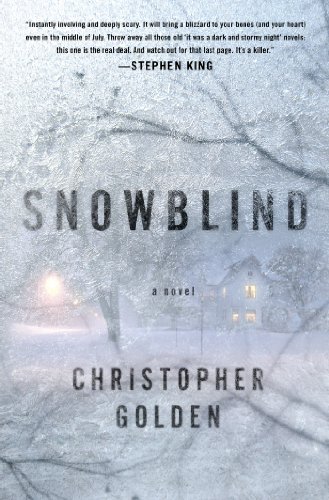
- Snowblind
Christopher Goldenstandalone novel2014
similar bygrief and lossnorth americacontemporaryhorroreerie+1 more
"SNOWBLIND is a thrilling contemporary ghost story with both horror and heart. The small New England town of Coventry is haunted by its memories of a deadly winter... in which loved ones were lost, families torn apart, and a town buried in a terrible blizzard. Now, twelve years later, the people plagued by their memories of that storm are haunted once again as a new storm approaches, promising to wreak new havoc. Old ghosts trickle back, and this storm will prove even more terrifying and deadly than the last. With richly textured characters, scarred and haunted by the ghosts of those they loved most, Snowblind reinvents the ghost story for today's world. Spellbinding in scope and rooted deeply in classic storytelling, Christopher Golden has written a chilling masterpiece that is the best work of his career and a standout supernatural thriller"--
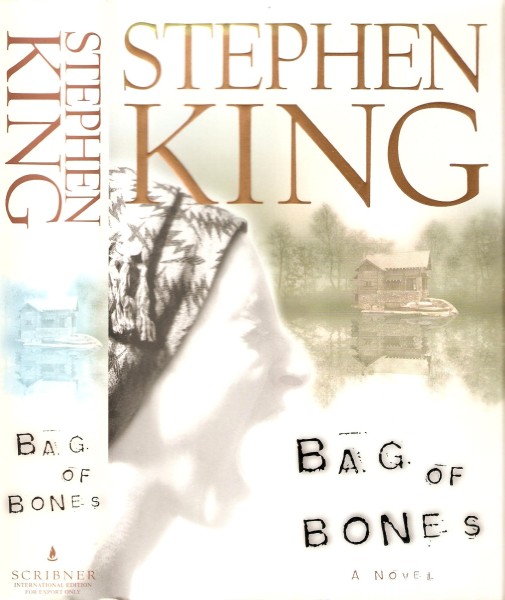
- Bag of Bones
Stephen Kingstandalone novel1998
similar bygrief and lossnorth americacontemporaryhorror+1 more
Bag of Bones is a 1998 horror novel by American writer Stephen King. It focuses on an author who suffers severe writer's block and delusions at an isolated lake house four years after the death of his wife. It won the 1999 Bram Stoker Award for Best Novel, the 1999 British Fantasy Award for Best Novel, and the 1999 Locus Award for Best Dark Fantasy/Horror Novel.
- Dracula
universe144 books1897
Start hereDracula · Start here
similar byhorror+1 more
"Come freely. Go safely. And leave something of the happiness you bring" — so the Count greets his guest at the threshold of the Carpathians, and the great door shuts behind. Bram Stoker's Dracula (1897) is the wellspring of the modern vampire: the account of a centuries-old Transylvanian nobleman who quits his crumbling castle for the crowded lodging-houses of London, and the handful of ordinary people — a young solicitor, a doctor of the mad, a professor of stranger learning — who must piece together what he is before he makes the whole city his fold. It is told wholly in fragments: journal entries, letters, telegrams, ships' logs, phonograph cylinders, each hand recording only its own sliver of the dark. Around that single novel a whole crypt of continuations has grown, raised by many writers across a century. Fred Saberhagen's Dracula Sequence hands the Count the microphone, retelling the old events from his own wry, aggrieved lips and following him into later intrigues. Robert Lory's brisk 1970s Dracula Horror Series revives him as a reluctant weapon turned against fouler things; Peter Tremayne's trilogy reaches back along his bloodline; and further sequels, a Quincey Morris spin-off, and Dracula's Children carry the shadow onward. This is a loose shared world built upon a public-domain figure, not one governed continuity — each author remakes him as villain, antihero, or sympathetic narrator. Begin, always, with Stoker's original; the letters and the mounting dread stand entirely on their own. From there follow whichever door tempts you — Saberhagen's The Dracula Tape for the monster's own confession, Lory or Tremayne for tales that never glance back at the Borgo Pass again.
- The Vanishing
Wendy Webb (I)standalone novel2014
similar bynorth americacontemporaryeeriemysteriousfamily secretsgothic+2 more
"Recently widowed and rendered penniless by her Ponzi-scheming husband, Julia Bishop is eager to start anew. So when a stranger appears on her doorstep with a job offer, she finds herself accepting the mysterious yet unique position: caretaker to his mother, Amaris Sinclair, the famous and rather eccentric horror novelist whom Julia has always admired ... and who the world believes is dead. When she arrives at the Sinclairs' enormous estate on Lake Superior, Julia begins to suspect that there may be sinister undercurrents to her "too-good-to-be-true" position. As Julia delves into the reasons of why Amaris chose to abandon her successful writing career and withdraw from the public eye, her search leads to unsettling connections to her own family tree, making her wonder why she really was invited to Havenwood in the first place, and what monstrous secrets are still held prisoner within its walls." — quoted from the Amazon.com's product page for this book as of 2015-02-11.