Loreful
HomeDiscover
Search series, authors…⌘K
Loreful

Reading orders for SF/F series and shared universes — with your place kept in every one.

Explore

UniversesSeriesWorksAuthorsAtlas

Help

FAQAboutSite map

Account & legal

Sign inCreate accountPrivacyTerms

Data

Built on ISFDB, Wikipedia, Wikidata and Open Library. Curated reading orders carry their reasoning on the page; the rest follow publication order. Data sources & licenses

© Loreful · data: ISFDB · CC BY

More like Navigating Stories

but

Mood

The mood the book leaves you in.

  • The reading experience is propelled by journeys, exploration, and physical risk; excitement and forward momentum dominate over dread or introspection.
  • Joy and loss are deliberately mixed; the resolution grants characters something real while taking something else away, leaving warmth and sorrow together.
  • The book demands work from the reader — dense prose, difficult structure, unfamiliar ideas, or morally uncomfortable material — as part of its intended effect.
  • Grim events, cruelty, or despair dominate the atmosphere, and the book does not soften them with comfort or comic relief.
  • The atmosphere is quietly unsettling — wrongness, unease, and the uncanny pervade the book without necessarily escalating into overt horror.
  • The book is built to move the reader; character feeling is foregrounded and major scenes aim at a strong emotional response.
  • Humor is a primary aim and the prose plays for laughs — comic situations, wit, or dialogue produce sustained comedy, not occasional levity.
  • The book insists that things can improve; effort and decency are shown to matter, and the arc bends toward better outcomes even through hardship.
  • The book teaches as it goes — real facts, history, science, or craft are conveyed in enough depth that learning is part of the reading experience.
  • The book is designed to uplift and motivate, presenting perseverance or achievement in a way that invites the reader to aspire or act.
  • The overall register is cheerful and easygoing; stakes are kept gentle and the book avoids dwelling on pain or dread.
  • Withheld information drives the experience; the book sustains enigmas and secrets the reader wants resolved, whatever its genre.
  • The book is contemplative and inward-looking, giving more weight to thought, memory, and meaning than to external events.
  • The book works as comfort reading — low tension, a soothing pace, and an atmosphere the reader can unwind in.
  • Grief, loss, or melancholy set the dominant register, and the book lets sorrow stand rather than resolving it into comfort.
  • Sustained suspense is the point; the book keeps the reader braced for what happens next through danger, pressure, or impending revelation.
  • Playful invention and charm define the register — fanciful conceits, light absurdity, and a narration that delights in its own oddity.

About

What the story runs on.

  • Stories in which extraterrestrial beings are central — as characters, cultures, or the object of the plot.
  • Stories structured as a quest — a journey undertaken to find, deliver, or destroy something of great import.
  • Stories in which staying alive against nature, catastrophe, or scarcity is the central problem.
  • Stories of lovers kept apart by law, family, faith, or station, where the obstacle to love is the plot.
  • Stories in which a friendship — its making, testing, or loss — is the emotional center.
  • Stories of growing up — a young protagonist crossing from childhood into adult knowledge and responsibility.
  • Stories about who a character truly is — self-discovery, doubled lives, and the search for a self.
  • Stories about mourning — living through the death of a loved one and what loss does to the survivors.
  • Stories in which a buried family truth — hidden parentage, crimes, or shames — surfaces and reorders the present.
  • Stories driven by maneuvering for power — factions, conspiracies, and statecraft conducted in shadow.
  • Stories in which war itself is the subject — combat, occupation, and what warfare does to soldiers and civilians.
  • Stories organized around investigating a killing — the case, the clues, and the pursuit of the killer, in any genre's clothing.

Shelf

Where it sits in the library.

    • Fiction built on magic or other supernatural elements that have no scientific explanation.
    • Secondary-world fantasy at large scale, where the fate of nations or the world turns on the protagonists' struggle.
    • Fantasy set in a recognizably modern city or contemporary world where the supernatural intrudes on everyday life.
    • Fantasy that blends in horror's atmosphere and imagery, keeping a fantastical frame around grim or frightening material.
    • Action-driven fantasy following warriors or rogues with personal stakes against sorcerous threats, rather than world-spanning conflicts.
    • Fantasy set in a real historical period or a close analogue of one, with magic woven into the era.
    • Fantasy in which protagonists cross from the ordinary world into another world through a portal or similar passage.
    • Fiction that retells or reworks a traditional fairy tale in a new form or setting.
    • Fantasy drawing directly on myths, legends, and folklore, retelling them or building on their figures and logic.
    • Fantasy of ghosts, vampires, shapeshifters, psychics, and similar phenomena, usually set in an otherwise ordinary world.
    • Fiction mixing science-fictional trappings with overtly magical or impossible elements in one setting.
    • Low-stakes fantasy emphasizing comfort, community, and everyday pleasures over conflict and peril.
    • Speculative fiction of pervasive moral ambiguity, violence, and cynicism that rejects heroic conventions — fantasy and SF alike.
      • Fiction that extrapolates from science and technology — future societies, space travel, or speculative inventions — within at least nominally natural laws.
      • Science fiction of interstellar scope — starships, galactic polities, and adventure across star systems.
      • Science fiction committed to scientific rigor, where technical plausibility constrains the story.
      • Science fiction centered on armed forces and warfare, told largely from a military point of view.
      • Science fiction of networked, corporate-dominated near futures, pairing high technology with social decay.
      • Science fiction styled on nineteenth-century steam-powered technology, often in a Victorian or pseudo-Victorian setting.
      • Fiction depicting an oppressive or catastrophic society, presented as a warning.
      • Fiction set after civilization's collapse, following survivors in the ruins of the old world.
      • Fiction in which characters move between past and future, and the mechanics or consequences of that travel drive the plot.
      • Fiction exploring a world where a historical event went differently and history diverged from ours.
      • Science fiction about humanity's first encounter and communication with an alien intelligence.
      • Science fiction in which extraterrestrial forces attack or occupy Earth and humanity resists.
      • Fiction whose primary aim is to frighten or unsettle the reader through dread, menace, or the monstrous.
      • Horror of vast, indifferent, incomprehensible entities before which humanity is insignificant, in the Lovecraft tradition.
      • Horror of decaying houses, buried family secrets, and oppressive atmosphere in the Gothic literary tradition.
      • Horror centered on hauntings and the returning dead.
      • Horror located in the mind — paranoia, obsession, and unreliable perception rather than external monsters.
      • Horror built around the reanimated dead and survival amid their outbreaks.
      • Horror defined by explicit, transgressive gore that refuses to cut away from violence.
      • Speculative fiction of the strange and uncanny that resists both natural explanation and standard genre categories.
      • Fiction organized around solving a crime or puzzle, typically following an investigator toward the identification of a culprit.
      • A puzzle-first mystery that lays out clues so the culprit's identity can be deduced before the reveal.
      • Crime fiction of moral ambiguity, fatalism, and hard-edged style, set among the corrupt and the doomed.
      • A mystery following the realistic routines of police work — forensics, interviews, and case-building.
      • A gentle mystery with an amateur sleuth, a small community, and violence kept off the page.
      • A mystery set in a past era, where the investigation works within that period's methods and society.
      • Fast-paced fiction driven by imminent danger, pursuit, or high-stakes conspiracy, built to sustain tension.
      • A thriller of espionage — agents, tradecraft, and intelligence services in conflict.
      • A thriller centered on lawyers and the courtroom, where litigation carries the suspense.
      • A thriller driven by detailed contemporary or near-future technology, often military or scientific.
      • A thriller whose tension comes from mental states and manipulation between characters rather than external action.
      • Fiction whose central plot is a romantic relationship and its development toward an emotionally satisfying resolution.
      • Romance in which one or both partners are supernatural beings, blending fantasy elements into the love story.
      • A fantasy-romance hybrid in which the romantic arc and the fantasy plot carry equal weight.
      • Romance set in a past era, with courtship shaped by the period's society and manners.
      • Romance set in the present day, without supernatural or historical elements.
      • Fiction set in a real past period, where the historical setting materially shapes characters and events.
        • General and literary fiction emphasizing prose style, character interiority, or formal ambition over genre plot conventions.
        • Fiction in a realistic world where magical events occur and are treated as ordinary, in the tradition of Latin American literature.
        • Fiction that ridicules people, institutions, or society in order to criticize them.
        • Fiction of dreamlike, irrational imagery and logic that breaks from realistic representation.
        • Fiction that plays with narrative convention through metafiction, fragmentation, and self-reference.
        • Fiction propelled by journeys, exploration, and physical peril, where action and survival carry the plot.
        • Adventure fiction of ships and seafaring — naval engagements, voyages, and life at sea.
        • Fiction of the American frontier West — gunmen, ranchers, and lawmen, typically in the late nineteenth century.
        • Fiction centered on soldiers, campaigns, and the experience of warfare, historical or imagined.
          • Fiction written primarily to amuse, using comedic situations, wit, or parody as its organizing principle.
            • Multi-generational fiction following a family or dynasty across decades, with inheritance and kinship as the through-line.
              • Fiction whose world runs on explicit game mechanics — levels, stats, and skills that characters can see and exploit.
                • Fiction about costumed or superpowered heroes and their conflicts with comparable villains.

                Practical

                How long a commitment, whether it stands alone, and whether it has finished.

                Tap a chip to ask for it · tap again to rule it out · once more to clear. Numbers show what would be left.

                • Cover of Pym
                  Pym

                  series · 5 books · 1838

                  similar byexpeditionsadventure+3 more

                  Edgar Allan Poe's The Narrative of Arthur Gordon Pym of Nantucket (1838), his only complete novel, sends a young stowaway through shipwreck, mutiny, and cannibalism toward an increasingly strange voyage to the South Pole that breaks off on a mysterious, unexplained image. Jules Verne wrote an unauthorized 1897 sequel, An Antarctic Mystery, resolving Poe's cliffhanger in more rationalist terms, while Mat Johnson's 2011 novel Pym uses Poe's original as the springboard for a satirical modern story about race.

                • Cover of The Stonehenge Gate
                  The Stonehenge Gate

                  Jack Williamson · standalone novel · 2005

                  similar byexpeditionsadventurouscontemporaryscience fictionadventure+1 more

                  Stumbling on ancient stones in the Sahara Desert, four adventurous excavators and poker buddies realize that they have discovered a gateway to other worlds, from technologically advanced planets to primitive civilizations.

                • Cover of Cavor
                  Cavor

                  series · 2 books · 1901

                  similar byadventurousscience fiction

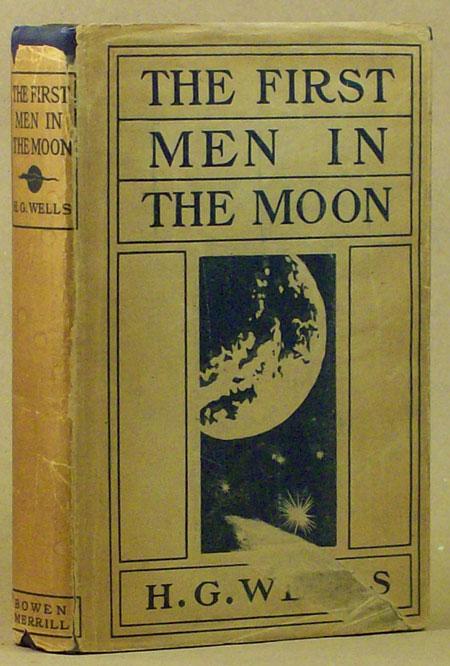
                  H. G. Wells's 1901 novel The First Men in the Moon is narrated by the businessman Bedford, who joins the reclusive scientist Cavor after Cavor invents cavorite, a gravity-blocking substance that carries the two men to the Moon. There they discover a vast underground civilization of insect-like Selenites, and the expedition that began as a hunt for lunar minerals turns into an encounter with an alien society. It is a standalone novel; later editions crediting Stephen Baxter add an introduction or afterword rather than a continuing story.

                • Cover of Miss Pickerell
                  Miss Pickerell

                  series · 18 books · 1950

                  completed

                  similar byadventurousscience fiction+2 more

                • Cover of The Zone Unknown
                  The Zone Unknown

                  series · 7 books · 1994

                  completed

                  similar bycontemporary+4 more

                • Cover of Danny Dunn
                  Danny Dunn

                  series · 15 books · 1956

                  completed

                  similar byadventurousscience fictionadventure+1 more

                  Danny Dunn is the young protagonist of a long-running mid-century American juvenile science fiction series by Raymond Abrashkin and Jay Williams, starting in 1956. Each book sends Danny and his friends into an adventure built around a specific piece of speculative technology — anti-gravity paint, a homework machine, weather control — that goes predictably wrong or is misused by someone else. Aimed squarely at young readers, the fifteen-book run treats gadget-driven science fiction as a springboard for comic mishap and light moralizing rather than hard extrapolation.

                • Cover of Cairo Jim and/or Jocelyn Osgood
                  Cairo Jim and/or Jocelyn Osgood

                  series · 18 books · 1991

                  similar byadventure+1 more

                  Cairo Jim is an archaeologist-poet who lives in Cairo's fictional Valley of the Hairdressers, adventuring around the world's ancient sites with his English-speaking, Shakespeare-quoting macaw Doris and a widely read camel named Brenda, usually opposed by his treasure-hunting rival Captain Neptune Flannelbottom Bone. Jocelyn Osgood, a pilot and flight attendant, joins him on many of the later expeditions. Geoffrey McSkimming's Australian series runs to about twenty volumes of pun-heavy, globe-trotting adventure for younger readers.

                • Cover of The NUMA Files
                  The NUMA Files

                  series · 6 books · 2004

                  similar byadventurousour worldcontemporary+2 more

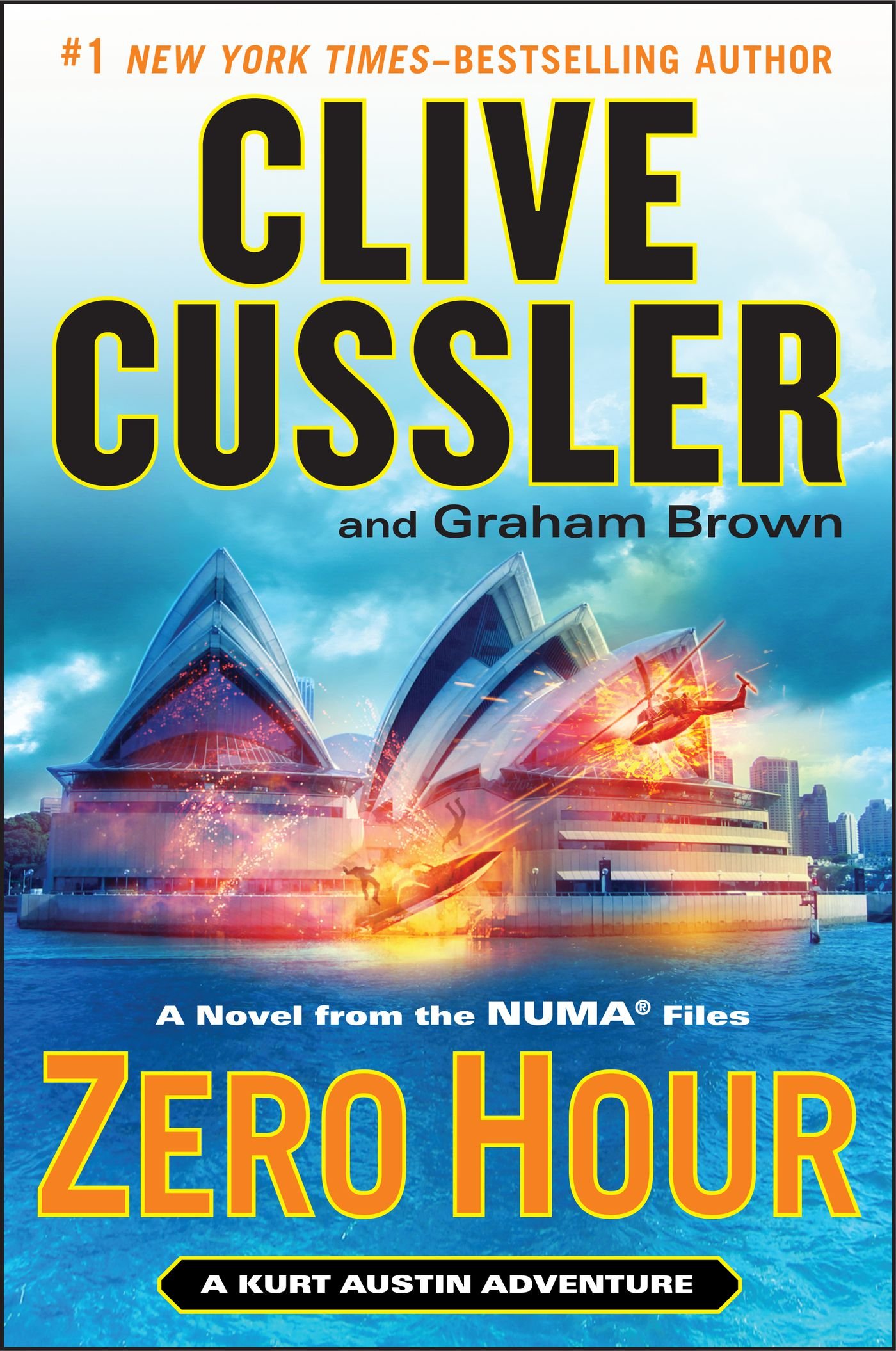
                  Clive Cussler's NUMA Files novels follow Kurt Austin, leader of the National Underwater and Marine Agency's Special Assignments Team, and his colleague Joe Zavala, through globe-spanning adventure-thrillers mixing action, exotic locations and speculative science. Lost City finds them investigating a life-extending enzyme discovered deep in the North Atlantic, and the string of deaths and disappearances surrounding its discovery. Zero Hour, Nighthawk and the following novels continue Austin's missions, later written with Graham Brown after original co-author Paul Kemprecos.

                • Cover of Allan Quatermain
                  Allan Quatermain

                  series · 25 books · 1885

                  similar byexpeditionsadventurousadventure

                  Allan Quatermain is the protagonist of H. Rider Haggard's 1885 novel King Solomon's Mines, its one sequel Allan Quatermain (1887), twelve prequel novels and four prequel short stories, totalling eighteen works. An English professional big game hunter and adventurer, in film and television he has been portrayed by Richard Chamberlain, Sean Connery, Cedric Hardwicke, Patrick Swayze and Stewart Granger among others.

                • ML
                  Meg / Loch Universe

                  series · 11 books · 1997

                  similar byour worldcontemporaryscience fiction+1 more

                • Cover of Wold Newton
                  Wold Newton

                  series · 21 books · 1972

                  similar byour world+3 more

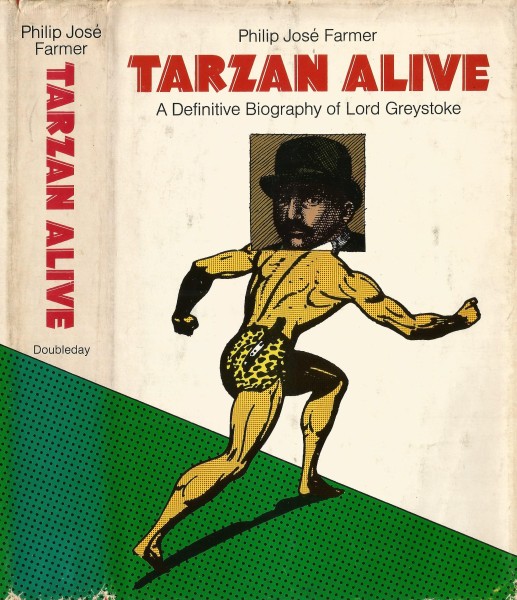
                  The Wold Newton family is a literary concept derived from a form of crossover fiction developed by the American science fiction writer Philip José Farmer.

                • Cover of The Copernicus Legacy
                  The Copernicus Legacy

                  series · 6 books · 2014

                  similar byadventurouscontemporaryadventure+2 more

                  The Copernicus Legacy is a book series written by Tony Abbott. It is about the adventures of Wade Kaplan, Darrell Kaplan, Lily, Becca Moore, Roald Kaplan, and Sara Kaplan, as they try to destroy a time machine made by Ptolemy but discovered and used by Nicolaus Copernicus, from the dangerous Teutonic Order of Ancient Prussia. It currently has four books in the main series, but two are in a series diverted from The Copernicus Legacy called Copernicus Archives. While a work of fiction, it does incorporate some facts about Copernicus's history.

                • Cover of Zarkon
                  Zarkon

                  series · 5 books · 1975

                  completed

                  similar byadventurousour worldcontemporaryscience fiction+2 more

                • Cover of The Joshua Files
                  The Joshua Files

                  series · 6 books · 2008

                  similar byexpeditionsadventurouscontemporaryadventure+1 more

                  The Joshua Files is a thriller book series aimed at pre-teens/teenagers written by British author M. G. Harris. The mythology of the series includes a fictional prophecy of the ancient Maya of a catastrophic event that will occur in December 2012.

                • Cover of Ancient Egyptian
                  Ancient Egyptian

                  series · 9 books · 1993

                  similar byadventurous+1 more

                  Wilbur Smith's Ancient Egypt novels open with River God (1993), narrated by the loyal eunuch slave Taita as he guides the royal family's flight from the Hyksos invasion and their eventual return to power. The series, later continued by Smith with co-author Mark Chadbourn, follows Taita and Egypt's rulers across further installments including The Seventh Scroll, Warlock, and Desert God, spanning three decades of publication.

                • Cover of The Chronicles of St. Mary's
                  The Chronicles of St. Mary's

                  series · 46 books · 2013

                  similar byour worldcontemporaryscience fiction+1 more

                  Jodi Taylor's Chronicles of St Mary's follows the disaster-prone historians of St Mary's Institute of Historical Research, who insist they don't 'time travel' but merely 'investigate major historical events in contemporary time' — usually while narrowly avoiding death and causing chaos. Beginning with Just One Damned Thing After Another, the comic time-travel series has grown to nineteen novels ranging across historical periods from the Cretaceous to the twentieth century.

                • Cover of Primeval
                  Primeval

                  series · 8 books · 2008

                  similar byour worldcontemporaryscience fiction+2 more

                • Cover of Thunder
                  Thunder

                  series · 3 books · 1995

                  similar byadventurousour worldscience fiction+3 more

                • ER
                  Edgar Rice Burroughs' Pellucidar universe

                  series · 24 books · 1922

                  similar byadventurous+3 more

                • RS
                  Roland Smith's Cryptid Series

                  series · 5 books · 1998

                  similar byexpeditionsadventurouscontemporaryadventure+1 more

                • Cover of Dirk Pitt
                  Dirk Pitt

                  series · 12 books · 1973

                  completed

                  similar byexpeditionsadventurousour worldcontemporaryadventure

                  Clive Cussler's Dirk Pitt novels follow the title character, a two-fisted marine engineer and de facto field agent for the fictional National Underwater and Marine Agency, through globe-spanning adventures mixing undersea salvage, historical mystery, and international conspiracy. The run collected here spans The Mediterranean Caper (1973) through Valhalla Rising (2001), the earlier stretch of a series Cussler continued for decades with later co-authors.

                • Cover of Danger Boy
                  Danger Boy

                  series · 4 books · 2001

                  similar byadventurousour worldscience fiction+2 more

                • K
                  Kairos

                  series · 11 books · 1962

                  completed

                  similar byscience fiction+3 more

                  The Time Quintet is a science fantasy series of five young adult novels written by American author Madeleine L'Engle and made up of A Wrinkle in Time (1962), A Wind in the Door (1973), A Swiftly Tilting Planet (1978), Many Waters (1986), and An Acceptable Time (1989).
                • Cover of Blake Walker / Crosstime
                  Blake Walker / Crosstime

                  series · 2 books · 1956

                  completed

                  similar byadventurousscience fiction+2 more