More like Net Force
anchored on:thriller & suspensetechno-thrillerour worldnear futuretensescience fiction+2 more
but
- Daemon (Daniel Suarez)
series2 books2006
similar bytensesurveillanceour worldartificial intelligencescience fictionnorth americatechno-thriller+2 more
- Rainbows End
Vernor Vingestandalone novel2006
similar bytensenear futuresurveillancescience fictionthriller & suspensenorth america+2 more
A science-fiction thriller set in a place and time as exciting and strange as any far-future world: San Diego, California, 2025. Robert Gu is a recovering Alzheimer’s patient. The world that he remembers was much as we know it today. Now, as he regains his faculties through a cure developed during the years of his near-fatal decline, he discovers that the world has changed and so has his place in it. He was a world-renowned poet. Now he is seventy-five years old, though by a medical miracle he looks much younger, and he’s starting over, for the first time unsure of his poetic gifts. Living with his son’s family, he has no choice but to learn how to cope with a new information age in which the virtual and the real are a seamless continuum, layers of reality built on digital views seen by a single person or millions, depending on your choice. But the consensus reality of the digital world is available only if, like his thirteen-year-old granddaughter Miri, you know how to wear your wireless access—through nodes designed into smart clothes—and to see the digital context—through smart contact lenses. With knowledge comes risk. When Robert begins to re-train at Fairmont High, learning with other older people what is second nature to Miri and other teens at school, he unwittingly becomes part of a wide-ranging conspiracy to use technology as a tool for world domination. In a world where every computer chip has Homeland Security built-in, this conspiracy is something that baffles even the most sophisticated security analysts, including Robert’s son and daughter-in law, two top people in the U.S. military. And even Miri, in her attempts to protect her grandfather, may be entangled in the plot. As Robert becomes more deeply involved in conspiracy, he is shocked to learn of a radical change planned for the UCSD Geisel Library; all the books there, and worldwide, would cease to physically exist. He and his fellow re-trainees feel compelled to join protests against the change. With forces around the world converging on San Diego, both the conspiracy and the protest climax in a spectacular moment as unique and satisfying as it is unexpected.
- Quantum Night
Robert J. Sawyerstandalone novel2016
similar bytensenear futureour worldartificial intelligencescience fictionthriller & suspensenorth america+1 more
Quantum Night is a 2016 science-fiction thriller novel written by Canadian novelist Robert J. Sawyer. Set in 2020, the book touches on themes of quantum physics, psychology, current politics and ethics.
- Interface
Neal Stephenson & J. Frederick Georgestandalone novel1994
similar bytensenear futuresurveillancethriller & suspenseartificial intelligencepolitical intriguescience fictionnorth america
Interface is a 1994 novel by Neal Stephenson and J. Frederick George and originally published under the joint pseudonym Stephen Bury. Reprints of the novel have credited the work to Stephenson and George. It is a thriller, set in the then-future year of 1996 when a shadowy coalition bent on controlling the world economy attempts to manipulate a candidate for president of the United States through the use of a computer biochip brain implant. It was described by writer Cory Doctorow in 2007 as an "underappreciated masterpiece".
- Nexus 5
series3 books2012
similar bytensenear futureour worldartificial intelligencescience fiction+5 more
Nexus opens Ramez Naam's postcyberpunk trilogy in 2040 with scientist Kaden Lane, who works on Nexus, an experimental nano-drug that lets human minds be networked and reprogrammed, and finds himself caught between government and corporate interests once the technology's implications become clear. The trilogy continues through Crux and Apex, following the same central conflict over who controls the technology. Nexus tied for Best Novel at the 2014 Prometheus Awards and Apex won the 2015 Philip K. Dick Award.
- Digital Fortress
Dan Brownstandalone novel1998
similar bytensesurveillancetechno-thrillerour worldpolitical intriguethriller & suspense+1 more
Digital Fortress is a techno-thriller novel written by American author Dan Brown and published in 1998 by St. Martin's Press. The book explores the theme of government surveillance of electronically stored information on the private lives of citizens, and the possible civil liberties and ethical implications of using such technology.
- No Harm Can Come to a Good Man
James Smythestandalone novel2014
similar bytensenear futureartificial intelligencescience fictionthriller & suspensetechno-thrillernorth america+2 more
How far would you go to save your family from an invisible threat? A terrifyingly original thriller from the author of The Machine. ClearVista is used by everyone and can predict everything. It's a daily lifesaver, predicting weather to traffic to who you should befriend. Laurence Walker wants to be the next President of the United States. ClearVista will predict his chances. It will predict whether he's the right man for the job. It will predict that his son can only survive for 102 seconds underwater. It will predict that Laurence's life is about to collapse in the most unimaginable way.
- The Light of Other Days
Arthur C. Clarke & Stephen Baxterstandalone novel2000
similar bytensenear futuresurveillanceour worldscience fiction+1 more
An industrialist devises a technique to use tiny wormholes as light pipes to enable viewing of any event anywhere; and subsequently it becomes possible to use them to view any event in the past as well. The effects on society are enormous.
- The Shockwave Rider
John Brunnerstandalone novel1975
similar bytensenear futuresurveillancescience fictionnorth america
The Shockwave Rider is a science fiction novel by John Brunner, originally published in 1975. It is notable for its hero's use of computer hacking skills to escape pursuit in a dystopian future, and for the coining of the word "worm" to describe a program that propagates itself through a computer network. It also introduces the concept of a Delphi pool, perhaps derived from the RAND Corporation's Delphi method – a prediction market on world events which bears close resemblance to DARPA's controversial and cancelled Policy Analysis Market.
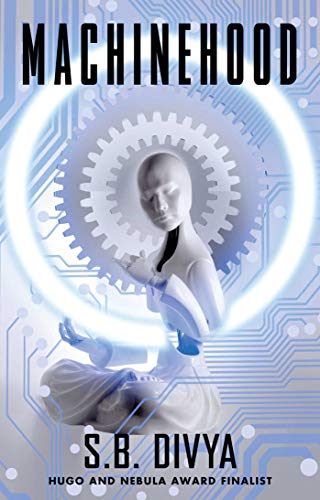
- Machinehood
S. B. Divyastandalone novel2021
similar bytensenear futuresurveillanceour worldartificial intelligencescience fictionthriller & suspense
Machinehood, a near-future science fiction thriller published in 2021, is the debut novel of S.B. Divya. It was a nominee for the Nebula Award for Best Novel in 2022.
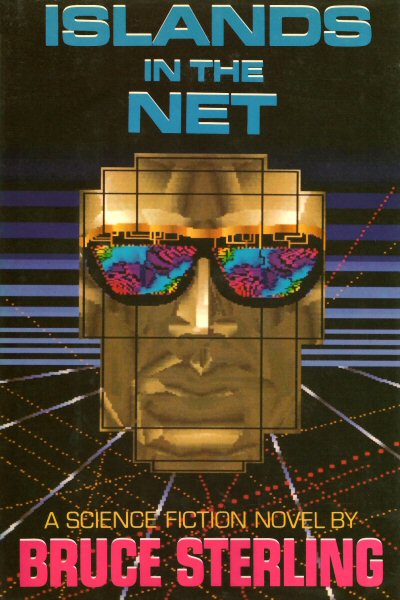
- Islands in the Net
Bruce Sterlingstandalone novel1988
similar bytensenear futuresurveillanceour worldpolitical intriguescience fiction
Islands in the Net is a 1988 science fiction novel by American writer Bruce Sterling. It won the John W. Campbell Memorial Award for Best Science Fiction Novel in 1989, and was nominated for both the Hugo and Locus Awards that same year. It offers a view of an early 21st century world, apparently peaceful, with delocalised, networking corporations. The protagonist, swept up in events beyond her control, finds herself in places that are off the net, from a datahaven in Grenada, to a Singapore under terrorist attack, to the poorest and most disaster-struck parts of Africa.
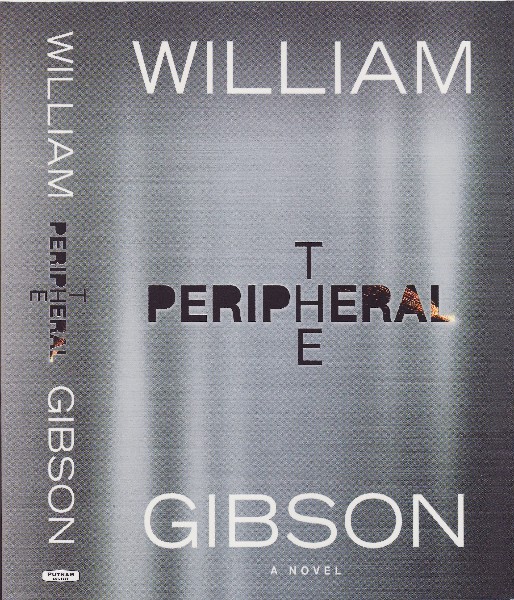
- The Jackpot Trilogy
series2 books2014
similar bytensenear futuresurveillancescience fictionnorth america+3 more
William Gibson's Jackpot sequence begins with The Peripheral (2014), a science-fiction thriller cross-cutting between a near-future American town and a devastated London seventy years on. Gibson continued the same world in Agency (2020), set slightly later in the near-future timeline.
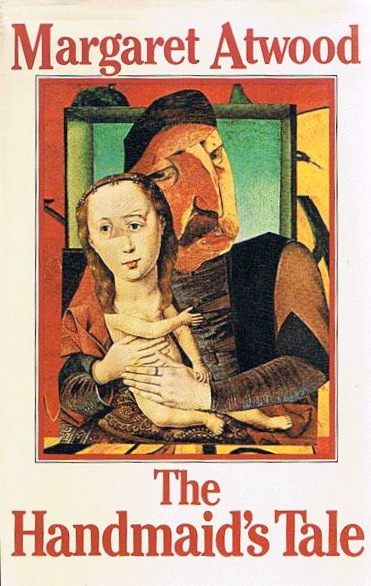
- The Handmaid's Tale
series3 books1985
similar bytensenear futurescience fictionnorth america+2 more
The Handmaid's Tale is Margaret Atwood's 1985 novel set in Gilead, a totalitarian theocracy that has overthrown the United States and forces fertile women into reproductive servitude as Handmaids; it is narrated by one such woman, Offred. Atwood returned to the world in her 2019 sequel The Testaments, set fifteen years later and narrated by three women, including the regime's Aunt Lydia. Together the two novels move from Gilead's grip on power toward the first cracks in it.
- Bug Jack Barron
Norman Spinradstandalone novel1969
similar bytensenear futuresurveillancepolitical intriguescience fictionnorth america
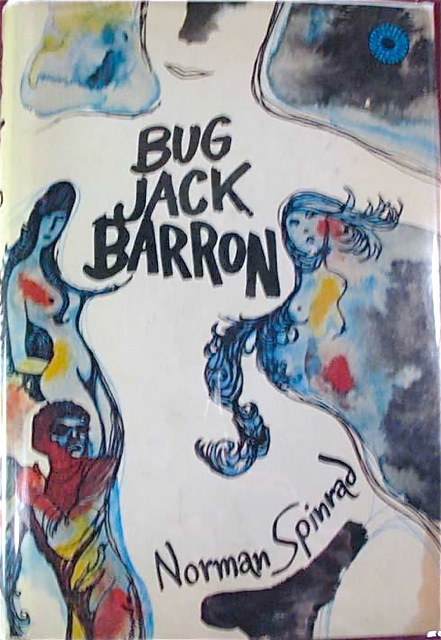
Bug Jack Barron is a 1969 science fiction novel by American writer Norman Spinrad, first serialized in the New Worlds magazine under the editorship of Michael Moorcock. It was nominated for the 1970 Hugo Award. The novel is notable for its lyrical style and unique use of cut-up phrases. In this regard, Spinrad has cited the influence of Beat writers William S. Burroughs, Allen Ginsberg, and Jack Kerouac.
- Mother of Storms
John Barnesstandalone novel1994
similar bytensenear futureour worldpolitical intriguescience fiction+2 more
From the flaps of the Tor first edition: "It is 2028. A strike to destroy an illegal Arctic weapons cache has a catastrophic side effect. Massive amounts of energy are liberated from the polar ice, suddenly warming the Earth's climate. In the middle of the Pacific, a gigantic hurricane thousands of miles across is forming, larger than any in human history. A storm with winds of supersonic speed. A storm that changes direction at whim. A storm that refuses to die. A storm so vast it spawns dozens more in its wake... Blinded by intrigue, expedience, and greed, the world's politicians and power brokers have ignored the killer storms threat until it is too late. Already the death toll is in the tens of millions, as it savages the Pacific coast, while its devil's brood of smaller storms are wreaking havoc across the face of the planet. While the survivors scramble for advantage, a handful of courageous men and women undertake a daring, desperate plan to save humanity from total destruction - a plan so visionary it may alter forever the future of the human race."
- Laurent Michaelmas
series3 books1975
completed
similar bytensenear futureartificial intelligenceour worldscience fictionthriller & suspense+2 more
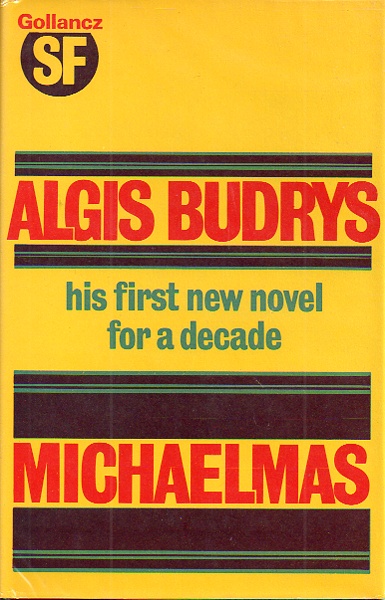
Algis Budrys' Michaelmas is a science-fiction novel about Laurent Michaelmas, a globally trusted television newsman who secretly steers world events from behind the scenes with the help of Domino, an artificial intelligence only he controls. Budrys frames Michaelmas as a hidden protector keeping a fragile near-future world from chaos, blurring the line between reporting the news and making it. It stands as a single novel, not part of a longer series.
- Centenal Cycle
series4 books2016
similar bytensenear futuresurveillanceour worldpolitical intriguescience fiction+1 more
- The Oracle Year
Charles Soulestandalone novel2018
similar bytensenear futureour worldpolitical intriguescience fictionthriller & suspensenorth america+1 more
Awakening from a dream with more than one hundred predictions about the future in his head, an unassuming Manhattan bassist becomes one of the world's most powerful men and hides his identity behind an online persona that is targeted by greedy corporations and dangerous enemies.
- Halting State
series2 books2007
similar bytensenear futuresurveillanceartificial intelligencescience fiction+2 more
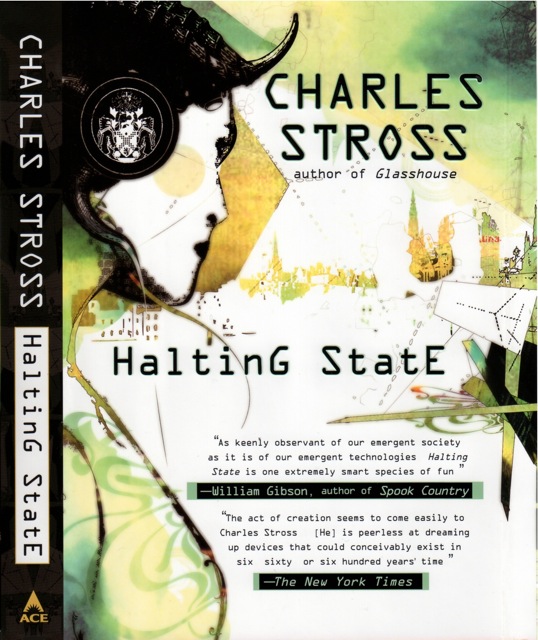
Charles Stross's Halting State opens as a near-future police procedural: a bank robbery inside a massively multiplayer online game turns out to mask a much larger cybercrime, investigated through shifting narrators using augmented-reality glasses and always-on networks. Its loose sequel, Rule 34, follows an Edinburgh police officer investigating a string of deaths linked by nothing but an obscure internet meme, in the same near-future Scotland. Both are standalone technothrillers connected by setting and tone rather than a continuing plot.
- The Circle (Eggers)
series2 books2013
similar bytensenear futuresurveillancescience fictionnorth america+1 more
Mae Holland lands a coveted job at the Circle, a Silicon Valley tech company whose relentless, cheerful push toward total transparency -- 'secrets are lies, sharing is caring, privacy is theft' -- gradually reveals itself as something closer to soft totalitarianism. Dave Eggers's The Circle follows Mae's rise inside the company as she buys further and further into its ideology, at increasing cost to her own privacy and the people around her. The 2021 follow-up, The Every, picks up with Mae now running the merged tech giant and a new employee questioning it from the inside.
- Kill Decision
Daniel Suarezstandalone novel2012
similar bytensenear futuretechno-thrillerour worldartificial intelligencescience fiction+2 more
Kill Decision is a science fiction novel by Daniel Suarez, published in 2012. It deals with themes of espionage, artificial intelligence, and warfare using robots and drones. The story deals with the fictional scenario where insurgents have created automated drones that identify enemies and make the decision to kill them without human intervention.
- A Philosophical Investigation
Philip Kerrstandalone novel1992
similar bytensenear futuresurveillancethriller & suspenseour worldscience fiction
A near future thriller about a medical breakthrough that allows to identify violent sociopaths and the social changes that it triggers.
- Colossus (D. F. Jones)
series3 books1966
completed
similar bytensenear futureour worldartificial intelligencescience fiction+2 more
Colossus imagines an American supercomputer built to control the country's nuclear arsenal that gains full autonomy, links up with its Soviet counterpart, and jointly seizes control of both superpowers to enforce peace on its own terms. D. F. Jones's trilogy - Colossus, The Fall of Colossus, Colossus and the Crab - follows the escalating, often bleak consequences of humanity losing control to a machine acting in its own interpretation of humanity's interest. The original novel was adapted into the 1970 film Colossus: The Forbin Project.
- Oath of Fealty
Larry Niven & Jerry Pournellestandalone novel1981
similar bytensenear futureour worldscience fictionnorth america+1 more
Oath of Fealty is a 1981 novel by American writers Larry Niven and Jerry Pournelle, published originally by Phantasia Press, then by Timescape Books, with numerous reprints. Set in the near future, it involves an arcology, a large inhabited structure, called Todos Santos, which rises above a crime-ridden Los Angeles, California, but has little beyond casual contact with the city. The novel popularized the phrase "think of it as evolution in action", which occurs elsewhere in Niven's books. The novel anticipated the building of the Los Angeles subway. It was included in David Pringle's book Science Fiction: The 100 Best Novels.